Accent Wall Ideas: The Ultimate Guide to Creating a Focal Point
What is an Accent Wall?
An accent wall is the most powerful tool in an interior designer’s kit to transform a room from bland to brilliant without a full-scale renovation. It is a single wall that is differentiated from the others by a unique design, color, texture, or material, creating an intentional and captivating focal point.
The Ultimate Accent Wall Guide
Whether you want to add depth, introduce a pop of color, showcase a textural element, or cleverly incorporate mirror wall decor, a well-executed accent wall can redefine your entire space. This ultimate guide will explore every conceivable accent wall idea, from classic paint and modern wallpaper to innovative 3D panels and functional shelving units. We will provide you with the inspiration, practical know-how, and expert tips to confidently create a stunning accent wall that reflects your personal style.
Why You Need an Accent Wall in Your Home
Accent walls are more than just a trend; they are a fundamental design principle with numerous psychological and aesthetic benefits.
Creating a Dynamic Focal Point
Every well-designed room needs a focal point—a place where the eye lands first. In the absence of natural architecture like a fireplace, an accent wall creates this focal point artificially. It anchors the room, provides a backdrop for key furniture, and gives the space a sense of purpose and order.
Adding Depth and Dimension
Color, pattern, and texture on a single wall can manipulate perception. Dark colors can make a wall seem to recede, adding depth to a shallow room. Textured materials like wood or stone add a tactile, three-dimensional quality that makes the wall feel more dynamic and interesting.
Expressing Personal Style Without Overwhelm
An accent wall allows you to experiment with bold colors, dramatic patterns, or unconventional materials that might feel too intense on all four walls. It’s the perfect way to incorporate a daring design element you love without committing to it for the entire room.
Defining Zones in an Open Floor Plan
In large, open-concept living areas, an accent wall can visually define different zones without building walls. A different color or material behind the dining table set distinguishes it from the living area, creating a sense of separation and coziness.
Choosing the Perfect Wall: The Designer’s Rulebook
The first and most critical step is choosing the right wall. The wrong choice can throw off the room’s balance.
The Natural Focal Point Wall
mirror wall decor This is the most straightforward choice. Look for the wall that naturally draws attention.
- The Wall Behind the Bed: In bedrooms, the wall behind the headboard is the undeniable focal point.
- The Fireplace Wall: In living rooms, the fireplace and mantel are a natural center of attention.
- The Wall Opposite the Entryway: This is the first wall you see when you enter a room, making it a powerful choice for making a strong first impression.
Architectural Feature Walls
Choose a wall that already has interesting architecture to highlight it.
- Walls with Nooks or Recesses: Accentuating these can make them feel intentional and built-in.
- Walls with Slanted Ceilings: An accent color or wallpaper on a sloped ceiling wall can turn an awkward angle into a dramatic feature.
- Wall at the End of a Hallway: This creates a visual destination and makes a long hallway feel shorter and more interesting.
Walls to Avoid
- Walls with Excessive Interruptions: Avoid walls that are broken up by too many doors, windows, or built-in cabinets, as it will be difficult to create a cohesive look.
- Small, Insignificant Walls: Accenting a very small wall can look like an afterthought rather than a statement.
Category 1: Painted Accent Walls (The Classic Approach)
Paint remains the most popular, cost-effective, and versatile way to create an accent wall.
The Bold Color Pop
Choose a color that contrasts significantly with the other walls. A deep navy, emerald green, or terracotta against light grey or white walls is a timeless and dramatic choice. This works exceptionally well in living rooms and bedrooms.
The Subtle Tone-on-Tone
For a more sophisticated and less contrasting look, choose a paint color that is a few shades darker or lighter than the other walls. This creates a subtle, layered effect that adds depth without high contrast.
Painted Patterns: Geometric & Shapes
Move beyond a single block of color.
- Vertical or Horizontal Stripes: Use painter’s tape to create crisp stripes. Vertical stripes can make ceilings feel higher, while horizontal stripes can make a room feel wider.
- Geometric Shapes: Create large triangles, diamonds, or arches for a modern, artistic feel.
- Color Blocking: Use tape to create large, abstract blocks of different colors for a high-energy, modern art effect.
Category 2: Wallpapered & Textured Accent Walls
When paint isn’t enough, wallpaper and textural treatments add unparalleled pattern and depth.
Statement Wallpaper
The options are endless:
- Botanical & Tropical Prints: Lush leaves and large patterns create a vibrant, organic feel.
- Geometric & Abstract Prints: Perfect for mid-century modern or eclectic spaces.
- Murals: A photorealistic mural of a forest, cityscape, or ocean can become a breathtaking window to another world.
- Textured Grasscloths and Weaves: These add natural, tactile texture and a subtle pattern that feels rich and luxurious.
Wood Accent Walls
Wood brings warmth and natural beauty.
- Reclaimed Wood: Weathered barn wood planks add rustic charm and a story.
- Shiplap: Horizontal shiplap boards offer a clean, modern farmhouse vibe.
- Vertical Planks: Vertical wood paneling can make a room feel taller.
- Wood Slats: Thin, evenly spaced wood slats create a modern, rhythmic pattern that plays with light and shadow mirror wall decor.
Stone & Brick Veneers
For organic, rustic, or industrial appeal.
- Stacked Stone: Creates a rustic, cozy feel, perfect for behind a fireplace mirror wall decor.
- Whitewashed Brick: Offers industrial loft charm with a lighter, brighter touch mirror wall decor.
- Thin Brick Veneers: Real brick look without the weight or cost, ideal for feature walls mirror wall decor.
Category 3: Functional & 3D Accent Walls
These walls are not just beautiful; they also serve a purpose or add physical dimension mirror wall decor.
The Shelving Accent Wall
A floor-to-ceiling shelving unit is the ultimate functional accent wall mirror wall decor.
- Built-in Bookshelves: Fill them with books, art objects, and plants for a lived-in, scholarly feel mirror wall decor.
- Floating Shelves: Arrange them in an asymmetrical pattern for a modern, lightweight look. They are perfect for displaying decorative items and small pieces of mirror wall decor.
3D Wall Panels
These modern panels are made from MDF, gypsum, or PVC and are installed directly onto the wall mirror wall decor.
- Geometric Patterns: Hexagons, waves, and cubes add a strong architectural element.
- Organic Patterns: Designs that mimic waves, vines, or dunes feel fluid and modern.
- They are typically painted to match the room, creating incredible shadow play throughout the day mirror wall decor.
The Upholstered Wall
Add softness, luxury, and acoustic dampening with a fabric-covered wall mirror wall decor.
- Button Tufting: For a classic, luxurious headboard feel throughout the entire wall mirror wall decor.
- Simple Fabric Wrap: Stretch and staple fabric over a padded wall for a clean, sound-absorbent surface mirror wall decor.
Incorporating Mirror Wall Decor into Your Accent Wall
This is where our two topics beautifully converge. Mirrors can be integrated into an accent wall to amplify its effect mirror wall decor.
The Mirror Gallery Wall
Create your accent wall entirely from a collection of mirrors. Mix and match different shapes, sizes, and frames for an eclectic look that reflects light and makes the room feel enormous mirror wall decor.
A Large Statement Mirror as the Focal Point
Hang a single, oversized mirror on your painted or wallpapered accent wall. The mirror will reflect the color and pattern, doubling the visual impact of your design choice mirror wall decor.
Mirrors with Integrated Shelving
Use a mirror that also functions as a shelf unit. These designs often have small ledges or recesses for placing candles, plants, or other decor, combining reflection with functionality mirror wall decor.
DIY Tutorial: Creating a Geometric Painted Accent Wall
Skill Level: Beginner-Intermediate
Time: 1-2 Days
Tools: Painter’s Tape, Level, Measuring Tape, Pencil, Paint Brushes, Paint Roller, Drop Cloth.
Steps:
- Choose Your Design: Sketch your pattern on paper first. A simple horizontal or vertical grid is great for beginners mirror wall decor.
- Prep the Wall: Clean the wall and paint the entire surface with your base color. Let it dry completely.
- Mark the Pattern: Use a pencil, level, and measuring tape to lightly mark your design on the wall. For a grid, mark all the points where the lines will intersect.
- Apply Painter’s Tape: Carefully apply painter’s tape along your pencil lines to create the negative space of your design. Burnish the edges of the tape firmly to prevent paint bleed.
- Paint Over the Tape: Using your accent color, paint over the taped wall. Use a brush for the edges near the tape and a roller for the larger areas. Apply two thin coats for even coverage.
- The Magic Step: Remove the tape while the second coat is still slightly wet. Pull it off slowly at a 45-degree angle to reveal incredibly crisp, clean lines.
- Touch-Ups: Use a small artist’s brush to fix any minor bleeds or mistakes.
What is the best color for an accent wall?
The “best” color is subjective and depends on your goal. Dark, saturated colors like navy blue, forest green, or charcoal grey create drama and make the wall recede. Warm colors like terracotta or mustard yellow add energy and coziness. The best rule is to choose a color you love from an existing element in the room, like a rug, painting, or throw pillow.
Should an accent wall be lighter or darker?
Typically, accent walls are darker than the other three walls to create contrast and a strong focal point. However, in a room with very dark walls, a lighter accent wall (e.g., white or beige) can be used to brighten and highlight a specific area.
Can you have an accent wall in a small room?
Absolutely. A dark accent wall in a small room can actually make it feel larger by adding depth and making the walls feel less defined. Alternatively, a light-colored textural accent wall (like shiplap) adds interest without closing the space in.
Can I use an accent wall behind a TV?
Yes, the wall behind the TV is often a natural focal point. Using a dark color or a subtle texture can help the TV blend into the wall when it’s off. Avoid overly busy patterns directly behind the TV, as they can create visual competition when you’re trying to watch.
What is the current trend for accent walls?
While classic painted walls are always in style, current trends include: Natural textures (wood slats, limewash paint), warm earth tones (terracotta, ochre, sage green), bold patterns (large-scale geometric wallpapers), and functional accent walls (floor-to-ceiling shelving).
Accent Wall Ideas: The Ultimate Guide to Creating a Focal Point
What is an Accent Wall?
An accent wall is the most powerful tool in an interior designer’s kit to transform a room from bland to brilliant without a full-scale renovation. It is a single wall that is differentiated from the others by a unique design, color, texture, or material, creating an intentional and captivating focal point.
The Ultimate Accent Wall Guide
Whether you want to add depth, introduce a pop of color, showcase a textural element, or cleverly incorporate mirror wall decor, a well-executed accent wall can redefine your entire space. This ultimate guide will explore every conceivable accent wall idea, from classic paint and modern wallpaper to innovative 3D panels and functional shelving units. We will provide you with the inspiration, practical know-how, and expert tips to confidently create a stunning accent wall that reflects your personal style.
Why You Need an Accent Wall in Your Home
Accent walls are more than just a trend; they are a fundamental design principle with numerous psychological and aesthetic benefits.
Creating a Dynamic Focal Point
Every well-designed room needs a focal point—a place where the eye lands first. In the absence of natural architecture like a fireplace, an accent wall creates this focal point artificially. It anchors the room, provides a backdrop for key furniture, and gives the space a sense of purpose and order.
Adding Depth and Dimension
Color, pattern, and texture on a single wall can manipulate perception. Dark colors can make a wall seem to recede, adding depth to a shallow room. Textured materials like wood or stone add a tactile, three-dimensional quality that makes the wall feel more dynamic and interesting.
Expressing Personal Style Without Overwhelm
An accent wall allows you to experiment with bold colors, dramatic patterns, or unconventional materials that might feel too intense on all four walls. It’s the perfect way to incorporate a daring design element you love without committing to it for the entire room.
Defining Zones in an Open Floor Plan
In large, open-concept living areas, an accent wall can visually define different zones without building walls. A different color or material behind the dining table set distinguishes it from the living area, creating a sense of separation and coziness.
Choosing the Perfect Wall: The Designer’s Rulebook
The first and most critical step is choosing the right wall. The wrong choice can throw off the room’s balance.
The Natural Focal Point Wall
mirror wall decor This is the most straightforward choice. Look for the wall that naturally draws attention.
- The Wall Behind the Bed: In bedrooms, the wall behind the headboard is the undeniable focal point.
- The Fireplace Wall: In living rooms, the fireplace and mantel are a natural center of attention.
- The Wall Opposite the Entryway: This is the first wall you see when you enter a room, making it a powerful choice for making a strong first impression.
Architectural Feature Walls
Choose a wall that already has interesting architecture to highlight it.
- Walls with Nooks or Recesses: Accentuating these can make them feel intentional and built-in.
- Walls with Slanted Ceilings: An accent color or wallpaper on a sloped ceiling wall can turn an awkward angle into a dramatic feature.
- Wall at the End of a Hallway: This creates a visual destination and makes a long hallway feel shorter and more interesting.
Walls to Avoid
- Walls with Excessive Interruptions: Avoid walls that are broken up by too many doors, windows, or built-in cabinets, as it will be difficult to create a cohesive look.
- Small, Insignificant Walls: Accenting a very small wall can look like an afterthought rather than a statement.
Category 1: Painted Accent Walls (The Classic Approach)
Paint remains the most popular, cost-effective, and versatile way to create an accent wall.
The Bold Color Pop
Choose a color that contrasts significantly with the other walls. A deep navy, emerald green, or terracotta against light grey or white walls is a timeless and dramatic choice. This works exceptionally well in living rooms and bedrooms.
The Subtle Tone-on-Tone
For a more sophisticated and less contrasting look, choose a paint color that is a few shades darker or lighter than the other walls. This creates a subtle, layered effect that adds depth without high contrast.
Painted Patterns: Geometric & Shapes
Move beyond a single block of color.
- Vertical or Horizontal Stripes: Use painter’s tape to create crisp stripes. Vertical stripes can make ceilings feel higher, while horizontal stripes can make a room feel wider.
- Geometric Shapes: Create large triangles, diamonds, or arches for a modern, artistic feel.
- Color Blocking: Use tape to create large, abstract blocks of different colors for a high-energy, modern art effect.
Category 2: Wallpapered & Textured Accent Walls
When paint isn’t enough, wallpaper and textural treatments add unparalleled pattern and depth.
Statement Wallpaper
The options are endless:
- Botanical & Tropical Prints: Lush leaves and large patterns create a vibrant, organic feel.
- Geometric & Abstract Prints: Perfect for mid-century modern or eclectic spaces.
- Murals: A photorealistic mural of a forest, cityscape, or ocean can become a breathtaking window to another world.
- Textured Grasscloths and Weaves: These add natural, tactile texture and a subtle pattern that feels rich and luxurious.
Wood Accent Walls
Wood brings warmth and natural beauty.
- Reclaimed Wood: Weathered barn wood planks add rustic charm and a story.
- Shiplap: Horizontal shiplap boards offer a clean, modern farmhouse vibe.
- Vertical Planks: Vertical wood paneling can make a room feel taller.
- Wood Slats: Thin, evenly spaced wood slats create a modern, rhythmic pattern that plays with light and shadow mirror wall decor.
Stone & Brick Veneers
For organic, rustic, or industrial appeal.
- Stacked Stone: Creates a rustic, cozy feel, perfect for behind a fireplace mirror wall decor.
- Whitewashed Brick: Offers industrial loft charm with a lighter, brighter touch mirror wall decor.
- Thin Brick Veneers: Real brick look without the weight or cost, ideal for feature walls mirror wall decor.
Category 3: Functional & 3D Accent Walls
These walls are not just beautiful; they also serve a purpose or add physical dimension mirror wall decor.
The Shelving Accent Wall
A floor-to-ceiling shelving unit is the ultimate functional accent wall mirror wall decor.
- Built-in Bookshelves: Fill them with books, art objects, and plants for a lived-in, scholarly feel mirror wall decor.
- Floating Shelves: Arrange them in an asymmetrical pattern for a modern, lightweight look. They are perfect for displaying decorative items and small pieces of mirror wall decor.
3D Wall Panels
These modern panels are made from MDF, gypsum, or PVC and are installed directly onto the wall mirror wall decor.
- Geometric Patterns: Hexagons, waves, and cubes add a strong architectural element.
- Organic Patterns: Designs that mimic waves, vines, or dunes feel fluid and modern.
- They are typically painted to match the room, creating incredible shadow play throughout the day mirror wall decor.
The Upholstered Wall
Add softness, luxury, and acoustic dampening with a fabric-covered wall mirror wall decor.
- Button Tufting: For a classic, luxurious headboard feel throughout the entire wall mirror wall decor.
- Simple Fabric Wrap: Stretch and staple fabric over a padded wall for a clean, sound-absorbent surface mirror wall decor.
Incorporating Mirror Wall Decor into Your Accent Wall
This is where our two topics beautifully converge. Mirrors can be integrated into an accent wall to amplify its effect mirror wall decor.
The Mirror Gallery Wall
Create your accent wall entirely from a collection of mirrors. Mix and match different shapes, sizes, and frames for an eclectic look that reflects light and makes the room feel enormous mirror wall decor.
A Large Statement Mirror as the Focal Point
Hang a single, oversized mirror on your painted or wallpapered accent wall. The mirror will reflect the color and pattern, doubling the visual impact of your design choice mirror wall decor.
Mirrors with Integrated Shelving
Use a mirror that also functions as a shelf unit. These designs often have small ledges or recesses for placing candles, plants, or other decor, combining reflection with functionality mirror wall decor.
DIY Tutorial: Creating a Geometric Painted Accent Wall
Skill Level: Beginner-Intermediate
Time: 1-2 Days
Tools: Painter’s Tape, Level, Measuring Tape, Pencil, Paint Brushes, Paint Roller, Drop Cloth.
Steps:
- Choose Your Design: Sketch your pattern on paper first. A simple horizontal or vertical grid is great for beginners mirror wall decor.
- Prep the Wall: Clean the wall and paint the entire surface with your base color. Let it dry completely.
- Mark the Pattern: Use a pencil, level, and measuring tape to lightly mark your design on the wall. For a grid, mark all the points where the lines will intersect.
- Apply Painter’s Tape: Carefully apply painter’s tape along your pencil lines to create the negative space of your design. Burnish the edges of the tape firmly to prevent paint bleed.
- Paint Over the Tape: Using your accent color, paint over the taped wall. Use a brush for the edges near the tape and a roller for the larger areas. Apply two thin coats for even coverage.
- The Magic Step: Remove the tape while the second coat is still slightly wet. Pull it off slowly at a 45-degree angle to reveal incredibly crisp, clean lines.
- Touch-Ups: Use a small artist’s brush to fix any minor bleeds or mistakes.
What is the best color for an accent wall?
The “best” color is subjective and depends on your goal. Dark, saturated colors like navy blue, forest green, or charcoal grey create drama and make the wall recede. Warm colors like terracotta or mustard yellow add energy and coziness. The best rule is to choose a color you love from an existing element in the room, like a rug, painting, or throw pillow.
Should an accent wall be lighter or darker?
Typically, accent walls are darker than the other three walls to create contrast and a strong focal point. However, in a room with very dark walls, a lighter accent wall (e.g., white or beige) can be used to brighten and highlight a specific area.
Can you have an accent wall in a small room?
Absolutely. A dark accent wall in a small room can actually make it feel larger by adding depth and making the walls feel less defined. Alternatively, a light-colored textural accent wall (like shiplap) adds interest without closing the space in.
Can I use an accent wall behind a TV?
Yes, the wall behind the TV is often a natural focal point. Using a dark color or a subtle texture can help the TV blend into the wall when it’s off. Avoid overly busy patterns directly behind the TV, as they can create visual competition when you’re trying to watch.
What is the current trend for accent walls?
While classic painted walls are always in style, current trends include: Natural textures (wood slats, limewash paint), warm earth tones (terracotta, ochre, sage green), bold patterns (large-scale geometric wallpapers), and functional accent walls (floor-to-ceiling shelving).
Accent Wall Ideas: The Ultimate Guide to Creating a Focal Point
What is an Accent Wall?
An accent wall is the most powerful tool in an interior designer’s kit to transform a room from bland to brilliant without a full-scale renovation. It is a single wall that is differentiated from the others by a unique design, color, texture, or material, creating an intentional and captivating focal point.
The Ultimate Accent Wall Guide
Whether you want to add depth, introduce a pop of color, showcase a textural element, or cleverly incorporate mirror wall decor, a well-executed accent wall can redefine your entire space. This ultimate guide will explore every conceivable accent wall idea, from classic paint and modern wallpaper to innovative 3D panels and functional shelving units. We will provide you with the inspiration, practical know-how, and expert tips to confidently create a stunning accent wall that reflects your personal style.
Why You Need an Accent Wall in Your Home
Accent walls are more than just a trend; they are a fundamental design principle with numerous psychological and aesthetic benefits.
Creating a Dynamic Focal Point
Every well-designed room needs a focal point—a place where the eye lands first. In the absence of natural architecture like a fireplace, an accent wall creates this focal point artificially. It anchors the room, provides a backdrop for key furniture, and gives the space a sense of purpose and order.
Adding Depth and Dimension
Color, pattern, and texture on a single wall can manipulate perception. Dark colors can make a wall seem to recede, adding depth to a shallow room. Textured materials like wood or stone add a tactile, three-dimensional quality that makes the wall feel more dynamic and interesting.
Expressing Personal Style Without Overwhelm
An accent wall allows you to experiment with bold colors, dramatic patterns, or unconventional materials that might feel too intense on all four walls. It’s the perfect way to incorporate a daring design element you love without committing to it for the entire room.
Defining Zones in an Open Floor Plan
In large, open-concept living areas, an accent wall can visually define different zones without building walls. A different color or material behind the dining table set distinguishes it from the living area, creating a sense of separation and coziness.
Choosing the Perfect Wall: The Designer’s Rulebook
The first and most critical step is choosing the right wall. The wrong choice can throw off the room’s balance.
The Natural Focal Point Wall
mirror wall decor This is the most straightforward choice. Look for the wall that naturally draws attention.
- The Wall Behind the Bed: In bedrooms, the wall behind the headboard is the undeniable focal point.
- The Fireplace Wall: In living rooms, the fireplace and mantel are a natural center of attention.
- The Wall Opposite the Entryway: This is the first wall you see when you enter a room, making it a powerful choice for making a strong first impression.
Architectural Feature Walls
Choose a wall that already has interesting architecture to highlight it.
- Walls with Nooks or Recesses: Accentuating these can make them feel intentional and built-in.
- Walls with Slanted Ceilings: An accent color or wallpaper on a sloped ceiling wall can turn an awkward angle into a dramatic feature.
- Wall at the End of a Hallway: This creates a visual destination and makes a long hallway feel shorter and more interesting.
Walls to Avoid
- Walls with Excessive Interruptions: Avoid walls that are broken up by too many doors, windows, or built-in cabinets, as it will be difficult to create a cohesive look.
- Small, Insignificant Walls: Accenting a very small wall can look like an afterthought rather than a statement.
Category 1: Painted Accent Walls (The Classic Approach)
Paint remains the most popular, cost-effective, and versatile way to create an accent wall.
The Bold Color Pop
Choose a color that contrasts significantly with the other walls. A deep navy, emerald green, or terracotta against light grey or white walls is a timeless and dramatic choice. This works exceptionally well in living rooms and bedrooms.
The Subtle Tone-on-Tone
For a more sophisticated and less contrasting look, choose a paint color that is a few shades darker or lighter than the other walls. This creates a subtle, layered effect that adds depth without high contrast.
Painted Patterns: Geometric & Shapes
Move beyond a single block of color.
- Vertical or Horizontal Stripes: Use painter’s tape to create crisp stripes. Vertical stripes can make ceilings feel higher, while horizontal stripes can make a room feel wider.
- Geometric Shapes: Create large triangles, diamonds, or arches for a modern, artistic feel.
- Color Blocking: Use tape to create large, abstract blocks of different colors for a high-energy, modern art effect.
Category 2: Wallpapered & Textured Accent Walls
When paint isn’t enough, wallpaper and textural treatments add unparalleled pattern and depth.
Statement Wallpaper
The options are endless:
- Botanical & Tropical Prints: Lush leaves and large patterns create a vibrant, organic feel.
- Geometric & Abstract Prints: Perfect for mid-century modern or eclectic spaces.
- Murals: A photorealistic mural of a forest, cityscape, or ocean can become a breathtaking window to another world.
- Textured Grasscloths and Weaves: These add natural, tactile texture and a subtle pattern that feels rich and luxurious.
Wood Accent Walls
Wood brings warmth and natural beauty.
- Reclaimed Wood: Weathered barn wood planks add rustic charm and a story.
- Shiplap: Horizontal shiplap boards offer a clean, modern farmhouse vibe.
- Vertical Planks: Vertical wood paneling can make a room feel taller.
- Wood Slats: Thin, evenly spaced wood slats create a modern, rhythmic pattern that plays with light and shadow mirror wall decor.
Stone & Brick Veneers
For organic, rustic, or industrial appeal.
- Stacked Stone: Creates a rustic, cozy feel, perfect for behind a fireplace mirror wall decor.
- Whitewashed Brick: Offers industrial loft charm with a lighter, brighter touch mirror wall decor.
- Thin Brick Veneers: Real brick look without the weight or cost, ideal for feature walls mirror wall decor.
Category 3: Functional & 3D Accent Walls
These walls are not just beautiful; they also serve a purpose or add physical dimension mirror wall decor.
The Shelving Accent Wall
A floor-to-ceiling shelving unit is the ultimate functional accent wall mirror wall decor.
- Built-in Bookshelves: Fill them with books, art objects, and plants for a lived-in, scholarly feel mirror wall decor.
- Floating Shelves: Arrange them in an asymmetrical pattern for a modern, lightweight look. They are perfect for displaying decorative items and small pieces of mirror wall decor.
3D Wall Panels
These modern panels are made from MDF, gypsum, or PVC and are installed directly onto the wall mirror wall decor.
- Geometric Patterns: Hexagons, waves, and cubes add a strong architectural element.
- Organic Patterns: Designs that mimic waves, vines, or dunes feel fluid and modern.
- They are typically painted to match the room, creating incredible shadow play throughout the day mirror wall decor.
The Upholstered Wall
Add softness, luxury, and acoustic dampening with a fabric-covered wall mirror wall decor.
- Button Tufting: For a classic, luxurious headboard feel throughout the entire wall mirror wall decor.
- Simple Fabric Wrap: Stretch and staple fabric over a padded wall for a clean, sound-absorbent surface mirror wall decor.
Incorporating Mirror Wall Decor into Your Accent Wall
This is where our two topics beautifully converge. Mirrors can be integrated into an accent wall to amplify its effect mirror wall decor.
The Mirror Gallery Wall
Create your accent wall entirely from a collection of mirrors. Mix and match different shapes, sizes, and frames for an eclectic look that reflects light and makes the room feel enormous mirror wall decor.
A Large Statement Mirror as the Focal Point
Hang a single, oversized mirror on your painted or wallpapered accent wall. The mirror will reflect the color and pattern, doubling the visual impact of your design choice mirror wall decor.
Mirrors with Integrated Shelving
Use a mirror that also functions as a shelf unit. These designs often have small ledges or recesses for placing candles, plants, or other decor, combining reflection with functionality mirror wall decor.
DIY Tutorial: Creating a Geometric Painted Accent Wall
Skill Level: Beginner-Intermediate
Time: 1-2 Days
Tools: Painter’s Tape, Level, Measuring Tape, Pencil, Paint Brushes, Paint Roller, Drop Cloth.
Steps:
- Choose Your Design: Sketch your pattern on paper first. A simple horizontal or vertical grid is great for beginners mirror wall decor.
- Prep the Wall: Clean the wall and paint the entire surface with your base color. Let it dry completely.
- Mark the Pattern: Use a pencil, level, and measuring tape to lightly mark your design on the wall. For a grid, mark all the points where the lines will intersect.
- Apply Painter’s Tape: Carefully apply painter’s tape along your pencil lines to create the negative space of your design. Burnish the edges of the tape firmly to prevent paint bleed.
- Paint Over the Tape: Using your accent color, paint over the taped wall. Use a brush for the edges near the tape and a roller for the larger areas. Apply two thin coats for even coverage.
- The Magic Step: Remove the tape while the second coat is still slightly wet. Pull it off slowly at a 45-degree angle to reveal incredibly crisp, clean lines.
- Touch-Ups: Use a small artist’s brush to fix any minor bleeds or mistakes.
What is the best color for an accent wall?
The “best” color is subjective and depends on your goal. Dark, saturated colors like navy blue, forest green, or charcoal grey create drama and make the wall recede. Warm colors like terracotta or mustard yellow add energy and coziness. The best rule is to choose a color you love from an existing element in the room, like a rug, painting, or throw pillow.
Should an accent wall be lighter or darker?
Typically, accent walls are darker than the other three walls to create contrast and a strong focal point. However, in a room with very dark walls, a lighter accent wall (e.g., white or beige) can be used to brighten and highlight a specific area.
Can you have an accent wall in a small room?
Absolutely. A dark accent wall in a small room can actually make it feel larger by adding depth and making the walls feel less defined. Alternatively, a light-colored textural accent wall (like shiplap) adds interest without closing the space in.
Can I use an accent wall behind a TV?
Yes, the wall behind the TV is often a natural focal point. Using a dark color or a subtle texture can help the TV blend into the wall when it’s off. Avoid overly busy patterns directly behind the TV, as they can create visual competition when you’re trying to watch.
What is the current trend for accent walls?
While classic painted walls are always in style, current trends include: Natural textures (wood slats, limewash paint), warm earth tones (terracotta, ochre, sage green), bold patterns (large-scale geometric wallpapers), and functional accent walls (floor-to-ceiling shelving).
Accent Wall Ideas: The Ultimate Guide to Creating a Focal Point
What is an Accent Wall?
An accent wall is the most powerful tool in an interior designer’s kit to transform a room from bland to brilliant without a full-scale renovation. It is a single wall that is differentiated from the others by a unique design, color, texture, or material, creating an intentional and captivating focal point.
The Ultimate Accent Wall Guide
Whether you want to add depth, introduce a pop of color, showcase a textural element, or cleverly incorporate mirror wall decor, a well-executed accent wall can redefine your entire space. This ultimate guide will explore every conceivable accent wall idea, from classic paint and modern wallpaper to innovative 3D panels and functional shelving units. We will provide you with the inspiration, practical know-how, and expert tips to confidently create a stunning accent wall that reflects your personal style.
Why You Need an Accent Wall in Your Home
Accent walls are more than just a trend; they are a fundamental design principle with numerous psychological and aesthetic benefits.
Creating a Dynamic Focal Point
Every well-designed room needs a focal point—a place where the eye lands first. In the absence of natural architecture like a fireplace, an accent wall creates this focal point artificially. It anchors the room, provides a backdrop for key furniture, and gives the space a sense of purpose and order.
Adding Depth and Dimension
Color, pattern, and texture on a single wall can manipulate perception. Dark colors can make a wall seem to recede, adding depth to a shallow room. Textured materials like wood or stone add a tactile, three-dimensional quality that makes the wall feel more dynamic and interesting.
Expressing Personal Style Without Overwhelm
An accent wall allows you to experiment with bold colors, dramatic patterns, or unconventional materials that might feel too intense on all four walls. It’s the perfect way to incorporate a daring design element you love without committing to it for the entire room.
Defining Zones in an Open Floor Plan
In large, open-concept living areas, an accent wall can visually define different zones without building walls. A different color or material behind the dining table set distinguishes it from the living area, creating a sense of separation and coziness.
Choosing the Perfect Wall: The Designer’s Rulebook
The first and most critical step is choosing the right wall. The wrong choice can throw off the room’s balance.
The Natural Focal Point Wall
mirror wall decor This is the most straightforward choice. Look for the wall that naturally draws attention.
- The Wall Behind the Bed: In bedrooms, the wall behind the headboard is the undeniable focal point.
- The Fireplace Wall: In living rooms, the fireplace and mantel are a natural center of attention.
- The Wall Opposite the Entryway: This is the first wall you see when you enter a room, making it a powerful choice for making a strong first impression.
Architectural Feature Walls
Choose a wall that already has interesting architecture to highlight it.
- Walls with Nooks or Recesses: Accentuating these can make them feel intentional and built-in.
- Walls with Slanted Ceilings: An accent color or wallpaper on a sloped ceiling wall can turn an awkward angle into a dramatic feature.
- Wall at the End of a Hallway: This creates a visual destination and makes a long hallway feel shorter and more interesting.
Walls to Avoid
- Walls with Excessive Interruptions: Avoid walls that are broken up by too many doors, windows, or built-in cabinets, as it will be difficult to create a cohesive look.
- Small, Insignificant Walls: Accenting a very small wall can look like an afterthought rather than a statement.
Category 1: Painted Accent Walls (The Classic Approach)
Paint remains the most popular, cost-effective, and versatile way to create an accent wall.
The Bold Color Pop
Choose a color that contrasts significantly with the other walls. A deep navy, emerald green, or terracotta against light grey or white walls is a timeless and dramatic choice. This works exceptionally well in living rooms and bedrooms.
The Subtle Tone-on-Tone
For a more sophisticated and less contrasting look, choose a paint color that is a few shades darker or lighter than the other walls. This creates a subtle, layered effect that adds depth without high contrast.
Painted Patterns: Geometric & Shapes
Move beyond a single block of color.
- Vertical or Horizontal Stripes: Use painter’s tape to create crisp stripes. Vertical stripes can make ceilings feel higher, while horizontal stripes can make a room feel wider.
- Geometric Shapes: Create large triangles, diamonds, or arches for a modern, artistic feel.
- Color Blocking: Use tape to create large, abstract blocks of different colors for a high-energy, modern art effect.
Category 2: Wallpapered & Textured Accent Walls
When paint isn’t enough, wallpaper and textural treatments add unparalleled pattern and depth.
Statement Wallpaper
The options are endless:
- Botanical & Tropical Prints: Lush leaves and large patterns create a vibrant, organic feel.
- Geometric & Abstract Prints: Perfect for mid-century modern or eclectic spaces.
- Murals: A photorealistic mural of a forest, cityscape, or ocean can become a breathtaking window to another world.
- Textured Grasscloths and Weaves: These add natural, tactile texture and a subtle pattern that feels rich and luxurious.
Wood Accent Walls
Wood brings warmth and natural beauty.
- Reclaimed Wood: Weathered barn wood planks add rustic charm and a story.
- Shiplap: Horizontal shiplap boards offer a clean, modern farmhouse vibe.
- Vertical Planks: Vertical wood paneling can make a room feel taller.
- Wood Slats: Thin, evenly spaced wood slats create a modern, rhythmic pattern that plays with light and shadow mirror wall decor.
Stone & Brick Veneers
For organic, rustic, or industrial appeal.
- Stacked Stone: Creates a rustic, cozy feel, perfect for behind a fireplace mirror wall decor.
- Whitewashed Brick: Offers industrial loft charm with a lighter, brighter touch mirror wall decor.
- Thin Brick Veneers: Real brick look without the weight or cost, ideal for feature walls mirror wall decor.
Category 3: Functional & 3D Accent Walls
These walls are not just beautiful; they also serve a purpose or add physical dimension mirror wall decor.
The Shelving Accent Wall
A floor-to-ceiling shelving unit is the ultimate functional accent wall mirror wall decor.
- Built-in Bookshelves: Fill them with books, art objects, and plants for a lived-in, scholarly feel mirror wall decor.
- Floating Shelves: Arrange them in an asymmetrical pattern for a modern, lightweight look. They are perfect for displaying decorative items and small pieces of mirror wall decor.
3D Wall Panels
These modern panels are made from MDF, gypsum, or PVC and are installed directly onto the wall mirror wall decor.
- Geometric Patterns: Hexagons, waves, and cubes add a strong architectural element.
- Organic Patterns: Designs that mimic waves, vines, or dunes feel fluid and modern.
- They are typically painted to match the room, creating incredible shadow play throughout the day mirror wall decor.
The Upholstered Wall
Add softness, luxury, and acoustic dampening with a fabric-covered wall mirror wall decor.
- Button Tufting: For a classic, luxurious headboard feel throughout the entire wall mirror wall decor.
- Simple Fabric Wrap: Stretch and staple fabric over a padded wall for a clean, sound-absorbent surface mirror wall decor.
Incorporating Mirror Wall Decor into Your Accent Wall
This is where our two topics beautifully converge. Mirrors can be integrated into an accent wall to amplify its effect mirror wall decor.
The Mirror Gallery Wall
Create your accent wall entirely from a collection of mirrors. Mix and match different shapes, sizes, and frames for an eclectic look that reflects light and makes the room feel enormous mirror wall decor.
A Large Statement Mirror as the Focal Point
Hang a single, oversized mirror on your painted or wallpapered accent wall. The mirror will reflect the color and pattern, doubling the visual impact of your design choice mirror wall decor.
Mirrors with Integrated Shelving
Use a mirror that also functions as a shelf unit. These designs often have small ledges or recesses for placing candles, plants, or other decor, combining reflection with functionality mirror wall decor.
DIY Tutorial: Creating a Geometric Painted Accent Wall
Skill Level: Beginner-Intermediate
Time: 1-2 Days
Tools: Painter’s Tape, Level, Measuring Tape, Pencil, Paint Brushes, Paint Roller, Drop Cloth.
Steps:
- Choose Your Design: Sketch your pattern on paper first. A simple horizontal or vertical grid is great for beginners mirror wall decor.
- Prep the Wall: Clean the wall and paint the entire surface with your base color. Let it dry completely.
- Mark the Pattern: Use a pencil, level, and measuring tape to lightly mark your design on the wall. For a grid, mark all the points where the lines will intersect.
- Apply Painter’s Tape: Carefully apply painter’s tape along your pencil lines to create the negative space of your design. Burnish the edges of the tape firmly to prevent paint bleed.
- Paint Over the Tape: Using your accent color, paint over the taped wall. Use a brush for the edges near the tape and a roller for the larger areas. Apply two thin coats for even coverage.
- The Magic Step: Remove the tape while the second coat is still slightly wet. Pull it off slowly at a 45-degree angle to reveal incredibly crisp, clean lines.
- Touch-Ups: Use a small artist’s brush to fix any minor bleeds or mistakes.
What is the best color for an accent wall?
The “best” color is subjective and depends on your goal. Dark, saturated colors like navy blue, forest green, or charcoal grey create drama and make the wall recede. Warm colors like terracotta or mustard yellow add energy and coziness. The best rule is to choose a color you love from an existing element in the room, like a rug, painting, or throw pillow.
Should an accent wall be lighter or darker?
Typically, accent walls are darker than the other three walls to create contrast and a strong focal point. However, in a room with very dark walls, a lighter accent wall (e.g., white or beige) can be used to brighten and highlight a specific area.
Can you have an accent wall in a small room?
Absolutely. A dark accent wall in a small room can actually make it feel larger by adding depth and making the walls feel less defined. Alternatively, a light-colored textural accent wall (like shiplap) adds interest without closing the space in.
Can I use an accent wall behind a TV?
Yes, the wall behind the TV is often a natural focal point. Using a dark color or a subtle texture can help the TV blend into the wall when it’s off. Avoid overly busy patterns directly behind the TV, as they can create visual competition when you’re trying to watch.
What is the current trend for accent walls?
While classic painted walls are always in style, current trends include: Natural textures (wood slats, limewash paint), warm earth tones (terracotta, ochre, sage green), bold patterns (large-scale geometric wallpapers), and functional accent walls (floor-to-ceiling shelving).
Accent Wall Ideas: The Ultimate Guide to Creating a Focal Point
What is an Accent Wall?
An accent wall is the most powerful tool in an interior designer’s kit to transform a room from bland to brilliant without a full-scale renovation. It is a single wall that is differentiated from the others by a unique design, color, texture, or material, creating an intentional and captivating focal point.
The Ultimate Accent Wall Guide
Whether you want to add depth, introduce a pop of color, showcase a textural element, or cleverly incorporate mirror wall decor, a well-executed accent wall can redefine your entire space. This ultimate guide will explore every conceivable accent wall idea, from classic paint and modern wallpaper to innovative 3D panels and functional shelving units. We will provide you with the inspiration, practical know-how, and expert tips to confidently create a stunning accent wall that reflects your personal style.
Why You Need an Accent Wall in Your Home
Accent walls are more than just a trend; they are a fundamental design principle with numerous psychological and aesthetic benefits.
Creating a Dynamic Focal Point
Every well-designed room needs a focal point—a place where the eye lands first. In the absence of natural architecture like a fireplace, an accent wall creates this focal point artificially. It anchors the room, provides a backdrop for key furniture, and gives the space a sense of purpose and order.
Adding Depth and Dimension
Color, pattern, and texture on a single wall can manipulate perception. Dark colors can make a wall seem to recede, adding depth to a shallow room. Textured materials like wood or stone add a tactile, three-dimensional quality that makes the wall feel more dynamic and interesting.
Expressing Personal Style Without Overwhelm
An accent wall allows you to experiment with bold colors, dramatic patterns, or unconventional materials that might feel too intense on all four walls. It’s the perfect way to incorporate a daring design element you love without committing to it for the entire room.
Defining Zones in an Open Floor Plan
In large, open-concept living areas, an accent wall can visually define different zones without building walls. A different color or material behind the dining table set distinguishes it from the living area, creating a sense of separation and coziness.
Choosing the Perfect Wall: The Designer’s Rulebook
The first and most critical step is choosing the right wall. The wrong choice can throw off the room’s balance.
The Natural Focal Point Wall
mirror wall decor This is the most straightforward choice. Look for the wall that naturally draws attention.
- The Wall Behind the Bed: In bedrooms, the wall behind the headboard is the undeniable focal point.
- The Fireplace Wall: In living rooms, the fireplace and mantel are a natural center of attention.
- The Wall Opposite the Entryway: This is the first wall you see when you enter a room, making it a powerful choice for making a strong first impression.
Architectural Feature Walls
Choose a wall that already has interesting architecture to highlight it.
- Walls with Nooks or Recesses: Accentuating these can make them feel intentional and built-in.
- Walls with Slanted Ceilings: An accent color or wallpaper on a sloped ceiling wall can turn an awkward angle into a dramatic feature.
- Wall at the End of a Hallway: This creates a visual destination and makes a long hallway feel shorter and more interesting.
Walls to Avoid
- Walls with Excessive Interruptions: Avoid walls that are broken up by too many doors, windows, or built-in cabinets, as it will be difficult to create a cohesive look.
- Small, Insignificant Walls: Accenting a very small wall can look like an afterthought rather than a statement.
Category 1: Painted Accent Walls (The Classic Approach)
Paint remains the most popular, cost-effective, and versatile way to create an accent wall.
The Bold Color Pop
Choose a color that contrasts significantly with the other walls. A deep navy, emerald green, or terracotta against light grey or white walls is a timeless and dramatic choice. This works exceptionally well in living rooms and bedrooms.
The Subtle Tone-on-Tone
For a more sophisticated and less contrasting look, choose a paint color that is a few shades darker or lighter than the other walls. This creates a subtle, layered effect that adds depth without high contrast.
Painted Patterns: Geometric & Shapes
Move beyond a single block of color.
- Vertical or Horizontal Stripes: Use painter’s tape to create crisp stripes. Vertical stripes can make ceilings feel higher, while horizontal stripes can make a room feel wider.
- Geometric Shapes: Create large triangles, diamonds, or arches for a modern, artistic feel.
- Color Blocking: Use tape to create large, abstract blocks of different colors for a high-energy, modern art effect.
Category 2: Wallpapered & Textured Accent Walls
When paint isn’t enough, wallpaper and textural treatments add unparalleled pattern and depth.
Statement Wallpaper
The options are endless:
- Botanical & Tropical Prints: Lush leaves and large patterns create a vibrant, organic feel.
- Geometric & Abstract Prints: Perfect for mid-century modern or eclectic spaces.
- Murals: A photorealistic mural of a forest, cityscape, or ocean can become a breathtaking window to another world.
- Textured Grasscloths and Weaves: These add natural, tactile texture and a subtle pattern that feels rich and luxurious.
Wood Accent Walls
Wood brings warmth and natural beauty.
- Reclaimed Wood: Weathered barn wood planks add rustic charm and a story.
- Shiplap: Horizontal shiplap boards offer a clean, modern farmhouse vibe.
- Vertical Planks: Vertical wood paneling can make a room feel taller.
- Wood Slats: Thin, evenly spaced wood slats create a modern, rhythmic pattern that plays with light and shadow mirror wall decor.
Stone & Brick Veneers
For organic, rustic, or industrial appeal.
- Stacked Stone: Creates a rustic, cozy feel, perfect for behind a fireplace mirror wall decor.
- Whitewashed Brick: Offers industrial loft charm with a lighter, brighter touch mirror wall decor.
- Thin Brick Veneers: Real brick look without the weight or cost, ideal for feature walls mirror wall decor.
Category 3: Functional & 3D Accent Walls
These walls are not just beautiful; they also serve a purpose or add physical dimension mirror wall decor.
The Shelving Accent Wall
A floor-to-ceiling shelving unit is the ultimate functional accent wall mirror wall decor.
- Built-in Bookshelves: Fill them with books, art objects, and plants for a lived-in, scholarly feel mirror wall decor.
- Floating Shelves: Arrange them in an asymmetrical pattern for a modern, lightweight look. They are perfect for displaying decorative items and small pieces of mirror wall decor.
3D Wall Panels
These modern panels are made from MDF, gypsum, or PVC and are installed directly onto the wall mirror wall decor.
- Geometric Patterns: Hexagons, waves, and cubes add a strong architectural element.
- Organic Patterns: Designs that mimic waves, vines, or dunes feel fluid and modern.
- They are typically painted to match the room, creating incredible shadow play throughout the day mirror wall decor.
The Upholstered Wall
Add softness, luxury, and acoustic dampening with a fabric-covered wall mirror wall decor.
- Button Tufting: For a classic, luxurious headboard feel throughout the entire wall mirror wall decor.
- Simple Fabric Wrap: Stretch and staple fabric over a padded wall for a clean, sound-absorbent surface mirror wall decor.
Incorporating Mirror Wall Decor into Your Accent Wall
This is where our two topics beautifully converge. Mirrors can be integrated into an accent wall to amplify its effect mirror wall decor.
The Mirror Gallery Wall
Create your accent wall entirely from a collection of mirrors. Mix and match different shapes, sizes, and frames for an eclectic look that reflects light and makes the room feel enormous mirror wall decor.
A Large Statement Mirror as the Focal Point
Hang a single, oversized mirror on your painted or wallpapered accent wall. The mirror will reflect the color and pattern, doubling the visual impact of your design choice mirror wall decor.
Mirrors with Integrated Shelving
Use a mirror that also functions as a shelf unit. These designs often have small ledges or recesses for placing candles, plants, or other decor, combining reflection with functionality mirror wall decor.
DIY Tutorial: Creating a Geometric Painted Accent Wall
Skill Level: Beginner-Intermediate
Time: 1-2 Days
Tools: Painter’s Tape, Level, Measuring Tape, Pencil, Paint Brushes, Paint Roller, Drop Cloth.
Steps:
- Choose Your Design: Sketch your pattern on paper first. A simple horizontal or vertical grid is great for beginners mirror wall decor.
- Prep the Wall: Clean the wall and paint the entire surface with your base color. Let it dry completely.
- Mark the Pattern: Use a pencil, level, and measuring tape to lightly mark your design on the wall. For a grid, mark all the points where the lines will intersect.
- Apply Painter’s Tape: Carefully apply painter’s tape along your pencil lines to create the negative space of your design. Burnish the edges of the tape firmly to prevent paint bleed.
- Paint Over the Tape: Using your accent color, paint over the taped wall. Use a brush for the edges near the tape and a roller for the larger areas. Apply two thin coats for even coverage.
- The Magic Step: Remove the tape while the second coat is still slightly wet. Pull it off slowly at a 45-degree angle to reveal incredibly crisp, clean lines.
- Touch-Ups: Use a small artist’s brush to fix any minor bleeds or mistakes.
What is the best color for an accent wall?
The “best” color is subjective and depends on your goal. Dark, saturated colors like navy blue, forest green, or charcoal grey create drama and make the wall recede. Warm colors like terracotta or mustard yellow add energy and coziness. The best rule is to choose a color you love from an existing element in the room, like a rug, painting, or throw pillow.
Should an accent wall be lighter or darker?
Typically, accent walls are darker than the other three walls to create contrast and a strong focal point. However, in a room with very dark walls, a lighter accent wall (e.g., white or beige) can be used to brighten and highlight a specific area.
Can you have an accent wall in a small room?
Absolutely. A dark accent wall in a small room can actually make it feel larger by adding depth and making the walls feel less defined. Alternatively, a light-colored textural accent wall (like shiplap) adds interest without closing the space in.
Can I use an accent wall behind a TV?
Yes, the wall behind the TV is often a natural focal point. Using a dark color or a subtle texture can help the TV blend into the wall when it’s off. Avoid overly busy patterns directly behind the TV, as they can create visual competition when you’re trying to watch.
What is the current trend for accent walls?
While classic painted walls are always in style, current trends include: Natural textures (wood slats, limewash paint), warm earth tones (terracotta, ochre, sage green), bold patterns (large-scale geometric wallpapers), and functional accent walls (floor-to-ceiling shelving).
Accent Wall Ideas: The Ultimate Guide to Creating a Focal Point
What is an Accent Wall?
An accent wall is the most powerful tool in an interior designer’s kit to transform a room from bland to brilliant without a full-scale renovation. It is a single wall that is differentiated from the others by a unique design, color, texture, or material, creating an intentional and captivating focal point.
The Ultimate Accent Wall Guide
Whether you want to add depth, introduce a pop of color, showcase a textural element, or cleverly incorporate mirror wall decor, a well-executed accent wall can redefine your entire space. This ultimate guide will explore every conceivable accent wall idea, from classic paint and modern wallpaper to innovative 3D panels and functional shelving units. We will provide you with the inspiration, practical know-how, and expert tips to confidently create a stunning accent wall that reflects your personal style.
Why You Need an Accent Wall in Your Home
Accent walls are more than just a trend; they are a fundamental design principle with numerous psychological and aesthetic benefits.
Creating a Dynamic Focal Point
Every well-designed room needs a focal point—a place where the eye lands first. In the absence of natural architecture like a fireplace, an accent wall creates this focal point artificially. It anchors the room, provides a backdrop for key furniture, and gives the space a sense of purpose and order.
Adding Depth and Dimension
Color, pattern, and texture on a single wall can manipulate perception. Dark colors can make a wall seem to recede, adding depth to a shallow room. Textured materials like wood or stone add a tactile, three-dimensional quality that makes the wall feel more dynamic and interesting.
Expressing Personal Style Without Overwhelm
An accent wall allows you to experiment with bold colors, dramatic patterns, or unconventional materials that might feel too intense on all four walls. It’s the perfect way to incorporate a daring design element you love without committing to it for the entire room.
Defining Zones in an Open Floor Plan
In large, open-concept living areas, an accent wall can visually define different zones without building walls. A different color or material behind the dining table set distinguishes it from the living area, creating a sense of separation and coziness.
Choosing the Perfect Wall: The Designer’s Rulebook
The first and most critical step is choosing the right wall. The wrong choice can throw off the room’s balance.
The Natural Focal Point Wall
mirror wall decor This is the most straightforward choice. Look for the wall that naturally draws attention.
- The Wall Behind the Bed: In bedrooms, the wall behind the headboard is the undeniable focal point.
- The Fireplace Wall: In living rooms, the fireplace and mantel are a natural center of attention.
- The Wall Opposite the Entryway: This is the first wall you see when you enter a room, making it a powerful choice for making a strong first impression.
Architectural Feature Walls
Choose a wall that already has interesting architecture to highlight it.
- Walls with Nooks or Recesses: Accentuating these can make them feel intentional and built-in.
- Walls with Slanted Ceilings: An accent color or wallpaper on a sloped ceiling wall can turn an awkward angle into a dramatic feature.
- Wall at the End of a Hallway: This creates a visual destination and makes a long hallway feel shorter and more interesting.
Walls to Avoid
- Walls with Excessive Interruptions: Avoid walls that are broken up by too many doors, windows, or built-in cabinets, as it will be difficult to create a cohesive look.
- Small, Insignificant Walls: Accenting a very small wall can look like an afterthought rather than a statement.
Category 1: Painted Accent Walls (The Classic Approach)
Paint remains the most popular, cost-effective, and versatile way to create an accent wall.
The Bold Color Pop
Choose a color that contrasts significantly with the other walls. A deep navy, emerald green, or terracotta against light grey or white walls is a timeless and dramatic choice. This works exceptionally well in living rooms and bedrooms.
The Subtle Tone-on-Tone
For a more sophisticated and less contrasting look, choose a paint color that is a few shades darker or lighter than the other walls. This creates a subtle, layered effect that adds depth without high contrast.
Painted Patterns: Geometric & Shapes
Move beyond a single block of color.
- Vertical or Horizontal Stripes: Use painter’s tape to create crisp stripes. Vertical stripes can make ceilings feel higher, while horizontal stripes can make a room feel wider.
- Geometric Shapes: Create large triangles, diamonds, or arches for a modern, artistic feel.
- Color Blocking: Use tape to create large, abstract blocks of different colors for a high-energy, modern art effect.
Category 2: Wallpapered & Textured Accent Walls
When paint isn’t enough, wallpaper and textural treatments add unparalleled pattern and depth.
Statement Wallpaper
The options are endless:
- Botanical & Tropical Prints: Lush leaves and large patterns create a vibrant, organic feel.
- Geometric & Abstract Prints: Perfect for mid-century modern or eclectic spaces.
- Murals: A photorealistic mural of a forest, cityscape, or ocean can become a breathtaking window to another world.
- Textured Grasscloths and Weaves: These add natural, tactile texture and a subtle pattern that feels rich and luxurious.
Wood Accent Walls
Wood brings warmth and natural beauty.
- Reclaimed Wood: Weathered barn wood planks add rustic charm and a story.
- Shiplap: Horizontal shiplap boards offer a clean, modern farmhouse vibe.
- Vertical Planks: Vertical wood paneling can make a room feel taller.
- Wood Slats: Thin, evenly spaced wood slats create a modern, rhythmic pattern that plays with light and shadow mirror wall decor.
Stone & Brick Veneers
For organic, rustic, or industrial appeal.
- Stacked Stone: Creates a rustic, cozy feel, perfect for behind a fireplace mirror wall decor.
- Whitewashed Brick: Offers industrial loft charm with a lighter, brighter touch mirror wall decor.
- Thin Brick Veneers: Real brick look without the weight or cost, ideal for feature walls mirror wall decor.
Category 3: Functional & 3D Accent Walls
These walls are not just beautiful; they also serve a purpose or add physical dimension mirror wall decor.
The Shelving Accent Wall
A floor-to-ceiling shelving unit is the ultimate functional accent wall mirror wall decor.
- Built-in Bookshelves: Fill them with books, art objects, and plants for a lived-in, scholarly feel mirror wall decor.
- Floating Shelves: Arrange them in an asymmetrical pattern for a modern, lightweight look. They are perfect for displaying decorative items and small pieces of mirror wall decor.
3D Wall Panels
These modern panels are made from MDF, gypsum, or PVC and are installed directly onto the wall mirror wall decor.
- Geometric Patterns: Hexagons, waves, and cubes add a strong architectural element.
- Organic Patterns: Designs that mimic waves, vines, or dunes feel fluid and modern.
- They are typically painted to match the room, creating incredible shadow play throughout the day mirror wall decor.
The Upholstered Wall
Add softness, luxury, and acoustic dampening with a fabric-covered wall mirror wall decor.
- Button Tufting: For a classic, luxurious headboard feel throughout the entire wall mirror wall decor.
- Simple Fabric Wrap: Stretch and staple fabric over a padded wall for a clean, sound-absorbent surface mirror wall decor.
Incorporating Mirror Wall Decor into Your Accent Wall
This is where our two topics beautifully converge. Mirrors can be integrated into an accent wall to amplify its effect mirror wall decor.
The Mirror Gallery Wall
Create your accent wall entirely from a collection of mirrors. Mix and match different shapes, sizes, and frames for an eclectic look that reflects light and makes the room feel enormous mirror wall decor.
A Large Statement Mirror as the Focal Point
Hang a single, oversized mirror on your painted or wallpapered accent wall. The mirror will reflect the color and pattern, doubling the visual impact of your design choice mirror wall decor.
Mirrors with Integrated Shelving
Use a mirror that also functions as a shelf unit. These designs often have small ledges or recesses for placing candles, plants, or other decor, combining reflection with functionality mirror wall decor.
DIY Tutorial: Creating a Geometric Painted Accent Wall
Skill Level: Beginner-Intermediate
Time: 1-2 Days
Tools: Painter’s Tape, Level, Measuring Tape, Pencil, Paint Brushes, Paint Roller, Drop Cloth.
Steps:
- Choose Your Design: Sketch your pattern on paper first. A simple horizontal or vertical grid is great for beginners mirror wall decor.
- Prep the Wall: Clean the wall and paint the entire surface with your base color. Let it dry completely.
- Mark the Pattern: Use a pencil, level, and measuring tape to lightly mark your design on the wall. For a grid, mark all the points where the lines will intersect.
- Apply Painter’s Tape: Carefully apply painter’s tape along your pencil lines to create the negative space of your design. Burnish the edges of the tape firmly to prevent paint bleed.
- Paint Over the Tape: Using your accent color, paint over the taped wall. Use a brush for the edges near the tape and a roller for the larger areas. Apply two thin coats for even coverage.
- The Magic Step: Remove the tape while the second coat is still slightly wet. Pull it off slowly at a 45-degree angle to reveal incredibly crisp, clean lines.
- Touch-Ups: Use a small artist’s brush to fix any minor bleeds or mistakes.
What is the best color for an accent wall?
The “best” color is subjective and depends on your goal. Dark, saturated colors like navy blue, forest green, or charcoal grey create drama and make the wall recede. Warm colors like terracotta or mustard yellow add energy and coziness. The best rule is to choose a color you love from an existing element in the room, like a rug, painting, or throw pillow.
Should an accent wall be lighter or darker?
Typically, accent walls are darker than the other three walls to create contrast and a strong focal point. However, in a room with very dark walls, a lighter accent wall (e.g., white or beige) can be used to brighten and highlight a specific area.
Can you have an accent wall in a small room?
Absolutely. A dark accent wall in a small room can actually make it feel larger by adding depth and making the walls feel less defined. Alternatively, a light-colored textural accent wall (like shiplap) adds interest without closing the space in.
Can I use an accent wall behind a TV?
Yes, the wall behind the TV is often a natural focal point. Using a dark color or a subtle texture can help the TV blend into the wall when it’s off. Avoid overly busy patterns directly behind the TV, as they can create visual competition when you’re trying to watch.
What is the current trend for accent walls?
While classic painted walls are always in style, current trends include: Natural textures (wood slats, limewash paint), warm earth tones (terracotta, ochre, sage green), bold patterns (large-scale geometric wallpapers), and functional accent walls (floor-to-ceiling shelving).
Accent Wall Ideas: The Ultimate Guide to Creating a Focal Point
What is an Accent Wall?
An accent wall is the most powerful tool in an interior designer’s kit to transform a room from bland to brilliant without a full-scale renovation. It is a single wall that is differentiated from the others by a unique design, color, texture, or material, creating an intentional and captivating focal point.
The Ultimate Accent Wall Guide
Whether you want to add depth, introduce a pop of color, showcase a textural element, or cleverly incorporate mirror wall decor, a well-executed accent wall can redefine your entire space. This ultimate guide will explore every conceivable accent wall idea, from classic paint and modern wallpaper to innovative 3D panels and functional shelving units. We will provide you with the inspiration, practical know-how, and expert tips to confidently create a stunning accent wall that reflects your personal style.
Why You Need an Accent Wall in Your Home
Accent walls are more than just a trend; they are a fundamental design principle with numerous psychological and aesthetic benefits.
Creating a Dynamic Focal Point
Every well-designed room needs a focal point—a place where the eye lands first. In the absence of natural architecture like a fireplace, an accent wall creates this focal point artificially. It anchors the room, provides a backdrop for key furniture, and gives the space a sense of purpose and order.
Adding Depth and Dimension
Color, pattern, and texture on a single wall can manipulate perception. Dark colors can make a wall seem to recede, adding depth to a shallow room. Textured materials like wood or stone add a tactile, three-dimensional quality that makes the wall feel more dynamic and interesting.
Expressing Personal Style Without Overwhelm
An accent wall allows you to experiment with bold colors, dramatic patterns, or unconventional materials that might feel too intense on all four walls. It’s the perfect way to incorporate a daring design element you love without committing to it for the entire room.
Defining Zones in an Open Floor Plan
In large, open-concept living areas, an accent wall can visually define different zones without building walls. A different color or material behind the dining table set distinguishes it from the living area, creating a sense of separation and coziness.
Choosing the Perfect Wall: The Designer’s Rulebook
The first and most critical step is choosing the right wall. The wrong choice can throw off the room’s balance.
The Natural Focal Point Wall
mirror wall decor This is the most straightforward choice. Look for the wall that naturally draws attention.
- The Wall Behind the Bed: In bedrooms, the wall behind the headboard is the undeniable focal point.
- The Fireplace Wall: In living rooms, the fireplace and mantel are a natural center of attention.
- The Wall Opposite the Entryway: This is the first wall you see when you enter a room, making it a powerful choice for making a strong first impression.
Architectural Feature Walls
Choose a wall that already has interesting architecture to highlight it.
- Walls with Nooks or Recesses: Accentuating these can make them feel intentional and built-in.
- Walls with Slanted Ceilings: An accent color or wallpaper on a sloped ceiling wall can turn an awkward angle into a dramatic feature.
- Wall at the End of a Hallway: This creates a visual destination and makes a long hallway feel shorter and more interesting.
Walls to Avoid
- Walls with Excessive Interruptions: Avoid walls that are broken up by too many doors, windows, or built-in cabinets, as it will be difficult to create a cohesive look.
- Small, Insignificant Walls: Accenting a very small wall can look like an afterthought rather than a statement.
Category 1: Painted Accent Walls (The Classic Approach)
Paint remains the most popular, cost-effective, and versatile way to create an accent wall.
The Bold Color Pop
Choose a color that contrasts significantly with the other walls. A deep navy, emerald green, or terracotta against light grey or white walls is a timeless and dramatic choice. This works exceptionally well in living rooms and bedrooms.
The Subtle Tone-on-Tone
For a more sophisticated and less contrasting look, choose a paint color that is a few shades darker or lighter than the other walls. This creates a subtle, layered effect that adds depth without high contrast.
Painted Patterns: Geometric & Shapes
Move beyond a single block of color.
- Vertical or Horizontal Stripes: Use painter’s tape to create crisp stripes. Vertical stripes can make ceilings feel higher, while horizontal stripes can make a room feel wider.
- Geometric Shapes: Create large triangles, diamonds, or arches for a modern, artistic feel.
- Color Blocking: Use tape to create large, abstract blocks of different colors for a high-energy, modern art effect.
Category 2: Wallpapered & Textured Accent Walls
When paint isn’t enough, wallpaper and textural treatments add unparalleled pattern and depth.
Statement Wallpaper
The options are endless:
- Botanical & Tropical Prints: Lush leaves and large patterns create a vibrant, organic feel.
- Geometric & Abstract Prints: Perfect for mid-century modern or eclectic spaces.
- Murals: A photorealistic mural of a forest, cityscape, or ocean can become a breathtaking window to another world.
- Textured Grasscloths and Weaves: These add natural, tactile texture and a subtle pattern that feels rich and luxurious.
Wood Accent Walls
Wood brings warmth and natural beauty.
- Reclaimed Wood: Weathered barn wood planks add rustic charm and a story.
- Shiplap: Horizontal shiplap boards offer a clean, modern farmhouse vibe.
- Vertical Planks: Vertical wood paneling can make a room feel taller.
- Wood Slats: Thin, evenly spaced wood slats create a modern, rhythmic pattern that plays with light and shadow mirror wall decor.
Stone & Brick Veneers
For organic, rustic, or industrial appeal.
- Stacked Stone: Creates a rustic, cozy feel, perfect for behind a fireplace mirror wall decor.
- Whitewashed Brick: Offers industrial loft charm with a lighter, brighter touch mirror wall decor.
- Thin Brick Veneers: Real brick look without the weight or cost, ideal for feature walls mirror wall decor.
Category 3: Functional & 3D Accent Walls
These walls are not just beautiful; they also serve a purpose or add physical dimension mirror wall decor.
The Shelving Accent Wall
A floor-to-ceiling shelving unit is the ultimate functional accent wall mirror wall decor.
- Built-in Bookshelves: Fill them with books, art objects, and plants for a lived-in, scholarly feel mirror wall decor.
- Floating Shelves: Arrange them in an asymmetrical pattern for a modern, lightweight look. They are perfect for displaying decorative items and small pieces of mirror wall decor.
3D Wall Panels
These modern panels are made from MDF, gypsum, or PVC and are installed directly onto the wall mirror wall decor.
- Geometric Patterns: Hexagons, waves, and cubes add a strong architectural element.
- Organic Patterns: Designs that mimic waves, vines, or dunes feel fluid and modern.
- They are typically painted to match the room, creating incredible shadow play throughout the day mirror wall decor.
The Upholstered Wall
Add softness, luxury, and acoustic dampening with a fabric-covered wall mirror wall decor.
- Button Tufting: For a classic, luxurious headboard feel throughout the entire wall mirror wall decor.
- Simple Fabric Wrap: Stretch and staple fabric over a padded wall for a clean, sound-absorbent surface mirror wall decor.
Incorporating Mirror Wall Decor into Your Accent Wall
This is where our two topics beautifully converge. Mirrors can be integrated into an accent wall to amplify its effect mirror wall decor.
The Mirror Gallery Wall
Create your accent wall entirely from a collection of mirrors. Mix and match different shapes, sizes, and frames for an eclectic look that reflects light and makes the room feel enormous mirror wall decor.
A Large Statement Mirror as the Focal Point
Hang a single, oversized mirror on your painted or wallpapered accent wall. The mirror will reflect the color and pattern, doubling the visual impact of your design choice mirror wall decor.
Mirrors with Integrated Shelving
Use a mirror that also functions as a shelf unit. These designs often have small ledges or recesses for placing candles, plants, or other decor, combining reflection with functionality mirror wall decor.
DIY Tutorial: Creating a Geometric Painted Accent Wall
Skill Level: Beginner-Intermediate
Time: 1-2 Days
Tools: Painter’s Tape, Level, Measuring Tape, Pencil, Paint Brushes, Paint Roller, Drop Cloth.
Steps:
- Choose Your Design: Sketch your pattern on paper first. A simple horizontal or vertical grid is great for beginners mirror wall decor.
- Prep the Wall: Clean the wall and paint the entire surface with your base color. Let it dry completely.
- Mark the Pattern: Use a pencil, level, and measuring tape to lightly mark your design on the wall. For a grid, mark all the points where the lines will intersect.
- Apply Painter’s Tape: Carefully apply painter’s tape along your pencil lines to create the negative space of your design. Burnish the edges of the tape firmly to prevent paint bleed.
- Paint Over the Tape: Using your accent color, paint over the taped wall. Use a brush for the edges near the tape and a roller for the larger areas. Apply two thin coats for even coverage.
- The Magic Step: Remove the tape while the second coat is still slightly wet. Pull it off slowly at a 45-degree angle to reveal incredibly crisp, clean lines.
- Touch-Ups: Use a small artist’s brush to fix any minor bleeds or mistakes.
What is the best color for an accent wall?
The “best” color is subjective and depends on your goal. Dark, saturated colors like navy blue, forest green, or charcoal grey create drama and make the wall recede. Warm colors like terracotta or mustard yellow add energy and coziness. The best rule is to choose a color you love from an existing element in the room, like a rug, painting, or throw pillow.
Should an accent wall be lighter or darker?
Typically, accent walls are darker than the other three walls to create contrast and a strong focal point. However, in a room with very dark walls, a lighter accent wall (e.g., white or beige) can be used to brighten and highlight a specific area.
Can you have an accent wall in a small room?
Absolutely. A dark accent wall in a small room can actually make it feel larger by adding depth and making the walls feel less defined. Alternatively, a light-colored textural accent wall (like shiplap) adds interest without closing the space in.
Can I use an accent wall behind a TV?
Yes, the wall behind the TV is often a natural focal point. Using a dark color or a subtle texture can help the TV blend into the wall when it’s off. Avoid overly busy patterns directly behind the TV, as they can create visual competition when you’re trying to watch.
What is the current trend for accent walls?
While classic painted walls are always in style, current trends include: Natural textures (wood slats, limewash paint), warm earth tones (terracotta, ochre, sage green), bold patterns (large-scale geometric wallpapers), and functional accent walls (floor-to-ceiling shelving).
Accent Wall Ideas: The Ultimate Guide to Creating a Focal Point
What is an Accent Wall?
An accent wall is the most powerful tool in an interior designer’s kit to transform a room from bland to brilliant without a full-scale renovation. It is a single wall that is differentiated from the others by a unique design, color, texture, or material, creating an intentional and captivating focal point.
The Ultimate Accent Wall Guide
Whether you want to add depth, introduce a pop of color, showcase a textural element, or cleverly incorporate mirror wall decor, a well-executed accent wall can redefine your entire space. This ultimate guide will explore every conceivable accent wall idea, from classic paint and modern wallpaper to innovative 3D panels and functional shelving units. We will provide you with the inspiration, practical know-how, and expert tips to confidently create a stunning accent wall that reflects your personal style.
Why You Need an Accent Wall in Your Home
Accent walls are more than just a trend; they are a fundamental design principle with numerous psychological and aesthetic benefits.
Creating a Dynamic Focal Point
Every well-designed room needs a focal point—a place where the eye lands first. In the absence of natural architecture like a fireplace, an accent wall creates this focal point artificially. It anchors the room, provides a backdrop for key furniture, and gives the space a sense of purpose and order.
Adding Depth and Dimension
Color, pattern, and texture on a single wall can manipulate perception. Dark colors can make a wall seem to recede, adding depth to a shallow room. Textured materials like wood or stone add a tactile, three-dimensional quality that makes the wall feel more dynamic and interesting.
Expressing Personal Style Without Overwhelm
An accent wall allows you to experiment with bold colors, dramatic patterns, or unconventional materials that might feel too intense on all four walls. It’s the perfect way to incorporate a daring design element you love without committing to it for the entire room.
Defining Zones in an Open Floor Plan
In large, open-concept living areas, an accent wall can visually define different zones without building walls. A different color or material behind the dining table set distinguishes it from the living area, creating a sense of separation and coziness.
Choosing the Perfect Wall: The Designer’s Rulebook
The first and most critical step is choosing the right wall. The wrong choice can throw off the room’s balance.
The Natural Focal Point Wall
mirror wall decor This is the most straightforward choice. Look for the wall that naturally draws attention.
- The Wall Behind the Bed: In bedrooms, the wall behind the headboard is the undeniable focal point.
- The Fireplace Wall: In living rooms, the fireplace and mantel are a natural center of attention.
- The Wall Opposite the Entryway: This is the first wall you see when you enter a room, making it a powerful choice for making a strong first impression.
Architectural Feature Walls
Choose a wall that already has interesting architecture to highlight it.
- Walls with Nooks or Recesses: Accentuating these can make them feel intentional and built-in.
- Walls with Slanted Ceilings: An accent color or wallpaper on a sloped ceiling wall can turn an awkward angle into a dramatic feature.
- Wall at the End of a Hallway: This creates a visual destination and makes a long hallway feel shorter and more interesting.
Walls to Avoid
- Walls with Excessive Interruptions: Avoid walls that are broken up by too many doors, windows, or built-in cabinets, as it will be difficult to create a cohesive look.
- Small, Insignificant Walls: Accenting a very small wall can look like an afterthought rather than a statement.
Category 1: Painted Accent Walls (The Classic Approach)
Paint remains the most popular, cost-effective, and versatile way to create an accent wall.
The Bold Color Pop
Choose a color that contrasts significantly with the other walls. A deep navy, emerald green, or terracotta against light grey or white walls is a timeless and dramatic choice. This works exceptionally well in living rooms and bedrooms.
The Subtle Tone-on-Tone
For a more sophisticated and less contrasting look, choose a paint color that is a few shades darker or lighter than the other walls. This creates a subtle, layered effect that adds depth without high contrast.
Painted Patterns: Geometric & Shapes
Move beyond a single block of color.
- Vertical or Horizontal Stripes: Use painter’s tape to create crisp stripes. Vertical stripes can make ceilings feel higher, while horizontal stripes can make a room feel wider.
- Geometric Shapes: Create large triangles, diamonds, or arches for a modern, artistic feel.
- Color Blocking: Use tape to create large, abstract blocks of different colors for a high-energy, modern art effect.
Category 2: Wallpapered & Textured Accent Walls
When paint isn’t enough, wallpaper and textural treatments add unparalleled pattern and depth.
Statement Wallpaper
The options are endless:
- Botanical & Tropical Prints: Lush leaves and large patterns create a vibrant, organic feel.
- Geometric & Abstract Prints: Perfect for mid-century modern or eclectic spaces.
- Murals: A photorealistic mural of a forest, cityscape, or ocean can become a breathtaking window to another world.
- Textured Grasscloths and Weaves: These add natural, tactile texture and a subtle pattern that feels rich and luxurious.
Wood Accent Walls
Wood brings warmth and natural beauty.
- Reclaimed Wood: Weathered barn wood planks add rustic charm and a story.
- Shiplap: Horizontal shiplap boards offer a clean, modern farmhouse vibe.
- Vertical Planks: Vertical wood paneling can make a room feel taller.
- Wood Slats: Thin, evenly spaced wood slats create a modern, rhythmic pattern that plays with light and shadow mirror wall decor.
Stone & Brick Veneers
For organic, rustic, or industrial appeal.
- Stacked Stone: Creates a rustic, cozy feel, perfect for behind a fireplace mirror wall decor.
- Whitewashed Brick: Offers industrial loft charm with a lighter, brighter touch mirror wall decor.
- Thin Brick Veneers: Real brick look without the weight or cost, ideal for feature walls mirror wall decor.
Category 3: Functional & 3D Accent Walls
These walls are not just beautiful; they also serve a purpose or add physical dimension mirror wall decor.
The Shelving Accent Wall
A floor-to-ceiling shelving unit is the ultimate functional accent wall mirror wall decor.
- Built-in Bookshelves: Fill them with books, art objects, and plants for a lived-in, scholarly feel mirror wall decor.
- Floating Shelves: Arrange them in an asymmetrical pattern for a modern, lightweight look. They are perfect for displaying decorative items and small pieces of mirror wall decor.
3D Wall Panels
These modern panels are made from MDF, gypsum, or PVC and are installed directly onto the wall mirror wall decor.
- Geometric Patterns: Hexagons, waves, and cubes add a strong architectural element.
- Organic Patterns: Designs that mimic waves, vines, or dunes feel fluid and modern.
- They are typically painted to match the room, creating incredible shadow play throughout the day mirror wall decor.
The Upholstered Wall
Add softness, luxury, and acoustic dampening with a fabric-covered wall mirror wall decor.
- Button Tufting: For a classic, luxurious headboard feel throughout the entire wall mirror wall decor.
- Simple Fabric Wrap: Stretch and staple fabric over a padded wall for a clean, sound-absorbent surface mirror wall decor.
Incorporating Mirror Wall Decor into Your Accent Wall
This is where our two topics beautifully converge. Mirrors can be integrated into an accent wall to amplify its effect mirror wall decor.
The Mirror Gallery Wall
Create your accent wall entirely from a collection of mirrors. Mix and match different shapes, sizes, and frames for an eclectic look that reflects light and makes the room feel enormous mirror wall decor.
A Large Statement Mirror as the Focal Point
Hang a single, oversized mirror on your painted or wallpapered accent wall. The mirror will reflect the color and pattern, doubling the visual impact of your design choice mirror wall decor.
Mirrors with Integrated Shelving
Use a mirror that also functions as a shelf unit. These designs often have small ledges or recesses for placing candles, plants, or other decor, combining reflection with functionality mirror wall decor.
DIY Tutorial: Creating a Geometric Painted Accent Wall
Skill Level: Beginner-Intermediate
Time: 1-2 Days
Tools: Painter’s Tape, Level, Measuring Tape, Pencil, Paint Brushes, Paint Roller, Drop Cloth.
Steps:
- Choose Your Design: Sketch your pattern on paper first. A simple horizontal or vertical grid is great for beginners mirror wall decor.
- Prep the Wall: Clean the wall and paint the entire surface with your base color. Let it dry completely.
- Mark the Pattern: Use a pencil, level, and measuring tape to lightly mark your design on the wall. For a grid, mark all the points where the lines will intersect.
- Apply Painter’s Tape: Carefully apply painter’s tape along your pencil lines to create the negative space of your design. Burnish the edges of the tape firmly to prevent paint bleed.
- Paint Over the Tape: Using your accent color, paint over the taped wall. Use a brush for the edges near the tape and a roller for the larger areas. Apply two thin coats for even coverage.
- The Magic Step: Remove the tape while the second coat is still slightly wet. Pull it off slowly at a 45-degree angle to reveal incredibly crisp, clean lines.
- Touch-Ups: Use a small artist’s brush to fix any minor bleeds or mistakes.
What is the best color for an accent wall?
The “best” color is subjective and depends on your goal. Dark, saturated colors like navy blue, forest green, or charcoal grey create drama and make the wall recede. Warm colors like terracotta or mustard yellow add energy and coziness. The best rule is to choose a color you love from an existing element in the room, like a rug, painting, or throw pillow.
Should an accent wall be lighter or darker?
Typically, accent walls are darker than the other three walls to create contrast and a strong focal point. However, in a room with very dark walls, a lighter accent wall (e.g., white or beige) can be used to brighten and highlight a specific area.
Can you have an accent wall in a small room?
Absolutely. A dark accent wall in a small room can actually make it feel larger by adding depth and making the walls feel less defined. Alternatively, a light-colored textural accent wall (like shiplap) adds interest without closing the space in.
Can I use an accent wall behind a TV?
Yes, the wall behind the TV is often a natural focal point. Using a dark color or a subtle texture can help the TV blend into the wall when it’s off. Avoid overly busy patterns directly behind the TV, as they can create visual competition when you’re trying to watch.
What is the current trend for accent walls?
While classic painted walls are always in style, current trends include: Natural textures (wood slats, limewash paint), warm earth tones (terracotta, ochre, sage green), bold patterns (large-scale geometric wallpapers), and functional accent walls (floor-to-ceiling shelving).
Accent Wall Ideas: The Ultimate Guide to Creating a Focal Point
What is an Accent Wall?
An accent wall is the most powerful tool in an interior designer’s kit to transform a room from bland to brilliant without a full-scale renovation. It is a single wall that is differentiated from the others by a unique design, color, texture, or material, creating an intentional and captivating focal point.
The Ultimate Accent Wall Guide
Whether you want to add depth, introduce a pop of color, showcase a textural element, or cleverly incorporate mirror wall decor, a well-executed accent wall can redefine your entire space. This ultimate guide will explore every conceivable accent wall idea, from classic paint and modern wallpaper to innovative 3D panels and functional shelving units. We will provide you with the inspiration, practical know-how, and expert tips to confidently create a stunning accent wall that reflects your personal style.
Why You Need an Accent Wall in Your Home
Accent walls are more than just a trend; they are a fundamental design principle with numerous psychological and aesthetic benefits.
Creating a Dynamic Focal Point
Every well-designed room needs a focal point—a place where the eye lands first. In the absence of natural architecture like a fireplace, an accent wall creates this focal point artificially. It anchors the room, provides a backdrop for key furniture, and gives the space a sense of purpose and order.
Adding Depth and Dimension
Color, pattern, and texture on a single wall can manipulate perception. Dark colors can make a wall seem to recede, adding depth to a shallow room. Textured materials like wood or stone add a tactile, three-dimensional quality that makes the wall feel more dynamic and interesting.
Expressing Personal Style Without Overwhelm
An accent wall allows you to experiment with bold colors, dramatic patterns, or unconventional materials that might feel too intense on all four walls. It’s the perfect way to incorporate a daring design element you love without committing to it for the entire room.
Defining Zones in an Open Floor Plan
In large, open-concept living areas, an accent wall can visually define different zones without building walls. A different color or material behind the dining table set distinguishes it from the living area, creating a sense of separation and coziness.
Choosing the Perfect Wall: The Designer’s Rulebook
The first and most critical step is choosing the right wall. The wrong choice can throw off the room’s balance.
The Natural Focal Point Wall
mirror wall decor This is the most straightforward choice. Look for the wall that naturally draws attention.
- The Wall Behind the Bed: In bedrooms, the wall behind the headboard is the undeniable focal point.
- The Fireplace Wall: In living rooms, the fireplace and mantel are a natural center of attention.
- The Wall Opposite the Entryway: This is the first wall you see when you enter a room, making it a powerful choice for making a strong first impression.
Architectural Feature Walls
Choose a wall that already has interesting architecture to highlight it.
- Walls with Nooks or Recesses: Accentuating these can make them feel intentional and built-in.
- Walls with Slanted Ceilings: An accent color or wallpaper on a sloped ceiling wall can turn an awkward angle into a dramatic feature.
- Wall at the End of a Hallway: This creates a visual destination and makes a long hallway feel shorter and more interesting.
Walls to Avoid
- Walls with Excessive Interruptions: Avoid walls that are broken up by too many doors, windows, or built-in cabinets, as it will be difficult to create a cohesive look.
- Small, Insignificant Walls: Accenting a very small wall can look like an afterthought rather than a statement.
Category 1: Painted Accent Walls (The Classic Approach)
Paint remains the most popular, cost-effective, and versatile way to create an accent wall.
The Bold Color Pop
Choose a color that contrasts significantly with the other walls. A deep navy, emerald green, or terracotta against light grey or white walls is a timeless and dramatic choice. This works exceptionally well in living rooms and bedrooms.
The Subtle Tone-on-Tone
For a more sophisticated and less contrasting look, choose a paint color that is a few shades darker or lighter than the other walls. This creates a subtle, layered effect that adds depth without high contrast.
Painted Patterns: Geometric & Shapes
Move beyond a single block of color.
- Vertical or Horizontal Stripes: Use painter’s tape to create crisp stripes. Vertical stripes can make ceilings feel higher, while horizontal stripes can make a room feel wider.
- Geometric Shapes: Create large triangles, diamonds, or arches for a modern, artistic feel.
- Color Blocking: Use tape to create large, abstract blocks of different colors for a high-energy, modern art effect.
Category 2: Wallpapered & Textured Accent Walls
When paint isn’t enough, wallpaper and textural treatments add unparalleled pattern and depth.
Statement Wallpaper
The options are endless:
- Botanical & Tropical Prints: Lush leaves and large patterns create a vibrant, organic feel.
- Geometric & Abstract Prints: Perfect for mid-century modern or eclectic spaces.
- Murals: A photorealistic mural of a forest, cityscape, or ocean can become a breathtaking window to another world.
- Textured Grasscloths and Weaves: These add natural, tactile texture and a subtle pattern that feels rich and luxurious.
Wood Accent Walls
Wood brings warmth and natural beauty.
- Reclaimed Wood: Weathered barn wood planks add rustic charm and a story.
- Shiplap: Horizontal shiplap boards offer a clean, modern farmhouse vibe.
- Vertical Planks: Vertical wood paneling can make a room feel taller.
- Wood Slats: Thin, evenly spaced wood slats create a modern, rhythmic pattern that plays with light and shadow mirror wall decor.
Stone & Brick Veneers
For organic, rustic, or industrial appeal.
- Stacked Stone: Creates a rustic, cozy feel, perfect for behind a fireplace mirror wall decor.
- Whitewashed Brick: Offers industrial loft charm with a lighter, brighter touch mirror wall decor.
- Thin Brick Veneers: Real brick look without the weight or cost, ideal for feature walls mirror wall decor.
Category 3: Functional & 3D Accent Walls
These walls are not just beautiful; they also serve a purpose or add physical dimension mirror wall decor.
The Shelving Accent Wall
A floor-to-ceiling shelving unit is the ultimate functional accent wall mirror wall decor.
- Built-in Bookshelves: Fill them with books, art objects, and plants for a lived-in, scholarly feel mirror wall decor.
- Floating Shelves: Arrange them in an asymmetrical pattern for a modern, lightweight look. They are perfect for displaying decorative items and small pieces of mirror wall decor.
3D Wall Panels
These modern panels are made from MDF, gypsum, or PVC and are installed directly onto the wall mirror wall decor.
- Geometric Patterns: Hexagons, waves, and cubes add a strong architectural element.
- Organic Patterns: Designs that mimic waves, vines, or dunes feel fluid and modern.
- They are typically painted to match the room, creating incredible shadow play throughout the day mirror wall decor.
The Upholstered Wall
Add softness, luxury, and acoustic dampening with a fabric-covered wall mirror wall decor.
- Button Tufting: For a classic, luxurious headboard feel throughout the entire wall mirror wall decor.
- Simple Fabric Wrap: Stretch and staple fabric over a padded wall for a clean, sound-absorbent surface mirror wall decor.
Incorporating Mirror Wall Decor into Your Accent Wall
This is where our two topics beautifully converge. Mirrors can be integrated into an accent wall to amplify its effect mirror wall decor.
The Mirror Gallery Wall
Create your accent wall entirely from a collection of mirrors. Mix and match different shapes, sizes, and frames for an eclectic look that reflects light and makes the room feel enormous mirror wall decor.
A Large Statement Mirror as the Focal Point
Hang a single, oversized mirror on your painted or wallpapered accent wall. The mirror will reflect the color and pattern, doubling the visual impact of your design choice mirror wall decor.
Mirrors with Integrated Shelving
Use a mirror that also functions as a shelf unit. These designs often have small ledges or recesses for placing candles, plants, or other decor, combining reflection with functionality mirror wall decor.
DIY Tutorial: Creating a Geometric Painted Accent Wall
Skill Level: Beginner-Intermediate
Time: 1-2 Days
Tools: Painter’s Tape, Level, Measuring Tape, Pencil, Paint Brushes, Paint Roller, Drop Cloth.
Steps:
- Choose Your Design: Sketch your pattern on paper first. A simple horizontal or vertical grid is great for beginners mirror wall decor.
- Prep the Wall: Clean the wall and paint the entire surface with your base color. Let it dry completely.
- Mark the Pattern: Use a pencil, level, and measuring tape to lightly mark your design on the wall. For a grid, mark all the points where the lines will intersect.
- Apply Painter’s Tape: Carefully apply painter’s tape along your pencil lines to create the negative space of your design. Burnish the edges of the tape firmly to prevent paint bleed.
- Paint Over the Tape: Using your accent color, paint over the taped wall. Use a brush for the edges near the tape and a roller for the larger areas. Apply two thin coats for even coverage.
- The Magic Step: Remove the tape while the second coat is still slightly wet. Pull it off slowly at a 45-degree angle to reveal incredibly crisp, clean lines.
- Touch-Ups: Use a small artist’s brush to fix any minor bleeds or mistakes.
What is the best color for an accent wall?
The “best” color is subjective and depends on your goal. Dark, saturated colors like navy blue, forest green, or charcoal grey create drama and make the wall recede. Warm colors like terracotta or mustard yellow add energy and coziness. The best rule is to choose a color you love from an existing element in the room, like a rug, painting, or throw pillow.
Should an accent wall be lighter or darker?
Typically, accent walls are darker than the other three walls to create contrast and a strong focal point. However, in a room with very dark walls, a lighter accent wall (e.g., white or beige) can be used to brighten and highlight a specific area.
Can you have an accent wall in a small room?
Absolutely. A dark accent wall in a small room can actually make it feel larger by adding depth and making the walls feel less defined. Alternatively, a light-colored textural accent wall (like shiplap) adds interest without closing the space in.
Can I use an accent wall behind a TV?
Yes, the wall behind the TV is often a natural focal point. Using a dark color or a subtle texture can help the TV blend into the wall when it’s off. Avoid overly busy patterns directly behind the TV, as they can create visual competition when you’re trying to watch.
What is the current trend for accent walls?
While classic painted walls are always in style, current trends include: Natural textures (wood slats, limewash paint), warm earth tones (terracotta, ochre, sage green), bold patterns (large-scale geometric wallpapers), and functional accent walls (floor-to-ceiling shelving).
(Introduction)
Mirror wall decor is far more than a simple functional object for checking your reflection. It is one of the most powerful and versatile tools in an interior designer’s arsenal. A strategically placed mirror can transform a room: amplifying light, creating the illusion of space, introducing architectural interest, and serving as a stunning artistic focal point. Whether your style is minimalist modern, opulent traditional, or eclectic bohemian, there is a piece of mirror wall decor that can elevate your home. This definitive guide will explore every facet of using mirrors in your home, from fundamental principles and style guides to advanced DIY projects and expert maintenance tips. Prepare to see your space in a whole new light.
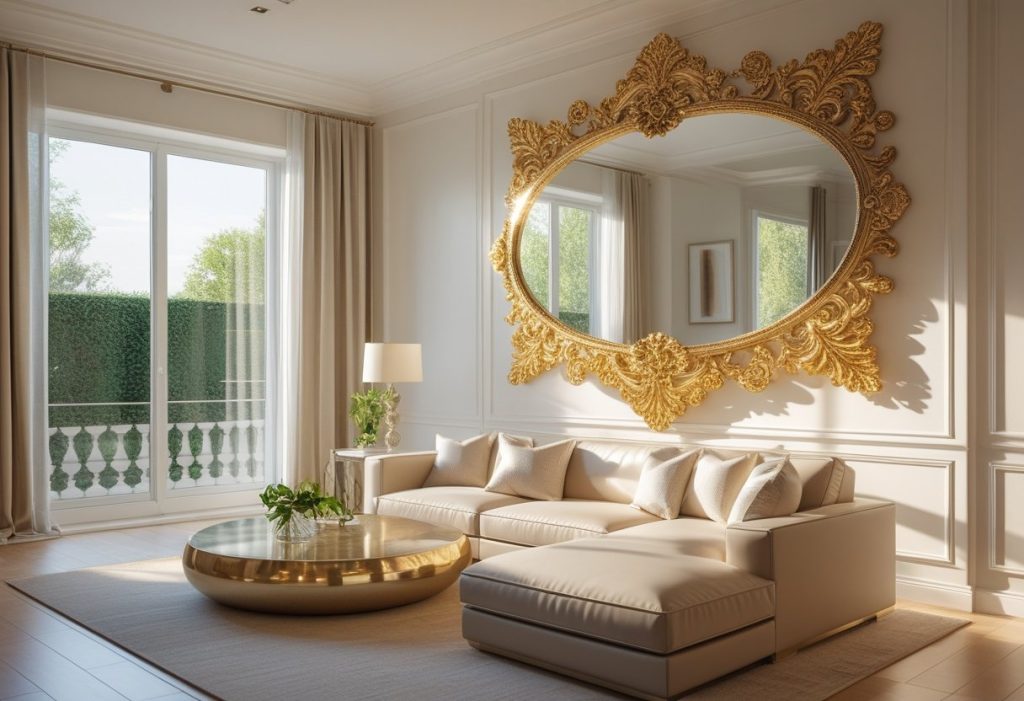
Why Mirror Wall Decor is a Design Essential
Mirrors possess a unique duality, combining intense visual appeal with profound practical benefits. Understanding this is key to using them effectively.
The Illusion of Space: Making Rooms Feel Larger
The most celebrated power of mirror wall decor is its ability to visually double your space. By reflecting the room back onto itself, a mirror creates depth and tricks the eye into perceiving a larger area. This is especially powerful in smaller apartments, narrow hallways, or cozy dining rooms. Placing a large mirror on the largest wall or opposite a window can make a cramped room feel open and airy.
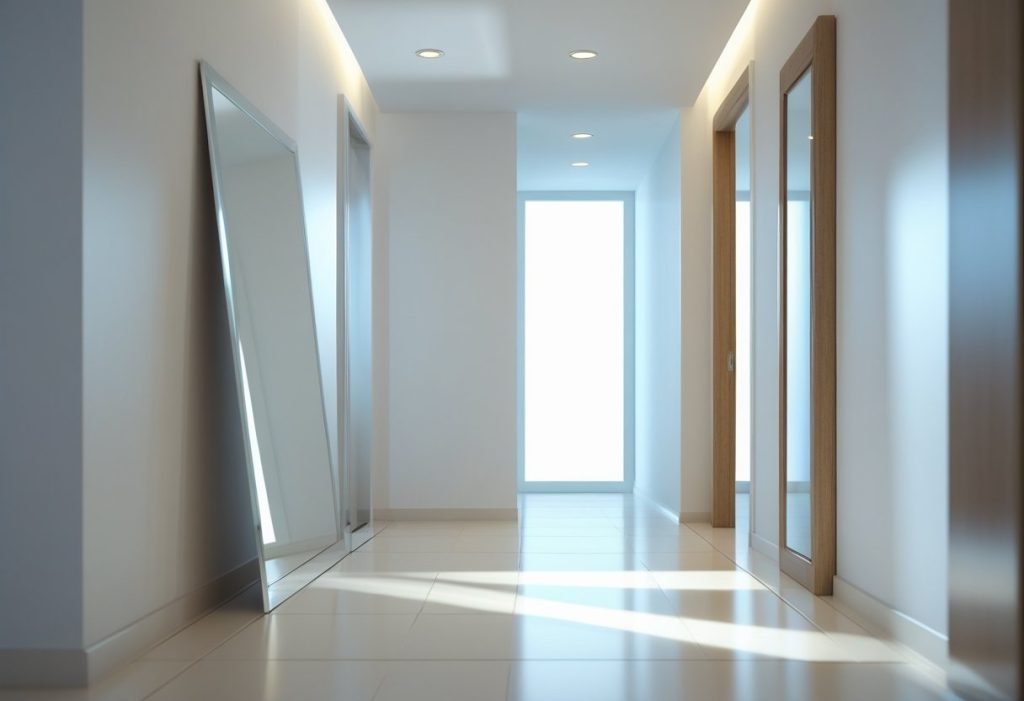
Amplifying Natural and Artificial Light
Light is the lifeblood of any room. Mirrors act as amplifiers for both natural sunlight and interior lighting. A mirror placed directly across from a window will bounce sunlight throughout the room, reducing the need for artificial light during the day and creating a brighter, more cheerful atmosphere. Similarly, positioning a mirror to reflect a beautiful statement light fixture or a cluster of lamps will double its glow and impact.
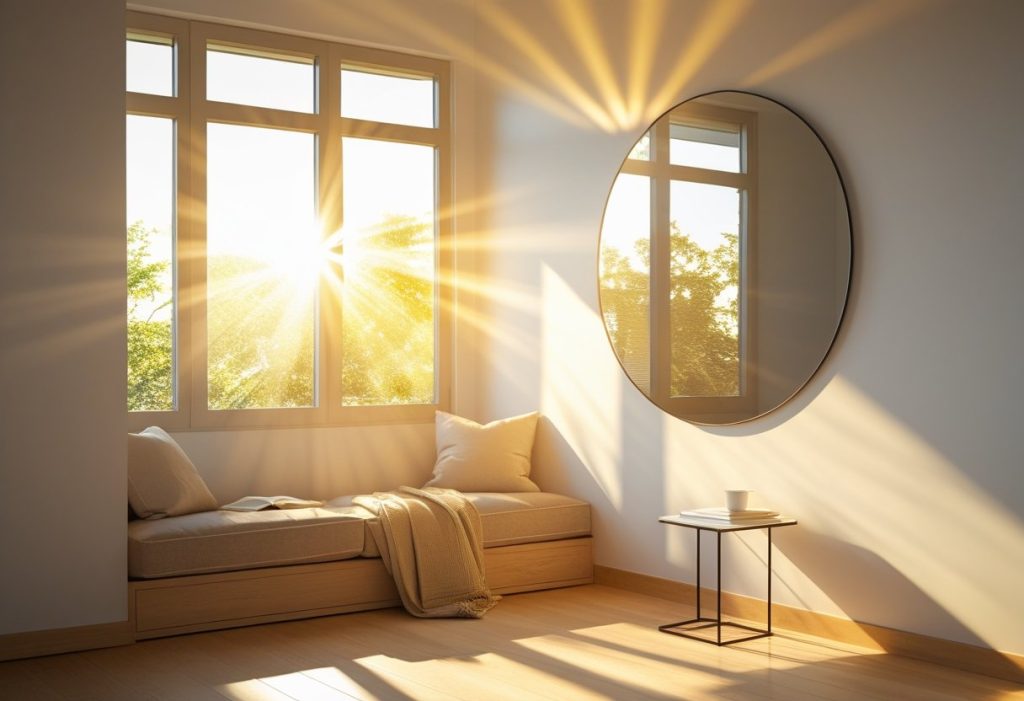
Creating a Focal Point and Adding Drama
A well-chosen mirror is a work of art. An ornate, gilded mirror above a fireplace commands attention and adds a dose of grandeur. A large, minimalist mirror in a sleek frame can anchor an entire living room. Mirror wall decor draws the eye, establishes a center of visual interest, and sets the tone for the entire space. It can be the star of the show or a supporting actor that enhances other elements.
Enhancing Home Value and Appeal
Staged homes often feature strategic mirror placement for a reason: it works. Well-executed mirror wall decor makes spaces feel more luxurious, brighter, and larger—all highly desirable traits for potential buyers. It signals thoughtful design and can make your home more memorable in a competitive market.
Exploring the Diverse World of Mirror Styles and Frames
The frame is the personality of the mirror. It dictates the style, mood, and period of the piece. Choosing the right frame is as important as choosing the mirror itself.
Modern and Minimalist Mirrors
Characterized by clean lines, simple geometric shapes, and often thin or absent frames. Think large rectangular panels, perfect circles, and asymmetrical forms. Frames are typically black, white, chrome, brass, or natural wood with a sleek finish. This style is ideal for contemporary, Scandinavian, and industrial interiors. It emphasizes reflection over ornamentation.
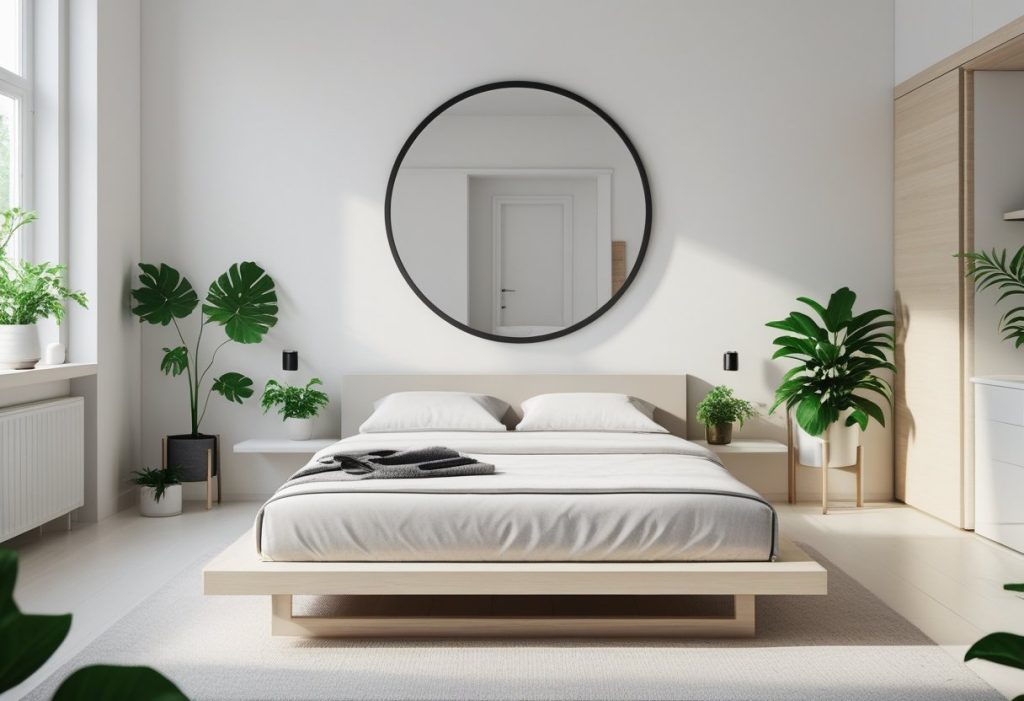
Traditional and Ornate Mirrors
This category evokes classic elegance and history. Frames are often wood or composite materials with intricate carvings, detailing, and finishes like gold leaf, silver leaf, or distressed paint. Sunburst mirrors, baroque-style mirrors with scrollwork, and heavy wooden framed mirrors fall into this category. They are perfect for adding a touch of luxury and formality to traditional, Victorian, or Hollywood Regency spaces.
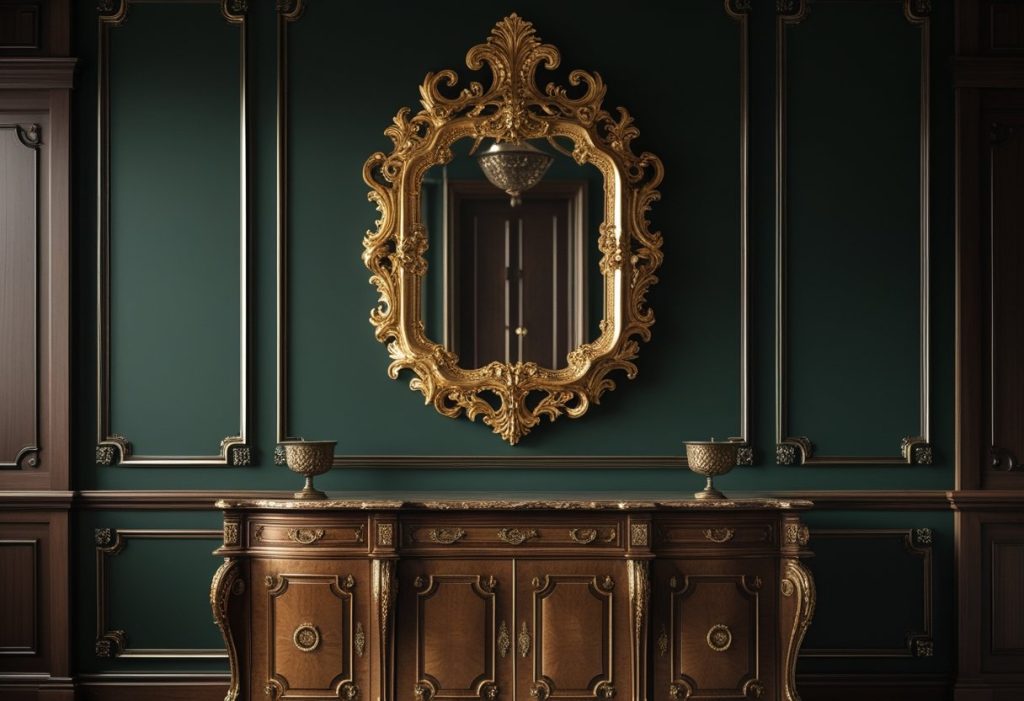
Industrial and Rustic Mirrors
Drawing inspiration from warehouses and nature, this style features raw, unfinished, or repurposed materials. Think mirrors with black iron piping frames, reclaimed barn wood frames, or mirrors with intentionally distressed and worn finishes. They add texture, warmth, and a sense of authenticity to industrial, farmhouse, and rustic decors.
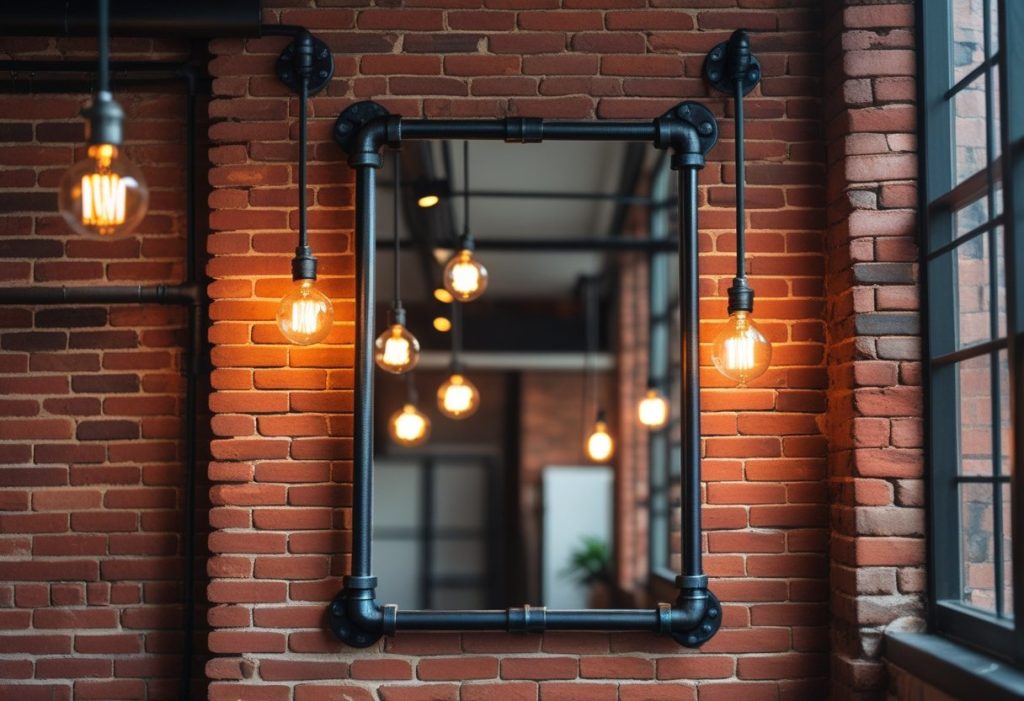
Bohemian and Eclectic Mirrors
Bohemian mirror wall decor is all about uniqueness, texture, and global influence. This includes mirrors with macrame rope hangers, rattan or wicker wrappings, beaded details, or mosaics of smaller mirror tiles. These pieces are artistic, casual, and perfect for adding a personalized, laid-back vibe to a room.
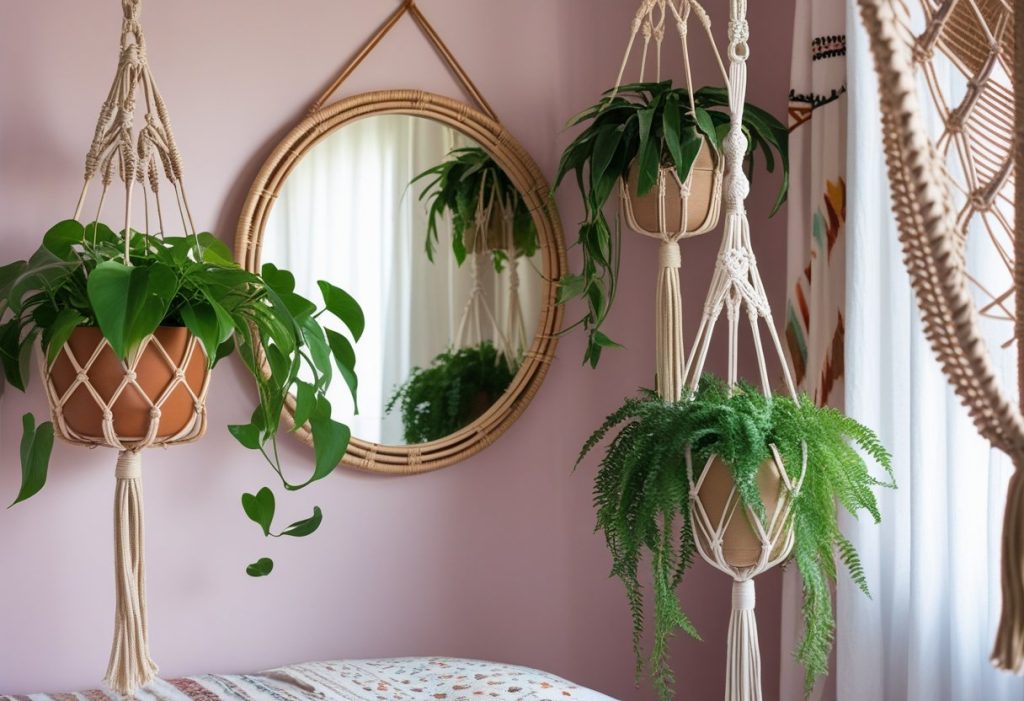
Unframed and Novelty Mirror Mirror Wall Decor
Transform your space with stunning mirror arrangements that amplify light, create depth, and add elegance to any room. Discover the art of reflective decor.
Benefits of Mirror Decor
- Creates illusion of space in small rooms
- Amplifies natural and artificial light
- Enhances room aesthetics and style
- Serves as a captivating focal point
- Increases perceived value of your home
Popular Mirror Styles
Modern Minimalist
Traditional Ornate
Industrial
Bohemian
Frequently Asked QuestionsWhat is the best way to choose the right size mirror for a wall?
A good rule of thumb is that the mirror should occupy between 50% to 75% of the width of the furniture it’s hanging above (like a console table or sofa). For a large blank wall, the mirror should be significant enough to command attention without overwhelming the space. Always use painter’s tape to mark out the dimensions on the wall before purchasing to visualize the scale.
Is it bad feng shui to have a mirror facing the bed?
In traditional feng shui, it is generally advised to avoid placing a mirror directly opposite the bed. The belief is that it can disrupt sleep by bouncing energy around the room and can be startling upon waking. If you have this setup and are uncomfortable, simply
Can I use mirror wall decor in a bathroomAbsolutely. Mirrors are essential in bathrooms. For a cohesive look, consider the style of your vanity and lighting. A large mirror behind the vanity or two smaller mirrors above each sink are popular choices. Ensure the mirror is properly sealed and installed to withstand humidity.
How do I prevent my mirrors from getting cloudy spots?Cloudy spots are often caused by moisture penetrating the protective backing of the mirror, usually due to cleaning with overly wet solutions or exposure to high humidity. To prevent this, avoid spraying liquid directly on the mirror, ensure your bathroom is well-ventilated, and clean mirrors with a damp (not wet) cloth followed by a dry one.
Transform Your Space Today
Explore our curated collection of mirror wall decor ideas and find the perfect pieces to reflect your unique style and enhance your living space.
Get Inspired Now
Mirror Wall Decor
Transform your space with stunning mirror arrangements that amplify light, create depth, and add elegance to any room. Discover the art of reflective decor.
Benefits of Mirror Decor
- Creates illusion of space in small rooms
- Amplifies natural and artificial light
- Enhances room aesthetics and style
- Serves as a captivating focal point
- Increases perceived value of your home
Popular Mirror Styles
Modern Minimalist
Traditional Ornate
Industrial
Bohemian
Frequently Asked Questions
What is the best way to choose the right size mirror for a wall?
A good rule of thumb is that the mirror should occupy between 50% to 75% of the width of the furniture it’s hanging above (like a console table or sofa). For a large blank wall, the mirror should be significant enough to command attention without overwhelming the space. Always use painter’s tape to mark out the dimensions on the wall before purchasing to visualize the scale.
Is it bad feng shui to have a mirror facing the bed?In traditional feng shui, it is generally advised to avoid placing a mirror directly opposite the bed. The belief is that it can disrupt sleep by bouncing energy around the room and can be startling upon waking. If you have this setup and are uncomfortable, simply
Can I use mirror wall decor in a bathroomAbsolutely. Mirrors are essential in bathrooms. For a cohesive look, consider the style of your vanity and lighting. A large mirror behind the vanity or two smaller mirrors above each sink are popular choices. Ensure the mirror is properly sealed and installed to withstand humidity.
How do I prevent my mirrors from getting cloudy spots?
Cloudy spots are often caused by moisture penetrating the protective backing of the mirror, usually due to cleaning with overly wet solutions or exposure to high humidity. To prevent this, avoid spraying liquid directly on the mirror, ensure your bathroom is well-ventilated, and clean mirrors with a damp (not wet) cloth followed by a dry one.
Transform Your Space Today
Explore our curated collection of mirror wall decor ideas and find the perfect pieces to reflect your unique style and enhance your living space.
Get Inspired Now
Strategic Placement: Where to Hang Your Mirror Wall Decor
Where you hang your mirror is just as critical as which mirror you choose. Proper placement maximizes its functional and aesthetic benefits.
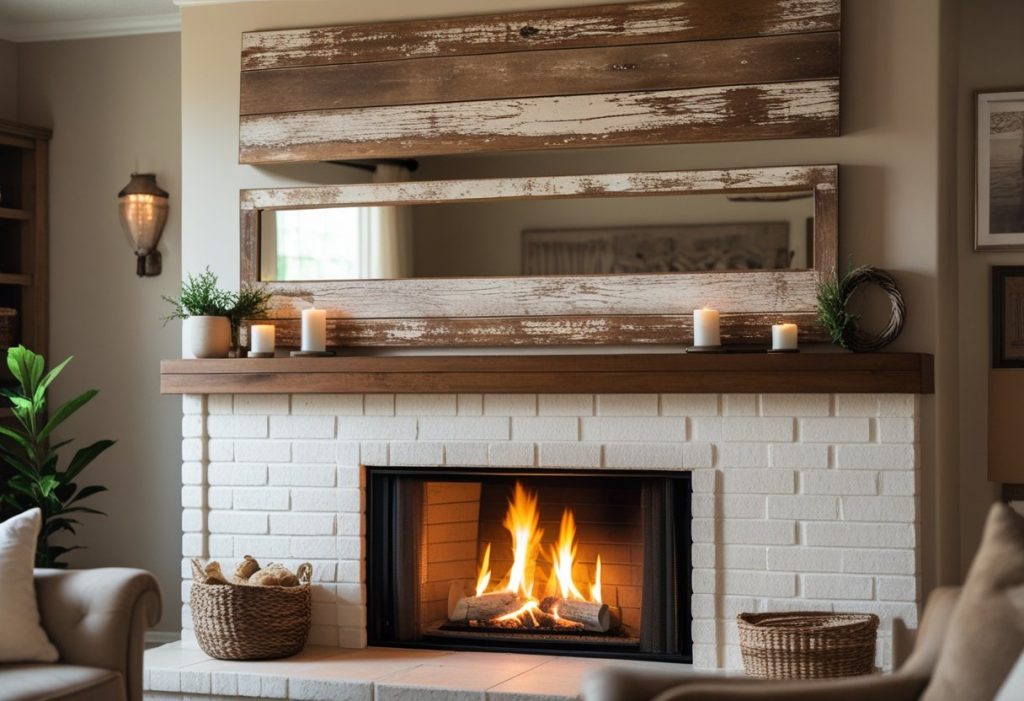
The Golden Rule: Reflecting What You Love
The fundamental rule of mirror placement is simple: a mirror will double whatever it reflects. Therefore, always position it to reflect something attractive. This could be a beautiful outdoor view, an attractive piece of artwork, a stylish seating area, or an appealing light source. Avoid placing mirrors where they will reflect cluttered corners, blank walls, or unsightly areas.
Above the Mantelpiece
The fireplace is often the natural heart of a room. Hanging a mirror above it reinforces this focal point. A large horizontal or ornate mirror works beautifully here, reflecting the room and the movement within it. Ensure the mirror is proportionate to the mantel and the wall—it should feel anchored, not floating or overwhelming.
In the Entryway and Hallways
Entryways are the first impression of your home. A mirror here is both practical for a last-minute check before leaving and excellent for making a typically small space feel welcoming and open. In long, narrow hallways, a series of mirrors or a gallery wall can break up the tunnel effect and add light.
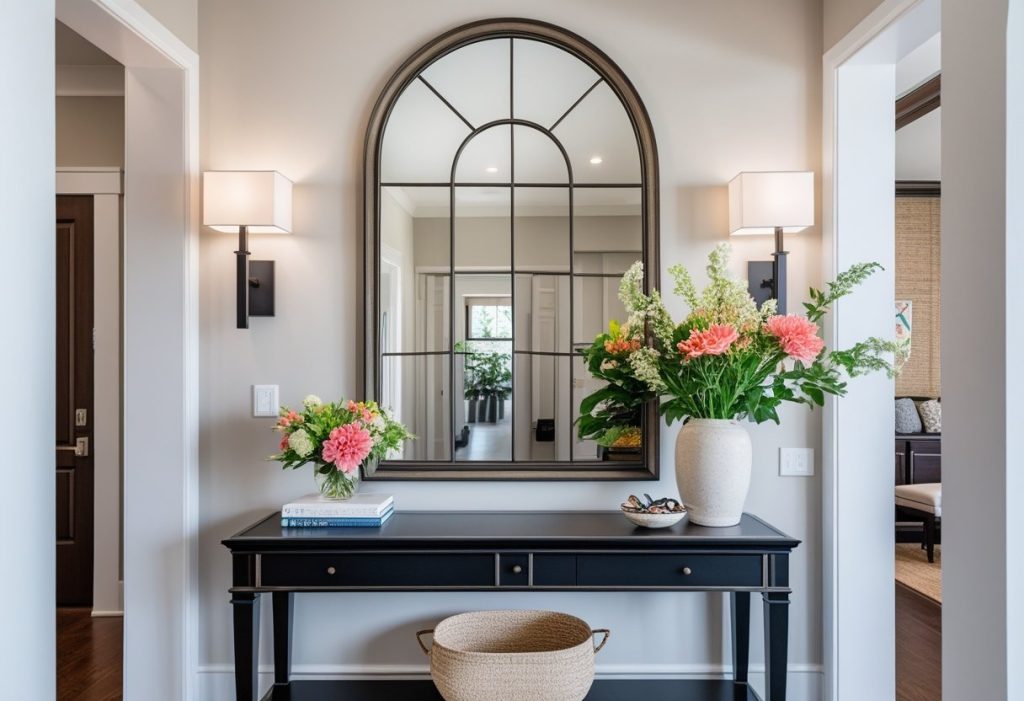
In the Dining Room
A mirror in a dining room can work magic. Placing a large mirror on a wall adjacent to or opposite the dining table makes the space feel grander and more luxurious, perfect for entertaining. It also reflects the glow from a dining chandelier, creating a warmer, more intimate atmosphere during evening gatherings.
In the Bedroom
A full-length mirror is a bedroom necessity, but think beyond the back of the door. A leaning floor mirror adds style, or a large mirror placed strategically can reflect natural light from a window. Avoid placing a mirror directly opposite the bed if it causes discomfort.
In the Living Room
The living room offers the most flexibility. Large mirrors can be placed above sofas or consoles, while smaller accent mirrors can be part of a gallery wall. The goal is to enhance the sense of community and space where people gather.
Creative and Unexpected Places
Mirror Wall Decor
Transform your space with stunning mirror arrangements that amplify light, create depth, and add elegance to any room. Discover the art of reflective decor.
Benefits of Mirror Decor
- Creates illusion of space in small rooms
- Amplifies natural and artificial light
- Enhances room aesthetics and style
- Serves as a captivating focal point
- Increases perceived value of your home
Popular Mirror Styles
Modern Minimalist
Traditional Ornate
Industrial
Bohemian
Creative Mirror Placement Ideas
Don’t be afraid to break the rules when it comes to mirror wall decor. A mirror in a small bathroom can feel expansive when placed on the back of the door. A collection of small mirrors can create a stunning feature on a landing or in a walk-in closet. Consider placing a mirror behind shelves to make collectibles appear more numerous and to add depth.
For more inspiration on creative placement, check out Architectural Digest’s gallery of mirror ideas. If you’re working with a larger space, our guide to accent wall ideas can help you create a cohesive look.
According to Houzz’s design experts, the key to successful mirror placement is considering both function and aesthetics. Always ensure your mirrors are securely mounted, especially in high-traffic areas.
Frequently Asked Questions
What is the best way to choose the right size mirror for a wall?
A good rule of thumb is that the mirror should occupy between 50% to 75% of the width of the furniture it’s hanging above (like a console table or sofa). For a large blank wall, the mirror should be significant enough to command attention without overwhelming the space. Always use painter’s tape to mark out the dimensions on the wall before purchasing to visualize the scale.
Is it bad feng shui to have a mirror facing the bed?
In traditional feng shui, it is generally advised to avoid placing a mirror directly opposite the bed. The belief is that it can disrupt sleep by bouncing energy around the room and can be startling upon waking. If you have this setup and are uncomfortable, simply drape a cloth over the mirror at night or reposition it.
Can I use mirror wall decor in a bathroom?
Absolutely. Mirrors are essential in bathrooms. For a cohesive look, consider the style of your vanity and lighting. A large mirror behind the vanity or two smaller mirrors above each sink are popular choices. Ensure the mirror is properly sealed and installed to withstand humidity.
How do I prevent my mirrors from getting cloudy spots?
Cloudy spots are often caused by moisture penetrating the protective backing of the mirror, usually due to cleaning with overly wet solutions or exposure to high humidity. To prevent this, avoid spraying liquid directly on the mirror, ensure your bathroom is well-ventilated, and clean mirrors with a damp (not wet) cloth followed by a dry one.
Transform Your Space Today
Explore our curated collection of mirror wall decor ideas and find the perfect pieces to reflect your unique style and enhance your living space.
Get Inspired Now
// FAQ functionality
document.querySelectorAll(‘.faq-question’).forEach(question => {
question.addEventListener(‘click’, () => {
const item = question.parentNode;
item.classList.toggle(‘active’);
});
});
// Add subtle animation to header text
const mirrorText = document.querySelector(‘.mirror-animation’);
setInterval(() => {
mirrorText.classList.toggle(‘mirror-animation’);
setTimeout(() => {
mirrorText.classList.toggle(‘mirror-animation’);
}, 100);
}, 10000);
// Add shine effect on hover to cards
const cards = document.querySelectorAll(‘.card’);
cards.forEach(card => {
card.addEventListener(‘mouseover’, () => {
card.classList.add(‘shine’);
});
card.addEventListener(‘mouseout’, () => {
card.classList.remove(‘shine’);
});
});
The Art of the Mirror Gallery Wall
A gallery wall composed entirely or partly of mirrors is a dynamic and sophisticated way to make a massive style statement.
Why a Mirror Gallery Wall Works
It combines the space-enhancing and light-reflecting properties of mirrors with the curated, personal feel of an art collection. It creates a multifaceted focal point that is constantly changing based on the angle of view and the time of day.
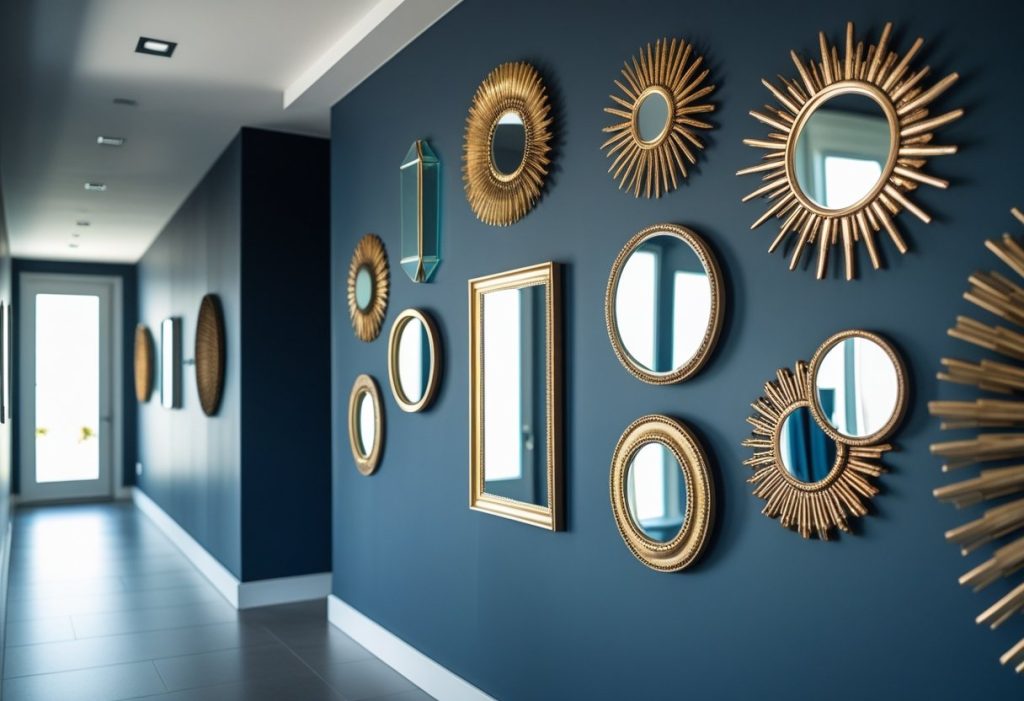
Choosing a Theme for Cohesion
The key to a successful gallery wall is cohesion. Choose a unifying theme to prevent it from looking messy.
- Shape Theme: Use all circular mirrors or all hexagonal mirrors.
- Frame Theme: Use all gold-frames, all black frames, or all natural wood frames, even if the mirror shapes differ.
- Style Theme: Stick to all antique mirrors or all modern mirrors.
Planning Your Layout: The Paper Trick
Never start hammering nails blindly.
- Trace each mirror onto craft paper or newspaper and cut out the shapes.
- Label each paper cutout.
- Tape these templates to the wall using painter’s tape.
- Rearrange them until you find a layout you love. This allows you to visualize the arrangement without putting dozens of holes in your wall.
Arrangement Patterns and Ideas
- The Grid: Perfect for a collection of mirrors that are all the same size and shape. Offers a clean, modern, and orderly look.
- The Asymmetrical Cluster: A more organic and eclectic approach. Mix and match different sizes and shapes, keeping them relatively close together to form one large, interesting shape.
- The Linear Arrangement: Hanging mirrors in a straight horizontal or vertical line works well in stairwells or above a long console table.
DIY Mirror Wall Decor Projects
Creating your own mirror wall decor is a rewarding way to get a custom look for a fraction of the price. It allows for complete personalization.
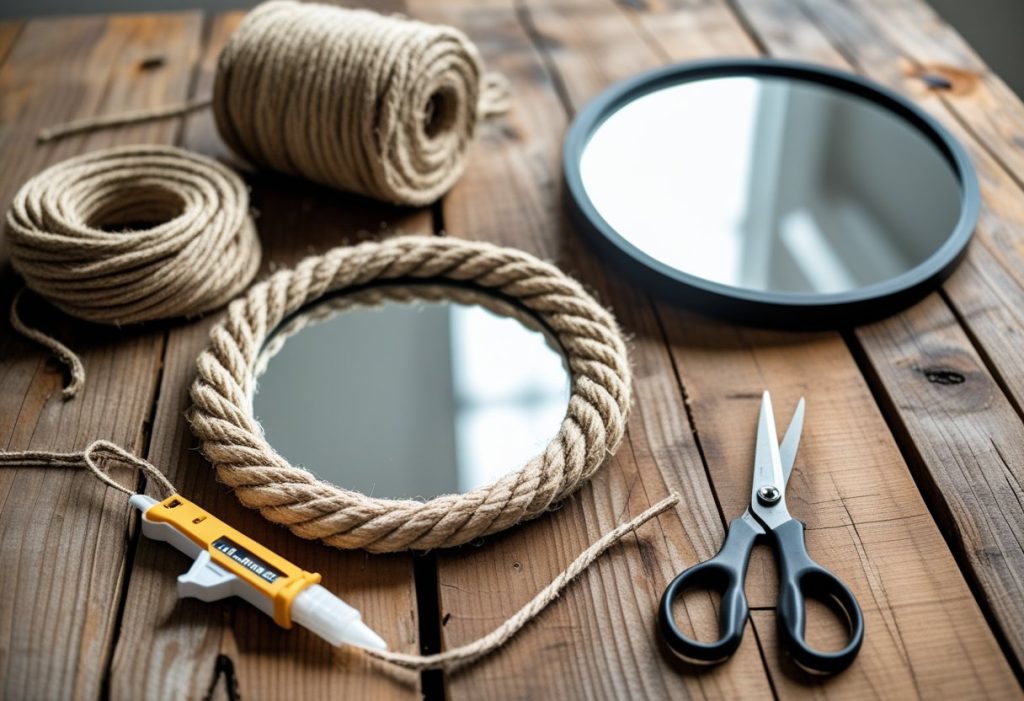
Project 1: The Modern Rope-Wrapped Mirror
Materials: Plain round or rectangular mirror, 1/4″ thick natural or colored manila rope, strong adhesive (E6000 or a hot glue gun), scissors.
Steps:
- Ensure the mirror surface is clean and dry.
- Starting at the top center of the mirror’s edge, apply a 2-inch line of glue.
- Press the end of the rope firmly into the glue.
- Continue applying glue in small sections and wrapping the rope tightly around the edge of the mirror, ensuring each coil is flush against the last.
- When you reach the end, cut the rope and secure the end with a final dab of glue. Tuck it under the previous coil for a neat finish.
This creates a beautiful coastal or natural-style mirror.
Project 2: Upcycled Thrift Store Mirror Makeover
Materials: An old, dated mirror from a thrift store, sandpaper, primer, spray paint or acrylic paint in your color of choice, painter’s tape (if needed).Steps:
- Clean the mirror and frame thoroughly.
- Use painter’s tape and newspaper to mask off the mirror glass completely.
- Lightly sand the frame to help the new paint adhere.
- Apply a coat of primer and let it dry.
- Apply 2-3 light, even coats of spray paint or brush-on acrylic paint, allowing drying time between coats.
A can of gold spray paint can transform a tacky ’80s mirror into a glamorous art deco piece.
Project 3: A Mosaic of Mirror Tiles
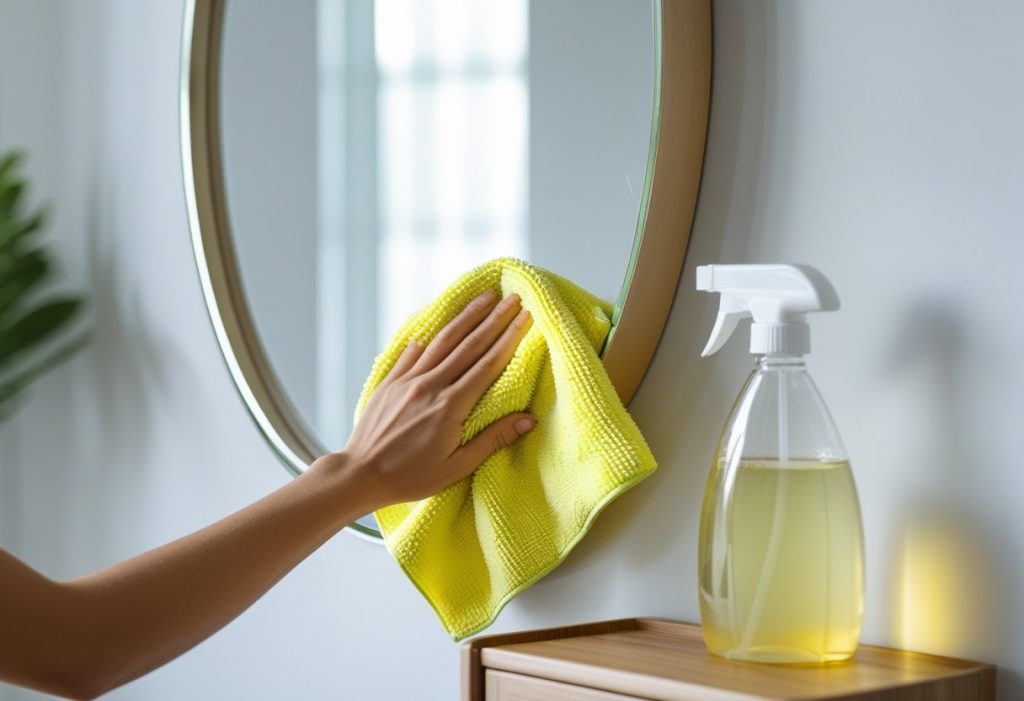
Materials: Individual mirror tiles (available at craft stores), a large piece of wood or MDF as a base, strong adhesive, grout (optional), safety gloves.
Steps:
- Plan your design on the base board. You can create a geometric pattern, a random mosaic, or a specific shape.
- Wearing gloves to protect your hands from sharp edges, carefully apply adhesive to the back of a tile and press it firmly onto the board.
- Continue until your design is complete.
- For a true mosaic look, you can apply grout between the tiles once the adhesive is dry, wiping away excess from the mirror surfaces immediately.
Measuring, Hanging, and Installing Mirrors Safely
A beautiful mirror installation is a safe one. The method you choose depends entirely on the mirror’s size and weight.
Choosing the Right Hardware
- Picture Hooks: Suitable for small, lightweight mirrors. Check the weight rating on the package.
- D-Rings and Wire: For medium-weight mirrors. D-rings are screwed into the back of the frame, and a taut wire is strung between them. This allows for some adjustment when hanging on a single hook.
- French Cleats: The most secure method for heavy mirrors. One piece is attached to the wall, and the matching angled piece is attached to the mirror. The mirror then locks onto the wall mount. This is highly recommended for large pieces of mirror wall decor.
- J-Channels or Mirror Clips: Often used for unframed, heavy bathroom mirrors. They grip the edges of the mirror securely.
Finding the Perfect Height
A standard rule of thumb is to hang art—and mirrors—so that the center point is approximately 57 to 60 inches from the floor. This aligns with average eye level and creates a comfortable viewing line. Of course, this should be adjusted based on context. A mirror above a sofa should only be 6-10 inches above the back of the sofa.
The Essential Hanging Process
- Measure: Decide on the exact placement and mark the desired top center of the mirror on the wall with a pencil.
- Measure Again: Measure the distance from the top of the mirror’s hanging wire (when pulled taut) to the top of the mirror.
- Mark the Wall: Subtract that distance from your initial mark. This is where your nail or hook needs to go.
- Locate a Stud: For anything but the lightest mirrors, use a stud finder to locate a wall stud and drive your hardware into it. For heavy mirrors not on a stud, you must use appropriate hollow-wall anchors rated for the mirror’s weight.
- Hang and Level: Place the mirror on the hook and use a level to ensure it’s perfectly straight.
Cleaning and Maintaining Your Mirrors
To keep your mirror wall decor looking pristine and crystal-clear, proper cleaning is essential.
The Right Tools and Solutions
Avoid harsh chemicals like ammonia or bleach, which can damage the mirror’s backing over time and cause “black edge,” a deterioration around the sides.
- Ideal Solution: A 50/50 mix of white vinegar and distilled water in a spray bottle. For streak-free shine, add a drop of dish soap.
- Best Cloths: Microfiber cloths are ideal. Paper towels can work but can sometimes leave lint. Never use abrasive pads or scrubbers.
The Streak-Free Cleaning Technique
- Dust the frame first with a dry microfiber cloth.
- Lightly spray your cleaning solution onto the microfiber cloth, not directly onto the mirror. Spraying directly can cause liquid to seep behind the frame and damage the backing.
- Wipe the glass in a circular motion or in an “S” pattern.
- Immediately buff dry with a clean, dry microfiber cloth. The key to no streaks is to not let the solution air dry on the glass.
Advanced Tips and Tricks from Interior Designers
Go from standard to stellar with these professional insights.
- Use Mirrors to Highlight Architecture: Place a mirror to reflect a beautiful archway, a window frame, or other architectural details, thereby celebrating and doubling them.
- Layer Your Lighting: Place a mirror behind or adjacent to a table lamp. The reflection will amplify the warm, ambient glow and make the lamp appear more significant.
- Create a “Window” Where There Isn’t One: In a windowless room or hallway, hang a mirror in a window-style frame. Adding faux shutters or drapes on either side can complete the illusion bringing light and a sense of the outdoors inside.
- Mix Mirrors with Art: In a gallery wall, don’t be afraid to mix mirrors with paintings, prints, and photographs. The mirrors will break up the visual density and add light and reflection to the collection.
- Think Beyond the Wall: Don’t forget about leaning mirrors. A large floor mirror leaning against a wall is incredibly stylish, less permanent, and perfect for rental homes where drilling is limited.
- Choose Your Design: Sketch your pattern on paper first. A simple horizontal or vertical grid is great for beginners mirror wall decor.
- Prep the Wall: Clean the wall and paint the entire surface with your base color. Let it dry completely.
- Mark the Pattern: Use a pencil, level, and measuring tape to lightly mark your design on the wall. For a grid, mark all the points where the lines will intersect.
- Apply Painter’s Tape: Carefully apply painter’s tape along your pencil lines to create the negative space of your design. Burnish the edges of the tape firmly to prevent paint bleed.
- Paint Over the Tape: Using your accent color, paint over the taped wall. Use a brush for the edges near the tape and a roller for the larger areas. Apply two thin coats for even coverage.
- The Magic Step: Remove the tape while the second coat is still slightly wet. Pull it off slowly at a 45-degree angle to reveal incredibly crisp, clean lines.
- Touch-Ups: Use a small artist’s brush to fix any minor bleeds or mistakes.
What is the best color for an accent wall?
The “best” color is subjective and depends on your goal. Dark, saturated colors like navy blue, forest green, or charcoal grey create drama and make the wall recede. Warm colors like terracotta or mustard yellow add energy and coziness. The best rule is to choose a color you love from an existing element in the room, like a rug, painting, or throw pillow.
Should an accent wall be lighter or darker?
Typically, accent walls are darker than the other three walls to create contrast and a strong focal point. However, in a room with very dark walls, a lighter accent wall (e.g., white or beige) can be used to brighten and highlight a specific area.
Can you have an accent wall in a small room?
Absolutely. A dark accent wall in a small room can actually make it feel larger by adding depth and making the walls feel less defined. Alternatively, a light-colored textural accent wall (like shiplap) adds interest without closing the space in.
Can I use an accent wall behind a TV?
Yes, the wall behind the TV is often a natural focal point. Using a dark color or a subtle texture can help the TV blend into the wall when it’s off. Avoid overly busy patterns directly behind the TV, as they can create visual competition when you’re trying to watch.
What is the current trend for accent walls?
While classic painted walls are always in style, current trends include: Natural textures (wood slats, limewash paint), warm earth tones (terracotta, ochre, sage green), bold patterns (large-scale geometric wallpapers), and functional accent walls (floor-to-ceiling shelving).
Accent Wall Ideas: The Ultimate Guide to Creating a Focal Point
What is an Accent Wall?
An accent wall is the most powerful tool in an interior designer’s kit to transform a room from bland to brilliant without a full-scale renovation. It is a single wall that is differentiated from the others by a unique design, color, texture, or material, creating an intentional and captivating focal point.
The Ultimate Accent Wall Guide
Whether you want to add depth, introduce a pop of color, showcase a textural element, or cleverly incorporate mirror wall decor, a well-executed accent wall can redefine your entire space. This ultimate guide will explore every conceivable accent wall idea, from classic paint and modern wallpaper to innovative 3D panels and functional shelving units. We will provide you with the inspiration, practical know-how, and expert tips to confidently create a stunning accent wall that reflects your personal style.
Why You Need an Accent Wall in Your Home
Accent walls are more than just a trend; they are a fundamental design principle with numerous psychological and aesthetic benefits.
Creating a Dynamic Focal Point
Every well-designed room needs a focal point—a place where the eye lands first. In the absence of natural architecture like a fireplace, an accent wall creates this focal point artificially. It anchors the room, provides a backdrop for key furniture, and gives the space a sense of purpose and order.
Adding Depth and Dimension
Color, pattern, and texture on a single wall can manipulate perception. Dark colors can make a wall seem to recede, adding depth to a shallow room. Textured materials like wood or stone add a tactile, three-dimensional quality that makes the wall feel more dynamic and interesting.
Expressing Personal Style Without Overwhelm
An accent wall allows you to experiment with bold colors, dramatic patterns, or unconventional materials that might feel too intense on all four walls. It’s the perfect way to incorporate a daring design element you love without committing to it for the entire room.
Defining Zones in an Open Floor Plan
In large, open-concept living areas, an accent wall can visually define different zones without building walls. A different color or material behind the dining table set distinguishes it from the living area, creating a sense of separation and coziness.
Choosing the Perfect Wall: The Designer’s Rulebook
The first and most critical step is choosing the right wall. The wrong choice can throw off the room’s balance.
The Natural Focal Point Wall
mirror wall decor This is the most straightforward choice. Look for the wall that naturally draws attention.
- The Wall Behind the Bed: In bedrooms, the wall behind the headboard is the undeniable focal point.
- The Fireplace Wall: In living rooms, the fireplace and mantel are a natural center of attention.
- The Wall Opposite the Entryway: This is the first wall you see when you enter a room, making it a powerful choice for making a strong first impression.
Architectural Feature Walls
Choose a wall that already has interesting architecture to highlight it.
- Walls with Nooks or Recesses: Accentuating these can make them feel intentional and built-in.
- Walls with Slanted Ceilings: An accent color or wallpaper on a sloped ceiling wall can turn an awkward angle into a dramatic feature.
- Wall at the End of a Hallway: This creates a visual destination and makes a long hallway feel shorter and more interesting.
Walls to Avoid
- Walls with Excessive Interruptions: Avoid walls that are broken up by too many doors, windows, or built-in cabinets, as it will be difficult to create a cohesive look.
- Small, Insignificant Walls: Accenting a very small wall can look like an afterthought rather than a statement.
Category 1: Painted Accent Walls (The Classic Approach)
Paint remains the most popular, cost-effective, and versatile way to create an accent wall.
The Bold Color Pop
Choose a color that contrasts significantly with the other walls. A deep navy, emerald green, or terracotta against light grey or white walls is a timeless and dramatic choice. This works exceptionally well in living rooms and bedrooms.
The Subtle Tone-on-Tone
For a more sophisticated and less contrasting look, choose a paint color that is a few shades darker or lighter than the other walls. This creates a subtle, layered effect that adds depth without high contrast.
Painted Patterns: Geometric & Shapes
Move beyond a single block of color.
- Vertical or Horizontal Stripes: Use painter’s tape to create crisp stripes. Vertical stripes can make ceilings feel higher, while horizontal stripes can make a room feel wider.
- Geometric Shapes: Create large triangles, diamonds, or arches for a modern, artistic feel.
- Color Blocking: Use tape to create large, abstract blocks of different colors for a high-energy, modern art effect.
Category 2: Wallpapered & Textured Accent Walls
When paint isn’t enough, wallpaper and textural treatments add unparalleled pattern and depth.
Statement Wallpaper
The options are endless:
- Botanical & Tropical Prints: Lush leaves and large patterns create a vibrant, organic feel.
- Geometric & Abstract Prints: Perfect for mid-century modern or eclectic spaces.
- Murals: A photorealistic mural of a forest, cityscape, or ocean can become a breathtaking window to another world.
- Textured Grasscloths and Weaves: These add natural, tactile texture and a subtle pattern that feels rich and luxurious.
Wood Accent Walls
Wood brings warmth and natural beauty.
- Reclaimed Wood: Weathered barn wood planks add rustic charm and a story.
- Shiplap: Horizontal shiplap boards offer a clean, modern farmhouse vibe.
- Vertical Planks: Vertical wood paneling can make a room feel taller.
- Wood Slats: Thin, evenly spaced wood slats create a modern, rhythmic pattern that plays with light and shadow mirror wall decor.
Stone & Brick Veneers
For organic, rustic, or industrial appeal.
- Stacked Stone: Creates a rustic, cozy feel, perfect for behind a fireplace mirror wall decor.
- Whitewashed Brick: Offers industrial loft charm with a lighter, brighter touch mirror wall decor.
- Thin Brick Veneers: Real brick look without the weight or cost, ideal for feature walls mirror wall decor.
Category 3: Functional & 3D Accent Walls
These walls are not just beautiful; they also serve a purpose or add physical dimension mirror wall decor.
The Shelving Accent Wall
A floor-to-ceiling shelving unit is the ultimate functional accent wall mirror wall decor.
- Built-in Bookshelves: Fill them with books, art objects, and plants for a lived-in, scholarly feel mirror wall decor.
- Floating Shelves: Arrange them in an asymmetrical pattern for a modern, lightweight look. They are perfect for displaying decorative items and small pieces of mirror wall decor.
3D Wall Panels
These modern panels are made from MDF, gypsum, or PVC and are installed directly onto the wall mirror wall decor.
- Geometric Patterns: Hexagons, waves, and cubes add a strong architectural element.
- Organic Patterns: Designs that mimic waves, vines, or dunes feel fluid and modern.
- They are typically painted to match the room, creating incredible shadow play throughout the day mirror wall decor.
The Upholstered Wall
Add softness, luxury, and acoustic dampening with a fabric-covered wall mirror wall decor.
- Button Tufting: For a classic, luxurious headboard feel throughout the entire wall mirror wall decor.
- Simple Fabric Wrap: Stretch and staple fabric over a padded wall for a clean, sound-absorbent surface mirror wall decor.
Incorporating Mirror Wall Decor into Your Accent Wall
This is where our two topics beautifully converge. Mirrors can be integrated into an accent wall to amplify its effect mirror wall decor.
The Mirror Gallery Wall
Create your accent wall entirely from a collection of mirrors. Mix and match different shapes, sizes, and frames for an eclectic look that reflects light and makes the room feel enormous mirror wall decor.
A Large Statement Mirror as the Focal Point
Hang a single, oversized mirror on your painted or wallpapered accent wall. The mirror will reflect the color and pattern, doubling the visual impact of your design choice mirror wall decor.
Mirrors with Integrated Shelving
Use a mirror that also functions as a shelf unit. These designs often have small ledges or recesses for placing candles, plants, or other decor, combining reflection with functionality mirror wall decor.
DIY Tutorial: Creating a Geometric Painted Accent Wall
Skill Level: Beginner-Intermediate
Time: 1-2 Days
Tools: Painter’s Tape, Level, Measuring Tape, Pencil, Paint Brushes, Paint Roller, Drop Cloth.
Steps:
- Choose Your Design: Sketch your pattern on paper first. A simple horizontal or vertical grid is great for beginners mirror wall decor.
- Prep the Wall: Clean the wall and paint the entire surface with your base color. Let it dry completely.
- Mark the Pattern: Use a pencil, level, and measuring tape to lightly mark your design on the wall. For a grid, mark all the points where the lines will intersect.
- Apply Painter’s Tape: Carefully apply painter’s tape along your pencil lines to create the negative space of your design. Burnish the edges of the tape firmly to prevent paint bleed.
- Paint Over the Tape: Using your accent color, paint over the taped wall. Use a brush for the edges near the tape and a roller for the larger areas. Apply two thin coats for even coverage.
- The Magic Step: Remove the tape while the second coat is still slightly wet. Pull it off slowly at a 45-degree angle to reveal incredibly crisp, clean lines.
- Touch-Ups: Use a small artist’s brush to fix any minor bleeds or mistakes.
What is the best color for an accent wall?
The “best” color is subjective and depends on your goal. Dark, saturated colors like navy blue, forest green, or charcoal grey create drama and make the wall recede. Warm colors like terracotta or mustard yellow add energy and coziness. The best rule is to choose a color you love from an existing element in the room, like a rug, painting, or throw pillow.
Should an accent wall be lighter or darker?
Typically, accent walls are darker than the other three walls to create contrast and a strong focal point. However, in a room with very dark walls, a lighter accent wall (e.g., white or beige) can be used to brighten and highlight a specific area.
Can you have an accent wall in a small room?
Absolutely. A dark accent wall in a small room can actually make it feel larger by adding depth and making the walls feel less defined. Alternatively, a light-colored textural accent wall (like shiplap) adds interest without closing the space in.
Can I use an accent wall behind a TV?
Yes, the wall behind the TV is often a natural focal point. Using a dark color or a subtle texture can help the TV blend into the wall when it’s off. Avoid overly busy patterns directly behind the TV, as they can create visual competition when you’re trying to watch.
What is the current trend for accent walls?
While classic painted walls are always in style, current trends include: Natural textures (wood slats, limewash paint), warm earth tones (terracotta, ochre, sage green), bold patterns (large-scale geometric wallpapers), and functional accent walls (floor-to-ceiling shelving).
Accent Wall Ideas: The Ultimate Guide to Creating a Focal Point
What is an Accent Wall?
An accent wall is the most powerful tool in an interior designer’s kit to transform a room from bland to brilliant without a full-scale renovation. It is a single wall that is differentiated from the others by a unique design, color, texture, or material, creating an intentional and captivating focal point.
The Ultimate Accent Wall Guide
Whether you want to add depth, introduce a pop of color, showcase a textural element, or cleverly incorporate mirror wall decor, a well-executed accent wall can redefine your entire space. This ultimate guide will explore every conceivable accent wall idea, from classic paint and modern wallpaper to innovative 3D panels and functional shelving units. We will provide you with the inspiration, practical know-how, and expert tips to confidently create a stunning accent wall that reflects your personal style.
Why You Need an Accent Wall in Your Home
Accent walls are more than just a trend; they are a fundamental design principle with numerous psychological and aesthetic benefits.
Creating a Dynamic Focal Point
Every well-designed room needs a focal point—a place where the eye lands first. In the absence of natural architecture like a fireplace, an accent wall creates this focal point artificially. It anchors the room, provides a backdrop for key furniture, and gives the space a sense of purpose and order.
Adding Depth and Dimension
Color, pattern, and texture on a single wall can manipulate perception. Dark colors can make a wall seem to recede, adding depth to a shallow room. Textured materials like wood or stone add a tactile, three-dimensional quality that makes the wall feel more dynamic and interesting.
Expressing Personal Style Without Overwhelm
An accent wall allows you to experiment with bold colors, dramatic patterns, or unconventional materials that might feel too intense on all four walls. It’s the perfect way to incorporate a daring design element you love without committing to it for the entire room.
Defining Zones in an Open Floor Plan
In large, open-concept living areas, an accent wall can visually define different zones without building walls. A different color or material behind the dining table set distinguishes it from the living area, creating a sense of separation and coziness.
Choosing the Perfect Wall: The Designer’s Rulebook
The first and most critical step is choosing the right wall. The wrong choice can throw off the room’s balance.
The Natural Focal Point Wall
mirror wall decor This is the most straightforward choice. Look for the wall that naturally draws attention.
- The Wall Behind the Bed: In bedrooms, the wall behind the headboard is the undeniable focal point.
- The Fireplace Wall: In living rooms, the fireplace and mantel are a natural center of attention.
- The Wall Opposite the Entryway: This is the first wall you see when you enter a room, making it a powerful choice for making a strong first impression.
Architectural Feature Walls
Choose a wall that already has interesting architecture to highlight it.
- Walls with Nooks or Recesses: Accentuating these can make them feel intentional and built-in.
- Walls with Slanted Ceilings: An accent color or wallpaper on a sloped ceiling wall can turn an awkward angle into a dramatic feature.
- Wall at the End of a Hallway: This creates a visual destination and makes a long hallway feel shorter and more interesting.
Walls to Avoid
- Walls with Excessive Interruptions: Avoid walls that are broken up by too many doors, windows, or built-in cabinets, as it will be difficult to create a cohesive look.
- Small, Insignificant Walls: Accenting a very small wall can look like an afterthought rather than a statement.
Category 1: Painted Accent Walls (The Classic Approach)
Paint remains the most popular, cost-effective, and versatile way to create an accent wall.
The Bold Color Pop
Choose a color that contrasts significantly with the other walls. A deep navy, emerald green, or terracotta against light grey or white walls is a timeless and dramatic choice. This works exceptionally well in living rooms and bedrooms.
The Subtle Tone-on-Tone
For a more sophisticated and less contrasting look, choose a paint color that is a few shades darker or lighter than the other walls. This creates a subtle, layered effect that adds depth without high contrast.
Painted Patterns: Geometric & Shapes
Move beyond a single block of color.
- Vertical or Horizontal Stripes: Use painter’s tape to create crisp stripes. Vertical stripes can make ceilings feel higher, while horizontal stripes can make a room feel wider.
- Geometric Shapes: Create large triangles, diamonds, or arches for a modern, artistic feel.
- Color Blocking: Use tape to create large, abstract blocks of different colors for a high-energy, modern art effect.
Category 2: Wallpapered & Textured Accent Walls
When paint isn’t enough, wallpaper and textural treatments add unparalleled pattern and depth.
Statement Wallpaper
The options are endless:
- Botanical & Tropical Prints: Lush leaves and large patterns create a vibrant, organic feel.
- Geometric & Abstract Prints: Perfect for mid-century modern or eclectic spaces.
- Murals: A photorealistic mural of a forest, cityscape, or ocean can become a breathtaking window to another world.
- Textured Grasscloths and Weaves: These add natural, tactile texture and a subtle pattern that feels rich and luxurious.
Wood Accent Walls
Wood brings warmth and natural beauty.
- Reclaimed Wood: Weathered barn wood planks add rustic charm and a story.
- Shiplap: Horizontal shiplap boards offer a clean, modern farmhouse vibe.
- Vertical Planks: Vertical wood paneling can make a room feel taller.
- Wood Slats: Thin, evenly spaced wood slats create a modern, rhythmic pattern that plays with light and shadow mirror wall decor.
Stone & Brick Veneers
For organic, rustic, or industrial appeal.
- Stacked Stone: Creates a rustic, cozy feel, perfect for behind a fireplace mirror wall decor.
- Whitewashed Brick: Offers industrial loft charm with a lighter, brighter touch mirror wall decor.
- Thin Brick Veneers: Real brick look without the weight or cost, ideal for feature walls mirror wall decor.
Category 3: Functional & 3D Accent Walls
These walls are not just beautiful; they also serve a purpose or add physical dimension mirror wall decor.
The Shelving Accent Wall
A floor-to-ceiling shelving unit is the ultimate functional accent wall mirror wall decor.
- Built-in Bookshelves: Fill them with books, art objects, and plants for a lived-in, scholarly feel mirror wall decor.
- Floating Shelves: Arrange them in an asymmetrical pattern for a modern, lightweight look. They are perfect for displaying decorative items and small pieces of mirror wall decor.
3D Wall Panels
These modern panels are made from MDF, gypsum, or PVC and are installed directly onto the wall mirror wall decor.
- Geometric Patterns: Hexagons, waves, and cubes add a strong architectural element.
- Organic Patterns: Designs that mimic waves, vines, or dunes feel fluid and modern.
- They are typically painted to match the room, creating incredible shadow play throughout the day mirror wall decor.
The Upholstered Wall
Add softness, luxury, and acoustic dampening with a fabric-covered wall mirror wall decor.
- Button Tufting: For a classic, luxurious headboard feel throughout the entire wall mirror wall decor.
- Simple Fabric Wrap: Stretch and staple fabric over a padded wall for a clean, sound-absorbent surface mirror wall decor.
Incorporating Mirror Wall Decor into Your Accent Wall
This is where our two topics beautifully converge. Mirrors can be integrated into an accent wall to amplify its effect mirror wall decor.
The Mirror Gallery Wall
Create your accent wall entirely from a collection of mirrors. Mix and match different shapes, sizes, and frames for an eclectic look that reflects light and makes the room feel enormous mirror wall decor.
A Large Statement Mirror as the Focal Point
Hang a single, oversized mirror on your painted or wallpapered accent wall. The mirror will reflect the color and pattern, doubling the visual impact of your design choice mirror wall decor.
Mirrors with Integrated Shelving
Use a mirror that also functions as a shelf unit. These designs often have small ledges or recesses for placing candles, plants, or other decor, combining reflection with functionality mirror wall decor.
DIY Tutorial: Creating a Geometric Painted Accent Wall
Skill Level: Beginner-Intermediate
Time: 1-2 Days
Tools: Painter’s Tape, Level, Measuring Tape, Pencil, Paint Brushes, Paint Roller, Drop Cloth.
Steps:
- Choose Your Design: Sketch your pattern on paper first. A simple horizontal or vertical grid is great for beginners mirror wall decor.
- Prep the Wall: Clean the wall and paint the entire surface with your base color. Let it dry completely.
- Mark the Pattern: Use a pencil, level, and measuring tape to lightly mark your design on the wall. For a grid, mark all the points where the lines will intersect.
- Apply Painter’s Tape: Carefully apply painter’s tape along your pencil lines to create the negative space of your design. Burnish the edges of the tape firmly to prevent paint bleed.
- Paint Over the Tape: Using your accent color, paint over the taped wall. Use a brush for the edges near the tape and a roller for the larger areas. Apply two thin coats for even coverage.
- The Magic Step: Remove the tape while the second coat is still slightly wet. Pull it off slowly at a 45-degree angle to reveal incredibly crisp, clean lines.
- Touch-Ups: Use a small artist’s brush to fix any minor bleeds or mistakes.
What is the best color for an accent wall?
The “best” color is subjective and depends on your goal. Dark, saturated colors like navy blue, forest green, or charcoal grey create drama and make the wall recede. Warm colors like terracotta or mustard yellow add energy and coziness. The best rule is to choose a color you love from an existing element in the room, like a rug, painting, or throw pillow.
Should an accent wall be lighter or darker?
Typically, accent walls are darker than the other three walls to create contrast and a strong focal point. However, in a room with very dark walls, a lighter accent wall (e.g., white or beige) can be used to brighten and highlight a specific area.
Can you have an accent wall in a small room?
Absolutely. A dark accent wall in a small room can actually make it feel larger by adding depth and making the walls feel less defined. Alternatively, a light-colored textural accent wall (like shiplap) adds interest without closing the space in.
Can I use an accent wall behind a TV?
Yes, the wall behind the TV is often a natural focal point. Using a dark color or a subtle texture can help the TV blend into the wall when it’s off. Avoid overly busy patterns directly behind the TV, as they can create visual competition when you’re trying to watch.
What is the current trend for accent walls?
While classic painted walls are always in style, current trends include: Natural textures (wood slats, limewash paint), warm earth tones (terracotta, ochre, sage green), bold patterns (large-scale geometric wallpapers), and functional accent walls (floor-to-ceiling shelving).
Accent Wall Ideas: The Ultimate Guide to Creating a Focal Point
What is an Accent Wall?
An accent wall is the most powerful tool in an interior designer’s kit to transform a room from bland to brilliant without a full-scale renovation. It is a single wall that is differentiated from the others by a unique design, color, texture, or material, creating an intentional and captivating focal point.
The Ultimate Accent Wall Guide
Whether you want to add depth, introduce a pop of color, showcase a textural element, or cleverly incorporate mirror wall decor, a well-executed accent wall can redefine your entire space. This ultimate guide will explore every conceivable accent wall idea, from classic paint and modern wallpaper to innovative 3D panels and functional shelving units. We will provide you with the inspiration, practical know-how, and expert tips to confidently create a stunning accent wall that reflects your personal style.
Why You Need an Accent Wall in Your Home
Accent walls are more than just a trend; they are a fundamental design principle with numerous psychological and aesthetic benefits.
Creating a Dynamic Focal Point
Every well-designed room needs a focal point—a place where the eye lands first. In the absence of natural architecture like a fireplace, an accent wall creates this focal point artificially. It anchors the room, provides a backdrop for key furniture, and gives the space a sense of purpose and order.
Adding Depth and Dimension
Color, pattern, and texture on a single wall can manipulate perception. Dark colors can make a wall seem to recede, adding depth to a shallow room. Textured materials like wood or stone add a tactile, three-dimensional quality that makes the wall feel more dynamic and interesting.
Expressing Personal Style Without Overwhelm
An accent wall allows you to experiment with bold colors, dramatic patterns, or unconventional materials that might feel too intense on all four walls. It’s the perfect way to incorporate a daring design element you love without committing to it for the entire room.
Defining Zones in an Open Floor Plan
In large, open-concept living areas, an accent wall can visually define different zones without building walls. A different color or material behind the dining table set distinguishes it from the living area, creating a sense of separation and coziness.
Choosing the Perfect Wall: The Designer’s Rulebook
The first and most critical step is choosing the right wall. The wrong choice can throw off the room’s balance.
The Natural Focal Point Wall
mirror wall decor This is the most straightforward choice. Look for the wall that naturally draws attention.
- The Wall Behind the Bed: In bedrooms, the wall behind the headboard is the undeniable focal point.
- The Fireplace Wall: In living rooms, the fireplace and mantel are a natural center of attention.
- The Wall Opposite the Entryway: This is the first wall you see when you enter a room, making it a powerful choice for making a strong first impression.
Architectural Feature Walls
Choose a wall that already has interesting architecture to highlight it.
- Walls with Nooks or Recesses: Accentuating these can make them feel intentional and built-in.
- Walls with Slanted Ceilings: An accent color or wallpaper on a sloped ceiling wall can turn an awkward angle into a dramatic feature.
- Wall at the End of a Hallway: This creates a visual destination and makes a long hallway feel shorter and more interesting.
Walls to Avoid
- Walls with Excessive Interruptions: Avoid walls that are broken up by too many doors, windows, or built-in cabinets, as it will be difficult to create a cohesive look.
- Small, Insignificant Walls: Accenting a very small wall can look like an afterthought rather than a statement.
Category 1: Painted Accent Walls (The Classic Approach)
Paint remains the most popular, cost-effective, and versatile way to create an accent wall.
The Bold Color Pop
Choose a color that contrasts significantly with the other walls. A deep navy, emerald green, or terracotta against light grey or white walls is a timeless and dramatic choice. This works exceptionally well in living rooms and bedrooms.
The Subtle Tone-on-Tone
For a more sophisticated and less contrasting look, choose a paint color that is a few shades darker or lighter than the other walls. This creates a subtle, layered effect that adds depth without high contrast.
Painted Patterns: Geometric & Shapes
Move beyond a single block of color.
- Vertical or Horizontal Stripes: Use painter’s tape to create crisp stripes. Vertical stripes can make ceilings feel higher, while horizontal stripes can make a room feel wider.
- Geometric Shapes: Create large triangles, diamonds, or arches for a modern, artistic feel.
- Color Blocking: Use tape to create large, abstract blocks of different colors for a high-energy, modern art effect.
Category 2: Wallpapered & Textured Accent Walls
When paint isn’t enough, wallpaper and textural treatments add unparalleled pattern and depth.
Statement Wallpaper
The options are endless:
- Botanical & Tropical Prints: Lush leaves and large patterns create a vibrant, organic feel.
- Geometric & Abstract Prints: Perfect for mid-century modern or eclectic spaces.
- Murals: A photorealistic mural of a forest, cityscape, or ocean can become a breathtaking window to another world.
- Textured Grasscloths and Weaves: These add natural, tactile texture and a subtle pattern that feels rich and luxurious.
Wood Accent Walls
Wood brings warmth and natural beauty.
- Reclaimed Wood: Weathered barn wood planks add rustic charm and a story.
- Shiplap: Horizontal shiplap boards offer a clean, modern farmhouse vibe.
- Vertical Planks: Vertical wood paneling can make a room feel taller.
- Wood Slats: Thin, evenly spaced wood slats create a modern, rhythmic pattern that plays with light and shadow mirror wall decor.
Stone & Brick Veneers
For organic, rustic, or industrial appeal.
- Stacked Stone: Creates a rustic, cozy feel, perfect for behind a fireplace mirror wall decor.
- Whitewashed Brick: Offers industrial loft charm with a lighter, brighter touch mirror wall decor.
- Thin Brick Veneers: Real brick look without the weight or cost, ideal for feature walls mirror wall decor.
Category 3: Functional & 3D Accent Walls
These walls are not just beautiful; they also serve a purpose or add physical dimension mirror wall decor.
The Shelving Accent Wall
A floor-to-ceiling shelving unit is the ultimate functional accent wall mirror wall decor.
- Built-in Bookshelves: Fill them with books, art objects, and plants for a lived-in, scholarly feel mirror wall decor.
- Floating Shelves: Arrange them in an asymmetrical pattern for a modern, lightweight look. They are perfect for displaying decorative items and small pieces of mirror wall decor.
3D Wall Panels
These modern panels are made from MDF, gypsum, or PVC and are installed directly onto the wall mirror wall decor.
- Geometric Patterns: Hexagons, waves, and cubes add a strong architectural element.
- Organic Patterns: Designs that mimic waves, vines, or dunes feel fluid and modern.
- They are typically painted to match the room, creating incredible shadow play throughout the day mirror wall decor.
The Upholstered Wall
Add softness, luxury, and acoustic dampening with a fabric-covered wall mirror wall decor.
- Button Tufting: For a classic, luxurious headboard feel throughout the entire wall mirror wall decor.
- Simple Fabric Wrap: Stretch and staple fabric over a padded wall for a clean, sound-absorbent surface mirror wall decor.
Incorporating Mirror Wall Decor into Your Accent Wall
This is where our two topics beautifully converge. Mirrors can be integrated into an accent wall to amplify its effect mirror wall decor.
The Mirror Gallery Wall
Create your accent wall entirely from a collection of mirrors. Mix and match different shapes, sizes, and frames for an eclectic look that reflects light and makes the room feel enormous mirror wall decor.
A Large Statement Mirror as the Focal Point
Hang a single, oversized mirror on your painted or wallpapered accent wall. The mirror will reflect the color and pattern, doubling the visual impact of your design choice mirror wall decor.
Mirrors with Integrated Shelving
Use a mirror that also functions as a shelf unit. These designs often have small ledges or recesses for placing candles, plants, or other decor, combining reflection with functionality mirror wall decor.
DIY Tutorial: Creating a Geometric Painted Accent Wall
Skill Level: Beginner-Intermediate
Time: 1-2 Days
Tools: Painter’s Tape, Level, Measuring Tape, Pencil, Paint Brushes, Paint Roller, Drop Cloth.
Steps:
- Choose Your Design: Sketch your pattern on paper first. A simple horizontal or vertical grid is great for beginners mirror wall decor.
- Prep the Wall: Clean the wall and paint the entire surface with your base color. Let it dry completely.
- Mark the Pattern: Use a pencil, level, and measuring tape to lightly mark your design on the wall. For a grid, mark all the points where the lines will intersect.
- Apply Painter’s Tape: Carefully apply painter’s tape along your pencil lines to create the negative space of your design. Burnish the edges of the tape firmly to prevent paint bleed.
- Paint Over the Tape: Using your accent color, paint over the taped wall. Use a brush for the edges near the tape and a roller for the larger areas. Apply two thin coats for even coverage.
- The Magic Step: Remove the tape while the second coat is still slightly wet. Pull it off slowly at a 45-degree angle to reveal incredibly crisp, clean lines.
- Touch-Ups: Use a small artist’s brush to fix any minor bleeds or mistakes.
What is the best color for an accent wall?
The “best” color is subjective and depends on your goal. Dark, saturated colors like navy blue, forest green, or charcoal grey create drama and make the wall recede. Warm colors like terracotta or mustard yellow add energy and coziness. The best rule is to choose a color you love from an existing element in the room, like a rug, painting, or throw pillow.
Should an accent wall be lighter or darker?
Typically, accent walls are darker than the other three walls to create contrast and a strong focal point. However, in a room with very dark walls, a lighter accent wall (e.g., white or beige) can be used to brighten and highlight a specific area.
Can you have an accent wall in a small room?
Absolutely. A dark accent wall in a small room can actually make it feel larger by adding depth and making the walls feel less defined. Alternatively, a light-colored textural accent wall (like shiplap) adds interest without closing the space in.
Can I use an accent wall behind a TV?
Yes, the wall behind the TV is often a natural focal point. Using a dark color or a subtle texture can help the TV blend into the wall when it’s off. Avoid overly busy patterns directly behind the TV, as they can create visual competition when you’re trying to watch.
What is the current trend for accent walls?
While classic painted walls are always in style, current trends include: Natural textures (wood slats, limewash paint), warm earth tones (terracotta, ochre, sage green), bold patterns (large-scale geometric wallpapers), and functional accent walls (floor-to-ceiling shelving).
Accent Wall Ideas: The Ultimate Guide to Creating a Focal Point
What is an Accent Wall?
An accent wall is the most powerful tool in an interior designer’s kit to transform a room from bland to brilliant without a full-scale renovation. It is a single wall that is differentiated from the others by a unique design, color, texture, or material, creating an intentional and captivating focal point.
The Ultimate Accent Wall Guide
Whether you want to add depth, introduce a pop of color, showcase a textural element, or cleverly incorporate mirror wall decor, a well-executed accent wall can redefine your entire space. This ultimate guide will explore every conceivable accent wall idea, from classic paint and modern wallpaper to innovative 3D panels and functional shelving units. We will provide you with the inspiration, practical know-how, and expert tips to confidently create a stunning accent wall that reflects your personal style.
Why You Need an Accent Wall in Your Home
Accent walls are more than just a trend; they are a fundamental design principle with numerous psychological and aesthetic benefits.
Creating a Dynamic Focal Point
Every well-designed room needs a focal point—a place where the eye lands first. In the absence of natural architecture like a fireplace, an accent wall creates this focal point artificially. It anchors the room, provides a backdrop for key furniture, and gives the space a sense of purpose and order.
Adding Depth and Dimension
Color, pattern, and texture on a single wall can manipulate perception. Dark colors can make a wall seem to recede, adding depth to a shallow room. Textured materials like wood or stone add a tactile, three-dimensional quality that makes the wall feel more dynamic and interesting.
Expressing Personal Style Without Overwhelm
An accent wall allows you to experiment with bold colors, dramatic patterns, or unconventional materials that might feel too intense on all four walls. It’s the perfect way to incorporate a daring design element you love without committing to it for the entire room.
Defining Zones in an Open Floor Plan
In large, open-concept living areas, an accent wall can visually define different zones without building walls. A different color or material behind the dining table set distinguishes it from the living area, creating a sense of separation and coziness.
Choosing the Perfect Wall: The Designer’s Rulebook
The first and most critical step is choosing the right wall. The wrong choice can throw off the room’s balance.
The Natural Focal Point Wall
mirror wall decor This is the most straightforward choice. Look for the wall that naturally draws attention.
- The Wall Behind the Bed: In bedrooms, the wall behind the headboard is the undeniable focal point.
- The Fireplace Wall: In living rooms, the fireplace and mantel are a natural center of attention.
- The Wall Opposite the Entryway: This is the first wall you see when you enter a room, making it a powerful choice for making a strong first impression.
Architectural Feature Walls
Choose a wall that already has interesting architecture to highlight it.
- Walls with Nooks or Recesses: Accentuating these can make them feel intentional and built-in.
- Walls with Slanted Ceilings: An accent color or wallpaper on a sloped ceiling wall can turn an awkward angle into a dramatic feature.
- Wall at the End of a Hallway: This creates a visual destination and makes a long hallway feel shorter and more interesting.
Walls to Avoid
- Walls with Excessive Interruptions: Avoid walls that are broken up by too many doors, windows, or built-in cabinets, as it will be difficult to create a cohesive look.
- Small, Insignificant Walls: Accenting a very small wall can look like an afterthought rather than a statement.
Category 1: Painted Accent Walls (The Classic Approach)
Paint remains the most popular, cost-effective, and versatile way to create an accent wall.
The Bold Color Pop
Choose a color that contrasts significantly with the other walls. A deep navy, emerald green, or terracotta against light grey or white walls is a timeless and dramatic choice. This works exceptionally well in living rooms and bedrooms.
The Subtle Tone-on-Tone
For a more sophisticated and less contrasting look, choose a paint color that is a few shades darker or lighter than the other walls. This creates a subtle, layered effect that adds depth without high contrast.
Painted Patterns: Geometric & Shapes
Move beyond a single block of color.
- Vertical or Horizontal Stripes: Use painter’s tape to create crisp stripes. Vertical stripes can make ceilings feel higher, while horizontal stripes can make a room feel wider.
- Geometric Shapes: Create large triangles, diamonds, or arches for a modern, artistic feel.
- Color Blocking: Use tape to create large, abstract blocks of different colors for a high-energy, modern art effect.
Category 2: Wallpapered & Textured Accent Walls
When paint isn’t enough, wallpaper and textural treatments add unparalleled pattern and depth.
Statement Wallpaper
The options are endless:
- Botanical & Tropical Prints: Lush leaves and large patterns create a vibrant, organic feel.
- Geometric & Abstract Prints: Perfect for mid-century modern or eclectic spaces.
- Murals: A photorealistic mural of a forest, cityscape, or ocean can become a breathtaking window to another world.
- Textured Grasscloths and Weaves: These add natural, tactile texture and a subtle pattern that feels rich and luxurious.
Wood Accent Walls
Wood brings warmth and natural beauty.
- Reclaimed Wood: Weathered barn wood planks add rustic charm and a story.
- Shiplap: Horizontal shiplap boards offer a clean, modern farmhouse vibe.
- Vertical Planks: Vertical wood paneling can make a room feel taller.
- Wood Slats: Thin, evenly spaced wood slats create a modern, rhythmic pattern that plays with light and shadow mirror wall decor.
Stone & Brick Veneers
For organic, rustic, or industrial appeal.
- Stacked Stone: Creates a rustic, cozy feel, perfect for behind a fireplace mirror wall decor.
- Whitewashed Brick: Offers industrial loft charm with a lighter, brighter touch mirror wall decor.
- Thin Brick Veneers: Real brick look without the weight or cost, ideal for feature walls mirror wall decor.
Category 3: Functional & 3D Accent Walls
These walls are not just beautiful; they also serve a purpose or add physical dimension mirror wall decor.
The Shelving Accent Wall
A floor-to-ceiling shelving unit is the ultimate functional accent wall mirror wall decor.
- Built-in Bookshelves: Fill them with books, art objects, and plants for a lived-in, scholarly feel mirror wall decor.
- Floating Shelves: Arrange them in an asymmetrical pattern for a modern, lightweight look. They are perfect for displaying decorative items and small pieces of mirror wall decor.
3D Wall Panels
These modern panels are made from MDF, gypsum, or PVC and are installed directly onto the wall mirror wall decor.
- Geometric Patterns: Hexagons, waves, and cubes add a strong architectural element.
- Organic Patterns: Designs that mimic waves, vines, or dunes feel fluid and modern.
- They are typically painted to match the room, creating incredible shadow play throughout the day mirror wall decor.
The Upholstered Wall
Add softness, luxury, and acoustic dampening with a fabric-covered wall mirror wall decor.
- Button Tufting: For a classic, luxurious headboard feel throughout the entire wall mirror wall decor.
- Simple Fabric Wrap: Stretch and staple fabric over a padded wall for a clean, sound-absorbent surface mirror wall decor.
Incorporating Mirror Wall Decor into Your Accent Wall
This is where our two topics beautifully converge. Mirrors can be integrated into an accent wall to amplify its effect mirror wall decor.
The Mirror Gallery Wall
Create your accent wall entirely from a collection of mirrors. Mix and match different shapes, sizes, and frames for an eclectic look that reflects light and makes the room feel enormous mirror wall decor.
A Large Statement Mirror as the Focal Point
Hang a single, oversized mirror on your painted or wallpapered accent wall. The mirror will reflect the color and pattern, doubling the visual impact of your design choice mirror wall decor.
Mirrors with Integrated Shelving
Use a mirror that also functions as a shelf unit. These designs often have small ledges or recesses for placing candles, plants, or other decor, combining reflection with functionality mirror wall decor.
DIY Tutorial: Creating a Geometric Painted Accent Wall
Skill Level: Beginner-Intermediate
Time: 1-2 Days
Tools: Painter’s Tape, Level, Measuring Tape, Pencil, Paint Brushes, Paint Roller, Drop Cloth.
Steps:
- Choose Your Design: Sketch your pattern on paper first. A simple horizontal or vertical grid is great for beginners mirror wall decor.
- Prep the Wall: Clean the wall and paint the entire surface with your base color. Let it dry completely.
- Mark the Pattern: Use a pencil, level, and measuring tape to lightly mark your design on the wall. For a grid, mark all the points where the lines will intersect.
- Apply Painter’s Tape: Carefully apply painter’s tape along your pencil lines to create the negative space of your design. Burnish the edges of the tape firmly to prevent paint bleed.
- Paint Over the Tape: Using your accent color, paint over the taped wall. Use a brush for the edges near the tape and a roller for the larger areas. Apply two thin coats for even coverage.
- The Magic Step: Remove the tape while the second coat is still slightly wet. Pull it off slowly at a 45-degree angle to reveal incredibly crisp, clean lines.
- Touch-Ups: Use a small artist’s brush to fix any minor bleeds or mistakes.
What is the best color for an accent wall?
The “best” color is subjective and depends on your goal. Dark, saturated colors like navy blue, forest green, or charcoal grey create drama and make the wall recede. Warm colors like terracotta or mustard yellow add energy and coziness. The best rule is to choose a color you love from an existing element in the room, like a rug, painting, or throw pillow.
Should an accent wall be lighter or darker?
Typically, accent walls are darker than the other three walls to create contrast and a strong focal point. However, in a room with very dark walls, a lighter accent wall (e.g., white or beige) can be used to brighten and highlight a specific area.
Can you have an accent wall in a small room?
Absolutely. A dark accent wall in a small room can actually make it feel larger by adding depth and making the walls feel less defined. Alternatively, a light-colored textural accent wall (like shiplap) adds interest without closing the space in.
Can I use an accent wall behind a TV?
Yes, the wall behind the TV is often a natural focal point. Using a dark color or a subtle texture can help the TV blend into the wall when it’s off. Avoid overly busy patterns directly behind the TV, as they can create visual competition when you’re trying to watch.
What is the current trend for accent walls?
While classic painted walls are always in style, current trends include: Natural textures (wood slats, limewash paint), warm earth tones (terracotta, ochre, sage green), bold patterns (large-scale geometric wallpapers), and functional accent walls (floor-to-ceiling shelving).
(Introduction)
Mirror wall decor is far more than a simple functional object for checking your reflection. It is one of the most powerful and versatile tools in an interior designer’s arsenal. A strategically placed mirror can transform a room: amplifying light, creating the illusion of space, introducing architectural interest, and serving as a stunning artistic focal point. Whether your style is minimalist modern, opulent traditional, or eclectic bohemian, there is a piece of mirror wall decor that can elevate your home. This definitive guide will explore every facet of using mirrors in your home, from fundamental principles and style guides to advanced DIY projects and expert maintenance tips. Prepare to see your space in a whole new light.
Why Mirror Wall Decor is a Design Essential
Mirrors possess a unique duality, combining intense visual appeal with profound practical benefits. Understanding this is key to using them effectively.
The Illusion of Space: Making Rooms Feel Larger
The most celebrated power of mirror wall decor is its ability to visually double your space. By reflecting the room back onto itself, a mirror creates depth and tricks the eye into perceiving a larger area. This is especially powerful in smaller apartments, narrow hallways, or cozy dining rooms. Placing a large mirror on the largest wall or opposite a window can make a cramped room feel open and airy.
Amplifying Natural and Artificial Light
Light is the lifeblood of any room. Mirrors act as amplifiers for both natural sunlight and interior lighting. A mirror placed directly across from a window will bounce sunlight throughout the room, reducing the need for artificial light during the day and creating a brighter, more cheerful atmosphere. Similarly, positioning a mirror to reflect a beautiful statement light fixture or a cluster of lamps will double its glow and impact.
Creating a Focal Point and Adding Drama
A well-chosen mirror is a work of art. An ornate, gilded mirror above a fireplace commands attention and adds a dose of grandeur. A large, minimalist mirror in a sleek frame can anchor an entire living room. Mirror wall decor draws the eye, establishes a center of visual interest, and sets the tone for the entire space. It can be the star of the show or a supporting actor that enhances other elements.
Enhancing Home Value and Appeal
Staged homes often feature strategic mirror placement for a reason: it works. Well-executed mirror wall decor makes spaces feel more luxurious, brighter, and larger—all highly desirable traits for potential buyers. It signals thoughtful design and can make your home more memorable in a competitive market.
Exploring the Diverse World of Mirror Styles and Frames
The frame is the personality of the mirror. It dictates the style, mood, and period of the piece. Choosing the right frame is as important as choosing the mirror itself.
Modern and Minimalist Mirrors
Characterized by clean lines, simple geometric shapes, and often thin or absent frames. Think large rectangular panels, perfect circles, and asymmetrical forms. Frames are typically black, white, chrome, brass, or natural wood with a sleek finish. This style is ideal for contemporary, Scandinavian, and industrial interiors. It emphasizes reflection over ornamentation.
Traditional and Ornate Mirrors
This category evokes classic elegance and history. Frames are often wood or composite materials with intricate carvings, detailing, and finishes like gold leaf, silver leaf, or distressed paint. Sunburst mirrors, baroque-style mirrors with scrollwork, and heavy wooden framed mirrors fall into this category. They are perfect for adding a touch of luxury and formality to traditional, Victorian, or Hollywood Regency spaces.
Industrial and Rustic Mirrors
Drawing inspiration from warehouses and nature, this style features raw, unfinished, or repurposed materials. Think mirrors with black iron piping frames, reclaimed barn wood frames, or mirrors with intentionally distressed and worn finishes. They add texture, warmth, and a sense of authenticity to industrial, farmhouse, and rustic decors.
Bohemian and Eclectic Mirrors
Bohemian mirror wall decor is all about uniqueness, texture, and global influence. This includes mirrors with macrame rope hangers, rattan or wicker wrappings, beaded details, or mosaics of smaller mirror tiles. These pieces are artistic, casual, and perfect for adding a personalized, laid-back vibe to a room.
Unframed and Novelty Mirror Mirror Wall Decor
Transform your space with stunning mirror arrangements that amplify light, create depth, and add elegance to any room. Discover the art of reflective decor.
Benefits of Mirror Decor
- Creates illusion of space in small rooms
- Amplifies natural and artificial light
- Enhances room aesthetics and style
- Serves as a captivating focal point
- Increases perceived value of your home
Popular Mirror Styles
Modern Minimalist
Traditional Ornate
Industrial
Bohemian
Frequently Asked QuestionsWhat is the best way to choose the right size mirror for a wall?
A good rule of thumb is that the mirror should occupy between 50% to 75% of the width of the furniture it’s hanging above (like a console table or sofa). For a large blank wall, the mirror should be significant enough to command attention without overwhelming the space. Always use painter’s tape to mark out the dimensions on the wall before purchasing to visualize the scale.
Is it bad feng shui to have a mirror facing the bed?
In traditional feng shui, it is generally advised to avoid placing a mirror directly opposite the bed. The belief is that it can disrupt sleep by bouncing energy around the room and can be startling upon waking. If you have this setup and are uncomfortable, simply
Can I use mirror wall decor in a bathroomAbsolutely. Mirrors are essential in bathrooms. For a cohesive look, consider the style of your vanity and lighting. A large mirror behind the vanity or two smaller mirrors above each sink are popular choices. Ensure the mirror is properly sealed and installed to withstand humidity.
How do I prevent my mirrors from getting cloudy spots?Cloudy spots are often caused by moisture penetrating the protective backing of the mirror, usually due to cleaning with overly wet solutions or exposure to high humidity. To prevent this, avoid spraying liquid directly on the mirror, ensure your bathroom is well-ventilated, and clean mirrors with a damp (not wet) cloth followed by a dry one.
Transform Your Space Today
Explore our curated collection of mirror wall decor ideas and find the perfect pieces to reflect your unique style and enhance your living space.
Get Inspired Now
Mirror Wall Decor
Transform your space with stunning mirror arrangements that amplify light, create depth, and add elegance to any room. Discover the art of reflective decor.
Benefits of Mirror Decor
- Creates illusion of space in small rooms
- Amplifies natural and artificial light
- Enhances room aesthetics and style
- Serves as a captivating focal point
- Increases perceived value of your home
Popular Mirror Styles
Modern Minimalist
Traditional Ornate
Industrial
Bohemian
Frequently Asked Questions
What is the best way to choose the right size mirror for a wall?
A good rule of thumb is that the mirror should occupy between 50% to 75% of the width of the furniture it’s hanging above (like a console table or sofa). For a large blank wall, the mirror should be significant enough to command attention without overwhelming the space. Always use painter’s tape to mark out the dimensions on the wall before purchasing to visualize the scale.
Is it bad feng shui to have a mirror facing the bed?In traditional feng shui, it is generally advised to avoid placing a mirror directly opposite the bed. The belief is that it can disrupt sleep by bouncing energy around the room and can be startling upon waking. If you have this setup and are uncomfortable, simply
Can I use mirror wall decor in a bathroomAbsolutely. Mirrors are essential in bathrooms. For a cohesive look, consider the style of your vanity and lighting. A large mirror behind the vanity or two smaller mirrors above each sink are popular choices. Ensure the mirror is properly sealed and installed to withstand humidity.
How do I prevent my mirrors from getting cloudy spots?
Cloudy spots are often caused by moisture penetrating the protective backing of the mirror, usually due to cleaning with overly wet solutions or exposure to high humidity. To prevent this, avoid spraying liquid directly on the mirror, ensure your bathroom is well-ventilated, and clean mirrors with a damp (not wet) cloth followed by a dry one.
Transform Your Space Today
Explore our curated collection of mirror wall decor ideas and find the perfect pieces to reflect your unique style and enhance your living space.
Get Inspired Now
Strategic Placement: Where to Hang Your Mirror Wall Decor
Where you hang your mirror is just as critical as which mirror you choose. Proper placement maximizes its functional and aesthetic benefits.
The Golden Rule: Reflecting What You Love
The fundamental rule of mirror placement is simple: a mirror will double whatever it reflects. Therefore, always position it to reflect something attractive. This could be a beautiful outdoor view, an attractive piece of artwork, a stylish seating area, or an appealing light source. Avoid placing mirrors where they will reflect cluttered corners, blank walls, or unsightly areas.
Above the Mantelpiece
The fireplace is often the natural heart of a room. Hanging a mirror above it reinforces this focal point. A large horizontal or ornate mirror works beautifully here, reflecting the room and the movement within it. Ensure the mirror is proportionate to the mantel and the wall—it should feel anchored, not floating or overwhelming.
In the Entryway and Hallways
Entryways are the first impression of your home. A mirror here is both practical for a last-minute check before leaving and excellent for making a typically small space feel welcoming and open. In long, narrow hallways, a series of mirrors or a gallery wall can break up the tunnel effect and add light.
In the Dining Room
A mirror in a dining room can work magic. Placing a large mirror on a wall adjacent to or opposite the dining table makes the space feel grander and more luxurious, perfect for entertaining. It also reflects the glow from a dining chandelier, creating a warmer, more intimate atmosphere during evening gatherings.
In the Bedroom
A full-length mirror is a bedroom necessity, but think beyond the back of the door. A leaning floor mirror adds style, or a large mirror placed strategically can reflect natural light from a window. Avoid placing a mirror directly opposite the bed if it causes discomfort.
In the Living Room
The living room offers the most flexibility. Large mirrors can be placed above sofas or consoles, while smaller accent mirrors can be part of a gallery wall. The goal is to enhance the sense of community and space where people gather.
Creative and Unexpected Places
Mirror Wall Decor
Transform your space with stunning mirror arrangements that amplify light, create depth, and add elegance to any room. Discover the art of reflective decor.
Benefits of Mirror Decor
- Creates illusion of space in small rooms
- Amplifies natural and artificial light
- Enhances room aesthetics and style
- Serves as a captivating focal point
- Increases perceived value of your home
Popular Mirror Styles
Modern Minimalist
Traditional Ornate
Industrial
Bohemian
Creative Mirror Placement Ideas
Don’t be afraid to break the rules when it comes to mirror wall decor. A mirror in a small bathroom can feel expansive when placed on the back of the door. A collection of small mirrors can create a stunning feature on a landing or in a walk-in closet. Consider placing a mirror behind shelves to make collectibles appear more numerous and to add depth.
For more inspiration on creative placement, check out Architectural Digest’s gallery of mirror ideas. If you’re working with a larger space, our guide to accent wall ideas can help you create a cohesive look.
According to Houzz’s design experts, the key to successful mirror placement is considering both function and aesthetics. Always ensure your mirrors are securely mounted, especially in high-traffic areas.
Frequently Asked Questions
What is the best way to choose the right size mirror for a wall?
A good rule of thumb is that the mirror should occupy between 50% to 75% of the width of the furniture it’s hanging above (like a console table or sofa). For a large blank wall, the mirror should be significant enough to command attention without overwhelming the space. Always use painter’s tape to mark out the dimensions on the wall before purchasing to visualize the scale.
Is it bad feng shui to have a mirror facing the bed?
In traditional feng shui, it is generally advised to avoid placing a mirror directly opposite the bed. The belief is that it can disrupt sleep by bouncing energy around the room and can be startling upon waking. If you have this setup and are uncomfortable, simply drape a cloth over the mirror at night or reposition it.
Can I use mirror wall decor in a bathroom?
Absolutely. Mirrors are essential in bathrooms. For a cohesive look, consider the style of your vanity and lighting. A large mirror behind the vanity or two smaller mirrors above each sink are popular choices. Ensure the mirror is properly sealed and installed to withstand humidity.
How do I prevent my mirrors from getting cloudy spots?
Cloudy spots are often caused by moisture penetrating the protective backing of the mirror, usually due to cleaning with overly wet solutions or exposure to high humidity. To prevent this, avoid spraying liquid directly on the mirror, ensure your bathroom is well-ventilated, and clean mirrors with a damp (not wet) cloth followed by a dry one.
Transform Your Space Today
Explore our curated collection of mirror wall decor ideas and find the perfect pieces to reflect your unique style and enhance your living space.
Get Inspired Now
// FAQ functionality
document.querySelectorAll(‘.faq-question’).forEach(question => {
question.addEventListener(‘click’, () => {
const item = question.parentNode;
item.classList.toggle(‘active’);
});
});
// Add subtle animation to header text
const mirrorText = document.querySelector(‘.mirror-animation’);
setInterval(() => {
mirrorText.classList.toggle(‘mirror-animation’);
setTimeout(() => {
mirrorText.classList.toggle(‘mirror-animation’);
}, 100);
}, 10000);
// Add shine effect on hover to cards
const cards = document.querySelectorAll(‘.card’);
cards.forEach(card => {
card.addEventListener(‘mouseover’, () => {
card.classList.add(‘shine’);
});
card.addEventListener(‘mouseout’, () => {
card.classList.remove(‘shine’);
});
});
The Art of the Mirror Gallery Wall
A gallery wall composed entirely or partly of mirrors is a dynamic and sophisticated way to make a massive style statement.
Why a Mirror Gallery Wall Works
It combines the space-enhancing and light-reflecting properties of mirrors with the curated, personal feel of an art collection. It creates a multifaceted focal point that is constantly changing based on the angle of view and the time of day.
Choosing a Theme for Cohesion
The key to a successful gallery wall is cohesion. Choose a unifying theme to prevent it from looking messy.
- Shape Theme: Use all circular mirrors or all hexagonal mirrors.
- Frame Theme: Use all gold-frames, all black frames, or all natural wood frames, even if the mirror shapes differ.
- Style Theme: Stick to all antique mirrors or all modern mirrors.
Planning Your Layout: The Paper Trick
Never start hammering nails blindly.
- Trace each mirror onto craft paper or newspaper and cut out the shapes.
- Label each paper cutout.
- Tape these templates to the wall using painter’s tape.
- Rearrange them until you find a layout you love. This allows you to visualize the arrangement without putting dozens of holes in your wall.
Arrangement Patterns and Ideas
- The Grid: Perfect for a collection of mirrors that are all the same size and shape. Offers a clean, modern, and orderly look.
- The Asymmetrical Cluster: A more organic and eclectic approach. Mix and match different sizes and shapes, keeping them relatively close together to form one large, interesting shape.
- The Linear Arrangement: Hanging mirrors in a straight horizontal or vertical line works well in stairwells or above a long console table.
DIY Mirror Wall Decor Projects
Creating your own mirror wall decor is a rewarding way to get a custom look for a fraction of the price. It allows for complete personalization.
Project 1: The Modern Rope-Wrapped Mirror
Materials: Plain round or rectangular mirror, 1/4″ thick natural or colored manila rope, strong adhesive (E6000 or a hot glue gun), scissors.
Steps:
- Ensure the mirror surface is clean and dry.
- Starting at the top center of the mirror’s edge, apply a 2-inch line of glue.
- Press the end of the rope firmly into the glue.
- Continue applying glue in small sections and wrapping the rope tightly around the edge of the mirror, ensuring each coil is flush against the last.
- When you reach the end, cut the rope and secure the end with a final dab of glue. Tuck it under the previous coil for a neat finish.
This creates a beautiful coastal or natural-style mirror.
Project 2: Upcycled Thrift Store Mirror Makeover
Materials: An old, dated mirror from a thrift store, sandpaper, primer, spray paint or acrylic paint in your color of choice, painter’s tape (if needed).Steps:
- Clean the mirror and frame thoroughly.
- Use painter’s tape and newspaper to mask off the mirror glass completely.
- Lightly sand the frame to help the new paint adhere.
- Apply a coat of primer and let it dry.
- Apply 2-3 light, even coats of spray paint or brush-on acrylic paint, allowing drying time between coats.
A can of gold spray paint can transform a tacky ’80s mirror into a glamorous art deco piece.
Project 3: A Mosaic of Mirror Tiles
Materials: Individual mirror tiles (available at craft stores), a large piece of wood or MDF as a base, strong adhesive, grout (optional), safety gloves.
Steps:
- Plan your design on the base board. You can create a geometric pattern, a random mosaic, or a specific shape.
- Wearing gloves to protect your hands from sharp edges, carefully apply adhesive to the back of a tile and press it firmly onto the board.
- Continue until your design is complete.
- For a true mosaic look, you can apply grout between the tiles once the adhesive is dry, wiping away excess from the mirror surfaces immediately.
Measuring, Hanging, and Installing Mirrors Safely
A beautiful mirror installation is a safe one. The method you choose depends entirely on the mirror’s size and weight.
Choosing the Right Hardware
- Picture Hooks: Suitable for small, lightweight mirrors. Check the weight rating on the package.
- D-Rings and Wire: For medium-weight mirrors. D-rings are screwed into the back of the frame, and a taut wire is strung between them. This allows for some adjustment when hanging on a single hook.
- French Cleats: The most secure method for heavy mirrors. One piece is attached to the wall, and the matching angled piece is attached to the mirror. The mirror then locks onto the wall mount. This is highly recommended for large pieces of mirror wall decor.
- J-Channels or Mirror Clips: Often used for unframed, heavy bathroom mirrors. They grip the edges of the mirror securely.
Finding the Perfect Height
A standard rule of thumb is to hang art—and mirrors—so that the center point is approximately 57 to 60 inches from the floor. This aligns with average eye level and creates a comfortable viewing line. Of course, this should be adjusted based on context. A mirror above a sofa should only be 6-10 inches above the back of the sofa.
The Essential Hanging Process
- Measure: Decide on the exact placement and mark the desired top center of the mirror on the wall with a pencil.
- Measure Again: Measure the distance from the top of the mirror’s hanging wire (when pulled taut) to the top of the mirror.
- Mark the Wall: Subtract that distance from your initial mark. This is where your nail or hook needs to go.
- Locate a Stud: For anything but the lightest mirrors, use a stud finder to locate a wall stud and drive your hardware into it. For heavy mirrors not on a stud, you must use appropriate hollow-wall anchors rated for the mirror’s weight.
- Hang and Level: Place the mirror on the hook and use a level to ensure it’s perfectly straight.
Cleaning and Maintaining Your Mirrors
To keep your mirror wall decor looking pristine and crystal-clear, proper cleaning is essential.
The Right Tools and Solutions
Avoid harsh chemicals like ammonia or bleach, which can damage the mirror’s backing over time and cause “black edge,” a deterioration around the sides.
- Ideal Solution: A 50/50 mix of white vinegar and distilled water in a spray bottle. For streak-free shine, add a drop of dish soap.
- Best Cloths: Microfiber cloths are ideal. Paper towels can work but can sometimes leave lint. Never use abrasive pads or scrubbers.
The Streak-Free Cleaning Technique
- Dust the frame first with a dry microfiber cloth.
- Lightly spray your cleaning solution onto the microfiber cloth, not directly onto the mirror. Spraying directly can cause liquid to seep behind the frame and damage the backing.
- Wipe the glass in a circular motion or in an “S” pattern.
- Immediately buff dry with a clean, dry microfiber cloth. The key to no streaks is to not let the solution air dry on the glass.
Advanced Tips and Tricks from Interior Designers
Go from standard to stellar with these professional insights.
- Use Mirrors to Highlight Architecture: Place a mirror to reflect a beautiful archway, a window frame, or other architectural details, thereby celebrating and doubling them.
- Layer Your Lighting: Place a mirror behind or adjacent to a table lamp. The reflection will amplify the warm, ambient glow and make the lamp appear more significant.
- Create a “Window” Where There Isn’t One: In a windowless room or hallway, hang a mirror in a window-style frame. Adding faux shutters or drapes on either side can complete the illusion bringing light and a sense of the outdoors inside.
- Mix Mirrors with Art: In a gallery wall, don’t be afraid to mix mirrors with paintings, prints, and photographs. The mirrors will break up the visual density and add light and reflection to the collection.
- Think Beyond the Wall: Don’t forget about leaning mirrors. A large floor mirror leaning against a wall is incredibly stylish, less permanent, and perfect for rental homes where drilling is limited.
- Choose Your Design: Sketch your pattern on paper first. A simple horizontal or vertical grid is great for beginners mirror wall decor.
- Prep the Wall: Clean the wall and paint the entire surface with your base color. Let it dry completely.
- Mark the Pattern: Use a pencil, level, and measuring tape to lightly mark your design on the wall. For a grid, mark all the points where the lines will intersect.
- Apply Painter’s Tape: Carefully apply painter’s tape along your pencil lines to create the negative space of your design. Burnish the edges of the tape firmly to prevent paint bleed.
- Paint Over the Tape: Using your accent color, paint over the taped wall. Use a brush for the edges near the tape and a roller for the larger areas. Apply two thin coats for even coverage.
- The Magic Step: Remove the tape while the second coat is still slightly wet. Pull it off slowly at a 45-degree angle to reveal incredibly crisp, clean lines.
- Touch-Ups: Use a small artist’s brush to fix any minor bleeds or mistakes.
What is the best color for an accent wall?
The “best” color is subjective and depends on your goal. Dark, saturated colors like navy blue, forest green, or charcoal grey create drama and make the wall recede. Warm colors like terracotta or mustard yellow add energy and coziness. The best rule is to choose a color you love from an existing element in the room, like a rug, painting, or throw pillow.
Should an accent wall be lighter or darker?
Typically, accent walls are darker than the other three walls to create contrast and a strong focal point. However, in a room with very dark walls, a lighter accent wall (e.g., white or beige) can be used to brighten and highlight a specific area.
Can you have an accent wall in a small room?
Absolutely. A dark accent wall in a small room can actually make it feel larger by adding depth and making the walls feel less defined. Alternatively, a light-colored textural accent wall (like shiplap) adds interest without closing the space in.
Can I use an accent wall behind a TV?
Yes, the wall behind the TV is often a natural focal point. Using a dark color or a subtle texture can help the TV blend into the wall when it’s off. Avoid overly busy patterns directly behind the TV, as they can create visual competition when you’re trying to watch.
What is the current trend for accent walls?
While classic painted walls are always in style, current trends include: Natural textures (wood slats, limewash paint), warm earth tones (terracotta, ochre, sage green), bold patterns (large-scale geometric wallpapers), and functional accent walls (floor-to-ceiling shelving).
Accent Wall Ideas: The Ultimate Guide to Creating a Focal Point
What is an Accent Wall?
An accent wall is the most powerful tool in an interior designer’s kit to transform a room from bland to brilliant without a full-scale renovation. It is a single wall that is differentiated from the others by a unique design, color, texture, or material, creating an intentional and captivating focal point.
The Ultimate Accent Wall Guide
Whether you want to add depth, introduce a pop of color, showcase a textural element, or cleverly incorporate mirror wall decor, a well-executed accent wall can redefine your entire space. This ultimate guide will explore every conceivable accent wall idea, from classic paint and modern wallpaper to innovative 3D panels and functional shelving units. We will provide you with the inspiration, practical know-how, and expert tips to confidently create a stunning accent wall that reflects your personal style.
Why You Need an Accent Wall in Your Home
Accent walls are more than just a trend; they are a fundamental design principle with numerous psychological and aesthetic benefits.
Creating a Dynamic Focal Point
Every well-designed room needs a focal point—a place where the eye lands first. In the absence of natural architecture like a fireplace, an accent wall creates this focal point artificially. It anchors the room, provides a backdrop for key furniture, and gives the space a sense of purpose and order.
Adding Depth and Dimension
Color, pattern, and texture on a single wall can manipulate perception. Dark colors can make a wall seem to recede, adding depth to a shallow room. Textured materials like wood or stone add a tactile, three-dimensional quality that makes the wall feel more dynamic and interesting.
Expressing Personal Style Without Overwhelm
An accent wall allows you to experiment with bold colors, dramatic patterns, or unconventional materials that might feel too intense on all four walls. It’s the perfect way to incorporate a daring design element you love without committing to it for the entire room.
Defining Zones in an Open Floor Plan
In large, open-concept living areas, an accent wall can visually define different zones without building walls. A different color or material behind the dining table set distinguishes it from the living area, creating a sense of separation and coziness.
Choosing the Perfect Wall: The Designer’s Rulebook
The first and most critical step is choosing the right wall. The wrong choice can throw off the room’s balance.
The Natural Focal Point Wall
mirror wall decor This is the most straightforward choice. Look for the wall that naturally draws attention.
- The Wall Behind the Bed: In bedrooms, the wall behind the headboard is the undeniable focal point.
- The Fireplace Wall: In living rooms, the fireplace and mantel are a natural center of attention.
- The Wall Opposite the Entryway: This is the first wall you see when you enter a room, making it a powerful choice for making a strong first impression.
Architectural Feature Walls
Choose a wall that already has interesting architecture to highlight it.
- Walls with Nooks or Recesses: Accentuating these can make them feel intentional and built-in.
- Walls with Slanted Ceilings: An accent color or wallpaper on a sloped ceiling wall can turn an awkward angle into a dramatic feature.
- Wall at the End of a Hallway: This creates a visual destination and makes a long hallway feel shorter and more interesting.
Walls to Avoid
- Walls with Excessive Interruptions: Avoid walls that are broken up by too many doors, windows, or built-in cabinets, as it will be difficult to create a cohesive look.
- Small, Insignificant Walls: Accenting a very small wall can look like an afterthought rather than a statement.
Category 1: Painted Accent Walls (The Classic Approach)
Paint remains the most popular, cost-effective, and versatile way to create an accent wall.
The Bold Color Pop
Choose a color that contrasts significantly with the other walls. A deep navy, emerald green, or terracotta against light grey or white walls is a timeless and dramatic choice. This works exceptionally well in living rooms and bedrooms.
The Subtle Tone-on-Tone
For a more sophisticated and less contrasting look, choose a paint color that is a few shades darker or lighter than the other walls. This creates a subtle, layered effect that adds depth without high contrast.
Painted Patterns: Geometric & Shapes
Move beyond a single block of color.
- Vertical or Horizontal Stripes: Use painter’s tape to create crisp stripes. Vertical stripes can make ceilings feel higher, while horizontal stripes can make a room feel wider.
- Geometric Shapes: Create large triangles, diamonds, or arches for a modern, artistic feel.
- Color Blocking: Use tape to create large, abstract blocks of different colors for a high-energy, modern art effect.
Category 2: Wallpapered & Textured Accent Walls
When paint isn’t enough, wallpaper and textural treatments add unparalleled pattern and depth.
Statement Wallpaper
The options are endless:
- Botanical & Tropical Prints: Lush leaves and large patterns create a vibrant, organic feel.
- Geometric & Abstract Prints: Perfect for mid-century modern or eclectic spaces.
- Murals: A photorealistic mural of a forest, cityscape, or ocean can become a breathtaking window to another world.
- Textured Grasscloths and Weaves: These add natural, tactile texture and a subtle pattern that feels rich and luxurious.
Wood Accent Walls
Wood brings warmth and natural beauty.
- Reclaimed Wood: Weathered barn wood planks add rustic charm and a story.
- Shiplap: Horizontal shiplap boards offer a clean, modern farmhouse vibe.
- Vertical Planks: Vertical wood paneling can make a room feel taller.
- Wood Slats: Thin, evenly spaced wood slats create a modern, rhythmic pattern that plays with light and shadow mirror wall decor.
Stone & Brick Veneers
For organic, rustic, or industrial appeal.
- Stacked Stone: Creates a rustic, cozy feel, perfect for behind a fireplace mirror wall decor.
- Whitewashed Brick: Offers industrial loft charm with a lighter, brighter touch mirror wall decor.
- Thin Brick Veneers: Real brick look without the weight or cost, ideal for feature walls mirror wall decor.
Category 3: Functional & 3D Accent Walls
These walls are not just beautiful; they also serve a purpose or add physical dimension mirror wall decor.
The Shelving Accent Wall
A floor-to-ceiling shelving unit is the ultimate functional accent wall mirror wall decor.
- Built-in Bookshelves: Fill them with books, art objects, and plants for a lived-in, scholarly feel mirror wall decor.
- Floating Shelves: Arrange them in an asymmetrical pattern for a modern, lightweight look. They are perfect for displaying decorative items and small pieces of mirror wall decor.
3D Wall Panels
These modern panels are made from MDF, gypsum, or PVC and are installed directly onto the wall mirror wall decor.
- Geometric Patterns: Hexagons, waves, and cubes add a strong architectural element.
- Organic Patterns: Designs that mimic waves, vines, or dunes feel fluid and modern.
- They are typically painted to match the room, creating incredible shadow play throughout the day mirror wall decor.
The Upholstered Wall
Add softness, luxury, and acoustic dampening with a fabric-covered wall mirror wall decor.
- Button Tufting: For a classic, luxurious headboard feel throughout the entire wall mirror wall decor.
- Simple Fabric Wrap: Stretch and staple fabric over a padded wall for a clean, sound-absorbent surface mirror wall decor.
Incorporating Mirror Wall Decor into Your Accent Wall
This is where our two topics beautifully converge. Mirrors can be integrated into an accent wall to amplify its effect mirror wall decor.
The Mirror Gallery Wall
Create your accent wall entirely from a collection of mirrors. Mix and match different shapes, sizes, and frames for an eclectic look that reflects light and makes the room feel enormous mirror wall decor.
A Large Statement Mirror as the Focal Point
Hang a single, oversized mirror on your painted or wallpapered accent wall. The mirror will reflect the color and pattern, doubling the visual impact of your design choice mirror wall decor.
Mirrors with Integrated Shelving
Use a mirror that also functions as a shelf unit. These designs often have small ledges or recesses for placing candles, plants, or other decor, combining reflection with functionality mirror wall decor.
DIY Tutorial: Creating a Geometric Painted Accent Wall
Skill Level: Beginner-Intermediate
Time: 1-2 Days
Tools: Painter’s Tape, Level, Measuring Tape, Pencil, Paint Brushes, Paint Roller, Drop Cloth.
Steps:
- Choose Your Design: Sketch your pattern on paper first. A simple horizontal or vertical grid is great for beginners mirror wall decor.
- Prep the Wall: Clean the wall and paint the entire surface with your base color. Let it dry completely.
- Mark the Pattern: Use a pencil, level, and measuring tape to lightly mark your design on the wall. For a grid, mark all the points where the lines will intersect.
- Apply Painter’s Tape: Carefully apply painter’s tape along your pencil lines to create the negative space of your design. Burnish the edges of the tape firmly to prevent paint bleed.
- Paint Over the Tape: Using your accent color, paint over the taped wall. Use a brush for the edges near the tape and a roller for the larger areas. Apply two thin coats for even coverage.
- The Magic Step: Remove the tape while the second coat is still slightly wet. Pull it off slowly at a 45-degree angle to reveal incredibly crisp, clean lines.
- Touch-Ups: Use a small artist’s brush to fix any minor bleeds or mistakes.
What is the best color for an accent wall?
The “best” color is subjective and depends on your goal. Dark, saturated colors like navy blue, forest green, or charcoal grey create drama and make the wall recede. Warm colors like terracotta or mustard yellow add energy and coziness. The best rule is to choose a color you love from an existing element in the room, like a rug, painting, or throw pillow.
Should an accent wall be lighter or darker?
Typically, accent walls are darker than the other three walls to create contrast and a strong focal point. However, in a room with very dark walls, a lighter accent wall (e.g., white or beige) can be used to brighten and highlight a specific area.
Can you have an accent wall in a small room?
Absolutely. A dark accent wall in a small room can actually make it feel larger by adding depth and making the walls feel less defined. Alternatively, a light-colored textural accent wall (like shiplap) adds interest without closing the space in.
Can I use an accent wall behind a TV?
Yes, the wall behind the TV is often a natural focal point. Using a dark color or a subtle texture can help the TV blend into the wall when it’s off. Avoid overly busy patterns directly behind the TV, as they can create visual competition when you’re trying to watch.
What is the current trend for accent walls?
While classic painted walls are always in style, current trends include: Natural textures (wood slats, limewash paint), warm earth tones (terracotta, ochre, sage green), bold patterns (large-scale geometric wallpapers), and functional accent walls (floor-to-ceiling shelving).
Accent Wall Ideas: The Ultimate Guide to Creating a Focal Point
What is an Accent Wall?
An accent wall is the most powerful tool in an interior designer’s kit to transform a room from bland to brilliant without a full-scale renovation. It is a single wall that is differentiated from the others by a unique design, color, texture, or material, creating an intentional and captivating focal point.
The Ultimate Accent Wall Guide
Whether you want to add depth, introduce a pop of color, showcase a textural element, or cleverly incorporate mirror wall decor, a well-executed accent wall can redefine your entire space. This ultimate guide will explore every conceivable accent wall idea, from classic paint and modern wallpaper to innovative 3D panels and functional shelving units. We will provide you with the inspiration, practical know-how, and expert tips to confidently create a stunning accent wall that reflects your personal style.
Why You Need an Accent Wall in Your Home
Accent walls are more than just a trend; they are a fundamental design principle with numerous psychological and aesthetic benefits.
Creating a Dynamic Focal Point
Every well-designed room needs a focal point—a place where the eye lands first. In the absence of natural architecture like a fireplace, an accent wall creates this focal point artificially. It anchors the room, provides a backdrop for key furniture, and gives the space a sense of purpose and order.
Adding Depth and Dimension
Color, pattern, and texture on a single wall can manipulate perception. Dark colors can make a wall seem to recede, adding depth to a shallow room. Textured materials like wood or stone add a tactile, three-dimensional quality that makes the wall feel more dynamic and interesting.
Expressing Personal Style Without Overwhelm
An accent wall allows you to experiment with bold colors, dramatic patterns, or unconventional materials that might feel too intense on all four walls. It’s the perfect way to incorporate a daring design element you love without committing to it for the entire room.
Defining Zones in an Open Floor Plan
In large, open-concept living areas, an accent wall can visually define different zones without building walls. A different color or material behind the dining table set distinguishes it from the living area, creating a sense of separation and coziness.
Choosing the Perfect Wall: The Designer’s Rulebook
The first and most critical step is choosing the right wall. The wrong choice can throw off the room’s balance.
The Natural Focal Point Wall
mirror wall decor This is the most straightforward choice. Look for the wall that naturally draws attention.
- The Wall Behind the Bed: In bedrooms, the wall behind the headboard is the undeniable focal point.
- The Fireplace Wall: In living rooms, the fireplace and mantel are a natural center of attention.
- The Wall Opposite the Entryway: This is the first wall you see when you enter a room, making it a powerful choice for making a strong first impression.
Architectural Feature Walls
Choose a wall that already has interesting architecture to highlight it.
- Walls with Nooks or Recesses: Accentuating these can make them feel intentional and built-in.
- Walls with Slanted Ceilings: An accent color or wallpaper on a sloped ceiling wall can turn an awkward angle into a dramatic feature.
- Wall at the End of a Hallway: This creates a visual destination and makes a long hallway feel shorter and more interesting.
Walls to Avoid
- Walls with Excessive Interruptions: Avoid walls that are broken up by too many doors, windows, or built-in cabinets, as it will be difficult to create a cohesive look.
- Small, Insignificant Walls: Accenting a very small wall can look like an afterthought rather than a statement.
Category 1: Painted Accent Walls (The Classic Approach)
Paint remains the most popular, cost-effective, and versatile way to create an accent wall.
The Bold Color Pop
Choose a color that contrasts significantly with the other walls. A deep navy, emerald green, or terracotta against light grey or white walls is a timeless and dramatic choice. This works exceptionally well in living rooms and bedrooms.
The Subtle Tone-on-Tone
For a more sophisticated and less contrasting look, choose a paint color that is a few shades darker or lighter than the other walls. This creates a subtle, layered effect that adds depth without high contrast.
Painted Patterns: Geometric & Shapes
Move beyond a single block of color.
- Vertical or Horizontal Stripes: Use painter’s tape to create crisp stripes. Vertical stripes can make ceilings feel higher, while horizontal stripes can make a room feel wider.
- Geometric Shapes: Create large triangles, diamonds, or arches for a modern, artistic feel.
- Color Blocking: Use tape to create large, abstract blocks of different colors for a high-energy, modern art effect.
Category 2: Wallpapered & Textured Accent Walls
When paint isn’t enough, wallpaper and textural treatments add unparalleled pattern and depth.
Statement Wallpaper
The options are endless:
- Botanical & Tropical Prints: Lush leaves and large patterns create a vibrant, organic feel.
- Geometric & Abstract Prints: Perfect for mid-century modern or eclectic spaces.
- Murals: A photorealistic mural of a forest, cityscape, or ocean can become a breathtaking window to another world.
- Textured Grasscloths and Weaves: These add natural, tactile texture and a subtle pattern that feels rich and luxurious.
Wood Accent Walls
Wood brings warmth and natural beauty.
- Reclaimed Wood: Weathered barn wood planks add rustic charm and a story.
- Shiplap: Horizontal shiplap boards offer a clean, modern farmhouse vibe.
- Vertical Planks: Vertical wood paneling can make a room feel taller.
- Wood Slats: Thin, evenly spaced wood slats create a modern, rhythmic pattern that plays with light and shadow mirror wall decor.
Stone & Brick Veneers
For organic, rustic, or industrial appeal.
- Stacked Stone: Creates a rustic, cozy feel, perfect for behind a fireplace mirror wall decor.
- Whitewashed Brick: Offers industrial loft charm with a lighter, brighter touch mirror wall decor.
- Thin Brick Veneers: Real brick look without the weight or cost, ideal for feature walls mirror wall decor.
Category 3: Functional & 3D Accent Walls
These walls are not just beautiful; they also serve a purpose or add physical dimension mirror wall decor.
The Shelving Accent Wall
A floor-to-ceiling shelving unit is the ultimate functional accent wall mirror wall decor.
- Built-in Bookshelves: Fill them with books, art objects, and plants for a lived-in, scholarly feel mirror wall decor.
- Floating Shelves: Arrange them in an asymmetrical pattern for a modern, lightweight look. They are perfect for displaying decorative items and small pieces of mirror wall decor.
3D Wall Panels
These modern panels are made from MDF, gypsum, or PVC and are installed directly onto the wall mirror wall decor.
- Geometric Patterns: Hexagons, waves, and cubes add a strong architectural element.
- Organic Patterns: Designs that mimic waves, vines, or dunes feel fluid and modern.
- They are typically painted to match the room, creating incredible shadow play throughout the day mirror wall decor.
The Upholstered Wall
Add softness, luxury, and acoustic dampening with a fabric-covered wall mirror wall decor.
- Button Tufting: For a classic, luxurious headboard feel throughout the entire wall mirror wall decor.
- Simple Fabric Wrap: Stretch and staple fabric over a padded wall for a clean, sound-absorbent surface mirror wall decor.
Incorporating Mirror Wall Decor into Your Accent Wall
This is where our two topics beautifully converge. Mirrors can be integrated into an accent wall to amplify its effect mirror wall decor.
The Mirror Gallery Wall
Create your accent wall entirely from a collection of mirrors. Mix and match different shapes, sizes, and frames for an eclectic look that reflects light and makes the room feel enormous mirror wall decor.
A Large Statement Mirror as the Focal Point
Hang a single, oversized mirror on your painted or wallpapered accent wall. The mirror will reflect the color and pattern, doubling the visual impact of your design choice mirror wall decor.
Mirrors with Integrated Shelving
Use a mirror that also functions as a shelf unit. These designs often have small ledges or recesses for placing candles, plants, or other decor, combining reflection with functionality mirror wall decor.
DIY Tutorial: Creating a Geometric Painted Accent Wall
Skill Level: Beginner-Intermediate
Time: 1-2 Days
Tools: Painter’s Tape, Level, Measuring Tape, Pencil, Paint Brushes, Paint Roller, Drop Cloth.
Steps:
- Choose Your Design: Sketch your pattern on paper first. A simple horizontal or vertical grid is great for beginners mirror wall decor.
- Prep the Wall: Clean the wall and paint the entire surface with your base color. Let it dry completely.
- Mark the Pattern: Use a pencil, level, and measuring tape to lightly mark your design on the wall. For a grid, mark all the points where the lines will intersect.
- Apply Painter’s Tape: Carefully apply painter’s tape along your pencil lines to create the negative space of your design. Burnish the edges of the tape firmly to prevent paint bleed.
- Paint Over the Tape: Using your accent color, paint over the taped wall. Use a brush for the edges near the tape and a roller for the larger areas. Apply two thin coats for even coverage.
- The Magic Step: Remove the tape while the second coat is still slightly wet. Pull it off slowly at a 45-degree angle to reveal incredibly crisp, clean lines.
- Touch-Ups: Use a small artist’s brush to fix any minor bleeds or mistakes.
What is the best color for an accent wall?
The “best” color is subjective and depends on your goal. Dark, saturated colors like navy blue, forest green, or charcoal grey create drama and make the wall recede. Warm colors like terracotta or mustard yellow add energy and coziness. The best rule is to choose a color you love from an existing element in the room, like a rug, painting, or throw pillow.
Should an accent wall be lighter or darker?
Typically, accent walls are darker than the other three walls to create contrast and a strong focal point. However, in a room with very dark walls, a lighter accent wall (e.g., white or beige) can be used to brighten and highlight a specific area.
Can you have an accent wall in a small room?
Absolutely. A dark accent wall in a small room can actually make it feel larger by adding depth and making the walls feel less defined. Alternatively, a light-colored textural accent wall (like shiplap) adds interest without closing the space in.
Can I use an accent wall behind a TV?
Yes, the wall behind the TV is often a natural focal point. Using a dark color or a subtle texture can help the TV blend into the wall when it’s off. Avoid overly busy patterns directly behind the TV, as they can create visual competition when you’re trying to watch.
What is the current trend for accent walls?
While classic painted walls are always in style, current trends include: Natural textures (wood slats, limewash paint), warm earth tones (terracotta, ochre, sage green), bold patterns (large-scale geometric wallpapers), and functional accent walls (floor-to-ceiling shelving).
Accent Wall Ideas: The Ultimate Guide to Creating a Focal Point
What is an Accent Wall?
An accent wall is the most powerful tool in an interior designer’s kit to transform a room from bland to brilliant without a full-scale renovation. It is a single wall that is differentiated from the others by a unique design, color, texture, or material, creating an intentional and captivating focal point.
The Ultimate Accent Wall Guide
Whether you want to add depth, introduce a pop of color, showcase a textural element, or cleverly incorporate mirror wall decor, a well-executed accent wall can redefine your entire space. This ultimate guide will explore every conceivable accent wall idea, from classic paint and modern wallpaper to innovative 3D panels and functional shelving units. We will provide you with the inspiration, practical know-how, and expert tips to confidently create a stunning accent wall that reflects your personal style.
Why You Need an Accent Wall in Your Home
Accent walls are more than just a trend; they are a fundamental design principle with numerous psychological and aesthetic benefits.
Creating a Dynamic Focal Point
Every well-designed room needs a focal point—a place where the eye lands first. In the absence of natural architecture like a fireplace, an accent wall creates this focal point artificially. It anchors the room, provides a backdrop for key furniture, and gives the space a sense of purpose and order.
Adding Depth and Dimension
Color, pattern, and texture on a single wall can manipulate perception. Dark colors can make a wall seem to recede, adding depth to a shallow room. Textured materials like wood or stone add a tactile, three-dimensional quality that makes the wall feel more dynamic and interesting.
Expressing Personal Style Without Overwhelm
An accent wall allows you to experiment with bold colors, dramatic patterns, or unconventional materials that might feel too intense on all four walls. It’s the perfect way to incorporate a daring design element you love without committing to it for the entire room.
Defining Zones in an Open Floor Plan
In large, open-concept living areas, an accent wall can visually define different zones without building walls. A different color or material behind the dining table set distinguishes it from the living area, creating a sense of separation and coziness.
Choosing the Perfect Wall: The Designer’s Rulebook
The first and most critical step is choosing the right wall. The wrong choice can throw off the room’s balance.
The Natural Focal Point Wall
mirror wall decor This is the most straightforward choice. Look for the wall that naturally draws attention.
- The Wall Behind the Bed: In bedrooms, the wall behind the headboard is the undeniable focal point.
- The Fireplace Wall: In living rooms, the fireplace and mantel are a natural center of attention.
- The Wall Opposite the Entryway: This is the first wall you see when you enter a room, making it a powerful choice for making a strong first impression.
Architectural Feature Walls
Choose a wall that already has interesting architecture to highlight it.
- Walls with Nooks or Recesses: Accentuating these can make them feel intentional and built-in.
- Walls with Slanted Ceilings: An accent color or wallpaper on a sloped ceiling wall can turn an awkward angle into a dramatic feature.
- Wall at the End of a Hallway: This creates a visual destination and makes a long hallway feel shorter and more interesting.
Walls to Avoid
- Walls with Excessive Interruptions: Avoid walls that are broken up by too many doors, windows, or built-in cabinets, as it will be difficult to create a cohesive look.
- Small, Insignificant Walls: Accenting a very small wall can look like an afterthought rather than a statement.
Category 1: Painted Accent Walls (The Classic Approach)
Paint remains the most popular, cost-effective, and versatile way to create an accent wall.
The Bold Color Pop
Choose a color that contrasts significantly with the other walls. A deep navy, emerald green, or terracotta against light grey or white walls is a timeless and dramatic choice. This works exceptionally well in living rooms and bedrooms.
The Subtle Tone-on-Tone
For a more sophisticated and less contrasting look, choose a paint color that is a few shades darker or lighter than the other walls. This creates a subtle, layered effect that adds depth without high contrast.
Painted Patterns: Geometric & Shapes
Move beyond a single block of color.
- Vertical or Horizontal Stripes: Use painter’s tape to create crisp stripes. Vertical stripes can make ceilings feel higher, while horizontal stripes can make a room feel wider.
- Geometric Shapes: Create large triangles, diamonds, or arches for a modern, artistic feel.
- Color Blocking: Use tape to create large, abstract blocks of different colors for a high-energy, modern art effect.
Category 2: Wallpapered & Textured Accent Walls
When paint isn’t enough, wallpaper and textural treatments add unparalleled pattern and depth.
Statement Wallpaper
The options are endless:
- Botanical & Tropical Prints: Lush leaves and large patterns create a vibrant, organic feel.
- Geometric & Abstract Prints: Perfect for mid-century modern or eclectic spaces.
- Murals: A photorealistic mural of a forest, cityscape, or ocean can become a breathtaking window to another world.
- Textured Grasscloths and Weaves: These add natural, tactile texture and a subtle pattern that feels rich and luxurious.
Wood Accent Walls
Wood brings warmth and natural beauty.
- Reclaimed Wood: Weathered barn wood planks add rustic charm and a story.
- Shiplap: Horizontal shiplap boards offer a clean, modern farmhouse vibe.
- Vertical Planks: Vertical wood paneling can make a room feel taller.
- Wood Slats: Thin, evenly spaced wood slats create a modern, rhythmic pattern that plays with light and shadow mirror wall decor.
Stone & Brick Veneers
For organic, rustic, or industrial appeal.
- Stacked Stone: Creates a rustic, cozy feel, perfect for behind a fireplace mirror wall decor.
- Whitewashed Brick: Offers industrial loft charm with a lighter, brighter touch mirror wall decor.
- Thin Brick Veneers: Real brick look without the weight or cost, ideal for feature walls mirror wall decor.
Category 3: Functional & 3D Accent Walls
These walls are not just beautiful; they also serve a purpose or add physical dimension mirror wall decor.
The Shelving Accent Wall
A floor-to-ceiling shelving unit is the ultimate functional accent wall mirror wall decor.
- Built-in Bookshelves: Fill them with books, art objects, and plants for a lived-in, scholarly feel mirror wall decor.
- Floating Shelves: Arrange them in an asymmetrical pattern for a modern, lightweight look. They are perfect for displaying decorative items and small pieces of mirror wall decor.
3D Wall Panels
These modern panels are made from MDF, gypsum, or PVC and are installed directly onto the wall mirror wall decor.
- Geometric Patterns: Hexagons, waves, and cubes add a strong architectural element.
- Organic Patterns: Designs that mimic waves, vines, or dunes feel fluid and modern.
- They are typically painted to match the room, creating incredible shadow play throughout the day mirror wall decor.
The Upholstered Wall
Add softness, luxury, and acoustic dampening with a fabric-covered wall mirror wall decor.
- Button Tufting: For a classic, luxurious headboard feel throughout the entire wall mirror wall decor.
- Simple Fabric Wrap: Stretch and staple fabric over a padded wall for a clean, sound-absorbent surface mirror wall decor.
Incorporating Mirror Wall Decor into Your Accent Wall
This is where our two topics beautifully converge. Mirrors can be integrated into an accent wall to amplify its effect mirror wall decor.
The Mirror Gallery Wall
Create your accent wall entirely from a collection of mirrors. Mix and match different shapes, sizes, and frames for an eclectic look that reflects light and makes the room feel enormous mirror wall decor.
A Large Statement Mirror as the Focal Point
Hang a single, oversized mirror on your painted or wallpapered accent wall. The mirror will reflect the color and pattern, doubling the visual impact of your design choice mirror wall decor.
Mirrors with Integrated Shelving
Use a mirror that also functions as a shelf unit. These designs often have small ledges or recesses for placing candles, plants, or other decor, combining reflection with functionality mirror wall decor.
DIY Tutorial: Creating a Geometric Painted Accent Wall
Skill Level: Beginner-Intermediate
Time: 1-2 Days
Tools: Painter’s Tape, Level, Measuring Tape, Pencil, Paint Brushes, Paint Roller, Drop Cloth.
Steps:
- Choose Your Design: Sketch your pattern on paper first. A simple horizontal or vertical grid is great for beginners mirror wall decor.
- Prep the Wall: Clean the wall and paint the entire surface with your base color. Let it dry completely.
- Mark the Pattern: Use a pencil, level, and measuring tape to lightly mark your design on the wall. For a grid, mark all the points where the lines will intersect.
- Apply Painter’s Tape: Carefully apply painter’s tape along your pencil lines to create the negative space of your design. Burnish the edges of the tape firmly to prevent paint bleed.
- Paint Over the Tape: Using your accent color, paint over the taped wall. Use a brush for the edges near the tape and a roller for the larger areas. Apply two thin coats for even coverage.
- The Magic Step: Remove the tape while the second coat is still slightly wet. Pull it off slowly at a 45-degree angle to reveal incredibly crisp, clean lines.
- Touch-Ups: Use a small artist’s brush to fix any minor bleeds or mistakes.
What is the best color for an accent wall?
The “best” color is subjective and depends on your goal. Dark, saturated colors like navy blue, forest green, or charcoal grey create drama and make the wall recede. Warm colors like terracotta or mustard yellow add energy and coziness. The best rule is to choose a color you love from an existing element in the room, like a rug, painting, or throw pillow.
Should an accent wall be lighter or darker?
Typically, accent walls are darker than the other three walls to create contrast and a strong focal point. However, in a room with very dark walls, a lighter accent wall (e.g., white or beige) can be used to brighten and highlight a specific area.
Can you have an accent wall in a small room?
Absolutely. A dark accent wall in a small room can actually make it feel larger by adding depth and making the walls feel less defined. Alternatively, a light-colored textural accent wall (like shiplap) adds interest without closing the space in.
Can I use an accent wall behind a TV?
Yes, the wall behind the TV is often a natural focal point. Using a dark color or a subtle texture can help the TV blend into the wall when it’s off. Avoid overly busy patterns directly behind the TV, as they can create visual competition when you’re trying to watch.
What is the current trend for accent walls?
While classic painted walls are always in style, current trends include: Natural textures (wood slats, limewash paint), warm earth tones (terracotta, ochre, sage green), bold patterns (large-scale geometric wallpapers), and functional accent walls (floor-to-ceiling shelving).
Accent Wall Ideas: The Ultimate Guide to Creating a Focal Point
What is an Accent Wall?
An accent wall is the most powerful tool in an interior designer’s kit to transform a room from bland to brilliant without a full-scale renovation. It is a single wall that is differentiated from the others by a unique design, color, texture, or material, creating an intentional and captivating focal point.
The Ultimate Accent Wall Guide
Whether you want to add depth, introduce a pop of color, showcase a textural element, or cleverly incorporate mirror wall decor, a well-executed accent wall can redefine your entire space. This ultimate guide will explore every conceivable accent wall idea, from classic paint and modern wallpaper to innovative 3D panels and functional shelving units. We will provide you with the inspiration, practical know-how, and expert tips to confidently create a stunning accent wall that reflects your personal style.
Why You Need an Accent Wall in Your Home
Accent walls are more than just a trend; they are a fundamental design principle with numerous psychological and aesthetic benefits.
Creating a Dynamic Focal Point
Every well-designed room needs a focal point—a place where the eye lands first. In the absence of natural architecture like a fireplace, an accent wall creates this focal point artificially. It anchors the room, provides a backdrop for key furniture, and gives the space a sense of purpose and order.
Adding Depth and Dimension
Color, pattern, and texture on a single wall can manipulate perception. Dark colors can make a wall seem to recede, adding depth to a shallow room. Textured materials like wood or stone add a tactile, three-dimensional quality that makes the wall feel more dynamic and interesting.
Expressing Personal Style Without Overwhelm
An accent wall allows you to experiment with bold colors, dramatic patterns, or unconventional materials that might feel too intense on all four walls. It’s the perfect way to incorporate a daring design element you love without committing to it for the entire room.
Defining Zones in an Open Floor Plan
In large, open-concept living areas, an accent wall can visually define different zones without building walls. A different color or material behind the dining table set distinguishes it from the living area, creating a sense of separation and coziness.
Choosing the Perfect Wall: The Designer’s Rulebook
The first and most critical step is choosing the right wall. The wrong choice can throw off the room’s balance.
The Natural Focal Point Wall
mirror wall decor This is the most straightforward choice. Look for the wall that naturally draws attention.
- The Wall Behind the Bed: In bedrooms, the wall behind the headboard is the undeniable focal point.
- The Fireplace Wall: In living rooms, the fireplace and mantel are a natural center of attention.
- The Wall Opposite the Entryway: This is the first wall you see when you enter a room, making it a powerful choice for making a strong first impression.
Architectural Feature Walls
Choose a wall that already has interesting architecture to highlight it.
- Walls with Nooks or Recesses: Accentuating these can make them feel intentional and built-in.
- Walls with Slanted Ceilings: An accent color or wallpaper on a sloped ceiling wall can turn an awkward angle into a dramatic feature.
- Wall at the End of a Hallway: This creates a visual destination and makes a long hallway feel shorter and more interesting.
Walls to Avoid
- Walls with Excessive Interruptions: Avoid walls that are broken up by too many doors, windows, or built-in cabinets, as it will be difficult to create a cohesive look.
- Small, Insignificant Walls: Accenting a very small wall can look like an afterthought rather than a statement.
Category 1: Painted Accent Walls (The Classic Approach)
Paint remains the most popular, cost-effective, and versatile way to create an accent wall.
The Bold Color Pop
Choose a color that contrasts significantly with the other walls. A deep navy, emerald green, or terracotta against light grey or white walls is a timeless and dramatic choice. This works exceptionally well in living rooms and bedrooms.
The Subtle Tone-on-Tone
For a more sophisticated and less contrasting look, choose a paint color that is a few shades darker or lighter than the other walls. This creates a subtle, layered effect that adds depth without high contrast.
Painted Patterns: Geometric & Shapes
Move beyond a single block of color.
- Vertical or Horizontal Stripes: Use painter’s tape to create crisp stripes. Vertical stripes can make ceilings feel higher, while horizontal stripes can make a room feel wider.
- Geometric Shapes: Create large triangles, diamonds, or arches for a modern, artistic feel.
- Color Blocking: Use tape to create large, abstract blocks of different colors for a high-energy, modern art effect.
Category 2: Wallpapered & Textured Accent Walls
When paint isn’t enough, wallpaper and textural treatments add unparalleled pattern and depth.
Statement Wallpaper
The options are endless:
- Botanical & Tropical Prints: Lush leaves and large patterns create a vibrant, organic feel.
- Geometric & Abstract Prints: Perfect for mid-century modern or eclectic spaces.
- Murals: A photorealistic mural of a forest, cityscape, or ocean can become a breathtaking window to another world.
- Textured Grasscloths and Weaves: These add natural, tactile texture and a subtle pattern that feels rich and luxurious.
Wood Accent Walls
Wood brings warmth and natural beauty.
- Reclaimed Wood: Weathered barn wood planks add rustic charm and a story.
- Shiplap: Horizontal shiplap boards offer a clean, modern farmhouse vibe.
- Vertical Planks: Vertical wood paneling can make a room feel taller.
- Wood Slats: Thin, evenly spaced wood slats create a modern, rhythmic pattern that plays with light and shadow mirror wall decor.
Stone & Brick Veneers
For organic, rustic, or industrial appeal.
- Stacked Stone: Creates a rustic, cozy feel, perfect for behind a fireplace mirror wall decor.
- Whitewashed Brick: Offers industrial loft charm with a lighter, brighter touch mirror wall decor.
- Thin Brick Veneers: Real brick look without the weight or cost, ideal for feature walls mirror wall decor.
Category 3: Functional & 3D Accent Walls
These walls are not just beautiful; they also serve a purpose or add physical dimension mirror wall decor.
The Shelving Accent Wall
A floor-to-ceiling shelving unit is the ultimate functional accent wall mirror wall decor.
- Built-in Bookshelves: Fill them with books, art objects, and plants for a lived-in, scholarly feel mirror wall decor.
- Floating Shelves: Arrange them in an asymmetrical pattern for a modern, lightweight look. They are perfect for displaying decorative items and small pieces of mirror wall decor.
3D Wall Panels
These modern panels are made from MDF, gypsum, or PVC and are installed directly onto the wall mirror wall decor.
- Geometric Patterns: Hexagons, waves, and cubes add a strong architectural element.
- Organic Patterns: Designs that mimic waves, vines, or dunes feel fluid and modern.
- They are typically painted to match the room, creating incredible shadow play throughout the day mirror wall decor.
The Upholstered Wall
Add softness, luxury, and acoustic dampening with a fabric-covered wall mirror wall decor.
- Button Tufting: For a classic, luxurious headboard feel throughout the entire wall mirror wall decor.
- Simple Fabric Wrap: Stretch and staple fabric over a padded wall for a clean, sound-absorbent surface mirror wall decor.
Incorporating Mirror Wall Decor into Your Accent Wall
This is where our two topics beautifully converge. Mirrors can be integrated into an accent wall to amplify its effect mirror wall decor.
The Mirror Gallery Wall
Create your accent wall entirely from a collection of mirrors. Mix and match different shapes, sizes, and frames for an eclectic look that reflects light and makes the room feel enormous mirror wall decor.
A Large Statement Mirror as the Focal Point
Hang a single, oversized mirror on your painted or wallpapered accent wall. The mirror will reflect the color and pattern, doubling the visual impact of your design choice mirror wall decor.
Mirrors with Integrated Shelving
Use a mirror that also functions as a shelf unit. These designs often have small ledges or recesses for placing candles, plants, or other decor, combining reflection with functionality mirror wall decor.
DIY Tutorial: Creating a Geometric Painted Accent Wall
Skill Level: Beginner-Intermediate
Time: 1-2 Days
Tools: Painter’s Tape, Level, Measuring Tape, Pencil, Paint Brushes, Paint Roller, Drop Cloth.
Steps:
- Choose Your Design: Sketch your pattern on paper first. A simple horizontal or vertical grid is great for beginners mirror wall decor.
- Prep the Wall: Clean the wall and paint the entire surface with your base color. Let it dry completely.
- Mark the Pattern: Use a pencil, level, and measuring tape to lightly mark your design on the wall. For a grid, mark all the points where the lines will intersect.
- Apply Painter’s Tape: Carefully apply painter’s tape along your pencil lines to create the negative space of your design. Burnish the edges of the tape firmly to prevent paint bleed.
- Paint Over the Tape: Using your accent color, paint over the taped wall. Use a brush for the edges near the tape and a roller for the larger areas. Apply two thin coats for even coverage.
- The Magic Step: Remove the tape while the second coat is still slightly wet. Pull it off slowly at a 45-degree angle to reveal incredibly crisp, clean lines.
- Touch-Ups: Use a small artist’s brush to fix any minor bleeds or mistakes.
What is the best color for an accent wall?
The “best” color is subjective and depends on your goal. Dark, saturated colors like navy blue, forest green, or charcoal grey create drama and make the wall recede. Warm colors like terracotta or mustard yellow add energy and coziness. The best rule is to choose a color you love from an existing element in the room, like a rug, painting, or throw pillow.
Should an accent wall be lighter or darker?
Typically, accent walls are darker than the other three walls to create contrast and a strong focal point. However, in a room with very dark walls, a lighter accent wall (e.g., white or beige) can be used to brighten and highlight a specific area.
Can you have an accent wall in a small room?
Absolutely. A dark accent wall in a small room can actually make it feel larger by adding depth and making the walls feel less defined. Alternatively, a light-colored textural accent wall (like shiplap) adds interest without closing the space in.
Can I use an accent wall behind a TV?
Yes, the wall behind the TV is often a natural focal point. Using a dark color or a subtle texture can help the TV blend into the wall when it’s off. Avoid overly busy patterns directly behind the TV, as they can create visual competition when you’re trying to watch.
What is the current trend for accent walls?
While classic painted walls are always in style, current trends include: Natural textures (wood slats, limewash paint), warm earth tones (terracotta, ochre, sage green), bold patterns (large-scale geometric wallpapers), and functional accent walls (floor-to-ceiling shelving).
Accent Wall Ideas: The Ultimate Guide to Creating a Focal Point
What is an Accent Wall?
An accent wall is the most powerful tool in an interior designer’s kit to transform a room from bland to brilliant without a full-scale renovation. It is a single wall that is differentiated from the others by a unique design, color, texture, or material, creating an intentional and captivating focal point.
The Ultimate Accent Wall Guide
Whether you want to add depth, introduce a pop of color, showcase a textural element, or cleverly incorporate mirror wall decor, a well-executed accent wall can redefine your entire space. This ultimate guide will explore every conceivable accent wall idea, from classic paint and modern wallpaper to innovative 3D panels and functional shelving units. We will provide you with the inspiration, practical know-how, and expert tips to confidently create a stunning accent wall that reflects your personal style.
Why You Need an Accent Wall in Your Home
Accent walls are more than just a trend; they are a fundamental design principle with numerous psychological and aesthetic benefits.
Creating a Dynamic Focal Point
Every well-designed room needs a focal point—a place where the eye lands first. In the absence of natural architecture like a fireplace, an accent wall creates this focal point artificially. It anchors the room, provides a backdrop for key furniture, and gives the space a sense of purpose and order.
Adding Depth and Dimension
Color, pattern, and texture on a single wall can manipulate perception. Dark colors can make a wall seem to recede, adding depth to a shallow room. Textured materials like wood or stone add a tactile, three-dimensional quality that makes the wall feel more dynamic and interesting.
Expressing Personal Style Without Overwhelm
An accent wall allows you to experiment with bold colors, dramatic patterns, or unconventional materials that might feel too intense on all four walls. It’s the perfect way to incorporate a daring design element you love without committing to it for the entire room.
Defining Zones in an Open Floor Plan
In large, open-concept living areas, an accent wall can visually define different zones without building walls. A different color or material behind the dining table set distinguishes it from the living area, creating a sense of separation and coziness.
Choosing the Perfect Wall: The Designer’s Rulebook
The first and most critical step is choosing the right wall. The wrong choice can throw off the room’s balance.
The Natural Focal Point Wall
mirror wall decor This is the most straightforward choice. Look for the wall that naturally draws attention.
- The Wall Behind the Bed: In bedrooms, the wall behind the headboard is the undeniable focal point.
- The Fireplace Wall: In living rooms, the fireplace and mantel are a natural center of attention.
- The Wall Opposite the Entryway: This is the first wall you see when you enter a room, making it a powerful choice for making a strong first impression.
Architectural Feature Walls
Choose a wall that already has interesting architecture to highlight it.
- Walls with Nooks or Recesses: Accentuating these can make them feel intentional and built-in.
- Walls with Slanted Ceilings: An accent color or wallpaper on a sloped ceiling wall can turn an awkward angle into a dramatic feature.
- Wall at the End of a Hallway: This creates a visual destination and makes a long hallway feel shorter and more interesting.
Walls to Avoid
- Walls with Excessive Interruptions: Avoid walls that are broken up by too many doors, windows, or built-in cabinets, as it will be difficult to create a cohesive look.
- Small, Insignificant Walls: Accenting a very small wall can look like an afterthought rather than a statement.
Category 1: Painted Accent Walls (The Classic Approach)
Paint remains the most popular, cost-effective, and versatile way to create an accent wall.
The Bold Color Pop
Choose a color that contrasts significantly with the other walls. A deep navy, emerald green, or terracotta against light grey or white walls is a timeless and dramatic choice. This works exceptionally well in living rooms and bedrooms.
The Subtle Tone-on-Tone
For a more sophisticated and less contrasting look, choose a paint color that is a few shades darker or lighter than the other walls. This creates a subtle, layered effect that adds depth without high contrast.
Painted Patterns: Geometric & Shapes
Move beyond a single block of color.
- Vertical or Horizontal Stripes: Use painter’s tape to create crisp stripes. Vertical stripes can make ceilings feel higher, while horizontal stripes can make a room feel wider.
- Geometric Shapes: Create large triangles, diamonds, or arches for a modern, artistic feel.
- Color Blocking: Use tape to create large, abstract blocks of different colors for a high-energy, modern art effect.
Category 2: Wallpapered & Textured Accent Walls
When paint isn’t enough, wallpaper and textural treatments add unparalleled pattern and depth.
Statement Wallpaper
The options are endless:
- Botanical & Tropical Prints: Lush leaves and large patterns create a vibrant, organic feel.
- Geometric & Abstract Prints: Perfect for mid-century modern or eclectic spaces.
- Murals: A photorealistic mural of a forest, cityscape, or ocean can become a breathtaking window to another world.
- Textured Grasscloths and Weaves: These add natural, tactile texture and a subtle pattern that feels rich and luxurious.
Wood Accent Walls
Wood brings warmth and natural beauty.
- Reclaimed Wood: Weathered barn wood planks add rustic charm and a story.
- Shiplap: Horizontal shiplap boards offer a clean, modern farmhouse vibe.
- Vertical Planks: Vertical wood paneling can make a room feel taller.
- Wood Slats: Thin, evenly spaced wood slats create a modern, rhythmic pattern that plays with light and shadow mirror wall decor.
Stone & Brick Veneers
For organic, rustic, or industrial appeal.
- Stacked Stone: Creates a rustic, cozy feel, perfect for behind a fireplace mirror wall decor.
- Whitewashed Brick: Offers industrial loft charm with a lighter, brighter touch mirror wall decor.
- Thin Brick Veneers: Real brick look without the weight or cost, ideal for feature walls mirror wall decor.
Category 3: Functional & 3D Accent Walls
These walls are not just beautiful; they also serve a purpose or add physical dimension mirror wall decor.
The Shelving Accent Wall
A floor-to-ceiling shelving unit is the ultimate functional accent wall mirror wall decor.
- Built-in Bookshelves: Fill them with books, art objects, and plants for a lived-in, scholarly feel mirror wall decor.
- Floating Shelves: Arrange them in an asymmetrical pattern for a modern, lightweight look. They are perfect for displaying decorative items and small pieces of mirror wall decor.
3D Wall Panels
These modern panels are made from MDF, gypsum, or PVC and are installed directly onto the wall mirror wall decor.
- Geometric Patterns: Hexagons, waves, and cubes add a strong architectural element.
- Organic Patterns: Designs that mimic waves, vines, or dunes feel fluid and modern.
- They are typically painted to match the room, creating incredible shadow play throughout the day mirror wall decor.
The Upholstered Wall
Add softness, luxury, and acoustic dampening with a fabric-covered wall mirror wall decor.
- Button Tufting: For a classic, luxurious headboard feel throughout the entire wall mirror wall decor.
- Simple Fabric Wrap: Stretch and staple fabric over a padded wall for a clean, sound-absorbent surface mirror wall decor.
Incorporating Mirror Wall Decor into Your Accent Wall
This is where our two topics beautifully converge. Mirrors can be integrated into an accent wall to amplify its effect mirror wall decor.
The Mirror Gallery Wall
Create your accent wall entirely from a collection of mirrors. Mix and match different shapes, sizes, and frames for an eclectic look that reflects light and makes the room feel enormous mirror wall decor.
A Large Statement Mirror as the Focal Point
Hang a single, oversized mirror on your painted or wallpapered accent wall. The mirror will reflect the color and pattern, doubling the visual impact of your design choice mirror wall decor.
Mirrors with Integrated Shelving
Use a mirror that also functions as a shelf unit. These designs often have small ledges or recesses for placing candles, plants, or other decor, combining reflection with functionality mirror wall decor.
DIY Tutorial: Creating a Geometric Painted Accent Wall
Skill Level: Beginner-Intermediate
Time: 1-2 Days
Tools: Painter’s Tape, Level, Measuring Tape, Pencil, Paint Brushes, Paint Roller, Drop Cloth.
Steps:
- Choose Your Design: Sketch your pattern on paper first. A simple horizontal or vertical grid is great for beginners mirror wall decor.
- Prep the Wall: Clean the wall and paint the entire surface with your base color. Let it dry completely.
- Mark the Pattern: Use a pencil, level, and measuring tape to lightly mark your design on the wall. For a grid, mark all the points where the lines will intersect.
- Apply Painter’s Tape: Carefully apply painter’s tape along your pencil lines to create the negative space of your design. Burnish the edges of the tape firmly to prevent paint bleed.
- Paint Over the Tape: Using your accent color, paint over the taped wall. Use a brush for the edges near the tape and a roller for the larger areas. Apply two thin coats for even coverage.
- The Magic Step: Remove the tape while the second coat is still slightly wet. Pull it off slowly at a 45-degree angle to reveal incredibly crisp, clean lines.
- Touch-Ups: Use a small artist’s brush to fix any minor bleeds or mistakes.
What is the best color for an accent wall?
The “best” color is subjective and depends on your goal. Dark, saturated colors like navy blue, forest green, or charcoal grey create drama and make the wall recede. Warm colors like terracotta or mustard yellow add energy and coziness. The best rule is to choose a color you love from an existing element in the room, like a rug, painting, or throw pillow.
Should an accent wall be lighter or darker?
Typically, accent walls are darker than the other three walls to create contrast and a strong focal point. However, in a room with very dark walls, a lighter accent wall (e.g., white or beige) can be used to brighten and highlight a specific area.
Can you have an accent wall in a small room?
Absolutely. A dark accent wall in a small room can actually make it feel larger by adding depth and making the walls feel less defined. Alternatively, a light-colored textural accent wall (like shiplap) adds interest without closing the space in.
Can I use an accent wall behind a TV?
Yes, the wall behind the TV is often a natural focal point. Using a dark color or a subtle texture can help the TV blend into the wall when it’s off. Avoid overly busy patterns directly behind the TV, as they can create visual competition when you’re trying to watch.
What is the current trend for accent walls?
While classic painted walls are always in style, current trends include: Natural textures (wood slats, limewash paint), warm earth tones (terracotta, ochre, sage green), bold patterns (large-scale geometric wallpapers), and functional accent walls (floor-to-ceiling shelving).
(Introduction)
Mirror wall decor is far more than a simple functional object for checking your reflection. It is one of the most powerful and versatile tools in an interior designer’s arsenal. A strategically placed mirror can transform a room: amplifying light, creating the illusion of space, introducing architectural interest, and serving as a stunning artistic focal point. Whether your style is minimalist modern, opulent traditional, or eclectic bohemian, there is a piece of mirror wall decor that can elevate your home. This definitive guide will explore every facet of using mirrors in your home, from fundamental principles and style guides to advanced DIY projects and expert maintenance tips. Prepare to see your space in a whole new light.
Why Mirror Wall Decor is a Design Essential
Mirrors possess a unique duality, combining intense visual appeal with profound practical benefits. Understanding this is key to using them effectively.
The Illusion of Space: Making Rooms Feel Larger
The most celebrated power of mirror wall decor is its ability to visually double your space. By reflecting the room back onto itself, a mirror creates depth and tricks the eye into perceiving a larger area. This is especially powerful in smaller apartments, narrow hallways, or cozy dining rooms. Placing a large mirror on the largest wall or opposite a window can make a cramped room feel open and airy.
Amplifying Natural and Artificial Light
Light is the lifeblood of any room. Mirrors act as amplifiers for both natural sunlight and interior lighting. A mirror placed directly across from a window will bounce sunlight throughout the room, reducing the need for artificial light during the day and creating a brighter, more cheerful atmosphere. Similarly, positioning a mirror to reflect a beautiful statement light fixture or a cluster of lamps will double its glow and impact.
Creating a Focal Point and Adding Drama
A well-chosen mirror is a work of art. An ornate, gilded mirror above a fireplace commands attention and adds a dose of grandeur. A large, minimalist mirror in a sleek frame can anchor an entire living room. Mirror wall decor draws the eye, establishes a center of visual interest, and sets the tone for the entire space. It can be the star of the show or a supporting actor that enhances other elements.
Enhancing Home Value and Appeal
Staged homes often feature strategic mirror placement for a reason: it works. Well-executed mirror wall decor makes spaces feel more luxurious, brighter, and larger—all highly desirable traits for potential buyers. It signals thoughtful design and can make your home more memorable in a competitive market.
Exploring the Diverse World of Mirror Styles and Frames
The frame is the personality of the mirror. It dictates the style, mood, and period of the piece. Choosing the right frame is as important as choosing the mirror itself.
Modern and Minimalist Mirrors
Characterized by clean lines, simple geometric shapes, and often thin or absent frames. Think large rectangular panels, perfect circles, and asymmetrical forms. Frames are typically black, white, chrome, brass, or natural wood with a sleek finish. This style is ideal for contemporary, Scandinavian, and industrial interiors. It emphasizes reflection over ornamentation.
Traditional and Ornate Mirrors
This category evokes classic elegance and history. Frames are often wood or composite materials with intricate carvings, detailing, and finishes like gold leaf, silver leaf, or distressed paint. Sunburst mirrors, baroque-style mirrors with scrollwork, and heavy wooden framed mirrors fall into this category. They are perfect for adding a touch of luxury and formality to traditional, Victorian, or Hollywood Regency spaces.
Industrial and Rustic Mirrors
Drawing inspiration from warehouses and nature, this style features raw, unfinished, or repurposed materials. Think mirrors with black iron piping frames, reclaimed barn wood frames, or mirrors with intentionally distressed and worn finishes. They add texture, warmth, and a sense of authenticity to industrial, farmhouse, and rustic decors.
Bohemian and Eclectic Mirrors
Bohemian mirror wall decor is all about uniqueness, texture, and global influence. This includes mirrors with macrame rope hangers, rattan or wicker wrappings, beaded details, or mosaics of smaller mirror tiles. These pieces are artistic, casual, and perfect for adding a personalized, laid-back vibe to a room.
Unframed and Novelty Mirror Mirror Wall Decor
Transform your space with stunning mirror arrangements that amplify light, create depth, and add elegance to any room. Discover the art of reflective decor.
Benefits of Mirror Decor
- Creates illusion of space in small rooms
- Amplifies natural and artificial light
- Enhances room aesthetics and style
- Serves as a captivating focal point
- Increases perceived value of your home
Popular Mirror Styles
Modern Minimalist
Traditional Ornate
Industrial
Bohemian
Frequently Asked QuestionsWhat is the best way to choose the right size mirror for a wall?
A good rule of thumb is that the mirror should occupy between 50% to 75% of the width of the furniture it’s hanging above (like a console table or sofa). For a large blank wall, the mirror should be significant enough to command attention without overwhelming the space. Always use painter’s tape to mark out the dimensions on the wall before purchasing to visualize the scale.
Is it bad feng shui to have a mirror facing the bed?
In traditional feng shui, it is generally advised to avoid placing a mirror directly opposite the bed. The belief is that it can disrupt sleep by bouncing energy around the room and can be startling upon waking. If you have this setup and are uncomfortable, simply
Can I use mirror wall decor in a bathroomAbsolutely. Mirrors are essential in bathrooms. For a cohesive look, consider the style of your vanity and lighting. A large mirror behind the vanity or two smaller mirrors above each sink are popular choices. Ensure the mirror is properly sealed and installed to withstand humidity.
How do I prevent my mirrors from getting cloudy spots?Cloudy spots are often caused by moisture penetrating the protective backing of the mirror, usually due to cleaning with overly wet solutions or exposure to high humidity. To prevent this, avoid spraying liquid directly on the mirror, ensure your bathroom is well-ventilated, and clean mirrors with a damp (not wet) cloth followed by a dry one.
Transform Your Space Today
Explore our curated collection of mirror wall decor ideas and find the perfect pieces to reflect your unique style and enhance your living space.
Get Inspired Now
Mirror Wall Decor
Transform your space with stunning mirror arrangements that amplify light, create depth, and add elegance to any room. Discover the art of reflective decor.
Benefits of Mirror Decor
- Creates illusion of space in small rooms
- Amplifies natural and artificial light
- Enhances room aesthetics and style
- Serves as a captivating focal point
- Increases perceived value of your home
Popular Mirror Styles
Modern Minimalist
Traditional Ornate
Industrial
Bohemian
Frequently Asked Questions
What is the best way to choose the right size mirror for a wall?
A good rule of thumb is that the mirror should occupy between 50% to 75% of the width of the furniture it’s hanging above (like a console table or sofa). For a large blank wall, the mirror should be significant enough to command attention without overwhelming the space. Always use painter’s tape to mark out the dimensions on the wall before purchasing to visualize the scale.
Is it bad feng shui to have a mirror facing the bed?In traditional feng shui, it is generally advised to avoid placing a mirror directly opposite the bed. The belief is that it can disrupt sleep by bouncing energy around the room and can be startling upon waking. If you have this setup and are uncomfortable, simply
Can I use mirror wall decor in a bathroomAbsolutely. Mirrors are essential in bathrooms. For a cohesive look, consider the style of your vanity and lighting. A large mirror behind the vanity or two smaller mirrors above each sink are popular choices. Ensure the mirror is properly sealed and installed to withstand humidity.
How do I prevent my mirrors from getting cloudy spots?
Cloudy spots are often caused by moisture penetrating the protective backing of the mirror, usually due to cleaning with overly wet solutions or exposure to high humidity. To prevent this, avoid spraying liquid directly on the mirror, ensure your bathroom is well-ventilated, and clean mirrors with a damp (not wet) cloth followed by a dry one.
Transform Your Space Today
Explore our curated collection of mirror wall decor ideas and find the perfect pieces to reflect your unique style and enhance your living space.
Get Inspired Now
Strategic Placement: Where to Hang Your Mirror Wall Decor
Where you hang your mirror is just as critical as which mirror you choose. Proper placement maximizes its functional and aesthetic benefits.
The Golden Rule: Reflecting What You Love
The fundamental rule of mirror placement is simple: a mirror will double whatever it reflects. Therefore, always position it to reflect something attractive. This could be a beautiful outdoor view, an attractive piece of artwork, a stylish seating area, or an appealing light source. Avoid placing mirrors where they will reflect cluttered corners, blank walls, or unsightly areas.
Above the Mantelpiece
The fireplace is often the natural heart of a room. Hanging a mirror above it reinforces this focal point. A large horizontal or ornate mirror works beautifully here, reflecting the room and the movement within it. Ensure the mirror is proportionate to the mantel and the wall—it should feel anchored, not floating or overwhelming.
In the Entryway and Hallways
Entryways are the first impression of your home. A mirror here is both practical for a last-minute check before leaving and excellent for making a typically small space feel welcoming and open. In long, narrow hallways, a series of mirrors or a gallery wall can break up the tunnel effect and add light.
In the Dining Room
A mirror in a dining room can work magic. Placing a large mirror on a wall adjacent to or opposite the dining table makes the space feel grander and more luxurious, perfect for entertaining. It also reflects the glow from a dining chandelier, creating a warmer, more intimate atmosphere during evening gatherings.
In the Bedroom
A full-length mirror is a bedroom necessity, but think beyond the back of the door. A leaning floor mirror adds style, or a large mirror placed strategically can reflect natural light from a window. Avoid placing a mirror directly opposite the bed if it causes discomfort.
In the Living Room
The living room offers the most flexibility. Large mirrors can be placed above sofas or consoles, while smaller accent mirrors can be part of a gallery wall. The goal is to enhance the sense of community and space where people gather.
Creative and Unexpected Places
Mirror Wall Decor
Transform your space with stunning mirror arrangements that amplify light, create depth, and add elegance to any room. Discover the art of reflective decor.
Benefits of Mirror Decor
- Creates illusion of space in small rooms
- Amplifies natural and artificial light
- Enhances room aesthetics and style
- Serves as a captivating focal point
- Increases perceived value of your home
Popular Mirror Styles
Modern Minimalist
Traditional Ornate
Industrial
Bohemian
Creative Mirror Placement Ideas
Don’t be afraid to break the rules when it comes to mirror wall decor. A mirror in a small bathroom can feel expansive when placed on the back of the door. A collection of small mirrors can create a stunning feature on a landing or in a walk-in closet. Consider placing a mirror behind shelves to make collectibles appear more numerous and to add depth.
For more inspiration on creative placement, check out Architectural Digest’s gallery of mirror ideas. If you’re working with a larger space, our guide to accent wall ideas can help you create a cohesive look.
According to Houzz’s design experts, the key to successful mirror placement is considering both function and aesthetics. Always ensure your mirrors are securely mounted, especially in high-traffic areas.
Frequently Asked Questions
What is the best way to choose the right size mirror for a wall?
A good rule of thumb is that the mirror should occupy between 50% to 75% of the width of the furniture it’s hanging above (like a console table or sofa). For a large blank wall, the mirror should be significant enough to command attention without overwhelming the space. Always use painter’s tape to mark out the dimensions on the wall before purchasing to visualize the scale.
Is it bad feng shui to have a mirror facing the bed?
In traditional feng shui, it is generally advised to avoid placing a mirror directly opposite the bed. The belief is that it can disrupt sleep by bouncing energy around the room and can be startling upon waking. If you have this setup and are uncomfortable, simply drape a cloth over the mirror at night or reposition it.
Can I use mirror wall decor in a bathroom?
Absolutely. Mirrors are essential in bathrooms. For a cohesive look, consider the style of your vanity and lighting. A large mirror behind the vanity or two smaller mirrors above each sink are popular choices. Ensure the mirror is properly sealed and installed to withstand humidity.
How do I prevent my mirrors from getting cloudy spots?
Cloudy spots are often caused by moisture penetrating the protective backing of the mirror, usually due to cleaning with overly wet solutions or exposure to high humidity. To prevent this, avoid spraying liquid directly on the mirror, ensure your bathroom is well-ventilated, and clean mirrors with a damp (not wet) cloth followed by a dry one.
Transform Your Space Today
Explore our curated collection of mirror wall decor ideas and find the perfect pieces to reflect your unique style and enhance your living space.
Get Inspired Now
// FAQ functionality
document.querySelectorAll(‘.faq-question’).forEach(question => {
question.addEventListener(‘click’, () => {
const item = question.parentNode;
item.classList.toggle(‘active’);
});
});
// Add subtle animation to header text
const mirrorText = document.querySelector(‘.mirror-animation’);
setInterval(() => {
mirrorText.classList.toggle(‘mirror-animation’);
setTimeout(() => {
mirrorText.classList.toggle(‘mirror-animation’);
}, 100);
}, 10000);
// Add shine effect on hover to cards
const cards = document.querySelectorAll(‘.card’);
cards.forEach(card => {
card.addEventListener(‘mouseover’, () => {
card.classList.add(‘shine’);
});
card.addEventListener(‘mouseout’, () => {
card.classList.remove(‘shine’);
});
});
The Art of the Mirror Gallery Wall
A gallery wall composed entirely or partly of mirrors is a dynamic and sophisticated way to make a massive style statement.
Why a Mirror Gallery Wall Works
It combines the space-enhancing and light-reflecting properties of mirrors with the curated, personal feel of an art collection. It creates a multifaceted focal point that is constantly changing based on the angle of view and the time of day.
Choosing a Theme for Cohesion
The key to a successful gallery wall is cohesion. Choose a unifying theme to prevent it from looking messy.
- Shape Theme: Use all circular mirrors or all hexagonal mirrors.
- Frame Theme: Use all gold-frames, all black frames, or all natural wood frames, even if the mirror shapes differ.
- Style Theme: Stick to all antique mirrors or all modern mirrors.
Planning Your Layout: The Paper Trick
Never start hammering nails blindly.
- Trace each mirror onto craft paper or newspaper and cut out the shapes.
- Label each paper cutout.
- Tape these templates to the wall using painter’s tape.
- Rearrange them until you find a layout you love. This allows you to visualize the arrangement without putting dozens of holes in your wall.
Arrangement Patterns and Ideas
- The Grid: Perfect for a collection of mirrors that are all the same size and shape. Offers a clean, modern, and orderly look.
- The Asymmetrical Cluster: A more organic and eclectic approach. Mix and match different sizes and shapes, keeping them relatively close together to form one large, interesting shape.
- The Linear Arrangement: Hanging mirrors in a straight horizontal or vertical line works well in stairwells or above a long console table.
DIY Mirror Wall Decor Projects
Creating your own mirror wall decor is a rewarding way to get a custom look for a fraction of the price. It allows for complete personalization.
Project 1: The Modern Rope-Wrapped Mirror
Materials: Plain round or rectangular mirror, 1/4″ thick natural or colored manila rope, strong adhesive (E6000 or a hot glue gun), scissors.
Steps:
- Ensure the mirror surface is clean and dry.
- Starting at the top center of the mirror’s edge, apply a 2-inch line of glue.
- Press the end of the rope firmly into the glue.
- Continue applying glue in small sections and wrapping the rope tightly around the edge of the mirror, ensuring each coil is flush against the last.
- When you reach the end, cut the rope and secure the end with a final dab of glue. Tuck it under the previous coil for a neat finish.
This creates a beautiful coastal or natural-style mirror.
Project 2: Upcycled Thrift Store Mirror Makeover
Materials: An old, dated mirror from a thrift store, sandpaper, primer, spray paint or acrylic paint in your color of choice, painter’s tape (if needed).Steps:
- Clean the mirror and frame thoroughly.
- Use painter’s tape and newspaper to mask off the mirror glass completely.
- Lightly sand the frame to help the new paint adhere.
- Apply a coat of primer and let it dry.
- Apply 2-3 light, even coats of spray paint or brush-on acrylic paint, allowing drying time between coats.
A can of gold spray paint can transform a tacky ’80s mirror into a glamorous art deco piece.
Project 3: A Mosaic of Mirror Tiles
Materials: Individual mirror tiles (available at craft stores), a large piece of wood or MDF as a base, strong adhesive, grout (optional), safety gloves.
Steps:
- Plan your design on the base board. You can create a geometric pattern, a random mosaic, or a specific shape.
- Wearing gloves to protect your hands from sharp edges, carefully apply adhesive to the back of a tile and press it firmly onto the board.
- Continue until your design is complete.
- For a true mosaic look, you can apply grout between the tiles once the adhesive is dry, wiping away excess from the mirror surfaces immediately.
Measuring, Hanging, and Installing Mirrors Safely
A beautiful mirror installation is a safe one. The method you choose depends entirely on the mirror’s size and weight.
Choosing the Right Hardware
- Picture Hooks: Suitable for small, lightweight mirrors. Check the weight rating on the package.
- D-Rings and Wire: For medium-weight mirrors. D-rings are screwed into the back of the frame, and a taut wire is strung between them. This allows for some adjustment when hanging on a single hook.
- French Cleats: The most secure method for heavy mirrors. One piece is attached to the wall, and the matching angled piece is attached to the mirror. The mirror then locks onto the wall mount. This is highly recommended for large pieces of mirror wall decor.
- J-Channels or Mirror Clips: Often used for unframed, heavy bathroom mirrors. They grip the edges of the mirror securely.
Finding the Perfect Height
A standard rule of thumb is to hang art—and mirrors—so that the center point is approximately 57 to 60 inches from the floor. This aligns with average eye level and creates a comfortable viewing line. Of course, this should be adjusted based on context. A mirror above a sofa should only be 6-10 inches above the back of the sofa.
The Essential Hanging Process
- Measure: Decide on the exact placement and mark the desired top center of the mirror on the wall with a pencil.
- Measure Again: Measure the distance from the top of the mirror’s hanging wire (when pulled taut) to the top of the mirror.
- Mark the Wall: Subtract that distance from your initial mark. This is where your nail or hook needs to go.
- Locate a Stud: For anything but the lightest mirrors, use a stud finder to locate a wall stud and drive your hardware into it. For heavy mirrors not on a stud, you must use appropriate hollow-wall anchors rated for the mirror’s weight.
- Hang and Level: Place the mirror on the hook and use a level to ensure it’s perfectly straight.
Cleaning and Maintaining Your Mirrors
To keep your mirror wall decor looking pristine and crystal-clear, proper cleaning is essential.
The Right Tools and Solutions
Avoid harsh chemicals like ammonia or bleach, which can damage the mirror’s backing over time and cause “black edge,” a deterioration around the sides.
- Ideal Solution: A 50/50 mix of white vinegar and distilled water in a spray bottle. For streak-free shine, add a drop of dish soap.
- Best Cloths: Microfiber cloths are ideal. Paper towels can work but can sometimes leave lint. Never use abrasive pads or scrubbers.
The Streak-Free Cleaning Technique
- Dust the frame first with a dry microfiber cloth.
- Lightly spray your cleaning solution onto the microfiber cloth, not directly onto the mirror. Spraying directly can cause liquid to seep behind the frame and damage the backing.
- Wipe the glass in a circular motion or in an “S” pattern.
- Immediately buff dry with a clean, dry microfiber cloth. The key to no streaks is to not let the solution air dry on the glass.
Advanced Tips and Tricks from Interior Designers
Go from standard to stellar with these professional insights.
- Use Mirrors to Highlight Architecture: Place a mirror to reflect a beautiful archway, a window frame, or other architectural details, thereby celebrating and doubling them.
- Layer Your Lighting: Place a mirror behind or adjacent to a table lamp. The reflection will amplify the warm, ambient glow and make the lamp appear more significant.
- Create a “Window” Where There Isn’t One: In a windowless room or hallway, hang a mirror in a window-style frame. Adding faux shutters or drapes on either side can complete the illusion bringing light and a sense of the outdoors inside.
- Mix Mirrors with Art: In a gallery wall, don’t be afraid to mix mirrors with paintings, prints, and photographs. The mirrors will break up the visual density and add light and reflection to the collection.
- Think Beyond the Wall: Don’t forget about leaning mirrors. A large floor mirror leaning against a wall is incredibly stylish, less permanent, and perfect for rental homes where drilling is limited.
- Choose Your Design: Sketch your pattern on paper first. A simple horizontal or vertical grid is great for beginners mirror wall decor.
- Prep the Wall: Clean the wall and paint the entire surface with your base color. Let it dry completely.
- Mark the Pattern: Use a pencil, level, and measuring tape to lightly mark your design on the wall. For a grid, mark all the points where the lines will intersect.
- Apply Painter’s Tape: Carefully apply painter’s tape along your pencil lines to create the negative space of your design. Burnish the edges of the tape firmly to prevent paint bleed.
- Paint Over the Tape: Using your accent color, paint over the taped wall. Use a brush for the edges near the tape and a roller for the larger areas. Apply two thin coats for even coverage.
- The Magic Step: Remove the tape while the second coat is still slightly wet. Pull it off slowly at a 45-degree angle to reveal incredibly crisp, clean lines.
- Touch-Ups: Use a small artist’s brush to fix any minor bleeds or mistakes.
What is the best color for an accent wall?
The “best” color is subjective and depends on your goal. Dark, saturated colors like navy blue, forest green, or charcoal grey create drama and make the wall recede. Warm colors like terracotta or mustard yellow add energy and coziness. The best rule is to choose a color you love from an existing element in the room, like a rug, painting, or throw pillow.
Should an accent wall be lighter or darker?
Typically, accent walls are darker than the other three walls to create contrast and a strong focal point. However, in a room with very dark walls, a lighter accent wall (e.g., white or beige) can be used to brighten and highlight a specific area.
Can you have an accent wall in a small room?
Absolutely. A dark accent wall in a small room can actually make it feel larger by adding depth and making the walls feel less defined. Alternatively, a light-colored textural accent wall (like shiplap) adds interest without closing the space in.
Can I use an accent wall behind a TV?
Yes, the wall behind the TV is often a natural focal point. Using a dark color or a subtle texture can help the TV blend into the wall when it’s off. Avoid overly busy patterns directly behind the TV, as they can create visual competition when you’re trying to watch.
What is the current trend for accent walls?
While classic painted walls are always in style, current trends include: Natural textures (wood slats, limewash paint), warm earth tones (terracotta, ochre, sage green), bold patterns (large-scale geometric wallpapers), and functional accent walls (floor-to-ceiling shelving).
Accent Wall Ideas: The Ultimate Guide to Creating a Focal Point
What is an Accent Wall?
An accent wall is the most powerful tool in an interior designer’s kit to transform a room from bland to brilliant without a full-scale renovation. It is a single wall that is differentiated from the others by a unique design, color, texture, or material, creating an intentional and captivating focal point.
The Ultimate Accent Wall Guide
Whether you want to add depth, introduce a pop of color, showcase a textural element, or cleverly incorporate mirror wall decor, a well-executed accent wall can redefine your entire space. This ultimate guide will explore every conceivable accent wall idea, from classic paint and modern wallpaper to innovative 3D panels and functional shelving units. We will provide you with the inspiration, practical know-how, and expert tips to confidently create a stunning accent wall that reflects your personal style.
Why You Need an Accent Wall in Your Home
Accent walls are more than just a trend; they are a fundamental design principle with numerous psychological and aesthetic benefits.
Creating a Dynamic Focal Point
Every well-designed room needs a focal point—a place where the eye lands first. In the absence of natural architecture like a fireplace, an accent wall creates this focal point artificially. It anchors the room, provides a backdrop for key furniture, and gives the space a sense of purpose and order.
Adding Depth and Dimension
Color, pattern, and texture on a single wall can manipulate perception. Dark colors can make a wall seem to recede, adding depth to a shallow room. Textured materials like wood or stone add a tactile, three-dimensional quality that makes the wall feel more dynamic and interesting.
Expressing Personal Style Without Overwhelm
An accent wall allows you to experiment with bold colors, dramatic patterns, or unconventional materials that might feel too intense on all four walls. It’s the perfect way to incorporate a daring design element you love without committing to it for the entire room.
Defining Zones in an Open Floor Plan
In large, open-concept living areas, an accent wall can visually define different zones without building walls. A different color or material behind the dining table set distinguishes it from the living area, creating a sense of separation and coziness.
Choosing the Perfect Wall: The Designer’s Rulebook
The first and most critical step is choosing the right wall. The wrong choice can throw off the room’s balance.
The Natural Focal Point Wall
mirror wall decor This is the most straightforward choice. Look for the wall that naturally draws attention.
- The Wall Behind the Bed: In bedrooms, the wall behind the headboard is the undeniable focal point.
- The Fireplace Wall: In living rooms, the fireplace and mantel are a natural center of attention.
- The Wall Opposite the Entryway: This is the first wall you see when you enter a room, making it a powerful choice for making a strong first impression.
Architectural Feature Walls
Choose a wall that already has interesting architecture to highlight it.
- Walls with Nooks or Recesses: Accentuating these can make them feel intentional and built-in.
- Walls with Slanted Ceilings: An accent color or wallpaper on a sloped ceiling wall can turn an awkward angle into a dramatic feature.
- Wall at the End of a Hallway: This creates a visual destination and makes a long hallway feel shorter and more interesting.
Walls to Avoid
- Walls with Excessive Interruptions: Avoid walls that are broken up by too many doors, windows, or built-in cabinets, as it will be difficult to create a cohesive look.
- Small, Insignificant Walls: Accenting a very small wall can look like an afterthought rather than a statement.
Category 1: Painted Accent Walls (The Classic Approach)
Paint remains the most popular, cost-effective, and versatile way to create an accent wall.
The Bold Color Pop
Choose a color that contrasts significantly with the other walls. A deep navy, emerald green, or terracotta against light grey or white walls is a timeless and dramatic choice. This works exceptionally well in living rooms and bedrooms.
The Subtle Tone-on-Tone
For a more sophisticated and less contrasting look, choose a paint color that is a few shades darker or lighter than the other walls. This creates a subtle, layered effect that adds depth without high contrast.
Painted Patterns: Geometric & Shapes
Move beyond a single block of color.
- Vertical or Horizontal Stripes: Use painter’s tape to create crisp stripes. Vertical stripes can make ceilings feel higher, while horizontal stripes can make a room feel wider.
- Geometric Shapes: Create large triangles, diamonds, or arches for a modern, artistic feel.
- Color Blocking: Use tape to create large, abstract blocks of different colors for a high-energy, modern art effect.
Category 2: Wallpapered & Textured Accent Walls
When paint isn’t enough, wallpaper and textural treatments add unparalleled pattern and depth.
Statement Wallpaper
The options are endless:
- Botanical & Tropical Prints: Lush leaves and large patterns create a vibrant, organic feel.
- Geometric & Abstract Prints: Perfect for mid-century modern or eclectic spaces.
- Murals: A photorealistic mural of a forest, cityscape, or ocean can become a breathtaking window to another world.
- Textured Grasscloths and Weaves: These add natural, tactile texture and a subtle pattern that feels rich and luxurious.
Wood Accent Walls
Wood brings warmth and natural beauty.
- Reclaimed Wood: Weathered barn wood planks add rustic charm and a story.
- Shiplap: Horizontal shiplap boards offer a clean, modern farmhouse vibe.
- Vertical Planks: Vertical wood paneling can make a room feel taller.
- Wood Slats: Thin, evenly spaced wood slats create a modern, rhythmic pattern that plays with light and shadow mirror wall decor.
Stone & Brick Veneers
For organic, rustic, or industrial appeal.
- Stacked Stone: Creates a rustic, cozy feel, perfect for behind a fireplace mirror wall decor.
- Whitewashed Brick: Offers industrial loft charm with a lighter, brighter touch mirror wall decor.
- Thin Brick Veneers: Real brick look without the weight or cost, ideal for feature walls mirror wall decor.
Category 3: Functional & 3D Accent Walls
These walls are not just beautiful; they also serve a purpose or add physical dimension mirror wall decor.
The Shelving Accent Wall
A floor-to-ceiling shelving unit is the ultimate functional accent wall mirror wall decor.
- Built-in Bookshelves: Fill them with books, art objects, and plants for a lived-in, scholarly feel mirror wall decor.
- Floating Shelves: Arrange them in an asymmetrical pattern for a modern, lightweight look. They are perfect for displaying decorative items and small pieces of mirror wall decor.
3D Wall Panels
These modern panels are made from MDF, gypsum, or PVC and are installed directly onto the wall mirror wall decor.
- Geometric Patterns: Hexagons, waves, and cubes add a strong architectural element.
- Organic Patterns: Designs that mimic waves, vines, or dunes feel fluid and modern.
- They are typically painted to match the room, creating incredible shadow play throughout the day mirror wall decor.
The Upholstered Wall
Add softness, luxury, and acoustic dampening with a fabric-covered wall mirror wall decor.
- Button Tufting: For a classic, luxurious headboard feel throughout the entire wall mirror wall decor.
- Simple Fabric Wrap: Stretch and staple fabric over a padded wall for a clean, sound-absorbent surface mirror wall decor.
Incorporating Mirror Wall Decor into Your Accent Wall
This is where our two topics beautifully converge. Mirrors can be integrated into an accent wall to amplify its effect mirror wall decor.
The Mirror Gallery Wall
Create your accent wall entirely from a collection of mirrors. Mix and match different shapes, sizes, and frames for an eclectic look that reflects light and makes the room feel enormous mirror wall decor.
A Large Statement Mirror as the Focal Point
Hang a single, oversized mirror on your painted or wallpapered accent wall. The mirror will reflect the color and pattern, doubling the visual impact of your design choice mirror wall decor.
Mirrors with Integrated Shelving
Use a mirror that also functions as a shelf unit. These designs often have small ledges or recesses for placing candles, plants, or other decor, combining reflection with functionality mirror wall decor.
DIY Tutorial: Creating a Geometric Painted Accent Wall
Skill Level: Beginner-Intermediate
Time: 1-2 Days
Tools: Painter’s Tape, Level, Measuring Tape, Pencil, Paint Brushes, Paint Roller, Drop Cloth.
Steps:
- Choose Your Design: Sketch your pattern on paper first. A simple horizontal or vertical grid is great for beginners mirror wall decor.
- Prep the Wall: Clean the wall and paint the entire surface with your base color. Let it dry completely.
- Mark the Pattern: Use a pencil, level, and measuring tape to lightly mark your design on the wall. For a grid, mark all the points where the lines will intersect.
- Apply Painter’s Tape: Carefully apply painter’s tape along your pencil lines to create the negative space of your design. Burnish the edges of the tape firmly to prevent paint bleed.
- Paint Over the Tape: Using your accent color, paint over the taped wall. Use a brush for the edges near the tape and a roller for the larger areas. Apply two thin coats for even coverage.
- The Magic Step: Remove the tape while the second coat is still slightly wet. Pull it off slowly at a 45-degree angle to reveal incredibly crisp, clean lines.
- Touch-Ups: Use a small artist’s brush to fix any minor bleeds or mistakes.
What is the best color for an accent wall?
The “best” color is subjective and depends on your goal. Dark, saturated colors like navy blue, forest green, or charcoal grey create drama and make the wall recede. Warm colors like terracotta or mustard yellow add energy and coziness. The best rule is to choose a color you love from an existing element in the room, like a rug, painting, or throw pillow.
Should an accent wall be lighter or darker?
Typically, accent walls are darker than the other three walls to create contrast and a strong focal point. However, in a room with very dark walls, a lighter accent wall (e.g., white or beige) can be used to brighten and highlight a specific area.
Can you have an accent wall in a small room?
Absolutely. A dark accent wall in a small room can actually make it feel larger by adding depth and making the walls feel less defined. Alternatively, a light-colored textural accent wall (like shiplap) adds interest without closing the space in.
Can I use an accent wall behind a TV?
Yes, the wall behind the TV is often a natural focal point. Using a dark color or a subtle texture can help the TV blend into the wall when it’s off. Avoid overly busy patterns directly behind the TV, as they can create visual competition when you’re trying to watch.
What is the current trend for accent walls?
While classic painted walls are always in style, current trends include: Natural textures (wood slats, limewash paint), warm earth tones (terracotta, ochre, sage green), bold patterns (large-scale geometric wallpapers), and functional accent walls (floor-to-ceiling shelving).
Accent Wall Ideas: The Ultimate Guide to Creating a Focal Point
What is an Accent Wall?
An accent wall is the most powerful tool in an interior designer’s kit to transform a room from bland to brilliant without a full-scale renovation. It is a single wall that is differentiated from the others by a unique design, color, texture, or material, creating an intentional and captivating focal point.
The Ultimate Accent Wall Guide
Whether you want to add depth, introduce a pop of color, showcase a textural element, or cleverly incorporate mirror wall decor, a well-executed accent wall can redefine your entire space. This ultimate guide will explore every conceivable accent wall idea, from classic paint and modern wallpaper to innovative 3D panels and functional shelving units. We will provide you with the inspiration, practical know-how, and expert tips to confidently create a stunning accent wall that reflects your personal style.
Why You Need an Accent Wall in Your Home
Accent walls are more than just a trend; they are a fundamental design principle with numerous psychological and aesthetic benefits.
Creating a Dynamic Focal Point
Every well-designed room needs a focal point—a place where the eye lands first. In the absence of natural architecture like a fireplace, an accent wall creates this focal point artificially. It anchors the room, provides a backdrop for key furniture, and gives the space a sense of purpose and order.
Adding Depth and Dimension
Color, pattern, and texture on a single wall can manipulate perception. Dark colors can make a wall seem to recede, adding depth to a shallow room. Textured materials like wood or stone add a tactile, three-dimensional quality that makes the wall feel more dynamic and interesting.
Expressing Personal Style Without Overwhelm
An accent wall allows you to experiment with bold colors, dramatic patterns, or unconventional materials that might feel too intense on all four walls. It’s the perfect way to incorporate a daring design element you love without committing to it for the entire room.
Defining Zones in an Open Floor Plan
In large, open-concept living areas, an accent wall can visually define different zones without building walls. A different color or material behind the dining table set distinguishes it from the living area, creating a sense of separation and coziness.
Choosing the Perfect Wall: The Designer’s Rulebook
The first and most critical step is choosing the right wall. The wrong choice can throw off the room’s balance.
The Natural Focal Point Wall
mirror wall decor This is the most straightforward choice. Look for the wall that naturally draws attention.
- The Wall Behind the Bed: In bedrooms, the wall behind the headboard is the undeniable focal point.
- The Fireplace Wall: In living rooms, the fireplace and mantel are a natural center of attention.
- The Wall Opposite the Entryway: This is the first wall you see when you enter a room, making it a powerful choice for making a strong first impression.
Architectural Feature Walls
Choose a wall that already has interesting architecture to highlight it.
- Walls with Nooks or Recesses: Accentuating these can make them feel intentional and built-in.
- Walls with Slanted Ceilings: An accent color or wallpaper on a sloped ceiling wall can turn an awkward angle into a dramatic feature.
- Wall at the End of a Hallway: This creates a visual destination and makes a long hallway feel shorter and more interesting.
Walls to Avoid
- Walls with Excessive Interruptions: Avoid walls that are broken up by too many doors, windows, or built-in cabinets, as it will be difficult to create a cohesive look.
- Small, Insignificant Walls: Accenting a very small wall can look like an afterthought rather than a statement.
Category 1: Painted Accent Walls (The Classic Approach)
Paint remains the most popular, cost-effective, and versatile way to create an accent wall.
The Bold Color Pop
Choose a color that contrasts significantly with the other walls. A deep navy, emerald green, or terracotta against light grey or white walls is a timeless and dramatic choice. This works exceptionally well in living rooms and bedrooms.
The Subtle Tone-on-Tone
For a more sophisticated and less contrasting look, choose a paint color that is a few shades darker or lighter than the other walls. This creates a subtle, layered effect that adds depth without high contrast.
Painted Patterns: Geometric & Shapes
Move beyond a single block of color.
- Vertical or Horizontal Stripes: Use painter’s tape to create crisp stripes. Vertical stripes can make ceilings feel higher, while horizontal stripes can make a room feel wider.
- Geometric Shapes: Create large triangles, diamonds, or arches for a modern, artistic feel.
- Color Blocking: Use tape to create large, abstract blocks of different colors for a high-energy, modern art effect.
Category 2: Wallpapered & Textured Accent Walls
When paint isn’t enough, wallpaper and textural treatments add unparalleled pattern and depth.
Statement Wallpaper
The options are endless:
- Botanical & Tropical Prints: Lush leaves and large patterns create a vibrant, organic feel.
- Geometric & Abstract Prints: Perfect for mid-century modern or eclectic spaces.
- Murals: A photorealistic mural of a forest, cityscape, or ocean can become a breathtaking window to another world.
- Textured Grasscloths and Weaves: These add natural, tactile texture and a subtle pattern that feels rich and luxurious.
Wood Accent Walls
Wood brings warmth and natural beauty.
- Reclaimed Wood: Weathered barn wood planks add rustic charm and a story.
- Shiplap: Horizontal shiplap boards offer a clean, modern farmhouse vibe.
- Vertical Planks: Vertical wood paneling can make a room feel taller.
- Wood Slats: Thin, evenly spaced wood slats create a modern, rhythmic pattern that plays with light and shadow mirror wall decor.
Stone & Brick Veneers
For organic, rustic, or industrial appeal.
- Stacked Stone: Creates a rustic, cozy feel, perfect for behind a fireplace mirror wall decor.
- Whitewashed Brick: Offers industrial loft charm with a lighter, brighter touch mirror wall decor.
- Thin Brick Veneers: Real brick look without the weight or cost, ideal for feature walls mirror wall decor.
Category 3: Functional & 3D Accent Walls
These walls are not just beautiful; they also serve a purpose or add physical dimension mirror wall decor.
The Shelving Accent Wall
A floor-to-ceiling shelving unit is the ultimate functional accent wall mirror wall decor.
- Built-in Bookshelves: Fill them with books, art objects, and plants for a lived-in, scholarly feel mirror wall decor.
- Floating Shelves: Arrange them in an asymmetrical pattern for a modern, lightweight look. They are perfect for displaying decorative items and small pieces of mirror wall decor.
3D Wall Panels
These modern panels are made from MDF, gypsum, or PVC and are installed directly onto the wall mirror wall decor.
- Geometric Patterns: Hexagons, waves, and cubes add a strong architectural element.
- Organic Patterns: Designs that mimic waves, vines, or dunes feel fluid and modern.
- They are typically painted to match the room, creating incredible shadow play throughout the day mirror wall decor.
The Upholstered Wall
Add softness, luxury, and acoustic dampening with a fabric-covered wall mirror wall decor.
- Button Tufting: For a classic, luxurious headboard feel throughout the entire wall mirror wall decor.
- Simple Fabric Wrap: Stretch and staple fabric over a padded wall for a clean, sound-absorbent surface mirror wall decor.
Incorporating Mirror Wall Decor into Your Accent Wall
This is where our two topics beautifully converge. Mirrors can be integrated into an accent wall to amplify its effect mirror wall decor.
The Mirror Gallery Wall
Create your accent wall entirely from a collection of mirrors. Mix and match different shapes, sizes, and frames for an eclectic look that reflects light and makes the room feel enormous mirror wall decor.
A Large Statement Mirror as the Focal Point
Hang a single, oversized mirror on your painted or wallpapered accent wall. The mirror will reflect the color and pattern, doubling the visual impact of your design choice mirror wall decor.
Mirrors with Integrated Shelving
Use a mirror that also functions as a shelf unit. These designs often have small ledges or recesses for placing candles, plants, or other decor, combining reflection with functionality mirror wall decor.
DIY Tutorial: Creating a Geometric Painted Accent Wall
Skill Level: Beginner-Intermediate
Time: 1-2 Days
Tools: Painter’s Tape, Level, Measuring Tape, Pencil, Paint Brushes, Paint Roller, Drop Cloth.
Steps:
- Choose Your Design: Sketch your pattern on paper first. A simple horizontal or vertical grid is great for beginners mirror wall decor.
- Prep the Wall: Clean the wall and paint the entire surface with your base color. Let it dry completely.
- Mark the Pattern: Use a pencil, level, and measuring tape to lightly mark your design on the wall. For a grid, mark all the points where the lines will intersect.
- Apply Painter’s Tape: Carefully apply painter’s tape along your pencil lines to create the negative space of your design. Burnish the edges of the tape firmly to prevent paint bleed.
- Paint Over the Tape: Using your accent color, paint over the taped wall. Use a brush for the edges near the tape and a roller for the larger areas. Apply two thin coats for even coverage.
- The Magic Step: Remove the tape while the second coat is still slightly wet. Pull it off slowly at a 45-degree angle to reveal incredibly crisp, clean lines.
- Touch-Ups: Use a small artist’s brush to fix any minor bleeds or mistakes.
What is the best color for an accent wall?
The “best” color is subjective and depends on your goal. Dark, saturated colors like navy blue, forest green, or charcoal grey create drama and make the wall recede. Warm colors like terracotta or mustard yellow add energy and coziness. The best rule is to choose a color you love from an existing element in the room, like a rug, painting, or throw pillow.
Should an accent wall be lighter or darker?
Typically, accent walls are darker than the other three walls to create contrast and a strong focal point. However, in a room with very dark walls, a lighter accent wall (e.g., white or beige) can be used to brighten and highlight a specific area.
Can you have an accent wall in a small room?
Absolutely. A dark accent wall in a small room can actually make it feel larger by adding depth and making the walls feel less defined. Alternatively, a light-colored textural accent wall (like shiplap) adds interest without closing the space in.
Can I use an accent wall behind a TV?
Yes, the wall behind the TV is often a natural focal point. Using a dark color or a subtle texture can help the TV blend into the wall when it’s off. Avoid overly busy patterns directly behind the TV, as they can create visual competition when you’re trying to watch.
What is the current trend for accent walls?
While classic painted walls are always in style, current trends include: Natural textures (wood slats, limewash paint), warm earth tones (terracotta, ochre, sage green), bold patterns (large-scale geometric wallpapers), and functional accent walls (floor-to-ceiling shelving).
Accent Wall Ideas: The Ultimate Guide to Creating a Focal Point
What is an Accent Wall?
An accent wall is the most powerful tool in an interior designer’s kit to transform a room from bland to brilliant without a full-scale renovation. It is a single wall that is differentiated from the others by a unique design, color, texture, or material, creating an intentional and captivating focal point.
The Ultimate Accent Wall Guide
Whether you want to add depth, introduce a pop of color, showcase a textural element, or cleverly incorporate mirror wall decor, a well-executed accent wall can redefine your entire space. This ultimate guide will explore every conceivable accent wall idea, from classic paint and modern wallpaper to innovative 3D panels and functional shelving units. We will provide you with the inspiration, practical know-how, and expert tips to confidently create a stunning accent wall that reflects your personal style.
Why You Need an Accent Wall in Your Home
Accent walls are more than just a trend; they are a fundamental design principle with numerous psychological and aesthetic benefits.
Creating a Dynamic Focal Point
Every well-designed room needs a focal point—a place where the eye lands first. In the absence of natural architecture like a fireplace, an accent wall creates this focal point artificially. It anchors the room, provides a backdrop for key furniture, and gives the space a sense of purpose and order.
Adding Depth and Dimension
Color, pattern, and texture on a single wall can manipulate perception. Dark colors can make a wall seem to recede, adding depth to a shallow room. Textured materials like wood or stone add a tactile, three-dimensional quality that makes the wall feel more dynamic and interesting.
Expressing Personal Style Without Overwhelm
An accent wall allows you to experiment with bold colors, dramatic patterns, or unconventional materials that might feel too intense on all four walls. It’s the perfect way to incorporate a daring design element you love without committing to it for the entire room.
Defining Zones in an Open Floor Plan
In large, open-concept living areas, an accent wall can visually define different zones without building walls. A different color or material behind the dining table set distinguishes it from the living area, creating a sense of separation and coziness.
Choosing the Perfect Wall: The Designer’s Rulebook
The first and most critical step is choosing the right wall. The wrong choice can throw off the room’s balance.
The Natural Focal Point Wall
mirror wall decor This is the most straightforward choice. Look for the wall that naturally draws attention.
- The Wall Behind the Bed: In bedrooms, the wall behind the headboard is the undeniable focal point.
- The Fireplace Wall: In living rooms, the fireplace and mantel are a natural center of attention.
- The Wall Opposite the Entryway: This is the first wall you see when you enter a room, making it a powerful choice for making a strong first impression.
Architectural Feature Walls
Choose a wall that already has interesting architecture to highlight it.
- Walls with Nooks or Recesses: Accentuating these can make them feel intentional and built-in.
- Walls with Slanted Ceilings: An accent color or wallpaper on a sloped ceiling wall can turn an awkward angle into a dramatic feature.
- Wall at the End of a Hallway: This creates a visual destination and makes a long hallway feel shorter and more interesting.
Walls to Avoid
- Walls with Excessive Interruptions: Avoid walls that are broken up by too many doors, windows, or built-in cabinets, as it will be difficult to create a cohesive look.
- Small, Insignificant Walls: Accenting a very small wall can look like an afterthought rather than a statement.
Category 1: Painted Accent Walls (The Classic Approach)
Paint remains the most popular, cost-effective, and versatile way to create an accent wall.
The Bold Color Pop
Choose a color that contrasts significantly with the other walls. A deep navy, emerald green, or terracotta against light grey or white walls is a timeless and dramatic choice. This works exceptionally well in living rooms and bedrooms.
The Subtle Tone-on-Tone
For a more sophisticated and less contrasting look, choose a paint color that is a few shades darker or lighter than the other walls. This creates a subtle, layered effect that adds depth without high contrast.
Painted Patterns: Geometric & Shapes
Move beyond a single block of color.
- Vertical or Horizontal Stripes: Use painter’s tape to create crisp stripes. Vertical stripes can make ceilings feel higher, while horizontal stripes can make a room feel wider.
- Geometric Shapes: Create large triangles, diamonds, or arches for a modern, artistic feel.
- Color Blocking: Use tape to create large, abstract blocks of different colors for a high-energy, modern art effect.
Category 2: Wallpapered & Textured Accent Walls
When paint isn’t enough, wallpaper and textural treatments add unparalleled pattern and depth.
Statement Wallpaper
The options are endless:
- Botanical & Tropical Prints: Lush leaves and large patterns create a vibrant, organic feel.
- Geometric & Abstract Prints: Perfect for mid-century modern or eclectic spaces.
- Murals: A photorealistic mural of a forest, cityscape, or ocean can become a breathtaking window to another world.
- Textured Grasscloths and Weaves: These add natural, tactile texture and a subtle pattern that feels rich and luxurious.
Wood Accent Walls
Wood brings warmth and natural beauty.
- Reclaimed Wood: Weathered barn wood planks add rustic charm and a story.
- Shiplap: Horizontal shiplap boards offer a clean, modern farmhouse vibe.
- Vertical Planks: Vertical wood paneling can make a room feel taller.
- Wood Slats: Thin, evenly spaced wood slats create a modern, rhythmic pattern that plays with light and shadow mirror wall decor.
Stone & Brick Veneers
For organic, rustic, or industrial appeal.
- Stacked Stone: Creates a rustic, cozy feel, perfect for behind a fireplace mirror wall decor.
- Whitewashed Brick: Offers industrial loft charm with a lighter, brighter touch mirror wall decor.
- Thin Brick Veneers: Real brick look without the weight or cost, ideal for feature walls mirror wall decor.
Category 3: Functional & 3D Accent Walls
These walls are not just beautiful; they also serve a purpose or add physical dimension mirror wall decor.
The Shelving Accent Wall
A floor-to-ceiling shelving unit is the ultimate functional accent wall mirror wall decor.
- Built-in Bookshelves: Fill them with books, art objects, and plants for a lived-in, scholarly feel mirror wall decor.
- Floating Shelves: Arrange them in an asymmetrical pattern for a modern, lightweight look. They are perfect for displaying decorative items and small pieces of mirror wall decor.
3D Wall Panels
These modern panels are made from MDF, gypsum, or PVC and are installed directly onto the wall mirror wall decor.
- Geometric Patterns: Hexagons, waves, and cubes add a strong architectural element.
- Organic Patterns: Designs that mimic waves, vines, or dunes feel fluid and modern.
- They are typically painted to match the room, creating incredible shadow play throughout the day mirror wall decor.
The Upholstered Wall
Add softness, luxury, and acoustic dampening with a fabric-covered wall mirror wall decor.
- Button Tufting: For a classic, luxurious headboard feel throughout the entire wall mirror wall decor.
- Simple Fabric Wrap: Stretch and staple fabric over a padded wall for a clean, sound-absorbent surface mirror wall decor.
Incorporating Mirror Wall Decor into Your Accent Wall
This is where our two topics beautifully converge. Mirrors can be integrated into an accent wall to amplify its effect mirror wall decor.
The Mirror Gallery Wall
Create your accent wall entirely from a collection of mirrors. Mix and match different shapes, sizes, and frames for an eclectic look that reflects light and makes the room feel enormous mirror wall decor.
A Large Statement Mirror as the Focal Point
Hang a single, oversized mirror on your painted or wallpapered accent wall. The mirror will reflect the color and pattern, doubling the visual impact of your design choice mirror wall decor.
Mirrors with Integrated Shelving
Use a mirror that also functions as a shelf unit. These designs often have small ledges or recesses for placing candles, plants, or other decor, combining reflection with functionality mirror wall decor.
DIY Tutorial: Creating a Geometric Painted Accent Wall
Skill Level: Beginner-Intermediate
Time: 1-2 Days
Tools: Painter’s Tape, Level, Measuring Tape, Pencil, Paint Brushes, Paint Roller, Drop Cloth.
Steps:
- Choose Your Design: Sketch your pattern on paper first. A simple horizontal or vertical grid is great for beginners mirror wall decor.
- Prep the Wall: Clean the wall and paint the entire surface with your base color. Let it dry completely.
- Mark the Pattern: Use a pencil, level, and measuring tape to lightly mark your design on the wall. For a grid, mark all the points where the lines will intersect.
- Apply Painter’s Tape: Carefully apply painter’s tape along your pencil lines to create the negative space of your design. Burnish the edges of the tape firmly to prevent paint bleed.
- Paint Over the Tape: Using your accent color, paint over the taped wall. Use a brush for the edges near the tape and a roller for the larger areas. Apply two thin coats for even coverage.
- The Magic Step: Remove the tape while the second coat is still slightly wet. Pull it off slowly at a 45-degree angle to reveal incredibly crisp, clean lines.
- Touch-Ups: Use a small artist’s brush to fix any minor bleeds or mistakes.
What is the best color for an accent wall?
The “best” color is subjective and depends on your goal. Dark, saturated colors like navy blue, forest green, or charcoal grey create drama and make the wall recede. Warm colors like terracotta or mustard yellow add energy and coziness. The best rule is to choose a color you love from an existing element in the room, like a rug, painting, or throw pillow.
Should an accent wall be lighter or darker?
Typically, accent walls are darker than the other three walls to create contrast and a strong focal point. However, in a room with very dark walls, a lighter accent wall (e.g., white or beige) can be used to brighten and highlight a specific area.
Can you have an accent wall in a small room?
Absolutely. A dark accent wall in a small room can actually make it feel larger by adding depth and making the walls feel less defined. Alternatively, a light-colored textural accent wall (like shiplap) adds interest without closing the space in.
Can I use an accent wall behind a TV?
Yes, the wall behind the TV is often a natural focal point. Using a dark color or a subtle texture can help the TV blend into the wall when it’s off. Avoid overly busy patterns directly behind the TV, as they can create visual competition when you’re trying to watch.
What is the current trend for accent walls?
While classic painted walls are always in style, current trends include: Natural textures (wood slats, limewash paint), warm earth tones (terracotta, ochre, sage green), bold patterns (large-scale geometric wallpapers), and functional accent walls (floor-to-ceiling shelving).
Accent Wall Ideas: The Ultimate Guide to Creating a Focal Point
What is an Accent Wall?
An accent wall is the most powerful tool in an interior designer’s kit to transform a room from bland to brilliant without a full-scale renovation. It is a single wall that is differentiated from the others by a unique design, color, texture, or material, creating an intentional and captivating focal point.
The Ultimate Accent Wall Guide
Whether you want to add depth, introduce a pop of color, showcase a textural element, or cleverly incorporate mirror wall decor, a well-executed accent wall can redefine your entire space. This ultimate guide will explore every conceivable accent wall idea, from classic paint and modern wallpaper to innovative 3D panels and functional shelving units. We will provide you with the inspiration, practical know-how, and expert tips to confidently create a stunning accent wall that reflects your personal style.
Why You Need an Accent Wall in Your Home
Accent walls are more than just a trend; they are a fundamental design principle with numerous psychological and aesthetic benefits.
Creating a Dynamic Focal Point
Every well-designed room needs a focal point—a place where the eye lands first. In the absence of natural architecture like a fireplace, an accent wall creates this focal point artificially. It anchors the room, provides a backdrop for key furniture, and gives the space a sense of purpose and order.
Adding Depth and Dimension
Color, pattern, and texture on a single wall can manipulate perception. Dark colors can make a wall seem to recede, adding depth to a shallow room. Textured materials like wood or stone add a tactile, three-dimensional quality that makes the wall feel more dynamic and interesting.
Expressing Personal Style Without Overwhelm
An accent wall allows you to experiment with bold colors, dramatic patterns, or unconventional materials that might feel too intense on all four walls. It’s the perfect way to incorporate a daring design element you love without committing to it for the entire room.
Defining Zones in an Open Floor Plan
In large, open-concept living areas, an accent wall can visually define different zones without building walls. A different color or material behind the dining table set distinguishes it from the living area, creating a sense of separation and coziness.
Choosing the Perfect Wall: The Designer’s Rulebook
The first and most critical step is choosing the right wall. The wrong choice can throw off the room’s balance.
The Natural Focal Point Wall
mirror wall decor This is the most straightforward choice. Look for the wall that naturally draws attention.
- The Wall Behind the Bed: In bedrooms, the wall behind the headboard is the undeniable focal point.
- The Fireplace Wall: In living rooms, the fireplace and mantel are a natural center of attention.
- The Wall Opposite the Entryway: This is the first wall you see when you enter a room, making it a powerful choice for making a strong first impression.
Architectural Feature Walls
Choose a wall that already has interesting architecture to highlight it.
- Walls with Nooks or Recesses: Accentuating these can make them feel intentional and built-in.
- Walls with Slanted Ceilings: An accent color or wallpaper on a sloped ceiling wall can turn an awkward angle into a dramatic feature.
- Wall at the End of a Hallway: This creates a visual destination and makes a long hallway feel shorter and more interesting.
Walls to Avoid
- Walls with Excessive Interruptions: Avoid walls that are broken up by too many doors, windows, or built-in cabinets, as it will be difficult to create a cohesive look.
- Small, Insignificant Walls: Accenting a very small wall can look like an afterthought rather than a statement.
Category 1: Painted Accent Walls (The Classic Approach)
Paint remains the most popular, cost-effective, and versatile way to create an accent wall.
The Bold Color Pop
Choose a color that contrasts significantly with the other walls. A deep navy, emerald green, or terracotta against light grey or white walls is a timeless and dramatic choice. This works exceptionally well in living rooms and bedrooms.
The Subtle Tone-on-Tone
For a more sophisticated and less contrasting look, choose a paint color that is a few shades darker or lighter than the other walls. This creates a subtle, layered effect that adds depth without high contrast.
Painted Patterns: Geometric & Shapes
Move beyond a single block of color.
- Vertical or Horizontal Stripes: Use painter’s tape to create crisp stripes. Vertical stripes can make ceilings feel higher, while horizontal stripes can make a room feel wider.
- Geometric Shapes: Create large triangles, diamonds, or arches for a modern, artistic feel.
- Color Blocking: Use tape to create large, abstract blocks of different colors for a high-energy, modern art effect.
Category 2: Wallpapered & Textured Accent Walls
When paint isn’t enough, wallpaper and textural treatments add unparalleled pattern and depth.
Statement Wallpaper
The options are endless:
- Botanical & Tropical Prints: Lush leaves and large patterns create a vibrant, organic feel.
- Geometric & Abstract Prints: Perfect for mid-century modern or eclectic spaces.
- Murals: A photorealistic mural of a forest, cityscape, or ocean can become a breathtaking window to another world.
- Textured Grasscloths and Weaves: These add natural, tactile texture and a subtle pattern that feels rich and luxurious.
Wood Accent Walls
Wood brings warmth and natural beauty.
- Reclaimed Wood: Weathered barn wood planks add rustic charm and a story.
- Shiplap: Horizontal shiplap boards offer a clean, modern farmhouse vibe.
- Vertical Planks: Vertical wood paneling can make a room feel taller.
- Wood Slats: Thin, evenly spaced wood slats create a modern, rhythmic pattern that plays with light and shadow mirror wall decor.
Stone & Brick Veneers
For organic, rustic, or industrial appeal.
- Stacked Stone: Creates a rustic, cozy feel, perfect for behind a fireplace mirror wall decor.
- Whitewashed Brick: Offers industrial loft charm with a lighter, brighter touch mirror wall decor.
- Thin Brick Veneers: Real brick look without the weight or cost, ideal for feature walls mirror wall decor.
Category 3: Functional & 3D Accent Walls
These walls are not just beautiful; they also serve a purpose or add physical dimension mirror wall decor.
The Shelving Accent Wall
A floor-to-ceiling shelving unit is the ultimate functional accent wall mirror wall decor.
- Built-in Bookshelves: Fill them with books, art objects, and plants for a lived-in, scholarly feel mirror wall decor.
- Floating Shelves: Arrange them in an asymmetrical pattern for a modern, lightweight look. They are perfect for displaying decorative items and small pieces of mirror wall decor.
3D Wall Panels
These modern panels are made from MDF, gypsum, or PVC and are installed directly onto the wall mirror wall decor.
- Geometric Patterns: Hexagons, waves, and cubes add a strong architectural element.
- Organic Patterns: Designs that mimic waves, vines, or dunes feel fluid and modern.
- They are typically painted to match the room, creating incredible shadow play throughout the day mirror wall decor.
The Upholstered Wall
Add softness, luxury, and acoustic dampening with a fabric-covered wall mirror wall decor.
- Button Tufting: For a classic, luxurious headboard feel throughout the entire wall mirror wall decor.
- Simple Fabric Wrap: Stretch and staple fabric over a padded wall for a clean, sound-absorbent surface mirror wall decor.
Incorporating Mirror Wall Decor into Your Accent Wall
This is where our two topics beautifully converge. Mirrors can be integrated into an accent wall to amplify its effect mirror wall decor.
The Mirror Gallery Wall
Create your accent wall entirely from a collection of mirrors. Mix and match different shapes, sizes, and frames for an eclectic look that reflects light and makes the room feel enormous mirror wall decor.
A Large Statement Mirror as the Focal Point
Hang a single, oversized mirror on your painted or wallpapered accent wall. The mirror will reflect the color and pattern, doubling the visual impact of your design choice mirror wall decor.
Mirrors with Integrated Shelving
Use a mirror that also functions as a shelf unit. These designs often have small ledges or recesses for placing candles, plants, or other decor, combining reflection with functionality mirror wall decor.
DIY Tutorial: Creating a Geometric Painted Accent Wall
Skill Level: Beginner-Intermediate
Time: 1-2 Days
Tools: Painter’s Tape, Level, Measuring Tape, Pencil, Paint Brushes, Paint Roller, Drop Cloth.
Steps:
- Choose Your Design: Sketch your pattern on paper first. A simple horizontal or vertical grid is great for beginners mirror wall decor.
- Prep the Wall: Clean the wall and paint the entire surface with your base color. Let it dry completely.
- Mark the Pattern: Use a pencil, level, and measuring tape to lightly mark your design on the wall. For a grid, mark all the points where the lines will intersect.
- Apply Painter’s Tape: Carefully apply painter’s tape along your pencil lines to create the negative space of your design. Burnish the edges of the tape firmly to prevent paint bleed.
- Paint Over the Tape: Using your accent color, paint over the taped wall. Use a brush for the edges near the tape and a roller for the larger areas. Apply two thin coats for even coverage.
- The Magic Step: Remove the tape while the second coat is still slightly wet. Pull it off slowly at a 45-degree angle to reveal incredibly crisp, clean lines.
- Touch-Ups: Use a small artist’s brush to fix any minor bleeds or mistakes.
What is the best color for an accent wall?
The “best” color is subjective and depends on your goal. Dark, saturated colors like navy blue, forest green, or charcoal grey create drama and make the wall recede. Warm colors like terracotta or mustard yellow add energy and coziness. The best rule is to choose a color you love from an existing element in the room, like a rug, painting, or throw pillow.
Should an accent wall be lighter or darker?
Typically, accent walls are darker than the other three walls to create contrast and a strong focal point. However, in a room with very dark walls, a lighter accent wall (e.g., white or beige) can be used to brighten and highlight a specific area.
Can you have an accent wall in a small room?
Absolutely. A dark accent wall in a small room can actually make it feel larger by adding depth and making the walls feel less defined. Alternatively, a light-colored textural accent wall (like shiplap) adds interest without closing the space in.
Can I use an accent wall behind a TV?
Yes, the wall behind the TV is often a natural focal point. Using a dark color or a subtle texture can help the TV blend into the wall when it’s off. Avoid overly busy patterns directly behind the TV, as they can create visual competition when you’re trying to watch.
What is the current trend for accent walls?
While classic painted walls are always in style, current trends include: Natural textures (wood slats, limewash paint), warm earth tones (terracotta, ochre, sage green), bold patterns (large-scale geometric wallpapers), and functional accent walls (floor-to-ceiling shelving).
Accent Wall Ideas: The Ultimate Guide to Creating a Focal Point
What is an Accent Wall?
An accent wall is the most powerful tool in an interior designer’s kit to transform a room from bland to brilliant without a full-scale renovation. It is a single wall that is differentiated from the others by a unique design, color, texture, or material, creating an intentional and captivating focal point.
The Ultimate Accent Wall Guide
Whether you want to add depth, introduce a pop of color, showcase a textural element, or cleverly incorporate mirror wall decor, a well-executed accent wall can redefine your entire space. This ultimate guide will explore every conceivable accent wall idea, from classic paint and modern wallpaper to innovative 3D panels and functional shelving units. We will provide you with the inspiration, practical know-how, and expert tips to confidently create a stunning accent wall that reflects your personal style.
Why You Need an Accent Wall in Your Home
Accent walls are more than just a trend; they are a fundamental design principle with numerous psychological and aesthetic benefits.
Creating a Dynamic Focal Point
Every well-designed room needs a focal point—a place where the eye lands first. In the absence of natural architecture like a fireplace, an accent wall creates this focal point artificially. It anchors the room, provides a backdrop for key furniture, and gives the space a sense of purpose and order.
Adding Depth and Dimension
Color, pattern, and texture on a single wall can manipulate perception. Dark colors can make a wall seem to recede, adding depth to a shallow room. Textured materials like wood or stone add a tactile, three-dimensional quality that makes the wall feel more dynamic and interesting.
Expressing Personal Style Without Overwhelm
An accent wall allows you to experiment with bold colors, dramatic patterns, or unconventional materials that might feel too intense on all four walls. It’s the perfect way to incorporate a daring design element you love without committing to it for the entire room.
Defining Zones in an Open Floor Plan
In large, open-concept living areas, an accent wall can visually define different zones without building walls. A different color or material behind the dining table set distinguishes it from the living area, creating a sense of separation and coziness.
Choosing the Perfect Wall: The Designer’s Rulebook
The first and most critical step is choosing the right wall. The wrong choice can throw off the room’s balance.
The Natural Focal Point Wall
mirror wall decor This is the most straightforward choice. Look for the wall that naturally draws attention.
- The Wall Behind the Bed: In bedrooms, the wall behind the headboard is the undeniable focal point.
- The Fireplace Wall: In living rooms, the fireplace and mantel are a natural center of attention.
- The Wall Opposite the Entryway: This is the first wall you see when you enter a room, making it a powerful choice for making a strong first impression.
Architectural Feature Walls
Choose a wall that already has interesting architecture to highlight it.
- Walls with Nooks or Recesses: Accentuating these can make them feel intentional and built-in.
- Walls with Slanted Ceilings: An accent color or wallpaper on a sloped ceiling wall can turn an awkward angle into a dramatic feature.
- Wall at the End of a Hallway: This creates a visual destination and makes a long hallway feel shorter and more interesting.
Walls to Avoid
- Walls with Excessive Interruptions: Avoid walls that are broken up by too many doors, windows, or built-in cabinets, as it will be difficult to create a cohesive look.
- Small, Insignificant Walls: Accenting a very small wall can look like an afterthought rather than a statement.
Category 1: Painted Accent Walls (The Classic Approach)
Paint remains the most popular, cost-effective, and versatile way to create an accent wall.
The Bold Color Pop
Choose a color that contrasts significantly with the other walls. A deep navy, emerald green, or terracotta against light grey or white walls is a timeless and dramatic choice. This works exceptionally well in living rooms and bedrooms.
The Subtle Tone-on-Tone
For a more sophisticated and less contrasting look, choose a paint color that is a few shades darker or lighter than the other walls. This creates a subtle, layered effect that adds depth without high contrast.
Painted Patterns: Geometric & Shapes
Move beyond a single block of color.
- Vertical or Horizontal Stripes: Use painter’s tape to create crisp stripes. Vertical stripes can make ceilings feel higher, while horizontal stripes can make a room feel wider.
- Geometric Shapes: Create large triangles, diamonds, or arches for a modern, artistic feel.
- Color Blocking: Use tape to create large, abstract blocks of different colors for a high-energy, modern art effect.
Category 2: Wallpapered & Textured Accent Walls
When paint isn’t enough, wallpaper and textural treatments add unparalleled pattern and depth.
Statement Wallpaper
The options are endless:
- Botanical & Tropical Prints: Lush leaves and large patterns create a vibrant, organic feel.
- Geometric & Abstract Prints: Perfect for mid-century modern or eclectic spaces.
- Murals: A photorealistic mural of a forest, cityscape, or ocean can become a breathtaking window to another world.
- Textured Grasscloths and Weaves: These add natural, tactile texture and a subtle pattern that feels rich and luxurious.
Wood Accent Walls
Wood brings warmth and natural beauty.
- Reclaimed Wood: Weathered barn wood planks add rustic charm and a story.
- Shiplap: Horizontal shiplap boards offer a clean, modern farmhouse vibe.
- Vertical Planks: Vertical wood paneling can make a room feel taller.
- Wood Slats: Thin, evenly spaced wood slats create a modern, rhythmic pattern that plays with light and shadow mirror wall decor.
Stone & Brick Veneers
For organic, rustic, or industrial appeal.
- Stacked Stone: Creates a rustic, cozy feel, perfect for behind a fireplace mirror wall decor.
- Whitewashed Brick: Offers industrial loft charm with a lighter, brighter touch mirror wall decor.
- Thin Brick Veneers: Real brick look without the weight or cost, ideal for feature walls mirror wall decor.
Category 3: Functional & 3D Accent Walls
These walls are not just beautiful; they also serve a purpose or add physical dimension mirror wall decor.
The Shelving Accent Wall
A floor-to-ceiling shelving unit is the ultimate functional accent wall mirror wall decor.
- Built-in Bookshelves: Fill them with books, art objects, and plants for a lived-in, scholarly feel mirror wall decor.
- Floating Shelves: Arrange them in an asymmetrical pattern for a modern, lightweight look. They are perfect for displaying decorative items and small pieces of mirror wall decor.
3D Wall Panels
These modern panels are made from MDF, gypsum, or PVC and are installed directly onto the wall mirror wall decor.
- Geometric Patterns: Hexagons, waves, and cubes add a strong architectural element.
- Organic Patterns: Designs that mimic waves, vines, or dunes feel fluid and modern.
- They are typically painted to match the room, creating incredible shadow play throughout the day mirror wall decor.
The Upholstered Wall
Add softness, luxury, and acoustic dampening with a fabric-covered wall mirror wall decor.
- Button Tufting: For a classic, luxurious headboard feel throughout the entire wall mirror wall decor.
- Simple Fabric Wrap: Stretch and staple fabric over a padded wall for a clean, sound-absorbent surface mirror wall decor.
Incorporating Mirror Wall Decor into Your Accent Wall
This is where our two topics beautifully converge. Mirrors can be integrated into an accent wall to amplify its effect mirror wall decor.
The Mirror Gallery Wall
Create your accent wall entirely from a collection of mirrors. Mix and match different shapes, sizes, and frames for an eclectic look that reflects light and makes the room feel enormous mirror wall decor.
A Large Statement Mirror as the Focal Point
Hang a single, oversized mirror on your painted or wallpapered accent wall. The mirror will reflect the color and pattern, doubling the visual impact of your design choice mirror wall decor.
Mirrors with Integrated Shelving
Use a mirror that also functions as a shelf unit. These designs often have small ledges or recesses for placing candles, plants, or other decor, combining reflection with functionality mirror wall decor.
DIY Tutorial: Creating a Geometric Painted Accent Wall
Skill Level: Beginner-Intermediate
Time: 1-2 Days
Tools: Painter’s Tape, Level, Measuring Tape, Pencil, Paint Brushes, Paint Roller, Drop Cloth.
Steps:
- Choose Your Design: Sketch your pattern on paper first. A simple horizontal or vertical grid is great for beginners mirror wall decor.
- Prep the Wall: Clean the wall and paint the entire surface with your base color. Let it dry completely.
- Mark the Pattern: Use a pencil, level, and measuring tape to lightly mark your design on the wall. For a grid, mark all the points where the lines will intersect.
- Apply Painter’s Tape: Carefully apply painter’s tape along your pencil lines to create the negative space of your design. Burnish the edges of the tape firmly to prevent paint bleed.
- Paint Over the Tape: Using your accent color, paint over the taped wall. Use a brush for the edges near the tape and a roller for the larger areas. Apply two thin coats for even coverage.
- The Magic Step: Remove the tape while the second coat is still slightly wet. Pull it off slowly at a 45-degree angle to reveal incredibly crisp, clean lines.
- Touch-Ups: Use a small artist’s brush to fix any minor bleeds or mistakes.
What is the best color for an accent wall?
The “best” color is subjective and depends on your goal. Dark, saturated colors like navy blue, forest green, or charcoal grey create drama and make the wall recede. Warm colors like terracotta or mustard yellow add energy and coziness. The best rule is to choose a color you love from an existing element in the room, like a rug, painting, or throw pillow.
Should an accent wall be lighter or darker?
Typically, accent walls are darker than the other three walls to create contrast and a strong focal point. However, in a room with very dark walls, a lighter accent wall (e.g., white or beige) can be used to brighten and highlight a specific area.
Can you have an accent wall in a small room?
Absolutely. A dark accent wall in a small room can actually make it feel larger by adding depth and making the walls feel less defined. Alternatively, a light-colored textural accent wall (like shiplap) adds interest without closing the space in.
Can I use an accent wall behind a TV?
Yes, the wall behind the TV is often a natural focal point. Using a dark color or a subtle texture can help the TV blend into the wall when it’s off. Avoid overly busy patterns directly behind the TV, as they can create visual competition when you’re trying to watch.
What is the current trend for accent walls?
While classic painted walls are always in style, current trends include: Natural textures (wood slats, limewash paint), warm earth tones (terracotta, ochre, sage green), bold patterns (large-scale geometric wallpapers), and functional accent walls (floor-to-ceiling shelving).
(Introduction)
Mirror wall decor is far more than a simple functional object for checking your reflection. It is one of the most powerful and versatile tools in an interior designer’s arsenal. A strategically placed mirror can transform a room: amplifying light, creating the illusion of space, introducing architectural interest, and serving as a stunning artistic focal point. Whether your style is minimalist modern, opulent traditional, or eclectic bohemian, there is a piece of mirror wall decor that can elevate your home. This definitive guide will explore every facet of using mirrors in your home, from fundamental principles and style guides to advanced DIY projects and expert maintenance tips. Prepare to see your space in a whole new light.
Why Mirror Wall Decor is a Design Essential
Mirrors possess a unique duality, combining intense visual appeal with profound practical benefits. Understanding this is key to using them effectively.
The Illusion of Space: Making Rooms Feel Larger
The most celebrated power of mirror wall decor is its ability to visually double your space. By reflecting the room back onto itself, a mirror creates depth and tricks the eye into perceiving a larger area. This is especially powerful in smaller apartments, narrow hallways, or cozy dining rooms. Placing a large mirror on the largest wall or opposite a window can make a cramped room feel open and airy.
Amplifying Natural and Artificial Light
Light is the lifeblood of any room. Mirrors act as amplifiers for both natural sunlight and interior lighting. A mirror placed directly across from a window will bounce sunlight throughout the room, reducing the need for artificial light during the day and creating a brighter, more cheerful atmosphere. Similarly, positioning a mirror to reflect a beautiful statement light fixture or a cluster of lamps will double its glow and impact.
Creating a Focal Point and Adding Drama
A well-chosen mirror is a work of art. An ornate, gilded mirror above a fireplace commands attention and adds a dose of grandeur. A large, minimalist mirror in a sleek frame can anchor an entire living room. Mirror wall decor draws the eye, establishes a center of visual interest, and sets the tone for the entire space. It can be the star of the show or a supporting actor that enhances other elements.
Enhancing Home Value and Appeal
Staged homes often feature strategic mirror placement for a reason: it works. Well-executed mirror wall decor makes spaces feel more luxurious, brighter, and larger—all highly desirable traits for potential buyers. It signals thoughtful design and can make your home more memorable in a competitive market.
Exploring the Diverse World of Mirror Styles and Frames
The frame is the personality of the mirror. It dictates the style, mood, and period of the piece. Choosing the right frame is as important as choosing the mirror itself.
Modern and Minimalist Mirrors
Characterized by clean lines, simple geometric shapes, and often thin or absent frames. Think large rectangular panels, perfect circles, and asymmetrical forms. Frames are typically black, white, chrome, brass, or natural wood with a sleek finish. This style is ideal for contemporary, Scandinavian, and industrial interiors. It emphasizes reflection over ornamentation.
Traditional and Ornate Mirrors
This category evokes classic elegance and history. Frames are often wood or composite materials with intricate carvings, detailing, and finishes like gold leaf, silver leaf, or distressed paint. Sunburst mirrors, baroque-style mirrors with scrollwork, and heavy wooden framed mirrors fall into this category. They are perfect for adding a touch of luxury and formality to traditional, Victorian, or Hollywood Regency spaces.
Industrial and Rustic Mirrors
Drawing inspiration from warehouses and nature, this style features raw, unfinished, or repurposed materials. Think mirrors with black iron piping frames, reclaimed barn wood frames, or mirrors with intentionally distressed and worn finishes. They add texture, warmth, and a sense of authenticity to industrial, farmhouse, and rustic decors.
Bohemian and Eclectic Mirrors
Bohemian mirror wall decor is all about uniqueness, texture, and global influence. This includes mirrors with macrame rope hangers, rattan or wicker wrappings, beaded details, or mosaics of smaller mirror tiles. These pieces are artistic, casual, and perfect for adding a personalized, laid-back vibe to a room.
Unframed and Novelty Mirror Mirror Wall Decor
Transform your space with stunning mirror arrangements that amplify light, create depth, and add elegance to any room. Discover the art of reflective decor.
Benefits of Mirror Decor
- Creates illusion of space in small rooms
- Amplifies natural and artificial light
- Enhances room aesthetics and style
- Serves as a captivating focal point
- Increases perceived value of your home
Popular Mirror Styles
Modern Minimalist
Traditional Ornate
Industrial
Bohemian
Frequently Asked QuestionsWhat is the best way to choose the right size mirror for a wall?
A good rule of thumb is that the mirror should occupy between 50% to 75% of the width of the furniture it’s hanging above (like a console table or sofa). For a large blank wall, the mirror should be significant enough to command attention without overwhelming the space. Always use painter’s tape to mark out the dimensions on the wall before purchasing to visualize the scale.
Is it bad feng shui to have a mirror facing the bed?
In traditional feng shui, it is generally advised to avoid placing a mirror directly opposite the bed. The belief is that it can disrupt sleep by bouncing energy around the room and can be startling upon waking. If you have this setup and are uncomfortable, simply
Can I use mirror wall decor in a bathroomAbsolutely. Mirrors are essential in bathrooms. For a cohesive look, consider the style of your vanity and lighting. A large mirror behind the vanity or two smaller mirrors above each sink are popular choices. Ensure the mirror is properly sealed and installed to withstand humidity.
How do I prevent my mirrors from getting cloudy spots?Cloudy spots are often caused by moisture penetrating the protective backing of the mirror, usually due to cleaning with overly wet solutions or exposure to high humidity. To prevent this, avoid spraying liquid directly on the mirror, ensure your bathroom is well-ventilated, and clean mirrors with a damp (not wet) cloth followed by a dry one.
Transform Your Space Today
Explore our curated collection of mirror wall decor ideas and find the perfect pieces to reflect your unique style and enhance your living space.
Get Inspired Now
Mirror Wall Decor
Transform your space with stunning mirror arrangements that amplify light, create depth, and add elegance to any room. Discover the art of reflective decor.
Benefits of Mirror Decor
- Creates illusion of space in small rooms
- Amplifies natural and artificial light
- Enhances room aesthetics and style
- Serves as a captivating focal point
- Increases perceived value of your home
Popular Mirror Styles
Modern Minimalist
Traditional Ornate
Industrial
Bohemian
Frequently Asked Questions
What is the best way to choose the right size mirror for a wall?
A good rule of thumb is that the mirror should occupy between 50% to 75% of the width of the furniture it’s hanging above (like a console table or sofa). For a large blank wall, the mirror should be significant enough to command attention without overwhelming the space. Always use painter’s tape to mark out the dimensions on the wall before purchasing to visualize the scale.
Is it bad feng shui to have a mirror facing the bed?In traditional feng shui, it is generally advised to avoid placing a mirror directly opposite the bed. The belief is that it can disrupt sleep by bouncing energy around the room and can be startling upon waking. If you have this setup and are uncomfortable, simply
Can I use mirror wall decor in a bathroomAbsolutely. Mirrors are essential in bathrooms. For a cohesive look, consider the style of your vanity and lighting. A large mirror behind the vanity or two smaller mirrors above each sink are popular choices. Ensure the mirror is properly sealed and installed to withstand humidity.
How do I prevent my mirrors from getting cloudy spots?
Cloudy spots are often caused by moisture penetrating the protective backing of the mirror, usually due to cleaning with overly wet solutions or exposure to high humidity. To prevent this, avoid spraying liquid directly on the mirror, ensure your bathroom is well-ventilated, and clean mirrors with a damp (not wet) cloth followed by a dry one.
Transform Your Space Today
Explore our curated collection of mirror wall decor ideas and find the perfect pieces to reflect your unique style and enhance your living space.
Get Inspired Now
Strategic Placement: Where to Hang Your Mirror Wall Decor
Where you hang your mirror is just as critical as which mirror you choose. Proper placement maximizes its functional and aesthetic benefits.
The Golden Rule: Reflecting What You Love
The fundamental rule of mirror placement is simple: a mirror will double whatever it reflects. Therefore, always position it to reflect something attractive. This could be a beautiful outdoor view, an attractive piece of artwork, a stylish seating area, or an appealing light source. Avoid placing mirrors where they will reflect cluttered corners, blank walls, or unsightly areas.
Above the Mantelpiece
The fireplace is often the natural heart of a room. Hanging a mirror above it reinforces this focal point. A large horizontal or ornate mirror works beautifully here, reflecting the room and the movement within it. Ensure the mirror is proportionate to the mantel and the wall—it should feel anchored, not floating or overwhelming.
In the Entryway and Hallways
Entryways are the first impression of your home. A mirror here is both practical for a last-minute check before leaving and excellent for making a typically small space feel welcoming and open. In long, narrow hallways, a series of mirrors or a gallery wall can break up the tunnel effect and add light.
In the Dining Room
A mirror in a dining room can work magic. Placing a large mirror on a wall adjacent to or opposite the dining table makes the space feel grander and more luxurious, perfect for entertaining. It also reflects the glow from a dining chandelier, creating a warmer, more intimate atmosphere during evening gatherings.
In the Bedroom
A full-length mirror is a bedroom necessity, but think beyond the back of the door. A leaning floor mirror adds style, or a large mirror placed strategically can reflect natural light from a window. Avoid placing a mirror directly opposite the bed if it causes discomfort.
In the Living Room
The living room offers the most flexibility. Large mirrors can be placed above sofas or consoles, while smaller accent mirrors can be part of a gallery wall. The goal is to enhance the sense of community and space where people gather.
Creative and Unexpected Places
Mirror Wall Decor
Transform your space with stunning mirror arrangements that amplify light, create depth, and add elegance to any room. Discover the art of reflective decor.
Benefits of Mirror Decor
- Creates illusion of space in small rooms
- Amplifies natural and artificial light
- Enhances room aesthetics and style
- Serves as a captivating focal point
- Increases perceived value of your home
Popular Mirror Styles
Modern Minimalist
Traditional Ornate
Industrial
Bohemian
Creative Mirror Placement Ideas
Don’t be afraid to break the rules when it comes to mirror wall decor. A mirror in a small bathroom can feel expansive when placed on the back of the door. A collection of small mirrors can create a stunning feature on a landing or in a walk-in closet. Consider placing a mirror behind shelves to make collectibles appear more numerous and to add depth.
For more inspiration on creative placement, check out Architectural Digest’s gallery of mirror ideas. If you’re working with a larger space, our guide to accent wall ideas can help you create a cohesive look.
According to Houzz’s design experts, the key to successful mirror placement is considering both function and aesthetics. Always ensure your mirrors are securely mounted, especially in high-traffic areas.
Frequently Asked Questions
What is the best way to choose the right size mirror for a wall?
A good rule of thumb is that the mirror should occupy between 50% to 75% of the width of the furniture it’s hanging above (like a console table or sofa). For a large blank wall, the mirror should be significant enough to command attention without overwhelming the space. Always use painter’s tape to mark out the dimensions on the wall before purchasing to visualize the scale.
Is it bad feng shui to have a mirror facing the bed?
In traditional feng shui, it is generally advised to avoid placing a mirror directly opposite the bed. The belief is that it can disrupt sleep by bouncing energy around the room and can be startling upon waking. If you have this setup and are uncomfortable, simply drape a cloth over the mirror at night or reposition it.
Can I use mirror wall decor in a bathroom?
Absolutely. Mirrors are essential in bathrooms. For a cohesive look, consider the style of your vanity and lighting. A large mirror behind the vanity or two smaller mirrors above each sink are popular choices. Ensure the mirror is properly sealed and installed to withstand humidity.
How do I prevent my mirrors from getting cloudy spots?
Cloudy spots are often caused by moisture penetrating the protective backing of the mirror, usually due to cleaning with overly wet solutions or exposure to high humidity. To prevent this, avoid spraying liquid directly on the mirror, ensure your bathroom is well-ventilated, and clean mirrors with a damp (not wet) cloth followed by a dry one.
Transform Your Space Today
Explore our curated collection of mirror wall decor ideas and find the perfect pieces to reflect your unique style and enhance your living space.
Get Inspired Now
// FAQ functionality
document.querySelectorAll(‘.faq-question’).forEach(question => {
question.addEventListener(‘click’, () => {
const item = question.parentNode;
item.classList.toggle(‘active’);
});
});
// Add subtle animation to header text
const mirrorText = document.querySelector(‘.mirror-animation’);
setInterval(() => {
mirrorText.classList.toggle(‘mirror-animation’);
setTimeout(() => {
mirrorText.classList.toggle(‘mirror-animation’);
}, 100);
}, 10000);
// Add shine effect on hover to cards
const cards = document.querySelectorAll(‘.card’);
cards.forEach(card => {
card.addEventListener(‘mouseover’, () => {
card.classList.add(‘shine’);
});
card.addEventListener(‘mouseout’, () => {
card.classList.remove(‘shine’);
});
});
The Art of the Mirror Gallery Wall
A gallery wall composed entirely or partly of mirrors is a dynamic and sophisticated way to make a massive style statement.
Why a Mirror Gallery Wall Works
It combines the space-enhancing and light-reflecting properties of mirrors with the curated, personal feel of an art collection. It creates a multifaceted focal point that is constantly changing based on the angle of view and the time of day.
Choosing a Theme for Cohesion
The key to a successful gallery wall is cohesion. Choose a unifying theme to prevent it from looking messy.
- Shape Theme: Use all circular mirrors or all hexagonal mirrors.
- Frame Theme: Use all gold-frames, all black frames, or all natural wood frames, even if the mirror shapes differ.
- Style Theme: Stick to all antique mirrors or all modern mirrors.
Planning Your Layout: The Paper Trick
Never start hammering nails blindly.
- Trace each mirror onto craft paper or newspaper and cut out the shapes.
- Label each paper cutout.
- Tape these templates to the wall using painter’s tape.
- Rearrange them until you find a layout you love. This allows you to visualize the arrangement without putting dozens of holes in your wall.
Arrangement Patterns and Ideas
- The Grid: Perfect for a collection of mirrors that are all the same size and shape. Offers a clean, modern, and orderly look.
- The Asymmetrical Cluster: A more organic and eclectic approach. Mix and match different sizes and shapes, keeping them relatively close together to form one large, interesting shape.
- The Linear Arrangement: Hanging mirrors in a straight horizontal or vertical line works well in stairwells or above a long console table.
DIY Mirror Wall Decor Projects
Creating your own mirror wall decor is a rewarding way to get a custom look for a fraction of the price. It allows for complete personalization.
Project 1: The Modern Rope-Wrapped Mirror
Materials: Plain round or rectangular mirror, 1/4″ thick natural or colored manila rope, strong adhesive (E6000 or a hot glue gun), scissors.
Steps:
- Ensure the mirror surface is clean and dry.
- Starting at the top center of the mirror’s edge, apply a 2-inch line of glue.
- Press the end of the rope firmly into the glue.
- Continue applying glue in small sections and wrapping the rope tightly around the edge of the mirror, ensuring each coil is flush against the last.
- When you reach the end, cut the rope and secure the end with a final dab of glue. Tuck it under the previous coil for a neat finish.
This creates a beautiful coastal or natural-style mirror.
Project 2: Upcycled Thrift Store Mirror Makeover
Materials: An old, dated mirror from a thrift store, sandpaper, primer, spray paint or acrylic paint in your color of choice, painter’s tape (if needed).Steps:
- Clean the mirror and frame thoroughly.
- Use painter’s tape and newspaper to mask off the mirror glass completely.
- Lightly sand the frame to help the new paint adhere.
- Apply a coat of primer and let it dry.
- Apply 2-3 light, even coats of spray paint or brush-on acrylic paint, allowing drying time between coats.
A can of gold spray paint can transform a tacky ’80s mirror into a glamorous art deco piece.
Project 3: A Mosaic of Mirror Tiles
Materials: Individual mirror tiles (available at craft stores), a large piece of wood or MDF as a base, strong adhesive, grout (optional), safety gloves.
Steps:
- Plan your design on the base board. You can create a geometric pattern, a random mosaic, or a specific shape.
- Wearing gloves to protect your hands from sharp edges, carefully apply adhesive to the back of a tile and press it firmly onto the board.
- Continue until your design is complete.
- For a true mosaic look, you can apply grout between the tiles once the adhesive is dry, wiping away excess from the mirror surfaces immediately.
Measuring, Hanging, and Installing Mirrors Safely
A beautiful mirror installation is a safe one. The method you choose depends entirely on the mirror’s size and weight.
Choosing the Right Hardware
- Picture Hooks: Suitable for small, lightweight mirrors. Check the weight rating on the package.
- D-Rings and Wire: For medium-weight mirrors. D-rings are screwed into the back of the frame, and a taut wire is strung between them. This allows for some adjustment when hanging on a single hook.
- French Cleats: The most secure method for heavy mirrors. One piece is attached to the wall, and the matching angled piece is attached to the mirror. The mirror then locks onto the wall mount. This is highly recommended for large pieces of mirror wall decor.
- J-Channels or Mirror Clips: Often used for unframed, heavy bathroom mirrors. They grip the edges of the mirror securely.
Finding the Perfect Height
A standard rule of thumb is to hang art—and mirrors—so that the center point is approximately 57 to 60 inches from the floor. This aligns with average eye level and creates a comfortable viewing line. Of course, this should be adjusted based on context. A mirror above a sofa should only be 6-10 inches above the back of the sofa.
The Essential Hanging Process
- Measure: Decide on the exact placement and mark the desired top center of the mirror on the wall with a pencil.
- Measure Again: Measure the distance from the top of the mirror’s hanging wire (when pulled taut) to the top of the mirror.
- Mark the Wall: Subtract that distance from your initial mark. This is where your nail or hook needs to go.
- Locate a Stud: For anything but the lightest mirrors, use a stud finder to locate a wall stud and drive your hardware into it. For heavy mirrors not on a stud, you must use appropriate hollow-wall anchors rated for the mirror’s weight.
- Hang and Level: Place the mirror on the hook and use a level to ensure it’s perfectly straight.
Cleaning and Maintaining Your Mirrors
To keep your mirror wall decor looking pristine and crystal-clear, proper cleaning is essential.
The Right Tools and Solutions
Avoid harsh chemicals like ammonia or bleach, which can damage the mirror’s backing over time and cause “black edge,” a deterioration around the sides.
- Ideal Solution: A 50/50 mix of white vinegar and distilled water in a spray bottle. For streak-free shine, add a drop of dish soap.
- Best Cloths: Microfiber cloths are ideal. Paper towels can work but can sometimes leave lint. Never use abrasive pads or scrubbers.
The Streak-Free Cleaning Technique
- Dust the frame first with a dry microfiber cloth.
- Lightly spray your cleaning solution onto the microfiber cloth, not directly onto the mirror. Spraying directly can cause liquid to seep behind the frame and damage the backing.
- Wipe the glass in a circular motion or in an “S” pattern.
- Immediately buff dry with a clean, dry microfiber cloth. The key to no streaks is to not let the solution air dry on the glass.
Advanced Tips and Tricks from Interior Designers
Go from standard to stellar with these professional insights.
- Use Mirrors to Highlight Architecture: Place a mirror to reflect a beautiful archway, a window frame, or other architectural details, thereby celebrating and doubling them.
- Layer Your Lighting: Place a mirror behind or adjacent to a table lamp. The reflection will amplify the warm, ambient glow and make the lamp appear more significant.
- Create a “Window” Where There Isn’t One: In a windowless room or hallway, hang a mirror in a window-style frame. Adding faux shutters or drapes on either side can complete the illusion bringing light and a sense of the outdoors inside.
- Mix Mirrors with Art: In a gallery wall, don’t be afraid to mix mirrors with paintings, prints, and photographs. The mirrors will break up the visual density and add light and reflection to the collection.
- Think Beyond the Wall: Don’t forget about leaning mirrors. A large floor mirror leaning against a wall is incredibly stylish, less permanent, and perfect for rental homes where drilling is limited.
- Choose Your Design: Sketch your pattern on paper first. A simple horizontal or vertical grid is great for beginners mirror wall decor.
- Prep the Wall: Clean the wall and paint the entire surface with your base color. Let it dry completely.
- Mark the Pattern: Use a pencil, level, and measuring tape to lightly mark your design on the wall. For a grid, mark all the points where the lines will intersect.
- Apply Painter’s Tape: Carefully apply painter’s tape along your pencil lines to create the negative space of your design. Burnish the edges of the tape firmly to prevent paint bleed.
- Paint Over the Tape: Using your accent color, paint over the taped wall. Use a brush for the edges near the tape and a roller for the larger areas. Apply two thin coats for even coverage.
- The Magic Step: Remove the tape while the second coat is still slightly wet. Pull it off slowly at a 45-degree angle to reveal incredibly crisp, clean lines.
- Touch-Ups: Use a small artist’s brush to fix any minor bleeds or mistakes.
What is the best color for an accent wall?
The “best” color is subjective and depends on your goal. Dark, saturated colors like navy blue, forest green, or charcoal grey create drama and make the wall recede. Warm colors like terracotta or mustard yellow add energy and coziness. The best rule is to choose a color you love from an existing element in the room, like a rug, painting, or throw pillow.
Should an accent wall be lighter or darker?
Typically, accent walls are darker than the other three walls to create contrast and a strong focal point. However, in a room with very dark walls, a lighter accent wall (e.g., white or beige) can be used to brighten and highlight a specific area.
Can you have an accent wall in a small room?
Absolutely. A dark accent wall in a small room can actually make it feel larger by adding depth and making the walls feel less defined. Alternatively, a light-colored textural accent wall (like shiplap) adds interest without closing the space in.
Can I use an accent wall behind a TV?
Yes, the wall behind the TV is often a natural focal point. Using a dark color or a subtle texture can help the TV blend into the wall when it’s off. Avoid overly busy patterns directly behind the TV, as they can create visual competition when you’re trying to watch.
What is the current trend for accent walls?
While classic painted walls are always in style, current trends include: Natural textures (wood slats, limewash paint), warm earth tones (terracotta, ochre, sage green), bold patterns (large-scale geometric wallpapers), and functional accent walls (floor-to-ceiling shelving).
Accent Wall Ideas: The Ultimate Guide to Creating a Focal Point
What is an Accent Wall?
An accent wall is the most powerful tool in an interior designer’s kit to transform a room from bland to brilliant without a full-scale renovation. It is a single wall that is differentiated from the others by a unique design, color, texture, or material, creating an intentional and captivating focal point.
The Ultimate Accent Wall Guide
Whether you want to add depth, introduce a pop of color, showcase a textural element, or cleverly incorporate mirror wall decor, a well-executed accent wall can redefine your entire space. This ultimate guide will explore every conceivable accent wall idea, from classic paint and modern wallpaper to innovative 3D panels and functional shelving units. We will provide you with the inspiration, practical know-how, and expert tips to confidently create a stunning accent wall that reflects your personal style.
Why You Need an Accent Wall in Your Home
Accent walls are more than just a trend; they are a fundamental design principle with numerous psychological and aesthetic benefits.
Creating a Dynamic Focal Point
Every well-designed room needs a focal point—a place where the eye lands first. In the absence of natural architecture like a fireplace, an accent wall creates this focal point artificially. It anchors the room, provides a backdrop for key furniture, and gives the space a sense of purpose and order.
Adding Depth and Dimension
Color, pattern, and texture on a single wall can manipulate perception. Dark colors can make a wall seem to recede, adding depth to a shallow room. Textured materials like wood or stone add a tactile, three-dimensional quality that makes the wall feel more dynamic and interesting.
Expressing Personal Style Without Overwhelm
An accent wall allows you to experiment with bold colors, dramatic patterns, or unconventional materials that might feel too intense on all four walls. It’s the perfect way to incorporate a daring design element you love without committing to it for the entire room.
Defining Zones in an Open Floor Plan
In large, open-concept living areas, an accent wall can visually define different zones without building walls. A different color or material behind the dining table set distinguishes it from the living area, creating a sense of separation and coziness.
Choosing the Perfect Wall: The Designer’s Rulebook
The first and most critical step is choosing the right wall. The wrong choice can throw off the room’s balance.
The Natural Focal Point Wall
mirror wall decor This is the most straightforward choice. Look for the wall that naturally draws attention.
- The Wall Behind the Bed: In bedrooms, the wall behind the headboard is the undeniable focal point.
- The Fireplace Wall: In living rooms, the fireplace and mantel are a natural center of attention.
- The Wall Opposite the Entryway: This is the first wall you see when you enter a room, making it a powerful choice for making a strong first impression.
Architectural Feature Walls
Choose a wall that already has interesting architecture to highlight it.
- Walls with Nooks or Recesses: Accentuating these can make them feel intentional and built-in.
- Walls with Slanted Ceilings: An accent color or wallpaper on a sloped ceiling wall can turn an awkward angle into a dramatic feature.
- Wall at the End of a Hallway: This creates a visual destination and makes a long hallway feel shorter and more interesting.
Walls to Avoid
- Walls with Excessive Interruptions: Avoid walls that are broken up by too many doors, windows, or built-in cabinets, as it will be difficult to create a cohesive look.
- Small, Insignificant Walls: Accenting a very small wall can look like an afterthought rather than a statement.
Category 1: Painted Accent Walls (The Classic Approach)
Paint remains the most popular, cost-effective, and versatile way to create an accent wall.
The Bold Color Pop
Choose a color that contrasts significantly with the other walls. A deep navy, emerald green, or terracotta against light grey or white walls is a timeless and dramatic choice. This works exceptionally well in living rooms and bedrooms.
The Subtle Tone-on-Tone
For a more sophisticated and less contrasting look, choose a paint color that is a few shades darker or lighter than the other walls. This creates a subtle, layered effect that adds depth without high contrast.
Painted Patterns: Geometric & Shapes
Move beyond a single block of color.
- Vertical or Horizontal Stripes: Use painter’s tape to create crisp stripes. Vertical stripes can make ceilings feel higher, while horizontal stripes can make a room feel wider.
- Geometric Shapes: Create large triangles, diamonds, or arches for a modern, artistic feel.
- Color Blocking: Use tape to create large, abstract blocks of different colors for a high-energy, modern art effect.
Category 2: Wallpapered & Textured Accent Walls
When paint isn’t enough, wallpaper and textural treatments add unparalleled pattern and depth.
Statement Wallpaper
The options are endless:
- Botanical & Tropical Prints: Lush leaves and large patterns create a vibrant, organic feel.
- Geometric & Abstract Prints: Perfect for mid-century modern or eclectic spaces.
- Murals: A photorealistic mural of a forest, cityscape, or ocean can become a breathtaking window to another world.
- Textured Grasscloths and Weaves: These add natural, tactile texture and a subtle pattern that feels rich and luxurious.
Wood Accent Walls
Wood brings warmth and natural beauty.
- Reclaimed Wood: Weathered barn wood planks add rustic charm and a story.
- Shiplap: Horizontal shiplap boards offer a clean, modern farmhouse vibe.
- Vertical Planks: Vertical wood paneling can make a room feel taller.
- Wood Slats: Thin, evenly spaced wood slats create a modern, rhythmic pattern that plays with light and shadow mirror wall decor.
Stone & Brick Veneers
For organic, rustic, or industrial appeal.
- Stacked Stone: Creates a rustic, cozy feel, perfect for behind a fireplace mirror wall decor.
- Whitewashed Brick: Offers industrial loft charm with a lighter, brighter touch mirror wall decor.
- Thin Brick Veneers: Real brick look without the weight or cost, ideal for feature walls mirror wall decor.
Category 3: Functional & 3D Accent Walls
These walls are not just beautiful; they also serve a purpose or add physical dimension mirror wall decor.
The Shelving Accent Wall
A floor-to-ceiling shelving unit is the ultimate functional accent wall mirror wall decor.
- Built-in Bookshelves: Fill them with books, art objects, and plants for a lived-in, scholarly feel mirror wall decor.
- Floating Shelves: Arrange them in an asymmetrical pattern for a modern, lightweight look. They are perfect for displaying decorative items and small pieces of mirror wall decor.
3D Wall Panels
These modern panels are made from MDF, gypsum, or PVC and are installed directly onto the wall mirror wall decor.
- Geometric Patterns: Hexagons, waves, and cubes add a strong architectural element.
- Organic Patterns: Designs that mimic waves, vines, or dunes feel fluid and modern.
- They are typically painted to match the room, creating incredible shadow play throughout the day mirror wall decor.
The Upholstered Wall
Add softness, luxury, and acoustic dampening with a fabric-covered wall mirror wall decor.
- Button Tufting: For a classic, luxurious headboard feel throughout the entire wall mirror wall decor.
- Simple Fabric Wrap: Stretch and staple fabric over a padded wall for a clean, sound-absorbent surface mirror wall decor.
Incorporating Mirror Wall Decor into Your Accent Wall
This is where our two topics beautifully converge. Mirrors can be integrated into an accent wall to amplify its effect mirror wall decor.
The Mirror Gallery Wall
Create your accent wall entirely from a collection of mirrors. Mix and match different shapes, sizes, and frames for an eclectic look that reflects light and makes the room feel enormous mirror wall decor.
A Large Statement Mirror as the Focal Point
Hang a single, oversized mirror on your painted or wallpapered accent wall. The mirror will reflect the color and pattern, doubling the visual impact of your design choice mirror wall decor.
Mirrors with Integrated Shelving
Use a mirror that also functions as a shelf unit. These designs often have small ledges or recesses for placing candles, plants, or other decor, combining reflection with functionality mirror wall decor.
DIY Tutorial: Creating a Geometric Painted Accent Wall
Skill Level: Beginner-Intermediate
Time: 1-2 Days
Tools: Painter’s Tape, Level, Measuring Tape, Pencil, Paint Brushes, Paint Roller, Drop Cloth.
Steps:
- Choose Your Design: Sketch your pattern on paper first. A simple horizontal or vertical grid is great for beginners mirror wall decor.
- Prep the Wall: Clean the wall and paint the entire surface with your base color. Let it dry completely.
- Mark the Pattern: Use a pencil, level, and measuring tape to lightly mark your design on the wall. For a grid, mark all the points where the lines will intersect.
- Apply Painter’s Tape: Carefully apply painter’s tape along your pencil lines to create the negative space of your design. Burnish the edges of the tape firmly to prevent paint bleed.
- Paint Over the Tape: Using your accent color, paint over the taped wall. Use a brush for the edges near the tape and a roller for the larger areas. Apply two thin coats for even coverage.
- The Magic Step: Remove the tape while the second coat is still slightly wet. Pull it off slowly at a 45-degree angle to reveal incredibly crisp, clean lines.
- Touch-Ups: Use a small artist’s brush to fix any minor bleeds or mistakes.
What is the best color for an accent wall?
The “best” color is subjective and depends on your goal. Dark, saturated colors like navy blue, forest green, or charcoal grey create drama and make the wall recede. Warm colors like terracotta or mustard yellow add energy and coziness. The best rule is to choose a color you love from an existing element in the room, like a rug, painting, or throw pillow.
Should an accent wall be lighter or darker?
Typically, accent walls are darker than the other three walls to create contrast and a strong focal point. However, in a room with very dark walls, a lighter accent wall (e.g., white or beige) can be used to brighten and highlight a specific area.
Can you have an accent wall in a small room?
Absolutely. A dark accent wall in a small room can actually make it feel larger by adding depth and making the walls feel less defined. Alternatively, a light-colored textural accent wall (like shiplap) adds interest without closing the space in.
Can I use an accent wall behind a TV?
Yes, the wall behind the TV is often a natural focal point. Using a dark color or a subtle texture can help the TV blend into the wall when it’s off. Avoid overly busy patterns directly behind the TV, as they can create visual competition when you’re trying to watch.
What is the current trend for accent walls?
While classic painted walls are always in style, current trends include: Natural textures (wood slats, limewash paint), warm earth tones (terracotta, ochre, sage green), bold patterns (large-scale geometric wallpapers), and functional accent walls (floor-to-ceiling shelving).
Accent Wall Ideas: The Ultimate Guide to Creating a Focal Point
What is an Accent Wall?
An accent wall is the most powerful tool in an interior designer’s kit to transform a room from bland to brilliant without a full-scale renovation. It is a single wall that is differentiated from the others by a unique design, color, texture, or material, creating an intentional and captivating focal point.
The Ultimate Accent Wall Guide
Whether you want to add depth, introduce a pop of color, showcase a textural element, or cleverly incorporate mirror wall decor, a well-executed accent wall can redefine your entire space. This ultimate guide will explore every conceivable accent wall idea, from classic paint and modern wallpaper to innovative 3D panels and functional shelving units. We will provide you with the inspiration, practical know-how, and expert tips to confidently create a stunning accent wall that reflects your personal style.
Why You Need an Accent Wall in Your Home
Accent walls are more than just a trend; they are a fundamental design principle with numerous psychological and aesthetic benefits.
Creating a Dynamic Focal Point
Every well-designed room needs a focal point—a place where the eye lands first. In the absence of natural architecture like a fireplace, an accent wall creates this focal point artificially. It anchors the room, provides a backdrop for key furniture, and gives the space a sense of purpose and order.
Adding Depth and Dimension
Color, pattern, and texture on a single wall can manipulate perception. Dark colors can make a wall seem to recede, adding depth to a shallow room. Textured materials like wood or stone add a tactile, three-dimensional quality that makes the wall feel more dynamic and interesting.
Expressing Personal Style Without Overwhelm
An accent wall allows you to experiment with bold colors, dramatic patterns, or unconventional materials that might feel too intense on all four walls. It’s the perfect way to incorporate a daring design element you love without committing to it for the entire room.
Defining Zones in an Open Floor Plan
In large, open-concept living areas, an accent wall can visually define different zones without building walls. A different color or material behind the dining table set distinguishes it from the living area, creating a sense of separation and coziness.
Choosing the Perfect Wall: The Designer’s Rulebook
The first and most critical step is choosing the right wall. The wrong choice can throw off the room’s balance.
The Natural Focal Point Wall
mirror wall decor This is the most straightforward choice. Look for the wall that naturally draws attention.
- The Wall Behind the Bed: In bedrooms, the wall behind the headboard is the undeniable focal point.
- The Fireplace Wall: In living rooms, the fireplace and mantel are a natural center of attention.
- The Wall Opposite the Entryway: This is the first wall you see when you enter a room, making it a powerful choice for making a strong first impression.
Architectural Feature Walls
Choose a wall that already has interesting architecture to highlight it.
- Walls with Nooks or Recesses: Accentuating these can make them feel intentional and built-in.
- Walls with Slanted Ceilings: An accent color or wallpaper on a sloped ceiling wall can turn an awkward angle into a dramatic feature.
- Wall at the End of a Hallway: This creates a visual destination and makes a long hallway feel shorter and more interesting.
Walls to Avoid
- Walls with Excessive Interruptions: Avoid walls that are broken up by too many doors, windows, or built-in cabinets, as it will be difficult to create a cohesive look.
- Small, Insignificant Walls: Accenting a very small wall can look like an afterthought rather than a statement.
Category 1: Painted Accent Walls (The Classic Approach)
Paint remains the most popular, cost-effective, and versatile way to create an accent wall.
The Bold Color Pop
Choose a color that contrasts significantly with the other walls. A deep navy, emerald green, or terracotta against light grey or white walls is a timeless and dramatic choice. This works exceptionally well in living rooms and bedrooms.
The Subtle Tone-on-Tone
For a more sophisticated and less contrasting look, choose a paint color that is a few shades darker or lighter than the other walls. This creates a subtle, layered effect that adds depth without high contrast.
Painted Patterns: Geometric & Shapes
Move beyond a single block of color.
- Vertical or Horizontal Stripes: Use painter’s tape to create crisp stripes. Vertical stripes can make ceilings feel higher, while horizontal stripes can make a room feel wider.
- Geometric Shapes: Create large triangles, diamonds, or arches for a modern, artistic feel.
- Color Blocking: Use tape to create large, abstract blocks of different colors for a high-energy, modern art effect.
Category 2: Wallpapered & Textured Accent Walls
When paint isn’t enough, wallpaper and textural treatments add unparalleled pattern and depth.
Statement Wallpaper
The options are endless:
- Botanical & Tropical Prints: Lush leaves and large patterns create a vibrant, organic feel.
- Geometric & Abstract Prints: Perfect for mid-century modern or eclectic spaces.
- Murals: A photorealistic mural of a forest, cityscape, or ocean can become a breathtaking window to another world.
- Textured Grasscloths and Weaves: These add natural, tactile texture and a subtle pattern that feels rich and luxurious.
Wood Accent Walls
Wood brings warmth and natural beauty.
- Reclaimed Wood: Weathered barn wood planks add rustic charm and a story.
- Shiplap: Horizontal shiplap boards offer a clean, modern farmhouse vibe.
- Vertical Planks: Vertical wood paneling can make a room feel taller.
- Wood Slats: Thin, evenly spaced wood slats create a modern, rhythmic pattern that plays with light and shadow mirror wall decor.
Stone & Brick Veneers
For organic, rustic, or industrial appeal.
- Stacked Stone: Creates a rustic, cozy feel, perfect for behind a fireplace mirror wall decor.
- Whitewashed Brick: Offers industrial loft charm with a lighter, brighter touch mirror wall decor.
- Thin Brick Veneers: Real brick look without the weight or cost, ideal for feature walls mirror wall decor.
Category 3: Functional & 3D Accent Walls
These walls are not just beautiful; they also serve a purpose or add physical dimension mirror wall decor.
The Shelving Accent Wall
A floor-to-ceiling shelving unit is the ultimate functional accent wall mirror wall decor.
- Built-in Bookshelves: Fill them with books, art objects, and plants for a lived-in, scholarly feel mirror wall decor.
- Floating Shelves: Arrange them in an asymmetrical pattern for a modern, lightweight look. They are perfect for displaying decorative items and small pieces of mirror wall decor.
3D Wall Panels
These modern panels are made from MDF, gypsum, or PVC and are installed directly onto the wall mirror wall decor.
- Geometric Patterns: Hexagons, waves, and cubes add a strong architectural element.
- Organic Patterns: Designs that mimic waves, vines, or dunes feel fluid and modern.
- They are typically painted to match the room, creating incredible shadow play throughout the day mirror wall decor.
The Upholstered Wall
Add softness, luxury, and acoustic dampening with a fabric-covered wall mirror wall decor.
- Button Tufting: For a classic, luxurious headboard feel throughout the entire wall mirror wall decor.
- Simple Fabric Wrap: Stretch and staple fabric over a padded wall for a clean, sound-absorbent surface mirror wall decor.
Incorporating Mirror Wall Decor into Your Accent Wall
This is where our two topics beautifully converge. Mirrors can be integrated into an accent wall to amplify its effect mirror wall decor.
The Mirror Gallery Wall
Create your accent wall entirely from a collection of mirrors. Mix and match different shapes, sizes, and frames for an eclectic look that reflects light and makes the room feel enormous mirror wall decor.
A Large Statement Mirror as the Focal Point
Hang a single, oversized mirror on your painted or wallpapered accent wall. The mirror will reflect the color and pattern, doubling the visual impact of your design choice mirror wall decor.
Mirrors with Integrated Shelving
Use a mirror that also functions as a shelf unit. These designs often have small ledges or recesses for placing candles, plants, or other decor, combining reflection with functionality mirror wall decor.
DIY Tutorial: Creating a Geometric Painted Accent Wall
Skill Level: Beginner-Intermediate
Time: 1-2 Days
Tools: Painter’s Tape, Level, Measuring Tape, Pencil, Paint Brushes, Paint Roller, Drop Cloth.
Steps:
- Choose Your Design: Sketch your pattern on paper first. A simple horizontal or vertical grid is great for beginners mirror wall decor.
- Prep the Wall: Clean the wall and paint the entire surface with your base color. Let it dry completely.
- Mark the Pattern: Use a pencil, level, and measuring tape to lightly mark your design on the wall. For a grid, mark all the points where the lines will intersect.
- Apply Painter’s Tape: Carefully apply painter’s tape along your pencil lines to create the negative space of your design. Burnish the edges of the tape firmly to prevent paint bleed.
- Paint Over the Tape: Using your accent color, paint over the taped wall. Use a brush for the edges near the tape and a roller for the larger areas. Apply two thin coats for even coverage.
- The Magic Step: Remove the tape while the second coat is still slightly wet. Pull it off slowly at a 45-degree angle to reveal incredibly crisp, clean lines.
- Touch-Ups: Use a small artist’s brush to fix any minor bleeds or mistakes.
What is the best color for an accent wall?
The “best” color is subjective and depends on your goal. Dark, saturated colors like navy blue, forest green, or charcoal grey create drama and make the wall recede. Warm colors like terracotta or mustard yellow add energy and coziness. The best rule is to choose a color you love from an existing element in the room, like a rug, painting, or throw pillow.
Should an accent wall be lighter or darker?
Typically, accent walls are darker than the other three walls to create contrast and a strong focal point. However, in a room with very dark walls, a lighter accent wall (e.g., white or beige) can be used to brighten and highlight a specific area.
Can you have an accent wall in a small room?
Absolutely. A dark accent wall in a small room can actually make it feel larger by adding depth and making the walls feel less defined. Alternatively, a light-colored textural accent wall (like shiplap) adds interest without closing the space in.
Can I use an accent wall behind a TV?
Yes, the wall behind the TV is often a natural focal point. Using a dark color or a subtle texture can help the TV blend into the wall when it’s off. Avoid overly busy patterns directly behind the TV, as they can create visual competition when you’re trying to watch.
What is the current trend for accent walls?
While classic painted walls are always in style, current trends include: Natural textures (wood slats, limewash paint), warm earth tones (terracotta, ochre, sage green), bold patterns (large-scale geometric wallpapers), and functional accent walls (floor-to-ceiling shelving).
Accent Wall Ideas: The Ultimate Guide to Creating a Focal Point
What is an Accent Wall?
An accent wall is the most powerful tool in an interior designer’s kit to transform a room from bland to brilliant without a full-scale renovation. It is a single wall that is differentiated from the others by a unique design, color, texture, or material, creating an intentional and captivating focal point.
The Ultimate Accent Wall Guide
Whether you want to add depth, introduce a pop of color, showcase a textural element, or cleverly incorporate mirror wall decor, a well-executed accent wall can redefine your entire space. This ultimate guide will explore every conceivable accent wall idea, from classic paint and modern wallpaper to innovative 3D panels and functional shelving units. We will provide you with the inspiration, practical know-how, and expert tips to confidently create a stunning accent wall that reflects your personal style.
Why You Need an Accent Wall in Your Home
Accent walls are more than just a trend; they are a fundamental design principle with numerous psychological and aesthetic benefits.
Creating a Dynamic Focal Point
Every well-designed room needs a focal point—a place where the eye lands first. In the absence of natural architecture like a fireplace, an accent wall creates this focal point artificially. It anchors the room, provides a backdrop for key furniture, and gives the space a sense of purpose and order.
Adding Depth and Dimension
Color, pattern, and texture on a single wall can manipulate perception. Dark colors can make a wall seem to recede, adding depth to a shallow room. Textured materials like wood or stone add a tactile, three-dimensional quality that makes the wall feel more dynamic and interesting.
Expressing Personal Style Without Overwhelm
An accent wall allows you to experiment with bold colors, dramatic patterns, or unconventional materials that might feel too intense on all four walls. It’s the perfect way to incorporate a daring design element you love without committing to it for the entire room.
Defining Zones in an Open Floor Plan
In large, open-concept living areas, an accent wall can visually define different zones without building walls. A different color or material behind the dining table set distinguishes it from the living area, creating a sense of separation and coziness.
Choosing the Perfect Wall: The Designer’s Rulebook
The first and most critical step is choosing the right wall. The wrong choice can throw off the room’s balance.
The Natural Focal Point Wall
mirror wall decor This is the most straightforward choice. Look for the wall that naturally draws attention.
- The Wall Behind the Bed: In bedrooms, the wall behind the headboard is the undeniable focal point.
- The Fireplace Wall: In living rooms, the fireplace and mantel are a natural center of attention.
- The Wall Opposite the Entryway: This is the first wall you see when you enter a room, making it a powerful choice for making a strong first impression.
Architectural Feature Walls
Choose a wall that already has interesting architecture to highlight it.
- Walls with Nooks or Recesses: Accentuating these can make them feel intentional and built-in.
- Walls with Slanted Ceilings: An accent color or wallpaper on a sloped ceiling wall can turn an awkward angle into a dramatic feature.
- Wall at the End of a Hallway: This creates a visual destination and makes a long hallway feel shorter and more interesting.
Walls to Avoid
- Walls with Excessive Interruptions: Avoid walls that are broken up by too many doors, windows, or built-in cabinets, as it will be difficult to create a cohesive look.
- Small, Insignificant Walls: Accenting a very small wall can look like an afterthought rather than a statement.
Category 1: Painted Accent Walls (The Classic Approach)
Paint remains the most popular, cost-effective, and versatile way to create an accent wall.
The Bold Color Pop
Choose a color that contrasts significantly with the other walls. A deep navy, emerald green, or terracotta against light grey or white walls is a timeless and dramatic choice. This works exceptionally well in living rooms and bedrooms.
The Subtle Tone-on-Tone
For a more sophisticated and less contrasting look, choose a paint color that is a few shades darker or lighter than the other walls. This creates a subtle, layered effect that adds depth without high contrast.
Painted Patterns: Geometric & Shapes
Move beyond a single block of color.
- Vertical or Horizontal Stripes: Use painter’s tape to create crisp stripes. Vertical stripes can make ceilings feel higher, while horizontal stripes can make a room feel wider.
- Geometric Shapes: Create large triangles, diamonds, or arches for a modern, artistic feel.
- Color Blocking: Use tape to create large, abstract blocks of different colors for a high-energy, modern art effect.
Category 2: Wallpapered & Textured Accent Walls
When paint isn’t enough, wallpaper and textural treatments add unparalleled pattern and depth.
Statement Wallpaper
The options are endless:
- Botanical & Tropical Prints: Lush leaves and large patterns create a vibrant, organic feel.
- Geometric & Abstract Prints: Perfect for mid-century modern or eclectic spaces.
- Murals: A photorealistic mural of a forest, cityscape, or ocean can become a breathtaking window to another world.
- Textured Grasscloths and Weaves: These add natural, tactile texture and a subtle pattern that feels rich and luxurious.
Wood Accent Walls
Wood brings warmth and natural beauty.
- Reclaimed Wood: Weathered barn wood planks add rustic charm and a story.
- Shiplap: Horizontal shiplap boards offer a clean, modern farmhouse vibe.
- Vertical Planks: Vertical wood paneling can make a room feel taller.
- Wood Slats: Thin, evenly spaced wood slats create a modern, rhythmic pattern that plays with light and shadow mirror wall decor.
Stone & Brick Veneers
For organic, rustic, or industrial appeal.
- Stacked Stone: Creates a rustic, cozy feel, perfect for behind a fireplace mirror wall decor.
- Whitewashed Brick: Offers industrial loft charm with a lighter, brighter touch mirror wall decor.
- Thin Brick Veneers: Real brick look without the weight or cost, ideal for feature walls mirror wall decor.
Category 3: Functional & 3D Accent Walls
These walls are not just beautiful; they also serve a purpose or add physical dimension mirror wall decor.
The Shelving Accent Wall
A floor-to-ceiling shelving unit is the ultimate functional accent wall mirror wall decor.
- Built-in Bookshelves: Fill them with books, art objects, and plants for a lived-in, scholarly feel mirror wall decor.
- Floating Shelves: Arrange them in an asymmetrical pattern for a modern, lightweight look. They are perfect for displaying decorative items and small pieces of mirror wall decor.
3D Wall Panels
These modern panels are made from MDF, gypsum, or PVC and are installed directly onto the wall mirror wall decor.
- Geometric Patterns: Hexagons, waves, and cubes add a strong architectural element.
- Organic Patterns: Designs that mimic waves, vines, or dunes feel fluid and modern.
- They are typically painted to match the room, creating incredible shadow play throughout the day mirror wall decor.
The Upholstered Wall
Add softness, luxury, and acoustic dampening with a fabric-covered wall mirror wall decor.
- Button Tufting: For a classic, luxurious headboard feel throughout the entire wall mirror wall decor.
- Simple Fabric Wrap: Stretch and staple fabric over a padded wall for a clean, sound-absorbent surface mirror wall decor.
Incorporating Mirror Wall Decor into Your Accent Wall
This is where our two topics beautifully converge. Mirrors can be integrated into an accent wall to amplify its effect mirror wall decor.
The Mirror Gallery Wall
Create your accent wall entirely from a collection of mirrors. Mix and match different shapes, sizes, and frames for an eclectic look that reflects light and makes the room feel enormous mirror wall decor.
A Large Statement Mirror as the Focal Point
Hang a single, oversized mirror on your painted or wallpapered accent wall. The mirror will reflect the color and pattern, doubling the visual impact of your design choice mirror wall decor.
Mirrors with Integrated Shelving
Use a mirror that also functions as a shelf unit. These designs often have small ledges or recesses for placing candles, plants, or other decor, combining reflection with functionality mirror wall decor.
DIY Tutorial: Creating a Geometric Painted Accent Wall
Skill Level: Beginner-Intermediate
Time: 1-2 Days
Tools: Painter’s Tape, Level, Measuring Tape, Pencil, Paint Brushes, Paint Roller, Drop Cloth.
Steps:
- Choose Your Design: Sketch your pattern on paper first. A simple horizontal or vertical grid is great for beginners mirror wall decor.
- Prep the Wall: Clean the wall and paint the entire surface with your base color. Let it dry completely.
- Mark the Pattern: Use a pencil, level, and measuring tape to lightly mark your design on the wall. For a grid, mark all the points where the lines will intersect.
- Apply Painter’s Tape: Carefully apply painter’s tape along your pencil lines to create the negative space of your design. Burnish the edges of the tape firmly to prevent paint bleed.
- Paint Over the Tape: Using your accent color, paint over the taped wall. Use a brush for the edges near the tape and a roller for the larger areas. Apply two thin coats for even coverage.
- The Magic Step: Remove the tape while the second coat is still slightly wet. Pull it off slowly at a 45-degree angle to reveal incredibly crisp, clean lines.
- Touch-Ups: Use a small artist’s brush to fix any minor bleeds or mistakes.
What is the best color for an accent wall?
The “best” color is subjective and depends on your goal. Dark, saturated colors like navy blue, forest green, or charcoal grey create drama and make the wall recede. Warm colors like terracotta or mustard yellow add energy and coziness. The best rule is to choose a color you love from an existing element in the room, like a rug, painting, or throw pillow.
Should an accent wall be lighter or darker?
Typically, accent walls are darker than the other three walls to create contrast and a strong focal point. However, in a room with very dark walls, a lighter accent wall (e.g., white or beige) can be used to brighten and highlight a specific area.
Can you have an accent wall in a small room?
Absolutely. A dark accent wall in a small room can actually make it feel larger by adding depth and making the walls feel less defined. Alternatively, a light-colored textural accent wall (like shiplap) adds interest without closing the space in.
Can I use an accent wall behind a TV?
Yes, the wall behind the TV is often a natural focal point. Using a dark color or a subtle texture can help the TV blend into the wall when it’s off. Avoid overly busy patterns directly behind the TV, as they can create visual competition when you’re trying to watch.
What is the current trend for accent walls?
While classic painted walls are always in style, current trends include: Natural textures (wood slats, limewash paint), warm earth tones (terracotta, ochre, sage green), bold patterns (large-scale geometric wallpapers), and functional accent walls (floor-to-ceiling shelving).
Accent Wall Ideas: The Ultimate Guide to Creating a Focal Point
What is an Accent Wall?
An accent wall is the most powerful tool in an interior designer’s kit to transform a room from bland to brilliant without a full-scale renovation. It is a single wall that is differentiated from the others by a unique design, color, texture, or material, creating an intentional and captivating focal point.
The Ultimate Accent Wall Guide
Whether you want to add depth, introduce a pop of color, showcase a textural element, or cleverly incorporate mirror wall decor, a well-executed accent wall can redefine your entire space. This ultimate guide will explore every conceivable accent wall idea, from classic paint and modern wallpaper to innovative 3D panels and functional shelving units. We will provide you with the inspiration, practical know-how, and expert tips to confidently create a stunning accent wall that reflects your personal style.
Why You Need an Accent Wall in Your Home
Accent walls are more than just a trend; they are a fundamental design principle with numerous psychological and aesthetic benefits.
Creating a Dynamic Focal Point
Every well-designed room needs a focal point—a place where the eye lands first. In the absence of natural architecture like a fireplace, an accent wall creates this focal point artificially. It anchors the room, provides a backdrop for key furniture, and gives the space a sense of purpose and order.
Adding Depth and Dimension
Color, pattern, and texture on a single wall can manipulate perception. Dark colors can make a wall seem to recede, adding depth to a shallow room. Textured materials like wood or stone add a tactile, three-dimensional quality that makes the wall feel more dynamic and interesting.
Expressing Personal Style Without Overwhelm
An accent wall allows you to experiment with bold colors, dramatic patterns, or unconventional materials that might feel too intense on all four walls. It’s the perfect way to incorporate a daring design element you love without committing to it for the entire room.
Defining Zones in an Open Floor Plan
In large, open-concept living areas, an accent wall can visually define different zones without building walls. A different color or material behind the dining table set distinguishes it from the living area, creating a sense of separation and coziness.
Choosing the Perfect Wall: The Designer’s Rulebook
The first and most critical step is choosing the right wall. The wrong choice can throw off the room’s balance.
The Natural Focal Point Wall
mirror wall decor This is the most straightforward choice. Look for the wall that naturally draws attention.
- The Wall Behind the Bed: In bedrooms, the wall behind the headboard is the undeniable focal point.
- The Fireplace Wall: In living rooms, the fireplace and mantel are a natural center of attention.
- The Wall Opposite the Entryway: This is the first wall you see when you enter a room, making it a powerful choice for making a strong first impression.
Architectural Feature Walls
Choose a wall that already has interesting architecture to highlight it.
- Walls with Nooks or Recesses: Accentuating these can make them feel intentional and built-in.
- Walls with Slanted Ceilings: An accent color or wallpaper on a sloped ceiling wall can turn an awkward angle into a dramatic feature.
- Wall at the End of a Hallway: This creates a visual destination and makes a long hallway feel shorter and more interesting.
Walls to Avoid
- Walls with Excessive Interruptions: Avoid walls that are broken up by too many doors, windows, or built-in cabinets, as it will be difficult to create a cohesive look.
- Small, Insignificant Walls: Accenting a very small wall can look like an afterthought rather than a statement.
Category 1: Painted Accent Walls (The Classic Approach)
Paint remains the most popular, cost-effective, and versatile way to create an accent wall.
The Bold Color Pop
Choose a color that contrasts significantly with the other walls. A deep navy, emerald green, or terracotta against light grey or white walls is a timeless and dramatic choice. This works exceptionally well in living rooms and bedrooms.
The Subtle Tone-on-Tone
For a more sophisticated and less contrasting look, choose a paint color that is a few shades darker or lighter than the other walls. This creates a subtle, layered effect that adds depth without high contrast.
Painted Patterns: Geometric & Shapes
Move beyond a single block of color.
- Vertical or Horizontal Stripes: Use painter’s tape to create crisp stripes. Vertical stripes can make ceilings feel higher, while horizontal stripes can make a room feel wider.
- Geometric Shapes: Create large triangles, diamonds, or arches for a modern, artistic feel.
- Color Blocking: Use tape to create large, abstract blocks of different colors for a high-energy, modern art effect.
Category 2: Wallpapered & Textured Accent Walls
When paint isn’t enough, wallpaper and textural treatments add unparalleled pattern and depth.
Statement Wallpaper
The options are endless:
- Botanical & Tropical Prints: Lush leaves and large patterns create a vibrant, organic feel.
- Geometric & Abstract Prints: Perfect for mid-century modern or eclectic spaces.
- Murals: A photorealistic mural of a forest, cityscape, or ocean can become a breathtaking window to another world.
- Textured Grasscloths and Weaves: These add natural, tactile texture and a subtle pattern that feels rich and luxurious.
Wood Accent Walls
Wood brings warmth and natural beauty.
- Reclaimed Wood: Weathered barn wood planks add rustic charm and a story.
- Shiplap: Horizontal shiplap boards offer a clean, modern farmhouse vibe.
- Vertical Planks: Vertical wood paneling can make a room feel taller.
- Wood Slats: Thin, evenly spaced wood slats create a modern, rhythmic pattern that plays with light and shadow mirror wall decor.
Stone & Brick Veneers
For organic, rustic, or industrial appeal.
- Stacked Stone: Creates a rustic, cozy feel, perfect for behind a fireplace mirror wall decor.
- Whitewashed Brick: Offers industrial loft charm with a lighter, brighter touch mirror wall decor.
- Thin Brick Veneers: Real brick look without the weight or cost, ideal for feature walls mirror wall decor.
Category 3: Functional & 3D Accent Walls
These walls are not just beautiful; they also serve a purpose or add physical dimension mirror wall decor.
The Shelving Accent Wall
A floor-to-ceiling shelving unit is the ultimate functional accent wall mirror wall decor.
- Built-in Bookshelves: Fill them with books, art objects, and plants for a lived-in, scholarly feel mirror wall decor.
- Floating Shelves: Arrange them in an asymmetrical pattern for a modern, lightweight look. They are perfect for displaying decorative items and small pieces of mirror wall decor.
3D Wall Panels
These modern panels are made from MDF, gypsum, or PVC and are installed directly onto the wall mirror wall decor.
- Geometric Patterns: Hexagons, waves, and cubes add a strong architectural element.
- Organic Patterns: Designs that mimic waves, vines, or dunes feel fluid and modern.
- They are typically painted to match the room, creating incredible shadow play throughout the day mirror wall decor.
The Upholstered Wall
Add softness, luxury, and acoustic dampening with a fabric-covered wall mirror wall decor.
- Button Tufting: For a classic, luxurious headboard feel throughout the entire wall mirror wall decor.
- Simple Fabric Wrap: Stretch and staple fabric over a padded wall for a clean, sound-absorbent surface mirror wall decor.
Incorporating Mirror Wall Decor into Your Accent Wall
This is where our two topics beautifully converge. Mirrors can be integrated into an accent wall to amplify its effect mirror wall decor.
The Mirror Gallery Wall
Create your accent wall entirely from a collection of mirrors. Mix and match different shapes, sizes, and frames for an eclectic look that reflects light and makes the room feel enormous mirror wall decor.
A Large Statement Mirror as the Focal Point
Hang a single, oversized mirror on your painted or wallpapered accent wall. The mirror will reflect the color and pattern, doubling the visual impact of your design choice mirror wall decor.
Mirrors with Integrated Shelving
Use a mirror that also functions as a shelf unit. These designs often have small ledges or recesses for placing candles, plants, or other decor, combining reflection with functionality mirror wall decor.
DIY Tutorial: Creating a Geometric Painted Accent Wall
Skill Level: Beginner-Intermediate
Time: 1-2 Days
Tools: Painter’s Tape, Level, Measuring Tape, Pencil, Paint Brushes, Paint Roller, Drop Cloth.
Steps:
- Choose Your Design: Sketch your pattern on paper first. A simple horizontal or vertical grid is great for beginners mirror wall decor.
- Prep the Wall: Clean the wall and paint the entire surface with your base color. Let it dry completely.
- Mark the Pattern: Use a pencil, level, and measuring tape to lightly mark your design on the wall. For a grid, mark all the points where the lines will intersect.
- Apply Painter’s Tape: Carefully apply painter’s tape along your pencil lines to create the negative space of your design. Burnish the edges of the tape firmly to prevent paint bleed.
- Paint Over the Tape: Using your accent color, paint over the taped wall. Use a brush for the edges near the tape and a roller for the larger areas. Apply two thin coats for even coverage.
- The Magic Step: Remove the tape while the second coat is still slightly wet. Pull it off slowly at a 45-degree angle to reveal incredibly crisp, clean lines.
- Touch-Ups: Use a small artist’s brush to fix any minor bleeds or mistakes.
What is the best color for an accent wall?
The “best” color is subjective and depends on your goal. Dark, saturated colors like navy blue, forest green, or charcoal grey create drama and make the wall recede. Warm colors like terracotta or mustard yellow add energy and coziness. The best rule is to choose a color you love from an existing element in the room, like a rug, painting, or throw pillow.
Should an accent wall be lighter or darker?
Typically, accent walls are darker than the other three walls to create contrast and a strong focal point. However, in a room with very dark walls, a lighter accent wall (e.g., white or beige) can be used to brighten and highlight a specific area.
Can you have an accent wall in a small room?
Absolutely. A dark accent wall in a small room can actually make it feel larger by adding depth and making the walls feel less defined. Alternatively, a light-colored textural accent wall (like shiplap) adds interest without closing the space in.
Can I use an accent wall behind a TV?
Yes, the wall behind the TV is often a natural focal point. Using a dark color or a subtle texture can help the TV blend into the wall when it’s off. Avoid overly busy patterns directly behind the TV, as they can create visual competition when you’re trying to watch.
What is the current trend for accent walls?
While classic painted walls are always in style, current trends include: Natural textures (wood slats, limewash paint), warm earth tones (terracotta, ochre, sage green), bold patterns (large-scale geometric wallpapers), and functional accent walls (floor-to-ceiling shelving).
Accent Wall Ideas: The Ultimate Guide to Creating a Focal Point
What is an Accent Wall?
An accent wall is the most powerful tool in an interior designer’s kit to transform a room from bland to brilliant without a full-scale renovation. It is a single wall that is differentiated from the others by a unique design, color, texture, or material, creating an intentional and captivating focal point.
The Ultimate Accent Wall Guide
Whether you want to add depth, introduce a pop of color, showcase a textural element, or cleverly incorporate mirror wall decor, a well-executed accent wall can redefine your entire space. This ultimate guide will explore every conceivable accent wall idea, from classic paint and modern wallpaper to innovative 3D panels and functional shelving units. We will provide you with the inspiration, practical know-how, and expert tips to confidently create a stunning accent wall that reflects your personal style.
Why You Need an Accent Wall in Your Home
Accent walls are more than just a trend; they are a fundamental design principle with numerous psychological and aesthetic benefits.
Creating a Dynamic Focal Point
Every well-designed room needs a focal point—a place where the eye lands first. In the absence of natural architecture like a fireplace, an accent wall creates this focal point artificially. It anchors the room, provides a backdrop for key furniture, and gives the space a sense of purpose and order.
Adding Depth and Dimension
Color, pattern, and texture on a single wall can manipulate perception. Dark colors can make a wall seem to recede, adding depth to a shallow room. Textured materials like wood or stone add a tactile, three-dimensional quality that makes the wall feel more dynamic and interesting.
Expressing Personal Style Without Overwhelm
An accent wall allows you to experiment with bold colors, dramatic patterns, or unconventional materials that might feel too intense on all four walls. It’s the perfect way to incorporate a daring design element you love without committing to it for the entire room.
Defining Zones in an Open Floor Plan
In large, open-concept living areas, an accent wall can visually define different zones without building walls. A different color or material behind the dining table set distinguishes it from the living area, creating a sense of separation and coziness.
Choosing the Perfect Wall: The Designer’s Rulebook
The first and most critical step is choosing the right wall. The wrong choice can throw off the room’s balance.
The Natural Focal Point Wall
mirror wall decor This is the most straightforward choice. Look for the wall that naturally draws attention.
- The Wall Behind the Bed: In bedrooms, the wall behind the headboard is the undeniable focal point.
- The Fireplace Wall: In living rooms, the fireplace and mantel are a natural center of attention.
- The Wall Opposite the Entryway: This is the first wall you see when you enter a room, making it a powerful choice for making a strong first impression.
Architectural Feature Walls
Choose a wall that already has interesting architecture to highlight it.
- Walls with Nooks or Recesses: Accentuating these can make them feel intentional and built-in.
- Walls with Slanted Ceilings: An accent color or wallpaper on a sloped ceiling wall can turn an awkward angle into a dramatic feature.
- Wall at the End of a Hallway: This creates a visual destination and makes a long hallway feel shorter and more interesting.
Walls to Avoid
- Walls with Excessive Interruptions: Avoid walls that are broken up by too many doors, windows, or built-in cabinets, as it will be difficult to create a cohesive look.
- Small, Insignificant Walls: Accenting a very small wall can look like an afterthought rather than a statement.
Category 1: Painted Accent Walls (The Classic Approach)
Paint remains the most popular, cost-effective, and versatile way to create an accent wall.
The Bold Color Pop
Choose a color that contrasts significantly with the other walls. A deep navy, emerald green, or terracotta against light grey or white walls is a timeless and dramatic choice. This works exceptionally well in living rooms and bedrooms.
The Subtle Tone-on-Tone
For a more sophisticated and less contrasting look, choose a paint color that is a few shades darker or lighter than the other walls. This creates a subtle, layered effect that adds depth without high contrast.
Painted Patterns: Geometric & Shapes
Move beyond a single block of color.
- Vertical or Horizontal Stripes: Use painter’s tape to create crisp stripes. Vertical stripes can make ceilings feel higher, while horizontal stripes can make a room feel wider.
- Geometric Shapes: Create large triangles, diamonds, or arches for a modern, artistic feel.
- Color Blocking: Use tape to create large, abstract blocks of different colors for a high-energy, modern art effect.
Category 2: Wallpapered & Textured Accent Walls
When paint isn’t enough, wallpaper and textural treatments add unparalleled pattern and depth.
Statement Wallpaper
The options are endless:
- Botanical & Tropical Prints: Lush leaves and large patterns create a vibrant, organic feel.
- Geometric & Abstract Prints: Perfect for mid-century modern or eclectic spaces.
- Murals: A photorealistic mural of a forest, cityscape, or ocean can become a breathtaking window to another world.
- Textured Grasscloths and Weaves: These add natural, tactile texture and a subtle pattern that feels rich and luxurious.
Wood Accent Walls
Wood brings warmth and natural beauty.
- Reclaimed Wood: Weathered barn wood planks add rustic charm and a story.
- Shiplap: Horizontal shiplap boards offer a clean, modern farmhouse vibe.
- Vertical Planks: Vertical wood paneling can make a room feel taller.
- Wood Slats: Thin, evenly spaced wood slats create a modern, rhythmic pattern that plays with light and shadow mirror wall decor.
Stone & Brick Veneers
For organic, rustic, or industrial appeal.
- Stacked Stone: Creates a rustic, cozy feel, perfect for behind a fireplace mirror wall decor.
- Whitewashed Brick: Offers industrial loft charm with a lighter, brighter touch mirror wall decor.
- Thin Brick Veneers: Real brick look without the weight or cost, ideal for feature walls mirror wall decor.
Category 3: Functional & 3D Accent Walls
These walls are not just beautiful; they also serve a purpose or add physical dimension mirror wall decor.
The Shelving Accent Wall
A floor-to-ceiling shelving unit is the ultimate functional accent wall mirror wall decor.
- Built-in Bookshelves: Fill them with books, art objects, and plants for a lived-in, scholarly feel mirror wall decor.
- Floating Shelves: Arrange them in an asymmetrical pattern for a modern, lightweight look. They are perfect for displaying decorative items and small pieces of mirror wall decor.
3D Wall Panels
These modern panels are made from MDF, gypsum, or PVC and are installed directly onto the wall mirror wall decor.
- Geometric Patterns: Hexagons, waves, and cubes add a strong architectural element.
- Organic Patterns: Designs that mimic waves, vines, or dunes feel fluid and modern.
- They are typically painted to match the room, creating incredible shadow play throughout the day mirror wall decor.
The Upholstered Wall
Add softness, luxury, and acoustic dampening with a fabric-covered wall mirror wall decor.
- Button Tufting: For a classic, luxurious headboard feel throughout the entire wall mirror wall decor.
- Simple Fabric Wrap: Stretch and staple fabric over a padded wall for a clean, sound-absorbent surface mirror wall decor.
Incorporating Mirror Wall Decor into Your Accent Wall
This is where our two topics beautifully converge. Mirrors can be integrated into an accent wall to amplify its effect mirror wall decor.
The Mirror Gallery Wall
Create your accent wall entirely from a collection of mirrors. Mix and match different shapes, sizes, and frames for an eclectic look that reflects light and makes the room feel enormous mirror wall decor.
A Large Statement Mirror as the Focal Point
Hang a single, oversized mirror on your painted or wallpapered accent wall. The mirror will reflect the color and pattern, doubling the visual impact of your design choice mirror wall decor.
Mirrors with Integrated Shelving
Use a mirror that also functions as a shelf unit. These designs often have small ledges or recesses for placing candles, plants, or other decor, combining reflection with functionality mirror wall decor.
DIY Tutorial: Creating a Geometric Painted Accent Wall
Skill Level: Beginner-Intermediate
Time: 1-2 Days
Tools: Painter’s Tape, Level, Measuring Tape, Pencil, Paint Brushes, Paint Roller, Drop Cloth.
Steps:
- Choose Your Design: Sketch your pattern on paper first. A simple horizontal or vertical grid is great for beginners mirror wall decor.
- Prep the Wall: Clean the wall and paint the entire surface with your base color. Let it dry completely.
- Mark the Pattern: Use a pencil, level, and measuring tape to lightly mark your design on the wall. For a grid, mark all the points where the lines will intersect.
- Apply Painter’s Tape: Carefully apply painter’s tape along your pencil lines to create the negative space of your design. Burnish the edges of the tape firmly to prevent paint bleed.
- Paint Over the Tape: Using your accent color, paint over the taped wall. Use a brush for the edges near the tape and a roller for the larger areas. Apply two thin coats for even coverage.
- The Magic Step: Remove the tape while the second coat is still slightly wet. Pull it off slowly at a 45-degree angle to reveal incredibly crisp, clean lines.
- Touch-Ups: Use a small artist’s brush to fix any minor bleeds or mistakes.
What is the best color for an accent wall?
The “best” color is subjective and depends on your goal. Dark, saturated colors like navy blue, forest green, or charcoal grey create drama and make the wall recede. Warm colors like terracotta or mustard yellow add energy and coziness. The best rule is to choose a color you love from an existing element in the room, like a rug, painting, or throw pillow.
Should an accent wall be lighter or darker?
Typically, accent walls are darker than the other three walls to create contrast and a strong focal point. However, in a room with very dark walls, a lighter accent wall (e.g., white or beige) can be used to brighten and highlight a specific area.
Can you have an accent wall in a small room?
Absolutely. A dark accent wall in a small room can actually make it feel larger by adding depth and making the walls feel less defined. Alternatively, a light-colored textural accent wall (like shiplap) adds interest without closing the space in.
Can I use an accent wall behind a TV?
Yes, the wall behind the TV is often a natural focal point. Using a dark color or a subtle texture can help the TV blend into the wall when it’s off. Avoid overly busy patterns directly behind the TV, as they can create visual competition when you’re trying to watch.
What is the current trend for accent walls?
While classic painted walls are always in style, current trends include: Natural textures (wood slats, limewash paint), warm earth tones (terracotta, ochre, sage green), bold patterns (large-scale geometric wallpapers), and functional accent walls (floor-to-ceiling shelving).
Accent Wall Ideas: The Ultimate Guide to Creating a Focal Point
What is an Accent Wall?
An accent wall is the most powerful tool in an interior designer’s kit to transform a room from bland to brilliant without a full-scale renovation. It is a single wall that is differentiated from the others by a unique design, color, texture, or material, creating an intentional and captivating focal point.
The Ultimate Accent Wall Guide
Whether you want to add depth, introduce a pop of color, showcase a textural element, or cleverly incorporate mirror wall decor, a well-executed accent wall can redefine your entire space. This ultimate guide will explore every conceivable accent wall idea, from classic paint and modern wallpaper to innovative 3D panels and functional shelving units. We will provide you with the inspiration, practical know-how, and expert tips to confidently create a stunning accent wall that reflects your personal style.
Why You Need an Accent Wall in Your Home
Accent walls are more than just a trend; they are a fundamental design principle with numerous psychological and aesthetic benefits.
Creating a Dynamic Focal Point
Every well-designed room needs a focal point—a place where the eye lands first. In the absence of natural architecture like a fireplace, an accent wall creates this focal point artificially. It anchors the room, provides a backdrop for key furniture, and gives the space a sense of purpose and order.
Adding Depth and Dimension
Color, pattern, and texture on a single wall can manipulate perception. Dark colors can make a wall seem to recede, adding depth to a shallow room. Textured materials like wood or stone add a tactile, three-dimensional quality that makes the wall feel more dynamic and interesting.
Expressing Personal Style Without Overwhelm
An accent wall allows you to experiment with bold colors, dramatic patterns, or unconventional materials that might feel too intense on all four walls. It’s the perfect way to incorporate a daring design element you love without committing to it for the entire room.
Defining Zones in an Open Floor Plan
In large, open-concept living areas, an accent wall can visually define different zones without building walls. A different color or material behind the dining table set distinguishes it from the living area, creating a sense of separation and coziness.
Choosing the Perfect Wall: The Designer’s Rulebook
The first and most critical step is choosing the right wall. The wrong choice can throw off the room’s balance.
The Natural Focal Point Wall
mirror wall decor This is the most straightforward choice. Look for the wall that naturally draws attention.
- The Wall Behind the Bed: In bedrooms, the wall behind the headboard is the undeniable focal point.
- The Fireplace Wall: In living rooms, the fireplace and mantel are a natural center of attention.
- The Wall Opposite the Entryway: This is the first wall you see when you enter a room, making it a powerful choice for making a strong first impression.
Architectural Feature Walls
Choose a wall that already has interesting architecture to highlight it.
- Walls with Nooks or Recesses: Accentuating these can make them feel intentional and built-in.
- Walls with Slanted Ceilings: An accent color or wallpaper on a sloped ceiling wall can turn an awkward angle into a dramatic feature.
- Wall at the End of a Hallway: This creates a visual destination and makes a long hallway feel shorter and more interesting.
Walls to Avoid
- Walls with Excessive Interruptions: Avoid walls that are broken up by too many doors, windows, or built-in cabinets, as it will be difficult to create a cohesive look.
- Small, Insignificant Walls: Accenting a very small wall can look like an afterthought rather than a statement.
Category 1: Painted Accent Walls (The Classic Approach)
Paint remains the most popular, cost-effective, and versatile way to create an accent wall.
The Bold Color Pop
Choose a color that contrasts significantly with the other walls. A deep navy, emerald green, or terracotta against light grey or white walls is a timeless and dramatic choice. This works exceptionally well in living rooms and bedrooms.
The Subtle Tone-on-Tone
For a more sophisticated and less contrasting look, choose a paint color that is a few shades darker or lighter than the other walls. This creates a subtle, layered effect that adds depth without high contrast.
Painted Patterns: Geometric & Shapes
Move beyond a single block of color.
- Vertical or Horizontal Stripes: Use painter’s tape to create crisp stripes. Vertical stripes can make ceilings feel higher, while horizontal stripes can make a room feel wider.
- Geometric Shapes: Create large triangles, diamonds, or arches for a modern, artistic feel.
- Color Blocking: Use tape to create large, abstract blocks of different colors for a high-energy, modern art effect.
Category 2: Wallpapered & Textured Accent Walls
When paint isn’t enough, wallpaper and textural treatments add unparalleled pattern and depth.
Statement Wallpaper
The options are endless:
- Botanical & Tropical Prints: Lush leaves and large patterns create a vibrant, organic feel.
- Geometric & Abstract Prints: Perfect for mid-century modern or eclectic spaces.
- Murals: A photorealistic mural of a forest, cityscape, or ocean can become a breathtaking window to another world.
- Textured Grasscloths and Weaves: These add natural, tactile texture and a subtle pattern that feels rich and luxurious.
Wood Accent Walls
Wood brings warmth and natural beauty.
- Reclaimed Wood: Weathered barn wood planks add rustic charm and a story.
- Shiplap: Horizontal shiplap boards offer a clean, modern farmhouse vibe.
- Vertical Planks: Vertical wood paneling can make a room feel taller.
- Wood Slats: Thin, evenly spaced wood slats create a modern, rhythmic pattern that plays with light and shadow mirror wall decor.
Stone & Brick Veneers
For organic, rustic, or industrial appeal.
- Stacked Stone: Creates a rustic, cozy feel, perfect for behind a fireplace mirror wall decor.
- Whitewashed Brick: Offers industrial loft charm with a lighter, brighter touch mirror wall decor.
- Thin Brick Veneers: Real brick look without the weight or cost, ideal for feature walls mirror wall decor.
Category 3: Functional & 3D Accent Walls
These walls are not just beautiful; they also serve a purpose or add physical dimension mirror wall decor.
The Shelving Accent Wall
A floor-to-ceiling shelving unit is the ultimate functional accent wall mirror wall decor.
- Built-in Bookshelves: Fill them with books, art objects, and plants for a lived-in, scholarly feel mirror wall decor.
- Floating Shelves: Arrange them in an asymmetrical pattern for a modern, lightweight look. They are perfect for displaying decorative items and small pieces of mirror wall decor.
3D Wall Panels
These modern panels are made from MDF, gypsum, or PVC and are installed directly onto the wall mirror wall decor.
- Geometric Patterns: Hexagons, waves, and cubes add a strong architectural element.
- Organic Patterns: Designs that mimic waves, vines, or dunes feel fluid and modern.
- They are typically painted to match the room, creating incredible shadow play throughout the day mirror wall decor.
The Upholstered Wall
Add softness, luxury, and acoustic dampening with a fabric-covered wall mirror wall decor.
- Button Tufting: For a classic, luxurious headboard feel throughout the entire wall mirror wall decor.
- Simple Fabric Wrap: Stretch and staple fabric over a padded wall for a clean, sound-absorbent surface mirror wall decor.
Incorporating Mirror Wall Decor into Your Accent Wall
This is where our two topics beautifully converge. Mirrors can be integrated into an accent wall to amplify its effect mirror wall decor.
The Mirror Gallery Wall
Create your accent wall entirely from a collection of mirrors. Mix and match different shapes, sizes, and frames for an eclectic look that reflects light and makes the room feel enormous mirror wall decor.
A Large Statement Mirror as the Focal Point
Hang a single, oversized mirror on your painted or wallpapered accent wall. The mirror will reflect the color and pattern, doubling the visual impact of your design choice mirror wall decor.
Mirrors with Integrated Shelving
Use a mirror that also functions as a shelf unit. These designs often have small ledges or recesses for placing candles, plants, or other decor, combining reflection with functionality mirror wall decor.
DIY Tutorial: Creating a Geometric Painted Accent Wall
Skill Level: Beginner-Intermediate
Time: 1-2 Days
Tools: Painter’s Tape, Level, Measuring Tape, Pencil, Paint Brushes, Paint Roller, Drop Cloth.
Steps:
- Choose Your Design: Sketch your pattern on paper first. A simple horizontal or vertical grid is great for beginners mirror wall decor.
- Prep the Wall: Clean the wall and paint the entire surface with your base color. Let it dry completely.
- Mark the Pattern: Use a pencil, level, and measuring tape to lightly mark your design on the wall. For a grid, mark all the points where the lines will intersect.
- Apply Painter’s Tape: Carefully apply painter’s tape along your pencil lines to create the negative space of your design. Burnish the edges of the tape firmly to prevent paint bleed.
- Paint Over the Tape: Using your accent color, paint over the taped wall. Use a brush for the edges near the tape and a roller for the larger areas. Apply two thin coats for even coverage.
- The Magic Step: Remove the tape while the second coat is still slightly wet. Pull it off slowly at a 45-degree angle to reveal incredibly crisp, clean lines.
- Touch-Ups: Use a small artist’s brush to fix any minor bleeds or mistakes.
What is the best color for an accent wall?
The “best” color is subjective and depends on your goal. Dark, saturated colors like navy blue, forest green, or charcoal grey create drama and make the wall recede. Warm colors like terracotta or mustard yellow add energy and coziness. The best rule is to choose a color you love from an existing element in the room, like a rug, painting, or throw pillow.
Should an accent wall be lighter or darker?
Typically, accent walls are darker than the other three walls to create contrast and a strong focal point. However, in a room with very dark walls, a lighter accent wall (e.g., white or beige) can be used to brighten and highlight a specific area.
Can you have an accent wall in a small room?
Absolutely. A dark accent wall in a small room can actually make it feel larger by adding depth and making the walls feel less defined. Alternatively, a light-colored textural accent wall (like shiplap) adds interest without closing the space in.
Can I use an accent wall behind a TV?
Yes, the wall behind the TV is often a natural focal point. Using a dark color or a subtle texture can help the TV blend into the wall when it’s off. Avoid overly busy patterns directly behind the TV, as they can create visual competition when you’re trying to watch.
What is the current trend for accent walls?
While classic painted walls are always in style, current trends include: Natural textures (wood slats, limewash paint), warm earth tones (terracotta, ochre, sage green), bold patterns (large-scale geometric wallpapers), and functional accent walls (floor-to-ceiling shelving).
(Introduction)
Mirror wall decor is far more than a simple functional object for checking your reflection. It is one of the most powerful and versatile tools in an interior designer’s arsenal. A strategically placed mirror can transform a room: amplifying light, creating the illusion of space, introducing architectural interest, and serving as a stunning artistic focal point. Whether your style is minimalist modern, opulent traditional, or eclectic bohemian, there is a piece of mirror wall decor that can elevate your home. This definitive guide will explore every facet of using mirrors in your home, from fundamental principles and style guides to advanced DIY projects and expert maintenance tips. Prepare to see your space in a whole new light.
Why Mirror Wall Decor is a Design Essential
Mirrors possess a unique duality, combining intense visual appeal with profound practical benefits. Understanding this is key to using them effectively.
The Illusion of Space: Making Rooms Feel Larger
The most celebrated power of mirror wall decor is its ability to visually double your space. By reflecting the room back onto itself, a mirror creates depth and tricks the eye into perceiving a larger area. This is especially powerful in smaller apartments, narrow hallways, or cozy dining rooms. Placing a large mirror on the largest wall or opposite a window can make a cramped room feel open and airy.
Amplifying Natural and Artificial Light
Light is the lifeblood of any room. Mirrors act as amplifiers for both natural sunlight and interior lighting. A mirror placed directly across from a window will bounce sunlight throughout the room, reducing the need for artificial light during the day and creating a brighter, more cheerful atmosphere. Similarly, positioning a mirror to reflect a beautiful statement light fixture or a cluster of lamps will double its glow and impact.
Creating a Focal Point and Adding Drama
A well-chosen mirror is a work of art. An ornate, gilded mirror above a fireplace commands attention and adds a dose of grandeur. A large, minimalist mirror in a sleek frame can anchor an entire living room. Mirror wall decor draws the eye, establishes a center of visual interest, and sets the tone for the entire space. It can be the star of the show or a supporting actor that enhances other elements.
Enhancing Home Value and Appeal
Staged homes often feature strategic mirror placement for a reason: it works. Well-executed mirror wall decor makes spaces feel more luxurious, brighter, and larger—all highly desirable traits for potential buyers. It signals thoughtful design and can make your home more memorable in a competitive market.
Exploring the Diverse World of Mirror Styles and Frames
The frame is the personality of the mirror. It dictates the style, mood, and period of the piece. Choosing the right frame is as important as choosing the mirror itself.
Modern and Minimalist Mirrors
Characterized by clean lines, simple geometric shapes, and often thin or absent frames. Think large rectangular panels, perfect circles, and asymmetrical forms. Frames are typically black, white, chrome, brass, or natural wood with a sleek finish. This style is ideal for contemporary, Scandinavian, and industrial interiors. It emphasizes reflection over ornamentation.
Traditional and Ornate Mirrors
This category evokes classic elegance and history. Frames are often wood or composite materials with intricate carvings, detailing, and finishes like gold leaf, silver leaf, or distressed paint. Sunburst mirrors, baroque-style mirrors with scrollwork, and heavy wooden framed mirrors fall into this category. They are perfect for adding a touch of luxury and formality to traditional, Victorian, or Hollywood Regency spaces.
Industrial and Rustic Mirrors
Drawing inspiration from warehouses and nature, this style features raw, unfinished, or repurposed materials. Think mirrors with black iron piping frames, reclaimed barn wood frames, or mirrors with intentionally distressed and worn finishes. They add texture, warmth, and a sense of authenticity to industrial, farmhouse, and rustic decors.
Bohemian and Eclectic Mirrors
Bohemian mirror wall decor is all about uniqueness, texture, and global influence. This includes mirrors with macrame rope hangers, rattan or wicker wrappings, beaded details, or mosaics of smaller mirror tiles. These pieces are artistic, casual, and perfect for adding a personalized, laid-back vibe to a room.
Unframed and Novelty Mirror Mirror Wall Decor
Transform your space with stunning mirror arrangements that amplify light, create depth, and add elegance to any room. Discover the art of reflective decor.
Benefits of Mirror Decor
- Creates illusion of space in small rooms
- Amplifies natural and artificial light
- Enhances room aesthetics and style
- Serves as a captivating focal point
- Increases perceived value of your home
Popular Mirror Styles
Modern Minimalist
Traditional Ornate
Industrial
Bohemian
Frequently Asked QuestionsWhat is the best way to choose the right size mirror for a wall?
A good rule of thumb is that the mirror should occupy between 50% to 75% of the width of the furniture it’s hanging above (like a console table or sofa). For a large blank wall, the mirror should be significant enough to command attention without overwhelming the space. Always use painter’s tape to mark out the dimensions on the wall before purchasing to visualize the scale.
Is it bad feng shui to have a mirror facing the bed?
In traditional feng shui, it is generally advised to avoid placing a mirror directly opposite the bed. The belief is that it can disrupt sleep by bouncing energy around the room and can be startling upon waking. If you have this setup and are uncomfortable, simply
Can I use mirror wall decor in a bathroomAbsolutely. Mirrors are essential in bathrooms. For a cohesive look, consider the style of your vanity and lighting. A large mirror behind the vanity or two smaller mirrors above each sink are popular choices. Ensure the mirror is properly sealed and installed to withstand humidity.
How do I prevent my mirrors from getting cloudy spots?Cloudy spots are often caused by moisture penetrating the protective backing of the mirror, usually due to cleaning with overly wet solutions or exposure to high humidity. To prevent this, avoid spraying liquid directly on the mirror, ensure your bathroom is well-ventilated, and clean mirrors with a damp (not wet) cloth followed by a dry one.
Transform Your Space Today
Explore our curated collection of mirror wall decor ideas and find the perfect pieces to reflect your unique style and enhance your living space.
Get Inspired Now
Mirror Wall Decor
Transform your space with stunning mirror arrangements that amplify light, create depth, and add elegance to any room. Discover the art of reflective decor.
Benefits of Mirror Decor
- Creates illusion of space in small rooms
- Amplifies natural and artificial light
- Enhances room aesthetics and style
- Serves as a captivating focal point
- Increases perceived value of your home
Popular Mirror Styles
Modern Minimalist
Traditional Ornate
Industrial
Bohemian
Frequently Asked Questions
What is the best way to choose the right size mirror for a wall?
A good rule of thumb is that the mirror should occupy between 50% to 75% of the width of the furniture it’s hanging above (like a console table or sofa). For a large blank wall, the mirror should be significant enough to command attention without overwhelming the space. Always use painter’s tape to mark out the dimensions on the wall before purchasing to visualize the scale.
Is it bad feng shui to have a mirror facing the bed?In traditional feng shui, it is generally advised to avoid placing a mirror directly opposite the bed. The belief is that it can disrupt sleep by bouncing energy around the room and can be startling upon waking. If you have this setup and are uncomfortable, simply
Can I use mirror wall decor in a bathroomAbsolutely. Mirrors are essential in bathrooms. For a cohesive look, consider the style of your vanity and lighting. A large mirror behind the vanity or two smaller mirrors above each sink are popular choices. Ensure the mirror is properly sealed and installed to withstand humidity.
How do I prevent my mirrors from getting cloudy spots?
Cloudy spots are often caused by moisture penetrating the protective backing of the mirror, usually due to cleaning with overly wet solutions or exposure to high humidity. To prevent this, avoid spraying liquid directly on the mirror, ensure your bathroom is well-ventilated, and clean mirrors with a damp (not wet) cloth followed by a dry one.
Transform Your Space Today
Explore our curated collection of mirror wall decor ideas and find the perfect pieces to reflect your unique style and enhance your living space.
Get Inspired Now
Strategic Placement: Where to Hang Your Mirror Wall Decor
Where you hang your mirror is just as critical as which mirror you choose. Proper placement maximizes its functional and aesthetic benefits.
The Golden Rule: Reflecting What You Love
The fundamental rule of mirror placement is simple: a mirror will double whatever it reflects. Therefore, always position it to reflect something attractive. This could be a beautiful outdoor view, an attractive piece of artwork, a stylish seating area, or an appealing light source. Avoid placing mirrors where they will reflect cluttered corners, blank walls, or unsightly areas.
Above the Mantelpiece
The fireplace is often the natural heart of a room. Hanging a mirror above it reinforces this focal point. A large horizontal or ornate mirror works beautifully here, reflecting the room and the movement within it. Ensure the mirror is proportionate to the mantel and the wall—it should feel anchored, not floating or overwhelming.
In the Entryway and Hallways
Entryways are the first impression of your home. A mirror here is both practical for a last-minute check before leaving and excellent for making a typically small space feel welcoming and open. In long, narrow hallways, a series of mirrors or a gallery wall can break up the tunnel effect and add light.
In the Dining Room
A mirror in a dining room can work magic. Placing a large mirror on a wall adjacent to or opposite the dining table makes the space feel grander and more luxurious, perfect for entertaining. It also reflects the glow from a dining chandelier, creating a warmer, more intimate atmosphere during evening gatherings.
In the Bedroom
A full-length mirror is a bedroom necessity, but think beyond the back of the door. A leaning floor mirror adds style, or a large mirror placed strategically can reflect natural light from a window. Avoid placing a mirror directly opposite the bed if it causes discomfort.
In the Living Room
The living room offers the most flexibility. Large mirrors can be placed above sofas or consoles, while smaller accent mirrors can be part of a gallery wall. The goal is to enhance the sense of community and space where people gather.
Creative and Unexpected Places
Mirror Wall Decor
Transform your space with stunning mirror arrangements that amplify light, create depth, and add elegance to any room. Discover the art of reflective decor.
Benefits of Mirror Decor
- Creates illusion of space in small rooms
- Amplifies natural and artificial light
- Enhances room aesthetics and style
- Serves as a captivating focal point
- Increases perceived value of your home
Popular Mirror Styles
Modern Minimalist
Traditional Ornate
Industrial
Bohemian
Creative Mirror Placement Ideas
Don’t be afraid to break the rules when it comes to mirror wall decor. A mirror in a small bathroom can feel expansive when placed on the back of the door. A collection of small mirrors can create a stunning feature on a landing or in a walk-in closet. Consider placing a mirror behind shelves to make collectibles appear more numerous and to add depth.
For more inspiration on creative placement, check out Architectural Digest’s gallery of mirror ideas. If you’re working with a larger space, our guide to accent wall ideas can help you create a cohesive look.
According to Houzz’s design experts, the key to successful mirror placement is considering both function and aesthetics. Always ensure your mirrors are securely mounted, especially in high-traffic areas.
Frequently Asked Questions
What is the best way to choose the right size mirror for a wall?
A good rule of thumb is that the mirror should occupy between 50% to 75% of the width of the furniture it’s hanging above (like a console table or sofa). For a large blank wall, the mirror should be significant enough to command attention without overwhelming the space. Always use painter’s tape to mark out the dimensions on the wall before purchasing to visualize the scale.
Is it bad feng shui to have a mirror facing the bed?
In traditional feng shui, it is generally advised to avoid placing a mirror directly opposite the bed. The belief is that it can disrupt sleep by bouncing energy around the room and can be startling upon waking. If you have this setup and are uncomfortable, simply drape a cloth over the mirror at night or reposition it.
Can I use mirror wall decor in a bathroom?
Absolutely. Mirrors are essential in bathrooms. For a cohesive look, consider the style of your vanity and lighting. A large mirror behind the vanity or two smaller mirrors above each sink are popular choices. Ensure the mirror is properly sealed and installed to withstand humidity.
How do I prevent my mirrors from getting cloudy spots?
Cloudy spots are often caused by moisture penetrating the protective backing of the mirror, usually due to cleaning with overly wet solutions or exposure to high humidity. To prevent this, avoid spraying liquid directly on the mirror, ensure your bathroom is well-ventilated, and clean mirrors with a damp (not wet) cloth followed by a dry one.
Transform Your Space Today
Explore our curated collection of mirror wall decor ideas and find the perfect pieces to reflect your unique style and enhance your living space.
Get Inspired Now
// FAQ functionality
document.querySelectorAll(‘.faq-question’).forEach(question => {
question.addEventListener(‘click’, () => {
const item = question.parentNode;
item.classList.toggle(‘active’);
});
});
// Add subtle animation to header text
const mirrorText = document.querySelector(‘.mirror-animation’);
setInterval(() => {
mirrorText.classList.toggle(‘mirror-animation’);
setTimeout(() => {
mirrorText.classList.toggle(‘mirror-animation’);
}, 100);
}, 10000);
// Add shine effect on hover to cards
const cards = document.querySelectorAll(‘.card’);
cards.forEach(card => {
card.addEventListener(‘mouseover’, () => {
card.classList.add(‘shine’);
});
card.addEventListener(‘mouseout’, () => {
card.classList.remove(‘shine’);
});
});
The Art of the Mirror Gallery Wall
A gallery wall composed entirely or partly of mirrors is a dynamic and sophisticated way to make a massive style statement.
Why a Mirror Gallery Wall Works
It combines the space-enhancing and light-reflecting properties of mirrors with the curated, personal feel of an art collection. It creates a multifaceted focal point that is constantly changing based on the angle of view and the time of day.
Choosing a Theme for Cohesion
The key to a successful gallery wall is cohesion. Choose a unifying theme to prevent it from looking messy.
- Shape Theme: Use all circular mirrors or all hexagonal mirrors.
- Frame Theme: Use all gold-frames, all black frames, or all natural wood frames, even if the mirror shapes differ.
- Style Theme: Stick to all antique mirrors or all modern mirrors.
Planning Your Layout: The Paper Trick
Never start hammering nails blindly.
- Trace each mirror onto craft paper or newspaper and cut out the shapes.
- Label each paper cutout.
- Tape these templates to the wall using painter’s tape.
- Rearrange them until you find a layout you love. This allows you to visualize the arrangement without putting dozens of holes in your wall.
Arrangement Patterns and Ideas
- The Grid: Perfect for a collection of mirrors that are all the same size and shape. Offers a clean, modern, and orderly look.
- The Asymmetrical Cluster: A more organic and eclectic approach. Mix and match different sizes and shapes, keeping them relatively close together to form one large, interesting shape.
- The Linear Arrangement: Hanging mirrors in a straight horizontal or vertical line works well in stairwells or above a long console table.
DIY Mirror Wall Decor Projects
Creating your own mirror wall decor is a rewarding way to get a custom look for a fraction of the price. It allows for complete personalization.
Project 1: The Modern Rope-Wrapped Mirror
Materials: Plain round or rectangular mirror, 1/4″ thick natural or colored manila rope, strong adhesive (E6000 or a hot glue gun), scissors.
Steps:
- Ensure the mirror surface is clean and dry.
- Starting at the top center of the mirror’s edge, apply a 2-inch line of glue.
- Press the end of the rope firmly into the glue.
- Continue applying glue in small sections and wrapping the rope tightly around the edge of the mirror, ensuring each coil is flush against the last.
- When you reach the end, cut the rope and secure the end with a final dab of glue. Tuck it under the previous coil for a neat finish.
This creates a beautiful coastal or natural-style mirror.
Project 2: Upcycled Thrift Store Mirror Makeover
Materials: An old, dated mirror from a thrift store, sandpaper, primer, spray paint or acrylic paint in your color of choice, painter’s tape (if needed).Steps:
- Clean the mirror and frame thoroughly.
- Use painter’s tape and newspaper to mask off the mirror glass completely.
- Lightly sand the frame to help the new paint adhere.
- Apply a coat of primer and let it dry.
- Apply 2-3 light, even coats of spray paint or brush-on acrylic paint, allowing drying time between coats.
A can of gold spray paint can transform a tacky ’80s mirror into a glamorous art deco piece.
Project 3: A Mosaic of Mirror Tiles
Materials: Individual mirror tiles (available at craft stores), a large piece of wood or MDF as a base, strong adhesive, grout (optional), safety gloves.
Steps:
- Plan your design on the base board. You can create a geometric pattern, a random mosaic, or a specific shape.
- Wearing gloves to protect your hands from sharp edges, carefully apply adhesive to the back of a tile and press it firmly onto the board.
- Continue until your design is complete.
- For a true mosaic look, you can apply grout between the tiles once the adhesive is dry, wiping away excess from the mirror surfaces immediately.
Measuring, Hanging, and Installing Mirrors Safely
A beautiful mirror installation is a safe one. The method you choose depends entirely on the mirror’s size and weight.
Choosing the Right Hardware
- Picture Hooks: Suitable for small, lightweight mirrors. Check the weight rating on the package.
- D-Rings and Wire: For medium-weight mirrors. D-rings are screwed into the back of the frame, and a taut wire is strung between them. This allows for some adjustment when hanging on a single hook.
- French Cleats: The most secure method for heavy mirrors. One piece is attached to the wall, and the matching angled piece is attached to the mirror. The mirror then locks onto the wall mount. This is highly recommended for large pieces of mirror wall decor.
- J-Channels or Mirror Clips: Often used for unframed, heavy bathroom mirrors. They grip the edges of the mirror securely.
Finding the Perfect Height
A standard rule of thumb is to hang art—and mirrors—so that the center point is approximately 57 to 60 inches from the floor. This aligns with average eye level and creates a comfortable viewing line. Of course, this should be adjusted based on context. A mirror above a sofa should only be 6-10 inches above the back of the sofa.
The Essential Hanging Process
- Measure: Decide on the exact placement and mark the desired top center of the mirror on the wall with a pencil.
- Measure Again: Measure the distance from the top of the mirror’s hanging wire (when pulled taut) to the top of the mirror.
- Mark the Wall: Subtract that distance from your initial mark. This is where your nail or hook needs to go.
- Locate a Stud: For anything but the lightest mirrors, use a stud finder to locate a wall stud and drive your hardware into it. For heavy mirrors not on a stud, you must use appropriate hollow-wall anchors rated for the mirror’s weight.
- Hang and Level: Place the mirror on the hook and use a level to ensure it’s perfectly straight.
Cleaning and Maintaining Your Mirrors
To keep your mirror wall decor looking pristine and crystal-clear, proper cleaning is essential.
The Right Tools and Solutions
Avoid harsh chemicals like ammonia or bleach, which can damage the mirror’s backing over time and cause “black edge,” a deterioration around the sides.
- Ideal Solution: A 50/50 mix of white vinegar and distilled water in a spray bottle. For streak-free shine, add a drop of dish soap.
- Best Cloths: Microfiber cloths are ideal. Paper towels can work but can sometimes leave lint. Never use abrasive pads or scrubbers.
The Streak-Free Cleaning Technique
- Dust the frame first with a dry microfiber cloth.
- Lightly spray your cleaning solution onto the microfiber cloth, not directly onto the mirror. Spraying directly can cause liquid to seep behind the frame and damage the backing.
- Wipe the glass in a circular motion or in an “S” pattern.
- Immediately buff dry with a clean, dry microfiber cloth. The key to no streaks is to not let the solution air dry on the glass.
Advanced Tips and Tricks from Interior Designers
Go from standard to stellar with these professional insights.
- Use Mirrors to Highlight Architecture: Place a mirror to reflect a beautiful archway, a window frame, or other architectural details, thereby celebrating and doubling them.
- Layer Your Lighting: Place a mirror behind or adjacent to a table lamp. The reflection will amplify the warm, ambient glow and make the lamp appear more significant.
- Create a “Window” Where There Isn’t One: In a windowless room or hallway, hang a mirror in a window-style frame. Adding faux shutters or drapes on either side can complete the illusion bringing light and a sense of the outdoors inside.
- Mix Mirrors with Art: In a gallery wall, don’t be afraid to mix mirrors with paintings, prints, and photographs. The mirrors will break up the visual density and add light and reflection to the collection.
- Think Beyond the Wall: Don’t forget about leaning mirrors. A large floor mirror leaning against a wall is incredibly stylish, less permanent, and perfect for rental homes where drilling is limited.
- Choose Your Design: Sketch your pattern on paper first. A simple horizontal or vertical grid is great for beginners mirror wall decor.
- Prep the Wall: Clean the wall and paint the entire surface with your base color. Let it dry completely.
- Mark the Pattern: Use a pencil, level, and measuring tape to lightly mark your design on the wall. For a grid, mark all the points where the lines will intersect.
- Apply Painter’s Tape: Carefully apply painter’s tape along your pencil lines to create the negative space of your design. Burnish the edges of the tape firmly to prevent paint bleed.
- Paint Over the Tape: Using your accent color, paint over the taped wall. Use a brush for the edges near the tape and a roller for the larger areas. Apply two thin coats for even coverage.
- The Magic Step: Remove the tape while the second coat is still slightly wet. Pull it off slowly at a 45-degree angle to reveal incredibly crisp, clean lines.
- Touch-Ups: Use a small artist’s brush to fix any minor bleeds or mistakes.
What is the best color for an accent wall?
The “best” color is subjective and depends on your goal. Dark, saturated colors like navy blue, forest green, or charcoal grey create drama and make the wall recede. Warm colors like terracotta or mustard yellow add energy and coziness. The best rule is to choose a color you love from an existing element in the room, like a rug, painting, or throw pillow.
Should an accent wall be lighter or darker?
Typically, accent walls are darker than the other three walls to create contrast and a strong focal point. However, in a room with very dark walls, a lighter accent wall (e.g., white or beige) can be used to brighten and highlight a specific area.
Can you have an accent wall in a small room?
Absolutely. A dark accent wall in a small room can actually make it feel larger by adding depth and making the walls feel less defined. Alternatively, a light-colored textural accent wall (like shiplap) adds interest without closing the space in.
Can I use an accent wall behind a TV?
Yes, the wall behind the TV is often a natural focal point. Using a dark color or a subtle texture can help the TV blend into the wall when it’s off. Avoid overly busy patterns directly behind the TV, as they can create visual competition when you’re trying to watch.
What is the current trend for accent walls?
While classic painted walls are always in style, current trends include: Natural textures (wood slats, limewash paint), warm earth tones (terracotta, ochre, sage green), bold patterns (large-scale geometric wallpapers), and functional accent walls (floor-to-ceiling shelving).
Accent Wall Ideas: The Ultimate Guide to Creating a Focal Point
What is an Accent Wall?
An accent wall is the most powerful tool in an interior designer’s kit to transform a room from bland to brilliant without a full-scale renovation. It is a single wall that is differentiated from the others by a unique design, color, texture, or material, creating an intentional and captivating focal point.
The Ultimate Accent Wall Guide
Whether you want to add depth, introduce a pop of color, showcase a textural element, or cleverly incorporate mirror wall decor, a well-executed accent wall can redefine your entire space. This ultimate guide will explore every conceivable accent wall idea, from classic paint and modern wallpaper to innovative 3D panels and functional shelving units. We will provide you with the inspiration, practical know-how, and expert tips to confidently create a stunning accent wall that reflects your personal style.
Why You Need an Accent Wall in Your Home
Accent walls are more than just a trend; they are a fundamental design principle with numerous psychological and aesthetic benefits.
Creating a Dynamic Focal Point
Every well-designed room needs a focal point—a place where the eye lands first. In the absence of natural architecture like a fireplace, an accent wall creates this focal point artificially. It anchors the room, provides a backdrop for key furniture, and gives the space a sense of purpose and order.
Adding Depth and Dimension
Color, pattern, and texture on a single wall can manipulate perception. Dark colors can make a wall seem to recede, adding depth to a shallow room. Textured materials like wood or stone add a tactile, three-dimensional quality that makes the wall feel more dynamic and interesting.
Expressing Personal Style Without Overwhelm
An accent wall allows you to experiment with bold colors, dramatic patterns, or unconventional materials that might feel too intense on all four walls. It’s the perfect way to incorporate a daring design element you love without committing to it for the entire room.
Defining Zones in an Open Floor Plan
In large, open-concept living areas, an accent wall can visually define different zones without building walls. A different color or material behind the dining table set distinguishes it from the living area, creating a sense of separation and coziness.
Choosing the Perfect Wall: The Designer’s Rulebook
The first and most critical step is choosing the right wall. The wrong choice can throw off the room’s balance.
The Natural Focal Point Wall
mirror wall decor This is the most straightforward choice. Look for the wall that naturally draws attention.
- The Wall Behind the Bed: In bedrooms, the wall behind the headboard is the undeniable focal point.
- The Fireplace Wall: In living rooms, the fireplace and mantel are a natural center of attention.
- The Wall Opposite the Entryway: This is the first wall you see when you enter a room, making it a powerful choice for making a strong first impression.
Architectural Feature Walls
Choose a wall that already has interesting architecture to highlight it.
- Walls with Nooks or Recesses: Accentuating these can make them feel intentional and built-in.
- Walls with Slanted Ceilings: An accent color or wallpaper on a sloped ceiling wall can turn an awkward angle into a dramatic feature.
- Wall at the End of a Hallway: This creates a visual destination and makes a long hallway feel shorter and more interesting.
Walls to Avoid
- Walls with Excessive Interruptions: Avoid walls that are broken up by too many doors, windows, or built-in cabinets, as it will be difficult to create a cohesive look.
- Small, Insignificant Walls: Accenting a very small wall can look like an afterthought rather than a statement.
Category 1: Painted Accent Walls (The Classic Approach)
Paint remains the most popular, cost-effective, and versatile way to create an accent wall.
The Bold Color Pop
Choose a color that contrasts significantly with the other walls. A deep navy, emerald green, or terracotta against light grey or white walls is a timeless and dramatic choice. This works exceptionally well in living rooms and bedrooms.
The Subtle Tone-on-Tone
For a more sophisticated and less contrasting look, choose a paint color that is a few shades darker or lighter than the other walls. This creates a subtle, layered effect that adds depth without high contrast.
Painted Patterns: Geometric & Shapes
Move beyond a single block of color.
- Vertical or Horizontal Stripes: Use painter’s tape to create crisp stripes. Vertical stripes can make ceilings feel higher, while horizontal stripes can make a room feel wider.
- Geometric Shapes: Create large triangles, diamonds, or arches for a modern, artistic feel.
- Color Blocking: Use tape to create large, abstract blocks of different colors for a high-energy, modern art effect.
Category 2: Wallpapered & Textured Accent Walls
When paint isn’t enough, wallpaper and textural treatments add unparalleled pattern and depth.
Statement Wallpaper
The options are endless:
- Botanical & Tropical Prints: Lush leaves and large patterns create a vibrant, organic feel.
- Geometric & Abstract Prints: Perfect for mid-century modern or eclectic spaces.
- Murals: A photorealistic mural of a forest, cityscape, or ocean can become a breathtaking window to another world.
- Textured Grasscloths and Weaves: These add natural, tactile texture and a subtle pattern that feels rich and luxurious.
Wood Accent Walls
Wood brings warmth and natural beauty.
- Reclaimed Wood: Weathered barn wood planks add rustic charm and a story.
- Shiplap: Horizontal shiplap boards offer a clean, modern farmhouse vibe.
- Vertical Planks: Vertical wood paneling can make a room feel taller.
- Wood Slats: Thin, evenly spaced wood slats create a modern, rhythmic pattern that plays with light and shadow mirror wall decor.
Stone & Brick Veneers
For organic, rustic, or industrial appeal.
- Stacked Stone: Creates a rustic, cozy feel, perfect for behind a fireplace mirror wall decor.
- Whitewashed Brick: Offers industrial loft charm with a lighter, brighter touch mirror wall decor.
- Thin Brick Veneers: Real brick look without the weight or cost, ideal for feature walls mirror wall decor.
Category 3: Functional & 3D Accent Walls
These walls are not just beautiful; they also serve a purpose or add physical dimension mirror wall decor.
The Shelving Accent Wall
A floor-to-ceiling shelving unit is the ultimate functional accent wall mirror wall decor.
- Built-in Bookshelves: Fill them with books, art objects, and plants for a lived-in, scholarly feel mirror wall decor.
- Floating Shelves: Arrange them in an asymmetrical pattern for a modern, lightweight look. They are perfect for displaying decorative items and small pieces of mirror wall decor.
3D Wall Panels
These modern panels are made from MDF, gypsum, or PVC and are installed directly onto the wall mirror wall decor.
- Geometric Patterns: Hexagons, waves, and cubes add a strong architectural element.
- Organic Patterns: Designs that mimic waves, vines, or dunes feel fluid and modern.
- They are typically painted to match the room, creating incredible shadow play throughout the day mirror wall decor.
The Upholstered Wall
Add softness, luxury, and acoustic dampening with a fabric-covered wall mirror wall decor.
- Button Tufting: For a classic, luxurious headboard feel throughout the entire wall mirror wall decor.
- Simple Fabric Wrap: Stretch and staple fabric over a padded wall for a clean, sound-absorbent surface mirror wall decor.
Incorporating Mirror Wall Decor into Your Accent Wall
This is where our two topics beautifully converge. Mirrors can be integrated into an accent wall to amplify its effect mirror wall decor.
The Mirror Gallery Wall
Create your accent wall entirely from a collection of mirrors. Mix and match different shapes, sizes, and frames for an eclectic look that reflects light and makes the room feel enormous mirror wall decor.
A Large Statement Mirror as the Focal Point
Hang a single, oversized mirror on your painted or wallpapered accent wall. The mirror will reflect the color and pattern, doubling the visual impact of your design choice mirror wall decor.
Mirrors with Integrated Shelving
Use a mirror that also functions as a shelf unit. These designs often have small ledges or recesses for placing candles, plants, or other decor, combining reflection with functionality mirror wall decor.
DIY Tutorial: Creating a Geometric Painted Accent Wall
Skill Level: Beginner-Intermediate
Time: 1-2 Days
Tools: Painter’s Tape, Level, Measuring Tape, Pencil, Paint Brushes, Paint Roller, Drop Cloth.
Steps:
- Choose Your Design: Sketch your pattern on paper first. A simple horizontal or vertical grid is great for beginners mirror wall decor.
- Prep the Wall: Clean the wall and paint the entire surface with your base color. Let it dry completely.
- Mark the Pattern: Use a pencil, level, and measuring tape to lightly mark your design on the wall. For a grid, mark all the points where the lines will intersect.
- Apply Painter’s Tape: Carefully apply painter’s tape along your pencil lines to create the negative space of your design. Burnish the edges of the tape firmly to prevent paint bleed.
- Paint Over the Tape: Using your accent color, paint over the taped wall. Use a brush for the edges near the tape and a roller for the larger areas. Apply two thin coats for even coverage.
- The Magic Step: Remove the tape while the second coat is still slightly wet. Pull it off slowly at a 45-degree angle to reveal incredibly crisp, clean lines.
- Touch-Ups: Use a small artist’s brush to fix any minor bleeds or mistakes.
What is the best color for an accent wall?
The “best” color is subjective and depends on your goal. Dark, saturated colors like navy blue, forest green, or charcoal grey create drama and make the wall recede. Warm colors like terracotta or mustard yellow add energy and coziness. The best rule is to choose a color you love from an existing element in the room, like a rug, painting, or throw pillow.
Should an accent wall be lighter or darker?
Typically, accent walls are darker than the other three walls to create contrast and a strong focal point. However, in a room with very dark walls, a lighter accent wall (e.g., white or beige) can be used to brighten and highlight a specific area.
Can you have an accent wall in a small room?
Absolutely. A dark accent wall in a small room can actually make it feel larger by adding depth and making the walls feel less defined. Alternatively, a light-colored textural accent wall (like shiplap) adds interest without closing the space in.
Can I use an accent wall behind a TV?
Yes, the wall behind the TV is often a natural focal point. Using a dark color or a subtle texture can help the TV blend into the wall when it’s off. Avoid overly busy patterns directly behind the TV, as they can create visual competition when you’re trying to watch.
What is the current trend for accent walls?
While classic painted walls are always in style, current trends include: Natural textures (wood slats, limewash paint), warm earth tones (terracotta, ochre, sage green), bold patterns (large-scale geometric wallpapers), and functional accent walls (floor-to-ceiling shelving).
Accent Wall Ideas: The Ultimate Guide to Creating a Focal Point
What is an Accent Wall?
An accent wall is the most powerful tool in an interior designer’s kit to transform a room from bland to brilliant without a full-scale renovation. It is a single wall that is differentiated from the others by a unique design, color, texture, or material, creating an intentional and captivating focal point.
The Ultimate Accent Wall Guide
Whether you want to add depth, introduce a pop of color, showcase a textural element, or cleverly incorporate mirror wall decor, a well-executed accent wall can redefine your entire space. This ultimate guide will explore every conceivable accent wall idea, from classic paint and modern wallpaper to innovative 3D panels and functional shelving units. We will provide you with the inspiration, practical know-how, and expert tips to confidently create a stunning accent wall that reflects your personal style.
Why You Need an Accent Wall in Your Home
Accent walls are more than just a trend; they are a fundamental design principle with numerous psychological and aesthetic benefits.
Creating a Dynamic Focal Point
Every well-designed room needs a focal point—a place where the eye lands first. In the absence of natural architecture like a fireplace, an accent wall creates this focal point artificially. It anchors the room, provides a backdrop for key furniture, and gives the space a sense of purpose and order.
Adding Depth and Dimension
Color, pattern, and texture on a single wall can manipulate perception. Dark colors can make a wall seem to recede, adding depth to a shallow room. Textured materials like wood or stone add a tactile, three-dimensional quality that makes the wall feel more dynamic and interesting.
Expressing Personal Style Without Overwhelm
An accent wall allows you to experiment with bold colors, dramatic patterns, or unconventional materials that might feel too intense on all four walls. It’s the perfect way to incorporate a daring design element you love without committing to it for the entire room.
Defining Zones in an Open Floor Plan
In large, open-concept living areas, an accent wall can visually define different zones without building walls. A different color or material behind the dining table set distinguishes it from the living area, creating a sense of separation and coziness.
Choosing the Perfect Wall: The Designer’s Rulebook
The first and most critical step is choosing the right wall. The wrong choice can throw off the room’s balance.
The Natural Focal Point Wall
mirror wall decor This is the most straightforward choice. Look for the wall that naturally draws attention.
- The Wall Behind the Bed: In bedrooms, the wall behind the headboard is the undeniable focal point.
- The Fireplace Wall: In living rooms, the fireplace and mantel are a natural center of attention.
- The Wall Opposite the Entryway: This is the first wall you see when you enter a room, making it a powerful choice for making a strong first impression.
Architectural Feature Walls
Choose a wall that already has interesting architecture to highlight it.
- Walls with Nooks or Recesses: Accentuating these can make them feel intentional and built-in.
- Walls with Slanted Ceilings: An accent color or wallpaper on a sloped ceiling wall can turn an awkward angle into a dramatic feature.
- Wall at the End of a Hallway: This creates a visual destination and makes a long hallway feel shorter and more interesting.
Walls to Avoid
- Walls with Excessive Interruptions: Avoid walls that are broken up by too many doors, windows, or built-in cabinets, as it will be difficult to create a cohesive look.
- Small, Insignificant Walls: Accenting a very small wall can look like an afterthought rather than a statement.
Category 1: Painted Accent Walls (The Classic Approach)
Paint remains the most popular, cost-effective, and versatile way to create an accent wall.
The Bold Color Pop
Choose a color that contrasts significantly with the other walls. A deep navy, emerald green, or terracotta against light grey or white walls is a timeless and dramatic choice. This works exceptionally well in living rooms and bedrooms.
The Subtle Tone-on-Tone
For a more sophisticated and less contrasting look, choose a paint color that is a few shades darker or lighter than the other walls. This creates a subtle, layered effect that adds depth without high contrast.
Painted Patterns: Geometric & Shapes
Move beyond a single block of color.
- Vertical or Horizontal Stripes: Use painter’s tape to create crisp stripes. Vertical stripes can make ceilings feel higher, while horizontal stripes can make a room feel wider.
- Geometric Shapes: Create large triangles, diamonds, or arches for a modern, artistic feel.
- Color Blocking: Use tape to create large, abstract blocks of different colors for a high-energy, modern art effect.
Category 2: Wallpapered & Textured Accent Walls
When paint isn’t enough, wallpaper and textural treatments add unparalleled pattern and depth.
Statement Wallpaper
The options are endless:
- Botanical & Tropical Prints: Lush leaves and large patterns create a vibrant, organic feel.
- Geometric & Abstract Prints: Perfect for mid-century modern or eclectic spaces.
- Murals: A photorealistic mural of a forest, cityscape, or ocean can become a breathtaking window to another world.
- Textured Grasscloths and Weaves: These add natural, tactile texture and a subtle pattern that feels rich and luxurious.
Wood Accent Walls
Wood brings warmth and natural beauty.
- Reclaimed Wood: Weathered barn wood planks add rustic charm and a story.
- Shiplap: Horizontal shiplap boards offer a clean, modern farmhouse vibe.
- Vertical Planks: Vertical wood paneling can make a room feel taller.
- Wood Slats: Thin, evenly spaced wood slats create a modern, rhythmic pattern that plays with light and shadow mirror wall decor.
Stone & Brick Veneers
For organic, rustic, or industrial appeal.
- Stacked Stone: Creates a rustic, cozy feel, perfect for behind a fireplace mirror wall decor.
- Whitewashed Brick: Offers industrial loft charm with a lighter, brighter touch mirror wall decor.
- Thin Brick Veneers: Real brick look without the weight or cost, ideal for feature walls mirror wall decor.
Category 3: Functional & 3D Accent Walls
These walls are not just beautiful; they also serve a purpose or add physical dimension mirror wall decor.
The Shelving Accent Wall
A floor-to-ceiling shelving unit is the ultimate functional accent wall mirror wall decor.
- Built-in Bookshelves: Fill them with books, art objects, and plants for a lived-in, scholarly feel mirror wall decor.
- Floating Shelves: Arrange them in an asymmetrical pattern for a modern, lightweight look. They are perfect for displaying decorative items and small pieces of mirror wall decor.
3D Wall Panels
These modern panels are made from MDF, gypsum, or PVC and are installed directly onto the wall mirror wall decor.
- Geometric Patterns: Hexagons, waves, and cubes add a strong architectural element.
- Organic Patterns: Designs that mimic waves, vines, or dunes feel fluid and modern.
- They are typically painted to match the room, creating incredible shadow play throughout the day mirror wall decor.
The Upholstered Wall
Add softness, luxury, and acoustic dampening with a fabric-covered wall mirror wall decor.
- Button Tufting: For a classic, luxurious headboard feel throughout the entire wall mirror wall decor.
- Simple Fabric Wrap: Stretch and staple fabric over a padded wall for a clean, sound-absorbent surface mirror wall decor.
Incorporating Mirror Wall Decor into Your Accent Wall
This is where our two topics beautifully converge. Mirrors can be integrated into an accent wall to amplify its effect mirror wall decor.
The Mirror Gallery Wall
Create your accent wall entirely from a collection of mirrors. Mix and match different shapes, sizes, and frames for an eclectic look that reflects light and makes the room feel enormous mirror wall decor.
A Large Statement Mirror as the Focal Point
Hang a single, oversized mirror on your painted or wallpapered accent wall. The mirror will reflect the color and pattern, doubling the visual impact of your design choice mirror wall decor.
Mirrors with Integrated Shelving
Use a mirror that also functions as a shelf unit. These designs often have small ledges or recesses for placing candles, plants, or other decor, combining reflection with functionality mirror wall decor.
DIY Tutorial: Creating a Geometric Painted Accent Wall
Skill Level: Beginner-Intermediate
Time: 1-2 Days
Tools: Painter’s Tape, Level, Measuring Tape, Pencil, Paint Brushes, Paint Roller, Drop Cloth.
Steps:
- Choose Your Design: Sketch your pattern on paper first. A simple horizontal or vertical grid is great for beginners mirror wall decor.
- Prep the Wall: Clean the wall and paint the entire surface with your base color. Let it dry completely.
- Mark the Pattern: Use a pencil, level, and measuring tape to lightly mark your design on the wall. For a grid, mark all the points where the lines will intersect.
- Apply Painter’s Tape: Carefully apply painter’s tape along your pencil lines to create the negative space of your design. Burnish the edges of the tape firmly to prevent paint bleed.
- Paint Over the Tape: Using your accent color, paint over the taped wall. Use a brush for the edges near the tape and a roller for the larger areas. Apply two thin coats for even coverage.
- The Magic Step: Remove the tape while the second coat is still slightly wet. Pull it off slowly at a 45-degree angle to reveal incredibly crisp, clean lines.
- Touch-Ups: Use a small artist’s brush to fix any minor bleeds or mistakes.
What is the best color for an accent wall?
The “best” color is subjective and depends on your goal. Dark, saturated colors like navy blue, forest green, or charcoal grey create drama and make the wall recede. Warm colors like terracotta or mustard yellow add energy and coziness. The best rule is to choose a color you love from an existing element in the room, like a rug, painting, or throw pillow.
Should an accent wall be lighter or darker?
Typically, accent walls are darker than the other three walls to create contrast and a strong focal point. However, in a room with very dark walls, a lighter accent wall (e.g., white or beige) can be used to brighten and highlight a specific area.
Can you have an accent wall in a small room?
Absolutely. A dark accent wall in a small room can actually make it feel larger by adding depth and making the walls feel less defined. Alternatively, a light-colored textural accent wall (like shiplap) adds interest without closing the space in.
Can I use an accent wall behind a TV?
Yes, the wall behind the TV is often a natural focal point. Using a dark color or a subtle texture can help the TV blend into the wall when it’s off. Avoid overly busy patterns directly behind the TV, as they can create visual competition when you’re trying to watch.
What is the current trend for accent walls?
While classic painted walls are always in style, current trends include: Natural textures (wood slats, limewash paint), warm earth tones (terracotta, ochre, sage green), bold patterns (large-scale geometric wallpapers), and functional accent walls (floor-to-ceiling shelving).
Accent Wall Ideas: The Ultimate Guide to Creating a Focal Point
What is an Accent Wall?
An accent wall is the most powerful tool in an interior designer’s kit to transform a room from bland to brilliant without a full-scale renovation. It is a single wall that is differentiated from the others by a unique design, color, texture, or material, creating an intentional and captivating focal point.
The Ultimate Accent Wall Guide
Whether you want to add depth, introduce a pop of color, showcase a textural element, or cleverly incorporate mirror wall decor, a well-executed accent wall can redefine your entire space. This ultimate guide will explore every conceivable accent wall idea, from classic paint and modern wallpaper to innovative 3D panels and functional shelving units. We will provide you with the inspiration, practical know-how, and expert tips to confidently create a stunning accent wall that reflects your personal style.
Why You Need an Accent Wall in Your Home
Accent walls are more than just a trend; they are a fundamental design principle with numerous psychological and aesthetic benefits.
Creating a Dynamic Focal Point
Every well-designed room needs a focal point—a place where the eye lands first. In the absence of natural architecture like a fireplace, an accent wall creates this focal point artificially. It anchors the room, provides a backdrop for key furniture, and gives the space a sense of purpose and order.
Adding Depth and Dimension
Color, pattern, and texture on a single wall can manipulate perception. Dark colors can make a wall seem to recede, adding depth to a shallow room. Textured materials like wood or stone add a tactile, three-dimensional quality that makes the wall feel more dynamic and interesting.
Expressing Personal Style Without Overwhelm
An accent wall allows you to experiment with bold colors, dramatic patterns, or unconventional materials that might feel too intense on all four walls. It’s the perfect way to incorporate a daring design element you love without committing to it for the entire room.
Defining Zones in an Open Floor Plan
In large, open-concept living areas, an accent wall can visually define different zones without building walls. A different color or material behind the dining table set distinguishes it from the living area, creating a sense of separation and coziness.
Choosing the Perfect Wall: The Designer’s Rulebook
The first and most critical step is choosing the right wall. The wrong choice can throw off the room’s balance.
The Natural Focal Point Wall
mirror wall decor This is the most straightforward choice. Look for the wall that naturally draws attention.
- The Wall Behind the Bed: In bedrooms, the wall behind the headboard is the undeniable focal point.
- The Fireplace Wall: In living rooms, the fireplace and mantel are a natural center of attention.
- The Wall Opposite the Entryway: This is the first wall you see when you enter a room, making it a powerful choice for making a strong first impression.
Architectural Feature Walls
Choose a wall that already has interesting architecture to highlight it.
- Walls with Nooks or Recesses: Accentuating these can make them feel intentional and built-in.
- Walls with Slanted Ceilings: An accent color or wallpaper on a sloped ceiling wall can turn an awkward angle into a dramatic feature.
- Wall at the End of a Hallway: This creates a visual destination and makes a long hallway feel shorter and more interesting.
Walls to Avoid
- Walls with Excessive Interruptions: Avoid walls that are broken up by too many doors, windows, or built-in cabinets, as it will be difficult to create a cohesive look.
- Small, Insignificant Walls: Accenting a very small wall can look like an afterthought rather than a statement.
Category 1: Painted Accent Walls (The Classic Approach)
Paint remains the most popular, cost-effective, and versatile way to create an accent wall.
The Bold Color Pop
Choose a color that contrasts significantly with the other walls. A deep navy, emerald green, or terracotta against light grey or white walls is a timeless and dramatic choice. This works exceptionally well in living rooms and bedrooms.
The Subtle Tone-on-Tone
For a more sophisticated and less contrasting look, choose a paint color that is a few shades darker or lighter than the other walls. This creates a subtle, layered effect that adds depth without high contrast.
Painted Patterns: Geometric & Shapes
Move beyond a single block of color.
- Vertical or Horizontal Stripes: Use painter’s tape to create crisp stripes. Vertical stripes can make ceilings feel higher, while horizontal stripes can make a room feel wider.
- Geometric Shapes: Create large triangles, diamonds, or arches for a modern, artistic feel.
- Color Blocking: Use tape to create large, abstract blocks of different colors for a high-energy, modern art effect.
Category 2: Wallpapered & Textured Accent Walls
When paint isn’t enough, wallpaper and textural treatments add unparalleled pattern and depth.
Statement Wallpaper
The options are endless:
- Botanical & Tropical Prints: Lush leaves and large patterns create a vibrant, organic feel.
- Geometric & Abstract Prints: Perfect for mid-century modern or eclectic spaces.
- Murals: A photorealistic mural of a forest, cityscape, or ocean can become a breathtaking window to another world.
- Textured Grasscloths and Weaves: These add natural, tactile texture and a subtle pattern that feels rich and luxurious.
Wood Accent Walls
Wood brings warmth and natural beauty.
- Reclaimed Wood: Weathered barn wood planks add rustic charm and a story.
- Shiplap: Horizontal shiplap boards offer a clean, modern farmhouse vibe.
- Vertical Planks: Vertical wood paneling can make a room feel taller.
- Wood Slats: Thin, evenly spaced wood slats create a modern, rhythmic pattern that plays with light and shadow mirror wall decor.
Stone & Brick Veneers
For organic, rustic, or industrial appeal.
- Stacked Stone: Creates a rustic, cozy feel, perfect for behind a fireplace mirror wall decor.
- Whitewashed Brick: Offers industrial loft charm with a lighter, brighter touch mirror wall decor.
- Thin Brick Veneers: Real brick look without the weight or cost, ideal for feature walls mirror wall decor.
Category 3: Functional & 3D Accent Walls
These walls are not just beautiful; they also serve a purpose or add physical dimension mirror wall decor.
The Shelving Accent Wall
A floor-to-ceiling shelving unit is the ultimate functional accent wall mirror wall decor.
- Built-in Bookshelves: Fill them with books, art objects, and plants for a lived-in, scholarly feel mirror wall decor.
- Floating Shelves: Arrange them in an asymmetrical pattern for a modern, lightweight look. They are perfect for displaying decorative items and small pieces of mirror wall decor.
3D Wall Panels
These modern panels are made from MDF, gypsum, or PVC and are installed directly onto the wall mirror wall decor.
- Geometric Patterns: Hexagons, waves, and cubes add a strong architectural element.
- Organic Patterns: Designs that mimic waves, vines, or dunes feel fluid and modern.
- They are typically painted to match the room, creating incredible shadow play throughout the day mirror wall decor.
The Upholstered Wall
Add softness, luxury, and acoustic dampening with a fabric-covered wall mirror wall decor.
- Button Tufting: For a classic, luxurious headboard feel throughout the entire wall mirror wall decor.
- Simple Fabric Wrap: Stretch and staple fabric over a padded wall for a clean, sound-absorbent surface mirror wall decor.
Incorporating Mirror Wall Decor into Your Accent Wall
This is where our two topics beautifully converge. Mirrors can be integrated into an accent wall to amplify its effect mirror wall decor.
The Mirror Gallery Wall
Create your accent wall entirely from a collection of mirrors. Mix and match different shapes, sizes, and frames for an eclectic look that reflects light and makes the room feel enormous mirror wall decor.
A Large Statement Mirror as the Focal Point
Hang a single, oversized mirror on your painted or wallpapered accent wall. The mirror will reflect the color and pattern, doubling the visual impact of your design choice mirror wall decor.
Mirrors with Integrated Shelving
Use a mirror that also functions as a shelf unit. These designs often have small ledges or recesses for placing candles, plants, or other decor, combining reflection with functionality mirror wall decor.
DIY Tutorial: Creating a Geometric Painted Accent Wall
Skill Level: Beginner-Intermediate
Time: 1-2 Days
Tools: Painter’s Tape, Level, Measuring Tape, Pencil, Paint Brushes, Paint Roller, Drop Cloth.
Steps:
- Choose Your Design: Sketch your pattern on paper first. A simple horizontal or vertical grid is great for beginners mirror wall decor.
- Prep the Wall: Clean the wall and paint the entire surface with your base color. Let it dry completely.
- Mark the Pattern: Use a pencil, level, and measuring tape to lightly mark your design on the wall. For a grid, mark all the points where the lines will intersect.
- Apply Painter’s Tape: Carefully apply painter’s tape along your pencil lines to create the negative space of your design. Burnish the edges of the tape firmly to prevent paint bleed.
- Paint Over the Tape: Using your accent color, paint over the taped wall. Use a brush for the edges near the tape and a roller for the larger areas. Apply two thin coats for even coverage.
- The Magic Step: Remove the tape while the second coat is still slightly wet. Pull it off slowly at a 45-degree angle to reveal incredibly crisp, clean lines.
- Touch-Ups: Use a small artist’s brush to fix any minor bleeds or mistakes.
What is the best color for an accent wall?
The “best” color is subjective and depends on your goal. Dark, saturated colors like navy blue, forest green, or charcoal grey create drama and make the wall recede. Warm colors like terracotta or mustard yellow add energy and coziness. The best rule is to choose a color you love from an existing element in the room, like a rug, painting, or throw pillow.
Should an accent wall be lighter or darker?
Typically, accent walls are darker than the other three walls to create contrast and a strong focal point. However, in a room with very dark walls, a lighter accent wall (e.g., white or beige) can be used to brighten and highlight a specific area.
Can you have an accent wall in a small room?
Absolutely. A dark accent wall in a small room can actually make it feel larger by adding depth and making the walls feel less defined. Alternatively, a light-colored textural accent wall (like shiplap) adds interest without closing the space in.
Can I use an accent wall behind a TV?
Yes, the wall behind the TV is often a natural focal point. Using a dark color or a subtle texture can help the TV blend into the wall when it’s off. Avoid overly busy patterns directly behind the TV, as they can create visual competition when you’re trying to watch.
What is the current trend for accent walls?
While classic painted walls are always in style, current trends include: Natural textures (wood slats, limewash paint), warm earth tones (terracotta, ochre, sage green), bold patterns (large-scale geometric wallpapers), and functional accent walls (floor-to-ceiling shelving).
Accent Wall Ideas: The Ultimate Guide to Creating a Focal Point
What is an Accent Wall?
An accent wall is the most powerful tool in an interior designer’s kit to transform a room from bland to brilliant without a full-scale renovation. It is a single wall that is differentiated from the others by a unique design, color, texture, or material, creating an intentional and captivating focal point.
The Ultimate Accent Wall Guide
Whether you want to add depth, introduce a pop of color, showcase a textural element, or cleverly incorporate mirror wall decor, a well-executed accent wall can redefine your entire space. This ultimate guide will explore every conceivable accent wall idea, from classic paint and modern wallpaper to innovative 3D panels and functional shelving units. We will provide you with the inspiration, practical know-how, and expert tips to confidently create a stunning accent wall that reflects your personal style.
Why You Need an Accent Wall in Your Home
Accent walls are more than just a trend; they are a fundamental design principle with numerous psychological and aesthetic benefits.
Creating a Dynamic Focal Point
Every well-designed room needs a focal point—a place where the eye lands first. In the absence of natural architecture like a fireplace, an accent wall creates this focal point artificially. It anchors the room, provides a backdrop for key furniture, and gives the space a sense of purpose and order.
Adding Depth and Dimension
Color, pattern, and texture on a single wall can manipulate perception. Dark colors can make a wall seem to recede, adding depth to a shallow room. Textured materials like wood or stone add a tactile, three-dimensional quality that makes the wall feel more dynamic and interesting.
Expressing Personal Style Without Overwhelm
An accent wall allows you to experiment with bold colors, dramatic patterns, or unconventional materials that might feel too intense on all four walls. It’s the perfect way to incorporate a daring design element you love without committing to it for the entire room.
Defining Zones in an Open Floor Plan
In large, open-concept living areas, an accent wall can visually define different zones without building walls. A different color or material behind the dining table set distinguishes it from the living area, creating a sense of separation and coziness.
Choosing the Perfect Wall: The Designer’s Rulebook
The first and most critical step is choosing the right wall. The wrong choice can throw off the room’s balance.
The Natural Focal Point Wall
mirror wall decor This is the most straightforward choice. Look for the wall that naturally draws attention.
- The Wall Behind the Bed: In bedrooms, the wall behind the headboard is the undeniable focal point.
- The Fireplace Wall: In living rooms, the fireplace and mantel are a natural center of attention.
- The Wall Opposite the Entryway: This is the first wall you see when you enter a room, making it a powerful choice for making a strong first impression.
Architectural Feature Walls
Choose a wall that already has interesting architecture to highlight it.
- Walls with Nooks or Recesses: Accentuating these can make them feel intentional and built-in.
- Walls with Slanted Ceilings: An accent color or wallpaper on a sloped ceiling wall can turn an awkward angle into a dramatic feature.
- Wall at the End of a Hallway: This creates a visual destination and makes a long hallway feel shorter and more interesting.
Walls to Avoid
- Walls with Excessive Interruptions: Avoid walls that are broken up by too many doors, windows, or built-in cabinets, as it will be difficult to create a cohesive look.
- Small, Insignificant Walls: Accenting a very small wall can look like an afterthought rather than a statement.
Category 1: Painted Accent Walls (The Classic Approach)
Paint remains the most popular, cost-effective, and versatile way to create an accent wall.
The Bold Color Pop
Choose a color that contrasts significantly with the other walls. A deep navy, emerald green, or terracotta against light grey or white walls is a timeless and dramatic choice. This works exceptionally well in living rooms and bedrooms.
The Subtle Tone-on-Tone
For a more sophisticated and less contrasting look, choose a paint color that is a few shades darker or lighter than the other walls. This creates a subtle, layered effect that adds depth without high contrast.
Painted Patterns: Geometric & Shapes
Move beyond a single block of color.
- Vertical or Horizontal Stripes: Use painter’s tape to create crisp stripes. Vertical stripes can make ceilings feel higher, while horizontal stripes can make a room feel wider.
- Geometric Shapes: Create large triangles, diamonds, or arches for a modern, artistic feel.
- Color Blocking: Use tape to create large, abstract blocks of different colors for a high-energy, modern art effect.
Category 2: Wallpapered & Textured Accent Walls
When paint isn’t enough, wallpaper and textural treatments add unparalleled pattern and depth.
Statement Wallpaper
The options are endless:
- Botanical & Tropical Prints: Lush leaves and large patterns create a vibrant, organic feel.
- Geometric & Abstract Prints: Perfect for mid-century modern or eclectic spaces.
- Murals: A photorealistic mural of a forest, cityscape, or ocean can become a breathtaking window to another world.
- Textured Grasscloths and Weaves: These add natural, tactile texture and a subtle pattern that feels rich and luxurious.
Wood Accent Walls
Wood brings warmth and natural beauty.
- Reclaimed Wood: Weathered barn wood planks add rustic charm and a story.
- Shiplap: Horizontal shiplap boards offer a clean, modern farmhouse vibe.
- Vertical Planks: Vertical wood paneling can make a room feel taller.
- Wood Slats: Thin, evenly spaced wood slats create a modern, rhythmic pattern that plays with light and shadow mirror wall decor.
Stone & Brick Veneers
For organic, rustic, or industrial appeal.
- Stacked Stone: Creates a rustic, cozy feel, perfect for behind a fireplace mirror wall decor.
- Whitewashed Brick: Offers industrial loft charm with a lighter, brighter touch mirror wall decor.
- Thin Brick Veneers: Real brick look without the weight or cost, ideal for feature walls mirror wall decor.
Category 3: Functional & 3D Accent Walls
These walls are not just beautiful; they also serve a purpose or add physical dimension mirror wall decor.
The Shelving Accent Wall
A floor-to-ceiling shelving unit is the ultimate functional accent wall mirror wall decor.
- Built-in Bookshelves: Fill them with books, art objects, and plants for a lived-in, scholarly feel mirror wall decor.
- Floating Shelves: Arrange them in an asymmetrical pattern for a modern, lightweight look. They are perfect for displaying decorative items and small pieces of mirror wall decor.
3D Wall Panels
These modern panels are made from MDF, gypsum, or PVC and are installed directly onto the wall mirror wall decor.
- Geometric Patterns: Hexagons, waves, and cubes add a strong architectural element.
- Organic Patterns: Designs that mimic waves, vines, or dunes feel fluid and modern.
- They are typically painted to match the room, creating incredible shadow play throughout the day mirror wall decor.
The Upholstered Wall
Add softness, luxury, and acoustic dampening with a fabric-covered wall mirror wall decor.
- Button Tufting: For a classic, luxurious headboard feel throughout the entire wall mirror wall decor.
- Simple Fabric Wrap: Stretch and staple fabric over a padded wall for a clean, sound-absorbent surface mirror wall decor.
Incorporating Mirror Wall Decor into Your Accent Wall
This is where our two topics beautifully converge. Mirrors can be integrated into an accent wall to amplify its effect mirror wall decor.
The Mirror Gallery Wall
Create your accent wall entirely from a collection of mirrors. Mix and match different shapes, sizes, and frames for an eclectic look that reflects light and makes the room feel enormous mirror wall decor.
A Large Statement Mirror as the Focal Point
Hang a single, oversized mirror on your painted or wallpapered accent wall. The mirror will reflect the color and pattern, doubling the visual impact of your design choice mirror wall decor.
Mirrors with Integrated Shelving
Use a mirror that also functions as a shelf unit. These designs often have small ledges or recesses for placing candles, plants, or other decor, combining reflection with functionality mirror wall decor.
DIY Tutorial: Creating a Geometric Painted Accent Wall
Skill Level: Beginner-Intermediate
Time: 1-2 Days
Tools: Painter’s Tape, Level, Measuring Tape, Pencil, Paint Brushes, Paint Roller, Drop Cloth.
Steps:
- Choose Your Design: Sketch your pattern on paper first. A simple horizontal or vertical grid is great for beginners mirror wall decor.
- Prep the Wall: Clean the wall and paint the entire surface with your base color. Let it dry completely.
- Mark the Pattern: Use a pencil, level, and measuring tape to lightly mark your design on the wall. For a grid, mark all the points where the lines will intersect.
- Apply Painter’s Tape: Carefully apply painter’s tape along your pencil lines to create the negative space of your design. Burnish the edges of the tape firmly to prevent paint bleed.
- Paint Over the Tape: Using your accent color, paint over the taped wall. Use a brush for the edges near the tape and a roller for the larger areas. Apply two thin coats for even coverage.
- The Magic Step: Remove the tape while the second coat is still slightly wet. Pull it off slowly at a 45-degree angle to reveal incredibly crisp, clean lines.
- Touch-Ups: Use a small artist’s brush to fix any minor bleeds or mistakes.
What is the best color for an accent wall?
The “best” color is subjective and depends on your goal. Dark, saturated colors like navy blue, forest green, or charcoal grey create drama and make the wall recede. Warm colors like terracotta or mustard yellow add energy and coziness. The best rule is to choose a color you love from an existing element in the room, like a rug, painting, or throw pillow.
Should an accent wall be lighter or darker?
Typically, accent walls are darker than the other three walls to create contrast and a strong focal point. However, in a room with very dark walls, a lighter accent wall (e.g., white or beige) can be used to brighten and highlight a specific area.
Can you have an accent wall in a small room?
Absolutely. A dark accent wall in a small room can actually make it feel larger by adding depth and making the walls feel less defined. Alternatively, a light-colored textural accent wall (like shiplap) adds interest without closing the space in.
Can I use an accent wall behind a TV?
Yes, the wall behind the TV is often a natural focal point. Using a dark color or a subtle texture can help the TV blend into the wall when it’s off. Avoid overly busy patterns directly behind the TV, as they can create visual competition when you’re trying to watch.
What is the current trend for accent walls?
While classic painted walls are always in style, current trends include: Natural textures (wood slats, limewash paint), warm earth tones (terracotta, ochre, sage green), bold patterns (large-scale geometric wallpapers), and functional accent walls (floor-to-ceiling shelving).
Accent Wall Ideas: The Ultimate Guide to Creating a Focal Point
What is an Accent Wall?
An accent wall is the most powerful tool in an interior designer’s kit to transform a room from bland to brilliant without a full-scale renovation. It is a single wall that is differentiated from the others by a unique design, color, texture, or material, creating an intentional and captivating focal point.
The Ultimate Accent Wall Guide
Whether you want to add depth, introduce a pop of color, showcase a textural element, or cleverly incorporate mirror wall decor, a well-executed accent wall can redefine your entire space. This ultimate guide will explore every conceivable accent wall idea, from classic paint and modern wallpaper to innovative 3D panels and functional shelving units. We will provide you with the inspiration, practical know-how, and expert tips to confidently create a stunning accent wall that reflects your personal style.
Why You Need an Accent Wall in Your Home
Accent walls are more than just a trend; they are a fundamental design principle with numerous psychological and aesthetic benefits.
Creating a Dynamic Focal Point
Every well-designed room needs a focal point—a place where the eye lands first. In the absence of natural architecture like a fireplace, an accent wall creates this focal point artificially. It anchors the room, provides a backdrop for key furniture, and gives the space a sense of purpose and order.
Adding Depth and Dimension
Color, pattern, and texture on a single wall can manipulate perception. Dark colors can make a wall seem to recede, adding depth to a shallow room. Textured materials like wood or stone add a tactile, three-dimensional quality that makes the wall feel more dynamic and interesting.
Expressing Personal Style Without Overwhelm
An accent wall allows you to experiment with bold colors, dramatic patterns, or unconventional materials that might feel too intense on all four walls. It’s the perfect way to incorporate a daring design element you love without committing to it for the entire room.
Defining Zones in an Open Floor Plan
In large, open-concept living areas, an accent wall can visually define different zones without building walls. A different color or material behind the dining table set distinguishes it from the living area, creating a sense of separation and coziness.
Choosing the Perfect Wall: The Designer’s Rulebook
The first and most critical step is choosing the right wall. The wrong choice can throw off the room’s balance.
The Natural Focal Point Wall
mirror wall decor This is the most straightforward choice. Look for the wall that naturally draws attention.
- The Wall Behind the Bed: In bedrooms, the wall behind the headboard is the undeniable focal point.
- The Fireplace Wall: In living rooms, the fireplace and mantel are a natural center of attention.
- The Wall Opposite the Entryway: This is the first wall you see when you enter a room, making it a powerful choice for making a strong first impression.
Architectural Feature Walls
Choose a wall that already has interesting architecture to highlight it.
- Walls with Nooks or Recesses: Accentuating these can make them feel intentional and built-in.
- Walls with Slanted Ceilings: An accent color or wallpaper on a sloped ceiling wall can turn an awkward angle into a dramatic feature.
- Wall at the End of a Hallway: This creates a visual destination and makes a long hallway feel shorter and more interesting.
Walls to Avoid
- Walls with Excessive Interruptions: Avoid walls that are broken up by too many doors, windows, or built-in cabinets, as it will be difficult to create a cohesive look.
- Small, Insignificant Walls: Accenting a very small wall can look like an afterthought rather than a statement.
Category 1: Painted Accent Walls (The Classic Approach)
Paint remains the most popular, cost-effective, and versatile way to create an accent wall.
The Bold Color Pop
Choose a color that contrasts significantly with the other walls. A deep navy, emerald green, or terracotta against light grey or white walls is a timeless and dramatic choice. This works exceptionally well in living rooms and bedrooms.
The Subtle Tone-on-Tone
For a more sophisticated and less contrasting look, choose a paint color that is a few shades darker or lighter than the other walls. This creates a subtle, layered effect that adds depth without high contrast.
Painted Patterns: Geometric & Shapes
Move beyond a single block of color.
- Vertical or Horizontal Stripes: Use painter’s tape to create crisp stripes. Vertical stripes can make ceilings feel higher, while horizontal stripes can make a room feel wider.
- Geometric Shapes: Create large triangles, diamonds, or arches for a modern, artistic feel.
- Color Blocking: Use tape to create large, abstract blocks of different colors for a high-energy, modern art effect.
Category 2: Wallpapered & Textured Accent Walls
When paint isn’t enough, wallpaper and textural treatments add unparalleled pattern and depth.
Statement Wallpaper
The options are endless:
- Botanical & Tropical Prints: Lush leaves and large patterns create a vibrant, organic feel.
- Geometric & Abstract Prints: Perfect for mid-century modern or eclectic spaces.
- Murals: A photorealistic mural of a forest, cityscape, or ocean can become a breathtaking window to another world.
- Textured Grasscloths and Weaves: These add natural, tactile texture and a subtle pattern that feels rich and luxurious.
Wood Accent Walls
Wood brings warmth and natural beauty.
- Reclaimed Wood: Weathered barn wood planks add rustic charm and a story.
- Shiplap: Horizontal shiplap boards offer a clean, modern farmhouse vibe.
- Vertical Planks: Vertical wood paneling can make a room feel taller.
- Wood Slats: Thin, evenly spaced wood slats create a modern, rhythmic pattern that plays with light and shadow mirror wall decor.
Stone & Brick Veneers
For organic, rustic, or industrial appeal.
- Stacked Stone: Creates a rustic, cozy feel, perfect for behind a fireplace mirror wall decor.
- Whitewashed Brick: Offers industrial loft charm with a lighter, brighter touch mirror wall decor.
- Thin Brick Veneers: Real brick look without the weight or cost, ideal for feature walls mirror wall decor.
Category 3: Functional & 3D Accent Walls
These walls are not just beautiful; they also serve a purpose or add physical dimension mirror wall decor.
The Shelving Accent Wall
A floor-to-ceiling shelving unit is the ultimate functional accent wall mirror wall decor.
- Built-in Bookshelves: Fill them with books, art objects, and plants for a lived-in, scholarly feel mirror wall decor.
- Floating Shelves: Arrange them in an asymmetrical pattern for a modern, lightweight look. They are perfect for displaying decorative items and small pieces of mirror wall decor.
3D Wall Panels
These modern panels are made from MDF, gypsum, or PVC and are installed directly onto the wall mirror wall decor.
- Geometric Patterns: Hexagons, waves, and cubes add a strong architectural element.
- Organic Patterns: Designs that mimic waves, vines, or dunes feel fluid and modern.
- They are typically painted to match the room, creating incredible shadow play throughout the day mirror wall decor.
The Upholstered Wall
Add softness, luxury, and acoustic dampening with a fabric-covered wall mirror wall decor.
- Button Tufting: For a classic, luxurious headboard feel throughout the entire wall mirror wall decor.
- Simple Fabric Wrap: Stretch and staple fabric over a padded wall for a clean, sound-absorbent surface mirror wall decor.
Incorporating Mirror Wall Decor into Your Accent Wall
This is where our two topics beautifully converge. Mirrors can be integrated into an accent wall to amplify its effect mirror wall decor.
The Mirror Gallery Wall
Create your accent wall entirely from a collection of mirrors. Mix and match different shapes, sizes, and frames for an eclectic look that reflects light and makes the room feel enormous mirror wall decor.
A Large Statement Mirror as the Focal Point
Hang a single, oversized mirror on your painted or wallpapered accent wall. The mirror will reflect the color and pattern, doubling the visual impact of your design choice mirror wall decor.
Mirrors with Integrated Shelving
Use a mirror that also functions as a shelf unit. These designs often have small ledges or recesses for placing candles, plants, or other decor, combining reflection with functionality mirror wall decor.
DIY Tutorial: Creating a Geometric Painted Accent Wall
Skill Level: Beginner-Intermediate
Time: 1-2 Days
Tools: Painter’s Tape, Level, Measuring Tape, Pencil, Paint Brushes, Paint Roller, Drop Cloth.
Steps:
- Choose Your Design: Sketch your pattern on paper first. A simple horizontal or vertical grid is great for beginners mirror wall decor.
- Prep the Wall: Clean the wall and paint the entire surface with your base color. Let it dry completely.
- Mark the Pattern: Use a pencil, level, and measuring tape to lightly mark your design on the wall. For a grid, mark all the points where the lines will intersect.
- Apply Painter’s Tape: Carefully apply painter’s tape along your pencil lines to create the negative space of your design. Burnish the edges of the tape firmly to prevent paint bleed.
- Paint Over the Tape: Using your accent color, paint over the taped wall. Use a brush for the edges near the tape and a roller for the larger areas. Apply two thin coats for even coverage.
- The Magic Step: Remove the tape while the second coat is still slightly wet. Pull it off slowly at a 45-degree angle to reveal incredibly crisp, clean lines.
- Touch-Ups: Use a small artist’s brush to fix any minor bleeds or mistakes.
What is the best color for an accent wall?
The “best” color is subjective and depends on your goal. Dark, saturated colors like navy blue, forest green, or charcoal grey create drama and make the wall recede. Warm colors like terracotta or mustard yellow add energy and coziness. The best rule is to choose a color you love from an existing element in the room, like a rug, painting, or throw pillow.
Should an accent wall be lighter or darker?
Typically, accent walls are darker than the other three walls to create contrast and a strong focal point. However, in a room with very dark walls, a lighter accent wall (e.g., white or beige) can be used to brighten and highlight a specific area.
Can you have an accent wall in a small room?
Absolutely. A dark accent wall in a small room can actually make it feel larger by adding depth and making the walls feel less defined. Alternatively, a light-colored textural accent wall (like shiplap) adds interest without closing the space in.
Can I use an accent wall behind a TV?
Yes, the wall behind the TV is often a natural focal point. Using a dark color or a subtle texture can help the TV blend into the wall when it’s off. Avoid overly busy patterns directly behind the TV, as they can create visual competition when you’re trying to watch.
What is the current trend for accent walls?
While classic painted walls are always in style, current trends include: Natural textures (wood slats, limewash paint), warm earth tones (terracotta, ochre, sage green), bold patterns (large-scale geometric wallpapers), and functional accent walls (floor-to-ceiling shelving).
Accent Wall Ideas: The Ultimate Guide to Creating a Focal Point
What is an Accent Wall?
An accent wall is the most powerful tool in an interior designer’s kit to transform a room from bland to brilliant without a full-scale renovation. It is a single wall that is differentiated from the others by a unique design, color, texture, or material, creating an intentional and captivating focal point.
The Ultimate Accent Wall Guide
Whether you want to add depth, introduce a pop of color, showcase a textural element, or cleverly incorporate mirror wall decor, a well-executed accent wall can redefine your entire space. This ultimate guide will explore every conceivable accent wall idea, from classic paint and modern wallpaper to innovative 3D panels and functional shelving units. We will provide you with the inspiration, practical know-how, and expert tips to confidently create a stunning accent wall that reflects your personal style.
Why You Need an Accent Wall in Your Home
Accent walls are more than just a trend; they are a fundamental design principle with numerous psychological and aesthetic benefits.
Creating a Dynamic Focal Point
Every well-designed room needs a focal point—a place where the eye lands first. In the absence of natural architecture like a fireplace, an accent wall creates this focal point artificially. It anchors the room, provides a backdrop for key furniture, and gives the space a sense of purpose and order.
Adding Depth and Dimension
Color, pattern, and texture on a single wall can manipulate perception. Dark colors can make a wall seem to recede, adding depth to a shallow room. Textured materials like wood or stone add a tactile, three-dimensional quality that makes the wall feel more dynamic and interesting.
Expressing Personal Style Without Overwhelm
An accent wall allows you to experiment with bold colors, dramatic patterns, or unconventional materials that might feel too intense on all four walls. It’s the perfect way to incorporate a daring design element you love without committing to it for the entire room.
Defining Zones in an Open Floor Plan
In large, open-concept living areas, an accent wall can visually define different zones without building walls. A different color or material behind the dining table set distinguishes it from the living area, creating a sense of separation and coziness.
Choosing the Perfect Wall: The Designer’s Rulebook
The first and most critical step is choosing the right wall. The wrong choice can throw off the room’s balance.
The Natural Focal Point Wall
mirror wall decor This is the most straightforward choice. Look for the wall that naturally draws attention.
- The Wall Behind the Bed: In bedrooms, the wall behind the headboard is the undeniable focal point.
- The Fireplace Wall: In living rooms, the fireplace and mantel are a natural center of attention.
- The Wall Opposite the Entryway: This is the first wall you see when you enter a room, making it a powerful choice for making a strong first impression.
Architectural Feature Walls
Choose a wall that already has interesting architecture to highlight it.
- Walls with Nooks or Recesses: Accentuating these can make them feel intentional and built-in.
- Walls with Slanted Ceilings: An accent color or wallpaper on a sloped ceiling wall can turn an awkward angle into a dramatic feature.
- Wall at the End of a Hallway: This creates a visual destination and makes a long hallway feel shorter and more interesting.
Walls to Avoid
- Walls with Excessive Interruptions: Avoid walls that are broken up by too many doors, windows, or built-in cabinets, as it will be difficult to create a cohesive look.
- Small, Insignificant Walls: Accenting a very small wall can look like an afterthought rather than a statement.
Category 1: Painted Accent Walls (The Classic Approach)
Paint remains the most popular, cost-effective, and versatile way to create an accent wall.
The Bold Color Pop
Choose a color that contrasts significantly with the other walls. A deep navy, emerald green, or terracotta against light grey or white walls is a timeless and dramatic choice. This works exceptionally well in living rooms and bedrooms.
The Subtle Tone-on-Tone
For a more sophisticated and less contrasting look, choose a paint color that is a few shades darker or lighter than the other walls. This creates a subtle, layered effect that adds depth without high contrast.
Painted Patterns: Geometric & Shapes
Move beyond a single block of color.
- Vertical or Horizontal Stripes: Use painter’s tape to create crisp stripes. Vertical stripes can make ceilings feel higher, while horizontal stripes can make a room feel wider.
- Geometric Shapes: Create large triangles, diamonds, or arches for a modern, artistic feel.
- Color Blocking: Use tape to create large, abstract blocks of different colors for a high-energy, modern art effect.
Category 2: Wallpapered & Textured Accent Walls
When paint isn’t enough, wallpaper and textural treatments add unparalleled pattern and depth.
Statement Wallpaper
The options are endless:
- Botanical & Tropical Prints: Lush leaves and large patterns create a vibrant, organic feel.
- Geometric & Abstract Prints: Perfect for mid-century modern or eclectic spaces.
- Murals: A photorealistic mural of a forest, cityscape, or ocean can become a breathtaking window to another world.
- Textured Grasscloths and Weaves: These add natural, tactile texture and a subtle pattern that feels rich and luxurious.
Wood Accent Walls
Wood brings warmth and natural beauty.
- Reclaimed Wood: Weathered barn wood planks add rustic charm and a story.
- Shiplap: Horizontal shiplap boards offer a clean, modern farmhouse vibe.
- Vertical Planks: Vertical wood paneling can make a room feel taller.
- Wood Slats: Thin, evenly spaced wood slats create a modern, rhythmic pattern that plays with light and shadow mirror wall decor.
Stone & Brick Veneers
For organic, rustic, or industrial appeal.
- Stacked Stone: Creates a rustic, cozy feel, perfect for behind a fireplace mirror wall decor.
- Whitewashed Brick: Offers industrial loft charm with a lighter, brighter touch mirror wall decor.
- Thin Brick Veneers: Real brick look without the weight or cost, ideal for feature walls mirror wall decor.
Category 3: Functional & 3D Accent Walls
These walls are not just beautiful; they also serve a purpose or add physical dimension mirror wall decor.
The Shelving Accent Wall
A floor-to-ceiling shelving unit is the ultimate functional accent wall mirror wall decor.
- Built-in Bookshelves: Fill them with books, art objects, and plants for a lived-in, scholarly feel mirror wall decor.
- Floating Shelves: Arrange them in an asymmetrical pattern for a modern, lightweight look. They are perfect for displaying decorative items and small pieces of mirror wall decor.
3D Wall Panels
These modern panels are made from MDF, gypsum, or PVC and are installed directly onto the wall mirror wall decor.
- Geometric Patterns: Hexagons, waves, and cubes add a strong architectural element.
- Organic Patterns: Designs that mimic waves, vines, or dunes feel fluid and modern.
- They are typically painted to match the room, creating incredible shadow play throughout the day mirror wall decor.
The Upholstered Wall
Add softness, luxury, and acoustic dampening with a fabric-covered wall mirror wall decor.
- Button Tufting: For a classic, luxurious headboard feel throughout the entire wall mirror wall decor.
- Simple Fabric Wrap: Stretch and staple fabric over a padded wall for a clean, sound-absorbent surface mirror wall decor.
Incorporating Mirror Wall Decor into Your Accent Wall
This is where our two topics beautifully converge. Mirrors can be integrated into an accent wall to amplify its effect mirror wall decor.
The Mirror Gallery Wall
Create your accent wall entirely from a collection of mirrors. Mix and match different shapes, sizes, and frames for an eclectic look that reflects light and makes the room feel enormous mirror wall decor.
A Large Statement Mirror as the Focal Point
Hang a single, oversized mirror on your painted or wallpapered accent wall. The mirror will reflect the color and pattern, doubling the visual impact of your design choice mirror wall decor.
Mirrors with Integrated Shelving
Use a mirror that also functions as a shelf unit. These designs often have small ledges or recesses for placing candles, plants, or other decor, combining reflection with functionality mirror wall decor.
DIY Tutorial: Creating a Geometric Painted Accent Wall
Skill Level: Beginner-Intermediate
Time: 1-2 Days
Tools: Painter’s Tape, Level, Measuring Tape, Pencil, Paint Brushes, Paint Roller, Drop Cloth.
Steps:
- Choose Your Design: Sketch your pattern on paper first. A simple horizontal or vertical grid is great for beginners mirror wall decor.
- Prep the Wall: Clean the wall and paint the entire surface with your base color. Let it dry completely.
- Mark the Pattern: Use a pencil, level, and measuring tape to lightly mark your design on the wall. For a grid, mark all the points where the lines will intersect.
- Apply Painter’s Tape: Carefully apply painter’s tape along your pencil lines to create the negative space of your design. Burnish the edges of the tape firmly to prevent paint bleed.
- Paint Over the Tape: Using your accent color, paint over the taped wall. Use a brush for the edges near the tape and a roller for the larger areas. Apply two thin coats for even coverage.
- The Magic Step: Remove the tape while the second coat is still slightly wet. Pull it off slowly at a 45-degree angle to reveal incredibly crisp, clean lines.
- Touch-Ups: Use a small artist’s brush to fix any minor bleeds or mistakes.
What is the best color for an accent wall?
The “best” color is subjective and depends on your goal. Dark, saturated colors like navy blue, forest green, or charcoal grey create drama and make the wall recede. Warm colors like terracotta or mustard yellow add energy and coziness. The best rule is to choose a color you love from an existing element in the room, like a rug, painting, or throw pillow.
Should an accent wall be lighter or darker?
Typically, accent walls are darker than the other three walls to create contrast and a strong focal point. However, in a room with very dark walls, a lighter accent wall (e.g., white or beige) can be used to brighten and highlight a specific area.
Can you have an accent wall in a small room?
Absolutely. A dark accent wall in a small room can actually make it feel larger by adding depth and making the walls feel less defined. Alternatively, a light-colored textural accent wall (like shiplap) adds interest without closing the space in.
Can I use an accent wall behind a TV?
Yes, the wall behind the TV is often a natural focal point. Using a dark color or a subtle texture can help the TV blend into the wall when it’s off. Avoid overly busy patterns directly behind the TV, as they can create visual competition when you’re trying to watch.
What is the current trend for accent walls?
While classic painted walls are always in style, current trends include: Natural textures (wood slats, limewash paint), warm earth tones (terracotta, ochre, sage green), bold patterns (large-scale geometric wallpapers), and functional accent walls (floor-to-ceiling shelving).
Accent Wall Ideas: The Ultimate Guide to Creating a Focal Point
What is an Accent Wall?
An accent wall is the most powerful tool in an interior designer’s kit to transform a room from bland to brilliant without a full-scale renovation. It is a single wall that is differentiated from the others by a unique design, color, texture, or material, creating an intentional and captivating focal point.
The Ultimate Accent Wall Guide
Whether you want to add depth, introduce a pop of color, showcase a textural element, or cleverly incorporate mirror wall decor, a well-executed accent wall can redefine your entire space. This ultimate guide will explore every conceivable accent wall idea, from classic paint and modern wallpaper to innovative 3D panels and functional shelving units. We will provide you with the inspiration, practical know-how, and expert tips to confidently create a stunning accent wall that reflects your personal style.
Why You Need an Accent Wall in Your Home
Accent walls are more than just a trend; they are a fundamental design principle with numerous psychological and aesthetic benefits.
Creating a Dynamic Focal Point
Every well-designed room needs a focal point—a place where the eye lands first. In the absence of natural architecture like a fireplace, an accent wall creates this focal point artificially. It anchors the room, provides a backdrop for key furniture, and gives the space a sense of purpose and order.
Adding Depth and Dimension
Color, pattern, and texture on a single wall can manipulate perception. Dark colors can make a wall seem to recede, adding depth to a shallow room. Textured materials like wood or stone add a tactile, three-dimensional quality that makes the wall feel more dynamic and interesting.
Expressing Personal Style Without Overwhelm
An accent wall allows you to experiment with bold colors, dramatic patterns, or unconventional materials that might feel too intense on all four walls. It’s the perfect way to incorporate a daring design element you love without committing to it for the entire room.
Defining Zones in an Open Floor Plan
In large, open-concept living areas, an accent wall can visually define different zones without building walls. A different color or material behind the dining table set distinguishes it from the living area, creating a sense of separation and coziness.
Choosing the Perfect Wall: The Designer’s Rulebook
The first and most critical step is choosing the right wall. The wrong choice can throw off the room’s balance.
The Natural Focal Point Wall
mirror wall decor This is the most straightforward choice. Look for the wall that naturally draws attention.
- The Wall Behind the Bed: In bedrooms, the wall behind the headboard is the undeniable focal point.
- The Fireplace Wall: In living rooms, the fireplace and mantel are a natural center of attention.
- The Wall Opposite the Entryway: This is the first wall you see when you enter a room, making it a powerful choice for making a strong first impression.
Architectural Feature Walls
Choose a wall that already has interesting architecture to highlight it.
- Walls with Nooks or Recesses: Accentuating these can make them feel intentional and built-in.
- Walls with Slanted Ceilings: An accent color or wallpaper on a sloped ceiling wall can turn an awkward angle into a dramatic feature.
- Wall at the End of a Hallway: This creates a visual destination and makes a long hallway feel shorter and more interesting.
Walls to Avoid
- Walls with Excessive Interruptions: Avoid walls that are broken up by too many doors, windows, or built-in cabinets, as it will be difficult to create a cohesive look.
- Small, Insignificant Walls: Accenting a very small wall can look like an afterthought rather than a statement.
Category 1: Painted Accent Walls (The Classic Approach)
Paint remains the most popular, cost-effective, and versatile way to create an accent wall.
The Bold Color Pop
Choose a color that contrasts significantly with the other walls. A deep navy, emerald green, or terracotta against light grey or white walls is a timeless and dramatic choice. This works exceptionally well in living rooms and bedrooms.
The Subtle Tone-on-Tone
For a more sophisticated and less contrasting look, choose a paint color that is a few shades darker or lighter than the other walls. This creates a subtle, layered effect that adds depth without high contrast.
Painted Patterns: Geometric & Shapes
Move beyond a single block of color.
- Vertical or Horizontal Stripes: Use painter’s tape to create crisp stripes. Vertical stripes can make ceilings feel higher, while horizontal stripes can make a room feel wider.
- Geometric Shapes: Create large triangles, diamonds, or arches for a modern, artistic feel.
- Color Blocking: Use tape to create large, abstract blocks of different colors for a high-energy, modern art effect.
Category 2: Wallpapered & Textured Accent Walls
When paint isn’t enough, wallpaper and textural treatments add unparalleled pattern and depth.
Statement Wallpaper
The options are endless:
- Botanical & Tropical Prints: Lush leaves and large patterns create a vibrant, organic feel.
- Geometric & Abstract Prints: Perfect for mid-century modern or eclectic spaces.
- Murals: A photorealistic mural of a forest, cityscape, or ocean can become a breathtaking window to another world.
- Textured Grasscloths and Weaves: These add natural, tactile texture and a subtle pattern that feels rich and luxurious.
Wood Accent Walls
Wood brings warmth and natural beauty.
- Reclaimed Wood: Weathered barn wood planks add rustic charm and a story.
- Shiplap: Horizontal shiplap boards offer a clean, modern farmhouse vibe.
- Vertical Planks: Vertical wood paneling can make a room feel taller.
- Wood Slats: Thin, evenly spaced wood slats create a modern, rhythmic pattern that plays with light and shadow mirror wall decor.
Stone & Brick Veneers
For organic, rustic, or industrial appeal.
- Stacked Stone: Creates a rustic, cozy feel, perfect for behind a fireplace mirror wall decor.
- Whitewashed Brick: Offers industrial loft charm with a lighter, brighter touch mirror wall decor.
- Thin Brick Veneers: Real brick look without the weight or cost, ideal for feature walls mirror wall decor.
Category 3: Functional & 3D Accent Walls
These walls are not just beautiful; they also serve a purpose or add physical dimension mirror wall decor.
The Shelving Accent Wall
A floor-to-ceiling shelving unit is the ultimate functional accent wall mirror wall decor.
- Built-in Bookshelves: Fill them with books, art objects, and plants for a lived-in, scholarly feel mirror wall decor.
- Floating Shelves: Arrange them in an asymmetrical pattern for a modern, lightweight look. They are perfect for displaying decorative items and small pieces of mirror wall decor.
3D Wall Panels
These modern panels are made from MDF, gypsum, or PVC and are installed directly onto the wall mirror wall decor.
- Geometric Patterns: Hexagons, waves, and cubes add a strong architectural element.
- Organic Patterns: Designs that mimic waves, vines, or dunes feel fluid and modern.
- They are typically painted to match the room, creating incredible shadow play throughout the day mirror wall decor.
The Upholstered Wall
Add softness, luxury, and acoustic dampening with a fabric-covered wall mirror wall decor.
- Button Tufting: For a classic, luxurious headboard feel throughout the entire wall mirror wall decor.
- Simple Fabric Wrap: Stretch and staple fabric over a padded wall for a clean, sound-absorbent surface mirror wall decor.
Incorporating Mirror Wall Decor into Your Accent Wall
This is where our two topics beautifully converge. Mirrors can be integrated into an accent wall to amplify its effect mirror wall decor.
The Mirror Gallery Wall
Create your accent wall entirely from a collection of mirrors. Mix and match different shapes, sizes, and frames for an eclectic look that reflects light and makes the room feel enormous mirror wall decor.
A Large Statement Mirror as the Focal Point
Hang a single, oversized mirror on your painted or wallpapered accent wall. The mirror will reflect the color and pattern, doubling the visual impact of your design choice mirror wall decor.
Mirrors with Integrated Shelving
Use a mirror that also functions as a shelf unit. These designs often have small ledges or recesses for placing candles, plants, or other decor, combining reflection with functionality mirror wall decor.
DIY Tutorial: Creating a Geometric Painted Accent Wall
Skill Level: Beginner-Intermediate
Time: 1-2 Days
Tools: Painter’s Tape, Level, Measuring Tape, Pencil, Paint Brushes, Paint Roller, Drop Cloth.
Steps:
- Choose Your Design: Sketch your pattern on paper first. A simple horizontal or vertical grid is great for beginners mirror wall decor.
- Prep the Wall: Clean the wall and paint the entire surface with your base color. Let it dry completely.
- Mark the Pattern: Use a pencil, level, and measuring tape to lightly mark your design on the wall. For a grid, mark all the points where the lines will intersect.
- Apply Painter’s Tape: Carefully apply painter’s tape along your pencil lines to create the negative space of your design. Burnish the edges of the tape firmly to prevent paint bleed.
- Paint Over the Tape: Using your accent color, paint over the taped wall. Use a brush for the edges near the tape and a roller for the larger areas. Apply two thin coats for even coverage.
- The Magic Step: Remove the tape while the second coat is still slightly wet. Pull it off slowly at a 45-degree angle to reveal incredibly crisp, clean lines.
- Touch-Ups: Use a small artist’s brush to fix any minor bleeds or mistakes.
What is the best color for an accent wall?
The “best” color is subjective and depends on your goal. Dark, saturated colors like navy blue, forest green, or charcoal grey create drama and make the wall recede. Warm colors like terracotta or mustard yellow add energy and coziness. The best rule is to choose a color you love from an existing element in the room, like a rug, painting, or throw pillow.
Should an accent wall be lighter or darker?
Typically, accent walls are darker than the other three walls to create contrast and a strong focal point. However, in a room with very dark walls, a lighter accent wall (e.g., white or beige) can be used to brighten and highlight a specific area.
Can you have an accent wall in a small room?
Absolutely. A dark accent wall in a small room can actually make it feel larger by adding depth and making the walls feel less defined. Alternatively, a light-colored textural accent wall (like shiplap) adds interest without closing the space in.
Can I use an accent wall behind a TV?
Yes, the wall behind the TV is often a natural focal point. Using a dark color or a subtle texture can help the TV blend into the wall when it’s off. Avoid overly busy patterns directly behind the TV, as they can create visual competition when you’re trying to watch.
What is the current trend for accent walls?
While classic painted walls are always in style, current trends include: Natural textures (wood slats, limewash paint), warm earth tones (terracotta, ochre, sage green), bold patterns (large-scale geometric wallpapers), and functional accent walls (floor-to-ceiling shelving).
(Introduction)
Mirror wall decor is far more than a simple functional object for checking your reflection. It is one of the most powerful and versatile tools in an interior designer’s arsenal. A strategically placed mirror can transform a room: amplifying light, creating the illusion of space, introducing architectural interest, and serving as a stunning artistic focal point. Whether your style is minimalist modern, opulent traditional, or eclectic bohemian, there is a piece of mirror wall decor that can elevate your home. This definitive guide will explore every facet of using mirrors in your home, from fundamental principles and style guides to advanced DIY projects and expert maintenance tips. Prepare to see your space in a whole new light.
Why Mirror Wall Decor is a Design Essential
Mirrors possess a unique duality, combining intense visual appeal with profound practical benefits. Understanding this is key to using them effectively.
The Illusion of Space: Making Rooms Feel Larger
The most celebrated power of mirror wall decor is its ability to visually double your space. By reflecting the room back onto itself, a mirror creates depth and tricks the eye into perceiving a larger area. This is especially powerful in smaller apartments, narrow hallways, or cozy dining rooms. Placing a large mirror on the largest wall or opposite a window can make a cramped room feel open and airy.
Amplifying Natural and Artificial Light
Light is the lifeblood of any room. Mirrors act as amplifiers for both natural sunlight and interior lighting. A mirror placed directly across from a window will bounce sunlight throughout the room, reducing the need for artificial light during the day and creating a brighter, more cheerful atmosphere. Similarly, positioning a mirror to reflect a beautiful statement light fixture or a cluster of lamps will double its glow and impact.
Creating a Focal Point and Adding Drama
A well-chosen mirror is a work of art. An ornate, gilded mirror above a fireplace commands attention and adds a dose of grandeur. A large, minimalist mirror in a sleek frame can anchor an entire living room. Mirror wall decor draws the eye, establishes a center of visual interest, and sets the tone for the entire space. It can be the star of the show or a supporting actor that enhances other elements.
Enhancing Home Value and Appeal
Staged homes often feature strategic mirror placement for a reason: it works. Well-executed mirror wall decor makes spaces feel more luxurious, brighter, and larger—all highly desirable traits for potential buyers. It signals thoughtful design and can make your home more memorable in a competitive market.
Exploring the Diverse World of Mirror Styles and Frames
The frame is the personality of the mirror. It dictates the style, mood, and period of the piece. Choosing the right frame is as important as choosing the mirror itself.
Modern and Minimalist Mirrors
Characterized by clean lines, simple geometric shapes, and often thin or absent frames. Think large rectangular panels, perfect circles, and asymmetrical forms. Frames are typically black, white, chrome, brass, or natural wood with a sleek finish. This style is ideal for contemporary, Scandinavian, and industrial interiors. It emphasizes reflection over ornamentation.
Traditional and Ornate Mirrors
This category evokes classic elegance and history. Frames are often wood or composite materials with intricate carvings, detailing, and finishes like gold leaf, silver leaf, or distressed paint. Sunburst mirrors, baroque-style mirrors with scrollwork, and heavy wooden framed mirrors fall into this category. They are perfect for adding a touch of luxury and formality to traditional, Victorian, or Hollywood Regency spaces.
Industrial and Rustic Mirrors
Drawing inspiration from warehouses and nature, this style features raw, unfinished, or repurposed materials. Think mirrors with black iron piping frames, reclaimed barn wood frames, or mirrors with intentionally distressed and worn finishes. They add texture, warmth, and a sense of authenticity to industrial, farmhouse, and rustic decors.
Bohemian and Eclectic Mirrors
Bohemian mirror wall decor is all about uniqueness, texture, and global influence. This includes mirrors with macrame rope hangers, rattan or wicker wrappings, beaded details, or mosaics of smaller mirror tiles. These pieces are artistic, casual, and perfect for adding a personalized, laid-back vibe to a room.
Unframed and Novelty Mirror Mirror Wall Decor
Transform your space with stunning mirror arrangements that amplify light, create depth, and add elegance to any room. Discover the art of reflective decor.
Benefits of Mirror Decor
- Creates illusion of space in small rooms
- Amplifies natural and artificial light
- Enhances room aesthetics and style
- Serves as a captivating focal point
- Increases perceived value of your home
Popular Mirror Styles
Modern Minimalist
Traditional Ornate
Industrial
Bohemian
Frequently Asked QuestionsWhat is the best way to choose the right size mirror for a wall?
A good rule of thumb is that the mirror should occupy between 50% to 75% of the width of the furniture it’s hanging above (like a console table or sofa). For a large blank wall, the mirror should be significant enough to command attention without overwhelming the space. Always use painter’s tape to mark out the dimensions on the wall before purchasing to visualize the scale.
Is it bad feng shui to have a mirror facing the bed?
In traditional feng shui, it is generally advised to avoid placing a mirror directly opposite the bed. The belief is that it can disrupt sleep by bouncing energy around the room and can be startling upon waking. If you have this setup and are uncomfortable, simply
Can I use mirror wall decor in a bathroomAbsolutely. Mirrors are essential in bathrooms. For a cohesive look, consider the style of your vanity and lighting. A large mirror behind the vanity or two smaller mirrors above each sink are popular choices. Ensure the mirror is properly sealed and installed to withstand humidity.
How do I prevent my mirrors from getting cloudy spots?Cloudy spots are often caused by moisture penetrating the protective backing of the mirror, usually due to cleaning with overly wet solutions or exposure to high humidity. To prevent this, avoid spraying liquid directly on the mirror, ensure your bathroom is well-ventilated, and clean mirrors with a damp (not wet) cloth followed by a dry one.
Transform Your Space Today
Explore our curated collection of mirror wall decor ideas and find the perfect pieces to reflect your unique style and enhance your living space.
Get Inspired Now
Mirror Wall Decor
Transform your space with stunning mirror arrangements that amplify light, create depth, and add elegance to any room. Discover the art of reflective decor.
Benefits of Mirror Decor
- Creates illusion of space in small rooms
- Amplifies natural and artificial light
- Enhances room aesthetics and style
- Serves as a captivating focal point
- Increases perceived value of your home
Popular Mirror Styles
Modern Minimalist
Traditional Ornate
Industrial
Bohemian
Frequently Asked Questions
What is the best way to choose the right size mirror for a wall?
A good rule of thumb is that the mirror should occupy between 50% to 75% of the width of the furniture it’s hanging above (like a console table or sofa). For a large blank wall, the mirror should be significant enough to command attention without overwhelming the space. Always use painter’s tape to mark out the dimensions on the wall before purchasing to visualize the scale.
Is it bad feng shui to have a mirror facing the bed?In traditional feng shui, it is generally advised to avoid placing a mirror directly opposite the bed. The belief is that it can disrupt sleep by bouncing energy around the room and can be startling upon waking. If you have this setup and are uncomfortable, simply
Can I use mirror wall decor in a bathroomAbsolutely. Mirrors are essential in bathrooms. For a cohesive look, consider the style of your vanity and lighting. A large mirror behind the vanity or two smaller mirrors above each sink are popular choices. Ensure the mirror is properly sealed and installed to withstand humidity.
How do I prevent my mirrors from getting cloudy spots?
Cloudy spots are often caused by moisture penetrating the protective backing of the mirror, usually due to cleaning with overly wet solutions or exposure to high humidity. To prevent this, avoid spraying liquid directly on the mirror, ensure your bathroom is well-ventilated, and clean mirrors with a damp (not wet) cloth followed by a dry one.
Transform Your Space Today
Explore our curated collection of mirror wall decor ideas and find the perfect pieces to reflect your unique style and enhance your living space.
Get Inspired Now
Strategic Placement: Where to Hang Your Mirror Wall Decor
Where you hang your mirror is just as critical as which mirror you choose. Proper placement maximizes its functional and aesthetic benefits.
The Golden Rule: Reflecting What You Love
The fundamental rule of mirror placement is simple: a mirror will double whatever it reflects. Therefore, always position it to reflect something attractive. This could be a beautiful outdoor view, an attractive piece of artwork, a stylish seating area, or an appealing light source. Avoid placing mirrors where they will reflect cluttered corners, blank walls, or unsightly areas.
Above the Mantelpiece
The fireplace is often the natural heart of a room. Hanging a mirror above it reinforces this focal point. A large horizontal or ornate mirror works beautifully here, reflecting the room and the movement within it. Ensure the mirror is proportionate to the mantel and the wall—it should feel anchored, not floating or overwhelming.
In the Entryway and Hallways
Entryways are the first impression of your home. A mirror here is both practical for a last-minute check before leaving and excellent for making a typically small space feel welcoming and open. In long, narrow hallways, a series of mirrors or a gallery wall can break up the tunnel effect and add light.
In the Dining Room
A mirror in a dining room can work magic. Placing a large mirror on a wall adjacent to or opposite the dining table makes the space feel grander and more luxurious, perfect for entertaining. It also reflects the glow from a dining chandelier, creating a warmer, more intimate atmosphere during evening gatherings.
In the Bedroom
A full-length mirror is a bedroom necessity, but think beyond the back of the door. A leaning floor mirror adds style, or a large mirror placed strategically can reflect natural light from a window. Avoid placing a mirror directly opposite the bed if it causes discomfort.
In the Living Room
The living room offers the most flexibility. Large mirrors can be placed above sofas or consoles, while smaller accent mirrors can be part of a gallery wall. The goal is to enhance the sense of community and space where people gather.
Creative and Unexpected Places
Mirror Wall Decor
Transform your space with stunning mirror arrangements that amplify light, create depth, and add elegance to any room. Discover the art of reflective decor.
Benefits of Mirror Decor
- Creates illusion of space in small rooms
- Amplifies natural and artificial light
- Enhances room aesthetics and style
- Serves as a captivating focal point
- Increases perceived value of your home
Popular Mirror Styles
Modern Minimalist
Traditional Ornate
Industrial
Bohemian
Creative Mirror Placement Ideas
Don’t be afraid to break the rules when it comes to mirror wall decor. A mirror in a small bathroom can feel expansive when placed on the back of the door. A collection of small mirrors can create a stunning feature on a landing or in a walk-in closet. Consider placing a mirror behind shelves to make collectibles appear more numerous and to add depth.
For more inspiration on creative placement, check out Architectural Digest’s gallery of mirror ideas. If you’re working with a larger space, our guide to accent wall ideas can help you create a cohesive look.
According to Houzz’s design experts, the key to successful mirror placement is considering both function and aesthetics. Always ensure your mirrors are securely mounted, especially in high-traffic areas.
Frequently Asked Questions
What is the best way to choose the right size mirror for a wall?
A good rule of thumb is that the mirror should occupy between 50% to 75% of the width of the furniture it’s hanging above (like a console table or sofa). For a large blank wall, the mirror should be significant enough to command attention without overwhelming the space. Always use painter’s tape to mark out the dimensions on the wall before purchasing to visualize the scale.
Is it bad feng shui to have a mirror facing the bed?
In traditional feng shui, it is generally advised to avoid placing a mirror directly opposite the bed. The belief is that it can disrupt sleep by bouncing energy around the room and can be startling upon waking. If you have this setup and are uncomfortable, simply drape a cloth over the mirror at night or reposition it.
Can I use mirror wall decor in a bathroom?
Absolutely. Mirrors are essential in bathrooms. For a cohesive look, consider the style of your vanity and lighting. A large mirror behind the vanity or two smaller mirrors above each sink are popular choices. Ensure the mirror is properly sealed and installed to withstand humidity.
How do I prevent my mirrors from getting cloudy spots?
Cloudy spots are often caused by moisture penetrating the protective backing of the mirror, usually due to cleaning with overly wet solutions or exposure to high humidity. To prevent this, avoid spraying liquid directly on the mirror, ensure your bathroom is well-ventilated, and clean mirrors with a damp (not wet) cloth followed by a dry one.
Transform Your Space Today
Explore our curated collection of mirror wall decor ideas and find the perfect pieces to reflect your unique style and enhance your living space.
Get Inspired Now
// FAQ functionality
document.querySelectorAll(‘.faq-question’).forEach(question => {
question.addEventListener(‘click’, () => {
const item = question.parentNode;
item.classList.toggle(‘active’);
});
});
// Add subtle animation to header text
const mirrorText = document.querySelector(‘.mirror-animation’);
setInterval(() => {
mirrorText.classList.toggle(‘mirror-animation’);
setTimeout(() => {
mirrorText.classList.toggle(‘mirror-animation’);
}, 100);
}, 10000);
// Add shine effect on hover to cards
const cards = document.querySelectorAll(‘.card’);
cards.forEach(card => {
card.addEventListener(‘mouseover’, () => {
card.classList.add(‘shine’);
});
card.addEventListener(‘mouseout’, () => {
card.classList.remove(‘shine’);
});
});
The Art of the Mirror Gallery Wall
A gallery wall composed entirely or partly of mirrors is a dynamic and sophisticated way to make a massive style statement.
Why a Mirror Gallery Wall Works
It combines the space-enhancing and light-reflecting properties of mirrors with the curated, personal feel of an art collection. It creates a multifaceted focal point that is constantly changing based on the angle of view and the time of day.
Choosing a Theme for Cohesion
The key to a successful gallery wall is cohesion. Choose a unifying theme to prevent it from looking messy.
- Shape Theme: Use all circular mirrors or all hexagonal mirrors.
- Frame Theme: Use all gold-frames, all black frames, or all natural wood frames, even if the mirror shapes differ.
- Style Theme: Stick to all antique mirrors or all modern mirrors.
Planning Your Layout: The Paper Trick
Never start hammering nails blindly.
- Trace each mirror onto craft paper or newspaper and cut out the shapes.
- Label each paper cutout.
- Tape these templates to the wall using painter’s tape.
- Rearrange them until you find a layout you love. This allows you to visualize the arrangement without putting dozens of holes in your wall.
Arrangement Patterns and Ideas
- The Grid: Perfect for a collection of mirrors that are all the same size and shape. Offers a clean, modern, and orderly look.
- The Asymmetrical Cluster: A more organic and eclectic approach. Mix and match different sizes and shapes, keeping them relatively close together to form one large, interesting shape.
- The Linear Arrangement: Hanging mirrors in a straight horizontal or vertical line works well in stairwells or above a long console table.
DIY Mirror Wall Decor Projects
Creating your own mirror wall decor is a rewarding way to get a custom look for a fraction of the price. It allows for complete personalization.
Project 1: The Modern Rope-Wrapped Mirror
Materials: Plain round or rectangular mirror, 1/4″ thick natural or colored manila rope, strong adhesive (E6000 or a hot glue gun), scissors.
Steps:
- Ensure the mirror surface is clean and dry.
- Starting at the top center of the mirror’s edge, apply a 2-inch line of glue.
- Press the end of the rope firmly into the glue.
- Continue applying glue in small sections and wrapping the rope tightly around the edge of the mirror, ensuring each coil is flush against the last.
- When you reach the end, cut the rope and secure the end with a final dab of glue. Tuck it under the previous coil for a neat finish.
This creates a beautiful coastal or natural-style mirror.
Project 2: Upcycled Thrift Store Mirror Makeover
Materials: An old, dated mirror from a thrift store, sandpaper, primer, spray paint or acrylic paint in your color of choice, painter’s tape (if needed).Steps:
- Clean the mirror and frame thoroughly.
- Use painter’s tape and newspaper to mask off the mirror glass completely.
- Lightly sand the frame to help the new paint adhere.
- Apply a coat of primer and let it dry.
- Apply 2-3 light, even coats of spray paint or brush-on acrylic paint, allowing drying time between coats.
A can of gold spray paint can transform a tacky ’80s mirror into a glamorous art deco piece.
Project 3: A Mosaic of Mirror Tiles
Materials: Individual mirror tiles (available at craft stores), a large piece of wood or MDF as a base, strong adhesive, grout (optional), safety gloves.
Steps:
- Plan your design on the base board. You can create a geometric pattern, a random mosaic, or a specific shape.
- Wearing gloves to protect your hands from sharp edges, carefully apply adhesive to the back of a tile and press it firmly onto the board.
- Continue until your design is complete.
- For a true mosaic look, you can apply grout between the tiles once the adhesive is dry, wiping away excess from the mirror surfaces immediately.
Measuring, Hanging, and Installing Mirrors Safely
A beautiful mirror installation is a safe one. The method you choose depends entirely on the mirror’s size and weight.
Choosing the Right Hardware
- Picture Hooks: Suitable for small, lightweight mirrors. Check the weight rating on the package.
- D-Rings and Wire: For medium-weight mirrors. D-rings are screwed into the back of the frame, and a taut wire is strung between them. This allows for some adjustment when hanging on a single hook.
- French Cleats: The most secure method for heavy mirrors. One piece is attached to the wall, and the matching angled piece is attached to the mirror. The mirror then locks onto the wall mount. This is highly recommended for large pieces of mirror wall decor.
- J-Channels or Mirror Clips: Often used for unframed, heavy bathroom mirrors. They grip the edges of the mirror securely.
Finding the Perfect Height
A standard rule of thumb is to hang art—and mirrors—so that the center point is approximately 57 to 60 inches from the floor. This aligns with average eye level and creates a comfortable viewing line. Of course, this should be adjusted based on context. A mirror above a sofa should only be 6-10 inches above the back of the sofa.
The Essential Hanging Process
- Measure: Decide on the exact placement and mark the desired top center of the mirror on the wall with a pencil.
- Measure Again: Measure the distance from the top of the mirror’s hanging wire (when pulled taut) to the top of the mirror.
- Mark the Wall: Subtract that distance from your initial mark. This is where your nail or hook needs to go.
- Locate a Stud: For anything but the lightest mirrors, use a stud finder to locate a wall stud and drive your hardware into it. For heavy mirrors not on a stud, you must use appropriate hollow-wall anchors rated for the mirror’s weight.
- Hang and Level: Place the mirror on the hook and use a level to ensure it’s perfectly straight.
Cleaning and Maintaining Your Mirrors
To keep your mirror wall decor looking pristine and crystal-clear, proper cleaning is essential.
The Right Tools and Solutions
Avoid harsh chemicals like ammonia or bleach, which can damage the mirror’s backing over time and cause “black edge,” a deterioration around the sides.
- Ideal Solution: A 50/50 mix of white vinegar and distilled water in a spray bottle. For streak-free shine, add a drop of dish soap.
- Best Cloths: Microfiber cloths are ideal. Paper towels can work but can sometimes leave lint. Never use abrasive pads or scrubbers.
The Streak-Free Cleaning Technique
- Dust the frame first with a dry microfiber cloth.
- Lightly spray your cleaning solution onto the microfiber cloth, not directly onto the mirror. Spraying directly can cause liquid to seep behind the frame and damage the backing.
- Wipe the glass in a circular motion or in an “S” pattern.
- Immediately buff dry with a clean, dry microfiber cloth. The key to no streaks is to not let the solution air dry on the glass.
Advanced Tips and Tricks from Interior Designers
Go from standard to stellar with these professional insights.
- Use Mirrors to Highlight Architecture: Place a mirror to reflect a beautiful archway, a window frame, or other architectural details, thereby celebrating and doubling them.
- Layer Your Lighting: Place a mirror behind or adjacent to a table lamp. The reflection will amplify the warm, ambient glow and make the lamp appear more significant.
- Create a “Window” Where There Isn’t One: In a windowless room or hallway, hang a mirror in a window-style frame. Adding faux shutters or drapes on either side can complete the illusion bringing light and a sense of the outdoors inside.
- Mix Mirrors with Art: In a gallery wall, don’t be afraid to mix mirrors with paintings, prints, and photographs. The mirrors will break up the visual density and add light and reflection to the collection.
- Think Beyond the Wall: Don’t forget about leaning mirrors. A large floor mirror leaning against a wall is incredibly stylish, less permanent, and perfect for rental homes where drilling is limited.
- Choose Your Design: Sketch your pattern on paper first. A simple horizontal or vertical grid is great for beginners mirror wall decor.
- Prep the Wall: Clean the wall and paint the entire surface with your base color. Let it dry completely.
- Mark the Pattern: Use a pencil, level, and measuring tape to lightly mark your design on the wall. For a grid, mark all the points where the lines will intersect.
- Apply Painter’s Tape: Carefully apply painter’s tape along your pencil lines to create the negative space of your design. Burnish the edges of the tape firmly to prevent paint bleed.
- Paint Over the Tape: Using your accent color, paint over the taped wall. Use a brush for the edges near the tape and a roller for the larger areas. Apply two thin coats for even coverage.
- The Magic Step: Remove the tape while the second coat is still slightly wet. Pull it off slowly at a 45-degree angle to reveal incredibly crisp, clean lines.
- Touch-Ups: Use a small artist’s brush to fix any minor bleeds or mistakes.
What is the best color for an accent wall?
The “best” color is subjective and depends on your goal. Dark, saturated colors like navy blue, forest green, or charcoal grey create drama and make the wall recede. Warm colors like terracotta or mustard yellow add energy and coziness. The best rule is to choose a color you love from an existing element in the room, like a rug, painting, or throw pillow.
Should an accent wall be lighter or darker?
Typically, accent walls are darker than the other three walls to create contrast and a strong focal point. However, in a room with very dark walls, a lighter accent wall (e.g., white or beige) can be used to brighten and highlight a specific area.
Can you have an accent wall in a small room?
Absolutely. A dark accent wall in a small room can actually make it feel larger by adding depth and making the walls feel less defined. Alternatively, a light-colored textural accent wall (like shiplap) adds interest without closing the space in.
Can I use an accent wall behind a TV?
Yes, the wall behind the TV is often a natural focal point. Using a dark color or a subtle texture can help the TV blend into the wall when it’s off. Avoid overly busy patterns directly behind the TV, as they can create visual competition when you’re trying to watch.
What is the current trend for accent walls?
While classic painted walls are always in style, current trends include: Natural textures (wood slats, limewash paint), warm earth tones (terracotta, ochre, sage green), bold patterns (large-scale geometric wallpapers), and functional accent walls (floor-to-ceiling shelving).
Accent Wall Ideas: The Ultimate Guide to Creating a Focal Point
What is an Accent Wall?
An accent wall is the most powerful tool in an interior designer’s kit to transform a room from bland to brilliant without a full-scale renovation. It is a single wall that is differentiated from the others by a unique design, color, texture, or material, creating an intentional and captivating focal point.
The Ultimate Accent Wall Guide
Whether you want to add depth, introduce a pop of color, showcase a textural element, or cleverly incorporate mirror wall decor, a well-executed accent wall can redefine your entire space. This ultimate guide will explore every conceivable accent wall idea, from classic paint and modern wallpaper to innovative 3D panels and functional shelving units. We will provide you with the inspiration, practical know-how, and expert tips to confidently create a stunning accent wall that reflects your personal style.
Why You Need an Accent Wall in Your Home
Accent walls are more than just a trend; they are a fundamental design principle with numerous psychological and aesthetic benefits.
Creating a Dynamic Focal Point
Every well-designed room needs a focal point—a place where the eye lands first. In the absence of natural architecture like a fireplace, an accent wall creates this focal point artificially. It anchors the room, provides a backdrop for key furniture, and gives the space a sense of purpose and order.
Adding Depth and Dimension
Color, pattern, and texture on a single wall can manipulate perception. Dark colors can make a wall seem to recede, adding depth to a shallow room. Textured materials like wood or stone add a tactile, three-dimensional quality that makes the wall feel more dynamic and interesting.
Expressing Personal Style Without Overwhelm
An accent wall allows you to experiment with bold colors, dramatic patterns, or unconventional materials that might feel too intense on all four walls. It’s the perfect way to incorporate a daring design element you love without committing to it for the entire room.
Defining Zones in an Open Floor Plan
In large, open-concept living areas, an accent wall can visually define different zones without building walls. A different color or material behind the dining table set distinguishes it from the living area, creating a sense of separation and coziness.
Choosing the Perfect Wall: The Designer’s Rulebook
The first and most critical step is choosing the right wall. The wrong choice can throw off the room’s balance.
The Natural Focal Point Wall
mirror wall decor This is the most straightforward choice. Look for the wall that naturally draws attention.
- The Wall Behind the Bed: In bedrooms, the wall behind the headboard is the undeniable focal point.
- The Fireplace Wall: In living rooms, the fireplace and mantel are a natural center of attention.
- The Wall Opposite the Entryway: This is the first wall you see when you enter a room, making it a powerful choice for making a strong first impression.
Architectural Feature Walls
Choose a wall that already has interesting architecture to highlight it.
- Walls with Nooks or Recesses: Accentuating these can make them feel intentional and built-in.
- Walls with Slanted Ceilings: An accent color or wallpaper on a sloped ceiling wall can turn an awkward angle into a dramatic feature.
- Wall at the End of a Hallway: This creates a visual destination and makes a long hallway feel shorter and more interesting.
Walls to Avoid
- Walls with Excessive Interruptions: Avoid walls that are broken up by too many doors, windows, or built-in cabinets, as it will be difficult to create a cohesive look.
- Small, Insignificant Walls: Accenting a very small wall can look like an afterthought rather than a statement.
Category 1: Painted Accent Walls (The Classic Approach)
Paint remains the most popular, cost-effective, and versatile way to create an accent wall.
The Bold Color Pop
Choose a color that contrasts significantly with the other walls. A deep navy, emerald green, or terracotta against light grey or white walls is a timeless and dramatic choice. This works exceptionally well in living rooms and bedrooms.
The Subtle Tone-on-Tone
For a more sophisticated and less contrasting look, choose a paint color that is a few shades darker or lighter than the other walls. This creates a subtle, layered effect that adds depth without high contrast.
Painted Patterns: Geometric & Shapes
Move beyond a single block of color.
- Vertical or Horizontal Stripes: Use painter’s tape to create crisp stripes. Vertical stripes can make ceilings feel higher, while horizontal stripes can make a room feel wider.
- Geometric Shapes: Create large triangles, diamonds, or arches for a modern, artistic feel.
- Color Blocking: Use tape to create large, abstract blocks of different colors for a high-energy, modern art effect.
Category 2: Wallpapered & Textured Accent Walls
When paint isn’t enough, wallpaper and textural treatments add unparalleled pattern and depth.
Statement Wallpaper
The options are endless:
- Botanical & Tropical Prints: Lush leaves and large patterns create a vibrant, organic feel.
- Geometric & Abstract Prints: Perfect for mid-century modern or eclectic spaces.
- Murals: A photorealistic mural of a forest, cityscape, or ocean can become a breathtaking window to another world.
- Textured Grasscloths and Weaves: These add natural, tactile texture and a subtle pattern that feels rich and luxurious.
Wood Accent Walls
Wood brings warmth and natural beauty.
- Reclaimed Wood: Weathered barn wood planks add rustic charm and a story.
- Shiplap: Horizontal shiplap boards offer a clean, modern farmhouse vibe.
- Vertical Planks: Vertical wood paneling can make a room feel taller.
- Wood Slats: Thin, evenly spaced wood slats create a modern, rhythmic pattern that plays with light and shadow mirror wall decor.
Stone & Brick Veneers
For organic, rustic, or industrial appeal.
- Stacked Stone: Creates a rustic, cozy feel, perfect for behind a fireplace mirror wall decor.
- Whitewashed Brick: Offers industrial loft charm with a lighter, brighter touch mirror wall decor.
- Thin Brick Veneers: Real brick look without the weight or cost, ideal for feature walls mirror wall decor.
Category 3: Functional & 3D Accent Walls
These walls are not just beautiful; they also serve a purpose or add physical dimension mirror wall decor.
The Shelving Accent Wall
A floor-to-ceiling shelving unit is the ultimate functional accent wall mirror wall decor.
- Built-in Bookshelves: Fill them with books, art objects, and plants for a lived-in, scholarly feel mirror wall decor.
- Floating Shelves: Arrange them in an asymmetrical pattern for a modern, lightweight look. They are perfect for displaying decorative items and small pieces of mirror wall decor.
3D Wall Panels
These modern panels are made from MDF, gypsum, or PVC and are installed directly onto the wall mirror wall decor.
- Geometric Patterns: Hexagons, waves, and cubes add a strong architectural element.
- Organic Patterns: Designs that mimic waves, vines, or dunes feel fluid and modern.
- They are typically painted to match the room, creating incredible shadow play throughout the day mirror wall decor.
The Upholstered Wall
Add softness, luxury, and acoustic dampening with a fabric-covered wall mirror wall decor.
- Button Tufting: For a classic, luxurious headboard feel throughout the entire wall mirror wall decor.
- Simple Fabric Wrap: Stretch and staple fabric over a padded wall for a clean, sound-absorbent surface mirror wall decor.
Incorporating Mirror Wall Decor into Your Accent Wall
This is where our two topics beautifully converge. Mirrors can be integrated into an accent wall to amplify its effect mirror wall decor.
The Mirror Gallery Wall
Create your accent wall entirely from a collection of mirrors. Mix and match different shapes, sizes, and frames for an eclectic look that reflects light and makes the room feel enormous mirror wall decor.
A Large Statement Mirror as the Focal Point
Hang a single, oversized mirror on your painted or wallpapered accent wall. The mirror will reflect the color and pattern, doubling the visual impact of your design choice mirror wall decor.
Mirrors with Integrated Shelving
Use a mirror that also functions as a shelf unit. These designs often have small ledges or recesses for placing candles, plants, or other decor, combining reflection with functionality mirror wall decor.
DIY Tutorial: Creating a Geometric Painted Accent Wall
Skill Level: Beginner-Intermediate
Time: 1-2 Days
Tools: Painter’s Tape, Level, Measuring Tape, Pencil, Paint Brushes, Paint Roller, Drop Cloth.
Steps:
- Choose Your Design: Sketch your pattern on paper first. A simple horizontal or vertical grid is great for beginners mirror wall decor.
- Prep the Wall: Clean the wall and paint the entire surface with your base color. Let it dry completely.
- Mark the Pattern: Use a pencil, level, and measuring tape to lightly mark your design on the wall. For a grid, mark all the points where the lines will intersect.
- Apply Painter’s Tape: Carefully apply painter’s tape along your pencil lines to create the negative space of your design. Burnish the edges of the tape firmly to prevent paint bleed.
- Paint Over the Tape: Using your accent color, paint over the taped wall. Use a brush for the edges near the tape and a roller for the larger areas. Apply two thin coats for even coverage.
- The Magic Step: Remove the tape while the second coat is still slightly wet. Pull it off slowly at a 45-degree angle to reveal incredibly crisp, clean lines.
- Touch-Ups: Use a small artist’s brush to fix any minor bleeds or mistakes.
What is the best color for an accent wall?
The “best” color is subjective and depends on your goal. Dark, saturated colors like navy blue, forest green, or charcoal grey create drama and make the wall recede. Warm colors like terracotta or mustard yellow add energy and coziness. The best rule is to choose a color you love from an existing element in the room, like a rug, painting, or throw pillow.
Should an accent wall be lighter or darker?
Typically, accent walls are darker than the other three walls to create contrast and a strong focal point. However, in a room with very dark walls, a lighter accent wall (e.g., white or beige) can be used to brighten and highlight a specific area.
Can you have an accent wall in a small room?
Absolutely. A dark accent wall in a small room can actually make it feel larger by adding depth and making the walls feel less defined. Alternatively, a light-colored textural accent wall (like shiplap) adds interest without closing the space in.
Can I use an accent wall behind a TV?
Yes, the wall behind the TV is often a natural focal point. Using a dark color or a subtle texture can help the TV blend into the wall when it’s off. Avoid overly busy patterns directly behind the TV, as they can create visual competition when you’re trying to watch.
What is the current trend for accent walls?
While classic painted walls are always in style, current trends include: Natural textures (wood slats, limewash paint), warm earth tones (terracotta, ochre, sage green), bold patterns (large-scale geometric wallpapers), and functional accent walls (floor-to-ceiling shelving).
Accent Wall Ideas: The Ultimate Guide to Creating a Focal Point
What is an Accent Wall?
An accent wall is the most powerful tool in an interior designer’s kit to transform a room from bland to brilliant without a full-scale renovation. It is a single wall that is differentiated from the others by a unique design, color, texture, or material, creating an intentional and captivating focal point.
The Ultimate Accent Wall Guide
Whether you want to add depth, introduce a pop of color, showcase a textural element, or cleverly incorporate mirror wall decor, a well-executed accent wall can redefine your entire space. This ultimate guide will explore every conceivable accent wall idea, from classic paint and modern wallpaper to innovative 3D panels and functional shelving units. We will provide you with the inspiration, practical know-how, and expert tips to confidently create a stunning accent wall that reflects your personal style.
Why You Need an Accent Wall in Your Home
Accent walls are more than just a trend; they are a fundamental design principle with numerous psychological and aesthetic benefits.
Creating a Dynamic Focal Point
Every well-designed room needs a focal point—a place where the eye lands first. In the absence of natural architecture like a fireplace, an accent wall creates this focal point artificially. It anchors the room, provides a backdrop for key furniture, and gives the space a sense of purpose and order.
Adding Depth and Dimension
Color, pattern, and texture on a single wall can manipulate perception. Dark colors can make a wall seem to recede, adding depth to a shallow room. Textured materials like wood or stone add a tactile, three-dimensional quality that makes the wall feel more dynamic and interesting.
Expressing Personal Style Without Overwhelm
An accent wall allows you to experiment with bold colors, dramatic patterns, or unconventional materials that might feel too intense on all four walls. It’s the perfect way to incorporate a daring design element you love without committing to it for the entire room.
Defining Zones in an Open Floor Plan
In large, open-concept living areas, an accent wall can visually define different zones without building walls. A different color or material behind the dining table set distinguishes it from the living area, creating a sense of separation and coziness.
Choosing the Perfect Wall: The Designer’s Rulebook
The first and most critical step is choosing the right wall. The wrong choice can throw off the room’s balance.
The Natural Focal Point Wall
mirror wall decor This is the most straightforward choice. Look for the wall that naturally draws attention.
- The Wall Behind the Bed: In bedrooms, the wall behind the headboard is the undeniable focal point.
- The Fireplace Wall: In living rooms, the fireplace and mantel are a natural center of attention.
- The Wall Opposite the Entryway: This is the first wall you see when you enter a room, making it a powerful choice for making a strong first impression.
Architectural Feature Walls
Choose a wall that already has interesting architecture to highlight it.
- Walls with Nooks or Recesses: Accentuating these can make them feel intentional and built-in.
- Walls with Slanted Ceilings: An accent color or wallpaper on a sloped ceiling wall can turn an awkward angle into a dramatic feature.
- Wall at the End of a Hallway: This creates a visual destination and makes a long hallway feel shorter and more interesting.
Walls to Avoid
- Walls with Excessive Interruptions: Avoid walls that are broken up by too many doors, windows, or built-in cabinets, as it will be difficult to create a cohesive look.
- Small, Insignificant Walls: Accenting a very small wall can look like an afterthought rather than a statement.
Category 1: Painted Accent Walls (The Classic Approach)
Paint remains the most popular, cost-effective, and versatile way to create an accent wall.
The Bold Color Pop
Choose a color that contrasts significantly with the other walls. A deep navy, emerald green, or terracotta against light grey or white walls is a timeless and dramatic choice. This works exceptionally well in living rooms and bedrooms.
The Subtle Tone-on-Tone
For a more sophisticated and less contrasting look, choose a paint color that is a few shades darker or lighter than the other walls. This creates a subtle, layered effect that adds depth without high contrast.
Painted Patterns: Geometric & Shapes
Move beyond a single block of color.
- Vertical or Horizontal Stripes: Use painter’s tape to create crisp stripes. Vertical stripes can make ceilings feel higher, while horizontal stripes can make a room feel wider.
- Geometric Shapes: Create large triangles, diamonds, or arches for a modern, artistic feel.
- Color Blocking: Use tape to create large, abstract blocks of different colors for a high-energy, modern art effect.
Category 2: Wallpapered & Textured Accent Walls
When paint isn’t enough, wallpaper and textural treatments add unparalleled pattern and depth.
Statement Wallpaper
The options are endless:
- Botanical & Tropical Prints: Lush leaves and large patterns create a vibrant, organic feel.
- Geometric & Abstract Prints: Perfect for mid-century modern or eclectic spaces.
- Murals: A photorealistic mural of a forest, cityscape, or ocean can become a breathtaking window to another world.
- Textured Grasscloths and Weaves: These add natural, tactile texture and a subtle pattern that feels rich and luxurious.
Wood Accent Walls
Wood brings warmth and natural beauty.
- Reclaimed Wood: Weathered barn wood planks add rustic charm and a story.
- Shiplap: Horizontal shiplap boards offer a clean, modern farmhouse vibe.
- Vertical Planks: Vertical wood paneling can make a room feel taller.
- Wood Slats: Thin, evenly spaced wood slats create a modern, rhythmic pattern that plays with light and shadow mirror wall decor.
Stone & Brick Veneers
For organic, rustic, or industrial appeal.
- Stacked Stone: Creates a rustic, cozy feel, perfect for behind a fireplace mirror wall decor.
- Whitewashed Brick: Offers industrial loft charm with a lighter, brighter touch mirror wall decor.
- Thin Brick Veneers: Real brick look without the weight or cost, ideal for feature walls mirror wall decor.
Category 3: Functional & 3D Accent Walls
These walls are not just beautiful; they also serve a purpose or add physical dimension mirror wall decor.
The Shelving Accent Wall
A floor-to-ceiling shelving unit is the ultimate functional accent wall mirror wall decor.
- Built-in Bookshelves: Fill them with books, art objects, and plants for a lived-in, scholarly feel mirror wall decor.
- Floating Shelves: Arrange them in an asymmetrical pattern for a modern, lightweight look. They are perfect for displaying decorative items and small pieces of mirror wall decor.
3D Wall Panels
These modern panels are made from MDF, gypsum, or PVC and are installed directly onto the wall mirror wall decor.
- Geometric Patterns: Hexagons, waves, and cubes add a strong architectural element.
- Organic Patterns: Designs that mimic waves, vines, or dunes feel fluid and modern.
- They are typically painted to match the room, creating incredible shadow play throughout the day mirror wall decor.
The Upholstered Wall
Add softness, luxury, and acoustic dampening with a fabric-covered wall mirror wall decor.
- Button Tufting: For a classic, luxurious headboard feel throughout the entire wall mirror wall decor.
- Simple Fabric Wrap: Stretch and staple fabric over a padded wall for a clean, sound-absorbent surface mirror wall decor.
Incorporating Mirror Wall Decor into Your Accent Wall
This is where our two topics beautifully converge. Mirrors can be integrated into an accent wall to amplify its effect mirror wall decor.
The Mirror Gallery Wall
Create your accent wall entirely from a collection of mirrors. Mix and match different shapes, sizes, and frames for an eclectic look that reflects light and makes the room feel enormous mirror wall decor.
A Large Statement Mirror as the Focal Point
Hang a single, oversized mirror on your painted or wallpapered accent wall. The mirror will reflect the color and pattern, doubling the visual impact of your design choice mirror wall decor.
Mirrors with Integrated Shelving
Use a mirror that also functions as a shelf unit. These designs often have small ledges or recesses for placing candles, plants, or other decor, combining reflection with functionality mirror wall decor.
DIY Tutorial: Creating a Geometric Painted Accent Wall
Skill Level: Beginner-Intermediate
Time: 1-2 Days
Tools: Painter’s Tape, Level, Measuring Tape, Pencil, Paint Brushes, Paint Roller, Drop Cloth.
Steps:
- Choose Your Design: Sketch your pattern on paper first. A simple horizontal or vertical grid is great for beginners mirror wall decor.
- Prep the Wall: Clean the wall and paint the entire surface with your base color. Let it dry completely.
- Mark the Pattern: Use a pencil, level, and measuring tape to lightly mark your design on the wall. For a grid, mark all the points where the lines will intersect.
- Apply Painter’s Tape: Carefully apply painter’s tape along your pencil lines to create the negative space of your design. Burnish the edges of the tape firmly to prevent paint bleed.
- Paint Over the Tape: Using your accent color, paint over the taped wall. Use a brush for the edges near the tape and a roller for the larger areas. Apply two thin coats for even coverage.
- The Magic Step: Remove the tape while the second coat is still slightly wet. Pull it off slowly at a 45-degree angle to reveal incredibly crisp, clean lines.
- Touch-Ups: Use a small artist’s brush to fix any minor bleeds or mistakes.
What is the best color for an accent wall?
The “best” color is subjective and depends on your goal. Dark, saturated colors like navy blue, forest green, or charcoal grey create drama and make the wall recede. Warm colors like terracotta or mustard yellow add energy and coziness. The best rule is to choose a color you love from an existing element in the room, like a rug, painting, or throw pillow.
Should an accent wall be lighter or darker?
Typically, accent walls are darker than the other three walls to create contrast and a strong focal point. However, in a room with very dark walls, a lighter accent wall (e.g., white or beige) can be used to brighten and highlight a specific area.
Can you have an accent wall in a small room?
Absolutely. A dark accent wall in a small room can actually make it feel larger by adding depth and making the walls feel less defined. Alternatively, a light-colored textural accent wall (like shiplap) adds interest without closing the space in.
Can I use an accent wall behind a TV?
Yes, the wall behind the TV is often a natural focal point. Using a dark color or a subtle texture can help the TV blend into the wall when it’s off. Avoid overly busy patterns directly behind the TV, as they can create visual competition when you’re trying to watch.
What is the current trend for accent walls?
While classic painted walls are always in style, current trends include: Natural textures (wood slats, limewash paint), warm earth tones (terracotta, ochre, sage green), bold patterns (large-scale geometric wallpapers), and functional accent walls (floor-to-ceiling shelving).
Accent Wall Ideas: The Ultimate Guide to Creating a Focal Point
What is an Accent Wall?
An accent wall is the most powerful tool in an interior designer’s kit to transform a room from bland to brilliant without a full-scale renovation. It is a single wall that is differentiated from the others by a unique design, color, texture, or material, creating an intentional and captivating focal point.
The Ultimate Accent Wall Guide
Whether you want to add depth, introduce a pop of color, showcase a textural element, or cleverly incorporate mirror wall decor, a well-executed accent wall can redefine your entire space. This ultimate guide will explore every conceivable accent wall idea, from classic paint and modern wallpaper to innovative 3D panels and functional shelving units. We will provide you with the inspiration, practical know-how, and expert tips to confidently create a stunning accent wall that reflects your personal style.
Why You Need an Accent Wall in Your Home
Accent walls are more than just a trend; they are a fundamental design principle with numerous psychological and aesthetic benefits.
Creating a Dynamic Focal Point
Every well-designed room needs a focal point—a place where the eye lands first. In the absence of natural architecture like a fireplace, an accent wall creates this focal point artificially. It anchors the room, provides a backdrop for key furniture, and gives the space a sense of purpose and order.
Adding Depth and Dimension
Color, pattern, and texture on a single wall can manipulate perception. Dark colors can make a wall seem to recede, adding depth to a shallow room. Textured materials like wood or stone add a tactile, three-dimensional quality that makes the wall feel more dynamic and interesting.
Expressing Personal Style Without Overwhelm
An accent wall allows you to experiment with bold colors, dramatic patterns, or unconventional materials that might feel too intense on all four walls. It’s the perfect way to incorporate a daring design element you love without committing to it for the entire room.
Defining Zones in an Open Floor Plan
In large, open-concept living areas, an accent wall can visually define different zones without building walls. A different color or material behind the dining table set distinguishes it from the living area, creating a sense of separation and coziness.
Choosing the Perfect Wall: The Designer’s Rulebook
The first and most critical step is choosing the right wall. The wrong choice can throw off the room’s balance.
The Natural Focal Point Wall
mirror wall decor This is the most straightforward choice. Look for the wall that naturally draws attention.
- The Wall Behind the Bed: In bedrooms, the wall behind the headboard is the undeniable focal point.
- The Fireplace Wall: In living rooms, the fireplace and mantel are a natural center of attention.
- The Wall Opposite the Entryway: This is the first wall you see when you enter a room, making it a powerful choice for making a strong first impression.
Architectural Feature Walls
Choose a wall that already has interesting architecture to highlight it.
- Walls with Nooks or Recesses: Accentuating these can make them feel intentional and built-in.
- Walls with Slanted Ceilings: An accent color or wallpaper on a sloped ceiling wall can turn an awkward angle into a dramatic feature.
- Wall at the End of a Hallway: This creates a visual destination and makes a long hallway feel shorter and more interesting.
Walls to Avoid
- Walls with Excessive Interruptions: Avoid walls that are broken up by too many doors, windows, or built-in cabinets, as it will be difficult to create a cohesive look.
- Small, Insignificant Walls: Accenting a very small wall can look like an afterthought rather than a statement.
Category 1: Painted Accent Walls (The Classic Approach)
Paint remains the most popular, cost-effective, and versatile way to create an accent wall.
The Bold Color Pop
Choose a color that contrasts significantly with the other walls. A deep navy, emerald green, or terracotta against light grey or white walls is a timeless and dramatic choice. This works exceptionally well in living rooms and bedrooms.
The Subtle Tone-on-Tone
For a more sophisticated and less contrasting look, choose a paint color that is a few shades darker or lighter than the other walls. This creates a subtle, layered effect that adds depth without high contrast.
Painted Patterns: Geometric & Shapes
Move beyond a single block of color.
- Vertical or Horizontal Stripes: Use painter’s tape to create crisp stripes. Vertical stripes can make ceilings feel higher, while horizontal stripes can make a room feel wider.
- Geometric Shapes: Create large triangles, diamonds, or arches for a modern, artistic feel.
- Color Blocking: Use tape to create large, abstract blocks of different colors for a high-energy, modern art effect.
Category 2: Wallpapered & Textured Accent Walls
When paint isn’t enough, wallpaper and textural treatments add unparalleled pattern and depth.
Statement Wallpaper
The options are endless:
- Botanical & Tropical Prints: Lush leaves and large patterns create a vibrant, organic feel.
- Geometric & Abstract Prints: Perfect for mid-century modern or eclectic spaces.
- Murals: A photorealistic mural of a forest, cityscape, or ocean can become a breathtaking window to another world.
- Textured Grasscloths and Weaves: These add natural, tactile texture and a subtle pattern that feels rich and luxurious.
Wood Accent Walls
Wood brings warmth and natural beauty.
- Reclaimed Wood: Weathered barn wood planks add rustic charm and a story.
- Shiplap: Horizontal shiplap boards offer a clean, modern farmhouse vibe.
- Vertical Planks: Vertical wood paneling can make a room feel taller.
- Wood Slats: Thin, evenly spaced wood slats create a modern, rhythmic pattern that plays with light and shadow mirror wall decor.
Stone & Brick Veneers
For organic, rustic, or industrial appeal.
- Stacked Stone: Creates a rustic, cozy feel, perfect for behind a fireplace mirror wall decor.
- Whitewashed Brick: Offers industrial loft charm with a lighter, brighter touch mirror wall decor.
- Thin Brick Veneers: Real brick look without the weight or cost, ideal for feature walls mirror wall decor.
Category 3: Functional & 3D Accent Walls
These walls are not just beautiful; they also serve a purpose or add physical dimension mirror wall decor.
The Shelving Accent Wall
A floor-to-ceiling shelving unit is the ultimate functional accent wall mirror wall decor.
- Built-in Bookshelves: Fill them with books, art objects, and plants for a lived-in, scholarly feel mirror wall decor.
- Floating Shelves: Arrange them in an asymmetrical pattern for a modern, lightweight look. They are perfect for displaying decorative items and small pieces of mirror wall decor.
3D Wall Panels
These modern panels are made from MDF, gypsum, or PVC and are installed directly onto the wall mirror wall decor.
- Geometric Patterns: Hexagons, waves, and cubes add a strong architectural element.
- Organic Patterns: Designs that mimic waves, vines, or dunes feel fluid and modern.
- They are typically painted to match the room, creating incredible shadow play throughout the day mirror wall decor.
The Upholstered Wall
Add softness, luxury, and acoustic dampening with a fabric-covered wall mirror wall decor.
- Button Tufting: For a classic, luxurious headboard feel throughout the entire wall mirror wall decor.
- Simple Fabric Wrap: Stretch and staple fabric over a padded wall for a clean, sound-absorbent surface mirror wall decor.
Incorporating Mirror Wall Decor into Your Accent Wall
This is where our two topics beautifully converge. Mirrors can be integrated into an accent wall to amplify its effect mirror wall decor.
The Mirror Gallery Wall
Create your accent wall entirely from a collection of mirrors. Mix and match different shapes, sizes, and frames for an eclectic look that reflects light and makes the room feel enormous mirror wall decor.
A Large Statement Mirror as the Focal Point
Hang a single, oversized mirror on your painted or wallpapered accent wall. The mirror will reflect the color and pattern, doubling the visual impact of your design choice mirror wall decor.
Mirrors with Integrated Shelving
Use a mirror that also functions as a shelf unit. These designs often have small ledges or recesses for placing candles, plants, or other decor, combining reflection with functionality mirror wall decor.
DIY Tutorial: Creating a Geometric Painted Accent Wall
Skill Level: Beginner-Intermediate
Time: 1-2 Days
Tools: Painter’s Tape, Level, Measuring Tape, Pencil, Paint Brushes, Paint Roller, Drop Cloth.
Steps:
- Choose Your Design: Sketch your pattern on paper first. A simple horizontal or vertical grid is great for beginners mirror wall decor.
- Prep the Wall: Clean the wall and paint the entire surface with your base color. Let it dry completely.
- Mark the Pattern: Use a pencil, level, and measuring tape to lightly mark your design on the wall. For a grid, mark all the points where the lines will intersect.
- Apply Painter’s Tape: Carefully apply painter’s tape along your pencil lines to create the negative space of your design. Burnish the edges of the tape firmly to prevent paint bleed.
- Paint Over the Tape: Using your accent color, paint over the taped wall. Use a brush for the edges near the tape and a roller for the larger areas. Apply two thin coats for even coverage.
- The Magic Step: Remove the tape while the second coat is still slightly wet. Pull it off slowly at a 45-degree angle to reveal incredibly crisp, clean lines.
- Touch-Ups: Use a small artist’s brush to fix any minor bleeds or mistakes.
What is the best color for an accent wall?
The “best” color is subjective and depends on your goal. Dark, saturated colors like navy blue, forest green, or charcoal grey create drama and make the wall recede. Warm colors like terracotta or mustard yellow add energy and coziness. The best rule is to choose a color you love from an existing element in the room, like a rug, painting, or throw pillow.
Should an accent wall be lighter or darker?
Typically, accent walls are darker than the other three walls to create contrast and a strong focal point. However, in a room with very dark walls, a lighter accent wall (e.g., white or beige) can be used to brighten and highlight a specific area.
Can you have an accent wall in a small room?
Absolutely. A dark accent wall in a small room can actually make it feel larger by adding depth and making the walls feel less defined. Alternatively, a light-colored textural accent wall (like shiplap) adds interest without closing the space in.
Can I use an accent wall behind a TV?
Yes, the wall behind the TV is often a natural focal point. Using a dark color or a subtle texture can help the TV blend into the wall when it’s off. Avoid overly busy patterns directly behind the TV, as they can create visual competition when you’re trying to watch.
What is the current trend for accent walls?
While classic painted walls are always in style, current trends include: Natural textures (wood slats, limewash paint), warm earth tones (terracotta, ochre, sage green), bold patterns (large-scale geometric wallpapers), and functional accent walls (floor-to-ceiling shelving).
Accent Wall Ideas: The Ultimate Guide to Creating a Focal Point
What is an Accent Wall?
An accent wall is the most powerful tool in an interior designer’s kit to transform a room from bland to brilliant without a full-scale renovation. It is a single wall that is differentiated from the others by a unique design, color, texture, or material, creating an intentional and captivating focal point.
The Ultimate Accent Wall Guide
Whether you want to add depth, introduce a pop of color, showcase a textural element, or cleverly incorporate mirror wall decor, a well-executed accent wall can redefine your entire space. This ultimate guide will explore every conceivable accent wall idea, from classic paint and modern wallpaper to innovative 3D panels and functional shelving units. We will provide you with the inspiration, practical know-how, and expert tips to confidently create a stunning accent wall that reflects your personal style.
Why You Need an Accent Wall in Your Home
Accent walls are more than just a trend; they are a fundamental design principle with numerous psychological and aesthetic benefits.
Creating a Dynamic Focal Point
Every well-designed room needs a focal point—a place where the eye lands first. In the absence of natural architecture like a fireplace, an accent wall creates this focal point artificially. It anchors the room, provides a backdrop for key furniture, and gives the space a sense of purpose and order.
Adding Depth and Dimension
Color, pattern, and texture on a single wall can manipulate perception. Dark colors can make a wall seem to recede, adding depth to a shallow room. Textured materials like wood or stone add a tactile, three-dimensional quality that makes the wall feel more dynamic and interesting.
Expressing Personal Style Without Overwhelm
An accent wall allows you to experiment with bold colors, dramatic patterns, or unconventional materials that might feel too intense on all four walls. It’s the perfect way to incorporate a daring design element you love without committing to it for the entire room.
Defining Zones in an Open Floor Plan
In large, open-concept living areas, an accent wall can visually define different zones without building walls. A different color or material behind the dining table set distinguishes it from the living area, creating a sense of separation and coziness.
Choosing the Perfect Wall: The Designer’s Rulebook
The first and most critical step is choosing the right wall. The wrong choice can throw off the room’s balance.
The Natural Focal Point Wall
mirror wall decor This is the most straightforward choice. Look for the wall that naturally draws attention.
- The Wall Behind the Bed: In bedrooms, the wall behind the headboard is the undeniable focal point.
- The Fireplace Wall: In living rooms, the fireplace and mantel are a natural center of attention.
- The Wall Opposite the Entryway: This is the first wall you see when you enter a room, making it a powerful choice for making a strong first impression.
Architectural Feature Walls
Choose a wall that already has interesting architecture to highlight it.
- Walls with Nooks or Recesses: Accentuating these can make them feel intentional and built-in.
- Walls with Slanted Ceilings: An accent color or wallpaper on a sloped ceiling wall can turn an awkward angle into a dramatic feature.
- Wall at the End of a Hallway: This creates a visual destination and makes a long hallway feel shorter and more interesting.
Walls to Avoid
- Walls with Excessive Interruptions: Avoid walls that are broken up by too many doors, windows, or built-in cabinets, as it will be difficult to create a cohesive look.
- Small, Insignificant Walls: Accenting a very small wall can look like an afterthought rather than a statement.
Category 1: Painted Accent Walls (The Classic Approach)
Paint remains the most popular, cost-effective, and versatile way to create an accent wall.
The Bold Color Pop
Choose a color that contrasts significantly with the other walls. A deep navy, emerald green, or terracotta against light grey or white walls is a timeless and dramatic choice. This works exceptionally well in living rooms and bedrooms.
The Subtle Tone-on-Tone
For a more sophisticated and less contrasting look, choose a paint color that is a few shades darker or lighter than the other walls. This creates a subtle, layered effect that adds depth without high contrast.
Painted Patterns: Geometric & Shapes
Move beyond a single block of color.
- Vertical or Horizontal Stripes: Use painter’s tape to create crisp stripes. Vertical stripes can make ceilings feel higher, while horizontal stripes can make a room feel wider.
- Geometric Shapes: Create large triangles, diamonds, or arches for a modern, artistic feel.
- Color Blocking: Use tape to create large, abstract blocks of different colors for a high-energy, modern art effect.
Category 2: Wallpapered & Textured Accent Walls
When paint isn’t enough, wallpaper and textural treatments add unparalleled pattern and depth.
Statement Wallpaper
The options are endless:
- Botanical & Tropical Prints: Lush leaves and large patterns create a vibrant, organic feel.
- Geometric & Abstract Prints: Perfect for mid-century modern or eclectic spaces.
- Murals: A photorealistic mural of a forest, cityscape, or ocean can become a breathtaking window to another world.
- Textured Grasscloths and Weaves: These add natural, tactile texture and a subtle pattern that feels rich and luxurious.
Wood Accent Walls
Wood brings warmth and natural beauty.
- Reclaimed Wood: Weathered barn wood planks add rustic charm and a story.
- Shiplap: Horizontal shiplap boards offer a clean, modern farmhouse vibe.
- Vertical Planks: Vertical wood paneling can make a room feel taller.
- Wood Slats: Thin, evenly spaced wood slats create a modern, rhythmic pattern that plays with light and shadow mirror wall decor.
Stone & Brick Veneers
For organic, rustic, or industrial appeal.
- Stacked Stone: Creates a rustic, cozy feel, perfect for behind a fireplace mirror wall decor.
- Whitewashed Brick: Offers industrial loft charm with a lighter, brighter touch mirror wall decor.
- Thin Brick Veneers: Real brick look without the weight or cost, ideal for feature walls mirror wall decor.
Category 3: Functional & 3D Accent Walls
These walls are not just beautiful; they also serve a purpose or add physical dimension mirror wall decor.
The Shelving Accent Wall
A floor-to-ceiling shelving unit is the ultimate functional accent wall mirror wall decor.
- Built-in Bookshelves: Fill them with books, art objects, and plants for a lived-in, scholarly feel mirror wall decor.
- Floating Shelves: Arrange them in an asymmetrical pattern for a modern, lightweight look. They are perfect for displaying decorative items and small pieces of mirror wall decor.
3D Wall Panels
These modern panels are made from MDF, gypsum, or PVC and are installed directly onto the wall mirror wall decor.
- Geometric Patterns: Hexagons, waves, and cubes add a strong architectural element.
- Organic Patterns: Designs that mimic waves, vines, or dunes feel fluid and modern.
- They are typically painted to match the room, creating incredible shadow play throughout the day mirror wall decor.
The Upholstered Wall
Add softness, luxury, and acoustic dampening with a fabric-covered wall mirror wall decor.
- Button Tufting: For a classic, luxurious headboard feel throughout the entire wall mirror wall decor.
- Simple Fabric Wrap: Stretch and staple fabric over a padded wall for a clean, sound-absorbent surface mirror wall decor.
Incorporating Mirror Wall Decor into Your Accent Wall
This is where our two topics beautifully converge. Mirrors can be integrated into an accent wall to amplify its effect mirror wall decor.
The Mirror Gallery Wall
Create your accent wall entirely from a collection of mirrors. Mix and match different shapes, sizes, and frames for an eclectic look that reflects light and makes the room feel enormous mirror wall decor.
A Large Statement Mirror as the Focal Point
Hang a single, oversized mirror on your painted or wallpapered accent wall. The mirror will reflect the color and pattern, doubling the visual impact of your design choice mirror wall decor.
Mirrors with Integrated Shelving
Use a mirror that also functions as a shelf unit. These designs often have small ledges or recesses for placing candles, plants, or other decor, combining reflection with functionality mirror wall decor.
DIY Tutorial: Creating a Geometric Painted Accent Wall
Skill Level: Beginner-Intermediate
Time: 1-2 Days
Tools: Painter’s Tape, Level, Measuring Tape, Pencil, Paint Brushes, Paint Roller, Drop Cloth.
Steps:
- Choose Your Design: Sketch your pattern on paper first. A simple horizontal or vertical grid is great for beginners mirror wall decor.
- Prep the Wall: Clean the wall and paint the entire surface with your base color. Let it dry completely.
- Mark the Pattern: Use a pencil, level, and measuring tape to lightly mark your design on the wall. For a grid, mark all the points where the lines will intersect.
- Apply Painter’s Tape: Carefully apply painter’s tape along your pencil lines to create the negative space of your design. Burnish the edges of the tape firmly to prevent paint bleed.
- Paint Over the Tape: Using your accent color, paint over the taped wall. Use a brush for the edges near the tape and a roller for the larger areas. Apply two thin coats for even coverage.
- The Magic Step: Remove the tape while the second coat is still slightly wet. Pull it off slowly at a 45-degree angle to reveal incredibly crisp, clean lines.
- Touch-Ups: Use a small artist’s brush to fix any minor bleeds or mistakes.
What is the best color for an accent wall?
The “best” color is subjective and depends on your goal. Dark, saturated colors like navy blue, forest green, or charcoal grey create drama and make the wall recede. Warm colors like terracotta or mustard yellow add energy and coziness. The best rule is to choose a color you love from an existing element in the room, like a rug, painting, or throw pillow.
Should an accent wall be lighter or darker?
Typically, accent walls are darker than the other three walls to create contrast and a strong focal point. However, in a room with very dark walls, a lighter accent wall (e.g., white or beige) can be used to brighten and highlight a specific area.
Can you have an accent wall in a small room?
Absolutely. A dark accent wall in a small room can actually make it feel larger by adding depth and making the walls feel less defined. Alternatively, a light-colored textural accent wall (like shiplap) adds interest without closing the space in.
Can I use an accent wall behind a TV?
Yes, the wall behind the TV is often a natural focal point. Using a dark color or a subtle texture can help the TV blend into the wall when it’s off. Avoid overly busy patterns directly behind the TV, as they can create visual competition when you’re trying to watch.
What is the current trend for accent walls?
While classic painted walls are always in style, current trends include: Natural textures (wood slats, limewash paint), warm earth tones (terracotta, ochre, sage green), bold patterns (large-scale geometric wallpapers), and functional accent walls (floor-to-ceiling shelving).
Accent Wall Ideas: The Ultimate Guide to Creating a Focal Point
What is an Accent Wall?
An accent wall is the most powerful tool in an interior designer’s kit to transform a room from bland to brilliant without a full-scale renovation. It is a single wall that is differentiated from the others by a unique design, color, texture, or material, creating an intentional and captivating focal point.
The Ultimate Accent Wall Guide
Whether you want to add depth, introduce a pop of color, showcase a textural element, or cleverly incorporate mirror wall decor, a well-executed accent wall can redefine your entire space. This ultimate guide will explore every conceivable accent wall idea, from classic paint and modern wallpaper to innovative 3D panels and functional shelving units. We will provide you with the inspiration, practical know-how, and expert tips to confidently create a stunning accent wall that reflects your personal style.
Why You Need an Accent Wall in Your Home
Accent walls are more than just a trend; they are a fundamental design principle with numerous psychological and aesthetic benefits.
Creating a Dynamic Focal Point
Every well-designed room needs a focal point—a place where the eye lands first. In the absence of natural architecture like a fireplace, an accent wall creates this focal point artificially. It anchors the room, provides a backdrop for key furniture, and gives the space a sense of purpose and order.
Adding Depth and Dimension
Color, pattern, and texture on a single wall can manipulate perception. Dark colors can make a wall seem to recede, adding depth to a shallow room. Textured materials like wood or stone add a tactile, three-dimensional quality that makes the wall feel more dynamic and interesting.
Expressing Personal Style Without Overwhelm
An accent wall allows you to experiment with bold colors, dramatic patterns, or unconventional materials that might feel too intense on all four walls. It’s the perfect way to incorporate a daring design element you love without committing to it for the entire room.
Defining Zones in an Open Floor Plan
In large, open-concept living areas, an accent wall can visually define different zones without building walls. A different color or material behind the dining table set distinguishes it from the living area, creating a sense of separation and coziness.
Choosing the Perfect Wall: The Designer’s Rulebook
The first and most critical step is choosing the right wall. The wrong choice can throw off the room’s balance.
The Natural Focal Point Wall
mirror wall decor This is the most straightforward choice. Look for the wall that naturally draws attention.
- The Wall Behind the Bed: In bedrooms, the wall behind the headboard is the undeniable focal point.
- The Fireplace Wall: In living rooms, the fireplace and mantel are a natural center of attention.
- The Wall Opposite the Entryway: This is the first wall you see when you enter a room, making it a powerful choice for making a strong first impression.
Architectural Feature Walls
Choose a wall that already has interesting architecture to highlight it.
- Walls with Nooks or Recesses: Accentuating these can make them feel intentional and built-in.
- Walls with Slanted Ceilings: An accent color or wallpaper on a sloped ceiling wall can turn an awkward angle into a dramatic feature.
- Wall at the End of a Hallway: This creates a visual destination and makes a long hallway feel shorter and more interesting.
Walls to Avoid
- Walls with Excessive Interruptions: Avoid walls that are broken up by too many doors, windows, or built-in cabinets, as it will be difficult to create a cohesive look.
- Small, Insignificant Walls: Accenting a very small wall can look like an afterthought rather than a statement.
Category 1: Painted Accent Walls (The Classic Approach)
Paint remains the most popular, cost-effective, and versatile way to create an accent wall.
The Bold Color Pop
Choose a color that contrasts significantly with the other walls. A deep navy, emerald green, or terracotta against light grey or white walls is a timeless and dramatic choice. This works exceptionally well in living rooms and bedrooms.
The Subtle Tone-on-Tone
For a more sophisticated and less contrasting look, choose a paint color that is a few shades darker or lighter than the other walls. This creates a subtle, layered effect that adds depth without high contrast.
Painted Patterns: Geometric & Shapes
Move beyond a single block of color.
- Vertical or Horizontal Stripes: Use painter’s tape to create crisp stripes. Vertical stripes can make ceilings feel higher, while horizontal stripes can make a room feel wider.
- Geometric Shapes: Create large triangles, diamonds, or arches for a modern, artistic feel.
- Color Blocking: Use tape to create large, abstract blocks of different colors for a high-energy, modern art effect.
Category 2: Wallpapered & Textured Accent Walls
When paint isn’t enough, wallpaper and textural treatments add unparalleled pattern and depth.
Statement Wallpaper
The options are endless:
- Botanical & Tropical Prints: Lush leaves and large patterns create a vibrant, organic feel.
- Geometric & Abstract Prints: Perfect for mid-century modern or eclectic spaces.
- Murals: A photorealistic mural of a forest, cityscape, or ocean can become a breathtaking window to another world.
- Textured Grasscloths and Weaves: These add natural, tactile texture and a subtle pattern that feels rich and luxurious.
Wood Accent Walls
Wood brings warmth and natural beauty.
- Reclaimed Wood: Weathered barn wood planks add rustic charm and a story.
- Shiplap: Horizontal shiplap boards offer a clean, modern farmhouse vibe.
- Vertical Planks: Vertical wood paneling can make a room feel taller.
- Wood Slats: Thin, evenly spaced wood slats create a modern, rhythmic pattern that plays with light and shadow mirror wall decor.
Stone & Brick Veneers
For organic, rustic, or industrial appeal.
- Stacked Stone: Creates a rustic, cozy feel, perfect for behind a fireplace mirror wall decor.
- Whitewashed Brick: Offers industrial loft charm with a lighter, brighter touch mirror wall decor.
- Thin Brick Veneers: Real brick look without the weight or cost, ideal for feature walls mirror wall decor.
Category 3: Functional & 3D Accent Walls
These walls are not just beautiful; they also serve a purpose or add physical dimension mirror wall decor.
The Shelving Accent Wall
A floor-to-ceiling shelving unit is the ultimate functional accent wall mirror wall decor.
- Built-in Bookshelves: Fill them with books, art objects, and plants for a lived-in, scholarly feel mirror wall decor.
- Floating Shelves: Arrange them in an asymmetrical pattern for a modern, lightweight look. They are perfect for displaying decorative items and small pieces of mirror wall decor.
3D Wall Panels
These modern panels are made from MDF, gypsum, or PVC and are installed directly onto the wall mirror wall decor.
- Geometric Patterns: Hexagons, waves, and cubes add a strong architectural element.
- Organic Patterns: Designs that mimic waves, vines, or dunes feel fluid and modern.
- They are typically painted to match the room, creating incredible shadow play throughout the day mirror wall decor.
The Upholstered Wall
Add softness, luxury, and acoustic dampening with a fabric-covered wall mirror wall decor.
- Button Tufting: For a classic, luxurious headboard feel throughout the entire wall mirror wall decor.
- Simple Fabric Wrap: Stretch and staple fabric over a padded wall for a clean, sound-absorbent surface mirror wall decor.
Incorporating Mirror Wall Decor into Your Accent Wall
This is where our two topics beautifully converge. Mirrors can be integrated into an accent wall to amplify its effect mirror wall decor.
The Mirror Gallery Wall
Create your accent wall entirely from a collection of mirrors. Mix and match different shapes, sizes, and frames for an eclectic look that reflects light and makes the room feel enormous mirror wall decor.
A Large Statement Mirror as the Focal Point
Hang a single, oversized mirror on your painted or wallpapered accent wall. The mirror will reflect the color and pattern, doubling the visual impact of your design choice mirror wall decor.
Mirrors with Integrated Shelving
Use a mirror that also functions as a shelf unit. These designs often have small ledges or recesses for placing candles, plants, or other decor, combining reflection with functionality mirror wall decor.
DIY Tutorial: Creating a Geometric Painted Accent Wall
Skill Level: Beginner-Intermediate
Time: 1-2 Days
Tools: Painter’s Tape, Level, Measuring Tape, Pencil, Paint Brushes, Paint Roller, Drop Cloth.
Steps:
- Choose Your Design: Sketch your pattern on paper first. A simple horizontal or vertical grid is great for beginners mirror wall decor.
- Prep the Wall: Clean the wall and paint the entire surface with your base color. Let it dry completely.
- Mark the Pattern: Use a pencil, level, and measuring tape to lightly mark your design on the wall. For a grid, mark all the points where the lines will intersect.
- Apply Painter’s Tape: Carefully apply painter’s tape along your pencil lines to create the negative space of your design. Burnish the edges of the tape firmly to prevent paint bleed.
- Paint Over the Tape: Using your accent color, paint over the taped wall. Use a brush for the edges near the tape and a roller for the larger areas. Apply two thin coats for even coverage.
- The Magic Step: Remove the tape while the second coat is still slightly wet. Pull it off slowly at a 45-degree angle to reveal incredibly crisp, clean lines.
- Touch-Ups: Use a small artist’s brush to fix any minor bleeds or mistakes.
What is the best color for an accent wall?
The “best” color is subjective and depends on your goal. Dark, saturated colors like navy blue, forest green, or charcoal grey create drama and make the wall recede. Warm colors like terracotta or mustard yellow add energy and coziness. The best rule is to choose a color you love from an existing element in the room, like a rug, painting, or throw pillow.
Should an accent wall be lighter or darker?
Typically, accent walls are darker than the other three walls to create contrast and a strong focal point. However, in a room with very dark walls, a lighter accent wall (e.g., white or beige) can be used to brighten and highlight a specific area.
Can you have an accent wall in a small room?
Absolutely. A dark accent wall in a small room can actually make it feel larger by adding depth and making the walls feel less defined. Alternatively, a light-colored textural accent wall (like shiplap) adds interest without closing the space in.
Can I use an accent wall behind a TV?
Yes, the wall behind the TV is often a natural focal point. Using a dark color or a subtle texture can help the TV blend into the wall when it’s off. Avoid overly busy patterns directly behind the TV, as they can create visual competition when you’re trying to watch.
What is the current trend for accent walls?
While classic painted walls are always in style, current trends include: Natural textures (wood slats, limewash paint), warm earth tones (terracotta, ochre, sage green), bold patterns (large-scale geometric wallpapers), and functional accent walls (floor-to-ceiling shelving).
Accent Wall Ideas: The Ultimate Guide to Creating a Focal Point
What is an Accent Wall?
An accent wall is the most powerful tool in an interior designer’s kit to transform a room from bland to brilliant without a full-scale renovation. It is a single wall that is differentiated from the others by a unique design, color, texture, or material, creating an intentional and captivating focal point.
The Ultimate Accent Wall Guide
Whether you want to add depth, introduce a pop of color, showcase a textural element, or cleverly incorporate mirror wall decor, a well-executed accent wall can redefine your entire space. This ultimate guide will explore every conceivable accent wall idea, from classic paint and modern wallpaper to innovative 3D panels and functional shelving units. We will provide you with the inspiration, practical know-how, and expert tips to confidently create a stunning accent wall that reflects your personal style.
Why You Need an Accent Wall in Your Home
Accent walls are more than just a trend; they are a fundamental design principle with numerous psychological and aesthetic benefits.
Creating a Dynamic Focal Point
Every well-designed room needs a focal point—a place where the eye lands first. In the absence of natural architecture like a fireplace, an accent wall creates this focal point artificially. It anchors the room, provides a backdrop for key furniture, and gives the space a sense of purpose and order.
Adding Depth and Dimension
Color, pattern, and texture on a single wall can manipulate perception. Dark colors can make a wall seem to recede, adding depth to a shallow room. Textured materials like wood or stone add a tactile, three-dimensional quality that makes the wall feel more dynamic and interesting.
Expressing Personal Style Without Overwhelm
An accent wall allows you to experiment with bold colors, dramatic patterns, or unconventional materials that might feel too intense on all four walls. It’s the perfect way to incorporate a daring design element you love without committing to it for the entire room.
Defining Zones in an Open Floor Plan
In large, open-concept living areas, an accent wall can visually define different zones without building walls. A different color or material behind the dining table set distinguishes it from the living area, creating a sense of separation and coziness.
Choosing the Perfect Wall: The Designer’s Rulebook
The first and most critical step is choosing the right wall. The wrong choice can throw off the room’s balance.
The Natural Focal Point Wall
mirror wall decor This is the most straightforward choice. Look for the wall that naturally draws attention.
- The Wall Behind the Bed: In bedrooms, the wall behind the headboard is the undeniable focal point.
- The Fireplace Wall: In living rooms, the fireplace and mantel are a natural center of attention.
- The Wall Opposite the Entryway: This is the first wall you see when you enter a room, making it a powerful choice for making a strong first impression.
Architectural Feature Walls
Choose a wall that already has interesting architecture to highlight it.
- Walls with Nooks or Recesses: Accentuating these can make them feel intentional and built-in.
- Walls with Slanted Ceilings: An accent color or wallpaper on a sloped ceiling wall can turn an awkward angle into a dramatic feature.
- Wall at the End of a Hallway: This creates a visual destination and makes a long hallway feel shorter and more interesting.
Walls to Avoid
- Walls with Excessive Interruptions: Avoid walls that are broken up by too many doors, windows, or built-in cabinets, as it will be difficult to create a cohesive look.
- Small, Insignificant Walls: Accenting a very small wall can look like an afterthought rather than a statement.
Category 1: Painted Accent Walls (The Classic Approach)
Paint remains the most popular, cost-effective, and versatile way to create an accent wall.
The Bold Color Pop
Choose a color that contrasts significantly with the other walls. A deep navy, emerald green, or terracotta against light grey or white walls is a timeless and dramatic choice. This works exceptionally well in living rooms and bedrooms.
The Subtle Tone-on-Tone
For a more sophisticated and less contrasting look, choose a paint color that is a few shades darker or lighter than the other walls. This creates a subtle, layered effect that adds depth without high contrast.
Painted Patterns: Geometric & Shapes
Move beyond a single block of color.
- Vertical or Horizontal Stripes: Use painter’s tape to create crisp stripes. Vertical stripes can make ceilings feel higher, while horizontal stripes can make a room feel wider.
- Geometric Shapes: Create large triangles, diamonds, or arches for a modern, artistic feel.
- Color Blocking: Use tape to create large, abstract blocks of different colors for a high-energy, modern art effect.
Category 2: Wallpapered & Textured Accent Walls
When paint isn’t enough, wallpaper and textural treatments add unparalleled pattern and depth.
Statement Wallpaper
The options are endless:
- Botanical & Tropical Prints: Lush leaves and large patterns create a vibrant, organic feel.
- Geometric & Abstract Prints: Perfect for mid-century modern or eclectic spaces.
- Murals: A photorealistic mural of a forest, cityscape, or ocean can become a breathtaking window to another world.
- Textured Grasscloths and Weaves: These add natural, tactile texture and a subtle pattern that feels rich and luxurious.
Wood Accent Walls
Wood brings warmth and natural beauty.
- Reclaimed Wood: Weathered barn wood planks add rustic charm and a story.
- Shiplap: Horizontal shiplap boards offer a clean, modern farmhouse vibe.
- Vertical Planks: Vertical wood paneling can make a room feel taller.
- Wood Slats: Thin, evenly spaced wood slats create a modern, rhythmic pattern that plays with light and shadow mirror wall decor.
Stone & Brick Veneers
For organic, rustic, or industrial appeal.
- Stacked Stone: Creates a rustic, cozy feel, perfect for behind a fireplace mirror wall decor.
- Whitewashed Brick: Offers industrial loft charm with a lighter, brighter touch mirror wall decor.
- Thin Brick Veneers: Real brick look without the weight or cost, ideal for feature walls mirror wall decor.
Category 3: Functional & 3D Accent Walls
These walls are not just beautiful; they also serve a purpose or add physical dimension mirror wall decor.
The Shelving Accent Wall
A floor-to-ceiling shelving unit is the ultimate functional accent wall mirror wall decor.
- Built-in Bookshelves: Fill them with books, art objects, and plants for a lived-in, scholarly feel mirror wall decor.
- Floating Shelves: Arrange them in an asymmetrical pattern for a modern, lightweight look. They are perfect for displaying decorative items and small pieces of mirror wall decor.
3D Wall Panels
These modern panels are made from MDF, gypsum, or PVC and are installed directly onto the wall mirror wall decor.
- Geometric Patterns: Hexagons, waves, and cubes add a strong architectural element.
- Organic Patterns: Designs that mimic waves, vines, or dunes feel fluid and modern.
- They are typically painted to match the room, creating incredible shadow play throughout the day mirror wall decor.
The Upholstered Wall
Add softness, luxury, and acoustic dampening with a fabric-covered wall mirror wall decor.
- Button Tufting: For a classic, luxurious headboard feel throughout the entire wall mirror wall decor.
- Simple Fabric Wrap: Stretch and staple fabric over a padded wall for a clean, sound-absorbent surface mirror wall decor.
Incorporating Mirror Wall Decor into Your Accent Wall
This is where our two topics beautifully converge. Mirrors can be integrated into an accent wall to amplify its effect mirror wall decor.
The Mirror Gallery Wall
Create your accent wall entirely from a collection of mirrors. Mix and match different shapes, sizes, and frames for an eclectic look that reflects light and makes the room feel enormous mirror wall decor.
A Large Statement Mirror as the Focal Point
Hang a single, oversized mirror on your painted or wallpapered accent wall. The mirror will reflect the color and pattern, doubling the visual impact of your design choice mirror wall decor.
Mirrors with Integrated Shelving
Use a mirror that also functions as a shelf unit. These designs often have small ledges or recesses for placing candles, plants, or other decor, combining reflection with functionality mirror wall decor.
DIY Tutorial: Creating a Geometric Painted Accent Wall
Skill Level: Beginner-Intermediate
Time: 1-2 Days
Tools: Painter’s Tape, Level, Measuring Tape, Pencil, Paint Brushes, Paint Roller, Drop Cloth.
Steps:
- Choose Your Design: Sketch your pattern on paper first. A simple horizontal or vertical grid is great for beginners mirror wall decor.
- Prep the Wall: Clean the wall and paint the entire surface with your base color. Let it dry completely.
- Mark the Pattern: Use a pencil, level, and measuring tape to lightly mark your design on the wall. For a grid, mark all the points where the lines will intersect.
- Apply Painter’s Tape: Carefully apply painter’s tape along your pencil lines to create the negative space of your design. Burnish the edges of the tape firmly to prevent paint bleed.
- Paint Over the Tape: Using your accent color, paint over the taped wall. Use a brush for the edges near the tape and a roller for the larger areas. Apply two thin coats for even coverage.
- The Magic Step: Remove the tape while the second coat is still slightly wet. Pull it off slowly at a 45-degree angle to reveal incredibly crisp, clean lines.
- Touch-Ups: Use a small artist’s brush to fix any minor bleeds or mistakes.
What is the best color for an accent wall?
The “best” color is subjective and depends on your goal. Dark, saturated colors like navy blue, forest green, or charcoal grey create drama and make the wall recede. Warm colors like terracotta or mustard yellow add energy and coziness. The best rule is to choose a color you love from an existing element in the room, like a rug, painting, or throw pillow.
Should an accent wall be lighter or darker?
Typically, accent walls are darker than the other three walls to create contrast and a strong focal point. However, in a room with very dark walls, a lighter accent wall (e.g., white or beige) can be used to brighten and highlight a specific area.
Can you have an accent wall in a small room?
Absolutely. A dark accent wall in a small room can actually make it feel larger by adding depth and making the walls feel less defined. Alternatively, a light-colored textural accent wall (like shiplap) adds interest without closing the space in.
Can I use an accent wall behind a TV?
Yes, the wall behind the TV is often a natural focal point. Using a dark color or a subtle texture can help the TV blend into the wall when it’s off. Avoid overly busy patterns directly behind the TV, as they can create visual competition when you’re trying to watch.
What is the current trend for accent walls?
While classic painted walls are always in style, current trends include: Natural textures (wood slats, limewash paint), warm earth tones (terracotta, ochre, sage green), bold patterns (large-scale geometric wallpapers), and functional accent walls (floor-to-ceiling shelving).
Accent Wall Ideas: The Ultimate Guide to Creating a Focal Point
What is an Accent Wall?
An accent wall is the most powerful tool in an interior designer’s kit to transform a room from bland to brilliant without a full-scale renovation. It is a single wall that is differentiated from the others by a unique design, color, texture, or material, creating an intentional and captivating focal point.
The Ultimate Accent Wall Guide
Whether you want to add depth, introduce a pop of color, showcase a textural element, or cleverly incorporate mirror wall decor, a well-executed accent wall can redefine your entire space. This ultimate guide will explore every conceivable accent wall idea, from classic paint and modern wallpaper to innovative 3D panels and functional shelving units. We will provide you with the inspiration, practical know-how, and expert tips to confidently create a stunning accent wall that reflects your personal style.
Why You Need an Accent Wall in Your Home
Accent walls are more than just a trend; they are a fundamental design principle with numerous psychological and aesthetic benefits.
Creating a Dynamic Focal Point
Every well-designed room needs a focal point—a place where the eye lands first. In the absence of natural architecture like a fireplace, an accent wall creates this focal point artificially. It anchors the room, provides a backdrop for key furniture, and gives the space a sense of purpose and order.
Adding Depth and Dimension
Color, pattern, and texture on a single wall can manipulate perception. Dark colors can make a wall seem to recede, adding depth to a shallow room. Textured materials like wood or stone add a tactile, three-dimensional quality that makes the wall feel more dynamic and interesting.
Expressing Personal Style Without Overwhelm
An accent wall allows you to experiment with bold colors, dramatic patterns, or unconventional materials that might feel too intense on all four walls. It’s the perfect way to incorporate a daring design element you love without committing to it for the entire room.
Defining Zones in an Open Floor Plan
In large, open-concept living areas, an accent wall can visually define different zones without building walls. A different color or material behind the dining table set distinguishes it from the living area, creating a sense of separation and coziness.
Choosing the Perfect Wall: The Designer’s Rulebook
The first and most critical step is choosing the right wall. The wrong choice can throw off the room’s balance.
The Natural Focal Point Wall
mirror wall decor This is the most straightforward choice. Look for the wall that naturally draws attention.
- The Wall Behind the Bed: In bedrooms, the wall behind the headboard is the undeniable focal point.
- The Fireplace Wall: In living rooms, the fireplace and mantel are a natural center of attention.
- The Wall Opposite the Entryway: This is the first wall you see when you enter a room, making it a powerful choice for making a strong first impression.
Architectural Feature Walls
Choose a wall that already has interesting architecture to highlight it.
- Walls with Nooks or Recesses: Accentuating these can make them feel intentional and built-in.
- Walls with Slanted Ceilings: An accent color or wallpaper on a sloped ceiling wall can turn an awkward angle into a dramatic feature.
- Wall at the End of a Hallway: This creates a visual destination and makes a long hallway feel shorter and more interesting.
Walls to Avoid
- Walls with Excessive Interruptions: Avoid walls that are broken up by too many doors, windows, or built-in cabinets, as it will be difficult to create a cohesive look.
- Small, Insignificant Walls: Accenting a very small wall can look like an afterthought rather than a statement.
Category 1: Painted Accent Walls (The Classic Approach)
Paint remains the most popular, cost-effective, and versatile way to create an accent wall.
The Bold Color Pop
Choose a color that contrasts significantly with the other walls. A deep navy, emerald green, or terracotta against light grey or white walls is a timeless and dramatic choice. This works exceptionally well in living rooms and bedrooms.
The Subtle Tone-on-Tone
For a more sophisticated and less contrasting look, choose a paint color that is a few shades darker or lighter than the other walls. This creates a subtle, layered effect that adds depth without high contrast.
Painted Patterns: Geometric & Shapes
Move beyond a single block of color.
- Vertical or Horizontal Stripes: Use painter’s tape to create crisp stripes. Vertical stripes can make ceilings feel higher, while horizontal stripes can make a room feel wider.
- Geometric Shapes: Create large triangles, diamonds, or arches for a modern, artistic feel.
- Color Blocking: Use tape to create large, abstract blocks of different colors for a high-energy, modern art effect.
Category 2: Wallpapered & Textured Accent Walls
When paint isn’t enough, wallpaper and textural treatments add unparalleled pattern and depth.
Statement Wallpaper
The options are endless:
- Botanical & Tropical Prints: Lush leaves and large patterns create a vibrant, organic feel.
- Geometric & Abstract Prints: Perfect for mid-century modern or eclectic spaces.
- Murals: A photorealistic mural of a forest, cityscape, or ocean can become a breathtaking window to another world.
- Textured Grasscloths and Weaves: These add natural, tactile texture and a subtle pattern that feels rich and luxurious.
Wood Accent Walls
Wood brings warmth and natural beauty.
- Reclaimed Wood: Weathered barn wood planks add rustic charm and a story.
- Shiplap: Horizontal shiplap boards offer a clean, modern farmhouse vibe.
- Vertical Planks: Vertical wood paneling can make a room feel taller.
- Wood Slats: Thin, evenly spaced wood slats create a modern, rhythmic pattern that plays with light and shadow mirror wall decor.
Stone & Brick Veneers
For organic, rustic, or industrial appeal.
- Stacked Stone: Creates a rustic, cozy feel, perfect for behind a fireplace mirror wall decor.
- Whitewashed Brick: Offers industrial loft charm with a lighter, brighter touch mirror wall decor.
- Thin Brick Veneers: Real brick look without the weight or cost, ideal for feature walls mirror wall decor.
Category 3: Functional & 3D Accent Walls
These walls are not just beautiful; they also serve a purpose or add physical dimension mirror wall decor.
The Shelving Accent Wall
A floor-to-ceiling shelving unit is the ultimate functional accent wall mirror wall decor.
- Built-in Bookshelves: Fill them with books, art objects, and plants for a lived-in, scholarly feel mirror wall decor.
- Floating Shelves: Arrange them in an asymmetrical pattern for a modern, lightweight look. They are perfect for displaying decorative items and small pieces of mirror wall decor.
3D Wall Panels
These modern panels are made from MDF, gypsum, or PVC and are installed directly onto the wall mirror wall decor.
- Geometric Patterns: Hexagons, waves, and cubes add a strong architectural element.
- Organic Patterns: Designs that mimic waves, vines, or dunes feel fluid and modern.
- They are typically painted to match the room, creating incredible shadow play throughout the day mirror wall decor.
The Upholstered Wall
Add softness, luxury, and acoustic dampening with a fabric-covered wall mirror wall decor.
- Button Tufting: For a classic, luxurious headboard feel throughout the entire wall mirror wall decor.
- Simple Fabric Wrap: Stretch and staple fabric over a padded wall for a clean, sound-absorbent surface mirror wall decor.
Incorporating Mirror Wall Decor into Your Accent Wall
This is where our two topics beautifully converge. Mirrors can be integrated into an accent wall to amplify its effect mirror wall decor.
The Mirror Gallery Wall
Create your accent wall entirely from a collection of mirrors. Mix and match different shapes, sizes, and frames for an eclectic look that reflects light and makes the room feel enormous mirror wall decor.
A Large Statement Mirror as the Focal Point
Hang a single, oversized mirror on your painted or wallpapered accent wall. The mirror will reflect the color and pattern, doubling the visual impact of your design choice mirror wall decor.
Mirrors with Integrated Shelving
Use a mirror that also functions as a shelf unit. These designs often have small ledges or recesses for placing candles, plants, or other decor, combining reflection with functionality mirror wall decor.
DIY Tutorial: Creating a Geometric Painted Accent Wall
Skill Level: Beginner-Intermediate
Time: 1-2 Days
Tools: Painter’s Tape, Level, Measuring Tape, Pencil, Paint Brushes, Paint Roller, Drop Cloth.
Steps:
- Choose Your Design: Sketch your pattern on paper first. A simple horizontal or vertical grid is great for beginners mirror wall decor.
- Prep the Wall: Clean the wall and paint the entire surface with your base color. Let it dry completely.
- Mark the Pattern: Use a pencil, level, and measuring tape to lightly mark your design on the wall. For a grid, mark all the points where the lines will intersect.
- Apply Painter’s Tape: Carefully apply painter’s tape along your pencil lines to create the negative space of your design. Burnish the edges of the tape firmly to prevent paint bleed.
- Paint Over the Tape: Using your accent color, paint over the taped wall. Use a brush for the edges near the tape and a roller for the larger areas. Apply two thin coats for even coverage.
- The Magic Step: Remove the tape while the second coat is still slightly wet. Pull it off slowly at a 45-degree angle to reveal incredibly crisp, clean lines.
- Touch-Ups: Use a small artist’s brush to fix any minor bleeds or mistakes.
What is the best color for an accent wall?
The “best” color is subjective and depends on your goal. Dark, saturated colors like navy blue, forest green, or charcoal grey create drama and make the wall recede. Warm colors like terracotta or mustard yellow add energy and coziness. The best rule is to choose a color you love from an existing element in the room, like a rug, painting, or throw pillow.
Should an accent wall be lighter or darker?
Typically, accent walls are darker than the other three walls to create contrast and a strong focal point. However, in a room with very dark walls, a lighter accent wall (e.g., white or beige) can be used to brighten and highlight a specific area.
Can you have an accent wall in a small room?
Absolutely. A dark accent wall in a small room can actually make it feel larger by adding depth and making the walls feel less defined. Alternatively, a light-colored textural accent wall (like shiplap) adds interest without closing the space in.
Can I use an accent wall behind a TV?
Yes, the wall behind the TV is often a natural focal point. Using a dark color or a subtle texture can help the TV blend into the wall when it’s off. Avoid overly busy patterns directly behind the TV, as they can create visual competition when you’re trying to watch.
What is the current trend for accent walls?
While classic painted walls are always in style, current trends include: Natural textures (wood slats, limewash paint), warm earth tones (terracotta, ochre, sage green), bold patterns (large-scale geometric wallpapers), and functional accent walls (floor-to-ceiling shelving).
Accent Wall Ideas: The Ultimate Guide to Creating a Focal Point
What is an Accent Wall?
An accent wall is the most powerful tool in an interior designer’s kit to transform a room from bland to brilliant without a full-scale renovation. It is a single wall that is differentiated from the others by a unique design, color, texture, or material, creating an intentional and captivating focal point.
The Ultimate Accent Wall Guide
Whether you want to add depth, introduce a pop of color, showcase a textural element, or cleverly incorporate mirror wall decor, a well-executed accent wall can redefine your entire space. This ultimate guide will explore every conceivable accent wall idea, from classic paint and modern wallpaper to innovative 3D panels and functional shelving units. We will provide you with the inspiration, practical know-how, and expert tips to confidently create a stunning accent wall that reflects your personal style.
Why You Need an Accent Wall in Your Home
Accent walls are more than just a trend; they are a fundamental design principle with numerous psychological and aesthetic benefits.
Creating a Dynamic Focal Point
Every well-designed room needs a focal point—a place where the eye lands first. In the absence of natural architecture like a fireplace, an accent wall creates this focal point artificially. It anchors the room, provides a backdrop for key furniture, and gives the space a sense of purpose and order.
Adding Depth and Dimension
Color, pattern, and texture on a single wall can manipulate perception. Dark colors can make a wall seem to recede, adding depth to a shallow room. Textured materials like wood or stone add a tactile, three-dimensional quality that makes the wall feel more dynamic and interesting.
Expressing Personal Style Without Overwhelm
An accent wall allows you to experiment with bold colors, dramatic patterns, or unconventional materials that might feel too intense on all four walls. It’s the perfect way to incorporate a daring design element you love without committing to it for the entire room.
Defining Zones in an Open Floor Plan
In large, open-concept living areas, an accent wall can visually define different zones without building walls. A different color or material behind the dining table set distinguishes it from the living area, creating a sense of separation and coziness.
Choosing the Perfect Wall: The Designer’s Rulebook
The first and most critical step is choosing the right wall. The wrong choice can throw off the room’s balance.
The Natural Focal Point Wall
mirror wall decor This is the most straightforward choice. Look for the wall that naturally draws attention.
- The Wall Behind the Bed: In bedrooms, the wall behind the headboard is the undeniable focal point.
- The Fireplace Wall: In living rooms, the fireplace and mantel are a natural center of attention.
- The Wall Opposite the Entryway: This is the first wall you see when you enter a room, making it a powerful choice for making a strong first impression.
Architectural Feature Walls
Choose a wall that already has interesting architecture to highlight it.
- Walls with Nooks or Recesses: Accentuating these can make them feel intentional and built-in.
- Walls with Slanted Ceilings: An accent color or wallpaper on a sloped ceiling wall can turn an awkward angle into a dramatic feature.
- Wall at the End of a Hallway: This creates a visual destination and makes a long hallway feel shorter and more interesting.
Walls to Avoid
- Walls with Excessive Interruptions: Avoid walls that are broken up by too many doors, windows, or built-in cabinets, as it will be difficult to create a cohesive look.
- Small, Insignificant Walls: Accenting a very small wall can look like an afterthought rather than a statement.
Category 1: Painted Accent Walls (The Classic Approach)
Paint remains the most popular, cost-effective, and versatile way to create an accent wall.
The Bold Color Pop
Choose a color that contrasts significantly with the other walls. A deep navy, emerald green, or terracotta against light grey or white walls is a timeless and dramatic choice. This works exceptionally well in living rooms and bedrooms.
The Subtle Tone-on-Tone
For a more sophisticated and less contrasting look, choose a paint color that is a few shades darker or lighter than the other walls. This creates a subtle, layered effect that adds depth without high contrast.
Painted Patterns: Geometric & Shapes
Move beyond a single block of color.
- Vertical or Horizontal Stripes: Use painter’s tape to create crisp stripes. Vertical stripes can make ceilings feel higher, while horizontal stripes can make a room feel wider.
- Geometric Shapes: Create large triangles, diamonds, or arches for a modern, artistic feel.
- Color Blocking: Use tape to create large, abstract blocks of different colors for a high-energy, modern art effect.
Category 2: Wallpapered & Textured Accent Walls
When paint isn’t enough, wallpaper and textural treatments add unparalleled pattern and depth.
Statement Wallpaper
The options are endless:
- Botanical & Tropical Prints: Lush leaves and large patterns create a vibrant, organic feel.
- Geometric & Abstract Prints: Perfect for mid-century modern or eclectic spaces.
- Murals: A photorealistic mural of a forest, cityscape, or ocean can become a breathtaking window to another world.
- Textured Grasscloths and Weaves: These add natural, tactile texture and a subtle pattern that feels rich and luxurious.
Wood Accent Walls
Wood brings warmth and natural beauty.
- Reclaimed Wood: Weathered barn wood planks add rustic charm and a story.
- Shiplap: Horizontal shiplap boards offer a clean, modern farmhouse vibe.
- Vertical Planks: Vertical wood paneling can make a room feel taller.
- Wood Slats: Thin, evenly spaced wood slats create a modern, rhythmic pattern that plays with light and shadow mirror wall decor.
Stone & Brick Veneers
For organic, rustic, or industrial appeal.
- Stacked Stone: Creates a rustic, cozy feel, perfect for behind a fireplace mirror wall decor.
- Whitewashed Brick: Offers industrial loft charm with a lighter, brighter touch mirror wall decor.
- Thin Brick Veneers: Real brick look without the weight or cost, ideal for feature walls mirror wall decor.
Category 3: Functional & 3D Accent Walls
These walls are not just beautiful; they also serve a purpose or add physical dimension mirror wall decor.
The Shelving Accent Wall
A floor-to-ceiling shelving unit is the ultimate functional accent wall mirror wall decor.
- Built-in Bookshelves: Fill them with books, art objects, and plants for a lived-in, scholarly feel mirror wall decor.
- Floating Shelves: Arrange them in an asymmetrical pattern for a modern, lightweight look. They are perfect for displaying decorative items and small pieces of mirror wall decor.
3D Wall Panels
These modern panels are made from MDF, gypsum, or PVC and are installed directly onto the wall mirror wall decor.
- Geometric Patterns: Hexagons, waves, and cubes add a strong architectural element.
- Organic Patterns: Designs that mimic waves, vines, or dunes feel fluid and modern.
- They are typically painted to match the room, creating incredible shadow play throughout the day mirror wall decor.
The Upholstered Wall
Add softness, luxury, and acoustic dampening with a fabric-covered wall mirror wall decor.
- Button Tufting: For a classic, luxurious headboard feel throughout the entire wall mirror wall decor.
- Simple Fabric Wrap: Stretch and staple fabric over a padded wall for a clean, sound-absorbent surface mirror wall decor.
Incorporating Mirror Wall Decor into Your Accent Wall
This is where our two topics beautifully converge. Mirrors can be integrated into an accent wall to amplify its effect mirror wall decor.
The Mirror Gallery Wall
Create your accent wall entirely from a collection of mirrors. Mix and match different shapes, sizes, and frames for an eclectic look that reflects light and makes the room feel enormous mirror wall decor.
A Large Statement Mirror as the Focal Point
Hang a single, oversized mirror on your painted or wallpapered accent wall. The mirror will reflect the color and pattern, doubling the visual impact of your design choice mirror wall decor.
Mirrors with Integrated Shelving
Use a mirror that also functions as a shelf unit. These designs often have small ledges or recesses for placing candles, plants, or other decor, combining reflection with functionality mirror wall decor.
DIY Tutorial: Creating a Geometric Painted Accent Wall
Skill Level: Beginner-Intermediate
Time: 1-2 Days
Tools: Painter’s Tape, Level, Measuring Tape, Pencil, Paint Brushes, Paint Roller, Drop Cloth.
Steps:
- Choose Your Design: Sketch your pattern on paper first. A simple horizontal or vertical grid is great for beginners mirror wall decor.
- Prep the Wall: Clean the wall and paint the entire surface with your base color. Let it dry completely.
- Mark the Pattern: Use a pencil, level, and measuring tape to lightly mark your design on the wall. For a grid, mark all the points where the lines will intersect.
- Apply Painter’s Tape: Carefully apply painter’s tape along your pencil lines to create the negative space of your design. Burnish the edges of the tape firmly to prevent paint bleed.
- Paint Over the Tape: Using your accent color, paint over the taped wall. Use a brush for the edges near the tape and a roller for the larger areas. Apply two thin coats for even coverage.
- The Magic Step: Remove the tape while the second coat is still slightly wet. Pull it off slowly at a 45-degree angle to reveal incredibly crisp, clean lines.
- Touch-Ups: Use a small artist’s brush to fix any minor bleeds or mistakes.
What is the best color for an accent wall?
The “best” color is subjective and depends on your goal. Dark, saturated colors like navy blue, forest green, or charcoal grey create drama and make the wall recede. Warm colors like terracotta or mustard yellow add energy and coziness. The best rule is to choose a color you love from an existing element in the room, like a rug, painting, or throw pillow.
Should an accent wall be lighter or darker?
Typically, accent walls are darker than the other three walls to create contrast and a strong focal point. However, in a room with very dark walls, a lighter accent wall (e.g., white or beige) can be used to brighten and highlight a specific area.
Can you have an accent wall in a small room?
Absolutely. A dark accent wall in a small room can actually make it feel larger by adding depth and making the walls feel less defined. Alternatively, a light-colored textural accent wall (like shiplap) adds interest without closing the space in.
Can I use an accent wall behind a TV?
Yes, the wall behind the TV is often a natural focal point. Using a dark color or a subtle texture can help the TV blend into the wall when it’s off. Avoid overly busy patterns directly behind the TV, as they can create visual competition when you’re trying to watch.
What is the current trend for accent walls?
While classic painted walls are always in style, current trends include: Natural textures (wood slats, limewash paint), warm earth tones (terracotta, ochre, sage green), bold patterns (large-scale geometric wallpapers), and functional accent walls (floor-to-ceiling shelving).
(Introduction)
Mirror wall decor is far more than a simple functional object for checking your reflection. It is one of the most powerful and versatile tools in an interior designer’s arsenal. A strategically placed mirror can transform a room: amplifying light, creating the illusion of space, introducing architectural interest, and serving as a stunning artistic focal point. Whether your style is minimalist modern, opulent traditional, or eclectic bohemian, there is a piece of mirror wall decor that can elevate your home. This definitive guide will explore every facet of using mirrors in your home, from fundamental principles and style guides to advanced DIY projects and expert maintenance tips. Prepare to see your space in a whole new light.
Why Mirror Wall Decor is a Design Essential
Mirrors possess a unique duality, combining intense visual appeal with profound practical benefits. Understanding this is key to using them effectively.
The Illusion of Space: Making Rooms Feel Larger
The most celebrated power of mirror wall decor is its ability to visually double your space. By reflecting the room back onto itself, a mirror creates depth and tricks the eye into perceiving a larger area. This is especially powerful in smaller apartments, narrow hallways, or cozy dining rooms. Placing a large mirror on the largest wall or opposite a window can make a cramped room feel open and airy.
Amplifying Natural and Artificial Light
Light is the lifeblood of any room. Mirrors act as amplifiers for both natural sunlight and interior lighting. A mirror placed directly across from a window will bounce sunlight throughout the room, reducing the need for artificial light during the day and creating a brighter, more cheerful atmosphere. Similarly, positioning a mirror to reflect a beautiful statement light fixture or a cluster of lamps will double its glow and impact.
Creating a Focal Point and Adding Drama
A well-chosen mirror is a work of art. An ornate, gilded mirror above a fireplace commands attention and adds a dose of grandeur. A large, minimalist mirror in a sleek frame can anchor an entire living room. Mirror wall decor draws the eye, establishes a center of visual interest, and sets the tone for the entire space. It can be the star of the show or a supporting actor that enhances other elements.
Enhancing Home Value and Appeal
Staged homes often feature strategic mirror placement for a reason: it works. Well-executed mirror wall decor makes spaces feel more luxurious, brighter, and larger—all highly desirable traits for potential buyers. It signals thoughtful design and can make your home more memorable in a competitive market.
Exploring the Diverse World of Mirror Styles and Frames
The frame is the personality of the mirror. It dictates the style, mood, and period of the piece. Choosing the right frame is as important as choosing the mirror itself.
Modern and Minimalist Mirrors
Characterized by clean lines, simple geometric shapes, and often thin or absent frames. Think large rectangular panels, perfect circles, and asymmetrical forms. Frames are typically black, white, chrome, brass, or natural wood with a sleek finish. This style is ideal for contemporary, Scandinavian, and industrial interiors. It emphasizes reflection over ornamentation.
Traditional and Ornate Mirrors
This category evokes classic elegance and history. Frames are often wood or composite materials with intricate carvings, detailing, and finishes like gold leaf, silver leaf, or distressed paint. Sunburst mirrors, baroque-style mirrors with scrollwork, and heavy wooden framed mirrors fall into this category. They are perfect for adding a touch of luxury and formality to traditional, Victorian, or Hollywood Regency spaces.
Industrial and Rustic Mirrors
Drawing inspiration from warehouses and nature, this style features raw, unfinished, or repurposed materials. Think mirrors with black iron piping frames, reclaimed barn wood frames, or mirrors with intentionally distressed and worn finishes. They add texture, warmth, and a sense of authenticity to industrial, farmhouse, and rustic decors.
Bohemian and Eclectic Mirrors
Bohemian mirror wall decor is all about uniqueness, texture, and global influence. This includes mirrors with macrame rope hangers, rattan or wicker wrappings, beaded details, or mosaics of smaller mirror tiles. These pieces are artistic, casual, and perfect for adding a personalized, laid-back vibe to a room.
Unframed and Novelty Mirror Mirror Wall Decor
Transform your space with stunning mirror arrangements that amplify light, create depth, and add elegance to any room. Discover the art of reflective decor.
Benefits of Mirror Decor
- Creates illusion of space in small rooms
- Amplifies natural and artificial light
- Enhances room aesthetics and style
- Serves as a captivating focal point
- Increases perceived value of your home
Popular Mirror Styles
Modern Minimalist
Traditional Ornate
Industrial
Bohemian
Frequently Asked QuestionsWhat is the best way to choose the right size mirror for a wall?
A good rule of thumb is that the mirror should occupy between 50% to 75% of the width of the furniture it’s hanging above (like a console table or sofa). For a large blank wall, the mirror should be significant enough to command attention without overwhelming the space. Always use painter’s tape to mark out the dimensions on the wall before purchasing to visualize the scale.
Is it bad feng shui to have a mirror facing the bed?
In traditional feng shui, it is generally advised to avoid placing a mirror directly opposite the bed. The belief is that it can disrupt sleep by bouncing energy around the room and can be startling upon waking. If you have this setup and are uncomfortable, simply
Can I use mirror wall decor in a bathroomAbsolutely. Mirrors are essential in bathrooms. For a cohesive look, consider the style of your vanity and lighting. A large mirror behind the vanity or two smaller mirrors above each sink are popular choices. Ensure the mirror is properly sealed and installed to withstand humidity.
How do I prevent my mirrors from getting cloudy spots?Cloudy spots are often caused by moisture penetrating the protective backing of the mirror, usually due to cleaning with overly wet solutions or exposure to high humidity. To prevent this, avoid spraying liquid directly on the mirror, ensure your bathroom is well-ventilated, and clean mirrors with a damp (not wet) cloth followed by a dry one.
Transform Your Space Today
Explore our curated collection of mirror wall decor ideas and find the perfect pieces to reflect your unique style and enhance your living space.
Get Inspired Now
Mirror Wall Decor
Transform your space with stunning mirror arrangements that amplify light, create depth, and add elegance to any room. Discover the art of reflective decor.
Benefits of Mirror Decor
- Creates illusion of space in small rooms
- Amplifies natural and artificial light
- Enhances room aesthetics and style
- Serves as a captivating focal point
- Increases perceived value of your home
Popular Mirror Styles
Modern Minimalist
Traditional Ornate
Industrial
Bohemian
Frequently Asked Questions
What is the best way to choose the right size mirror for a wall?
A good rule of thumb is that the mirror should occupy between 50% to 75% of the width of the furniture it’s hanging above (like a console table or sofa). For a large blank wall, the mirror should be significant enough to command attention without overwhelming the space. Always use painter’s tape to mark out the dimensions on the wall before purchasing to visualize the scale.
Is it bad feng shui to have a mirror facing the bed?In traditional feng shui, it is generally advised to avoid placing a mirror directly opposite the bed. The belief is that it can disrupt sleep by bouncing energy around the room and can be startling upon waking. If you have this setup and are uncomfortable, simply
Can I use mirror wall decor in a bathroomAbsolutely. Mirrors are essential in bathrooms. For a cohesive look, consider the style of your vanity and lighting. A large mirror behind the vanity or two smaller mirrors above each sink are popular choices. Ensure the mirror is properly sealed and installed to withstand humidity.
How do I prevent my mirrors from getting cloudy spots?
Cloudy spots are often caused by moisture penetrating the protective backing of the mirror, usually due to cleaning with overly wet solutions or exposure to high humidity. To prevent this, avoid spraying liquid directly on the mirror, ensure your bathroom is well-ventilated, and clean mirrors with a damp (not wet) cloth followed by a dry one.
Transform Your Space Today
Explore our curated collection of mirror wall decor ideas and find the perfect pieces to reflect your unique style and enhance your living space.
Get Inspired Now
Strategic Placement: Where to Hang Your Mirror Wall Decor
Where you hang your mirror is just as critical as which mirror you choose. Proper placement maximizes its functional and aesthetic benefits.
The Golden Rule: Reflecting What You Love
The fundamental rule of mirror placement is simple: a mirror will double whatever it reflects. Therefore, always position it to reflect something attractive. This could be a beautiful outdoor view, an attractive piece of artwork, a stylish seating area, or an appealing light source. Avoid placing mirrors where they will reflect cluttered corners, blank walls, or unsightly areas.
Above the Mantelpiece
The fireplace is often the natural heart of a room. Hanging a mirror above it reinforces this focal point. A large horizontal or ornate mirror works beautifully here, reflecting the room and the movement within it. Ensure the mirror is proportionate to the mantel and the wall—it should feel anchored, not floating or overwhelming.
In the Entryway and Hallways
Entryways are the first impression of your home. A mirror here is both practical for a last-minute check before leaving and excellent for making a typically small space feel welcoming and open. In long, narrow hallways, a series of mirrors or a gallery wall can break up the tunnel effect and add light.
In the Dining Room
A mirror in a dining room can work magic. Placing a large mirror on a wall adjacent to or opposite the dining table makes the space feel grander and more luxurious, perfect for entertaining. It also reflects the glow from a dining chandelier, creating a warmer, more intimate atmosphere during evening gatherings.
In the Bedroom
A full-length mirror is a bedroom necessity, but think beyond the back of the door. A leaning floor mirror adds style, or a large mirror placed strategically can reflect natural light from a window. Avoid placing a mirror directly opposite the bed if it causes discomfort.
In the Living Room
The living room offers the most flexibility. Large mirrors can be placed above sofas or consoles, while smaller accent mirrors can be part of a gallery wall. The goal is to enhance the sense of community and space where people gather.
Creative and Unexpected Places
Mirror Wall Decor
Transform your space with stunning mirror arrangements that amplify light, create depth, and add elegance to any room. Discover the art of reflective decor.
Benefits of Mirror Decor
- Creates illusion of space in small rooms
- Amplifies natural and artificial light
- Enhances room aesthetics and style
- Serves as a captivating focal point
- Increases perceived value of your home
Popular Mirror Styles
Modern Minimalist
Traditional Ornate
Industrial
Bohemian
Creative Mirror Placement Ideas
Don’t be afraid to break the rules when it comes to mirror wall decor. A mirror in a small bathroom can feel expansive when placed on the back of the door. A collection of small mirrors can create a stunning feature on a landing or in a walk-in closet. Consider placing a mirror behind shelves to make collectibles appear more numerous and to add depth.
For more inspiration on creative placement, check out Architectural Digest’s gallery of mirror ideas. If you’re working with a larger space, our guide to accent wall ideas can help you create a cohesive look.
According to Houzz’s design experts, the key to successful mirror placement is considering both function and aesthetics. Always ensure your mirrors are securely mounted, especially in high-traffic areas.
Frequently Asked Questions
What is the best way to choose the right size mirror for a wall?
A good rule of thumb is that the mirror should occupy between 50% to 75% of the width of the furniture it’s hanging above (like a console table or sofa). For a large blank wall, the mirror should be significant enough to command attention without overwhelming the space. Always use painter’s tape to mark out the dimensions on the wall before purchasing to visualize the scale.
Is it bad feng shui to have a mirror facing the bed?
In traditional feng shui, it is generally advised to avoid placing a mirror directly opposite the bed. The belief is that it can disrupt sleep by bouncing energy around the room and can be startling upon waking. If you have this setup and are uncomfortable, simply drape a cloth over the mirror at night or reposition it.
Can I use mirror wall decor in a bathroom?
Absolutely. Mirrors are essential in bathrooms. For a cohesive look, consider the style of your vanity and lighting. A large mirror behind the vanity or two smaller mirrors above each sink are popular choices. Ensure the mirror is properly sealed and installed to withstand humidity.
How do I prevent my mirrors from getting cloudy spots?
Cloudy spots are often caused by moisture penetrating the protective backing of the mirror, usually due to cleaning with overly wet solutions or exposure to high humidity. To prevent this, avoid spraying liquid directly on the mirror, ensure your bathroom is well-ventilated, and clean mirrors with a damp (not wet) cloth followed by a dry one.
Transform Your Space Today
Explore our curated collection of mirror wall decor ideas and find the perfect pieces to reflect your unique style and enhance your living space.
Get Inspired Now
// FAQ functionality
document.querySelectorAll(‘.faq-question’).forEach(question => {
question.addEventListener(‘click’, () => {
const item = question.parentNode;
item.classList.toggle(‘active’);
});
});
// Add subtle animation to header text
const mirrorText = document.querySelector(‘.mirror-animation’);
setInterval(() => {
mirrorText.classList.toggle(‘mirror-animation’);
setTimeout(() => {
mirrorText.classList.toggle(‘mirror-animation’);
}, 100);
}, 10000);
// Add shine effect on hover to cards
const cards = document.querySelectorAll(‘.card’);
cards.forEach(card => {
card.addEventListener(‘mouseover’, () => {
card.classList.add(‘shine’);
});
card.addEventListener(‘mouseout’, () => {
card.classList.remove(‘shine’);
});
});
The Art of the Mirror Gallery Wall
A gallery wall composed entirely or partly of mirrors is a dynamic and sophisticated way to make a massive style statement.
Why a Mirror Gallery Wall Works
It combines the space-enhancing and light-reflecting properties of mirrors with the curated, personal feel of an art collection. It creates a multifaceted focal point that is constantly changing based on the angle of view and the time of day.
Choosing a Theme for Cohesion
The key to a successful gallery wall is cohesion. Choose a unifying theme to prevent it from looking messy.
- Shape Theme: Use all circular mirrors or all hexagonal mirrors.
- Frame Theme: Use all gold-frames, all black frames, or all natural wood frames, even if the mirror shapes differ.
- Style Theme: Stick to all antique mirrors or all modern mirrors.
Planning Your Layout: The Paper Trick
Never start hammering nails blindly.
- Trace each mirror onto craft paper or newspaper and cut out the shapes.
- Label each paper cutout.
- Tape these templates to the wall using painter’s tape.
- Rearrange them until you find a layout you love. This allows you to visualize the arrangement without putting dozens of holes in your wall.
Arrangement Patterns and Ideas
- The Grid: Perfect for a collection of mirrors that are all the same size and shape. Offers a clean, modern, and orderly look.
- The Asymmetrical Cluster: A more organic and eclectic approach. Mix and match different sizes and shapes, keeping them relatively close together to form one large, interesting shape.
- The Linear Arrangement: Hanging mirrors in a straight horizontal or vertical line works well in stairwells or above a long console table.
DIY Mirror Wall Decor Projects
Creating your own mirror wall decor is a rewarding way to get a custom look for a fraction of the price. It allows for complete personalization.
Project 1: The Modern Rope-Wrapped Mirror
Materials: Plain round or rectangular mirror, 1/4″ thick natural or colored manila rope, strong adhesive (E6000 or a hot glue gun), scissors.
Steps:
- Ensure the mirror surface is clean and dry.
- Starting at the top center of the mirror’s edge, apply a 2-inch line of glue.
- Press the end of the rope firmly into the glue.
- Continue applying glue in small sections and wrapping the rope tightly around the edge of the mirror, ensuring each coil is flush against the last.
- When you reach the end, cut the rope and secure the end with a final dab of glue. Tuck it under the previous coil for a neat finish.
This creates a beautiful coastal or natural-style mirror.
Project 2: Upcycled Thrift Store Mirror Makeover
Materials: An old, dated mirror from a thrift store, sandpaper, primer, spray paint or acrylic paint in your color of choice, painter’s tape (if needed).Steps:
- Clean the mirror and frame thoroughly.
- Use painter’s tape and newspaper to mask off the mirror glass completely.
- Lightly sand the frame to help the new paint adhere.
- Apply a coat of primer and let it dry.
- Apply 2-3 light, even coats of spray paint or brush-on acrylic paint, allowing drying time between coats.
A can of gold spray paint can transform a tacky ’80s mirror into a glamorous art deco piece.
Project 3: A Mosaic of Mirror Tiles
Materials: Individual mirror tiles (available at craft stores), a large piece of wood or MDF as a base, strong adhesive, grout (optional), safety gloves.
Steps:
- Plan your design on the base board. You can create a geometric pattern, a random mosaic, or a specific shape.
- Wearing gloves to protect your hands from sharp edges, carefully apply adhesive to the back of a tile and press it firmly onto the board.
- Continue until your design is complete.
- For a true mosaic look, you can apply grout between the tiles once the adhesive is dry, wiping away excess from the mirror surfaces immediately.
Measuring, Hanging, and Installing Mirrors Safely
A beautiful mirror installation is a safe one. The method you choose depends entirely on the mirror’s size and weight.
Choosing the Right Hardware
- Picture Hooks: Suitable for small, lightweight mirrors. Check the weight rating on the package.
- D-Rings and Wire: For medium-weight mirrors. D-rings are screwed into the back of the frame, and a taut wire is strung between them. This allows for some adjustment when hanging on a single hook.
- French Cleats: The most secure method for heavy mirrors. One piece is attached to the wall, and the matching angled piece is attached to the mirror. The mirror then locks onto the wall mount. This is highly recommended for large pieces of mirror wall decor.
- J-Channels or Mirror Clips: Often used for unframed, heavy bathroom mirrors. They grip the edges of the mirror securely.
Finding the Perfect Height
A standard rule of thumb is to hang art—and mirrors—so that the center point is approximately 57 to 60 inches from the floor. This aligns with average eye level and creates a comfortable viewing line. Of course, this should be adjusted based on context. A mirror above a sofa should only be 6-10 inches above the back of the sofa.
The Essential Hanging Process
- Measure: Decide on the exact placement and mark the desired top center of the mirror on the wall with a pencil.
- Measure Again: Measure the distance from the top of the mirror’s hanging wire (when pulled taut) to the top of the mirror.
- Mark the Wall: Subtract that distance from your initial mark. This is where your nail or hook needs to go.
- Locate a Stud: For anything but the lightest mirrors, use a stud finder to locate a wall stud and drive your hardware into it. For heavy mirrors not on a stud, you must use appropriate hollow-wall anchors rated for the mirror’s weight.
- Hang and Level: Place the mirror on the hook and use a level to ensure it’s perfectly straight.
Cleaning and Maintaining Your Mirrors
To keep your mirror wall decor looking pristine and crystal-clear, proper cleaning is essential.
The Right Tools and Solutions
Avoid harsh chemicals like ammonia or bleach, which can damage the mirror’s backing over time and cause “black edge,” a deterioration around the sides.
- Ideal Solution: A 50/50 mix of white vinegar and distilled water in a spray bottle. For streak-free shine, add a drop of dish soap.
- Best Cloths: Microfiber cloths are ideal. Paper towels can work but can sometimes leave lint. Never use abrasive pads or scrubbers.
The Streak-Free Cleaning Technique
- Dust the frame first with a dry microfiber cloth.
- Lightly spray your cleaning solution onto the microfiber cloth, not directly onto the mirror. Spraying directly can cause liquid to seep behind the frame and damage the backing.
- Wipe the glass in a circular motion or in an “S” pattern.
- Immediately buff dry with a clean, dry microfiber cloth. The key to no streaks is to not let the solution air dry on the glass.
Advanced Tips and Tricks from Interior Designers
Go from standard to stellar with these professional insights.
- Use Mirrors to Highlight Architecture: Place a mirror to reflect a beautiful archway, a window frame, or other architectural details, thereby celebrating and doubling them.
- Layer Your Lighting: Place a mirror behind or adjacent to a table lamp. The reflection will amplify the warm, ambient glow and make the lamp appear more significant.
- Create a “Window” Where There Isn’t One: In a windowless room or hallway, hang a mirror in a window-style frame. Adding faux shutters or drapes on either side can complete the illusion bringing light and a sense of the outdoors inside.
- Mix Mirrors with Art: In a gallery wall, don’t be afraid to mix mirrors with paintings, prints, and photographs. The mirrors will break up the visual density and add light and reflection to the collection.
- Think Beyond the Wall: Don’t forget about leaning mirrors. A large floor mirror leaning against a wall is incredibly stylish, less permanent, and perfect for rental homes where drilling is limited.
- Choose Your Design: Sketch your pattern on paper first. A simple horizontal or vertical grid is great for beginners mirror wall decor.
- Prep the Wall: Clean the wall and paint the entire surface with your base color. Let it dry completely.
- Mark the Pattern: Use a pencil, level, and measuring tape to lightly mark your design on the wall. For a grid, mark all the points where the lines will intersect.
- Apply Painter’s Tape: Carefully apply painter’s tape along your pencil lines to create the negative space of your design. Burnish the edges of the tape firmly to prevent paint bleed.
- Paint Over the Tape: Using your accent color, paint over the taped wall. Use a brush for the edges near the tape and a roller for the larger areas. Apply two thin coats for even coverage.
- The Magic Step: Remove the tape while the second coat is still slightly wet. Pull it off slowly at a 45-degree angle to reveal incredibly crisp, clean lines.
- Touch-Ups: Use a small artist’s brush to fix any minor bleeds or mistakes.
What is the best color for an accent wall?
The “best” color is subjective and depends on your goal. Dark, saturated colors like navy blue, forest green, or charcoal grey create drama and make the wall recede. Warm colors like terracotta or mustard yellow add energy and coziness. The best rule is to choose a color you love from an existing element in the room, like a rug, painting, or throw pillow.
Should an accent wall be lighter or darker?
Typically, accent walls are darker than the other three walls to create contrast and a strong focal point. However, in a room with very dark walls, a lighter accent wall (e.g., white or beige) can be used to brighten and highlight a specific area.
Can you have an accent wall in a small room?
Absolutely. A dark accent wall in a small room can actually make it feel larger by adding depth and making the walls feel less defined. Alternatively, a light-colored textural accent wall (like shiplap) adds interest without closing the space in.
Can I use an accent wall behind a TV?
Yes, the wall behind the TV is often a natural focal point. Using a dark color or a subtle texture can help the TV blend into the wall when it’s off. Avoid overly busy patterns directly behind the TV, as they can create visual competition when you’re trying to watch.
What is the current trend for accent walls?
While classic painted walls are always in style, current trends include: Natural textures (wood slats, limewash paint), warm earth tones (terracotta, ochre, sage green), bold patterns (large-scale geometric wallpapers), and functional accent walls (floor-to-ceiling shelving).
Accent Wall Ideas: The Ultimate Guide to Creating a Focal Point
What is an Accent Wall?
An accent wall is the most powerful tool in an interior designer’s kit to transform a room from bland to brilliant without a full-scale renovation. It is a single wall that is differentiated from the others by a unique design, color, texture, or material, creating an intentional and captivating focal point.
The Ultimate Accent Wall Guide
Whether you want to add depth, introduce a pop of color, showcase a textural element, or cleverly incorporate mirror wall decor, a well-executed accent wall can redefine your entire space. This ultimate guide will explore every conceivable accent wall idea, from classic paint and modern wallpaper to innovative 3D panels and functional shelving units. We will provide you with the inspiration, practical know-how, and expert tips to confidently create a stunning accent wall that reflects your personal style.
Why You Need an Accent Wall in Your Home
Accent walls are more than just a trend; they are a fundamental design principle with numerous psychological and aesthetic benefits.
Creating a Dynamic Focal Point
Every well-designed room needs a focal point—a place where the eye lands first. In the absence of natural architecture like a fireplace, an accent wall creates this focal point artificially. It anchors the room, provides a backdrop for key furniture, and gives the space a sense of purpose and order.
Adding Depth and Dimension
Color, pattern, and texture on a single wall can manipulate perception. Dark colors can make a wall seem to recede, adding depth to a shallow room. Textured materials like wood or stone add a tactile, three-dimensional quality that makes the wall feel more dynamic and interesting.
Expressing Personal Style Without Overwhelm
An accent wall allows you to experiment with bold colors, dramatic patterns, or unconventional materials that might feel too intense on all four walls. It’s the perfect way to incorporate a daring design element you love without committing to it for the entire room.
Defining Zones in an Open Floor Plan
In large, open-concept living areas, an accent wall can visually define different zones without building walls. A different color or material behind the dining table set distinguishes it from the living area, creating a sense of separation and coziness.
Choosing the Perfect Wall: The Designer’s Rulebook
The first and most critical step is choosing the right wall. The wrong choice can throw off the room’s balance.
The Natural Focal Point Wall
mirror wall decor This is the most straightforward choice. Look for the wall that naturally draws attention.
- The Wall Behind the Bed: In bedrooms, the wall behind the headboard is the undeniable focal point.
- The Fireplace Wall: In living rooms, the fireplace and mantel are a natural center of attention.
- The Wall Opposite the Entryway: This is the first wall you see when you enter a room, making it a powerful choice for making a strong first impression.
Architectural Feature Walls
Choose a wall that already has interesting architecture to highlight it.
- Walls with Nooks or Recesses: Accentuating these can make them feel intentional and built-in.
- Walls with Slanted Ceilings: An accent color or wallpaper on a sloped ceiling wall can turn an awkward angle into a dramatic feature.
- Wall at the End of a Hallway: This creates a visual destination and makes a long hallway feel shorter and more interesting.
Walls to Avoid
- Walls with Excessive Interruptions: Avoid walls that are broken up by too many doors, windows, or built-in cabinets, as it will be difficult to create a cohesive look.
- Small, Insignificant Walls: Accenting a very small wall can look like an afterthought rather than a statement.
Category 1: Painted Accent Walls (The Classic Approach)
Paint remains the most popular, cost-effective, and versatile way to create an accent wall.
The Bold Color Pop
Choose a color that contrasts significantly with the other walls. A deep navy, emerald green, or terracotta against light grey or white walls is a timeless and dramatic choice. This works exceptionally well in living rooms and bedrooms.
The Subtle Tone-on-Tone
For a more sophisticated and less contrasting look, choose a paint color that is a few shades darker or lighter than the other walls. This creates a subtle, layered effect that adds depth without high contrast.
Painted Patterns: Geometric & Shapes
Move beyond a single block of color.
- Vertical or Horizontal Stripes: Use painter’s tape to create crisp stripes. Vertical stripes can make ceilings feel higher, while horizontal stripes can make a room feel wider.
- Geometric Shapes: Create large triangles, diamonds, or arches for a modern, artistic feel.
- Color Blocking: Use tape to create large, abstract blocks of different colors for a high-energy, modern art effect.
Category 2: Wallpapered & Textured Accent Walls
When paint isn’t enough, wallpaper and textural treatments add unparalleled pattern and depth.
Statement Wallpaper
The options are endless:
- Botanical & Tropical Prints: Lush leaves and large patterns create a vibrant, organic feel.
- Geometric & Abstract Prints: Perfect for mid-century modern or eclectic spaces.
- Murals: A photorealistic mural of a forest, cityscape, or ocean can become a breathtaking window to another world.
- Textured Grasscloths and Weaves: These add natural, tactile texture and a subtle pattern that feels rich and luxurious.
Wood Accent Walls
Wood brings warmth and natural beauty.
- Reclaimed Wood: Weathered barn wood planks add rustic charm and a story.
- Shiplap: Horizontal shiplap boards offer a clean, modern farmhouse vibe.
- Vertical Planks: Vertical wood paneling can make a room feel taller.
- Wood Slats: Thin, evenly spaced wood slats create a modern, rhythmic pattern that plays with light and shadow mirror wall decor.
Stone & Brick Veneers
For organic, rustic, or industrial appeal.
- Stacked Stone: Creates a rustic, cozy feel, perfect for behind a fireplace mirror wall decor.
- Whitewashed Brick: Offers industrial loft charm with a lighter, brighter touch mirror wall decor.
- Thin Brick Veneers: Real brick look without the weight or cost, ideal for feature walls mirror wall decor.
Category 3: Functional & 3D Accent Walls
These walls are not just beautiful; they also serve a purpose or add physical dimension mirror wall decor.
The Shelving Accent Wall
A floor-to-ceiling shelving unit is the ultimate functional accent wall mirror wall decor.
- Built-in Bookshelves: Fill them with books, art objects, and plants for a lived-in, scholarly feel mirror wall decor.
- Floating Shelves: Arrange them in an asymmetrical pattern for a modern, lightweight look. They are perfect for displaying decorative items and small pieces of mirror wall decor.
3D Wall Panels
These modern panels are made from MDF, gypsum, or PVC and are installed directly onto the wall mirror wall decor.
- Geometric Patterns: Hexagons, waves, and cubes add a strong architectural element.
- Organic Patterns: Designs that mimic waves, vines, or dunes feel fluid and modern.
- They are typically painted to match the room, creating incredible shadow play throughout the day mirror wall decor.
The Upholstered Wall
Add softness, luxury, and acoustic dampening with a fabric-covered wall mirror wall decor.
- Button Tufting: For a classic, luxurious headboard feel throughout the entire wall mirror wall decor.
- Simple Fabric Wrap: Stretch and staple fabric over a padded wall for a clean, sound-absorbent surface mirror wall decor.
Incorporating Mirror Wall Decor into Your Accent Wall
This is where our two topics beautifully converge. Mirrors can be integrated into an accent wall to amplify its effect mirror wall decor.
The Mirror Gallery Wall
Create your accent wall entirely from a collection of mirrors. Mix and match different shapes, sizes, and frames for an eclectic look that reflects light and makes the room feel enormous mirror wall decor.
A Large Statement Mirror as the Focal Point
Hang a single, oversized mirror on your painted or wallpapered accent wall. The mirror will reflect the color and pattern, doubling the visual impact of your design choice mirror wall decor.
Mirrors with Integrated Shelving
Use a mirror that also functions as a shelf unit. These designs often have small ledges or recesses for placing candles, plants, or other decor, combining reflection with functionality mirror wall decor.
DIY Tutorial: Creating a Geometric Painted Accent Wall
Skill Level: Beginner-Intermediate
Time: 1-2 Days
Tools: Painter’s Tape, Level, Measuring Tape, Pencil, Paint Brushes, Paint Roller, Drop Cloth.
Steps:
- Choose Your Design: Sketch your pattern on paper first. A simple horizontal or vertical grid is great for beginners mirror wall decor.
- Prep the Wall: Clean the wall and paint the entire surface with your base color. Let it dry completely.
- Mark the Pattern: Use a pencil, level, and measuring tape to lightly mark your design on the wall. For a grid, mark all the points where the lines will intersect.
- Apply Painter’s Tape: Carefully apply painter’s tape along your pencil lines to create the negative space of your design. Burnish the edges of the tape firmly to prevent paint bleed.
- Paint Over the Tape: Using your accent color, paint over the taped wall. Use a brush for the edges near the tape and a roller for the larger areas. Apply two thin coats for even coverage.
- The Magic Step: Remove the tape while the second coat is still slightly wet. Pull it off slowly at a 45-degree angle to reveal incredibly crisp, clean lines.
- Touch-Ups: Use a small artist’s brush to fix any minor bleeds or mistakes.
What is the best color for an accent wall?
The “best” color is subjective and depends on your goal. Dark, saturated colors like navy blue, forest green, or charcoal grey create drama and make the wall recede. Warm colors like terracotta or mustard yellow add energy and coziness. The best rule is to choose a color you love from an existing element in the room, like a rug, painting, or throw pillow.
Should an accent wall be lighter or darker?
Typically, accent walls are darker than the other three walls to create contrast and a strong focal point. However, in a room with very dark walls, a lighter accent wall (e.g., white or beige) can be used to brighten and highlight a specific area.
Can you have an accent wall in a small room?
Absolutely. A dark accent wall in a small room can actually make it feel larger by adding depth and making the walls feel less defined. Alternatively, a light-colored textural accent wall (like shiplap) adds interest without closing the space in.
Can I use an accent wall behind a TV?
Yes, the wall behind the TV is often a natural focal point. Using a dark color or a subtle texture can help the TV blend into the wall when it’s off. Avoid overly busy patterns directly behind the TV, as they can create visual competition when you’re trying to watch.
What is the current trend for accent walls?
While classic painted walls are always in style, current trends include: Natural textures (wood slats, limewash paint), warm earth tones (terracotta, ochre, sage green), bold patterns (large-scale geometric wallpapers), and functional accent walls (floor-to-ceiling shelving).
Accent Wall Ideas: The Ultimate Guide to Creating a Focal Point
What is an Accent Wall?
An accent wall is the most powerful tool in an interior designer’s kit to transform a room from bland to brilliant without a full-scale renovation. It is a single wall that is differentiated from the others by a unique design, color, texture, or material, creating an intentional and captivating focal point.
The Ultimate Accent Wall Guide
Whether you want to add depth, introduce a pop of color, showcase a textural element, or cleverly incorporate mirror wall decor, a well-executed accent wall can redefine your entire space. This ultimate guide will explore every conceivable accent wall idea, from classic paint and modern wallpaper to innovative 3D panels and functional shelving units. We will provide you with the inspiration, practical know-how, and expert tips to confidently create a stunning accent wall that reflects your personal style.
Why You Need an Accent Wall in Your Home
Accent walls are more than just a trend; they are a fundamental design principle with numerous psychological and aesthetic benefits.
Creating a Dynamic Focal Point
Every well-designed room needs a focal point—a place where the eye lands first. In the absence of natural architecture like a fireplace, an accent wall creates this focal point artificially. It anchors the room, provides a backdrop for key furniture, and gives the space a sense of purpose and order.
Adding Depth and Dimension
Color, pattern, and texture on a single wall can manipulate perception. Dark colors can make a wall seem to recede, adding depth to a shallow room. Textured materials like wood or stone add a tactile, three-dimensional quality that makes the wall feel more dynamic and interesting.
Expressing Personal Style Without Overwhelm
An accent wall allows you to experiment with bold colors, dramatic patterns, or unconventional materials that might feel too intense on all four walls. It’s the perfect way to incorporate a daring design element you love without committing to it for the entire room.
Defining Zones in an Open Floor Plan
In large, open-concept living areas, an accent wall can visually define different zones without building walls. A different color or material behind the dining table set distinguishes it from the living area, creating a sense of separation and coziness.
Choosing the Perfect Wall: The Designer’s Rulebook
The first and most critical step is choosing the right wall. The wrong choice can throw off the room’s balance.
The Natural Focal Point Wall
mirror wall decor This is the most straightforward choice. Look for the wall that naturally draws attention.
- The Wall Behind the Bed: In bedrooms, the wall behind the headboard is the undeniable focal point.
- The Fireplace Wall: In living rooms, the fireplace and mantel are a natural center of attention.
- The Wall Opposite the Entryway: This is the first wall you see when you enter a room, making it a powerful choice for making a strong first impression.
Architectural Feature Walls
Choose a wall that already has interesting architecture to highlight it.
- Walls with Nooks or Recesses: Accentuating these can make them feel intentional and built-in.
- Walls with Slanted Ceilings: An accent color or wallpaper on a sloped ceiling wall can turn an awkward angle into a dramatic feature.
- Wall at the End of a Hallway: This creates a visual destination and makes a long hallway feel shorter and more interesting.
Walls to Avoid
- Walls with Excessive Interruptions: Avoid walls that are broken up by too many doors, windows, or built-in cabinets, as it will be difficult to create a cohesive look.
- Small, Insignificant Walls: Accenting a very small wall can look like an afterthought rather than a statement.
Category 1: Painted Accent Walls (The Classic Approach)
Paint remains the most popular, cost-effective, and versatile way to create an accent wall.
The Bold Color Pop
Choose a color that contrasts significantly with the other walls. A deep navy, emerald green, or terracotta against light grey or white walls is a timeless and dramatic choice. This works exceptionally well in living rooms and bedrooms.
The Subtle Tone-on-Tone
For a more sophisticated and less contrasting look, choose a paint color that is a few shades darker or lighter than the other walls. This creates a subtle, layered effect that adds depth without high contrast.
Painted Patterns: Geometric & Shapes
Move beyond a single block of color.
- Vertical or Horizontal Stripes: Use painter’s tape to create crisp stripes. Vertical stripes can make ceilings feel higher, while horizontal stripes can make a room feel wider.
- Geometric Shapes: Create large triangles, diamonds, or arches for a modern, artistic feel.
- Color Blocking: Use tape to create large, abstract blocks of different colors for a high-energy, modern art effect.
Category 2: Wallpapered & Textured Accent Walls
When paint isn’t enough, wallpaper and textural treatments add unparalleled pattern and depth.
Statement Wallpaper
The options are endless:
- Botanical & Tropical Prints: Lush leaves and large patterns create a vibrant, organic feel.
- Geometric & Abstract Prints: Perfect for mid-century modern or eclectic spaces.
- Murals: A photorealistic mural of a forest, cityscape, or ocean can become a breathtaking window to another world.
- Textured Grasscloths and Weaves: These add natural, tactile texture and a subtle pattern that feels rich and luxurious.
Wood Accent Walls
Wood brings warmth and natural beauty.
- Reclaimed Wood: Weathered barn wood planks add rustic charm and a story.
- Shiplap: Horizontal shiplap boards offer a clean, modern farmhouse vibe.
- Vertical Planks: Vertical wood paneling can make a room feel taller.
- Wood Slats: Thin, evenly spaced wood slats create a modern, rhythmic pattern that plays with light and shadow mirror wall decor.
Stone & Brick Veneers
For organic, rustic, or industrial appeal.
- Stacked Stone: Creates a rustic, cozy feel, perfect for behind a fireplace mirror wall decor.
- Whitewashed Brick: Offers industrial loft charm with a lighter, brighter touch mirror wall decor.
- Thin Brick Veneers: Real brick look without the weight or cost, ideal for feature walls mirror wall decor.
Category 3: Functional & 3D Accent Walls
These walls are not just beautiful; they also serve a purpose or add physical dimension mirror wall decor.
The Shelving Accent Wall
A floor-to-ceiling shelving unit is the ultimate functional accent wall mirror wall decor.
- Built-in Bookshelves: Fill them with books, art objects, and plants for a lived-in, scholarly feel mirror wall decor.
- Floating Shelves: Arrange them in an asymmetrical pattern for a modern, lightweight look. They are perfect for displaying decorative items and small pieces of mirror wall decor.
3D Wall Panels
These modern panels are made from MDF, gypsum, or PVC and are installed directly onto the wall mirror wall decor.
- Geometric Patterns: Hexagons, waves, and cubes add a strong architectural element.
- Organic Patterns: Designs that mimic waves, vines, or dunes feel fluid and modern.
- They are typically painted to match the room, creating incredible shadow play throughout the day mirror wall decor.
The Upholstered Wall
Add softness, luxury, and acoustic dampening with a fabric-covered wall mirror wall decor.
- Button Tufting: For a classic, luxurious headboard feel throughout the entire wall mirror wall decor.
- Simple Fabric Wrap: Stretch and staple fabric over a padded wall for a clean, sound-absorbent surface mirror wall decor.
Incorporating Mirror Wall Decor into Your Accent Wall
This is where our two topics beautifully converge. Mirrors can be integrated into an accent wall to amplify its effect mirror wall decor.
The Mirror Gallery Wall
Create your accent wall entirely from a collection of mirrors. Mix and match different shapes, sizes, and frames for an eclectic look that reflects light and makes the room feel enormous mirror wall decor.
A Large Statement Mirror as the Focal Point
Hang a single, oversized mirror on your painted or wallpapered accent wall. The mirror will reflect the color and pattern, doubling the visual impact of your design choice mirror wall decor.
Mirrors with Integrated Shelving
Use a mirror that also functions as a shelf unit. These designs often have small ledges or recesses for placing candles, plants, or other decor, combining reflection with functionality mirror wall decor.
DIY Tutorial: Creating a Geometric Painted Accent Wall
Skill Level: Beginner-Intermediate
Time: 1-2 Days
Tools: Painter’s Tape, Level, Measuring Tape, Pencil, Paint Brushes, Paint Roller, Drop Cloth.
Steps:
- Choose Your Design: Sketch your pattern on paper first. A simple horizontal or vertical grid is great for beginners mirror wall decor.
- Prep the Wall: Clean the wall and paint the entire surface with your base color. Let it dry completely.
- Mark the Pattern: Use a pencil, level, and measuring tape to lightly mark your design on the wall. For a grid, mark all the points where the lines will intersect.
- Apply Painter’s Tape: Carefully apply painter’s tape along your pencil lines to create the negative space of your design. Burnish the edges of the tape firmly to prevent paint bleed.
- Paint Over the Tape: Using your accent color, paint over the taped wall. Use a brush for the edges near the tape and a roller for the larger areas. Apply two thin coats for even coverage.
- The Magic Step: Remove the tape while the second coat is still slightly wet. Pull it off slowly at a 45-degree angle to reveal incredibly crisp, clean lines.
- Touch-Ups: Use a small artist’s brush to fix any minor bleeds or mistakes.
What is the best color for an accent wall?
The “best” color is subjective and depends on your goal. Dark, saturated colors like navy blue, forest green, or charcoal grey create drama and make the wall recede. Warm colors like terracotta or mustard yellow add energy and coziness. The best rule is to choose a color you love from an existing element in the room, like a rug, painting, or throw pillow.
Should an accent wall be lighter or darker?
Typically, accent walls are darker than the other three walls to create contrast and a strong focal point. However, in a room with very dark walls, a lighter accent wall (e.g., white or beige) can be used to brighten and highlight a specific area.
Can you have an accent wall in a small room?
Absolutely. A dark accent wall in a small room can actually make it feel larger by adding depth and making the walls feel less defined. Alternatively, a light-colored textural accent wall (like shiplap) adds interest without closing the space in.
Can I use an accent wall behind a TV?
Yes, the wall behind the TV is often a natural focal point. Using a dark color or a subtle texture can help the TV blend into the wall when it’s off. Avoid overly busy patterns directly behind the TV, as they can create visual competition when you’re trying to watch.
What is the current trend for accent walls?
While classic painted walls are always in style, current trends include: Natural textures (wood slats, limewash paint), warm earth tones (terracotta, ochre, sage green), bold patterns (large-scale geometric wallpapers), and functional accent walls (floor-to-ceiling shelving).
Accent Wall Ideas: The Ultimate Guide to Creating a Focal Point
What is an Accent Wall?
An accent wall is the most powerful tool in an interior designer’s kit to transform a room from bland to brilliant without a full-scale renovation. It is a single wall that is differentiated from the others by a unique design, color, texture, or material, creating an intentional and captivating focal point.
The Ultimate Accent Wall Guide
Whether you want to add depth, introduce a pop of color, showcase a textural element, or cleverly incorporate mirror wall decor, a well-executed accent wall can redefine your entire space. This ultimate guide will explore every conceivable accent wall idea, from classic paint and modern wallpaper to innovative 3D panels and functional shelving units. We will provide you with the inspiration, practical know-how, and expert tips to confidently create a stunning accent wall that reflects your personal style.
Why You Need an Accent Wall in Your Home
Accent walls are more than just a trend; they are a fundamental design principle with numerous psychological and aesthetic benefits.
Creating a Dynamic Focal Point
Every well-designed room needs a focal point—a place where the eye lands first. In the absence of natural architecture like a fireplace, an accent wall creates this focal point artificially. It anchors the room, provides a backdrop for key furniture, and gives the space a sense of purpose and order.
Adding Depth and Dimension
Color, pattern, and texture on a single wall can manipulate perception. Dark colors can make a wall seem to recede, adding depth to a shallow room. Textured materials like wood or stone add a tactile, three-dimensional quality that makes the wall feel more dynamic and interesting.
Expressing Personal Style Without Overwhelm
An accent wall allows you to experiment with bold colors, dramatic patterns, or unconventional materials that might feel too intense on all four walls. It’s the perfect way to incorporate a daring design element you love without committing to it for the entire room.
Defining Zones in an Open Floor Plan
In large, open-concept living areas, an accent wall can visually define different zones without building walls. A different color or material behind the dining table set distinguishes it from the living area, creating a sense of separation and coziness.
Choosing the Perfect Wall: The Designer’s Rulebook
The first and most critical step is choosing the right wall. The wrong choice can throw off the room’s balance.
The Natural Focal Point Wall
mirror wall decor This is the most straightforward choice. Look for the wall that naturally draws attention.
- The Wall Behind the Bed: In bedrooms, the wall behind the headboard is the undeniable focal point.
- The Fireplace Wall: In living rooms, the fireplace and mantel are a natural center of attention.
- The Wall Opposite the Entryway: This is the first wall you see when you enter a room, making it a powerful choice for making a strong first impression.
Architectural Feature Walls
Choose a wall that already has interesting architecture to highlight it.
- Walls with Nooks or Recesses: Accentuating these can make them feel intentional and built-in.
- Walls with Slanted Ceilings: An accent color or wallpaper on a sloped ceiling wall can turn an awkward angle into a dramatic feature.
- Wall at the End of a Hallway: This creates a visual destination and makes a long hallway feel shorter and more interesting.
Walls to Avoid
- Walls with Excessive Interruptions: Avoid walls that are broken up by too many doors, windows, or built-in cabinets, as it will be difficult to create a cohesive look.
- Small, Insignificant Walls: Accenting a very small wall can look like an afterthought rather than a statement.
Category 1: Painted Accent Walls (The Classic Approach)
Paint remains the most popular, cost-effective, and versatile way to create an accent wall.
The Bold Color Pop
Choose a color that contrasts significantly with the other walls. A deep navy, emerald green, or terracotta against light grey or white walls is a timeless and dramatic choice. This works exceptionally well in living rooms and bedrooms.
The Subtle Tone-on-Tone
For a more sophisticated and less contrasting look, choose a paint color that is a few shades darker or lighter than the other walls. This creates a subtle, layered effect that adds depth without high contrast.
Painted Patterns: Geometric & Shapes
Move beyond a single block of color.
- Vertical or Horizontal Stripes: Use painter’s tape to create crisp stripes. Vertical stripes can make ceilings feel higher, while horizontal stripes can make a room feel wider.
- Geometric Shapes: Create large triangles, diamonds, or arches for a modern, artistic feel.
- Color Blocking: Use tape to create large, abstract blocks of different colors for a high-energy, modern art effect.
Category 2: Wallpapered & Textured Accent Walls
When paint isn’t enough, wallpaper and textural treatments add unparalleled pattern and depth.
Statement Wallpaper
The options are endless:
- Botanical & Tropical Prints: Lush leaves and large patterns create a vibrant, organic feel.
- Geometric & Abstract Prints: Perfect for mid-century modern or eclectic spaces.
- Murals: A photorealistic mural of a forest, cityscape, or ocean can become a breathtaking window to another world.
- Textured Grasscloths and Weaves: These add natural, tactile texture and a subtle pattern that feels rich and luxurious.
Wood Accent Walls
Wood brings warmth and natural beauty.
- Reclaimed Wood: Weathered barn wood planks add rustic charm and a story.
- Shiplap: Horizontal shiplap boards offer a clean, modern farmhouse vibe.
- Vertical Planks: Vertical wood paneling can make a room feel taller.
- Wood Slats: Thin, evenly spaced wood slats create a modern, rhythmic pattern that plays with light and shadow mirror wall decor.
Stone & Brick Veneers
For organic, rustic, or industrial appeal.
- Stacked Stone: Creates a rustic, cozy feel, perfect for behind a fireplace mirror wall decor.
- Whitewashed Brick: Offers industrial loft charm with a lighter, brighter touch mirror wall decor.
- Thin Brick Veneers: Real brick look without the weight or cost, ideal for feature walls mirror wall decor.
Category 3: Functional & 3D Accent Walls
These walls are not just beautiful; they also serve a purpose or add physical dimension mirror wall decor.
The Shelving Accent Wall
A floor-to-ceiling shelving unit is the ultimate functional accent wall mirror wall decor.
- Built-in Bookshelves: Fill them with books, art objects, and plants for a lived-in, scholarly feel mirror wall decor.
- Floating Shelves: Arrange them in an asymmetrical pattern for a modern, lightweight look. They are perfect for displaying decorative items and small pieces of mirror wall decor.
3D Wall Panels
These modern panels are made from MDF, gypsum, or PVC and are installed directly onto the wall mirror wall decor.
- Geometric Patterns: Hexagons, waves, and cubes add a strong architectural element.
- Organic Patterns: Designs that mimic waves, vines, or dunes feel fluid and modern.
- They are typically painted to match the room, creating incredible shadow play throughout the day mirror wall decor.
The Upholstered Wall
Add softness, luxury, and acoustic dampening with a fabric-covered wall mirror wall decor.
- Button Tufting: For a classic, luxurious headboard feel throughout the entire wall mirror wall decor.
- Simple Fabric Wrap: Stretch and staple fabric over a padded wall for a clean, sound-absorbent surface mirror wall decor.
Incorporating Mirror Wall Decor into Your Accent Wall
This is where our two topics beautifully converge. Mirrors can be integrated into an accent wall to amplify its effect mirror wall decor.
The Mirror Gallery Wall
Create your accent wall entirely from a collection of mirrors. Mix and match different shapes, sizes, and frames for an eclectic look that reflects light and makes the room feel enormous mirror wall decor.
A Large Statement Mirror as the Focal Point
Hang a single, oversized mirror on your painted or wallpapered accent wall. The mirror will reflect the color and pattern, doubling the visual impact of your design choice mirror wall decor.
Mirrors with Integrated Shelving
Use a mirror that also functions as a shelf unit. These designs often have small ledges or recesses for placing candles, plants, or other decor, combining reflection with functionality mirror wall decor.
DIY Tutorial: Creating a Geometric Painted Accent Wall
Skill Level: Beginner-Intermediate
Time: 1-2 Days
Tools: Painter’s Tape, Level, Measuring Tape, Pencil, Paint Brushes, Paint Roller, Drop Cloth.
Steps:
- Choose Your Design: Sketch your pattern on paper first. A simple horizontal or vertical grid is great for beginners mirror wall decor.
- Prep the Wall: Clean the wall and paint the entire surface with your base color. Let it dry completely.
- Mark the Pattern: Use a pencil, level, and measuring tape to lightly mark your design on the wall. For a grid, mark all the points where the lines will intersect.
- Apply Painter’s Tape: Carefully apply painter’s tape along your pencil lines to create the negative space of your design. Burnish the edges of the tape firmly to prevent paint bleed.
- Paint Over the Tape: Using your accent color, paint over the taped wall. Use a brush for the edges near the tape and a roller for the larger areas. Apply two thin coats for even coverage.
- The Magic Step: Remove the tape while the second coat is still slightly wet. Pull it off slowly at a 45-degree angle to reveal incredibly crisp, clean lines.
- Touch-Ups: Use a small artist’s brush to fix any minor bleeds or mistakes.
What is the best color for an accent wall?
The “best” color is subjective and depends on your goal. Dark, saturated colors like navy blue, forest green, or charcoal grey create drama and make the wall recede. Warm colors like terracotta or mustard yellow add energy and coziness. The best rule is to choose a color you love from an existing element in the room, like a rug, painting, or throw pillow.
Should an accent wall be lighter or darker?
Typically, accent walls are darker than the other three walls to create contrast and a strong focal point. However, in a room with very dark walls, a lighter accent wall (e.g., white or beige) can be used to brighten and highlight a specific area.
Can you have an accent wall in a small room?
Absolutely. A dark accent wall in a small room can actually make it feel larger by adding depth and making the walls feel less defined. Alternatively, a light-colored textural accent wall (like shiplap) adds interest without closing the space in.
Can I use an accent wall behind a TV?
Yes, the wall behind the TV is often a natural focal point. Using a dark color or a subtle texture can help the TV blend into the wall when it’s off. Avoid overly busy patterns directly behind the TV, as they can create visual competition when you’re trying to watch.
What is the current trend for accent walls?
While classic painted walls are always in style, current trends include: Natural textures (wood slats, limewash paint), warm earth tones (terracotta, ochre, sage green), bold patterns (large-scale geometric wallpapers), and functional accent walls (floor-to-ceiling shelving).
Accent Wall Ideas: The Ultimate Guide to Creating a Focal Point
What is an Accent Wall?
An accent wall is the most powerful tool in an interior designer’s kit to transform a room from bland to brilliant without a full-scale renovation. It is a single wall that is differentiated from the others by a unique design, color, texture, or material, creating an intentional and captivating focal point.
The Ultimate Accent Wall Guide
Whether you want to add depth, introduce a pop of color, showcase a textural element, or cleverly incorporate mirror wall decor, a well-executed accent wall can redefine your entire space. This ultimate guide will explore every conceivable accent wall idea, from classic paint and modern wallpaper to innovative 3D panels and functional shelving units. We will provide you with the inspiration, practical know-how, and expert tips to confidently create a stunning accent wall that reflects your personal style.
Why You Need an Accent Wall in Your Home
Accent walls are more than just a trend; they are a fundamental design principle with numerous psychological and aesthetic benefits.
Creating a Dynamic Focal Point
Every well-designed room needs a focal point—a place where the eye lands first. In the absence of natural architecture like a fireplace, an accent wall creates this focal point artificially. It anchors the room, provides a backdrop for key furniture, and gives the space a sense of purpose and order.
Adding Depth and Dimension
Color, pattern, and texture on a single wall can manipulate perception. Dark colors can make a wall seem to recede, adding depth to a shallow room. Textured materials like wood or stone add a tactile, three-dimensional quality that makes the wall feel more dynamic and interesting.
Expressing Personal Style Without Overwhelm
An accent wall allows you to experiment with bold colors, dramatic patterns, or unconventional materials that might feel too intense on all four walls. It’s the perfect way to incorporate a daring design element you love without committing to it for the entire room.
Defining Zones in an Open Floor Plan
In large, open-concept living areas, an accent wall can visually define different zones without building walls. A different color or material behind the dining table set distinguishes it from the living area, creating a sense of separation and coziness.
Choosing the Perfect Wall: The Designer’s Rulebook
The first and most critical step is choosing the right wall. The wrong choice can throw off the room’s balance.
The Natural Focal Point Wall
mirror wall decor This is the most straightforward choice. Look for the wall that naturally draws attention.
- The Wall Behind the Bed: In bedrooms, the wall behind the headboard is the undeniable focal point.
- The Fireplace Wall: In living rooms, the fireplace and mantel are a natural center of attention.
- The Wall Opposite the Entryway: This is the first wall you see when you enter a room, making it a powerful choice for making a strong first impression.
Architectural Feature Walls
Choose a wall that already has interesting architecture to highlight it.
- Walls with Nooks or Recesses: Accentuating these can make them feel intentional and built-in.
- Walls with Slanted Ceilings: An accent color or wallpaper on a sloped ceiling wall can turn an awkward angle into a dramatic feature.
- Wall at the End of a Hallway: This creates a visual destination and makes a long hallway feel shorter and more interesting.
Walls to Avoid
- Walls with Excessive Interruptions: Avoid walls that are broken up by too many doors, windows, or built-in cabinets, as it will be difficult to create a cohesive look.
- Small, Insignificant Walls: Accenting a very small wall can look like an afterthought rather than a statement.
Category 1: Painted Accent Walls (The Classic Approach)
Paint remains the most popular, cost-effective, and versatile way to create an accent wall.
The Bold Color Pop
Choose a color that contrasts significantly with the other walls. A deep navy, emerald green, or terracotta against light grey or white walls is a timeless and dramatic choice. This works exceptionally well in living rooms and bedrooms.
The Subtle Tone-on-Tone
For a more sophisticated and less contrasting look, choose a paint color that is a few shades darker or lighter than the other walls. This creates a subtle, layered effect that adds depth without high contrast.
Painted Patterns: Geometric & Shapes
Move beyond a single block of color.
- Vertical or Horizontal Stripes: Use painter’s tape to create crisp stripes. Vertical stripes can make ceilings feel higher, while horizontal stripes can make a room feel wider.
- Geometric Shapes: Create large triangles, diamonds, or arches for a modern, artistic feel.
- Color Blocking: Use tape to create large, abstract blocks of different colors for a high-energy, modern art effect.
Category 2: Wallpapered & Textured Accent Walls
When paint isn’t enough, wallpaper and textural treatments add unparalleled pattern and depth.
Statement Wallpaper
The options are endless:
- Botanical & Tropical Prints: Lush leaves and large patterns create a vibrant, organic feel.
- Geometric & Abstract Prints: Perfect for mid-century modern or eclectic spaces.
- Murals: A photorealistic mural of a forest, cityscape, or ocean can become a breathtaking window to another world.
- Textured Grasscloths and Weaves: These add natural, tactile texture and a subtle pattern that feels rich and luxurious.
Wood Accent Walls
Wood brings warmth and natural beauty.
- Reclaimed Wood: Weathered barn wood planks add rustic charm and a story.
- Shiplap: Horizontal shiplap boards offer a clean, modern farmhouse vibe.
- Vertical Planks: Vertical wood paneling can make a room feel taller.
- Wood Slats: Thin, evenly spaced wood slats create a modern, rhythmic pattern that plays with light and shadow mirror wall decor.
Stone & Brick Veneers
For organic, rustic, or industrial appeal.
- Stacked Stone: Creates a rustic, cozy feel, perfect for behind a fireplace mirror wall decor.
- Whitewashed Brick: Offers industrial loft charm with a lighter, brighter touch mirror wall decor.
- Thin Brick Veneers: Real brick look without the weight or cost, ideal for feature walls mirror wall decor.
Category 3: Functional & 3D Accent Walls
These walls are not just beautiful; they also serve a purpose or add physical dimension mirror wall decor.
The Shelving Accent Wall
A floor-to-ceiling shelving unit is the ultimate functional accent wall mirror wall decor.
- Built-in Bookshelves: Fill them with books, art objects, and plants for a lived-in, scholarly feel mirror wall decor.
- Floating Shelves: Arrange them in an asymmetrical pattern for a modern, lightweight look. They are perfect for displaying decorative items and small pieces of mirror wall decor.
3D Wall Panels
These modern panels are made from MDF, gypsum, or PVC and are installed directly onto the wall mirror wall decor.
- Geometric Patterns: Hexagons, waves, and cubes add a strong architectural element.
- Organic Patterns: Designs that mimic waves, vines, or dunes feel fluid and modern.
- They are typically painted to match the room, creating incredible shadow play throughout the day mirror wall decor.
The Upholstered Wall
Add softness, luxury, and acoustic dampening with a fabric-covered wall mirror wall decor.
- Button Tufting: For a classic, luxurious headboard feel throughout the entire wall mirror wall decor.
- Simple Fabric Wrap: Stretch and staple fabric over a padded wall for a clean, sound-absorbent surface mirror wall decor.
Incorporating Mirror Wall Decor into Your Accent Wall
This is where our two topics beautifully converge. Mirrors can be integrated into an accent wall to amplify its effect mirror wall decor.
The Mirror Gallery Wall
Create your accent wall entirely from a collection of mirrors. Mix and match different shapes, sizes, and frames for an eclectic look that reflects light and makes the room feel enormous mirror wall decor.
A Large Statement Mirror as the Focal Point
Hang a single, oversized mirror on your painted or wallpapered accent wall. The mirror will reflect the color and pattern, doubling the visual impact of your design choice mirror wall decor.
Mirrors with Integrated Shelving
Use a mirror that also functions as a shelf unit. These designs often have small ledges or recesses for placing candles, plants, or other decor, combining reflection with functionality mirror wall decor.
DIY Tutorial: Creating a Geometric Painted Accent Wall
Skill Level: Beginner-Intermediate
Time: 1-2 Days
Tools: Painter’s Tape, Level, Measuring Tape, Pencil, Paint Brushes, Paint Roller, Drop Cloth.
Steps:
- Choose Your Design: Sketch your pattern on paper first. A simple horizontal or vertical grid is great for beginners mirror wall decor.
- Prep the Wall: Clean the wall and paint the entire surface with your base color. Let it dry completely.
- Mark the Pattern: Use a pencil, level, and measuring tape to lightly mark your design on the wall. For a grid, mark all the points where the lines will intersect.
- Apply Painter’s Tape: Carefully apply painter’s tape along your pencil lines to create the negative space of your design. Burnish the edges of the tape firmly to prevent paint bleed.
- Paint Over the Tape: Using your accent color, paint over the taped wall. Use a brush for the edges near the tape and a roller for the larger areas. Apply two thin coats for even coverage.
- The Magic Step: Remove the tape while the second coat is still slightly wet. Pull it off slowly at a 45-degree angle to reveal incredibly crisp, clean lines.
- Touch-Ups: Use a small artist’s brush to fix any minor bleeds or mistakes.
What is the best color for an accent wall?
The “best” color is subjective and depends on your goal. Dark, saturated colors like navy blue, forest green, or charcoal grey create drama and make the wall recede. Warm colors like terracotta or mustard yellow add energy and coziness. The best rule is to choose a color you love from an existing element in the room, like a rug, painting, or throw pillow.
Should an accent wall be lighter or darker?
Typically, accent walls are darker than the other three walls to create contrast and a strong focal point. However, in a room with very dark walls, a lighter accent wall (e.g., white or beige) can be used to brighten and highlight a specific area.
Can you have an accent wall in a small room?
Absolutely. A dark accent wall in a small room can actually make it feel larger by adding depth and making the walls feel less defined. Alternatively, a light-colored textural accent wall (like shiplap) adds interest without closing the space in.
Can I use an accent wall behind a TV?
Yes, the wall behind the TV is often a natural focal point. Using a dark color or a subtle texture can help the TV blend into the wall when it’s off. Avoid overly busy patterns directly behind the TV, as they can create visual competition when you’re trying to watch.
What is the current trend for accent walls?
While classic painted walls are always in style, current trends include: Natural textures (wood slats, limewash paint), warm earth tones (terracotta, ochre, sage green), bold patterns (large-scale geometric wallpapers), and functional accent walls (floor-to-ceiling shelving).
Accent Wall Ideas: The Ultimate Guide to Creating a Focal Point
What is an Accent Wall?
An accent wall is the most powerful tool in an interior designer’s kit to transform a room from bland to brilliant without a full-scale renovation. It is a single wall that is differentiated from the others by a unique design, color, texture, or material, creating an intentional and captivating focal point.
The Ultimate Accent Wall Guide
Whether you want to add depth, introduce a pop of color, showcase a textural element, or cleverly incorporate mirror wall decor, a well-executed accent wall can redefine your entire space. This ultimate guide will explore every conceivable accent wall idea, from classic paint and modern wallpaper to innovative 3D panels and functional shelving units. We will provide you with the inspiration, practical know-how, and expert tips to confidently create a stunning accent wall that reflects your personal style.
Why You Need an Accent Wall in Your Home
Accent walls are more than just a trend; they are a fundamental design principle with numerous psychological and aesthetic benefits.
Creating a Dynamic Focal Point
Every well-designed room needs a focal point—a place where the eye lands first. In the absence of natural architecture like a fireplace, an accent wall creates this focal point artificially. It anchors the room, provides a backdrop for key furniture, and gives the space a sense of purpose and order.
Adding Depth and Dimension
Color, pattern, and texture on a single wall can manipulate perception. Dark colors can make a wall seem to recede, adding depth to a shallow room. Textured materials like wood or stone add a tactile, three-dimensional quality that makes the wall feel more dynamic and interesting.
Expressing Personal Style Without Overwhelm
An accent wall allows you to experiment with bold colors, dramatic patterns, or unconventional materials that might feel too intense on all four walls. It’s the perfect way to incorporate a daring design element you love without committing to it for the entire room.
Defining Zones in an Open Floor Plan
In large, open-concept living areas, an accent wall can visually define different zones without building walls. A different color or material behind the dining table set distinguishes it from the living area, creating a sense of separation and coziness.
Choosing the Perfect Wall: The Designer’s Rulebook
The first and most critical step is choosing the right wall. The wrong choice can throw off the room’s balance.
The Natural Focal Point Wall
mirror wall decor This is the most straightforward choice. Look for the wall that naturally draws attention.
- The Wall Behind the Bed: In bedrooms, the wall behind the headboard is the undeniable focal point.
- The Fireplace Wall: In living rooms, the fireplace and mantel are a natural center of attention.
- The Wall Opposite the Entryway: This is the first wall you see when you enter a room, making it a powerful choice for making a strong first impression.
Architectural Feature Walls
Choose a wall that already has interesting architecture to highlight it.
- Walls with Nooks or Recesses: Accentuating these can make them feel intentional and built-in.
- Walls with Slanted Ceilings: An accent color or wallpaper on a sloped ceiling wall can turn an awkward angle into a dramatic feature.
- Wall at the End of a Hallway: This creates a visual destination and makes a long hallway feel shorter and more interesting.
Walls to Avoid
- Walls with Excessive Interruptions: Avoid walls that are broken up by too many doors, windows, or built-in cabinets, as it will be difficult to create a cohesive look.
- Small, Insignificant Walls: Accenting a very small wall can look like an afterthought rather than a statement.
Category 1: Painted Accent Walls (The Classic Approach)
Paint remains the most popular, cost-effective, and versatile way to create an accent wall.
The Bold Color Pop
Choose a color that contrasts significantly with the other walls. A deep navy, emerald green, or terracotta against light grey or white walls is a timeless and dramatic choice. This works exceptionally well in living rooms and bedrooms.
The Subtle Tone-on-Tone
For a more sophisticated and less contrasting look, choose a paint color that is a few shades darker or lighter than the other walls. This creates a subtle, layered effect that adds depth without high contrast.
Painted Patterns: Geometric & Shapes
Move beyond a single block of color.
- Vertical or Horizontal Stripes: Use painter’s tape to create crisp stripes. Vertical stripes can make ceilings feel higher, while horizontal stripes can make a room feel wider.
- Geometric Shapes: Create large triangles, diamonds, or arches for a modern, artistic feel.
- Color Blocking: Use tape to create large, abstract blocks of different colors for a high-energy, modern art effect.
Category 2: Wallpapered & Textured Accent Walls
When paint isn’t enough, wallpaper and textural treatments add unparalleled pattern and depth.
Statement Wallpaper
The options are endless:
- Botanical & Tropical Prints: Lush leaves and large patterns create a vibrant, organic feel.
- Geometric & Abstract Prints: Perfect for mid-century modern or eclectic spaces.
- Murals: A photorealistic mural of a forest, cityscape, or ocean can become a breathtaking window to another world.
- Textured Grasscloths and Weaves: These add natural, tactile texture and a subtle pattern that feels rich and luxurious.
Wood Accent Walls
Wood brings warmth and natural beauty.
- Reclaimed Wood: Weathered barn wood planks add rustic charm and a story.
- Shiplap: Horizontal shiplap boards offer a clean, modern farmhouse vibe.
- Vertical Planks: Vertical wood paneling can make a room feel taller.
- Wood Slats: Thin, evenly spaced wood slats create a modern, rhythmic pattern that plays with light and shadow mirror wall decor.
Stone & Brick Veneers
For organic, rustic, or industrial appeal.
- Stacked Stone: Creates a rustic, cozy feel, perfect for behind a fireplace mirror wall decor.
- Whitewashed Brick: Offers industrial loft charm with a lighter, brighter touch mirror wall decor.
- Thin Brick Veneers: Real brick look without the weight or cost, ideal for feature walls mirror wall decor.
Category 3: Functional & 3D Accent Walls
These walls are not just beautiful; they also serve a purpose or add physical dimension mirror wall decor.
The Shelving Accent Wall
A floor-to-ceiling shelving unit is the ultimate functional accent wall mirror wall decor.
- Built-in Bookshelves: Fill them with books, art objects, and plants for a lived-in, scholarly feel mirror wall decor.
- Floating Shelves: Arrange them in an asymmetrical pattern for a modern, lightweight look. They are perfect for displaying decorative items and small pieces of mirror wall decor.
3D Wall Panels
These modern panels are made from MDF, gypsum, or PVC and are installed directly onto the wall mirror wall decor.
- Geometric Patterns: Hexagons, waves, and cubes add a strong architectural element.
- Organic Patterns: Designs that mimic waves, vines, or dunes feel fluid and modern.
- They are typically painted to match the room, creating incredible shadow play throughout the day mirror wall decor.
The Upholstered Wall
Add softness, luxury, and acoustic dampening with a fabric-covered wall mirror wall decor.
- Button Tufting: For a classic, luxurious headboard feel throughout the entire wall mirror wall decor.
- Simple Fabric Wrap: Stretch and staple fabric over a padded wall for a clean, sound-absorbent surface mirror wall decor.
Incorporating Mirror Wall Decor into Your Accent Wall
This is where our two topics beautifully converge. Mirrors can be integrated into an accent wall to amplify its effect mirror wall decor.
The Mirror Gallery Wall
Create your accent wall entirely from a collection of mirrors. Mix and match different shapes, sizes, and frames for an eclectic look that reflects light and makes the room feel enormous mirror wall decor.
A Large Statement Mirror as the Focal Point
Hang a single, oversized mirror on your painted or wallpapered accent wall. The mirror will reflect the color and pattern, doubling the visual impact of your design choice mirror wall decor.
Mirrors with Integrated Shelving
Use a mirror that also functions as a shelf unit. These designs often have small ledges or recesses for placing candles, plants, or other decor, combining reflection with functionality mirror wall decor.
DIY Tutorial: Creating a Geometric Painted Accent Wall
Skill Level: Beginner-Intermediate
Time: 1-2 Days
Tools: Painter’s Tape, Level, Measuring Tape, Pencil, Paint Brushes, Paint Roller, Drop Cloth.
Steps:
- Choose Your Design: Sketch your pattern on paper first. A simple horizontal or vertical grid is great for beginners mirror wall decor.
- Prep the Wall: Clean the wall and paint the entire surface with your base color. Let it dry completely.
- Mark the Pattern: Use a pencil, level, and measuring tape to lightly mark your design on the wall. For a grid, mark all the points where the lines will intersect.
- Apply Painter’s Tape: Carefully apply painter’s tape along your pencil lines to create the negative space of your design. Burnish the edges of the tape firmly to prevent paint bleed.
- Paint Over the Tape: Using your accent color, paint over the taped wall. Use a brush for the edges near the tape and a roller for the larger areas. Apply two thin coats for even coverage.
- The Magic Step: Remove the tape while the second coat is still slightly wet. Pull it off slowly at a 45-degree angle to reveal incredibly crisp, clean lines.
- Touch-Ups: Use a small artist’s brush to fix any minor bleeds or mistakes.
What is the best color for an accent wall?
The “best” color is subjective and depends on your goal. Dark, saturated colors like navy blue, forest green, or charcoal grey create drama and make the wall recede. Warm colors like terracotta or mustard yellow add energy and coziness. The best rule is to choose a color you love from an existing element in the room, like a rug, painting, or throw pillow.
Should an accent wall be lighter or darker?
Typically, accent walls are darker than the other three walls to create contrast and a strong focal point. However, in a room with very dark walls, a lighter accent wall (e.g., white or beige) can be used to brighten and highlight a specific area.
Can you have an accent wall in a small room?
Absolutely. A dark accent wall in a small room can actually make it feel larger by adding depth and making the walls feel less defined. Alternatively, a light-colored textural accent wall (like shiplap) adds interest without closing the space in.
Can I use an accent wall behind a TV?
Yes, the wall behind the TV is often a natural focal point. Using a dark color or a subtle texture can help the TV blend into the wall when it’s off. Avoid overly busy patterns directly behind the TV, as they can create visual competition when you’re trying to watch.
What is the current trend for accent walls?
While classic painted walls are always in style, current trends include: Natural textures (wood slats, limewash paint), warm earth tones (terracotta, ochre, sage green), bold patterns (large-scale geometric wallpapers), and functional accent walls (floor-to-ceiling shelving).
Accent Wall Ideas: The Ultimate Guide to Creating a Focal Point
What is an Accent Wall?
An accent wall is the most powerful tool in an interior designer’s kit to transform a room from bland to brilliant without a full-scale renovation. It is a single wall that is differentiated from the others by a unique design, color, texture, or material, creating an intentional and captivating focal point.
The Ultimate Accent Wall Guide
Whether you want to add depth, introduce a pop of color, showcase a textural element, or cleverly incorporate mirror wall decor, a well-executed accent wall can redefine your entire space. This ultimate guide will explore every conceivable accent wall idea, from classic paint and modern wallpaper to innovative 3D panels and functional shelving units. We will provide you with the inspiration, practical know-how, and expert tips to confidently create a stunning accent wall that reflects your personal style.
Why You Need an Accent Wall in Your Home
Accent walls are more than just a trend; they are a fundamental design principle with numerous psychological and aesthetic benefits.
Creating a Dynamic Focal Point
Every well-designed room needs a focal point—a place where the eye lands first. In the absence of natural architecture like a fireplace, an accent wall creates this focal point artificially. It anchors the room, provides a backdrop for key furniture, and gives the space a sense of purpose and order.
Adding Depth and Dimension
Color, pattern, and texture on a single wall can manipulate perception. Dark colors can make a wall seem to recede, adding depth to a shallow room. Textured materials like wood or stone add a tactile, three-dimensional quality that makes the wall feel more dynamic and interesting.
Expressing Personal Style Without Overwhelm
An accent wall allows you to experiment with bold colors, dramatic patterns, or unconventional materials that might feel too intense on all four walls. It’s the perfect way to incorporate a daring design element you love without committing to it for the entire room.
Defining Zones in an Open Floor Plan
In large, open-concept living areas, an accent wall can visually define different zones without building walls. A different color or material behind the dining table set distinguishes it from the living area, creating a sense of separation and coziness.
Choosing the Perfect Wall: The Designer’s Rulebook
The first and most critical step is choosing the right wall. The wrong choice can throw off the room’s balance.
The Natural Focal Point Wall
mirror wall decor This is the most straightforward choice. Look for the wall that naturally draws attention.
- The Wall Behind the Bed: In bedrooms, the wall behind the headboard is the undeniable focal point.
- The Fireplace Wall: In living rooms, the fireplace and mantel are a natural center of attention.
- The Wall Opposite the Entryway: This is the first wall you see when you enter a room, making it a powerful choice for making a strong first impression.
Architectural Feature Walls
Choose a wall that already has interesting architecture to highlight it.
- Walls with Nooks or Recesses: Accentuating these can make them feel intentional and built-in.
- Walls with Slanted Ceilings: An accent color or wallpaper on a sloped ceiling wall can turn an awkward angle into a dramatic feature.
- Wall at the End of a Hallway: This creates a visual destination and makes a long hallway feel shorter and more interesting.
Walls to Avoid
- Walls with Excessive Interruptions: Avoid walls that are broken up by too many doors, windows, or built-in cabinets, as it will be difficult to create a cohesive look.
- Small, Insignificant Walls: Accenting a very small wall can look like an afterthought rather than a statement.
Category 1: Painted Accent Walls (The Classic Approach)
Paint remains the most popular, cost-effective, and versatile way to create an accent wall.
The Bold Color Pop
Choose a color that contrasts significantly with the other walls. A deep navy, emerald green, or terracotta against light grey or white walls is a timeless and dramatic choice. This works exceptionally well in living rooms and bedrooms.
The Subtle Tone-on-Tone
For a more sophisticated and less contrasting look, choose a paint color that is a few shades darker or lighter than the other walls. This creates a subtle, layered effect that adds depth without high contrast.
Painted Patterns: Geometric & Shapes
Move beyond a single block of color.
- Vertical or Horizontal Stripes: Use painter’s tape to create crisp stripes. Vertical stripes can make ceilings feel higher, while horizontal stripes can make a room feel wider.
- Geometric Shapes: Create large triangles, diamonds, or arches for a modern, artistic feel.
- Color Blocking: Use tape to create large, abstract blocks of different colors for a high-energy, modern art effect.
Category 2: Wallpapered & Textured Accent Walls
When paint isn’t enough, wallpaper and textural treatments add unparalleled pattern and depth.
Statement Wallpaper
The options are endless:
- Botanical & Tropical Prints: Lush leaves and large patterns create a vibrant, organic feel.
- Geometric & Abstract Prints: Perfect for mid-century modern or eclectic spaces.
- Murals: A photorealistic mural of a forest, cityscape, or ocean can become a breathtaking window to another world.
- Textured Grasscloths and Weaves: These add natural, tactile texture and a subtle pattern that feels rich and luxurious.
Wood Accent Walls
Wood brings warmth and natural beauty.
- Reclaimed Wood: Weathered barn wood planks add rustic charm and a story.
- Shiplap: Horizontal shiplap boards offer a clean, modern farmhouse vibe.
- Vertical Planks: Vertical wood paneling can make a room feel taller.
- Wood Slats: Thin, evenly spaced wood slats create a modern, rhythmic pattern that plays with light and shadow mirror wall decor.
Stone & Brick Veneers
For organic, rustic, or industrial appeal.
- Stacked Stone: Creates a rustic, cozy feel, perfect for behind a fireplace mirror wall decor.
- Whitewashed Brick: Offers industrial loft charm with a lighter, brighter touch mirror wall decor.
- Thin Brick Veneers: Real brick look without the weight or cost, ideal for feature walls mirror wall decor.
Category 3: Functional & 3D Accent Walls
These walls are not just beautiful; they also serve a purpose or add physical dimension mirror wall decor.
The Shelving Accent Wall
A floor-to-ceiling shelving unit is the ultimate functional accent wall mirror wall decor.
- Built-in Bookshelves: Fill them with books, art objects, and plants for a lived-in, scholarly feel mirror wall decor.
- Floating Shelves: Arrange them in an asymmetrical pattern for a modern, lightweight look. They are perfect for displaying decorative items and small pieces of mirror wall decor.
3D Wall Panels
These modern panels are made from MDF, gypsum, or PVC and are installed directly onto the wall mirror wall decor.
- Geometric Patterns: Hexagons, waves, and cubes add a strong architectural element.
- Organic Patterns: Designs that mimic waves, vines, or dunes feel fluid and modern.
- They are typically painted to match the room, creating incredible shadow play throughout the day mirror wall decor.
The Upholstered Wall
Add softness, luxury, and acoustic dampening with a fabric-covered wall mirror wall decor.
- Button Tufting: For a classic, luxurious headboard feel throughout the entire wall mirror wall decor.
- Simple Fabric Wrap: Stretch and staple fabric over a padded wall for a clean, sound-absorbent surface mirror wall decor.
Incorporating Mirror Wall Decor into Your Accent Wall
This is where our two topics beautifully converge. Mirrors can be integrated into an accent wall to amplify its effect mirror wall decor.
The Mirror Gallery Wall
Create your accent wall entirely from a collection of mirrors. Mix and match different shapes, sizes, and frames for an eclectic look that reflects light and makes the room feel enormous mirror wall decor.
A Large Statement Mirror as the Focal Point
Hang a single, oversized mirror on your painted or wallpapered accent wall. The mirror will reflect the color and pattern, doubling the visual impact of your design choice mirror wall decor.
Mirrors with Integrated Shelving
Use a mirror that also functions as a shelf unit. These designs often have small ledges or recesses for placing candles, plants, or other decor, combining reflection with functionality mirror wall decor.
DIY Tutorial: Creating a Geometric Painted Accent Wall
Skill Level: Beginner-Intermediate
Time: 1-2 Days
Tools: Painter’s Tape, Level, Measuring Tape, Pencil, Paint Brushes, Paint Roller, Drop Cloth.
Steps:
- Choose Your Design: Sketch your pattern on paper first. A simple horizontal or vertical grid is great for beginners mirror wall decor.
- Prep the Wall: Clean the wall and paint the entire surface with your base color. Let it dry completely.
- Mark the Pattern: Use a pencil, level, and measuring tape to lightly mark your design on the wall. For a grid, mark all the points where the lines will intersect.
- Apply Painter’s Tape: Carefully apply painter’s tape along your pencil lines to create the negative space of your design. Burnish the edges of the tape firmly to prevent paint bleed.
- Paint Over the Tape: Using your accent color, paint over the taped wall. Use a brush for the edges near the tape and a roller for the larger areas. Apply two thin coats for even coverage.
- The Magic Step: Remove the tape while the second coat is still slightly wet. Pull it off slowly at a 45-degree angle to reveal incredibly crisp, clean lines.
- Touch-Ups: Use a small artist’s brush to fix any minor bleeds or mistakes.
What is the best color for an accent wall?
The “best” color is subjective and depends on your goal. Dark, saturated colors like navy blue, forest green, or charcoal grey create drama and make the wall recede. Warm colors like terracotta or mustard yellow add energy and coziness. The best rule is to choose a color you love from an existing element in the room, like a rug, painting, or throw pillow.
Should an accent wall be lighter or darker?
Typically, accent walls are darker than the other three walls to create contrast and a strong focal point. However, in a room with very dark walls, a lighter accent wall (e.g., white or beige) can be used to brighten and highlight a specific area.
Can you have an accent wall in a small room?
Absolutely. A dark accent wall in a small room can actually make it feel larger by adding depth and making the walls feel less defined. Alternatively, a light-colored textural accent wall (like shiplap) adds interest without closing the space in.
Can I use an accent wall behind a TV?
Yes, the wall behind the TV is often a natural focal point. Using a dark color or a subtle texture can help the TV blend into the wall when it’s off. Avoid overly busy patterns directly behind the TV, as they can create visual competition when you’re trying to watch.
What is the current trend for accent walls?
While classic painted walls are always in style, current trends include: Natural textures (wood slats, limewash paint), warm earth tones (terracotta, ochre, sage green), bold patterns (large-scale geometric wallpapers), and functional accent walls (floor-to-ceiling shelving).
Accent Wall Ideas: The Ultimate Guide to Creating a Focal Point
What is an Accent Wall?
An accent wall is the most powerful tool in an interior designer’s kit to transform a room from bland to brilliant without a full-scale renovation. It is a single wall that is differentiated from the others by a unique design, color, texture, or material, creating an intentional and captivating focal point.
The Ultimate Accent Wall Guide
Whether you want to add depth, introduce a pop of color, showcase a textural element, or cleverly incorporate mirror wall decor, a well-executed accent wall can redefine your entire space. This ultimate guide will explore every conceivable accent wall idea, from classic paint and modern wallpaper to innovative 3D panels and functional shelving units. We will provide you with the inspiration, practical know-how, and expert tips to confidently create a stunning accent wall that reflects your personal style.
Why You Need an Accent Wall in Your Home
Accent walls are more than just a trend; they are a fundamental design principle with numerous psychological and aesthetic benefits.
Creating a Dynamic Focal Point
Every well-designed room needs a focal point—a place where the eye lands first. In the absence of natural architecture like a fireplace, an accent wall creates this focal point artificially. It anchors the room, provides a backdrop for key furniture, and gives the space a sense of purpose and order.
Adding Depth and Dimension
Color, pattern, and texture on a single wall can manipulate perception. Dark colors can make a wall seem to recede, adding depth to a shallow room. Textured materials like wood or stone add a tactile, three-dimensional quality that makes the wall feel more dynamic and interesting.
Expressing Personal Style Without Overwhelm
An accent wall allows you to experiment with bold colors, dramatic patterns, or unconventional materials that might feel too intense on all four walls. It’s the perfect way to incorporate a daring design element you love without committing to it for the entire room.
Defining Zones in an Open Floor Plan
In large, open-concept living areas, an accent wall can visually define different zones without building walls. A different color or material behind the dining table set distinguishes it from the living area, creating a sense of separation and coziness.
Choosing the Perfect Wall: The Designer’s Rulebook
The first and most critical step is choosing the right wall. The wrong choice can throw off the room’s balance.
The Natural Focal Point Wall
mirror wall decor This is the most straightforward choice. Look for the wall that naturally draws attention.
- The Wall Behind the Bed: In bedrooms, the wall behind the headboard is the undeniable focal point.
- The Fireplace Wall: In living rooms, the fireplace and mantel are a natural center of attention.
- The Wall Opposite the Entryway: This is the first wall you see when you enter a room, making it a powerful choice for making a strong first impression.
Architectural Feature Walls
Choose a wall that already has interesting architecture to highlight it.
- Walls with Nooks or Recesses: Accentuating these can make them feel intentional and built-in.
- Walls with Slanted Ceilings: An accent color or wallpaper on a sloped ceiling wall can turn an awkward angle into a dramatic feature.
- Wall at the End of a Hallway: This creates a visual destination and makes a long hallway feel shorter and more interesting.
Walls to Avoid
- Walls with Excessive Interruptions: Avoid walls that are broken up by too many doors, windows, or built-in cabinets, as it will be difficult to create a cohesive look.
- Small, Insignificant Walls: Accenting a very small wall can look like an afterthought rather than a statement.
Category 1: Painted Accent Walls (The Classic Approach)
Paint remains the most popular, cost-effective, and versatile way to create an accent wall.
The Bold Color Pop
Choose a color that contrasts significantly with the other walls. A deep navy, emerald green, or terracotta against light grey or white walls is a timeless and dramatic choice. This works exceptionally well in living rooms and bedrooms.
The Subtle Tone-on-Tone
For a more sophisticated and less contrasting look, choose a paint color that is a few shades darker or lighter than the other walls. This creates a subtle, layered effect that adds depth without high contrast.
Painted Patterns: Geometric & Shapes
Move beyond a single block of color.
- Vertical or Horizontal Stripes: Use painter’s tape to create crisp stripes. Vertical stripes can make ceilings feel higher, while horizontal stripes can make a room feel wider.
- Geometric Shapes: Create large triangles, diamonds, or arches for a modern, artistic feel.
- Color Blocking: Use tape to create large, abstract blocks of different colors for a high-energy, modern art effect.
Category 2: Wallpapered & Textured Accent Walls
When paint isn’t enough, wallpaper and textural treatments add unparalleled pattern and depth.
Statement Wallpaper
The options are endless:
- Botanical & Tropical Prints: Lush leaves and large patterns create a vibrant, organic feel.
- Geometric & Abstract Prints: Perfect for mid-century modern or eclectic spaces.
- Murals: A photorealistic mural of a forest, cityscape, or ocean can become a breathtaking window to another world.
- Textured Grasscloths and Weaves: These add natural, tactile texture and a subtle pattern that feels rich and luxurious.
Wood Accent Walls
Wood brings warmth and natural beauty.
- Reclaimed Wood: Weathered barn wood planks add rustic charm and a story.
- Shiplap: Horizontal shiplap boards offer a clean, modern farmhouse vibe.
- Vertical Planks: Vertical wood paneling can make a room feel taller.
- Wood Slats: Thin, evenly spaced wood slats create a modern, rhythmic pattern that plays with light and shadow mirror wall decor.
Stone & Brick Veneers
For organic, rustic, or industrial appeal.
- Stacked Stone: Creates a rustic, cozy feel, perfect for behind a fireplace mirror wall decor.
- Whitewashed Brick: Offers industrial loft charm with a lighter, brighter touch mirror wall decor.
- Thin Brick Veneers: Real brick look without the weight or cost, ideal for feature walls mirror wall decor.
Category 3: Functional & 3D Accent Walls
These walls are not just beautiful; they also serve a purpose or add physical dimension mirror wall decor.
The Shelving Accent Wall
A floor-to-ceiling shelving unit is the ultimate functional accent wall mirror wall decor.
- Built-in Bookshelves: Fill them with books, art objects, and plants for a lived-in, scholarly feel mirror wall decor.
- Floating Shelves: Arrange them in an asymmetrical pattern for a modern, lightweight look. They are perfect for displaying decorative items and small pieces of mirror wall decor.
3D Wall Panels
These modern panels are made from MDF, gypsum, or PVC and are installed directly onto the wall mirror wall decor.
- Geometric Patterns: Hexagons, waves, and cubes add a strong architectural element.
- Organic Patterns: Designs that mimic waves, vines, or dunes feel fluid and modern.
- They are typically painted to match the room, creating incredible shadow play throughout the day mirror wall decor.
The Upholstered Wall
Add softness, luxury, and acoustic dampening with a fabric-covered wall mirror wall decor.
- Button Tufting: For a classic, luxurious headboard feel throughout the entire wall mirror wall decor.
- Simple Fabric Wrap: Stretch and staple fabric over a padded wall for a clean, sound-absorbent surface mirror wall decor.
Incorporating Mirror Wall Decor into Your Accent Wall
This is where our two topics beautifully converge. Mirrors can be integrated into an accent wall to amplify its effect mirror wall decor.
The Mirror Gallery Wall
Create your accent wall entirely from a collection of mirrors. Mix and match different shapes, sizes, and frames for an eclectic look that reflects light and makes the room feel enormous mirror wall decor.
A Large Statement Mirror as the Focal Point
Hang a single, oversized mirror on your painted or wallpapered accent wall. The mirror will reflect the color and pattern, doubling the visual impact of your design choice mirror wall decor.
Mirrors with Integrated Shelving
Use a mirror that also functions as a shelf unit. These designs often have small ledges or recesses for placing candles, plants, or other decor, combining reflection with functionality mirror wall decor.
DIY Tutorial: Creating a Geometric Painted Accent Wall
Skill Level: Beginner-Intermediate
Time: 1-2 Days
Tools: Painter’s Tape, Level, Measuring Tape, Pencil, Paint Brushes, Paint Roller, Drop Cloth.
Steps:
- Choose Your Design: Sketch your pattern on paper first. A simple horizontal or vertical grid is great for beginners mirror wall decor.
- Prep the Wall: Clean the wall and paint the entire surface with your base color. Let it dry completely.
- Mark the Pattern: Use a pencil, level, and measuring tape to lightly mark your design on the wall. For a grid, mark all the points where the lines will intersect.
- Apply Painter’s Tape: Carefully apply painter’s tape along your pencil lines to create the negative space of your design. Burnish the edges of the tape firmly to prevent paint bleed.
- Paint Over the Tape: Using your accent color, paint over the taped wall. Use a brush for the edges near the tape and a roller for the larger areas. Apply two thin coats for even coverage.
- The Magic Step: Remove the tape while the second coat is still slightly wet. Pull it off slowly at a 45-degree angle to reveal incredibly crisp, clean lines.
- Touch-Ups: Use a small artist’s brush to fix any minor bleeds or mistakes.
What is the best color for an accent wall?
The “best” color is subjective and depends on your goal. Dark, saturated colors like navy blue, forest green, or charcoal grey create drama and make the wall recede. Warm colors like terracotta or mustard yellow add energy and coziness. The best rule is to choose a color you love from an existing element in the room, like a rug, painting, or throw pillow.
Should an accent wall be lighter or darker?
Typically, accent walls are darker than the other three walls to create contrast and a strong focal point. However, in a room with very dark walls, a lighter accent wall (e.g., white or beige) can be used to brighten and highlight a specific area.
Can you have an accent wall in a small room?
Absolutely. A dark accent wall in a small room can actually make it feel larger by adding depth and making the walls feel less defined. Alternatively, a light-colored textural accent wall (like shiplap) adds interest without closing the space in.
Can I use an accent wall behind a TV?
Yes, the wall behind the TV is often a natural focal point. Using a dark color or a subtle texture can help the TV blend into the wall when it’s off. Avoid overly busy patterns directly behind the TV, as they can create visual competition when you’re trying to watch.
What is the current trend for accent walls?
While classic painted walls are always in style, current trends include: Natural textures (wood slats, limewash paint), warm earth tones (terracotta, ochre, sage green), bold patterns (large-scale geometric wallpapers), and functional accent walls (floor-to-ceiling shelving).
Accent Wall Ideas: The Ultimate Guide to Creating a Focal Point
What is an Accent Wall?
An accent wall is the most powerful tool in an interior designer’s kit to transform a room from bland to brilliant without a full-scale renovation. It is a single wall that is differentiated from the others by a unique design, color, texture, or material, creating an intentional and captivating focal point.
The Ultimate Accent Wall Guide
Whether you want to add depth, introduce a pop of color, showcase a textural element, or cleverly incorporate mirror wall decor, a well-executed accent wall can redefine your entire space. This ultimate guide will explore every conceivable accent wall idea, from classic paint and modern wallpaper to innovative 3D panels and functional shelving units. We will provide you with the inspiration, practical know-how, and expert tips to confidently create a stunning accent wall that reflects your personal style.
Why You Need an Accent Wall in Your Home
Accent walls are more than just a trend; they are a fundamental design principle with numerous psychological and aesthetic benefits.
Creating a Dynamic Focal Point
Every well-designed room needs a focal point—a place where the eye lands first. In the absence of natural architecture like a fireplace, an accent wall creates this focal point artificially. It anchors the room, provides a backdrop for key furniture, and gives the space a sense of purpose and order.
Adding Depth and Dimension
Color, pattern, and texture on a single wall can manipulate perception. Dark colors can make a wall seem to recede, adding depth to a shallow room. Textured materials like wood or stone add a tactile, three-dimensional quality that makes the wall feel more dynamic and interesting.
Expressing Personal Style Without Overwhelm
An accent wall allows you to experiment with bold colors, dramatic patterns, or unconventional materials that might feel too intense on all four walls. It’s the perfect way to incorporate a daring design element you love without committing to it for the entire room.
Defining Zones in an Open Floor Plan
In large, open-concept living areas, an accent wall can visually define different zones without building walls. A different color or material behind the dining table set distinguishes it from the living area, creating a sense of separation and coziness.
Choosing the Perfect Wall: The Designer’s Rulebook
The first and most critical step is choosing the right wall. The wrong choice can throw off the room’s balance.
The Natural Focal Point Wall
mirror wall decor This is the most straightforward choice. Look for the wall that naturally draws attention.
- The Wall Behind the Bed: In bedrooms, the wall behind the headboard is the undeniable focal point.
- The Fireplace Wall: In living rooms, the fireplace and mantel are a natural center of attention.
- The Wall Opposite the Entryway: This is the first wall you see when you enter a room, making it a powerful choice for making a strong first impression.
Architectural Feature Walls
Choose a wall that already has interesting architecture to highlight it.
- Walls with Nooks or Recesses: Accentuating these can make them feel intentional and built-in.
- Walls with Slanted Ceilings: An accent color or wallpaper on a sloped ceiling wall can turn an awkward angle into a dramatic feature.
- Wall at the End of a Hallway: This creates a visual destination and makes a long hallway feel shorter and more interesting.
Walls to Avoid
- Walls with Excessive Interruptions: Avoid walls that are broken up by too many doors, windows, or built-in cabinets, as it will be difficult to create a cohesive look.
- Small, Insignificant Walls: Accenting a very small wall can look like an afterthought rather than a statement.
Category 1: Painted Accent Walls (The Classic Approach)
Paint remains the most popular, cost-effective, and versatile way to create an accent wall.
The Bold Color Pop
Choose a color that contrasts significantly with the other walls. A deep navy, emerald green, or terracotta against light grey or white walls is a timeless and dramatic choice. This works exceptionally well in living rooms and bedrooms.
The Subtle Tone-on-Tone
For a more sophisticated and less contrasting look, choose a paint color that is a few shades darker or lighter than the other walls. This creates a subtle, layered effect that adds depth without high contrast.
Painted Patterns: Geometric & Shapes
Move beyond a single block of color.
- Vertical or Horizontal Stripes: Use painter’s tape to create crisp stripes. Vertical stripes can make ceilings feel higher, while horizontal stripes can make a room feel wider.
- Geometric Shapes: Create large triangles, diamonds, or arches for a modern, artistic feel.
- Color Blocking: Use tape to create large, abstract blocks of different colors for a high-energy, modern art effect.
Category 2: Wallpapered & Textured Accent Walls
When paint isn’t enough, wallpaper and textural treatments add unparalleled pattern and depth.
Statement Wallpaper
The options are endless:
- Botanical & Tropical Prints: Lush leaves and large patterns create a vibrant, organic feel.
- Geometric & Abstract Prints: Perfect for mid-century modern or eclectic spaces.
- Murals: A photorealistic mural of a forest, cityscape, or ocean can become a breathtaking window to another world.
- Textured Grasscloths and Weaves: These add natural, tactile texture and a subtle pattern that feels rich and luxurious.
Wood Accent Walls
Wood brings warmth and natural beauty.
- Reclaimed Wood: Weathered barn wood planks add rustic charm and a story.
- Shiplap: Horizontal shiplap boards offer a clean, modern farmhouse vibe.
- Vertical Planks: Vertical wood paneling can make a room feel taller.
- Wood Slats: Thin, evenly spaced wood slats create a modern, rhythmic pattern that plays with light and shadow mirror wall decor.
Stone & Brick Veneers
For organic, rustic, or industrial appeal.
- Stacked Stone: Creates a rustic, cozy feel, perfect for behind a fireplace mirror wall decor.
- Whitewashed Brick: Offers industrial loft charm with a lighter, brighter touch mirror wall decor.
- Thin Brick Veneers: Real brick look without the weight or cost, ideal for feature walls mirror wall decor.
Category 3: Functional & 3D Accent Walls
These walls are not just beautiful; they also serve a purpose or add physical dimension mirror wall decor.
The Shelving Accent Wall
A floor-to-ceiling shelving unit is the ultimate functional accent wall mirror wall decor.
- Built-in Bookshelves: Fill them with books, art objects, and plants for a lived-in, scholarly feel mirror wall decor.
- Floating Shelves: Arrange them in an asymmetrical pattern for a modern, lightweight look. They are perfect for displaying decorative items and small pieces of mirror wall decor.
3D Wall Panels
These modern panels are made from MDF, gypsum, or PVC and are installed directly onto the wall mirror wall decor.
- Geometric Patterns: Hexagons, waves, and cubes add a strong architectural element.
- Organic Patterns: Designs that mimic waves, vines, or dunes feel fluid and modern.
- They are typically painted to match the room, creating incredible shadow play throughout the day mirror wall decor.
The Upholstered Wall
Add softness, luxury, and acoustic dampening with a fabric-covered wall mirror wall decor.
- Button Tufting: For a classic, luxurious headboard feel throughout the entire wall mirror wall decor.
- Simple Fabric Wrap: Stretch and staple fabric over a padded wall for a clean, sound-absorbent surface mirror wall decor.
Incorporating Mirror Wall Decor into Your Accent Wall
This is where our two topics beautifully converge. Mirrors can be integrated into an accent wall to amplify its effect mirror wall decor.
The Mirror Gallery Wall
Create your accent wall entirely from a collection of mirrors. Mix and match different shapes, sizes, and frames for an eclectic look that reflects light and makes the room feel enormous mirror wall decor.
A Large Statement Mirror as the Focal Point
Hang a single, oversized mirror on your painted or wallpapered accent wall. The mirror will reflect the color and pattern, doubling the visual impact of your design choice mirror wall decor.
Mirrors with Integrated Shelving
Use a mirror that also functions as a shelf unit. These designs often have small ledges or recesses for placing candles, plants, or other decor, combining reflection with functionality mirror wall decor.
DIY Tutorial: Creating a Geometric Painted Accent Wall
Skill Level: Beginner-Intermediate
Time: 1-2 Days
Tools: Painter’s Tape, Level, Measuring Tape, Pencil, Paint Brushes, Paint Roller, Drop Cloth.
Steps:
- Choose Your Design: Sketch your pattern on paper first. A simple horizontal or vertical grid is great for beginners mirror wall decor.
- Prep the Wall: Clean the wall and paint the entire surface with your base color. Let it dry completely.
- Mark the Pattern: Use a pencil, level, and measuring tape to lightly mark your design on the wall. For a grid, mark all the points where the lines will intersect.
- Apply Painter’s Tape: Carefully apply painter’s tape along your pencil lines to create the negative space of your design. Burnish the edges of the tape firmly to prevent paint bleed.
- Paint Over the Tape: Using your accent color, paint over the taped wall. Use a brush for the edges near the tape and a roller for the larger areas. Apply two thin coats for even coverage.
- The Magic Step: Remove the tape while the second coat is still slightly wet. Pull it off slowly at a 45-degree angle to reveal incredibly crisp, clean lines.
- Touch-Ups: Use a small artist’s brush to fix any minor bleeds or mistakes.
What is the best color for an accent wall?
The “best” color is subjective and depends on your goal. Dark, saturated colors like navy blue, forest green, or charcoal grey create drama and make the wall recede. Warm colors like terracotta or mustard yellow add energy and coziness. The best rule is to choose a color you love from an existing element in the room, like a rug, painting, or throw pillow.
Should an accent wall be lighter or darker?
Typically, accent walls are darker than the other three walls to create contrast and a strong focal point. However, in a room with very dark walls, a lighter accent wall (e.g., white or beige) can be used to brighten and highlight a specific area.
Can you have an accent wall in a small room?
Absolutely. A dark accent wall in a small room can actually make it feel larger by adding depth and making the walls feel less defined. Alternatively, a light-colored textural accent wall (like shiplap) adds interest without closing the space in.
Can I use an accent wall behind a TV?
Yes, the wall behind the TV is often a natural focal point. Using a dark color or a subtle texture can help the TV blend into the wall when it’s off. Avoid overly busy patterns directly behind the TV, as they can create visual competition when you’re trying to watch.
What is the current trend for accent walls?
While classic painted walls are always in style, current trends include: Natural textures (wood slats, limewash paint), warm earth tones (terracotta, ochre, sage green), bold patterns (large-scale geometric wallpapers), and functional accent walls (floor-to-ceiling shelving).
(Introduction)
Mirror wall decor is far more than a simple functional object for checking your reflection. It is one of the most powerful and versatile tools in an interior designer’s arsenal. A strategically placed mirror can transform a room: amplifying light, creating the illusion of space, introducing architectural interest, and serving as a stunning artistic focal point. Whether your style is minimalist modern, opulent traditional, or eclectic bohemian, there is a piece of mirror wall decor that can elevate your home. This definitive guide will explore every facet of using mirrors in your home, from fundamental principles and style guides to advanced DIY projects and expert maintenance tips. Prepare to see your space in a whole new light.
Why Mirror Wall Decor is a Design Essential
Mirrors possess a unique duality, combining intense visual appeal with profound practical benefits. Understanding this is key to using them effectively.
The Illusion of Space: Making Rooms Feel Larger
The most celebrated power of mirror wall decor is its ability to visually double your space. By reflecting the room back onto itself, a mirror creates depth and tricks the eye into perceiving a larger area. This is especially powerful in smaller apartments, narrow hallways, or cozy dining rooms. Placing a large mirror on the largest wall or opposite a window can make a cramped room feel open and airy.
Amplifying Natural and Artificial Light
Light is the lifeblood of any room. Mirrors act as amplifiers for both natural sunlight and interior lighting. A mirror placed directly across from a window will bounce sunlight throughout the room, reducing the need for artificial light during the day and creating a brighter, more cheerful atmosphere. Similarly, positioning a mirror to reflect a beautiful statement light fixture or a cluster of lamps will double its glow and impact.
Creating a Focal Point and Adding Drama
A well-chosen mirror is a work of art. An ornate, gilded mirror above a fireplace commands attention and adds a dose of grandeur. A large, minimalist mirror in a sleek frame can anchor an entire living room. Mirror wall decor draws the eye, establishes a center of visual interest, and sets the tone for the entire space. It can be the star of the show or a supporting actor that enhances other elements.
Enhancing Home Value and Appeal
Staged homes often feature strategic mirror placement for a reason: it works. Well-executed mirror wall decor makes spaces feel more luxurious, brighter, and larger—all highly desirable traits for potential buyers. It signals thoughtful design and can make your home more memorable in a competitive market.
Exploring the Diverse World of Mirror Styles and Frames
The frame is the personality of the mirror. It dictates the style, mood, and period of the piece. Choosing the right frame is as important as choosing the mirror itself.
Modern and Minimalist Mirrors
Characterized by clean lines, simple geometric shapes, and often thin or absent frames. Think large rectangular panels, perfect circles, and asymmetrical forms. Frames are typically black, white, chrome, brass, or natural wood with a sleek finish. This style is ideal for contemporary, Scandinavian, and industrial interiors. It emphasizes reflection over ornamentation.
Traditional and Ornate Mirrors
This category evokes classic elegance and history. Frames are often wood or composite materials with intricate carvings, detailing, and finishes like gold leaf, silver leaf, or distressed paint. Sunburst mirrors, baroque-style mirrors with scrollwork, and heavy wooden framed mirrors fall into this category. They are perfect for adding a touch of luxury and formality to traditional, Victorian, or Hollywood Regency spaces.
Industrial and Rustic Mirrors
Drawing inspiration from warehouses and nature, this style features raw, unfinished, or repurposed materials. Think mirrors with black iron piping frames, reclaimed barn wood frames, or mirrors with intentionally distressed and worn finishes. They add texture, warmth, and a sense of authenticity to industrial, farmhouse, and rustic decors.
Bohemian and Eclectic Mirrors
Bohemian mirror wall decor is all about uniqueness, texture, and global influence. This includes mirrors with macrame rope hangers, rattan or wicker wrappings, beaded details, or mosaics of smaller mirror tiles. These pieces are artistic, casual, and perfect for adding a personalized, laid-back vibe to a room.
Unframed and Novelty Mirror Mirror Wall Decor
Transform your space with stunning mirror arrangements that amplify light, create depth, and add elegance to any room. Discover the art of reflective decor.
Benefits of Mirror Decor
- Creates illusion of space in small rooms
- Amplifies natural and artificial light
- Enhances room aesthetics and style
- Serves as a captivating focal point
- Increases perceived value of your home
Popular Mirror Styles
Modern Minimalist
Traditional Ornate
Industrial
Bohemian
Frequently Asked QuestionsWhat is the best way to choose the right size mirror for a wall?
A good rule of thumb is that the mirror should occupy between 50% to 75% of the width of the furniture it’s hanging above (like a console table or sofa). For a large blank wall, the mirror should be significant enough to command attention without overwhelming the space. Always use painter’s tape to mark out the dimensions on the wall before purchasing to visualize the scale.
Is it bad feng shui to have a mirror facing the bed?
In traditional feng shui, it is generally advised to avoid placing a mirror directly opposite the bed. The belief is that it can disrupt sleep by bouncing energy around the room and can be startling upon waking. If you have this setup and are uncomfortable, simply
Can I use mirror wall decor in a bathroomAbsolutely. Mirrors are essential in bathrooms. For a cohesive look, consider the style of your vanity and lighting. A large mirror behind the vanity or two smaller mirrors above each sink are popular choices. Ensure the mirror is properly sealed and installed to withstand humidity.
How do I prevent my mirrors from getting cloudy spots?Cloudy spots are often caused by moisture penetrating the protective backing of the mirror, usually due to cleaning with overly wet solutions or exposure to high humidity. To prevent this, avoid spraying liquid directly on the mirror, ensure your bathroom is well-ventilated, and clean mirrors with a damp (not wet) cloth followed by a dry one.
Transform Your Space Today
Explore our curated collection of mirror wall decor ideas and find the perfect pieces to reflect your unique style and enhance your living space.
Get Inspired Now
Mirror Wall Decor
Transform your space with stunning mirror arrangements that amplify light, create depth, and add elegance to any room. Discover the art of reflective decor.
Benefits of Mirror Decor
- Creates illusion of space in small rooms
- Amplifies natural and artificial light
- Enhances room aesthetics and style
- Serves as a captivating focal point
- Increases perceived value of your home
Popular Mirror Styles
Modern Minimalist
Traditional Ornate
Industrial
Bohemian
Frequently Asked Questions
What is the best way to choose the right size mirror for a wall?
A good rule of thumb is that the mirror should occupy between 50% to 75% of the width of the furniture it’s hanging above (like a console table or sofa). For a large blank wall, the mirror should be significant enough to command attention without overwhelming the space. Always use painter’s tape to mark out the dimensions on the wall before purchasing to visualize the scale.
Is it bad feng shui to have a mirror facing the bed?In traditional feng shui, it is generally advised to avoid placing a mirror directly opposite the bed. The belief is that it can disrupt sleep by bouncing energy around the room and can be startling upon waking. If you have this setup and are uncomfortable, simply
Can I use mirror wall decor in a bathroomAbsolutely. Mirrors are essential in bathrooms. For a cohesive look, consider the style of your vanity and lighting. A large mirror behind the vanity or two smaller mirrors above each sink are popular choices. Ensure the mirror is properly sealed and installed to withstand humidity.
How do I prevent my mirrors from getting cloudy spots?
Cloudy spots are often caused by moisture penetrating the protective backing of the mirror, usually due to cleaning with overly wet solutions or exposure to high humidity. To prevent this, avoid spraying liquid directly on the mirror, ensure your bathroom is well-ventilated, and clean mirrors with a damp (not wet) cloth followed by a dry one.
Transform Your Space Today
Explore our curated collection of mirror wall decor ideas and find the perfect pieces to reflect your unique style and enhance your living space.
Get Inspired Now
Strategic Placement: Where to Hang Your Mirror Wall Decor
Where you hang your mirror is just as critical as which mirror you choose. Proper placement maximizes its functional and aesthetic benefits.
The Golden Rule: Reflecting What You Love
The fundamental rule of mirror placement is simple: a mirror will double whatever it reflects. Therefore, always position it to reflect something attractive. This could be a beautiful outdoor view, an attractive piece of artwork, a stylish seating area, or an appealing light source. Avoid placing mirrors where they will reflect cluttered corners, blank walls, or unsightly areas.
Above the Mantelpiece
The fireplace is often the natural heart of a room. Hanging a mirror above it reinforces this focal point. A large horizontal or ornate mirror works beautifully here, reflecting the room and the movement within it. Ensure the mirror is proportionate to the mantel and the wall—it should feel anchored, not floating or overwhelming.
In the Entryway and Hallways
Entryways are the first impression of your home. A mirror here is both practical for a last-minute check before leaving and excellent for making a typically small space feel welcoming and open. In long, narrow hallways, a series of mirrors or a gallery wall can break up the tunnel effect and add light.
In the Dining Room
A mirror in a dining room can work magic. Placing a large mirror on a wall adjacent to or opposite the dining table makes the space feel grander and more luxurious, perfect for entertaining. It also reflects the glow from a dining chandelier, creating a warmer, more intimate atmosphere during evening gatherings.
In the Bedroom
A full-length mirror is a bedroom necessity, but think beyond the back of the door. A leaning floor mirror adds style, or a large mirror placed strategically can reflect natural light from a window. Avoid placing a mirror directly opposite the bed if it causes discomfort.
In the Living Room
The living room offers the most flexibility. Large mirrors can be placed above sofas or consoles, while smaller accent mirrors can be part of a gallery wall. The goal is to enhance the sense of community and space where people gather.
Creative and Unexpected Places
Mirror Wall Decor
Transform your space with stunning mirror arrangements that amplify light, create depth, and add elegance to any room. Discover the art of reflective decor.
Benefits of Mirror Decor
- Creates illusion of space in small rooms
- Amplifies natural and artificial light
- Enhances room aesthetics and style
- Serves as a captivating focal point
- Increases perceived value of your home
Popular Mirror Styles
Modern Minimalist
Traditional Ornate
Industrial
Bohemian
Creative Mirror Placement Ideas
Don’t be afraid to break the rules when it comes to mirror wall decor. A mirror in a small bathroom can feel expansive when placed on the back of the door. A collection of small mirrors can create a stunning feature on a landing or in a walk-in closet. Consider placing a mirror behind shelves to make collectibles appear more numerous and to add depth.
For more inspiration on creative placement, check out Architectural Digest’s gallery of mirror ideas. If you’re working with a larger space, our guide to accent wall ideas can help you create a cohesive look.
According to Houzz’s design experts, the key to successful mirror placement is considering both function and aesthetics. Always ensure your mirrors are securely mounted, especially in high-traffic areas.
Frequently Asked Questions
What is the best way to choose the right size mirror for a wall?
A good rule of thumb is that the mirror should occupy between 50% to 75% of the width of the furniture it’s hanging above (like a console table or sofa). For a large blank wall, the mirror should be significant enough to command attention without overwhelming the space. Always use painter’s tape to mark out the dimensions on the wall before purchasing to visualize the scale.
Is it bad feng shui to have a mirror facing the bed?
In traditional feng shui, it is generally advised to avoid placing a mirror directly opposite the bed. The belief is that it can disrupt sleep by bouncing energy around the room and can be startling upon waking. If you have this setup and are uncomfortable, simply drape a cloth over the mirror at night or reposition it.
Can I use mirror wall decor in a bathroom?
Absolutely. Mirrors are essential in bathrooms. For a cohesive look, consider the style of your vanity and lighting. A large mirror behind the vanity or two smaller mirrors above each sink are popular choices. Ensure the mirror is properly sealed and installed to withstand humidity.
How do I prevent my mirrors from getting cloudy spots?
Cloudy spots are often caused by moisture penetrating the protective backing of the mirror, usually due to cleaning with overly wet solutions or exposure to high humidity. To prevent this, avoid spraying liquid directly on the mirror, ensure your bathroom is well-ventilated, and clean mirrors with a damp (not wet) cloth followed by a dry one.
Transform Your Space Today
Explore our curated collection of mirror wall decor ideas and find the perfect pieces to reflect your unique style and enhance your living space.
Get Inspired Now
// FAQ functionality
document.querySelectorAll(‘.faq-question’).forEach(question => {
question.addEventListener(‘click’, () => {
const item = question.parentNode;
item.classList.toggle(‘active’);
});
});
// Add subtle animation to header text
const mirrorText = document.querySelector(‘.mirror-animation’);
setInterval(() => {
mirrorText.classList.toggle(‘mirror-animation’);
setTimeout(() => {
mirrorText.classList.toggle(‘mirror-animation’);
}, 100);
}, 10000);
// Add shine effect on hover to cards
const cards = document.querySelectorAll(‘.card’);
cards.forEach(card => {
card.addEventListener(‘mouseover’, () => {
card.classList.add(‘shine’);
});
card.addEventListener(‘mouseout’, () => {
card.classList.remove(‘shine’);
});
});
The Art of the Mirror Gallery Wall
A gallery wall composed entirely or partly of mirrors is a dynamic and sophisticated way to make a massive style statement.
Why a Mirror Gallery Wall Works
It combines the space-enhancing and light-reflecting properties of mirrors with the curated, personal feel of an art collection. It creates a multifaceted focal point that is constantly changing based on the angle of view and the time of day.
Choosing a Theme for Cohesion
The key to a successful gallery wall is cohesion. Choose a unifying theme to prevent it from looking messy.
- Shape Theme: Use all circular mirrors or all hexagonal mirrors.
- Frame Theme: Use all gold-frames, all black frames, or all natural wood frames, even if the mirror shapes differ.
- Style Theme: Stick to all antique mirrors or all modern mirrors.
Planning Your Layout: The Paper Trick
Never start hammering nails blindly.
- Trace each mirror onto craft paper or newspaper and cut out the shapes.
- Label each paper cutout.
- Tape these templates to the wall using painter’s tape.
- Rearrange them until you find a layout you love. This allows you to visualize the arrangement without putting dozens of holes in your wall.
Arrangement Patterns and Ideas
- The Grid: Perfect for a collection of mirrors that are all the same size and shape. Offers a clean, modern, and orderly look.
- The Asymmetrical Cluster: A more organic and eclectic approach. Mix and match different sizes and shapes, keeping them relatively close together to form one large, interesting shape.
- The Linear Arrangement: Hanging mirrors in a straight horizontal or vertical line works well in stairwells or above a long console table.
DIY Mirror Wall Decor Projects
Creating your own mirror wall decor is a rewarding way to get a custom look for a fraction of the price. It allows for complete personalization.
Project 1: The Modern Rope-Wrapped Mirror
Materials: Plain round or rectangular mirror, 1/4″ thick natural or colored manila rope, strong adhesive (E6000 or a hot glue gun), scissors.
Steps:
- Ensure the mirror surface is clean and dry.
- Starting at the top center of the mirror’s edge, apply a 2-inch line of glue.
- Press the end of the rope firmly into the glue.
- Continue applying glue in small sections and wrapping the rope tightly around the edge of the mirror, ensuring each coil is flush against the last.
- When you reach the end, cut the rope and secure the end with a final dab of glue. Tuck it under the previous coil for a neat finish.
This creates a beautiful coastal or natural-style mirror.
Project 2: Upcycled Thrift Store Mirror Makeover
Materials: An old, dated mirror from a thrift store, sandpaper, primer, spray paint or acrylic paint in your color of choice, painter’s tape (if needed).Steps:
- Clean the mirror and frame thoroughly.
- Use painter’s tape and newspaper to mask off the mirror glass completely.
- Lightly sand the frame to help the new paint adhere.
- Apply a coat of primer and let it dry.
- Apply 2-3 light, even coats of spray paint or brush-on acrylic paint, allowing drying time between coats.
A can of gold spray paint can transform a tacky ’80s mirror into a glamorous art deco piece.
Project 3: A Mosaic of Mirror Tiles
Materials: Individual mirror tiles (available at craft stores), a large piece of wood or MDF as a base, strong adhesive, grout (optional), safety gloves.
Steps:
- Plan your design on the base board. You can create a geometric pattern, a random mosaic, or a specific shape.
- Wearing gloves to protect your hands from sharp edges, carefully apply adhesive to the back of a tile and press it firmly onto the board.
- Continue until your design is complete.
- For a true mosaic look, you can apply grout between the tiles once the adhesive is dry, wiping away excess from the mirror surfaces immediately.
Measuring, Hanging, and Installing Mirrors Safely
A beautiful mirror installation is a safe one. The method you choose depends entirely on the mirror’s size and weight.
Choosing the Right Hardware
- Picture Hooks: Suitable for small, lightweight mirrors. Check the weight rating on the package.
- D-Rings and Wire: For medium-weight mirrors. D-rings are screwed into the back of the frame, and a taut wire is strung between them. This allows for some adjustment when hanging on a single hook.
- French Cleats: The most secure method for heavy mirrors. One piece is attached to the wall, and the matching angled piece is attached to the mirror. The mirror then locks onto the wall mount. This is highly recommended for large pieces of mirror wall decor.
- J-Channels or Mirror Clips: Often used for unframed, heavy bathroom mirrors. They grip the edges of the mirror securely.
Finding the Perfect Height
A standard rule of thumb is to hang art—and mirrors—so that the center point is approximately 57 to 60 inches from the floor. This aligns with average eye level and creates a comfortable viewing line. Of course, this should be adjusted based on context. A mirror above a sofa should only be 6-10 inches above the back of the sofa.
The Essential Hanging Process
- Measure: Decide on the exact placement and mark the desired top center of the mirror on the wall with a pencil.
- Measure Again: Measure the distance from the top of the mirror’s hanging wire (when pulled taut) to the top of the mirror.
- Mark the Wall: Subtract that distance from your initial mark. This is where your nail or hook needs to go.
- Locate a Stud: For anything but the lightest mirrors, use a stud finder to locate a wall stud and drive your hardware into it. For heavy mirrors not on a stud, you must use appropriate hollow-wall anchors rated for the mirror’s weight.
- Hang and Level: Place the mirror on the hook and use a level to ensure it’s perfectly straight.
Cleaning and Maintaining Your Mirrors
To keep your mirror wall decor looking pristine and crystal-clear, proper cleaning is essential.
The Right Tools and Solutions
Avoid harsh chemicals like ammonia or bleach, which can damage the mirror’s backing over time and cause “black edge,” a deterioration around the sides.
- Ideal Solution: A 50/50 mix of white vinegar and distilled water in a spray bottle. For streak-free shine, add a drop of dish soap.
- Best Cloths: Microfiber cloths are ideal. Paper towels can work but can sometimes leave lint. Never use abrasive pads or scrubbers.
The Streak-Free Cleaning Technique
- Dust the frame first with a dry microfiber cloth.
- Lightly spray your cleaning solution onto the microfiber cloth, not directly onto the mirror. Spraying directly can cause liquid to seep behind the frame and damage the backing.
- Wipe the glass in a circular motion or in an “S” pattern.
- Immediately buff dry with a clean, dry microfiber cloth. The key to no streaks is to not let the solution air dry on the glass.
Advanced Tips and Tricks from Interior Designers
Go from standard to stellar with these professional insights.
- Use Mirrors to Highlight Architecture: Place a mirror to reflect a beautiful archway, a window frame, or other architectural details, thereby celebrating and doubling them.
- Layer Your Lighting: Place a mirror behind or adjacent to a table lamp. The reflection will amplify the warm, ambient glow and make the lamp appear more significant.
- Create a “Window” Where There Isn’t One: In a windowless room or hallway, hang a mirror in a window-style frame. Adding faux shutters or drapes on either side can complete the illusion bringing light and a sense of the outdoors inside.
- Mix Mirrors with Art: In a gallery wall, don’t be afraid to mix mirrors with paintings, prints, and photographs. The mirrors will break up the visual density and add light and reflection to the collection.
- Think Beyond the Wall: Don’t forget about leaning mirrors. A large floor mirror leaning against a wall is incredibly stylish, less permanent, and perfect for rental homes where drilling is limited.
- Choose Your Design: Sketch your pattern on paper first. A simple horizontal or vertical grid is great for beginners mirror wall decor.
- Prep the Wall: Clean the wall and paint the entire surface with your base color. Let it dry completely.
- Mark the Pattern: Use a pencil, level, and measuring tape to lightly mark your design on the wall. For a grid, mark all the points where the lines will intersect.
- Apply Painter’s Tape: Carefully apply painter’s tape along your pencil lines to create the negative space of your design. Burnish the edges of the tape firmly to prevent paint bleed.
- Paint Over the Tape: Using your accent color, paint over the taped wall. Use a brush for the edges near the tape and a roller for the larger areas. Apply two thin coats for even coverage.
- The Magic Step: Remove the tape while the second coat is still slightly wet. Pull it off slowly at a 45-degree angle to reveal incredibly crisp, clean lines.
- Touch-Ups: Use a small artist’s brush to fix any minor bleeds or mistakes.
What is the best color for an accent wall?
The “best” color is subjective and depends on your goal. Dark, saturated colors like navy blue, forest green, or charcoal grey create drama and make the wall recede. Warm colors like terracotta or mustard yellow add energy and coziness. The best rule is to choose a color you love from an existing element in the room, like a rug, painting, or throw pillow.
Should an accent wall be lighter or darker?
Typically, accent walls are darker than the other three walls to create contrast and a strong focal point. However, in a room with very dark walls, a lighter accent wall (e.g., white or beige) can be used to brighten and highlight a specific area.
Can you have an accent wall in a small room?
Absolutely. A dark accent wall in a small room can actually make it feel larger by adding depth and making the walls feel less defined. Alternatively, a light-colored textural accent wall (like shiplap) adds interest without closing the space in.
Can I use an accent wall behind a TV?
Yes, the wall behind the TV is often a natural focal point. Using a dark color or a subtle texture can help the TV blend into the wall when it’s off. Avoid overly busy patterns directly behind the TV, as they can create visual competition when you’re trying to watch.
What is the current trend for accent walls?
While classic painted walls are always in style, current trends include: Natural textures (wood slats, limewash paint), warm earth tones (terracotta, ochre, sage green), bold patterns (large-scale geometric wallpapers), and functional accent walls (floor-to-ceiling shelving).
Accent Wall Ideas: The Ultimate Guide to Creating a Focal Point
What is an Accent Wall?
An accent wall is the most powerful tool in an interior designer’s kit to transform a room from bland to brilliant without a full-scale renovation. It is a single wall that is differentiated from the others by a unique design, color, texture, or material, creating an intentional and captivating focal point.
The Ultimate Accent Wall Guide
Whether you want to add depth, introduce a pop of color, showcase a textural element, or cleverly incorporate mirror wall decor, a well-executed accent wall can redefine your entire space. This ultimate guide will explore every conceivable accent wall idea, from classic paint and modern wallpaper to innovative 3D panels and functional shelving units. We will provide you with the inspiration, practical know-how, and expert tips to confidently create a stunning accent wall that reflects your personal style.
Why You Need an Accent Wall in Your Home
Accent walls are more than just a trend; they are a fundamental design principle with numerous psychological and aesthetic benefits.
Creating a Dynamic Focal Point
Every well-designed room needs a focal point—a place where the eye lands first. In the absence of natural architecture like a fireplace, an accent wall creates this focal point artificially. It anchors the room, provides a backdrop for key furniture, and gives the space a sense of purpose and order.
Adding Depth and Dimension
Color, pattern, and texture on a single wall can manipulate perception. Dark colors can make a wall seem to recede, adding depth to a shallow room. Textured materials like wood or stone add a tactile, three-dimensional quality that makes the wall feel more dynamic and interesting.
Expressing Personal Style Without Overwhelm
An accent wall allows you to experiment with bold colors, dramatic patterns, or unconventional materials that might feel too intense on all four walls. It’s the perfect way to incorporate a daring design element you love without committing to it for the entire room.
Defining Zones in an Open Floor Plan
In large, open-concept living areas, an accent wall can visually define different zones without building walls. A different color or material behind the dining table set distinguishes it from the living area, creating a sense of separation and coziness.
Choosing the Perfect Wall: The Designer’s Rulebook
The first and most critical step is choosing the right wall. The wrong choice can throw off the room’s balance.
The Natural Focal Point Wall
mirror wall decor This is the most straightforward choice. Look for the wall that naturally draws attention.
- The Wall Behind the Bed: In bedrooms, the wall behind the headboard is the undeniable focal point.
- The Fireplace Wall: In living rooms, the fireplace and mantel are a natural center of attention.
- The Wall Opposite the Entryway: This is the first wall you see when you enter a room, making it a powerful choice for making a strong first impression.
Architectural Feature Walls
Choose a wall that already has interesting architecture to highlight it.
- Walls with Nooks or Recesses: Accentuating these can make them feel intentional and built-in.
- Walls with Slanted Ceilings: An accent color or wallpaper on a sloped ceiling wall can turn an awkward angle into a dramatic feature.
- Wall at the End of a Hallway: This creates a visual destination and makes a long hallway feel shorter and more interesting.
Walls to Avoid
- Walls with Excessive Interruptions: Avoid walls that are broken up by too many doors, windows, or built-in cabinets, as it will be difficult to create a cohesive look.
- Small, Insignificant Walls: Accenting a very small wall can look like an afterthought rather than a statement.
Category 1: Painted Accent Walls (The Classic Approach)
Paint remains the most popular, cost-effective, and versatile way to create an accent wall.
The Bold Color Pop
Choose a color that contrasts significantly with the other walls. A deep navy, emerald green, or terracotta against light grey or white walls is a timeless and dramatic choice. This works exceptionally well in living rooms and bedrooms.
The Subtle Tone-on-Tone
For a more sophisticated and less contrasting look, choose a paint color that is a few shades darker or lighter than the other walls. This creates a subtle, layered effect that adds depth without high contrast.
Painted Patterns: Geometric & Shapes
Move beyond a single block of color.
- Vertical or Horizontal Stripes: Use painter’s tape to create crisp stripes. Vertical stripes can make ceilings feel higher, while horizontal stripes can make a room feel wider.
- Geometric Shapes: Create large triangles, diamonds, or arches for a modern, artistic feel.
- Color Blocking: Use tape to create large, abstract blocks of different colors for a high-energy, modern art effect.
Category 2: Wallpapered & Textured Accent Walls
When paint isn’t enough, wallpaper and textural treatments add unparalleled pattern and depth.
Statement Wallpaper
The options are endless:
- Botanical & Tropical Prints: Lush leaves and large patterns create a vibrant, organic feel.
- Geometric & Abstract Prints: Perfect for mid-century modern or eclectic spaces.
- Murals: A photorealistic mural of a forest, cityscape, or ocean can become a breathtaking window to another world.
- Textured Grasscloths and Weaves: These add natural, tactile texture and a subtle pattern that feels rich and luxurious.
Wood Accent Walls
Wood brings warmth and natural beauty.
- Reclaimed Wood: Weathered barn wood planks add rustic charm and a story.
- Shiplap: Horizontal shiplap boards offer a clean, modern farmhouse vibe.
- Vertical Planks: Vertical wood paneling can make a room feel taller.
- Wood Slats: Thin, evenly spaced wood slats create a modern, rhythmic pattern that plays with light and shadow mirror wall decor.
Stone & Brick Veneers
For organic, rustic, or industrial appeal.
- Stacked Stone: Creates a rustic, cozy feel, perfect for behind a fireplace mirror wall decor.
- Whitewashed Brick: Offers industrial loft charm with a lighter, brighter touch mirror wall decor.
- Thin Brick Veneers: Real brick look without the weight or cost, ideal for feature walls mirror wall decor.
Category 3: Functional & 3D Accent Walls
These walls are not just beautiful; they also serve a purpose or add physical dimension mirror wall decor.
The Shelving Accent Wall
A floor-to-ceiling shelving unit is the ultimate functional accent wall mirror wall decor.
- Built-in Bookshelves: Fill them with books, art objects, and plants for a lived-in, scholarly feel mirror wall decor.
- Floating Shelves: Arrange them in an asymmetrical pattern for a modern, lightweight look. They are perfect for displaying decorative items and small pieces of mirror wall decor.
3D Wall Panels
These modern panels are made from MDF, gypsum, or PVC and are installed directly onto the wall mirror wall decor.
- Geometric Patterns: Hexagons, waves, and cubes add a strong architectural element.
- Organic Patterns: Designs that mimic waves, vines, or dunes feel fluid and modern.
- They are typically painted to match the room, creating incredible shadow play throughout the day mirror wall decor.
The Upholstered Wall
Add softness, luxury, and acoustic dampening with a fabric-covered wall mirror wall decor.
- Button Tufting: For a classic, luxurious headboard feel throughout the entire wall mirror wall decor.
- Simple Fabric Wrap: Stretch and staple fabric over a padded wall for a clean, sound-absorbent surface mirror wall decor.
Incorporating Mirror Wall Decor into Your Accent Wall
This is where our two topics beautifully converge. Mirrors can be integrated into an accent wall to amplify its effect mirror wall decor.
The Mirror Gallery Wall
Create your accent wall entirely from a collection of mirrors. Mix and match different shapes, sizes, and frames for an eclectic look that reflects light and makes the room feel enormous mirror wall decor.
A Large Statement Mirror as the Focal Point
Hang a single, oversized mirror on your painted or wallpapered accent wall. The mirror will reflect the color and pattern, doubling the visual impact of your design choice mirror wall decor.
Mirrors with Integrated Shelving
Use a mirror that also functions as a shelf unit. These designs often have small ledges or recesses for placing candles, plants, or other decor, combining reflection with functionality mirror wall decor.
DIY Tutorial: Creating a Geometric Painted Accent Wall
Skill Level: Beginner-Intermediate
Time: 1-2 Days
Tools: Painter’s Tape, Level, Measuring Tape, Pencil, Paint Brushes, Paint Roller, Drop Cloth.
Steps:
- Choose Your Design: Sketch your pattern on paper first. A simple horizontal or vertical grid is great for beginners mirror wall decor.
- Prep the Wall: Clean the wall and paint the entire surface with your base color. Let it dry completely.
- Mark the Pattern: Use a pencil, level, and measuring tape to lightly mark your design on the wall. For a grid, mark all the points where the lines will intersect.
- Apply Painter’s Tape: Carefully apply painter’s tape along your pencil lines to create the negative space of your design. Burnish the edges of the tape firmly to prevent paint bleed.
- Paint Over the Tape: Using your accent color, paint over the taped wall. Use a brush for the edges near the tape and a roller for the larger areas. Apply two thin coats for even coverage.
- The Magic Step: Remove the tape while the second coat is still slightly wet. Pull it off slowly at a 45-degree angle to reveal incredibly crisp, clean lines.
- Touch-Ups: Use a small artist’s brush to fix any minor bleeds or mistakes.
What is the best color for an accent wall?
The “best” color is subjective and depends on your goal. Dark, saturated colors like navy blue, forest green, or charcoal grey create drama and make the wall recede. Warm colors like terracotta or mustard yellow add energy and coziness. The best rule is to choose a color you love from an existing element in the room, like a rug, painting, or throw pillow.
Should an accent wall be lighter or darker?
Typically, accent walls are darker than the other three walls to create contrast and a strong focal point. However, in a room with very dark walls, a lighter accent wall (e.g., white or beige) can be used to brighten and highlight a specific area.
Can you have an accent wall in a small room?
Absolutely. A dark accent wall in a small room can actually make it feel larger by adding depth and making the walls feel less defined. Alternatively, a light-colored textural accent wall (like shiplap) adds interest without closing the space in.
Can I use an accent wall behind a TV?
Yes, the wall behind the TV is often a natural focal point. Using a dark color or a subtle texture can help the TV blend into the wall when it’s off. Avoid overly busy patterns directly behind the TV, as they can create visual competition when you’re trying to watch.
What is the current trend for accent walls?
While classic painted walls are always in style, current trends include: Natural textures (wood slats, limewash paint), warm earth tones (terracotta, ochre, sage green), bold patterns (large-scale geometric wallpapers), and functional accent walls (floor-to-ceiling shelving).
Accent Wall Ideas: The Ultimate Guide to Creating a Focal Point
What is an Accent Wall?
An accent wall is the most powerful tool in an interior designer’s kit to transform a room from bland to brilliant without a full-scale renovation. It is a single wall that is differentiated from the others by a unique design, color, texture, or material, creating an intentional and captivating focal point.
The Ultimate Accent Wall Guide
Whether you want to add depth, introduce a pop of color, showcase a textural element, or cleverly incorporate mirror wall decor, a well-executed accent wall can redefine your entire space. This ultimate guide will explore every conceivable accent wall idea, from classic paint and modern wallpaper to innovative 3D panels and functional shelving units. We will provide you with the inspiration, practical know-how, and expert tips to confidently create a stunning accent wall that reflects your personal style.
Why You Need an Accent Wall in Your Home
Accent walls are more than just a trend; they are a fundamental design principle with numerous psychological and aesthetic benefits.
Creating a Dynamic Focal Point
Every well-designed room needs a focal point—a place where the eye lands first. In the absence of natural architecture like a fireplace, an accent wall creates this focal point artificially. It anchors the room, provides a backdrop for key furniture, and gives the space a sense of purpose and order.
Adding Depth and Dimension
Color, pattern, and texture on a single wall can manipulate perception. Dark colors can make a wall seem to recede, adding depth to a shallow room. Textured materials like wood or stone add a tactile, three-dimensional quality that makes the wall feel more dynamic and interesting.
Expressing Personal Style Without Overwhelm
An accent wall allows you to experiment with bold colors, dramatic patterns, or unconventional materials that might feel too intense on all four walls. It’s the perfect way to incorporate a daring design element you love without committing to it for the entire room.
Defining Zones in an Open Floor Plan
In large, open-concept living areas, an accent wall can visually define different zones without building walls. A different color or material behind the dining table set distinguishes it from the living area, creating a sense of separation and coziness.
Choosing the Perfect Wall: The Designer’s Rulebook
The first and most critical step is choosing the right wall. The wrong choice can throw off the room’s balance.
The Natural Focal Point Wall
mirror wall decor This is the most straightforward choice. Look for the wall that naturally draws attention.
- The Wall Behind the Bed: In bedrooms, the wall behind the headboard is the undeniable focal point.
- The Fireplace Wall: In living rooms, the fireplace and mantel are a natural center of attention.
- The Wall Opposite the Entryway: This is the first wall you see when you enter a room, making it a powerful choice for making a strong first impression.
Architectural Feature Walls
Choose a wall that already has interesting architecture to highlight it.
- Walls with Nooks or Recesses: Accentuating these can make them feel intentional and built-in.
- Walls with Slanted Ceilings: An accent color or wallpaper on a sloped ceiling wall can turn an awkward angle into a dramatic feature.
- Wall at the End of a Hallway: This creates a visual destination and makes a long hallway feel shorter and more interesting.
Walls to Avoid
- Walls with Excessive Interruptions: Avoid walls that are broken up by too many doors, windows, or built-in cabinets, as it will be difficult to create a cohesive look.
- Small, Insignificant Walls: Accenting a very small wall can look like an afterthought rather than a statement.
Category 1: Painted Accent Walls (The Classic Approach)
Paint remains the most popular, cost-effective, and versatile way to create an accent wall.
The Bold Color Pop
Choose a color that contrasts significantly with the other walls. A deep navy, emerald green, or terracotta against light grey or white walls is a timeless and dramatic choice. This works exceptionally well in living rooms and bedrooms.
The Subtle Tone-on-Tone
For a more sophisticated and less contrasting look, choose a paint color that is a few shades darker or lighter than the other walls. This creates a subtle, layered effect that adds depth without high contrast.
Painted Patterns: Geometric & Shapes
Move beyond a single block of color.
- Vertical or Horizontal Stripes: Use painter’s tape to create crisp stripes. Vertical stripes can make ceilings feel higher, while horizontal stripes can make a room feel wider.
- Geometric Shapes: Create large triangles, diamonds, or arches for a modern, artistic feel.
- Color Blocking: Use tape to create large, abstract blocks of different colors for a high-energy, modern art effect.
Category 2: Wallpapered & Textured Accent Walls
When paint isn’t enough, wallpaper and textural treatments add unparalleled pattern and depth.
Statement Wallpaper
The options are endless:
- Botanical & Tropical Prints: Lush leaves and large patterns create a vibrant, organic feel.
- Geometric & Abstract Prints: Perfect for mid-century modern or eclectic spaces.
- Murals: A photorealistic mural of a forest, cityscape, or ocean can become a breathtaking window to another world.
- Textured Grasscloths and Weaves: These add natural, tactile texture and a subtle pattern that feels rich and luxurious.
Wood Accent Walls
Wood brings warmth and natural beauty.
- Reclaimed Wood: Weathered barn wood planks add rustic charm and a story.
- Shiplap: Horizontal shiplap boards offer a clean, modern farmhouse vibe.
- Vertical Planks: Vertical wood paneling can make a room feel taller.
- Wood Slats: Thin, evenly spaced wood slats create a modern, rhythmic pattern that plays with light and shadow mirror wall decor.
Stone & Brick Veneers
For organic, rustic, or industrial appeal.
- Stacked Stone: Creates a rustic, cozy feel, perfect for behind a fireplace mirror wall decor.
- Whitewashed Brick: Offers industrial loft charm with a lighter, brighter touch mirror wall decor.
- Thin Brick Veneers: Real brick look without the weight or cost, ideal for feature walls mirror wall decor.
Category 3: Functional & 3D Accent Walls
These walls are not just beautiful; they also serve a purpose or add physical dimension mirror wall decor.
The Shelving Accent Wall
A floor-to-ceiling shelving unit is the ultimate functional accent wall mirror wall decor.
- Built-in Bookshelves: Fill them with books, art objects, and plants for a lived-in, scholarly feel mirror wall decor.
- Floating Shelves: Arrange them in an asymmetrical pattern for a modern, lightweight look. They are perfect for displaying decorative items and small pieces of mirror wall decor.
3D Wall Panels
These modern panels are made from MDF, gypsum, or PVC and are installed directly onto the wall mirror wall decor.
- Geometric Patterns: Hexagons, waves, and cubes add a strong architectural element.
- Organic Patterns: Designs that mimic waves, vines, or dunes feel fluid and modern.
- They are typically painted to match the room, creating incredible shadow play throughout the day mirror wall decor.
The Upholstered Wall
Add softness, luxury, and acoustic dampening with a fabric-covered wall mirror wall decor.
- Button Tufting: For a classic, luxurious headboard feel throughout the entire wall mirror wall decor.
- Simple Fabric Wrap: Stretch and staple fabric over a padded wall for a clean, sound-absorbent surface mirror wall decor.
Incorporating Mirror Wall Decor into Your Accent Wall
This is where our two topics beautifully converge. Mirrors can be integrated into an accent wall to amplify its effect mirror wall decor.
The Mirror Gallery Wall
Create your accent wall entirely from a collection of mirrors. Mix and match different shapes, sizes, and frames for an eclectic look that reflects light and makes the room feel enormous mirror wall decor.
A Large Statement Mirror as the Focal Point
Hang a single, oversized mirror on your painted or wallpapered accent wall. The mirror will reflect the color and pattern, doubling the visual impact of your design choice mirror wall decor.
Mirrors with Integrated Shelving
Use a mirror that also functions as a shelf unit. These designs often have small ledges or recesses for placing candles, plants, or other decor, combining reflection with functionality mirror wall decor.
DIY Tutorial: Creating a Geometric Painted Accent Wall
Skill Level: Beginner-Intermediate
Time: 1-2 Days
Tools: Painter’s Tape, Level, Measuring Tape, Pencil, Paint Brushes, Paint Roller, Drop Cloth.
Steps:
- Choose Your Design: Sketch your pattern on paper first. A simple horizontal or vertical grid is great for beginners mirror wall decor.
- Prep the Wall: Clean the wall and paint the entire surface with your base color. Let it dry completely.
- Mark the Pattern: Use a pencil, level, and measuring tape to lightly mark your design on the wall. For a grid, mark all the points where the lines will intersect.
- Apply Painter’s Tape: Carefully apply painter’s tape along your pencil lines to create the negative space of your design. Burnish the edges of the tape firmly to prevent paint bleed.
- Paint Over the Tape: Using your accent color, paint over the taped wall. Use a brush for the edges near the tape and a roller for the larger areas. Apply two thin coats for even coverage.
- The Magic Step: Remove the tape while the second coat is still slightly wet. Pull it off slowly at a 45-degree angle to reveal incredibly crisp, clean lines.
- Touch-Ups: Use a small artist’s brush to fix any minor bleeds or mistakes.
What is the best color for an accent wall?
The “best” color is subjective and depends on your goal. Dark, saturated colors like navy blue, forest green, or charcoal grey create drama and make the wall recede. Warm colors like terracotta or mustard yellow add energy and coziness. The best rule is to choose a color you love from an existing element in the room, like a rug, painting, or throw pillow.
Should an accent wall be lighter or darker?
Typically, accent walls are darker than the other three walls to create contrast and a strong focal point. However, in a room with very dark walls, a lighter accent wall (e.g., white or beige) can be used to brighten and highlight a specific area.
Can you have an accent wall in a small room?
Absolutely. A dark accent wall in a small room can actually make it feel larger by adding depth and making the walls feel less defined. Alternatively, a light-colored textural accent wall (like shiplap) adds interest without closing the space in.
Can I use an accent wall behind a TV?
Yes, the wall behind the TV is often a natural focal point. Using a dark color or a subtle texture can help the TV blend into the wall when it’s off. Avoid overly busy patterns directly behind the TV, as they can create visual competition when you’re trying to watch.
What is the current trend for accent walls?
While classic painted walls are always in style, current trends include: Natural textures (wood slats, limewash paint), warm earth tones (terracotta, ochre, sage green), bold patterns (large-scale geometric wallpapers), and functional accent walls (floor-to-ceiling shelving).
Accent Wall Ideas: The Ultimate Guide to Creating a Focal Point
What is an Accent Wall?
An accent wall is the most powerful tool in an interior designer’s kit to transform a room from bland to brilliant without a full-scale renovation. It is a single wall that is differentiated from the others by a unique design, color, texture, or material, creating an intentional and captivating focal point.
The Ultimate Accent Wall Guide
Whether you want to add depth, introduce a pop of color, showcase a textural element, or cleverly incorporate mirror wall decor, a well-executed accent wall can redefine your entire space. This ultimate guide will explore every conceivable accent wall idea, from classic paint and modern wallpaper to innovative 3D panels and functional shelving units. We will provide you with the inspiration, practical know-how, and expert tips to confidently create a stunning accent wall that reflects your personal style.
Why You Need an Accent Wall in Your Home
Accent walls are more than just a trend; they are a fundamental design principle with numerous psychological and aesthetic benefits.
Creating a Dynamic Focal Point
Every well-designed room needs a focal point—a place where the eye lands first. In the absence of natural architecture like a fireplace, an accent wall creates this focal point artificially. It anchors the room, provides a backdrop for key furniture, and gives the space a sense of purpose and order.
Adding Depth and Dimension
Color, pattern, and texture on a single wall can manipulate perception. Dark colors can make a wall seem to recede, adding depth to a shallow room. Textured materials like wood or stone add a tactile, three-dimensional quality that makes the wall feel more dynamic and interesting.
Expressing Personal Style Without Overwhelm
An accent wall allows you to experiment with bold colors, dramatic patterns, or unconventional materials that might feel too intense on all four walls. It’s the perfect way to incorporate a daring design element you love without committing to it for the entire room.
Defining Zones in an Open Floor Plan
In large, open-concept living areas, an accent wall can visually define different zones without building walls. A different color or material behind the dining table set distinguishes it from the living area, creating a sense of separation and coziness.
Choosing the Perfect Wall: The Designer’s Rulebook
The first and most critical step is choosing the right wall. The wrong choice can throw off the room’s balance.
The Natural Focal Point Wall
mirror wall decor This is the most straightforward choice. Look for the wall that naturally draws attention.
- The Wall Behind the Bed: In bedrooms, the wall behind the headboard is the undeniable focal point.
- The Fireplace Wall: In living rooms, the fireplace and mantel are a natural center of attention.
- The Wall Opposite the Entryway: This is the first wall you see when you enter a room, making it a powerful choice for making a strong first impression.
Architectural Feature Walls
Choose a wall that already has interesting architecture to highlight it.
- Walls with Nooks or Recesses: Accentuating these can make them feel intentional and built-in.
- Walls with Slanted Ceilings: An accent color or wallpaper on a sloped ceiling wall can turn an awkward angle into a dramatic feature.
- Wall at the End of a Hallway: This creates a visual destination and makes a long hallway feel shorter and more interesting.
Walls to Avoid
- Walls with Excessive Interruptions: Avoid walls that are broken up by too many doors, windows, or built-in cabinets, as it will be difficult to create a cohesive look.
- Small, Insignificant Walls: Accenting a very small wall can look like an afterthought rather than a statement.
Category 1: Painted Accent Walls (The Classic Approach)
Paint remains the most popular, cost-effective, and versatile way to create an accent wall.
The Bold Color Pop
Choose a color that contrasts significantly with the other walls. A deep navy, emerald green, or terracotta against light grey or white walls is a timeless and dramatic choice. This works exceptionally well in living rooms and bedrooms.
The Subtle Tone-on-Tone
For a more sophisticated and less contrasting look, choose a paint color that is a few shades darker or lighter than the other walls. This creates a subtle, layered effect that adds depth without high contrast.
Painted Patterns: Geometric & Shapes
Move beyond a single block of color.
- Vertical or Horizontal Stripes: Use painter’s tape to create crisp stripes. Vertical stripes can make ceilings feel higher, while horizontal stripes can make a room feel wider.
- Geometric Shapes: Create large triangles, diamonds, or arches for a modern, artistic feel.
- Color Blocking: Use tape to create large, abstract blocks of different colors for a high-energy, modern art effect.
Category 2: Wallpapered & Textured Accent Walls
When paint isn’t enough, wallpaper and textural treatments add unparalleled pattern and depth.
Statement Wallpaper
The options are endless:
- Botanical & Tropical Prints: Lush leaves and large patterns create a vibrant, organic feel.
- Geometric & Abstract Prints: Perfect for mid-century modern or eclectic spaces.
- Murals: A photorealistic mural of a forest, cityscape, or ocean can become a breathtaking window to another world.
- Textured Grasscloths and Weaves: These add natural, tactile texture and a subtle pattern that feels rich and luxurious.
Wood Accent Walls
Wood brings warmth and natural beauty.
- Reclaimed Wood: Weathered barn wood planks add rustic charm and a story.
- Shiplap: Horizontal shiplap boards offer a clean, modern farmhouse vibe.
- Vertical Planks: Vertical wood paneling can make a room feel taller.
- Wood Slats: Thin, evenly spaced wood slats create a modern, rhythmic pattern that plays with light and shadow mirror wall decor.
Stone & Brick Veneers
For organic, rustic, or industrial appeal.
- Stacked Stone: Creates a rustic, cozy feel, perfect for behind a fireplace mirror wall decor.
- Whitewashed Brick: Offers industrial loft charm with a lighter, brighter touch mirror wall decor.
- Thin Brick Veneers: Real brick look without the weight or cost, ideal for feature walls mirror wall decor.
Category 3: Functional & 3D Accent Walls
These walls are not just beautiful; they also serve a purpose or add physical dimension mirror wall decor.
The Shelving Accent Wall
A floor-to-ceiling shelving unit is the ultimate functional accent wall mirror wall decor.
- Built-in Bookshelves: Fill them with books, art objects, and plants for a lived-in, scholarly feel mirror wall decor.
- Floating Shelves: Arrange them in an asymmetrical pattern for a modern, lightweight look. They are perfect for displaying decorative items and small pieces of mirror wall decor.
3D Wall Panels
These modern panels are made from MDF, gypsum, or PVC and are installed directly onto the wall mirror wall decor.
- Geometric Patterns: Hexagons, waves, and cubes add a strong architectural element.
- Organic Patterns: Designs that mimic waves, vines, or dunes feel fluid and modern.
- They are typically painted to match the room, creating incredible shadow play throughout the day mirror wall decor.
The Upholstered Wall
Add softness, luxury, and acoustic dampening with a fabric-covered wall mirror wall decor.
- Button Tufting: For a classic, luxurious headboard feel throughout the entire wall mirror wall decor.
- Simple Fabric Wrap: Stretch and staple fabric over a padded wall for a clean, sound-absorbent surface mirror wall decor.
Incorporating Mirror Wall Decor into Your Accent Wall
This is where our two topics beautifully converge. Mirrors can be integrated into an accent wall to amplify its effect mirror wall decor.
The Mirror Gallery Wall
Create your accent wall entirely from a collection of mirrors. Mix and match different shapes, sizes, and frames for an eclectic look that reflects light and makes the room feel enormous mirror wall decor.
A Large Statement Mirror as the Focal Point
Hang a single, oversized mirror on your painted or wallpapered accent wall. The mirror will reflect the color and pattern, doubling the visual impact of your design choice mirror wall decor.
Mirrors with Integrated Shelving
Use a mirror that also functions as a shelf unit. These designs often have small ledges or recesses for placing candles, plants, or other decor, combining reflection with functionality mirror wall decor.
DIY Tutorial: Creating a Geometric Painted Accent Wall
Skill Level: Beginner-Intermediate
Time: 1-2 Days
Tools: Painter’s Tape, Level, Measuring Tape, Pencil, Paint Brushes, Paint Roller, Drop Cloth.
Steps:
- Choose Your Design: Sketch your pattern on paper first. A simple horizontal or vertical grid is great for beginners mirror wall decor.
- Prep the Wall: Clean the wall and paint the entire surface with your base color. Let it dry completely.
- Mark the Pattern: Use a pencil, level, and measuring tape to lightly mark your design on the wall. For a grid, mark all the points where the lines will intersect.
- Apply Painter’s Tape: Carefully apply painter’s tape along your pencil lines to create the negative space of your design. Burnish the edges of the tape firmly to prevent paint bleed.
- Paint Over the Tape: Using your accent color, paint over the taped wall. Use a brush for the edges near the tape and a roller for the larger areas. Apply two thin coats for even coverage.
- The Magic Step: Remove the tape while the second coat is still slightly wet. Pull it off slowly at a 45-degree angle to reveal incredibly crisp, clean lines.
- Touch-Ups: Use a small artist’s brush to fix any minor bleeds or mistakes.
What is the best color for an accent wall?
The “best” color is subjective and depends on your goal. Dark, saturated colors like navy blue, forest green, or charcoal grey create drama and make the wall recede. Warm colors like terracotta or mustard yellow add energy and coziness. The best rule is to choose a color you love from an existing element in the room, like a rug, painting, or throw pillow.
Should an accent wall be lighter or darker?
Typically, accent walls are darker than the other three walls to create contrast and a strong focal point. However, in a room with very dark walls, a lighter accent wall (e.g., white or beige) can be used to brighten and highlight a specific area.
Can you have an accent wall in a small room?
Absolutely. A dark accent wall in a small room can actually make it feel larger by adding depth and making the walls feel less defined. Alternatively, a light-colored textural accent wall (like shiplap) adds interest without closing the space in.
Can I use an accent wall behind a TV?
Yes, the wall behind the TV is often a natural focal point. Using a dark color or a subtle texture can help the TV blend into the wall when it’s off. Avoid overly busy patterns directly behind the TV, as they can create visual competition when you’re trying to watch.
What is the current trend for accent walls?
While classic painted walls are always in style, current trends include: Natural textures (wood slats, limewash paint), warm earth tones (terracotta, ochre, sage green), bold patterns (large-scale geometric wallpapers), and functional accent walls (floor-to-ceiling shelving).
Accent Wall Ideas: The Ultimate Guide to Creating a Focal Point
What is an Accent Wall?
An accent wall is the most powerful tool in an interior designer’s kit to transform a room from bland to brilliant without a full-scale renovation. It is a single wall that is differentiated from the others by a unique design, color, texture, or material, creating an intentional and captivating focal point.
The Ultimate Accent Wall Guide
Whether you want to add depth, introduce a pop of color, showcase a textural element, or cleverly incorporate mirror wall decor, a well-executed accent wall can redefine your entire space. This ultimate guide will explore every conceivable accent wall idea, from classic paint and modern wallpaper to innovative 3D panels and functional shelving units. We will provide you with the inspiration, practical know-how, and expert tips to confidently create a stunning accent wall that reflects your personal style.
Why You Need an Accent Wall in Your Home
Accent walls are more than just a trend; they are a fundamental design principle with numerous psychological and aesthetic benefits.
Creating a Dynamic Focal Point
Every well-designed room needs a focal point—a place where the eye lands first. In the absence of natural architecture like a fireplace, an accent wall creates this focal point artificially. It anchors the room, provides a backdrop for key furniture, and gives the space a sense of purpose and order.
Adding Depth and Dimension
Color, pattern, and texture on a single wall can manipulate perception. Dark colors can make a wall seem to recede, adding depth to a shallow room. Textured materials like wood or stone add a tactile, three-dimensional quality that makes the wall feel more dynamic and interesting.
Expressing Personal Style Without Overwhelm
An accent wall allows you to experiment with bold colors, dramatic patterns, or unconventional materials that might feel too intense on all four walls. It’s the perfect way to incorporate a daring design element you love without committing to it for the entire room.
Defining Zones in an Open Floor Plan
In large, open-concept living areas, an accent wall can visually define different zones without building walls. A different color or material behind the dining table set distinguishes it from the living area, creating a sense of separation and coziness.
Choosing the Perfect Wall: The Designer’s Rulebook
The first and most critical step is choosing the right wall. The wrong choice can throw off the room’s balance.
The Natural Focal Point Wall
mirror wall decor This is the most straightforward choice. Look for the wall that naturally draws attention.
- The Wall Behind the Bed: In bedrooms, the wall behind the headboard is the undeniable focal point.
- The Fireplace Wall: In living rooms, the fireplace and mantel are a natural center of attention.
- The Wall Opposite the Entryway: This is the first wall you see when you enter a room, making it a powerful choice for making a strong first impression.
Architectural Feature Walls
Choose a wall that already has interesting architecture to highlight it.
- Walls with Nooks or Recesses: Accentuating these can make them feel intentional and built-in.
- Walls with Slanted Ceilings: An accent color or wallpaper on a sloped ceiling wall can turn an awkward angle into a dramatic feature.
- Wall at the End of a Hallway: This creates a visual destination and makes a long hallway feel shorter and more interesting.
Walls to Avoid
- Walls with Excessive Interruptions: Avoid walls that are broken up by too many doors, windows, or built-in cabinets, as it will be difficult to create a cohesive look.
- Small, Insignificant Walls: Accenting a very small wall can look like an afterthought rather than a statement.
Category 1: Painted Accent Walls (The Classic Approach)
Paint remains the most popular, cost-effective, and versatile way to create an accent wall.
The Bold Color Pop
Choose a color that contrasts significantly with the other walls. A deep navy, emerald green, or terracotta against light grey or white walls is a timeless and dramatic choice. This works exceptionally well in living rooms and bedrooms.
The Subtle Tone-on-Tone
For a more sophisticated and less contrasting look, choose a paint color that is a few shades darker or lighter than the other walls. This creates a subtle, layered effect that adds depth without high contrast.
Painted Patterns: Geometric & Shapes
Move beyond a single block of color.
- Vertical or Horizontal Stripes: Use painter’s tape to create crisp stripes. Vertical stripes can make ceilings feel higher, while horizontal stripes can make a room feel wider.
- Geometric Shapes: Create large triangles, diamonds, or arches for a modern, artistic feel.
- Color Blocking: Use tape to create large, abstract blocks of different colors for a high-energy, modern art effect.
Category 2: Wallpapered & Textured Accent Walls
When paint isn’t enough, wallpaper and textural treatments add unparalleled pattern and depth.
Statement Wallpaper
The options are endless:
- Botanical & Tropical Prints: Lush leaves and large patterns create a vibrant, organic feel.
- Geometric & Abstract Prints: Perfect for mid-century modern or eclectic spaces.
- Murals: A photorealistic mural of a forest, cityscape, or ocean can become a breathtaking window to another world.
- Textured Grasscloths and Weaves: These add natural, tactile texture and a subtle pattern that feels rich and luxurious.
Wood Accent Walls
Wood brings warmth and natural beauty.
- Reclaimed Wood: Weathered barn wood planks add rustic charm and a story.
- Shiplap: Horizontal shiplap boards offer a clean, modern farmhouse vibe.
- Vertical Planks: Vertical wood paneling can make a room feel taller.
- Wood Slats: Thin, evenly spaced wood slats create a modern, rhythmic pattern that plays with light and shadow mirror wall decor.
Stone & Brick Veneers
For organic, rustic, or industrial appeal.
- Stacked Stone: Creates a rustic, cozy feel, perfect for behind a fireplace mirror wall decor.
- Whitewashed Brick: Offers industrial loft charm with a lighter, brighter touch mirror wall decor.
- Thin Brick Veneers: Real brick look without the weight or cost, ideal for feature walls mirror wall decor.
Category 3: Functional & 3D Accent Walls
These walls are not just beautiful; they also serve a purpose or add physical dimension mirror wall decor.
The Shelving Accent Wall
A floor-to-ceiling shelving unit is the ultimate functional accent wall mirror wall decor.
- Built-in Bookshelves: Fill them with books, art objects, and plants for a lived-in, scholarly feel mirror wall decor.
- Floating Shelves: Arrange them in an asymmetrical pattern for a modern, lightweight look. They are perfect for displaying decorative items and small pieces of mirror wall decor.
3D Wall Panels
These modern panels are made from MDF, gypsum, or PVC and are installed directly onto the wall mirror wall decor.
- Geometric Patterns: Hexagons, waves, and cubes add a strong architectural element.
- Organic Patterns: Designs that mimic waves, vines, or dunes feel fluid and modern.
- They are typically painted to match the room, creating incredible shadow play throughout the day mirror wall decor.
The Upholstered Wall
Add softness, luxury, and acoustic dampening with a fabric-covered wall mirror wall decor.
- Button Tufting: For a classic, luxurious headboard feel throughout the entire wall mirror wall decor.
- Simple Fabric Wrap: Stretch and staple fabric over a padded wall for a clean, sound-absorbent surface mirror wall decor.
Incorporating Mirror Wall Decor into Your Accent Wall
This is where our two topics beautifully converge. Mirrors can be integrated into an accent wall to amplify its effect mirror wall decor.
The Mirror Gallery Wall
Create your accent wall entirely from a collection of mirrors. Mix and match different shapes, sizes, and frames for an eclectic look that reflects light and makes the room feel enormous mirror wall decor.
A Large Statement Mirror as the Focal Point
Hang a single, oversized mirror on your painted or wallpapered accent wall. The mirror will reflect the color and pattern, doubling the visual impact of your design choice mirror wall decor.
Mirrors with Integrated Shelving
Use a mirror that also functions as a shelf unit. These designs often have small ledges or recesses for placing candles, plants, or other decor, combining reflection with functionality mirror wall decor.
DIY Tutorial: Creating a Geometric Painted Accent Wall
Skill Level: Beginner-Intermediate
Time: 1-2 Days
Tools: Painter’s Tape, Level, Measuring Tape, Pencil, Paint Brushes, Paint Roller, Drop Cloth.
Steps:
- Choose Your Design: Sketch your pattern on paper first. A simple horizontal or vertical grid is great for beginners mirror wall decor.
- Prep the Wall: Clean the wall and paint the entire surface with your base color. Let it dry completely.
- Mark the Pattern: Use a pencil, level, and measuring tape to lightly mark your design on the wall. For a grid, mark all the points where the lines will intersect.
- Apply Painter’s Tape: Carefully apply painter’s tape along your pencil lines to create the negative space of your design. Burnish the edges of the tape firmly to prevent paint bleed.
- Paint Over the Tape: Using your accent color, paint over the taped wall. Use a brush for the edges near the tape and a roller for the larger areas. Apply two thin coats for even coverage.
- The Magic Step: Remove the tape while the second coat is still slightly wet. Pull it off slowly at a 45-degree angle to reveal incredibly crisp, clean lines.
- Touch-Ups: Use a small artist’s brush to fix any minor bleeds or mistakes.
What is the best color for an accent wall?
The “best” color is subjective and depends on your goal. Dark, saturated colors like navy blue, forest green, or charcoal grey create drama and make the wall recede. Warm colors like terracotta or mustard yellow add energy and coziness. The best rule is to choose a color you love from an existing element in the room, like a rug, painting, or throw pillow.
Should an accent wall be lighter or darker?
Typically, accent walls are darker than the other three walls to create contrast and a strong focal point. However, in a room with very dark walls, a lighter accent wall (e.g., white or beige) can be used to brighten and highlight a specific area.
Can you have an accent wall in a small room?
Absolutely. A dark accent wall in a small room can actually make it feel larger by adding depth and making the walls feel less defined. Alternatively, a light-colored textural accent wall (like shiplap) adds interest without closing the space in.
Can I use an accent wall behind a TV?
Yes, the wall behind the TV is often a natural focal point. Using a dark color or a subtle texture can help the TV blend into the wall when it’s off. Avoid overly busy patterns directly behind the TV, as they can create visual competition when you’re trying to watch.
What is the current trend for accent walls?
While classic painted walls are always in style, current trends include: Natural textures (wood slats, limewash paint), warm earth tones (terracotta, ochre, sage green), bold patterns (large-scale geometric wallpapers), and functional accent walls (floor-to-ceiling shelving).
Accent Wall Ideas: The Ultimate Guide to Creating a Focal Point
What is an Accent Wall?
An accent wall is the most powerful tool in an interior designer’s kit to transform a room from bland to brilliant without a full-scale renovation. It is a single wall that is differentiated from the others by a unique design, color, texture, or material, creating an intentional and captivating focal point.
The Ultimate Accent Wall Guide
Whether you want to add depth, introduce a pop of color, showcase a textural element, or cleverly incorporate mirror wall decor, a well-executed accent wall can redefine your entire space. This ultimate guide will explore every conceivable accent wall idea, from classic paint and modern wallpaper to innovative 3D panels and functional shelving units. We will provide you with the inspiration, practical know-how, and expert tips to confidently create a stunning accent wall that reflects your personal style.
Why You Need an Accent Wall in Your Home
Accent walls are more than just a trend; they are a fundamental design principle with numerous psychological and aesthetic benefits.
Creating a Dynamic Focal Point
Every well-designed room needs a focal point—a place where the eye lands first. In the absence of natural architecture like a fireplace, an accent wall creates this focal point artificially. It anchors the room, provides a backdrop for key furniture, and gives the space a sense of purpose and order.
Adding Depth and Dimension
Color, pattern, and texture on a single wall can manipulate perception. Dark colors can make a wall seem to recede, adding depth to a shallow room. Textured materials like wood or stone add a tactile, three-dimensional quality that makes the wall feel more dynamic and interesting.
Expressing Personal Style Without Overwhelm
An accent wall allows you to experiment with bold colors, dramatic patterns, or unconventional materials that might feel too intense on all four walls. It’s the perfect way to incorporate a daring design element you love without committing to it for the entire room.
Defining Zones in an Open Floor Plan
In large, open-concept living areas, an accent wall can visually define different zones without building walls. A different color or material behind the dining table set distinguishes it from the living area, creating a sense of separation and coziness.
Choosing the Perfect Wall: The Designer’s Rulebook
The first and most critical step is choosing the right wall. The wrong choice can throw off the room’s balance.
The Natural Focal Point Wall
mirror wall decor This is the most straightforward choice. Look for the wall that naturally draws attention.
- The Wall Behind the Bed: In bedrooms, the wall behind the headboard is the undeniable focal point.
- The Fireplace Wall: In living rooms, the fireplace and mantel are a natural center of attention.
- The Wall Opposite the Entryway: This is the first wall you see when you enter a room, making it a powerful choice for making a strong first impression.
Architectural Feature Walls
Choose a wall that already has interesting architecture to highlight it.
- Walls with Nooks or Recesses: Accentuating these can make them feel intentional and built-in.
- Walls with Slanted Ceilings: An accent color or wallpaper on a sloped ceiling wall can turn an awkward angle into a dramatic feature.
- Wall at the End of a Hallway: This creates a visual destination and makes a long hallway feel shorter and more interesting.
Walls to Avoid
- Walls with Excessive Interruptions: Avoid walls that are broken up by too many doors, windows, or built-in cabinets, as it will be difficult to create a cohesive look.
- Small, Insignificant Walls: Accenting a very small wall can look like an afterthought rather than a statement.
Category 1: Painted Accent Walls (The Classic Approach)
Paint remains the most popular, cost-effective, and versatile way to create an accent wall.
The Bold Color Pop
Choose a color that contrasts significantly with the other walls. A deep navy, emerald green, or terracotta against light grey or white walls is a timeless and dramatic choice. This works exceptionally well in living rooms and bedrooms.
The Subtle Tone-on-Tone
For a more sophisticated and less contrasting look, choose a paint color that is a few shades darker or lighter than the other walls. This creates a subtle, layered effect that adds depth without high contrast.
Painted Patterns: Geometric & Shapes
Move beyond a single block of color.
- Vertical or Horizontal Stripes: Use painter’s tape to create crisp stripes. Vertical stripes can make ceilings feel higher, while horizontal stripes can make a room feel wider.
- Geometric Shapes: Create large triangles, diamonds, or arches for a modern, artistic feel.
- Color Blocking: Use tape to create large, abstract blocks of different colors for a high-energy, modern art effect.
Category 2: Wallpapered & Textured Accent Walls
When paint isn’t enough, wallpaper and textural treatments add unparalleled pattern and depth.
Statement Wallpaper
The options are endless:
- Botanical & Tropical Prints: Lush leaves and large patterns create a vibrant, organic feel.
- Geometric & Abstract Prints: Perfect for mid-century modern or eclectic spaces.
- Murals: A photorealistic mural of a forest, cityscape, or ocean can become a breathtaking window to another world.
- Textured Grasscloths and Weaves: These add natural, tactile texture and a subtle pattern that feels rich and luxurious.
Wood Accent Walls
Wood brings warmth and natural beauty.
- Reclaimed Wood: Weathered barn wood planks add rustic charm and a story.
- Shiplap: Horizontal shiplap boards offer a clean, modern farmhouse vibe.
- Vertical Planks: Vertical wood paneling can make a room feel taller.
- Wood Slats: Thin, evenly spaced wood slats create a modern, rhythmic pattern that plays with light and shadow mirror wall decor.
Stone & Brick Veneers
For organic, rustic, or industrial appeal.
- Stacked Stone: Creates a rustic, cozy feel, perfect for behind a fireplace mirror wall decor.
- Whitewashed Brick: Offers industrial loft charm with a lighter, brighter touch mirror wall decor.
- Thin Brick Veneers: Real brick look without the weight or cost, ideal for feature walls mirror wall decor.
Category 3: Functional & 3D Accent Walls
These walls are not just beautiful; they also serve a purpose or add physical dimension mirror wall decor.
The Shelving Accent Wall
A floor-to-ceiling shelving unit is the ultimate functional accent wall mirror wall decor.
- Built-in Bookshelves: Fill them with books, art objects, and plants for a lived-in, scholarly feel mirror wall decor.
- Floating Shelves: Arrange them in an asymmetrical pattern for a modern, lightweight look. They are perfect for displaying decorative items and small pieces of mirror wall decor.
3D Wall Panels
These modern panels are made from MDF, gypsum, or PVC and are installed directly onto the wall mirror wall decor.
- Geometric Patterns: Hexagons, waves, and cubes add a strong architectural element.
- Organic Patterns: Designs that mimic waves, vines, or dunes feel fluid and modern.
- They are typically painted to match the room, creating incredible shadow play throughout the day mirror wall decor.
The Upholstered Wall
Add softness, luxury, and acoustic dampening with a fabric-covered wall mirror wall decor.
- Button Tufting: For a classic, luxurious headboard feel throughout the entire wall mirror wall decor.
- Simple Fabric Wrap: Stretch and staple fabric over a padded wall for a clean, sound-absorbent surface mirror wall decor.
Incorporating Mirror Wall Decor into Your Accent Wall
This is where our two topics beautifully converge. Mirrors can be integrated into an accent wall to amplify its effect mirror wall decor.
The Mirror Gallery Wall
Create your accent wall entirely from a collection of mirrors. Mix and match different shapes, sizes, and frames for an eclectic look that reflects light and makes the room feel enormous mirror wall decor.
A Large Statement Mirror as the Focal Point
Hang a single, oversized mirror on your painted or wallpapered accent wall. The mirror will reflect the color and pattern, doubling the visual impact of your design choice mirror wall decor.
Mirrors with Integrated Shelving
Use a mirror that also functions as a shelf unit. These designs often have small ledges or recesses for placing candles, plants, or other decor, combining reflection with functionality mirror wall decor.
DIY Tutorial: Creating a Geometric Painted Accent Wall
Skill Level: Beginner-Intermediate
Time: 1-2 Days
Tools: Painter’s Tape, Level, Measuring Tape, Pencil, Paint Brushes, Paint Roller, Drop Cloth.
Steps:
- Choose Your Design: Sketch your pattern on paper first. A simple horizontal or vertical grid is great for beginners mirror wall decor.
- Prep the Wall: Clean the wall and paint the entire surface with your base color. Let it dry completely.
- Mark the Pattern: Use a pencil, level, and measuring tape to lightly mark your design on the wall. For a grid, mark all the points where the lines will intersect.
- Apply Painter’s Tape: Carefully apply painter’s tape along your pencil lines to create the negative space of your design. Burnish the edges of the tape firmly to prevent paint bleed.
- Paint Over the Tape: Using your accent color, paint over the taped wall. Use a brush for the edges near the tape and a roller for the larger areas. Apply two thin coats for even coverage.
- The Magic Step: Remove the tape while the second coat is still slightly wet. Pull it off slowly at a 45-degree angle to reveal incredibly crisp, clean lines.
- Touch-Ups: Use a small artist’s brush to fix any minor bleeds or mistakes.
What is the best color for an accent wall?
The “best” color is subjective and depends on your goal. Dark, saturated colors like navy blue, forest green, or charcoal grey create drama and make the wall recede. Warm colors like terracotta or mustard yellow add energy and coziness. The best rule is to choose a color you love from an existing element in the room, like a rug, painting, or throw pillow.
Should an accent wall be lighter or darker?
Typically, accent walls are darker than the other three walls to create contrast and a strong focal point. However, in a room with very dark walls, a lighter accent wall (e.g., white or beige) can be used to brighten and highlight a specific area.
Can you have an accent wall in a small room?
Absolutely. A dark accent wall in a small room can actually make it feel larger by adding depth and making the walls feel less defined. Alternatively, a light-colored textural accent wall (like shiplap) adds interest without closing the space in.
Can I use an accent wall behind a TV?
Yes, the wall behind the TV is often a natural focal point. Using a dark color or a subtle texture can help the TV blend into the wall when it’s off. Avoid overly busy patterns directly behind the TV, as they can create visual competition when you’re trying to watch.
What is the current trend for accent walls?
While classic painted walls are always in style, current trends include: Natural textures (wood slats, limewash paint), warm earth tones (terracotta, ochre, sage green), bold patterns (large-scale geometric wallpapers), and functional accent walls (floor-to-ceiling shelving).
Accent Wall Ideas: The Ultimate Guide to Creating a Focal Point
What is an Accent Wall?
An accent wall is the most powerful tool in an interior designer’s kit to transform a room from bland to brilliant without a full-scale renovation. It is a single wall that is differentiated from the others by a unique design, color, texture, or material, creating an intentional and captivating focal point.
The Ultimate Accent Wall Guide
Whether you want to add depth, introduce a pop of color, showcase a textural element, or cleverly incorporate mirror wall decor, a well-executed accent wall can redefine your entire space. This ultimate guide will explore every conceivable accent wall idea, from classic paint and modern wallpaper to innovative 3D panels and functional shelving units. We will provide you with the inspiration, practical know-how, and expert tips to confidently create a stunning accent wall that reflects your personal style.
Why You Need an Accent Wall in Your Home
Accent walls are more than just a trend; they are a fundamental design principle with numerous psychological and aesthetic benefits.
Creating a Dynamic Focal Point
Every well-designed room needs a focal point—a place where the eye lands first. In the absence of natural architecture like a fireplace, an accent wall creates this focal point artificially. It anchors the room, provides a backdrop for key furniture, and gives the space a sense of purpose and order.
Adding Depth and Dimension
Color, pattern, and texture on a single wall can manipulate perception. Dark colors can make a wall seem to recede, adding depth to a shallow room. Textured materials like wood or stone add a tactile, three-dimensional quality that makes the wall feel more dynamic and interesting.
Expressing Personal Style Without Overwhelm
An accent wall allows you to experiment with bold colors, dramatic patterns, or unconventional materials that might feel too intense on all four walls. It’s the perfect way to incorporate a daring design element you love without committing to it for the entire room.
Defining Zones in an Open Floor Plan
In large, open-concept living areas, an accent wall can visually define different zones without building walls. A different color or material behind the dining table set distinguishes it from the living area, creating a sense of separation and coziness.
Choosing the Perfect Wall: The Designer’s Rulebook
The first and most critical step is choosing the right wall. The wrong choice can throw off the room’s balance.
The Natural Focal Point Wall
mirror wall decor This is the most straightforward choice. Look for the wall that naturally draws attention.
- The Wall Behind the Bed: In bedrooms, the wall behind the headboard is the undeniable focal point.
- The Fireplace Wall: In living rooms, the fireplace and mantel are a natural center of attention.
- The Wall Opposite the Entryway: This is the first wall you see when you enter a room, making it a powerful choice for making a strong first impression.
Architectural Feature Walls
Choose a wall that already has interesting architecture to highlight it.
- Walls with Nooks or Recesses: Accentuating these can make them feel intentional and built-in.
- Walls with Slanted Ceilings: An accent color or wallpaper on a sloped ceiling wall can turn an awkward angle into a dramatic feature.
- Wall at the End of a Hallway: This creates a visual destination and makes a long hallway feel shorter and more interesting.
Walls to Avoid
- Walls with Excessive Interruptions: Avoid walls that are broken up by too many doors, windows, or built-in cabinets, as it will be difficult to create a cohesive look.
- Small, Insignificant Walls: Accenting a very small wall can look like an afterthought rather than a statement.
Category 1: Painted Accent Walls (The Classic Approach)
Paint remains the most popular, cost-effective, and versatile way to create an accent wall.
The Bold Color Pop
Choose a color that contrasts significantly with the other walls. A deep navy, emerald green, or terracotta against light grey or white walls is a timeless and dramatic choice. This works exceptionally well in living rooms and bedrooms.
The Subtle Tone-on-Tone
For a more sophisticated and less contrasting look, choose a paint color that is a few shades darker or lighter than the other walls. This creates a subtle, layered effect that adds depth without high contrast.
Painted Patterns: Geometric & Shapes
Move beyond a single block of color.
- Vertical or Horizontal Stripes: Use painter’s tape to create crisp stripes. Vertical stripes can make ceilings feel higher, while horizontal stripes can make a room feel wider.
- Geometric Shapes: Create large triangles, diamonds, or arches for a modern, artistic feel.
- Color Blocking: Use tape to create large, abstract blocks of different colors for a high-energy, modern art effect.
Category 2: Wallpapered & Textured Accent Walls
When paint isn’t enough, wallpaper and textural treatments add unparalleled pattern and depth.
Statement Wallpaper
The options are endless:
- Botanical & Tropical Prints: Lush leaves and large patterns create a vibrant, organic feel.
- Geometric & Abstract Prints: Perfect for mid-century modern or eclectic spaces.
- Murals: A photorealistic mural of a forest, cityscape, or ocean can become a breathtaking window to another world.
- Textured Grasscloths and Weaves: These add natural, tactile texture and a subtle pattern that feels rich and luxurious.
Wood Accent Walls
Wood brings warmth and natural beauty.
- Reclaimed Wood: Weathered barn wood planks add rustic charm and a story.
- Shiplap: Horizontal shiplap boards offer a clean, modern farmhouse vibe.
- Vertical Planks: Vertical wood paneling can make a room feel taller.
- Wood Slats: Thin, evenly spaced wood slats create a modern, rhythmic pattern that plays with light and shadow mirror wall decor.
Stone & Brick Veneers
For organic, rustic, or industrial appeal.
- Stacked Stone: Creates a rustic, cozy feel, perfect for behind a fireplace mirror wall decor.
- Whitewashed Brick: Offers industrial loft charm with a lighter, brighter touch mirror wall decor.
- Thin Brick Veneers: Real brick look without the weight or cost, ideal for feature walls mirror wall decor.
Category 3: Functional & 3D Accent Walls
These walls are not just beautiful; they also serve a purpose or add physical dimension mirror wall decor.
The Shelving Accent Wall
A floor-to-ceiling shelving unit is the ultimate functional accent wall mirror wall decor.
- Built-in Bookshelves: Fill them with books, art objects, and plants for a lived-in, scholarly feel mirror wall decor.
- Floating Shelves: Arrange them in an asymmetrical pattern for a modern, lightweight look. They are perfect for displaying decorative items and small pieces of mirror wall decor.
3D Wall Panels
These modern panels are made from MDF, gypsum, or PVC and are installed directly onto the wall mirror wall decor.
- Geometric Patterns: Hexagons, waves, and cubes add a strong architectural element.
- Organic Patterns: Designs that mimic waves, vines, or dunes feel fluid and modern.
- They are typically painted to match the room, creating incredible shadow play throughout the day mirror wall decor.
The Upholstered Wall
Add softness, luxury, and acoustic dampening with a fabric-covered wall mirror wall decor.
- Button Tufting: For a classic, luxurious headboard feel throughout the entire wall mirror wall decor.
- Simple Fabric Wrap: Stretch and staple fabric over a padded wall for a clean, sound-absorbent surface mirror wall decor.
Incorporating Mirror Wall Decor into Your Accent Wall
This is where our two topics beautifully converge. Mirrors can be integrated into an accent wall to amplify its effect mirror wall decor.
The Mirror Gallery Wall
Create your accent wall entirely from a collection of mirrors. Mix and match different shapes, sizes, and frames for an eclectic look that reflects light and makes the room feel enormous mirror wall decor.
A Large Statement Mirror as the Focal Point
Hang a single, oversized mirror on your painted or wallpapered accent wall. The mirror will reflect the color and pattern, doubling the visual impact of your design choice mirror wall decor.
Mirrors with Integrated Shelving
Use a mirror that also functions as a shelf unit. These designs often have small ledges or recesses for placing candles, plants, or other decor, combining reflection with functionality mirror wall decor.
DIY Tutorial: Creating a Geometric Painted Accent Wall
Skill Level: Beginner-Intermediate
Time: 1-2 Days
Tools: Painter’s Tape, Level, Measuring Tape, Pencil, Paint Brushes, Paint Roller, Drop Cloth.
Steps:
- Choose Your Design: Sketch your pattern on paper first. A simple horizontal or vertical grid is great for beginners mirror wall decor.
- Prep the Wall: Clean the wall and paint the entire surface with your base color. Let it dry completely.
- Mark the Pattern: Use a pencil, level, and measuring tape to lightly mark your design on the wall. For a grid, mark all the points where the lines will intersect.
- Apply Painter’s Tape: Carefully apply painter’s tape along your pencil lines to create the negative space of your design. Burnish the edges of the tape firmly to prevent paint bleed.
- Paint Over the Tape: Using your accent color, paint over the taped wall. Use a brush for the edges near the tape and a roller for the larger areas. Apply two thin coats for even coverage.
- The Magic Step: Remove the tape while the second coat is still slightly wet. Pull it off slowly at a 45-degree angle to reveal incredibly crisp, clean lines.
- Touch-Ups: Use a small artist’s brush to fix any minor bleeds or mistakes.
What is the best color for an accent wall?
The “best” color is subjective and depends on your goal. Dark, saturated colors like navy blue, forest green, or charcoal grey create drama and make the wall recede. Warm colors like terracotta or mustard yellow add energy and coziness. The best rule is to choose a color you love from an existing element in the room, like a rug, painting, or throw pillow.
Should an accent wall be lighter or darker?
Typically, accent walls are darker than the other three walls to create contrast and a strong focal point. However, in a room with very dark walls, a lighter accent wall (e.g., white or beige) can be used to brighten and highlight a specific area.
Can you have an accent wall in a small room?
Absolutely. A dark accent wall in a small room can actually make it feel larger by adding depth and making the walls feel less defined. Alternatively, a light-colored textural accent wall (like shiplap) adds interest without closing the space in.
Can I use an accent wall behind a TV?
Yes, the wall behind the TV is often a natural focal point. Using a dark color or a subtle texture can help the TV blend into the wall when it’s off. Avoid overly busy patterns directly behind the TV, as they can create visual competition when you’re trying to watch.
What is the current trend for accent walls?
While classic painted walls are always in style, current trends include: Natural textures (wood slats, limewash paint), warm earth tones (terracotta, ochre, sage green), bold patterns (large-scale geometric wallpapers), and functional accent walls (floor-to-ceiling shelving).
Accent Wall Ideas: The Ultimate Guide to Creating a Focal Point
What is an Accent Wall?
An accent wall is the most powerful tool in an interior designer’s kit to transform a room from bland to brilliant without a full-scale renovation. It is a single wall that is differentiated from the others by a unique design, color, texture, or material, creating an intentional and captivating focal point.
The Ultimate Accent Wall Guide
Whether you want to add depth, introduce a pop of color, showcase a textural element, or cleverly incorporate mirror wall decor, a well-executed accent wall can redefine your entire space. This ultimate guide will explore every conceivable accent wall idea, from classic paint and modern wallpaper to innovative 3D panels and functional shelving units. We will provide you with the inspiration, practical know-how, and expert tips to confidently create a stunning accent wall that reflects your personal style.
Why You Need an Accent Wall in Your Home
Accent walls are more than just a trend; they are a fundamental design principle with numerous psychological and aesthetic benefits.
Creating a Dynamic Focal Point
Every well-designed room needs a focal point—a place where the eye lands first. In the absence of natural architecture like a fireplace, an accent wall creates this focal point artificially. It anchors the room, provides a backdrop for key furniture, and gives the space a sense of purpose and order.
Adding Depth and Dimension
Color, pattern, and texture on a single wall can manipulate perception. Dark colors can make a wall seem to recede, adding depth to a shallow room. Textured materials like wood or stone add a tactile, three-dimensional quality that makes the wall feel more dynamic and interesting.
Expressing Personal Style Without Overwhelm
An accent wall allows you to experiment with bold colors, dramatic patterns, or unconventional materials that might feel too intense on all four walls. It’s the perfect way to incorporate a daring design element you love without committing to it for the entire room.
Defining Zones in an Open Floor Plan
In large, open-concept living areas, an accent wall can visually define different zones without building walls. A different color or material behind the dining table set distinguishes it from the living area, creating a sense of separation and coziness.
Choosing the Perfect Wall: The Designer’s Rulebook
The first and most critical step is choosing the right wall. The wrong choice can throw off the room’s balance.
The Natural Focal Point Wall
mirror wall decor This is the most straightforward choice. Look for the wall that naturally draws attention.
- The Wall Behind the Bed: In bedrooms, the wall behind the headboard is the undeniable focal point.
- The Fireplace Wall: In living rooms, the fireplace and mantel are a natural center of attention.
- The Wall Opposite the Entryway: This is the first wall you see when you enter a room, making it a powerful choice for making a strong first impression.
Architectural Feature Walls
Choose a wall that already has interesting architecture to highlight it.
- Walls with Nooks or Recesses: Accentuating these can make them feel intentional and built-in.
- Walls with Slanted Ceilings: An accent color or wallpaper on a sloped ceiling wall can turn an awkward angle into a dramatic feature.
- Wall at the End of a Hallway: This creates a visual destination and makes a long hallway feel shorter and more interesting.
Walls to Avoid
- Walls with Excessive Interruptions: Avoid walls that are broken up by too many doors, windows, or built-in cabinets, as it will be difficult to create a cohesive look.
- Small, Insignificant Walls: Accenting a very small wall can look like an afterthought rather than a statement.
Category 1: Painted Accent Walls (The Classic Approach)
Paint remains the most popular, cost-effective, and versatile way to create an accent wall.
The Bold Color Pop
Choose a color that contrasts significantly with the other walls. A deep navy, emerald green, or terracotta against light grey or white walls is a timeless and dramatic choice. This works exceptionally well in living rooms and bedrooms.
The Subtle Tone-on-Tone
For a more sophisticated and less contrasting look, choose a paint color that is a few shades darker or lighter than the other walls. This creates a subtle, layered effect that adds depth without high contrast.
Painted Patterns: Geometric & Shapes
Move beyond a single block of color.
- Vertical or Horizontal Stripes: Use painter’s tape to create crisp stripes. Vertical stripes can make ceilings feel higher, while horizontal stripes can make a room feel wider.
- Geometric Shapes: Create large triangles, diamonds, or arches for a modern, artistic feel.
- Color Blocking: Use tape to create large, abstract blocks of different colors for a high-energy, modern art effect.
Category 2: Wallpapered & Textured Accent Walls
When paint isn’t enough, wallpaper and textural treatments add unparalleled pattern and depth.
Statement Wallpaper
The options are endless:
- Botanical & Tropical Prints: Lush leaves and large patterns create a vibrant, organic feel.
- Geometric & Abstract Prints: Perfect for mid-century modern or eclectic spaces.
- Murals: A photorealistic mural of a forest, cityscape, or ocean can become a breathtaking window to another world.
- Textured Grasscloths and Weaves: These add natural, tactile texture and a subtle pattern that feels rich and luxurious.
Wood Accent Walls
Wood brings warmth and natural beauty.
- Reclaimed Wood: Weathered barn wood planks add rustic charm and a story.
- Shiplap: Horizontal shiplap boards offer a clean, modern farmhouse vibe.
- Vertical Planks: Vertical wood paneling can make a room feel taller.
- Wood Slats: Thin, evenly spaced wood slats create a modern, rhythmic pattern that plays with light and shadow mirror wall decor.
Stone & Brick Veneers
For organic, rustic, or industrial appeal.
- Stacked Stone: Creates a rustic, cozy feel, perfect for behind a fireplace mirror wall decor.
- Whitewashed Brick: Offers industrial loft charm with a lighter, brighter touch mirror wall decor.
- Thin Brick Veneers: Real brick look without the weight or cost, ideal for feature walls mirror wall decor.
Category 3: Functional & 3D Accent Walls
These walls are not just beautiful; they also serve a purpose or add physical dimension mirror wall decor.
The Shelving Accent Wall
A floor-to-ceiling shelving unit is the ultimate functional accent wall mirror wall decor.
- Built-in Bookshelves: Fill them with books, art objects, and plants for a lived-in, scholarly feel mirror wall decor.
- Floating Shelves: Arrange them in an asymmetrical pattern for a modern, lightweight look. They are perfect for displaying decorative items and small pieces of mirror wall decor.
3D Wall Panels
These modern panels are made from MDF, gypsum, or PVC and are installed directly onto the wall mirror wall decor.
- Geometric Patterns: Hexagons, waves, and cubes add a strong architectural element.
- Organic Patterns: Designs that mimic waves, vines, or dunes feel fluid and modern.
- They are typically painted to match the room, creating incredible shadow play throughout the day mirror wall decor.
The Upholstered Wall
Add softness, luxury, and acoustic dampening with a fabric-covered wall mirror wall decor.
- Button Tufting: For a classic, luxurious headboard feel throughout the entire wall mirror wall decor.
- Simple Fabric Wrap: Stretch and staple fabric over a padded wall for a clean, sound-absorbent surface mirror wall decor.
Incorporating Mirror Wall Decor into Your Accent Wall
This is where our two topics beautifully converge. Mirrors can be integrated into an accent wall to amplify its effect mirror wall decor.
The Mirror Gallery Wall
Create your accent wall entirely from a collection of mirrors. Mix and match different shapes, sizes, and frames for an eclectic look that reflects light and makes the room feel enormous mirror wall decor.
A Large Statement Mirror as the Focal Point
Hang a single, oversized mirror on your painted or wallpapered accent wall. The mirror will reflect the color and pattern, doubling the visual impact of your design choice mirror wall decor.
Mirrors with Integrated Shelving
Use a mirror that also functions as a shelf unit. These designs often have small ledges or recesses for placing candles, plants, or other decor, combining reflection with functionality mirror wall decor.
DIY Tutorial: Creating a Geometric Painted Accent Wall
Skill Level: Beginner-Intermediate
Time: 1-2 Days
Tools: Painter’s Tape, Level, Measuring Tape, Pencil, Paint Brushes, Paint Roller, Drop Cloth.
Steps:
- Choose Your Design: Sketch your pattern on paper first. A simple horizontal or vertical grid is great for beginners mirror wall decor.
- Prep the Wall: Clean the wall and paint the entire surface with your base color. Let it dry completely.
- Mark the Pattern: Use a pencil, level, and measuring tape to lightly mark your design on the wall. For a grid, mark all the points where the lines will intersect.
- Apply Painter’s Tape: Carefully apply painter’s tape along your pencil lines to create the negative space of your design. Burnish the edges of the tape firmly to prevent paint bleed.
- Paint Over the Tape: Using your accent color, paint over the taped wall. Use a brush for the edges near the tape and a roller for the larger areas. Apply two thin coats for even coverage.
- The Magic Step: Remove the tape while the second coat is still slightly wet. Pull it off slowly at a 45-degree angle to reveal incredibly crisp, clean lines.
- Touch-Ups: Use a small artist’s brush to fix any minor bleeds or mistakes.
What is the best color for an accent wall?
The “best” color is subjective and depends on your goal. Dark, saturated colors like navy blue, forest green, or charcoal grey create drama and make the wall recede. Warm colors like terracotta or mustard yellow add energy and coziness. The best rule is to choose a color you love from an existing element in the room, like a rug, painting, or throw pillow.
Should an accent wall be lighter or darker?
Typically, accent walls are darker than the other three walls to create contrast and a strong focal point. However, in a room with very dark walls, a lighter accent wall (e.g., white or beige) can be used to brighten and highlight a specific area.
Can you have an accent wall in a small room?
Absolutely. A dark accent wall in a small room can actually make it feel larger by adding depth and making the walls feel less defined. Alternatively, a light-colored textural accent wall (like shiplap) adds interest without closing the space in.
Can I use an accent wall behind a TV?
Yes, the wall behind the TV is often a natural focal point. Using a dark color or a subtle texture can help the TV blend into the wall when it’s off. Avoid overly busy patterns directly behind the TV, as they can create visual competition when you’re trying to watch.
What is the current trend for accent walls?
While classic painted walls are always in style, current trends include: Natural textures (wood slats, limewash paint), warm earth tones (terracotta, ochre, sage green), bold patterns (large-scale geometric wallpapers), and functional accent walls (floor-to-ceiling shelving).
Accent Wall Ideas: The Ultimate Guide to Creating a Focal Point
What is an Accent Wall?
An accent wall is the most powerful tool in an interior designer’s kit to transform a room from bland to brilliant without a full-scale renovation. It is a single wall that is differentiated from the others by a unique design, color, texture, or material, creating an intentional and captivating focal point.
The Ultimate Accent Wall Guide
Whether you want to add depth, introduce a pop of color, showcase a textural element, or cleverly incorporate mirror wall decor, a well-executed accent wall can redefine your entire space. This ultimate guide will explore every conceivable accent wall idea, from classic paint and modern wallpaper to innovative 3D panels and functional shelving units. We will provide you with the inspiration, practical know-how, and expert tips to confidently create a stunning accent wall that reflects your personal style.
Why You Need an Accent Wall in Your Home
Accent walls are more than just a trend; they are a fundamental design principle with numerous psychological and aesthetic benefits.
Creating a Dynamic Focal Point
Every well-designed room needs a focal point—a place where the eye lands first. In the absence of natural architecture like a fireplace, an accent wall creates this focal point artificially. It anchors the room, provides a backdrop for key furniture, and gives the space a sense of purpose and order.
Adding Depth and Dimension
Color, pattern, and texture on a single wall can manipulate perception. Dark colors can make a wall seem to recede, adding depth to a shallow room. Textured materials like wood or stone add a tactile, three-dimensional quality that makes the wall feel more dynamic and interesting.
Expressing Personal Style Without Overwhelm
An accent wall allows you to experiment with bold colors, dramatic patterns, or unconventional materials that might feel too intense on all four walls. It’s the perfect way to incorporate a daring design element you love without committing to it for the entire room.
Defining Zones in an Open Floor Plan
In large, open-concept living areas, an accent wall can visually define different zones without building walls. A different color or material behind the dining table set distinguishes it from the living area, creating a sense of separation and coziness.
Choosing the Perfect Wall: The Designer’s Rulebook
The first and most critical step is choosing the right wall. The wrong choice can throw off the room’s balance.
The Natural Focal Point Wall
mirror wall decor This is the most straightforward choice. Look for the wall that naturally draws attention.
- The Wall Behind the Bed: In bedrooms, the wall behind the headboard is the undeniable focal point.
- The Fireplace Wall: In living rooms, the fireplace and mantel are a natural center of attention.
- The Wall Opposite the Entryway: This is the first wall you see when you enter a room, making it a powerful choice for making a strong first impression.
Architectural Feature Walls
Choose a wall that already has interesting architecture to highlight it.
- Walls with Nooks or Recesses: Accentuating these can make them feel intentional and built-in.
- Walls with Slanted Ceilings: An accent color or wallpaper on a sloped ceiling wall can turn an awkward angle into a dramatic feature.
- Wall at the End of a Hallway: This creates a visual destination and makes a long hallway feel shorter and more interesting.
Walls to Avoid
- Walls with Excessive Interruptions: Avoid walls that are broken up by too many doors, windows, or built-in cabinets, as it will be difficult to create a cohesive look.
- Small, Insignificant Walls: Accenting a very small wall can look like an afterthought rather than a statement.
Category 1: Painted Accent Walls (The Classic Approach)
Paint remains the most popular, cost-effective, and versatile way to create an accent wall.
The Bold Color Pop
Choose a color that contrasts significantly with the other walls. A deep navy, emerald green, or terracotta against light grey or white walls is a timeless and dramatic choice. This works exceptionally well in living rooms and bedrooms.
The Subtle Tone-on-Tone
For a more sophisticated and less contrasting look, choose a paint color that is a few shades darker or lighter than the other walls. This creates a subtle, layered effect that adds depth without high contrast.
Painted Patterns: Geometric & Shapes
Move beyond a single block of color.
- Vertical or Horizontal Stripes: Use painter’s tape to create crisp stripes. Vertical stripes can make ceilings feel higher, while horizontal stripes can make a room feel wider.
- Geometric Shapes: Create large triangles, diamonds, or arches for a modern, artistic feel.
- Color Blocking: Use tape to create large, abstract blocks of different colors for a high-energy, modern art effect.
Category 2: Wallpapered & Textured Accent Walls
When paint isn’t enough, wallpaper and textural treatments add unparalleled pattern and depth.
Statement Wallpaper
The options are endless:
- Botanical & Tropical Prints: Lush leaves and large patterns create a vibrant, organic feel.
- Geometric & Abstract Prints: Perfect for mid-century modern or eclectic spaces.
- Murals: A photorealistic mural of a forest, cityscape, or ocean can become a breathtaking window to another world.
- Textured Grasscloths and Weaves: These add natural, tactile texture and a subtle pattern that feels rich and luxurious.
Wood Accent Walls
Wood brings warmth and natural beauty.
- Reclaimed Wood: Weathered barn wood planks add rustic charm and a story.
- Shiplap: Horizontal shiplap boards offer a clean, modern farmhouse vibe.
- Vertical Planks: Vertical wood paneling can make a room feel taller.
- Wood Slats: Thin, evenly spaced wood slats create a modern, rhythmic pattern that plays with light and shadow mirror wall decor.
Stone & Brick Veneers
For organic, rustic, or industrial appeal.
- Stacked Stone: Creates a rustic, cozy feel, perfect for behind a fireplace mirror wall decor.
- Whitewashed Brick: Offers industrial loft charm with a lighter, brighter touch mirror wall decor.
- Thin Brick Veneers: Real brick look without the weight or cost, ideal for feature walls mirror wall decor.
Category 3: Functional & 3D Accent Walls
These walls are not just beautiful; they also serve a purpose or add physical dimension mirror wall decor.
The Shelving Accent Wall
A floor-to-ceiling shelving unit is the ultimate functional accent wall mirror wall decor.
- Built-in Bookshelves: Fill them with books, art objects, and plants for a lived-in, scholarly feel mirror wall decor.
- Floating Shelves: Arrange them in an asymmetrical pattern for a modern, lightweight look. They are perfect for displaying decorative items and small pieces of mirror wall decor.
3D Wall Panels
These modern panels are made from MDF, gypsum, or PVC and are installed directly onto the wall mirror wall decor.
- Geometric Patterns: Hexagons, waves, and cubes add a strong architectural element.
- Organic Patterns: Designs that mimic waves, vines, or dunes feel fluid and modern.
- They are typically painted to match the room, creating incredible shadow play throughout the day mirror wall decor.
The Upholstered Wall
Add softness, luxury, and acoustic dampening with a fabric-covered wall mirror wall decor.
- Button Tufting: For a classic, luxurious headboard feel throughout the entire wall mirror wall decor.
- Simple Fabric Wrap: Stretch and staple fabric over a padded wall for a clean, sound-absorbent surface mirror wall decor.
Incorporating Mirror Wall Decor into Your Accent Wall
This is where our two topics beautifully converge. Mirrors can be integrated into an accent wall to amplify its effect mirror wall decor.
The Mirror Gallery Wall
Create your accent wall entirely from a collection of mirrors. Mix and match different shapes, sizes, and frames for an eclectic look that reflects light and makes the room feel enormous mirror wall decor.
A Large Statement Mirror as the Focal Point
Hang a single, oversized mirror on your painted or wallpapered accent wall. The mirror will reflect the color and pattern, doubling the visual impact of your design choice mirror wall decor.
Mirrors with Integrated Shelving
Use a mirror that also functions as a shelf unit. These designs often have small ledges or recesses for placing candles, plants, or other decor, combining reflection with functionality mirror wall decor.
DIY Tutorial: Creating a Geometric Painted Accent Wall
Skill Level: Beginner-Intermediate
Time: 1-2 Days
Tools: Painter’s Tape, Level, Measuring Tape, Pencil, Paint Brushes, Paint Roller, Drop Cloth.
Steps:
- Choose Your Design: Sketch your pattern on paper first. A simple horizontal or vertical grid is great for beginners mirror wall decor.
- Prep the Wall: Clean the wall and paint the entire surface with your base color. Let it dry completely.
- Mark the Pattern: Use a pencil, level, and measuring tape to lightly mark your design on the wall. For a grid, mark all the points where the lines will intersect.
- Apply Painter’s Tape: Carefully apply painter’s tape along your pencil lines to create the negative space of your design. Burnish the edges of the tape firmly to prevent paint bleed.
- Paint Over the Tape: Using your accent color, paint over the taped wall. Use a brush for the edges near the tape and a roller for the larger areas. Apply two thin coats for even coverage.
- The Magic Step: Remove the tape while the second coat is still slightly wet. Pull it off slowly at a 45-degree angle to reveal incredibly crisp, clean lines.
- Touch-Ups: Use a small artist’s brush to fix any minor bleeds or mistakes.
What is the best color for an accent wall?
The “best” color is subjective and depends on your goal. Dark, saturated colors like navy blue, forest green, or charcoal grey create drama and make the wall recede. Warm colors like terracotta or mustard yellow add energy and coziness. The best rule is to choose a color you love from an existing element in the room, like a rug, painting, or throw pillow.
Should an accent wall be lighter or darker?
Typically, accent walls are darker than the other three walls to create contrast and a strong focal point. However, in a room with very dark walls, a lighter accent wall (e.g., white or beige) can be used to brighten and highlight a specific area.
Can you have an accent wall in a small room?
Absolutely. A dark accent wall in a small room can actually make it feel larger by adding depth and making the walls feel less defined. Alternatively, a light-colored textural accent wall (like shiplap) adds interest without closing the space in.
Can I use an accent wall behind a TV?
Yes, the wall behind the TV is often a natural focal point. Using a dark color or a subtle texture can help the TV blend into the wall when it’s off. Avoid overly busy patterns directly behind the TV, as they can create visual competition when you’re trying to watch.
What is the current trend for accent walls?
While classic painted walls are always in style, current trends include: Natural textures (wood slats, limewash paint), warm earth tones (terracotta, ochre, sage green), bold patterns (large-scale geometric wallpapers), and functional accent walls (floor-to-ceiling shelving).
Accent Wall Ideas: The Ultimate Guide to Creating a Focal Point
What is an Accent Wall?
An accent wall is the most powerful tool in an interior designer’s kit to transform a room from bland to brilliant without a full-scale renovation. It is a single wall that is differentiated from the others by a unique design, color, texture, or material, creating an intentional and captivating focal point.
The Ultimate Accent Wall Guide
Whether you want to add depth, introduce a pop of color, showcase a textural element, or cleverly incorporate mirror wall decor, a well-executed accent wall can redefine your entire space. This ultimate guide will explore every conceivable accent wall idea, from classic paint and modern wallpaper to innovative 3D panels and functional shelving units. We will provide you with the inspiration, practical know-how, and expert tips to confidently create a stunning accent wall that reflects your personal style.
Why You Need an Accent Wall in Your Home
Accent walls are more than just a trend; they are a fundamental design principle with numerous psychological and aesthetic benefits.
Creating a Dynamic Focal Point
Every well-designed room needs a focal point—a place where the eye lands first. In the absence of natural architecture like a fireplace, an accent wall creates this focal point artificially. It anchors the room, provides a backdrop for key furniture, and gives the space a sense of purpose and order.
Adding Depth and Dimension
Color, pattern, and texture on a single wall can manipulate perception. Dark colors can make a wall seem to recede, adding depth to a shallow room. Textured materials like wood or stone add a tactile, three-dimensional quality that makes the wall feel more dynamic and interesting.
Expressing Personal Style Without Overwhelm
An accent wall allows you to experiment with bold colors, dramatic patterns, or unconventional materials that might feel too intense on all four walls. It’s the perfect way to incorporate a daring design element you love without committing to it for the entire room.
Defining Zones in an Open Floor Plan
In large, open-concept living areas, an accent wall can visually define different zones without building walls. A different color or material behind the dining table set distinguishes it from the living area, creating a sense of separation and coziness.
Choosing the Perfect Wall: The Designer’s Rulebook
The first and most critical step is choosing the right wall. The wrong choice can throw off the room’s balance.
The Natural Focal Point Wall
mirror wall decor This is the most straightforward choice. Look for the wall that naturally draws attention.
- The Wall Behind the Bed: In bedrooms, the wall behind the headboard is the undeniable focal point.
- The Fireplace Wall: In living rooms, the fireplace and mantel are a natural center of attention.
- The Wall Opposite the Entryway: This is the first wall you see when you enter a room, making it a powerful choice for making a strong first impression.
Architectural Feature Walls
Choose a wall that already has interesting architecture to highlight it.
- Walls with Nooks or Recesses: Accentuating these can make them feel intentional and built-in.
- Walls with Slanted Ceilings: An accent color or wallpaper on a sloped ceiling wall can turn an awkward angle into a dramatic feature.
- Wall at the End of a Hallway: This creates a visual destination and makes a long hallway feel shorter and more interesting.
Walls to Avoid
- Walls with Excessive Interruptions: Avoid walls that are broken up by too many doors, windows, or built-in cabinets, as it will be difficult to create a cohesive look.
- Small, Insignificant Walls: Accenting a very small wall can look like an afterthought rather than a statement.
Category 1: Painted Accent Walls (The Classic Approach)
Paint remains the most popular, cost-effective, and versatile way to create an accent wall.
The Bold Color Pop
Choose a color that contrasts significantly with the other walls. A deep navy, emerald green, or terracotta against light grey or white walls is a timeless and dramatic choice. This works exceptionally well in living rooms and bedrooms.
The Subtle Tone-on-Tone
For a more sophisticated and less contrasting look, choose a paint color that is a few shades darker or lighter than the other walls. This creates a subtle, layered effect that adds depth without high contrast.
Painted Patterns: Geometric & Shapes
Move beyond a single block of color.
- Vertical or Horizontal Stripes: Use painter’s tape to create crisp stripes. Vertical stripes can make ceilings feel higher, while horizontal stripes can make a room feel wider.
- Geometric Shapes: Create large triangles, diamonds, or arches for a modern, artistic feel.
- Color Blocking: Use tape to create large, abstract blocks of different colors for a high-energy, modern art effect.
Category 2: Wallpapered & Textured Accent Walls
When paint isn’t enough, wallpaper and textural treatments add unparalleled pattern and depth.
Statement Wallpaper
The options are endless:
- Botanical & Tropical Prints: Lush leaves and large patterns create a vibrant, organic feel.
- Geometric & Abstract Prints: Perfect for mid-century modern or eclectic spaces.
- Murals: A photorealistic mural of a forest, cityscape, or ocean can become a breathtaking window to another world.
- Textured Grasscloths and Weaves: These add natural, tactile texture and a subtle pattern that feels rich and luxurious.
Wood Accent Walls
Wood brings warmth and natural beauty.
- Reclaimed Wood: Weathered barn wood planks add rustic charm and a story.
- Shiplap: Horizontal shiplap boards offer a clean, modern farmhouse vibe.
- Vertical Planks: Vertical wood paneling can make a room feel taller.
- Wood Slats: Thin, evenly spaced wood slats create a modern, rhythmic pattern that plays with light and shadow mirror wall decor.
Stone & Brick Veneers
For organic, rustic, or industrial appeal.
- Stacked Stone: Creates a rustic, cozy feel, perfect for behind a fireplace mirror wall decor.
- Whitewashed Brick: Offers industrial loft charm with a lighter, brighter touch mirror wall decor.
- Thin Brick Veneers: Real brick look without the weight or cost, ideal for feature walls mirror wall decor.
Category 3: Functional & 3D Accent Walls
These walls are not just beautiful; they also serve a purpose or add physical dimension mirror wall decor.
The Shelving Accent Wall
A floor-to-ceiling shelving unit is the ultimate functional accent wall mirror wall decor.
- Built-in Bookshelves: Fill them with books, art objects, and plants for a lived-in, scholarly feel mirror wall decor.
- Floating Shelves: Arrange them in an asymmetrical pattern for a modern, lightweight look. They are perfect for displaying decorative items and small pieces of mirror wall decor.
3D Wall Panels
These modern panels are made from MDF, gypsum, or PVC and are installed directly onto the wall mirror wall decor.
- Geometric Patterns: Hexagons, waves, and cubes add a strong architectural element.
- Organic Patterns: Designs that mimic waves, vines, or dunes feel fluid and modern.
- They are typically painted to match the room, creating incredible shadow play throughout the day mirror wall decor.
The Upholstered Wall
Add softness, luxury, and acoustic dampening with a fabric-covered wall mirror wall decor.
- Button Tufting: For a classic, luxurious headboard feel throughout the entire wall mirror wall decor.
- Simple Fabric Wrap: Stretch and staple fabric over a padded wall for a clean, sound-absorbent surface mirror wall decor.
Incorporating Mirror Wall Decor into Your Accent Wall
This is where our two topics beautifully converge. Mirrors can be integrated into an accent wall to amplify its effect mirror wall decor.
The Mirror Gallery Wall
Create your accent wall entirely from a collection of mirrors. Mix and match different shapes, sizes, and frames for an eclectic look that reflects light and makes the room feel enormous mirror wall decor.
A Large Statement Mirror as the Focal Point
Hang a single, oversized mirror on your painted or wallpapered accent wall. The mirror will reflect the color and pattern, doubling the visual impact of your design choice mirror wall decor.
Mirrors with Integrated Shelving
Use a mirror that also functions as a shelf unit. These designs often have small ledges or recesses for placing candles, plants, or other decor, combining reflection with functionality mirror wall decor.
DIY Tutorial: Creating a Geometric Painted Accent Wall
Skill Level: Beginner-Intermediate
Time: 1-2 Days
Tools: Painter’s Tape, Level, Measuring Tape, Pencil, Paint Brushes, Paint Roller, Drop Cloth.
Steps:
- Choose Your Design: Sketch your pattern on paper first. A simple horizontal or vertical grid is great for beginners mirror wall decor.
- Prep the Wall: Clean the wall and paint the entire surface with your base color. Let it dry completely.
- Mark the Pattern: Use a pencil, level, and measuring tape to lightly mark your design on the wall. For a grid, mark all the points where the lines will intersect.
- Apply Painter’s Tape: Carefully apply painter’s tape along your pencil lines to create the negative space of your design. Burnish the edges of the tape firmly to prevent paint bleed.
- Paint Over the Tape: Using your accent color, paint over the taped wall. Use a brush for the edges near the tape and a roller for the larger areas. Apply two thin coats for even coverage.
- The Magic Step: Remove the tape while the second coat is still slightly wet. Pull it off slowly at a 45-degree angle to reveal incredibly crisp, clean lines.
- Touch-Ups: Use a small artist’s brush to fix any minor bleeds or mistakes.
What is the best color for an accent wall?
The “best” color is subjective and depends on your goal. Dark, saturated colors like navy blue, forest green, or charcoal grey create drama and make the wall recede. Warm colors like terracotta or mustard yellow add energy and coziness. The best rule is to choose a color you love from an existing element in the room, like a rug, painting, or throw pillow.
Should an accent wall be lighter or darker?
Typically, accent walls are darker than the other three walls to create contrast and a strong focal point. However, in a room with very dark walls, a lighter accent wall (e.g., white or beige) can be used to brighten and highlight a specific area.
Can you have an accent wall in a small room?
Absolutely. A dark accent wall in a small room can actually make it feel larger by adding depth and making the walls feel less defined. Alternatively, a light-colored textural accent wall (like shiplap) adds interest without closing the space in.
Can I use an accent wall behind a TV?
Yes, the wall behind the TV is often a natural focal point. Using a dark color or a subtle texture can help the TV blend into the wall when it’s off. Avoid overly busy patterns directly behind the TV, as they can create visual competition when you’re trying to watch.
What is the current trend for accent walls?
While classic painted walls are always in style, current trends include: Natural textures (wood slats, limewash paint), warm earth tones (terracotta, ochre, sage green), bold patterns (large-scale geometric wallpapers), and functional accent walls (floor-to-ceiling shelving).
(Introduction)
Mirror wall decor is far more than a simple functional object for checking your reflection. It is one of the most powerful and versatile tools in an interior designer’s arsenal. A strategically placed mirror can transform a room: amplifying light, creating the illusion of space, introducing architectural interest, and serving as a stunning artistic focal point. Whether your style is minimalist modern, opulent traditional, or eclectic bohemian, there is a piece of mirror wall decor that can elevate your home. This definitive guide will explore every facet of using mirrors in your home, from fundamental principles and style guides to advanced DIY projects and expert maintenance tips. Prepare to see your space in a whole new light.
Why Mirror Wall Decor is a Design Essential
Mirrors possess a unique duality, combining intense visual appeal with profound practical benefits. Understanding this is key to using them effectively.
The Illusion of Space: Making Rooms Feel Larger
The most celebrated power of mirror wall decor is its ability to visually double your space. By reflecting the room back onto itself, a mirror creates depth and tricks the eye into perceiving a larger area. This is especially powerful in smaller apartments, narrow hallways, or cozy dining rooms. Placing a large mirror on the largest wall or opposite a window can make a cramped room feel open and airy.
Amplifying Natural and Artificial Light
Light is the lifeblood of any room. Mirrors act as amplifiers for both natural sunlight and interior lighting. A mirror placed directly across from a window will bounce sunlight throughout the room, reducing the need for artificial light during the day and creating a brighter, more cheerful atmosphere. Similarly, positioning a mirror to reflect a beautiful statement light fixture or a cluster of lamps will double its glow and impact.
Creating a Focal Point and Adding Drama
A well-chosen mirror is a work of art. An ornate, gilded mirror above a fireplace commands attention and adds a dose of grandeur. A large, minimalist mirror in a sleek frame can anchor an entire living room. Mirror wall decor draws the eye, establishes a center of visual interest, and sets the tone for the entire space. It can be the star of the show or a supporting actor that enhances other elements.
Enhancing Home Value and Appeal
Staged homes often feature strategic mirror placement for a reason: it works. Well-executed mirror wall decor makes spaces feel more luxurious, brighter, and larger—all highly desirable traits for potential buyers. It signals thoughtful design and can make your home more memorable in a competitive market.
Exploring the Diverse World of Mirror Styles and Frames
The frame is the personality of the mirror. It dictates the style, mood, and period of the piece. Choosing the right frame is as important as choosing the mirror itself.
Modern and Minimalist Mirrors
Characterized by clean lines, simple geometric shapes, and often thin or absent frames. Think large rectangular panels, perfect circles, and asymmetrical forms. Frames are typically black, white, chrome, brass, or natural wood with a sleek finish. This style is ideal for contemporary, Scandinavian, and industrial interiors. It emphasizes reflection over ornamentation.
Traditional and Ornate Mirrors
This category evokes classic elegance and history. Frames are often wood or composite materials with intricate carvings, detailing, and finishes like gold leaf, silver leaf, or distressed paint. Sunburst mirrors, baroque-style mirrors with scrollwork, and heavy wooden framed mirrors fall into this category. They are perfect for adding a touch of luxury and formality to traditional, Victorian, or Hollywood Regency spaces.
Industrial and Rustic Mirrors
Drawing inspiration from warehouses and nature, this style features raw, unfinished, or repurposed materials. Think mirrors with black iron piping frames, reclaimed barn wood frames, or mirrors with intentionally distressed and worn finishes. They add texture, warmth, and a sense of authenticity to industrial, farmhouse, and rustic decors.
Bohemian and Eclectic Mirrors
Bohemian mirror wall decor is all about uniqueness, texture, and global influence. This includes mirrors with macrame rope hangers, rattan or wicker wrappings, beaded details, or mosaics of smaller mirror tiles. These pieces are artistic, casual, and perfect for adding a personalized, laid-back vibe to a room.
Unframed and Novelty Mirror Mirror Wall Decor
Transform your space with stunning mirror arrangements that amplify light, create depth, and add elegance to any room. Discover the art of reflective decor.
Benefits of Mirror Decor
- Creates illusion of space in small rooms
- Amplifies natural and artificial light
- Enhances room aesthetics and style
- Serves as a captivating focal point
- Increases perceived value of your home
Popular Mirror Styles
Modern Minimalist
Traditional Ornate
Industrial
Bohemian
Frequently Asked QuestionsWhat is the best way to choose the right size mirror for a wall?
A good rule of thumb is that the mirror should occupy between 50% to 75% of the width of the furniture it’s hanging above (like a console table or sofa). For a large blank wall, the mirror should be significant enough to command attention without overwhelming the space. Always use painter’s tape to mark out the dimensions on the wall before purchasing to visualize the scale.
Is it bad feng shui to have a mirror facing the bed?
In traditional feng shui, it is generally advised to avoid placing a mirror directly opposite the bed. The belief is that it can disrupt sleep by bouncing energy around the room and can be startling upon waking. If you have this setup and are uncomfortable, simply
Can I use mirror wall decor in a bathroomAbsolutely. Mirrors are essential in bathrooms. For a cohesive look, consider the style of your vanity and lighting. A large mirror behind the vanity or two smaller mirrors above each sink are popular choices. Ensure the mirror is properly sealed and installed to withstand humidity.
How do I prevent my mirrors from getting cloudy spots?Cloudy spots are often caused by moisture penetrating the protective backing of the mirror, usually due to cleaning with overly wet solutions or exposure to high humidity. To prevent this, avoid spraying liquid directly on the mirror, ensure your bathroom is well-ventilated, and clean mirrors with a damp (not wet) cloth followed by a dry one.
Transform Your Space Today
Explore our curated collection of mirror wall decor ideas and find the perfect pieces to reflect your unique style and enhance your living space.
Get Inspired Now
Mirror Wall Decor
Transform your space with stunning mirror arrangements that amplify light, create depth, and add elegance to any room. Discover the art of reflective decor.
Benefits of Mirror Decor
- Creates illusion of space in small rooms
- Amplifies natural and artificial light
- Enhances room aesthetics and style
- Serves as a captivating focal point
- Increases perceived value of your home
Popular Mirror Styles
Modern Minimalist
Traditional Ornate
Industrial
Bohemian
Frequently Asked Questions
What is the best way to choose the right size mirror for a wall?
A good rule of thumb is that the mirror should occupy between 50% to 75% of the width of the furniture it’s hanging above (like a console table or sofa). For a large blank wall, the mirror should be significant enough to command attention without overwhelming the space. Always use painter’s tape to mark out the dimensions on the wall before purchasing to visualize the scale.
Is it bad feng shui to have a mirror facing the bed?In traditional feng shui, it is generally advised to avoid placing a mirror directly opposite the bed. The belief is that it can disrupt sleep by bouncing energy around the room and can be startling upon waking. If you have this setup and are uncomfortable, simply
Can I use mirror wall decor in a bathroomAbsolutely. Mirrors are essential in bathrooms. For a cohesive look, consider the style of your vanity and lighting. A large mirror behind the vanity or two smaller mirrors above each sink are popular choices. Ensure the mirror is properly sealed and installed to withstand humidity.
How do I prevent my mirrors from getting cloudy spots?
Cloudy spots are often caused by moisture penetrating the protective backing of the mirror, usually due to cleaning with overly wet solutions or exposure to high humidity. To prevent this, avoid spraying liquid directly on the mirror, ensure your bathroom is well-ventilated, and clean mirrors with a damp (not wet) cloth followed by a dry one.
Transform Your Space Today
Explore our curated collection of mirror wall decor ideas and find the perfect pieces to reflect your unique style and enhance your living space.
Get Inspired Now
Strategic Placement: Where to Hang Your Mirror Wall Decor
Where you hang your mirror is just as critical as which mirror you choose. Proper placement maximizes its functional and aesthetic benefits.
The Golden Rule: Reflecting What You Love
The fundamental rule of mirror placement is simple: a mirror will double whatever it reflects. Therefore, always position it to reflect something attractive. This could be a beautiful outdoor view, an attractive piece of artwork, a stylish seating area, or an appealing light source. Avoid placing mirrors where they will reflect cluttered corners, blank walls, or unsightly areas.
Above the Mantelpiece
The fireplace is often the natural heart of a room. Hanging a mirror above it reinforces this focal point. A large horizontal or ornate mirror works beautifully here, reflecting the room and the movement within it. Ensure the mirror is proportionate to the mantel and the wall—it should feel anchored, not floating or overwhelming.
In the Entryway and Hallways
Entryways are the first impression of your home. A mirror here is both practical for a last-minute check before leaving and excellent for making a typically small space feel welcoming and open. In long, narrow hallways, a series of mirrors or a gallery wall can break up the tunnel effect and add light.
In the Dining Room
A mirror in a dining room can work magic. Placing a large mirror on a wall adjacent to or opposite the dining table makes the space feel grander and more luxurious, perfect for entertaining. It also reflects the glow from a dining chandelier, creating a warmer, more intimate atmosphere during evening gatherings.
In the Bedroom
A full-length mirror is a bedroom necessity, but think beyond the back of the door. A leaning floor mirror adds style, or a large mirror placed strategically can reflect natural light from a window. Avoid placing a mirror directly opposite the bed if it causes discomfort.
In the Living Room
The living room offers the most flexibility. Large mirrors can be placed above sofas or consoles, while smaller accent mirrors can be part of a gallery wall. The goal is to enhance the sense of community and space where people gather.
Creative and Unexpected Places
Mirror Wall Decor
Transform your space with stunning mirror arrangements that amplify light, create depth, and add elegance to any room. Discover the art of reflective decor.
Benefits of Mirror Decor
- Creates illusion of space in small rooms
- Amplifies natural and artificial light
- Enhances room aesthetics and style
- Serves as a captivating focal point
- Increases perceived value of your home
Popular Mirror Styles
Modern Minimalist
Traditional Ornate
Industrial
Bohemian
Creative Mirror Placement Ideas
Don’t be afraid to break the rules when it comes to mirror wall decor. A mirror in a small bathroom can feel expansive when placed on the back of the door. A collection of small mirrors can create a stunning feature on a landing or in a walk-in closet. Consider placing a mirror behind shelves to make collectibles appear more numerous and to add depth.
For more inspiration on creative placement, check out Architectural Digest’s gallery of mirror ideas. If you’re working with a larger space, our guide to accent wall ideas can help you create a cohesive look.
According to Houzz’s design experts, the key to successful mirror placement is considering both function and aesthetics. Always ensure your mirrors are securely mounted, especially in high-traffic areas.
Frequently Asked Questions
What is the best way to choose the right size mirror for a wall?
A good rule of thumb is that the mirror should occupy between 50% to 75% of the width of the furniture it’s hanging above (like a console table or sofa). For a large blank wall, the mirror should be significant enough to command attention without overwhelming the space. Always use painter’s tape to mark out the dimensions on the wall before purchasing to visualize the scale.
Is it bad feng shui to have a mirror facing the bed?
In traditional feng shui, it is generally advised to avoid placing a mirror directly opposite the bed. The belief is that it can disrupt sleep by bouncing energy around the room and can be startling upon waking. If you have this setup and are uncomfortable, simply drape a cloth over the mirror at night or reposition it.
Can I use mirror wall decor in a bathroom?
Absolutely. Mirrors are essential in bathrooms. For a cohesive look, consider the style of your vanity and lighting. A large mirror behind the vanity or two smaller mirrors above each sink are popular choices. Ensure the mirror is properly sealed and installed to withstand humidity.
How do I prevent my mirrors from getting cloudy spots?
Cloudy spots are often caused by moisture penetrating the protective backing of the mirror, usually due to cleaning with overly wet solutions or exposure to high humidity. To prevent this, avoid spraying liquid directly on the mirror, ensure your bathroom is well-ventilated, and clean mirrors with a damp (not wet) cloth followed by a dry one.
Transform Your Space Today
Explore our curated collection of mirror wall decor ideas and find the perfect pieces to reflect your unique style and enhance your living space.
Get Inspired Now
// FAQ functionality
document.querySelectorAll(‘.faq-question’).forEach(question => {
question.addEventListener(‘click’, () => {
const item = question.parentNode;
item.classList.toggle(‘active’);
});
});
// Add subtle animation to header text
const mirrorText = document.querySelector(‘.mirror-animation’);
setInterval(() => {
mirrorText.classList.toggle(‘mirror-animation’);
setTimeout(() => {
mirrorText.classList.toggle(‘mirror-animation’);
}, 100);
}, 10000);
// Add shine effect on hover to cards
const cards = document.querySelectorAll(‘.card’);
cards.forEach(card => {
card.addEventListener(‘mouseover’, () => {
card.classList.add(‘shine’);
});
card.addEventListener(‘mouseout’, () => {
card.classList.remove(‘shine’);
});
});
The Art of the Mirror Gallery Wall
A gallery wall composed entirely or partly of mirrors is a dynamic and sophisticated way to make a massive style statement.
Why a Mirror Gallery Wall Works
It combines the space-enhancing and light-reflecting properties of mirrors with the curated, personal feel of an art collection. It creates a multifaceted focal point that is constantly changing based on the angle of view and the time of day.
Choosing a Theme for Cohesion
The key to a successful gallery wall is cohesion. Choose a unifying theme to prevent it from looking messy.
- Shape Theme: Use all circular mirrors or all hexagonal mirrors.
- Frame Theme: Use all gold-frames, all black frames, or all natural wood frames, even if the mirror shapes differ.
- Style Theme: Stick to all antique mirrors or all modern mirrors.
Planning Your Layout: The Paper Trick
Never start hammering nails blindly.
- Trace each mirror onto craft paper or newspaper and cut out the shapes.
- Label each paper cutout.
- Tape these templates to the wall using painter’s tape.
- Rearrange them until you find a layout you love. This allows you to visualize the arrangement without putting dozens of holes in your wall.
Arrangement Patterns and Ideas
- The Grid: Perfect for a collection of mirrors that are all the same size and shape. Offers a clean, modern, and orderly look.
- The Asymmetrical Cluster: A more organic and eclectic approach. Mix and match different sizes and shapes, keeping them relatively close together to form one large, interesting shape.
- The Linear Arrangement: Hanging mirrors in a straight horizontal or vertical line works well in stairwells or above a long console table.
DIY Mirror Wall Decor Projects
Creating your own mirror wall decor is a rewarding way to get a custom look for a fraction of the price. It allows for complete personalization.
Project 1: The Modern Rope-Wrapped Mirror
Materials: Plain round or rectangular mirror, 1/4″ thick natural or colored manila rope, strong adhesive (E6000 or a hot glue gun), scissors.
Steps:
- Ensure the mirror surface is clean and dry.
- Starting at the top center of the mirror’s edge, apply a 2-inch line of glue.
- Press the end of the rope firmly into the glue.
- Continue applying glue in small sections and wrapping the rope tightly around the edge of the mirror, ensuring each coil is flush against the last.
- When you reach the end, cut the rope and secure the end with a final dab of glue. Tuck it under the previous coil for a neat finish.
This creates a beautiful coastal or natural-style mirror.
Project 2: Upcycled Thrift Store Mirror Makeover
Materials: An old, dated mirror from a thrift store, sandpaper, primer, spray paint or acrylic paint in your color of choice, painter’s tape (if needed).Steps:
- Clean the mirror and frame thoroughly.
- Use painter’s tape and newspaper to mask off the mirror glass completely.
- Lightly sand the frame to help the new paint adhere.
- Apply a coat of primer and let it dry.
- Apply 2-3 light, even coats of spray paint or brush-on acrylic paint, allowing drying time between coats.
A can of gold spray paint can transform a tacky ’80s mirror into a glamorous art deco piece.
Project 3: A Mosaic of Mirror Tiles
Materials: Individual mirror tiles (available at craft stores), a large piece of wood or MDF as a base, strong adhesive, grout (optional), safety gloves.
Steps:
- Plan your design on the base board. You can create a geometric pattern, a random mosaic, or a specific shape.
- Wearing gloves to protect your hands from sharp edges, carefully apply adhesive to the back of a tile and press it firmly onto the board.
- Continue until your design is complete.
- For a true mosaic look, you can apply grout between the tiles once the adhesive is dry, wiping away excess from the mirror surfaces immediately.
Measuring, Hanging, and Installing Mirrors Safely
A beautiful mirror installation is a safe one. The method you choose depends entirely on the mirror’s size and weight.
Choosing the Right Hardware
- Picture Hooks: Suitable for small, lightweight mirrors. Check the weight rating on the package.
- D-Rings and Wire: For medium-weight mirrors. D-rings are screwed into the back of the frame, and a taut wire is strung between them. This allows for some adjustment when hanging on a single hook.
- French Cleats: The most secure method for heavy mirrors. One piece is attached to the wall, and the matching angled piece is attached to the mirror. The mirror then locks onto the wall mount. This is highly recommended for large pieces of mirror wall decor.
- J-Channels or Mirror Clips: Often used for unframed, heavy bathroom mirrors. They grip the edges of the mirror securely.
Finding the Perfect Height
A standard rule of thumb is to hang art—and mirrors—so that the center point is approximately 57 to 60 inches from the floor. This aligns with average eye level and creates a comfortable viewing line. Of course, this should be adjusted based on context. A mirror above a sofa should only be 6-10 inches above the back of the sofa.
The Essential Hanging Process
- Measure: Decide on the exact placement and mark the desired top center of the mirror on the wall with a pencil.
- Measure Again: Measure the distance from the top of the mirror’s hanging wire (when pulled taut) to the top of the mirror.
- Mark the Wall: Subtract that distance from your initial mark. This is where your nail or hook needs to go.
- Locate a Stud: For anything but the lightest mirrors, use a stud finder to locate a wall stud and drive your hardware into it. For heavy mirrors not on a stud, you must use appropriate hollow-wall anchors rated for the mirror’s weight.
- Hang and Level: Place the mirror on the hook and use a level to ensure it’s perfectly straight.
Cleaning and Maintaining Your Mirrors
To keep your mirror wall decor looking pristine and crystal-clear, proper cleaning is essential.
The Right Tools and Solutions
Avoid harsh chemicals like ammonia or bleach, which can damage the mirror’s backing over time and cause “black edge,” a deterioration around the sides.
- Ideal Solution: A 50/50 mix of white vinegar and distilled water in a spray bottle. For streak-free shine, add a drop of dish soap.
- Best Cloths: Microfiber cloths are ideal. Paper towels can work but can sometimes leave lint. Never use abrasive pads or scrubbers.
The Streak-Free Cleaning Technique
- Dust the frame first with a dry microfiber cloth.
- Lightly spray your cleaning solution onto the microfiber cloth, not directly onto the mirror. Spraying directly can cause liquid to seep behind the frame and damage the backing.
- Wipe the glass in a circular motion or in an “S” pattern.
- Immediately buff dry with a clean, dry microfiber cloth. The key to no streaks is to not let the solution air dry on the glass.
Advanced Tips and Tricks from Interior Designers
Go from standard to stellar with these professional insights.
- Use Mirrors to Highlight Architecture: Place a mirror to reflect a beautiful archway, a window frame, or other architectural details, thereby celebrating and doubling them.
- Layer Your Lighting: Place a mirror behind or adjacent to a table lamp. The reflection will amplify the warm, ambient glow and make the lamp appear more significant.
- Create a “Window” Where There Isn’t One: In a windowless room or hallway, hang a mirror in a window-style frame. Adding faux shutters or drapes on either side can complete the illusion bringing light and a sense of the outdoors inside.
- Mix Mirrors with Art: In a gallery wall, don’t be afraid to mix mirrors with paintings, prints, and photographs. The mirrors will break up the visual density and add light and reflection to the collection.
- Think Beyond the Wall: Don’t forget about leaning mirrors. A large floor mirror leaning against a wall is incredibly stylish, less permanent, and perfect for rental homes where drilling is limited.
- Choose Your Design: Sketch your pattern on paper first. A simple horizontal or vertical grid is great for beginners mirror wall decor.
- Prep the Wall: Clean the wall and paint the entire surface with your base color. Let it dry completely.
- Mark the Pattern: Use a pencil, level, and measuring tape to lightly mark your design on the wall. For a grid, mark all the points where the lines will intersect.
- Apply Painter’s Tape: Carefully apply painter’s tape along your pencil lines to create the negative space of your design. Burnish the edges of the tape firmly to prevent paint bleed.
- Paint Over the Tape: Using your accent color, paint over the taped wall. Use a brush for the edges near the tape and a roller for the larger areas. Apply two thin coats for even coverage.
- The Magic Step: Remove the tape while the second coat is still slightly wet. Pull it off slowly at a 45-degree angle to reveal incredibly crisp, clean lines.
- Touch-Ups: Use a small artist’s brush to fix any minor bleeds or mistakes.
What is the best color for an accent wall?
The “best” color is subjective and depends on your goal. Dark, saturated colors like navy blue, forest green, or charcoal grey create drama and make the wall recede. Warm colors like terracotta or mustard yellow add energy and coziness. The best rule is to choose a color you love from an existing element in the room, like a rug, painting, or throw pillow.
Should an accent wall be lighter or darker?
Typically, accent walls are darker than the other three walls to create contrast and a strong focal point. However, in a room with very dark walls, a lighter accent wall (e.g., white or beige) can be used to brighten and highlight a specific area.
Can you have an accent wall in a small room?
Absolutely. A dark accent wall in a small room can actually make it feel larger by adding depth and making the walls feel less defined. Alternatively, a light-colored textural accent wall (like shiplap) adds interest without closing the space in.
Can I use an accent wall behind a TV?
Yes, the wall behind the TV is often a natural focal point. Using a dark color or a subtle texture can help the TV blend into the wall when it’s off. Avoid overly busy patterns directly behind the TV, as they can create visual competition when you’re trying to watch.
What is the current trend for accent walls?
While classic painted walls are always in style, current trends include: Natural textures (wood slats, limewash paint), warm earth tones (terracotta, ochre, sage green), bold patterns (large-scale geometric wallpapers), and functional accent walls (floor-to-ceiling shelving).
Accent Wall Ideas: The Ultimate Guide to Creating a Focal Point
What is an Accent Wall?
An accent wall is the most powerful tool in an interior designer’s kit to transform a room from bland to brilliant without a full-scale renovation. It is a single wall that is differentiated from the others by a unique design, color, texture, or material, creating an intentional and captivating focal point.
The Ultimate Accent Wall Guide
Whether you want to add depth, introduce a pop of color, showcase a textural element, or cleverly incorporate mirror wall decor, a well-executed accent wall can redefine your entire space. This ultimate guide will explore every conceivable accent wall idea, from classic paint and modern wallpaper to innovative 3D panels and functional shelving units. We will provide you with the inspiration, practical know-how, and expert tips to confidently create a stunning accent wall that reflects your personal style.
Why You Need an Accent Wall in Your Home
Accent walls are more than just a trend; they are a fundamental design principle with numerous psychological and aesthetic benefits.
Creating a Dynamic Focal Point
Every well-designed room needs a focal point—a place where the eye lands first. In the absence of natural architecture like a fireplace, an accent wall creates this focal point artificially. It anchors the room, provides a backdrop for key furniture, and gives the space a sense of purpose and order.
Adding Depth and Dimension
Color, pattern, and texture on a single wall can manipulate perception. Dark colors can make a wall seem to recede, adding depth to a shallow room. Textured materials like wood or stone add a tactile, three-dimensional quality that makes the wall feel more dynamic and interesting.
Expressing Personal Style Without Overwhelm
An accent wall allows you to experiment with bold colors, dramatic patterns, or unconventional materials that might feel too intense on all four walls. It’s the perfect way to incorporate a daring design element you love without committing to it for the entire room.
Defining Zones in an Open Floor Plan
In large, open-concept living areas, an accent wall can visually define different zones without building walls. A different color or material behind the dining table set distinguishes it from the living area, creating a sense of separation and coziness.
Choosing the Perfect Wall: The Designer’s Rulebook
The first and most critical step is choosing the right wall. The wrong choice can throw off the room’s balance.
The Natural Focal Point Wall
mirror wall decor This is the most straightforward choice. Look for the wall that naturally draws attention.
- The Wall Behind the Bed: In bedrooms, the wall behind the headboard is the undeniable focal point.
- The Fireplace Wall: In living rooms, the fireplace and mantel are a natural center of attention.
- The Wall Opposite the Entryway: This is the first wall you see when you enter a room, making it a powerful choice for making a strong first impression.
Architectural Feature Walls
Choose a wall that already has interesting architecture to highlight it.
- Walls with Nooks or Recesses: Accentuating these can make them feel intentional and built-in.
- Walls with Slanted Ceilings: An accent color or wallpaper on a sloped ceiling wall can turn an awkward angle into a dramatic feature.
- Wall at the End of a Hallway: This creates a visual destination and makes a long hallway feel shorter and more interesting.
Walls to Avoid
- Walls with Excessive Interruptions: Avoid walls that are broken up by too many doors, windows, or built-in cabinets, as it will be difficult to create a cohesive look.
- Small, Insignificant Walls: Accenting a very small wall can look like an afterthought rather than a statement.
Category 1: Painted Accent Walls (The Classic Approach)
Paint remains the most popular, cost-effective, and versatile way to create an accent wall.
The Bold Color Pop
Choose a color that contrasts significantly with the other walls. A deep navy, emerald green, or terracotta against light grey or white walls is a timeless and dramatic choice. This works exceptionally well in living rooms and bedrooms.
The Subtle Tone-on-Tone
For a more sophisticated and less contrasting look, choose a paint color that is a few shades darker or lighter than the other walls. This creates a subtle, layered effect that adds depth without high contrast.
Painted Patterns: Geometric & Shapes
Move beyond a single block of color.
- Vertical or Horizontal Stripes: Use painter’s tape to create crisp stripes. Vertical stripes can make ceilings feel higher, while horizontal stripes can make a room feel wider.
- Geometric Shapes: Create large triangles, diamonds, or arches for a modern, artistic feel.
- Color Blocking: Use tape to create large, abstract blocks of different colors for a high-energy, modern art effect.
Category 2: Wallpapered & Textured Accent Walls
When paint isn’t enough, wallpaper and textural treatments add unparalleled pattern and depth.
Statement Wallpaper
The options are endless:
- Botanical & Tropical Prints: Lush leaves and large patterns create a vibrant, organic feel.
- Geometric & Abstract Prints: Perfect for mid-century modern or eclectic spaces.
- Murals: A photorealistic mural of a forest, cityscape, or ocean can become a breathtaking window to another world.
- Textured Grasscloths and Weaves: These add natural, tactile texture and a subtle pattern that feels rich and luxurious.
Wood Accent Walls
Wood brings warmth and natural beauty.
- Reclaimed Wood: Weathered barn wood planks add rustic charm and a story.
- Shiplap: Horizontal shiplap boards offer a clean, modern farmhouse vibe.
- Vertical Planks: Vertical wood paneling can make a room feel taller.
- Wood Slats: Thin, evenly spaced wood slats create a modern, rhythmic pattern that plays with light and shadow mirror wall decor.
Stone & Brick Veneers
For organic, rustic, or industrial appeal.
- Stacked Stone: Creates a rustic, cozy feel, perfect for behind a fireplace mirror wall decor.
- Whitewashed Brick: Offers industrial loft charm with a lighter, brighter touch mirror wall decor.
- Thin Brick Veneers: Real brick look without the weight or cost, ideal for feature walls mirror wall decor.
Category 3: Functional & 3D Accent Walls
These walls are not just beautiful; they also serve a purpose or add physical dimension mirror wall decor.
The Shelving Accent Wall
A floor-to-ceiling shelving unit is the ultimate functional accent wall mirror wall decor.
- Built-in Bookshelves: Fill them with books, art objects, and plants for a lived-in, scholarly feel mirror wall decor.
- Floating Shelves: Arrange them in an asymmetrical pattern for a modern, lightweight look. They are perfect for displaying decorative items and small pieces of mirror wall decor.
3D Wall Panels
These modern panels are made from MDF, gypsum, or PVC and are installed directly onto the wall mirror wall decor.
- Geometric Patterns: Hexagons, waves, and cubes add a strong architectural element.
- Organic Patterns: Designs that mimic waves, vines, or dunes feel fluid and modern.
- They are typically painted to match the room, creating incredible shadow play throughout the day mirror wall decor.
The Upholstered Wall
Add softness, luxury, and acoustic dampening with a fabric-covered wall mirror wall decor.
- Button Tufting: For a classic, luxurious headboard feel throughout the entire wall mirror wall decor.
- Simple Fabric Wrap: Stretch and staple fabric over a padded wall for a clean, sound-absorbent surface mirror wall decor.
Incorporating Mirror Wall Decor into Your Accent Wall
This is where our two topics beautifully converge. Mirrors can be integrated into an accent wall to amplify its effect mirror wall decor.
The Mirror Gallery Wall
Create your accent wall entirely from a collection of mirrors. Mix and match different shapes, sizes, and frames for an eclectic look that reflects light and makes the room feel enormous mirror wall decor.
A Large Statement Mirror as the Focal Point
Hang a single, oversized mirror on your painted or wallpapered accent wall. The mirror will reflect the color and pattern, doubling the visual impact of your design choice mirror wall decor.
Mirrors with Integrated Shelving
Use a mirror that also functions as a shelf unit. These designs often have small ledges or recesses for placing candles, plants, or other decor, combining reflection with functionality mirror wall decor.
DIY Tutorial: Creating a Geometric Painted Accent Wall
Skill Level: Beginner-Intermediate
Time: 1-2 Days
Tools: Painter’s Tape, Level, Measuring Tape, Pencil, Paint Brushes, Paint Roller, Drop Cloth.
Steps:
- Choose Your Design: Sketch your pattern on paper first. A simple horizontal or vertical grid is great for beginners mirror wall decor.
- Prep the Wall: Clean the wall and paint the entire surface with your base color. Let it dry completely.
- Mark the Pattern: Use a pencil, level, and measuring tape to lightly mark your design on the wall. For a grid, mark all the points where the lines will intersect.
- Apply Painter’s Tape: Carefully apply painter’s tape along your pencil lines to create the negative space of your design. Burnish the edges of the tape firmly to prevent paint bleed.
- Paint Over the Tape: Using your accent color, paint over the taped wall. Use a brush for the edges near the tape and a roller for the larger areas. Apply two thin coats for even coverage.
- The Magic Step: Remove the tape while the second coat is still slightly wet. Pull it off slowly at a 45-degree angle to reveal incredibly crisp, clean lines.
- Touch-Ups: Use a small artist’s brush to fix any minor bleeds or mistakes.
What is the best color for an accent wall?
The “best” color is subjective and depends on your goal. Dark, saturated colors like navy blue, forest green, or charcoal grey create drama and make the wall recede. Warm colors like terracotta or mustard yellow add energy and coziness. The best rule is to choose a color you love from an existing element in the room, like a rug, painting, or throw pillow.
Should an accent wall be lighter or darker?
Typically, accent walls are darker than the other three walls to create contrast and a strong focal point. However, in a room with very dark walls, a lighter accent wall (e.g., white or beige) can be used to brighten and highlight a specific area.
Can you have an accent wall in a small room?
Absolutely. A dark accent wall in a small room can actually make it feel larger by adding depth and making the walls feel less defined. Alternatively, a light-colored textural accent wall (like shiplap) adds interest without closing the space in.
Can I use an accent wall behind a TV?
Yes, the wall behind the TV is often a natural focal point. Using a dark color or a subtle texture can help the TV blend into the wall when it’s off. Avoid overly busy patterns directly behind the TV, as they can create visual competition when you’re trying to watch.
What is the current trend for accent walls?
While classic painted walls are always in style, current trends include: Natural textures (wood slats, limewash paint), warm earth tones (terracotta, ochre, sage green), bold patterns (large-scale geometric wallpapers), and functional accent walls (floor-to-ceiling shelving).
Accent Wall Ideas: The Ultimate Guide to Creating a Focal Point
What is an Accent Wall?
An accent wall is the most powerful tool in an interior designer’s kit to transform a room from bland to brilliant without a full-scale renovation. It is a single wall that is differentiated from the others by a unique design, color, texture, or material, creating an intentional and captivating focal point.
The Ultimate Accent Wall Guide
Whether you want to add depth, introduce a pop of color, showcase a textural element, or cleverly incorporate mirror wall decor, a well-executed accent wall can redefine your entire space. This ultimate guide will explore every conceivable accent wall idea, from classic paint and modern wallpaper to innovative 3D panels and functional shelving units. We will provide you with the inspiration, practical know-how, and expert tips to confidently create a stunning accent wall that reflects your personal style.
Why You Need an Accent Wall in Your Home
Accent walls are more than just a trend; they are a fundamental design principle with numerous psychological and aesthetic benefits.
Creating a Dynamic Focal Point
Every well-designed room needs a focal point—a place where the eye lands first. In the absence of natural architecture like a fireplace, an accent wall creates this focal point artificially. It anchors the room, provides a backdrop for key furniture, and gives the space a sense of purpose and order.
Adding Depth and Dimension
Color, pattern, and texture on a single wall can manipulate perception. Dark colors can make a wall seem to recede, adding depth to a shallow room. Textured materials like wood or stone add a tactile, three-dimensional quality that makes the wall feel more dynamic and interesting.
Expressing Personal Style Without Overwhelm
An accent wall allows you to experiment with bold colors, dramatic patterns, or unconventional materials that might feel too intense on all four walls. It’s the perfect way to incorporate a daring design element you love without committing to it for the entire room.
Defining Zones in an Open Floor Plan
In large, open-concept living areas, an accent wall can visually define different zones without building walls. A different color or material behind the dining table set distinguishes it from the living area, creating a sense of separation and coziness.
Choosing the Perfect Wall: The Designer’s Rulebook
The first and most critical step is choosing the right wall. The wrong choice can throw off the room’s balance.
The Natural Focal Point Wall
mirror wall decor This is the most straightforward choice. Look for the wall that naturally draws attention.
- The Wall Behind the Bed: In bedrooms, the wall behind the headboard is the undeniable focal point.
- The Fireplace Wall: In living rooms, the fireplace and mantel are a natural center of attention.
- The Wall Opposite the Entryway: This is the first wall you see when you enter a room, making it a powerful choice for making a strong first impression.
Architectural Feature Walls
Choose a wall that already has interesting architecture to highlight it.
- Walls with Nooks or Recesses: Accentuating these can make them feel intentional and built-in.
- Walls with Slanted Ceilings: An accent color or wallpaper on a sloped ceiling wall can turn an awkward angle into a dramatic feature.
- Wall at the End of a Hallway: This creates a visual destination and makes a long hallway feel shorter and more interesting.
Walls to Avoid
- Walls with Excessive Interruptions: Avoid walls that are broken up by too many doors, windows, or built-in cabinets, as it will be difficult to create a cohesive look.
- Small, Insignificant Walls: Accenting a very small wall can look like an afterthought rather than a statement.
Category 1: Painted Accent Walls (The Classic Approach)
Paint remains the most popular, cost-effective, and versatile way to create an accent wall.
The Bold Color Pop
Choose a color that contrasts significantly with the other walls. A deep navy, emerald green, or terracotta against light grey or white walls is a timeless and dramatic choice. This works exceptionally well in living rooms and bedrooms.
The Subtle Tone-on-Tone
For a more sophisticated and less contrasting look, choose a paint color that is a few shades darker or lighter than the other walls. This creates a subtle, layered effect that adds depth without high contrast.
Painted Patterns: Geometric & Shapes
Move beyond a single block of color.
- Vertical or Horizontal Stripes: Use painter’s tape to create crisp stripes. Vertical stripes can make ceilings feel higher, while horizontal stripes can make a room feel wider.
- Geometric Shapes: Create large triangles, diamonds, or arches for a modern, artistic feel.
- Color Blocking: Use tape to create large, abstract blocks of different colors for a high-energy, modern art effect.
Category 2: Wallpapered & Textured Accent Walls
When paint isn’t enough, wallpaper and textural treatments add unparalleled pattern and depth.
Statement Wallpaper
The options are endless:
- Botanical & Tropical Prints: Lush leaves and large patterns create a vibrant, organic feel.
- Geometric & Abstract Prints: Perfect for mid-century modern or eclectic spaces.
- Murals: A photorealistic mural of a forest, cityscape, or ocean can become a breathtaking window to another world.
- Textured Grasscloths and Weaves: These add natural, tactile texture and a subtle pattern that feels rich and luxurious.
Wood Accent Walls
Wood brings warmth and natural beauty.
- Reclaimed Wood: Weathered barn wood planks add rustic charm and a story.
- Shiplap: Horizontal shiplap boards offer a clean, modern farmhouse vibe.
- Vertical Planks: Vertical wood paneling can make a room feel taller.
- Wood Slats: Thin, evenly spaced wood slats create a modern, rhythmic pattern that plays with light and shadow mirror wall decor.
Stone & Brick Veneers
For organic, rustic, or industrial appeal.
- Stacked Stone: Creates a rustic, cozy feel, perfect for behind a fireplace mirror wall decor.
- Whitewashed Brick: Offers industrial loft charm with a lighter, brighter touch mirror wall decor.
- Thin Brick Veneers: Real brick look without the weight or cost, ideal for feature walls mirror wall decor.
Category 3: Functional & 3D Accent Walls
These walls are not just beautiful; they also serve a purpose or add physical dimension mirror wall decor.
The Shelving Accent Wall
A floor-to-ceiling shelving unit is the ultimate functional accent wall mirror wall decor.
- Built-in Bookshelves: Fill them with books, art objects, and plants for a lived-in, scholarly feel mirror wall decor.
- Floating Shelves: Arrange them in an asymmetrical pattern for a modern, lightweight look. They are perfect for displaying decorative items and small pieces of mirror wall decor.
3D Wall Panels
These modern panels are made from MDF, gypsum, or PVC and are installed directly onto the wall mirror wall decor.
- Geometric Patterns: Hexagons, waves, and cubes add a strong architectural element.
- Organic Patterns: Designs that mimic waves, vines, or dunes feel fluid and modern.
- They are typically painted to match the room, creating incredible shadow play throughout the day mirror wall decor.
The Upholstered Wall
Add softness, luxury, and acoustic dampening with a fabric-covered wall mirror wall decor.
- Button Tufting: For a classic, luxurious headboard feel throughout the entire wall mirror wall decor.
- Simple Fabric Wrap: Stretch and staple fabric over a padded wall for a clean, sound-absorbent surface mirror wall decor.
Incorporating Mirror Wall Decor into Your Accent Wall
This is where our two topics beautifully converge. Mirrors can be integrated into an accent wall to amplify its effect mirror wall decor.
The Mirror Gallery Wall
Create your accent wall entirely from a collection of mirrors. Mix and match different shapes, sizes, and frames for an eclectic look that reflects light and makes the room feel enormous mirror wall decor.
A Large Statement Mirror as the Focal Point
Hang a single, oversized mirror on your painted or wallpapered accent wall. The mirror will reflect the color and pattern, doubling the visual impact of your design choice mirror wall decor.
Mirrors with Integrated Shelving
Use a mirror that also functions as a shelf unit. These designs often have small ledges or recesses for placing candles, plants, or other decor, combining reflection with functionality mirror wall decor.
DIY Tutorial: Creating a Geometric Painted Accent Wall
Skill Level: Beginner-Intermediate
Time: 1-2 Days
Tools: Painter’s Tape, Level, Measuring Tape, Pencil, Paint Brushes, Paint Roller, Drop Cloth.
Steps:
- Choose Your Design: Sketch your pattern on paper first. A simple horizontal or vertical grid is great for beginners mirror wall decor.
- Prep the Wall: Clean the wall and paint the entire surface with your base color. Let it dry completely.
- Mark the Pattern: Use a pencil, level, and measuring tape to lightly mark your design on the wall. For a grid, mark all the points where the lines will intersect.
- Apply Painter’s Tape: Carefully apply painter’s tape along your pencil lines to create the negative space of your design. Burnish the edges of the tape firmly to prevent paint bleed.
- Paint Over the Tape: Using your accent color, paint over the taped wall. Use a brush for the edges near the tape and a roller for the larger areas. Apply two thin coats for even coverage.
- The Magic Step: Remove the tape while the second coat is still slightly wet. Pull it off slowly at a 45-degree angle to reveal incredibly crisp, clean lines.
- Touch-Ups: Use a small artist’s brush to fix any minor bleeds or mistakes.
What is the best color for an accent wall?
The “best” color is subjective and depends on your goal. Dark, saturated colors like navy blue, forest green, or charcoal grey create drama and make the wall recede. Warm colors like terracotta or mustard yellow add energy and coziness. The best rule is to choose a color you love from an existing element in the room, like a rug, painting, or throw pillow.
Should an accent wall be lighter or darker?
Typically, accent walls are darker than the other three walls to create contrast and a strong focal point. However, in a room with very dark walls, a lighter accent wall (e.g., white or beige) can be used to brighten and highlight a specific area.
Can you have an accent wall in a small room?
Absolutely. A dark accent wall in a small room can actually make it feel larger by adding depth and making the walls feel less defined. Alternatively, a light-colored textural accent wall (like shiplap) adds interest without closing the space in.
Can I use an accent wall behind a TV?
Yes, the wall behind the TV is often a natural focal point. Using a dark color or a subtle texture can help the TV blend into the wall when it’s off. Avoid overly busy patterns directly behind the TV, as they can create visual competition when you’re trying to watch.
What is the current trend for accent walls?
While classic painted walls are always in style, current trends include: Natural textures (wood slats, limewash paint), warm earth tones (terracotta, ochre, sage green), bold patterns (large-scale geometric wallpapers), and functional accent walls (floor-to-ceiling shelving).
Accent Wall Ideas: The Ultimate Guide to Creating a Focal Point
What is an Accent Wall?
An accent wall is the most powerful tool in an interior designer’s kit to transform a room from bland to brilliant without a full-scale renovation. It is a single wall that is differentiated from the others by a unique design, color, texture, or material, creating an intentional and captivating focal point.
The Ultimate Accent Wall Guide
Whether you want to add depth, introduce a pop of color, showcase a textural element, or cleverly incorporate mirror wall decor, a well-executed accent wall can redefine your entire space. This ultimate guide will explore every conceivable accent wall idea, from classic paint and modern wallpaper to innovative 3D panels and functional shelving units. We will provide you with the inspiration, practical know-how, and expert tips to confidently create a stunning accent wall that reflects your personal style.
Why You Need an Accent Wall in Your Home
Accent walls are more than just a trend; they are a fundamental design principle with numerous psychological and aesthetic benefits.
Creating a Dynamic Focal Point
Every well-designed room needs a focal point—a place where the eye lands first. In the absence of natural architecture like a fireplace, an accent wall creates this focal point artificially. It anchors the room, provides a backdrop for key furniture, and gives the space a sense of purpose and order.
Adding Depth and Dimension
Color, pattern, and texture on a single wall can manipulate perception. Dark colors can make a wall seem to recede, adding depth to a shallow room. Textured materials like wood or stone add a tactile, three-dimensional quality that makes the wall feel more dynamic and interesting.
Expressing Personal Style Without Overwhelm
An accent wall allows you to experiment with bold colors, dramatic patterns, or unconventional materials that might feel too intense on all four walls. It’s the perfect way to incorporate a daring design element you love without committing to it for the entire room.
Defining Zones in an Open Floor Plan
In large, open-concept living areas, an accent wall can visually define different zones without building walls. A different color or material behind the dining table set distinguishes it from the living area, creating a sense of separation and coziness.
Choosing the Perfect Wall: The Designer’s Rulebook
The first and most critical step is choosing the right wall. The wrong choice can throw off the room’s balance.
The Natural Focal Point Wall
mirror wall decor This is the most straightforward choice. Look for the wall that naturally draws attention.
- The Wall Behind the Bed: In bedrooms, the wall behind the headboard is the undeniable focal point.
- The Fireplace Wall: In living rooms, the fireplace and mantel are a natural center of attention.
- The Wall Opposite the Entryway: This is the first wall you see when you enter a room, making it a powerful choice for making a strong first impression.
Architectural Feature Walls
Choose a wall that already has interesting architecture to highlight it.
- Walls with Nooks or Recesses: Accentuating these can make them feel intentional and built-in.
- Walls with Slanted Ceilings: An accent color or wallpaper on a sloped ceiling wall can turn an awkward angle into a dramatic feature.
- Wall at the End of a Hallway: This creates a visual destination and makes a long hallway feel shorter and more interesting.
Walls to Avoid
- Walls with Excessive Interruptions: Avoid walls that are broken up by too many doors, windows, or built-in cabinets, as it will be difficult to create a cohesive look.
- Small, Insignificant Walls: Accenting a very small wall can look like an afterthought rather than a statement.
Category 1: Painted Accent Walls (The Classic Approach)
Paint remains the most popular, cost-effective, and versatile way to create an accent wall.
The Bold Color Pop
Choose a color that contrasts significantly with the other walls. A deep navy, emerald green, or terracotta against light grey or white walls is a timeless and dramatic choice. This works exceptionally well in living rooms and bedrooms.
The Subtle Tone-on-Tone
For a more sophisticated and less contrasting look, choose a paint color that is a few shades darker or lighter than the other walls. This creates a subtle, layered effect that adds depth without high contrast.
Painted Patterns: Geometric & Shapes
Move beyond a single block of color.
- Vertical or Horizontal Stripes: Use painter’s tape to create crisp stripes. Vertical stripes can make ceilings feel higher, while horizontal stripes can make a room feel wider.
- Geometric Shapes: Create large triangles, diamonds, or arches for a modern, artistic feel.
- Color Blocking: Use tape to create large, abstract blocks of different colors for a high-energy, modern art effect.
Category 2: Wallpapered & Textured Accent Walls
When paint isn’t enough, wallpaper and textural treatments add unparalleled pattern and depth.
Statement Wallpaper
The options are endless:
- Botanical & Tropical Prints: Lush leaves and large patterns create a vibrant, organic feel.
- Geometric & Abstract Prints: Perfect for mid-century modern or eclectic spaces.
- Murals: A photorealistic mural of a forest, cityscape, or ocean can become a breathtaking window to another world.
- Textured Grasscloths and Weaves: These add natural, tactile texture and a subtle pattern that feels rich and luxurious.
Wood Accent Walls
Wood brings warmth and natural beauty.
- Reclaimed Wood: Weathered barn wood planks add rustic charm and a story.
- Shiplap: Horizontal shiplap boards offer a clean, modern farmhouse vibe.
- Vertical Planks: Vertical wood paneling can make a room feel taller.
- Wood Slats: Thin, evenly spaced wood slats create a modern, rhythmic pattern that plays with light and shadow mirror wall decor.
Stone & Brick Veneers
For organic, rustic, or industrial appeal.
- Stacked Stone: Creates a rustic, cozy feel, perfect for behind a fireplace mirror wall decor.
- Whitewashed Brick: Offers industrial loft charm with a lighter, brighter touch mirror wall decor.
- Thin Brick Veneers: Real brick look without the weight or cost, ideal for feature walls mirror wall decor.
Category 3: Functional & 3D Accent Walls
These walls are not just beautiful; they also serve a purpose or add physical dimension mirror wall decor.
The Shelving Accent Wall
A floor-to-ceiling shelving unit is the ultimate functional accent wall mirror wall decor.
- Built-in Bookshelves: Fill them with books, art objects, and plants for a lived-in, scholarly feel mirror wall decor.
- Floating Shelves: Arrange them in an asymmetrical pattern for a modern, lightweight look. They are perfect for displaying decorative items and small pieces of mirror wall decor.
3D Wall Panels
These modern panels are made from MDF, gypsum, or PVC and are installed directly onto the wall mirror wall decor.
- Geometric Patterns: Hexagons, waves, and cubes add a strong architectural element.
- Organic Patterns: Designs that mimic waves, vines, or dunes feel fluid and modern.
- They are typically painted to match the room, creating incredible shadow play throughout the day mirror wall decor.
The Upholstered Wall
Add softness, luxury, and acoustic dampening with a fabric-covered wall mirror wall decor.
- Button Tufting: For a classic, luxurious headboard feel throughout the entire wall mirror wall decor.
- Simple Fabric Wrap: Stretch and staple fabric over a padded wall for a clean, sound-absorbent surface mirror wall decor.
Incorporating Mirror Wall Decor into Your Accent Wall
This is where our two topics beautifully converge. Mirrors can be integrated into an accent wall to amplify its effect mirror wall decor.
The Mirror Gallery Wall
Create your accent wall entirely from a collection of mirrors. Mix and match different shapes, sizes, and frames for an eclectic look that reflects light and makes the room feel enormous mirror wall decor.
A Large Statement Mirror as the Focal Point
Hang a single, oversized mirror on your painted or wallpapered accent wall. The mirror will reflect the color and pattern, doubling the visual impact of your design choice mirror wall decor.
Mirrors with Integrated Shelving
Use a mirror that also functions as a shelf unit. These designs often have small ledges or recesses for placing candles, plants, or other decor, combining reflection with functionality mirror wall decor.
DIY Tutorial: Creating a Geometric Painted Accent Wall
Skill Level: Beginner-Intermediate
Time: 1-2 Days
Tools: Painter’s Tape, Level, Measuring Tape, Pencil, Paint Brushes, Paint Roller, Drop Cloth.
Steps:
- Choose Your Design: Sketch your pattern on paper first. A simple horizontal or vertical grid is great for beginners mirror wall decor.
- Prep the Wall: Clean the wall and paint the entire surface with your base color. Let it dry completely.
- Mark the Pattern: Use a pencil, level, and measuring tape to lightly mark your design on the wall. For a grid, mark all the points where the lines will intersect.
- Apply Painter’s Tape: Carefully apply painter’s tape along your pencil lines to create the negative space of your design. Burnish the edges of the tape firmly to prevent paint bleed.
- Paint Over the Tape: Using your accent color, paint over the taped wall. Use a brush for the edges near the tape and a roller for the larger areas. Apply two thin coats for even coverage.
- The Magic Step: Remove the tape while the second coat is still slightly wet. Pull it off slowly at a 45-degree angle to reveal incredibly crisp, clean lines.
- Touch-Ups: Use a small artist’s brush to fix any minor bleeds or mistakes.
What is the best color for an accent wall?
The “best” color is subjective and depends on your goal. Dark, saturated colors like navy blue, forest green, or charcoal grey create drama and make the wall recede. Warm colors like terracotta or mustard yellow add energy and coziness. The best rule is to choose a color you love from an existing element in the room, like a rug, painting, or throw pillow.
Should an accent wall be lighter or darker?
Typically, accent walls are darker than the other three walls to create contrast and a strong focal point. However, in a room with very dark walls, a lighter accent wall (e.g., white or beige) can be used to brighten and highlight a specific area.
Can you have an accent wall in a small room?
Absolutely. A dark accent wall in a small room can actually make it feel larger by adding depth and making the walls feel less defined. Alternatively, a light-colored textural accent wall (like shiplap) adds interest without closing the space in.
Can I use an accent wall behind a TV?
Yes, the wall behind the TV is often a natural focal point. Using a dark color or a subtle texture can help the TV blend into the wall when it’s off. Avoid overly busy patterns directly behind the TV, as they can create visual competition when you’re trying to watch.
What is the current trend for accent walls?
While classic painted walls are always in style, current trends include: Natural textures (wood slats, limewash paint), warm earth tones (terracotta, ochre, sage green), bold patterns (large-scale geometric wallpapers), and functional accent walls (floor-to-ceiling shelving).
Accent Wall Ideas: The Ultimate Guide to Creating a Focal Point
What is an Accent Wall?
An accent wall is the most powerful tool in an interior designer’s kit to transform a room from bland to brilliant without a full-scale renovation. It is a single wall that is differentiated from the others by a unique design, color, texture, or material, creating an intentional and captivating focal point.
The Ultimate Accent Wall Guide
Whether you want to add depth, introduce a pop of color, showcase a textural element, or cleverly incorporate mirror wall decor, a well-executed accent wall can redefine your entire space. This ultimate guide will explore every conceivable accent wall idea, from classic paint and modern wallpaper to innovative 3D panels and functional shelving units. We will provide you with the inspiration, practical know-how, and expert tips to confidently create a stunning accent wall that reflects your personal style.
Why You Need an Accent Wall in Your Home
Accent walls are more than just a trend; they are a fundamental design principle with numerous psychological and aesthetic benefits.
Creating a Dynamic Focal Point
Every well-designed room needs a focal point—a place where the eye lands first. In the absence of natural architecture like a fireplace, an accent wall creates this focal point artificially. It anchors the room, provides a backdrop for key furniture, and gives the space a sense of purpose and order.
Adding Depth and Dimension
Color, pattern, and texture on a single wall can manipulate perception. Dark colors can make a wall seem to recede, adding depth to a shallow room. Textured materials like wood or stone add a tactile, three-dimensional quality that makes the wall feel more dynamic and interesting.
Expressing Personal Style Without Overwhelm
An accent wall allows you to experiment with bold colors, dramatic patterns, or unconventional materials that might feel too intense on all four walls. It’s the perfect way to incorporate a daring design element you love without committing to it for the entire room.
Defining Zones in an Open Floor Plan
In large, open-concept living areas, an accent wall can visually define different zones without building walls. A different color or material behind the dining table set distinguishes it from the living area, creating a sense of separation and coziness.
Choosing the Perfect Wall: The Designer’s Rulebook
The first and most critical step is choosing the right wall. The wrong choice can throw off the room’s balance.
The Natural Focal Point Wall
mirror wall decor This is the most straightforward choice. Look for the wall that naturally draws attention.
- The Wall Behind the Bed: In bedrooms, the wall behind the headboard is the undeniable focal point.
- The Fireplace Wall: In living rooms, the fireplace and mantel are a natural center of attention.
- The Wall Opposite the Entryway: This is the first wall you see when you enter a room, making it a powerful choice for making a strong first impression.
Architectural Feature Walls
Choose a wall that already has interesting architecture to highlight it.
- Walls with Nooks or Recesses: Accentuating these can make them feel intentional and built-in.
- Walls with Slanted Ceilings: An accent color or wallpaper on a sloped ceiling wall can turn an awkward angle into a dramatic feature.
- Wall at the End of a Hallway: This creates a visual destination and makes a long hallway feel shorter and more interesting.
Walls to Avoid
- Walls with Excessive Interruptions: Avoid walls that are broken up by too many doors, windows, or built-in cabinets, as it will be difficult to create a cohesive look.
- Small, Insignificant Walls: Accenting a very small wall can look like an afterthought rather than a statement.
Category 1: Painted Accent Walls (The Classic Approach)
Paint remains the most popular, cost-effective, and versatile way to create an accent wall.
The Bold Color Pop
Choose a color that contrasts significantly with the other walls. A deep navy, emerald green, or terracotta against light grey or white walls is a timeless and dramatic choice. This works exceptionally well in living rooms and bedrooms.
The Subtle Tone-on-Tone
For a more sophisticated and less contrasting look, choose a paint color that is a few shades darker or lighter than the other walls. This creates a subtle, layered effect that adds depth without high contrast.
Painted Patterns: Geometric & Shapes
Move beyond a single block of color.
- Vertical or Horizontal Stripes: Use painter’s tape to create crisp stripes. Vertical stripes can make ceilings feel higher, while horizontal stripes can make a room feel wider.
- Geometric Shapes: Create large triangles, diamonds, or arches for a modern, artistic feel.
- Color Blocking: Use tape to create large, abstract blocks of different colors for a high-energy, modern art effect.
Category 2: Wallpapered & Textured Accent Walls
When paint isn’t enough, wallpaper and textural treatments add unparalleled pattern and depth.
Statement Wallpaper
The options are endless:
- Botanical & Tropical Prints: Lush leaves and large patterns create a vibrant, organic feel.
- Geometric & Abstract Prints: Perfect for mid-century modern or eclectic spaces.
- Murals: A photorealistic mural of a forest, cityscape, or ocean can become a breathtaking window to another world.
- Textured Grasscloths and Weaves: These add natural, tactile texture and a subtle pattern that feels rich and luxurious.
Wood Accent Walls
Wood brings warmth and natural beauty.
- Reclaimed Wood: Weathered barn wood planks add rustic charm and a story.
- Shiplap: Horizontal shiplap boards offer a clean, modern farmhouse vibe.
- Vertical Planks: Vertical wood paneling can make a room feel taller.
- Wood Slats: Thin, evenly spaced wood slats create a modern, rhythmic pattern that plays with light and shadow mirror wall decor.
Stone & Brick Veneers
For organic, rustic, or industrial appeal.
- Stacked Stone: Creates a rustic, cozy feel, perfect for behind a fireplace mirror wall decor.
- Whitewashed Brick: Offers industrial loft charm with a lighter, brighter touch mirror wall decor.
- Thin Brick Veneers: Real brick look without the weight or cost, ideal for feature walls mirror wall decor.
Category 3: Functional & 3D Accent Walls
These walls are not just beautiful; they also serve a purpose or add physical dimension mirror wall decor.
The Shelving Accent Wall
A floor-to-ceiling shelving unit is the ultimate functional accent wall mirror wall decor.
- Built-in Bookshelves: Fill them with books, art objects, and plants for a lived-in, scholarly feel mirror wall decor.
- Floating Shelves: Arrange them in an asymmetrical pattern for a modern, lightweight look. They are perfect for displaying decorative items and small pieces of mirror wall decor.
3D Wall Panels
These modern panels are made from MDF, gypsum, or PVC and are installed directly onto the wall mirror wall decor.
- Geometric Patterns: Hexagons, waves, and cubes add a strong architectural element.
- Organic Patterns: Designs that mimic waves, vines, or dunes feel fluid and modern.
- They are typically painted to match the room, creating incredible shadow play throughout the day mirror wall decor.
The Upholstered Wall
Add softness, luxury, and acoustic dampening with a fabric-covered wall mirror wall decor.
- Button Tufting: For a classic, luxurious headboard feel throughout the entire wall mirror wall decor.
- Simple Fabric Wrap: Stretch and staple fabric over a padded wall for a clean, sound-absorbent surface mirror wall decor.
Incorporating Mirror Wall Decor into Your Accent Wall
This is where our two topics beautifully converge. Mirrors can be integrated into an accent wall to amplify its effect mirror wall decor.
The Mirror Gallery Wall
Create your accent wall entirely from a collection of mirrors. Mix and match different shapes, sizes, and frames for an eclectic look that reflects light and makes the room feel enormous mirror wall decor.
A Large Statement Mirror as the Focal Point
Hang a single, oversized mirror on your painted or wallpapered accent wall. The mirror will reflect the color and pattern, doubling the visual impact of your design choice mirror wall decor.
Mirrors with Integrated Shelving
Use a mirror that also functions as a shelf unit. These designs often have small ledges or recesses for placing candles, plants, or other decor, combining reflection with functionality mirror wall decor.
DIY Tutorial: Creating a Geometric Painted Accent Wall
Skill Level: Beginner-Intermediate
Time: 1-2 Days
Tools: Painter’s Tape, Level, Measuring Tape, Pencil, Paint Brushes, Paint Roller, Drop Cloth.
Steps:
- Choose Your Design: Sketch your pattern on paper first. A simple horizontal or vertical grid is great for beginners mirror wall decor.
- Prep the Wall: Clean the wall and paint the entire surface with your base color. Let it dry completely.
- Mark the Pattern: Use a pencil, level, and measuring tape to lightly mark your design on the wall. For a grid, mark all the points where the lines will intersect.
- Apply Painter’s Tape: Carefully apply painter’s tape along your pencil lines to create the negative space of your design. Burnish the edges of the tape firmly to prevent paint bleed.
- Paint Over the Tape: Using your accent color, paint over the taped wall. Use a brush for the edges near the tape and a roller for the larger areas. Apply two thin coats for even coverage.
- The Magic Step: Remove the tape while the second coat is still slightly wet. Pull it off slowly at a 45-degree angle to reveal incredibly crisp, clean lines.
- Touch-Ups: Use a small artist’s brush to fix any minor bleeds or mistakes.
What is the best color for an accent wall?
The “best” color is subjective and depends on your goal. Dark, saturated colors like navy blue, forest green, or charcoal grey create drama and make the wall recede. Warm colors like terracotta or mustard yellow add energy and coziness. The best rule is to choose a color you love from an existing element in the room, like a rug, painting, or throw pillow.
Should an accent wall be lighter or darker?
Typically, accent walls are darker than the other three walls to create contrast and a strong focal point. However, in a room with very dark walls, a lighter accent wall (e.g., white or beige) can be used to brighten and highlight a specific area.
Can you have an accent wall in a small room?
Absolutely. A dark accent wall in a small room can actually make it feel larger by adding depth and making the walls feel less defined. Alternatively, a light-colored textural accent wall (like shiplap) adds interest without closing the space in.
Can I use an accent wall behind a TV?
Yes, the wall behind the TV is often a natural focal point. Using a dark color or a subtle texture can help the TV blend into the wall when it’s off. Avoid overly busy patterns directly behind the TV, as they can create visual competition when you’re trying to watch.
What is the current trend for accent walls?
While classic painted walls are always in style, current trends include: Natural textures (wood slats, limewash paint), warm earth tones (terracotta, ochre, sage green), bold patterns (large-scale geometric wallpapers), and functional accent walls (floor-to-ceiling shelving).
Accent Wall Ideas: The Ultimate Guide to Creating a Focal Point
What is an Accent Wall?
An accent wall is the most powerful tool in an interior designer’s kit to transform a room from bland to brilliant without a full-scale renovation. It is a single wall that is differentiated from the others by a unique design, color, texture, or material, creating an intentional and captivating focal point.
The Ultimate Accent Wall Guide
Whether you want to add depth, introduce a pop of color, showcase a textural element, or cleverly incorporate mirror wall decor, a well-executed accent wall can redefine your entire space. This ultimate guide will explore every conceivable accent wall idea, from classic paint and modern wallpaper to innovative 3D panels and functional shelving units. We will provide you with the inspiration, practical know-how, and expert tips to confidently create a stunning accent wall that reflects your personal style.
Why You Need an Accent Wall in Your Home
Accent walls are more than just a trend; they are a fundamental design principle with numerous psychological and aesthetic benefits.
Creating a Dynamic Focal Point
Every well-designed room needs a focal point—a place where the eye lands first. In the absence of natural architecture like a fireplace, an accent wall creates this focal point artificially. It anchors the room, provides a backdrop for key furniture, and gives the space a sense of purpose and order.
Adding Depth and Dimension
Color, pattern, and texture on a single wall can manipulate perception. Dark colors can make a wall seem to recede, adding depth to a shallow room. Textured materials like wood or stone add a tactile, three-dimensional quality that makes the wall feel more dynamic and interesting.
Expressing Personal Style Without Overwhelm
An accent wall allows you to experiment with bold colors, dramatic patterns, or unconventional materials that might feel too intense on all four walls. It’s the perfect way to incorporate a daring design element you love without committing to it for the entire room.
Defining Zones in an Open Floor Plan
In large, open-concept living areas, an accent wall can visually define different zones without building walls. A different color or material behind the dining table set distinguishes it from the living area, creating a sense of separation and coziness.
Choosing the Perfect Wall: The Designer’s Rulebook
The first and most critical step is choosing the right wall. The wrong choice can throw off the room’s balance.
The Natural Focal Point Wall
mirror wall decor This is the most straightforward choice. Look for the wall that naturally draws attention.
- The Wall Behind the Bed: In bedrooms, the wall behind the headboard is the undeniable focal point.
- The Fireplace Wall: In living rooms, the fireplace and mantel are a natural center of attention.
- The Wall Opposite the Entryway: This is the first wall you see when you enter a room, making it a powerful choice for making a strong first impression.
Architectural Feature Walls
Choose a wall that already has interesting architecture to highlight it.
- Walls with Nooks or Recesses: Accentuating these can make them feel intentional and built-in.
- Walls with Slanted Ceilings: An accent color or wallpaper on a sloped ceiling wall can turn an awkward angle into a dramatic feature.
- Wall at the End of a Hallway: This creates a visual destination and makes a long hallway feel shorter and more interesting.
Walls to Avoid
- Walls with Excessive Interruptions: Avoid walls that are broken up by too many doors, windows, or built-in cabinets, as it will be difficult to create a cohesive look.
- Small, Insignificant Walls: Accenting a very small wall can look like an afterthought rather than a statement.
Category 1: Painted Accent Walls (The Classic Approach)
Paint remains the most popular, cost-effective, and versatile way to create an accent wall.
The Bold Color Pop
Choose a color that contrasts significantly with the other walls. A deep navy, emerald green, or terracotta against light grey or white walls is a timeless and dramatic choice. This works exceptionally well in living rooms and bedrooms.
The Subtle Tone-on-Tone
For a more sophisticated and less contrasting look, choose a paint color that is a few shades darker or lighter than the other walls. This creates a subtle, layered effect that adds depth without high contrast.
Painted Patterns: Geometric & Shapes
Move beyond a single block of color.
- Vertical or Horizontal Stripes: Use painter’s tape to create crisp stripes. Vertical stripes can make ceilings feel higher, while horizontal stripes can make a room feel wider.
- Geometric Shapes: Create large triangles, diamonds, or arches for a modern, artistic feel.
- Color Blocking: Use tape to create large, abstract blocks of different colors for a high-energy, modern art effect.
Category 2: Wallpapered & Textured Accent Walls
When paint isn’t enough, wallpaper and textural treatments add unparalleled pattern and depth.
Statement Wallpaper
The options are endless:
- Botanical & Tropical Prints: Lush leaves and large patterns create a vibrant, organic feel.
- Geometric & Abstract Prints: Perfect for mid-century modern or eclectic spaces.
- Murals: A photorealistic mural of a forest, cityscape, or ocean can become a breathtaking window to another world.
- Textured Grasscloths and Weaves: These add natural, tactile texture and a subtle pattern that feels rich and luxurious.
Wood Accent Walls
Wood brings warmth and natural beauty.
- Reclaimed Wood: Weathered barn wood planks add rustic charm and a story.
- Shiplap: Horizontal shiplap boards offer a clean, modern farmhouse vibe.
- Vertical Planks: Vertical wood paneling can make a room feel taller.
- Wood Slats: Thin, evenly spaced wood slats create a modern, rhythmic pattern that plays with light and shadow mirror wall decor.
Stone & Brick Veneers
For organic, rustic, or industrial appeal.
- Stacked Stone: Creates a rustic, cozy feel, perfect for behind a fireplace mirror wall decor.
- Whitewashed Brick: Offers industrial loft charm with a lighter, brighter touch mirror wall decor.
- Thin Brick Veneers: Real brick look without the weight or cost, ideal for feature walls mirror wall decor.
Category 3: Functional & 3D Accent Walls
These walls are not just beautiful; they also serve a purpose or add physical dimension mirror wall decor.
The Shelving Accent Wall
A floor-to-ceiling shelving unit is the ultimate functional accent wall mirror wall decor.
- Built-in Bookshelves: Fill them with books, art objects, and plants for a lived-in, scholarly feel mirror wall decor.
- Floating Shelves: Arrange them in an asymmetrical pattern for a modern, lightweight look. They are perfect for displaying decorative items and small pieces of mirror wall decor.
3D Wall Panels
These modern panels are made from MDF, gypsum, or PVC and are installed directly onto the wall mirror wall decor.
- Geometric Patterns: Hexagons, waves, and cubes add a strong architectural element.
- Organic Patterns: Designs that mimic waves, vines, or dunes feel fluid and modern.
- They are typically painted to match the room, creating incredible shadow play throughout the day mirror wall decor.
The Upholstered Wall
Add softness, luxury, and acoustic dampening with a fabric-covered wall mirror wall decor.
- Button Tufting: For a classic, luxurious headboard feel throughout the entire wall mirror wall decor.
- Simple Fabric Wrap: Stretch and staple fabric over a padded wall for a clean, sound-absorbent surface mirror wall decor.
Incorporating Mirror Wall Decor into Your Accent Wall
This is where our two topics beautifully converge. Mirrors can be integrated into an accent wall to amplify its effect mirror wall decor.
The Mirror Gallery Wall
Create your accent wall entirely from a collection of mirrors. Mix and match different shapes, sizes, and frames for an eclectic look that reflects light and makes the room feel enormous mirror wall decor.
A Large Statement Mirror as the Focal Point
Hang a single, oversized mirror on your painted or wallpapered accent wall. The mirror will reflect the color and pattern, doubling the visual impact of your design choice mirror wall decor.
Mirrors with Integrated Shelving
Use a mirror that also functions as a shelf unit. These designs often have small ledges or recesses for placing candles, plants, or other decor, combining reflection with functionality mirror wall decor.
DIY Tutorial: Creating a Geometric Painted Accent Wall
Skill Level: Beginner-Intermediate
Time: 1-2 Days
Tools: Painter’s Tape, Level, Measuring Tape, Pencil, Paint Brushes, Paint Roller, Drop Cloth.
Steps:
- Choose Your Design: Sketch your pattern on paper first. A simple horizontal or vertical grid is great for beginners mirror wall decor.
- Prep the Wall: Clean the wall and paint the entire surface with your base color. Let it dry completely.
- Mark the Pattern: Use a pencil, level, and measuring tape to lightly mark your design on the wall. For a grid, mark all the points where the lines will intersect.
- Apply Painter’s Tape: Carefully apply painter’s tape along your pencil lines to create the negative space of your design. Burnish the edges of the tape firmly to prevent paint bleed.
- Paint Over the Tape: Using your accent color, paint over the taped wall. Use a brush for the edges near the tape and a roller for the larger areas. Apply two thin coats for even coverage.
- The Magic Step: Remove the tape while the second coat is still slightly wet. Pull it off slowly at a 45-degree angle to reveal incredibly crisp, clean lines.
- Touch-Ups: Use a small artist’s brush to fix any minor bleeds or mistakes.
What is the best color for an accent wall?
The “best” color is subjective and depends on your goal. Dark, saturated colors like navy blue, forest green, or charcoal grey create drama and make the wall recede. Warm colors like terracotta or mustard yellow add energy and coziness. The best rule is to choose a color you love from an existing element in the room, like a rug, painting, or throw pillow.
Should an accent wall be lighter or darker?
Typically, accent walls are darker than the other three walls to create contrast and a strong focal point. However, in a room with very dark walls, a lighter accent wall (e.g., white or beige) can be used to brighten and highlight a specific area.
Can you have an accent wall in a small room?
Absolutely. A dark accent wall in a small room can actually make it feel larger by adding depth and making the walls feel less defined. Alternatively, a light-colored textural accent wall (like shiplap) adds interest without closing the space in.
Can I use an accent wall behind a TV?
Yes, the wall behind the TV is often a natural focal point. Using a dark color or a subtle texture can help the TV blend into the wall when it’s off. Avoid overly busy patterns directly behind the TV, as they can create visual competition when you’re trying to watch.
What is the current trend for accent walls?
While classic painted walls are always in style, current trends include: Natural textures (wood slats, limewash paint), warm earth tones (terracotta, ochre, sage green), bold patterns (large-scale geometric wallpapers), and functional accent walls (floor-to-ceiling shelving).
Accent Wall Ideas: The Ultimate Guide to Creating a Focal Point
What is an Accent Wall?
An accent wall is the most powerful tool in an interior designer’s kit to transform a room from bland to brilliant without a full-scale renovation. It is a single wall that is differentiated from the others by a unique design, color, texture, or material, creating an intentional and captivating focal point.
The Ultimate Accent Wall Guide
Whether you want to add depth, introduce a pop of color, showcase a textural element, or cleverly incorporate mirror wall decor, a well-executed accent wall can redefine your entire space. This ultimate guide will explore every conceivable accent wall idea, from classic paint and modern wallpaper to innovative 3D panels and functional shelving units. We will provide you with the inspiration, practical know-how, and expert tips to confidently create a stunning accent wall that reflects your personal style.
Why You Need an Accent Wall in Your Home
Accent walls are more than just a trend; they are a fundamental design principle with numerous psychological and aesthetic benefits.
Creating a Dynamic Focal Point
Every well-designed room needs a focal point—a place where the eye lands first. In the absence of natural architecture like a fireplace, an accent wall creates this focal point artificially. It anchors the room, provides a backdrop for key furniture, and gives the space a sense of purpose and order.
Adding Depth and Dimension
Color, pattern, and texture on a single wall can manipulate perception. Dark colors can make a wall seem to recede, adding depth to a shallow room. Textured materials like wood or stone add a tactile, three-dimensional quality that makes the wall feel more dynamic and interesting.
Expressing Personal Style Without Overwhelm
An accent wall allows you to experiment with bold colors, dramatic patterns, or unconventional materials that might feel too intense on all four walls. It’s the perfect way to incorporate a daring design element you love without committing to it for the entire room.
Defining Zones in an Open Floor Plan
In large, open-concept living areas, an accent wall can visually define different zones without building walls. A different color or material behind the dining table set distinguishes it from the living area, creating a sense of separation and coziness.
Choosing the Perfect Wall: The Designer’s Rulebook
The first and most critical step is choosing the right wall. The wrong choice can throw off the room’s balance.
The Natural Focal Point Wall
mirror wall decor This is the most straightforward choice. Look for the wall that naturally draws attention.
- The Wall Behind the Bed: In bedrooms, the wall behind the headboard is the undeniable focal point.
- The Fireplace Wall: In living rooms, the fireplace and mantel are a natural center of attention.
- The Wall Opposite the Entryway: This is the first wall you see when you enter a room, making it a powerful choice for making a strong first impression.
Architectural Feature Walls
Choose a wall that already has interesting architecture to highlight it.
- Walls with Nooks or Recesses: Accentuating these can make them feel intentional and built-in.
- Walls with Slanted Ceilings: An accent color or wallpaper on a sloped ceiling wall can turn an awkward angle into a dramatic feature.
- Wall at the End of a Hallway: This creates a visual destination and makes a long hallway feel shorter and more interesting.
Walls to Avoid
- Walls with Excessive Interruptions: Avoid walls that are broken up by too many doors, windows, or built-in cabinets, as it will be difficult to create a cohesive look.
- Small, Insignificant Walls: Accenting a very small wall can look like an afterthought rather than a statement.
Category 1: Painted Accent Walls (The Classic Approach)
Paint remains the most popular, cost-effective, and versatile way to create an accent wall.
The Bold Color Pop
Choose a color that contrasts significantly with the other walls. A deep navy, emerald green, or terracotta against light grey or white walls is a timeless and dramatic choice. This works exceptionally well in living rooms and bedrooms.
The Subtle Tone-on-Tone
For a more sophisticated and less contrasting look, choose a paint color that is a few shades darker or lighter than the other walls. This creates a subtle, layered effect that adds depth without high contrast.
Painted Patterns: Geometric & Shapes
Move beyond a single block of color.
- Vertical or Horizontal Stripes: Use painter’s tape to create crisp stripes. Vertical stripes can make ceilings feel higher, while horizontal stripes can make a room feel wider.
- Geometric Shapes: Create large triangles, diamonds, or arches for a modern, artistic feel.
- Color Blocking: Use tape to create large, abstract blocks of different colors for a high-energy, modern art effect.
Category 2: Wallpapered & Textured Accent Walls
When paint isn’t enough, wallpaper and textural treatments add unparalleled pattern and depth.
Statement Wallpaper
The options are endless:
- Botanical & Tropical Prints: Lush leaves and large patterns create a vibrant, organic feel.
- Geometric & Abstract Prints: Perfect for mid-century modern or eclectic spaces.
- Murals: A photorealistic mural of a forest, cityscape, or ocean can become a breathtaking window to another world.
- Textured Grasscloths and Weaves: These add natural, tactile texture and a subtle pattern that feels rich and luxurious.
Wood Accent Walls
Wood brings warmth and natural beauty.
- Reclaimed Wood: Weathered barn wood planks add rustic charm and a story.
- Shiplap: Horizontal shiplap boards offer a clean, modern farmhouse vibe.
- Vertical Planks: Vertical wood paneling can make a room feel taller.
- Wood Slats: Thin, evenly spaced wood slats create a modern, rhythmic pattern that plays with light and shadow mirror wall decor.
Stone & Brick Veneers
For organic, rustic, or industrial appeal.
- Stacked Stone: Creates a rustic, cozy feel, perfect for behind a fireplace mirror wall decor.
- Whitewashed Brick: Offers industrial loft charm with a lighter, brighter touch mirror wall decor.
- Thin Brick Veneers: Real brick look without the weight or cost, ideal for feature walls mirror wall decor.
Category 3: Functional & 3D Accent Walls
These walls are not just beautiful; they also serve a purpose or add physical dimension mirror wall decor.
The Shelving Accent Wall
A floor-to-ceiling shelving unit is the ultimate functional accent wall mirror wall decor.
- Built-in Bookshelves: Fill them with books, art objects, and plants for a lived-in, scholarly feel mirror wall decor.
- Floating Shelves: Arrange them in an asymmetrical pattern for a modern, lightweight look. They are perfect for displaying decorative items and small pieces of mirror wall decor.
3D Wall Panels
These modern panels are made from MDF, gypsum, or PVC and are installed directly onto the wall mirror wall decor.
- Geometric Patterns: Hexagons, waves, and cubes add a strong architectural element.
- Organic Patterns: Designs that mimic waves, vines, or dunes feel fluid and modern.
- They are typically painted to match the room, creating incredible shadow play throughout the day mirror wall decor.
The Upholstered Wall
Add softness, luxury, and acoustic dampening with a fabric-covered wall mirror wall decor.
- Button Tufting: For a classic, luxurious headboard feel throughout the entire wall mirror wall decor.
- Simple Fabric Wrap: Stretch and staple fabric over a padded wall for a clean, sound-absorbent surface mirror wall decor.
Incorporating Mirror Wall Decor into Your Accent Wall
This is where our two topics beautifully converge. Mirrors can be integrated into an accent wall to amplify its effect mirror wall decor.
The Mirror Gallery Wall
Create your accent wall entirely from a collection of mirrors. Mix and match different shapes, sizes, and frames for an eclectic look that reflects light and makes the room feel enormous mirror wall decor.
A Large Statement Mirror as the Focal Point
Hang a single, oversized mirror on your painted or wallpapered accent wall. The mirror will reflect the color and pattern, doubling the visual impact of your design choice mirror wall decor.
Mirrors with Integrated Shelving
Use a mirror that also functions as a shelf unit. These designs often have small ledges or recesses for placing candles, plants, or other decor, combining reflection with functionality mirror wall decor.
DIY Tutorial: Creating a Geometric Painted Accent Wall
Skill Level: Beginner-Intermediate
Time: 1-2 Days
Tools: Painter’s Tape, Level, Measuring Tape, Pencil, Paint Brushes, Paint Roller, Drop Cloth.
Steps:
- Choose Your Design: Sketch your pattern on paper first. A simple horizontal or vertical grid is great for beginners mirror wall decor.
- Prep the Wall: Clean the wall and paint the entire surface with your base color. Let it dry completely.
- Mark the Pattern: Use a pencil, level, and measuring tape to lightly mark your design on the wall. For a grid, mark all the points where the lines will intersect.
- Apply Painter’s Tape: Carefully apply painter’s tape along your pencil lines to create the negative space of your design. Burnish the edges of the tape firmly to prevent paint bleed.
- Paint Over the Tape: Using your accent color, paint over the taped wall. Use a brush for the edges near the tape and a roller for the larger areas. Apply two thin coats for even coverage.
- The Magic Step: Remove the tape while the second coat is still slightly wet. Pull it off slowly at a 45-degree angle to reveal incredibly crisp, clean lines.
- Touch-Ups: Use a small artist’s brush to fix any minor bleeds or mistakes.
What is the best color for an accent wall?
The “best” color is subjective and depends on your goal. Dark, saturated colors like navy blue, forest green, or charcoal grey create drama and make the wall recede. Warm colors like terracotta or mustard yellow add energy and coziness. The best rule is to choose a color you love from an existing element in the room, like a rug, painting, or throw pillow.
Should an accent wall be lighter or darker?
Typically, accent walls are darker than the other three walls to create contrast and a strong focal point. However, in a room with very dark walls, a lighter accent wall (e.g., white or beige) can be used to brighten and highlight a specific area.
Can you have an accent wall in a small room?
Absolutely. A dark accent wall in a small room can actually make it feel larger by adding depth and making the walls feel less defined. Alternatively, a light-colored textural accent wall (like shiplap) adds interest without closing the space in.
Can I use an accent wall behind a TV?
Yes, the wall behind the TV is often a natural focal point. Using a dark color or a subtle texture can help the TV blend into the wall when it’s off. Avoid overly busy patterns directly behind the TV, as they can create visual competition when you’re trying to watch.
What is the current trend for accent walls?
While classic painted walls are always in style, current trends include: Natural textures (wood slats, limewash paint), warm earth tones (terracotta, ochre, sage green), bold patterns (large-scale geometric wallpapers), and functional accent walls (floor-to-ceiling shelving).
Accent Wall Ideas: The Ultimate Guide to Creating a Focal Point
What is an Accent Wall?
An accent wall is the most powerful tool in an interior designer’s kit to transform a room from bland to brilliant without a full-scale renovation. It is a single wall that is differentiated from the others by a unique design, color, texture, or material, creating an intentional and captivating focal point.
The Ultimate Accent Wall Guide
Whether you want to add depth, introduce a pop of color, showcase a textural element, or cleverly incorporate mirror wall decor, a well-executed accent wall can redefine your entire space. This ultimate guide will explore every conceivable accent wall idea, from classic paint and modern wallpaper to innovative 3D panels and functional shelving units. We will provide you with the inspiration, practical know-how, and expert tips to confidently create a stunning accent wall that reflects your personal style.
Why You Need an Accent Wall in Your Home
Accent walls are more than just a trend; they are a fundamental design principle with numerous psychological and aesthetic benefits.
Creating a Dynamic Focal Point
Every well-designed room needs a focal point—a place where the eye lands first. In the absence of natural architecture like a fireplace, an accent wall creates this focal point artificially. It anchors the room, provides a backdrop for key furniture, and gives the space a sense of purpose and order.
Adding Depth and Dimension
Color, pattern, and texture on a single wall can manipulate perception. Dark colors can make a wall seem to recede, adding depth to a shallow room. Textured materials like wood or stone add a tactile, three-dimensional quality that makes the wall feel more dynamic and interesting.
Expressing Personal Style Without Overwhelm
An accent wall allows you to experiment with bold colors, dramatic patterns, or unconventional materials that might feel too intense on all four walls. It’s the perfect way to incorporate a daring design element you love without committing to it for the entire room.
Defining Zones in an Open Floor Plan
In large, open-concept living areas, an accent wall can visually define different zones without building walls. A different color or material behind the dining table set distinguishes it from the living area, creating a sense of separation and coziness.
Choosing the Perfect Wall: The Designer’s Rulebook
The first and most critical step is choosing the right wall. The wrong choice can throw off the room’s balance.
The Natural Focal Point Wall
mirror wall decor This is the most straightforward choice. Look for the wall that naturally draws attention.
- The Wall Behind the Bed: In bedrooms, the wall behind the headboard is the undeniable focal point.
- The Fireplace Wall: In living rooms, the fireplace and mantel are a natural center of attention.
- The Wall Opposite the Entryway: This is the first wall you see when you enter a room, making it a powerful choice for making a strong first impression.
Architectural Feature Walls
Choose a wall that already has interesting architecture to highlight it.
- Walls with Nooks or Recesses: Accentuating these can make them feel intentional and built-in.
- Walls with Slanted Ceilings: An accent color or wallpaper on a sloped ceiling wall can turn an awkward angle into a dramatic feature.
- Wall at the End of a Hallway: This creates a visual destination and makes a long hallway feel shorter and more interesting.
Walls to Avoid
- Walls with Excessive Interruptions: Avoid walls that are broken up by too many doors, windows, or built-in cabinets, as it will be difficult to create a cohesive look.
- Small, Insignificant Walls: Accenting a very small wall can look like an afterthought rather than a statement.
Category 1: Painted Accent Walls (The Classic Approach)
Paint remains the most popular, cost-effective, and versatile way to create an accent wall.
The Bold Color Pop
Choose a color that contrasts significantly with the other walls. A deep navy, emerald green, or terracotta against light grey or white walls is a timeless and dramatic choice. This works exceptionally well in living rooms and bedrooms.
The Subtle Tone-on-Tone
For a more sophisticated and less contrasting look, choose a paint color that is a few shades darker or lighter than the other walls. This creates a subtle, layered effect that adds depth without high contrast.
Painted Patterns: Geometric & Shapes
Move beyond a single block of color.
- Vertical or Horizontal Stripes: Use painter’s tape to create crisp stripes. Vertical stripes can make ceilings feel higher, while horizontal stripes can make a room feel wider.
- Geometric Shapes: Create large triangles, diamonds, or arches for a modern, artistic feel.
- Color Blocking: Use tape to create large, abstract blocks of different colors for a high-energy, modern art effect.
Category 2: Wallpapered & Textured Accent Walls
When paint isn’t enough, wallpaper and textural treatments add unparalleled pattern and depth.
Statement Wallpaper
The options are endless:
- Botanical & Tropical Prints: Lush leaves and large patterns create a vibrant, organic feel.
- Geometric & Abstract Prints: Perfect for mid-century modern or eclectic spaces.
- Murals: A photorealistic mural of a forest, cityscape, or ocean can become a breathtaking window to another world.
- Textured Grasscloths and Weaves: These add natural, tactile texture and a subtle pattern that feels rich and luxurious.
Wood Accent Walls
Wood brings warmth and natural beauty.
- Reclaimed Wood: Weathered barn wood planks add rustic charm and a story.
- Shiplap: Horizontal shiplap boards offer a clean, modern farmhouse vibe.
- Vertical Planks: Vertical wood paneling can make a room feel taller.
- Wood Slats: Thin, evenly spaced wood slats create a modern, rhythmic pattern that plays with light and shadow mirror wall decor.
Stone & Brick Veneers
For organic, rustic, or industrial appeal.
- Stacked Stone: Creates a rustic, cozy feel, perfect for behind a fireplace mirror wall decor.
- Whitewashed Brick: Offers industrial loft charm with a lighter, brighter touch mirror wall decor.
- Thin Brick Veneers: Real brick look without the weight or cost, ideal for feature walls mirror wall decor.
Category 3: Functional & 3D Accent Walls
These walls are not just beautiful; they also serve a purpose or add physical dimension mirror wall decor.
The Shelving Accent Wall
A floor-to-ceiling shelving unit is the ultimate functional accent wall mirror wall decor.
- Built-in Bookshelves: Fill them with books, art objects, and plants for a lived-in, scholarly feel mirror wall decor.
- Floating Shelves: Arrange them in an asymmetrical pattern for a modern, lightweight look. They are perfect for displaying decorative items and small pieces of mirror wall decor.
3D Wall Panels
These modern panels are made from MDF, gypsum, or PVC and are installed directly onto the wall mirror wall decor.
- Geometric Patterns: Hexagons, waves, and cubes add a strong architectural element.
- Organic Patterns: Designs that mimic waves, vines, or dunes feel fluid and modern.
- They are typically painted to match the room, creating incredible shadow play throughout the day mirror wall decor.
The Upholstered Wall
Add softness, luxury, and acoustic dampening with a fabric-covered wall mirror wall decor.
- Button Tufting: For a classic, luxurious headboard feel throughout the entire wall mirror wall decor.
- Simple Fabric Wrap: Stretch and staple fabric over a padded wall for a clean, sound-absorbent surface mirror wall decor.
Incorporating Mirror Wall Decor into Your Accent Wall
This is where our two topics beautifully converge. Mirrors can be integrated into an accent wall to amplify its effect mirror wall decor.
The Mirror Gallery Wall
Create your accent wall entirely from a collection of mirrors. Mix and match different shapes, sizes, and frames for an eclectic look that reflects light and makes the room feel enormous mirror wall decor.
A Large Statement Mirror as the Focal Point
Hang a single, oversized mirror on your painted or wallpapered accent wall. The mirror will reflect the color and pattern, doubling the visual impact of your design choice mirror wall decor.
Mirrors with Integrated Shelving
Use a mirror that also functions as a shelf unit. These designs often have small ledges or recesses for placing candles, plants, or other decor, combining reflection with functionality mirror wall decor.
DIY Tutorial: Creating a Geometric Painted Accent Wall
Skill Level: Beginner-Intermediate
Time: 1-2 Days
Tools: Painter’s Tape, Level, Measuring Tape, Pencil, Paint Brushes, Paint Roller, Drop Cloth.
Steps:
- Choose Your Design: Sketch your pattern on paper first. A simple horizontal or vertical grid is great for beginners mirror wall decor.
- Prep the Wall: Clean the wall and paint the entire surface with your base color. Let it dry completely.
- Mark the Pattern: Use a pencil, level, and measuring tape to lightly mark your design on the wall. For a grid, mark all the points where the lines will intersect.
- Apply Painter’s Tape: Carefully apply painter’s tape along your pencil lines to create the negative space of your design. Burnish the edges of the tape firmly to prevent paint bleed.
- Paint Over the Tape: Using your accent color, paint over the taped wall. Use a brush for the edges near the tape and a roller for the larger areas. Apply two thin coats for even coverage.
- The Magic Step: Remove the tape while the second coat is still slightly wet. Pull it off slowly at a 45-degree angle to reveal incredibly crisp, clean lines.
- Touch-Ups: Use a small artist’s brush to fix any minor bleeds or mistakes.
What is the best color for an accent wall?
The “best” color is subjective and depends on your goal. Dark, saturated colors like navy blue, forest green, or charcoal grey create drama and make the wall recede. Warm colors like terracotta or mustard yellow add energy and coziness. The best rule is to choose a color you love from an existing element in the room, like a rug, painting, or throw pillow.
Should an accent wall be lighter or darker?
Typically, accent walls are darker than the other three walls to create contrast and a strong focal point. However, in a room with very dark walls, a lighter accent wall (e.g., white or beige) can be used to brighten and highlight a specific area.
Can you have an accent wall in a small room?
Absolutely. A dark accent wall in a small room can actually make it feel larger by adding depth and making the walls feel less defined. Alternatively, a light-colored textural accent wall (like shiplap) adds interest without closing the space in.
Can I use an accent wall behind a TV?
Yes, the wall behind the TV is often a natural focal point. Using a dark color or a subtle texture can help the TV blend into the wall when it’s off. Avoid overly busy patterns directly behind the TV, as they can create visual competition when you’re trying to watch.
What is the current trend for accent walls?
While classic painted walls are always in style, current trends include: Natural textures (wood slats, limewash paint), warm earth tones (terracotta, ochre, sage green), bold patterns (large-scale geometric wallpapers), and functional accent walls (floor-to-ceiling shelving).
Accent Wall Ideas: The Ultimate Guide to Creating a Focal Point
What is an Accent Wall?
An accent wall is the most powerful tool in an interior designer’s kit to transform a room from bland to brilliant without a full-scale renovation. It is a single wall that is differentiated from the others by a unique design, color, texture, or material, creating an intentional and captivating focal point.
The Ultimate Accent Wall Guide
Whether you want to add depth, introduce a pop of color, showcase a textural element, or cleverly incorporate mirror wall decor, a well-executed accent wall can redefine your entire space. This ultimate guide will explore every conceivable accent wall idea, from classic paint and modern wallpaper to innovative 3D panels and functional shelving units. We will provide you with the inspiration, practical know-how, and expert tips to confidently create a stunning accent wall that reflects your personal style.
Why You Need an Accent Wall in Your Home
Accent walls are more than just a trend; they are a fundamental design principle with numerous psychological and aesthetic benefits.
Creating a Dynamic Focal Point
Every well-designed room needs a focal point—a place where the eye lands first. In the absence of natural architecture like a fireplace, an accent wall creates this focal point artificially. It anchors the room, provides a backdrop for key furniture, and gives the space a sense of purpose and order.
Adding Depth and Dimension
Color, pattern, and texture on a single wall can manipulate perception. Dark colors can make a wall seem to recede, adding depth to a shallow room. Textured materials like wood or stone add a tactile, three-dimensional quality that makes the wall feel more dynamic and interesting.
Expressing Personal Style Without Overwhelm
An accent wall allows you to experiment with bold colors, dramatic patterns, or unconventional materials that might feel too intense on all four walls. It’s the perfect way to incorporate a daring design element you love without committing to it for the entire room.
Defining Zones in an Open Floor Plan
In large, open-concept living areas, an accent wall can visually define different zones without building walls. A different color or material behind the dining table set distinguishes it from the living area, creating a sense of separation and coziness.
Choosing the Perfect Wall: The Designer’s Rulebook
The first and most critical step is choosing the right wall. The wrong choice can throw off the room’s balance.
The Natural Focal Point Wall
mirror wall decor This is the most straightforward choice. Look for the wall that naturally draws attention.
- The Wall Behind the Bed: In bedrooms, the wall behind the headboard is the undeniable focal point.
- The Fireplace Wall: In living rooms, the fireplace and mantel are a natural center of attention.
- The Wall Opposite the Entryway: This is the first wall you see when you enter a room, making it a powerful choice for making a strong first impression.
Architectural Feature Walls
Choose a wall that already has interesting architecture to highlight it.
- Walls with Nooks or Recesses: Accentuating these can make them feel intentional and built-in.
- Walls with Slanted Ceilings: An accent color or wallpaper on a sloped ceiling wall can turn an awkward angle into a dramatic feature.
- Wall at the End of a Hallway: This creates a visual destination and makes a long hallway feel shorter and more interesting.
Walls to Avoid
- Walls with Excessive Interruptions: Avoid walls that are broken up by too many doors, windows, or built-in cabinets, as it will be difficult to create a cohesive look.
- Small, Insignificant Walls: Accenting a very small wall can look like an afterthought rather than a statement.
Category 1: Painted Accent Walls (The Classic Approach)
Paint remains the most popular, cost-effective, and versatile way to create an accent wall.
The Bold Color Pop
Choose a color that contrasts significantly with the other walls. A deep navy, emerald green, or terracotta against light grey or white walls is a timeless and dramatic choice. This works exceptionally well in living rooms and bedrooms.
The Subtle Tone-on-Tone
For a more sophisticated and less contrasting look, choose a paint color that is a few shades darker or lighter than the other walls. This creates a subtle, layered effect that adds depth without high contrast.
Painted Patterns: Geometric & Shapes
Move beyond a single block of color.
- Vertical or Horizontal Stripes: Use painter’s tape to create crisp stripes. Vertical stripes can make ceilings feel higher, while horizontal stripes can make a room feel wider.
- Geometric Shapes: Create large triangles, diamonds, or arches for a modern, artistic feel.
- Color Blocking: Use tape to create large, abstract blocks of different colors for a high-energy, modern art effect.
Category 2: Wallpapered & Textured Accent Walls
When paint isn’t enough, wallpaper and textural treatments add unparalleled pattern and depth.
Statement Wallpaper
The options are endless:
- Botanical & Tropical Prints: Lush leaves and large patterns create a vibrant, organic feel.
- Geometric & Abstract Prints: Perfect for mid-century modern or eclectic spaces.
- Murals: A photorealistic mural of a forest, cityscape, or ocean can become a breathtaking window to another world.
- Textured Grasscloths and Weaves: These add natural, tactile texture and a subtle pattern that feels rich and luxurious.
Wood Accent Walls
Wood brings warmth and natural beauty.
- Reclaimed Wood: Weathered barn wood planks add rustic charm and a story.
- Shiplap: Horizontal shiplap boards offer a clean, modern farmhouse vibe.
- Vertical Planks: Vertical wood paneling can make a room feel taller.
- Wood Slats: Thin, evenly spaced wood slats create a modern, rhythmic pattern that plays with light and shadow mirror wall decor.
Stone & Brick Veneers
For organic, rustic, or industrial appeal.
- Stacked Stone: Creates a rustic, cozy feel, perfect for behind a fireplace mirror wall decor.
- Whitewashed Brick: Offers industrial loft charm with a lighter, brighter touch mirror wall decor.
- Thin Brick Veneers: Real brick look without the weight or cost, ideal for feature walls mirror wall decor.
Category 3: Functional & 3D Accent Walls
These walls are not just beautiful; they also serve a purpose or add physical dimension mirror wall decor.
The Shelving Accent Wall
A floor-to-ceiling shelving unit is the ultimate functional accent wall mirror wall decor.
- Built-in Bookshelves: Fill them with books, art objects, and plants for a lived-in, scholarly feel mirror wall decor.
- Floating Shelves: Arrange them in an asymmetrical pattern for a modern, lightweight look. They are perfect for displaying decorative items and small pieces of mirror wall decor.
3D Wall Panels
These modern panels are made from MDF, gypsum, or PVC and are installed directly onto the wall mirror wall decor.
- Geometric Patterns: Hexagons, waves, and cubes add a strong architectural element.
- Organic Patterns: Designs that mimic waves, vines, or dunes feel fluid and modern.
- They are typically painted to match the room, creating incredible shadow play throughout the day mirror wall decor.
The Upholstered Wall
Add softness, luxury, and acoustic dampening with a fabric-covered wall mirror wall decor.
- Button Tufting: For a classic, luxurious headboard feel throughout the entire wall mirror wall decor.
- Simple Fabric Wrap: Stretch and staple fabric over a padded wall for a clean, sound-absorbent surface mirror wall decor.
Incorporating Mirror Wall Decor into Your Accent Wall
This is where our two topics beautifully converge. Mirrors can be integrated into an accent wall to amplify its effect mirror wall decor.
The Mirror Gallery Wall
Create your accent wall entirely from a collection of mirrors. Mix and match different shapes, sizes, and frames for an eclectic look that reflects light and makes the room feel enormous mirror wall decor.
A Large Statement Mirror as the Focal Point
Hang a single, oversized mirror on your painted or wallpapered accent wall. The mirror will reflect the color and pattern, doubling the visual impact of your design choice mirror wall decor.
Mirrors with Integrated Shelving
Use a mirror that also functions as a shelf unit. These designs often have small ledges or recesses for placing candles, plants, or other decor, combining reflection with functionality mirror wall decor.
DIY Tutorial: Creating a Geometric Painted Accent Wall
Skill Level: Beginner-Intermediate
Time: 1-2 Days
Tools: Painter’s Tape, Level, Measuring Tape, Pencil, Paint Brushes, Paint Roller, Drop Cloth.
Steps:
- Choose Your Design: Sketch your pattern on paper first. A simple horizontal or vertical grid is great for beginners mirror wall decor.
- Prep the Wall: Clean the wall and paint the entire surface with your base color. Let it dry completely.
- Mark the Pattern: Use a pencil, level, and measuring tape to lightly mark your design on the wall. For a grid, mark all the points where the lines will intersect.
- Apply Painter’s Tape: Carefully apply painter’s tape along your pencil lines to create the negative space of your design. Burnish the edges of the tape firmly to prevent paint bleed.
- Paint Over the Tape: Using your accent color, paint over the taped wall. Use a brush for the edges near the tape and a roller for the larger areas. Apply two thin coats for even coverage.
- The Magic Step: Remove the tape while the second coat is still slightly wet. Pull it off slowly at a 45-degree angle to reveal incredibly crisp, clean lines.
- Touch-Ups: Use a small artist’s brush to fix any minor bleeds or mistakes.
What is the best color for an accent wall?
The “best” color is subjective and depends on your goal. Dark, saturated colors like navy blue, forest green, or charcoal grey create drama and make the wall recede. Warm colors like terracotta or mustard yellow add energy and coziness. The best rule is to choose a color you love from an existing element in the room, like a rug, painting, or throw pillow.
Should an accent wall be lighter or darker?
Typically, accent walls are darker than the other three walls to create contrast and a strong focal point. However, in a room with very dark walls, a lighter accent wall (e.g., white or beige) can be used to brighten and highlight a specific area.
Can you have an accent wall in a small room?
Absolutely. A dark accent wall in a small room can actually make it feel larger by adding depth and making the walls feel less defined. Alternatively, a light-colored textural accent wall (like shiplap) adds interest without closing the space in.
Can I use an accent wall behind a TV?
Yes, the wall behind the TV is often a natural focal point. Using a dark color or a subtle texture can help the TV blend into the wall when it’s off. Avoid overly busy patterns directly behind the TV, as they can create visual competition when you’re trying to watch.
What is the current trend for accent walls?
While classic painted walls are always in style, current trends include: Natural textures (wood slats, limewash paint), warm earth tones (terracotta, ochre, sage green), bold patterns (large-scale geometric wallpapers), and functional accent walls (floor-to-ceiling shelving).
Accent Wall Ideas: The Ultimate Guide to Creating a Focal Point
What is an Accent Wall?
An accent wall is the most powerful tool in an interior designer’s kit to transform a room from bland to brilliant without a full-scale renovation. It is a single wall that is differentiated from the others by a unique design, color, texture, or material, creating an intentional and captivating focal point.
The Ultimate Accent Wall Guide
Whether you want to add depth, introduce a pop of color, showcase a textural element, or cleverly incorporate mirror wall decor, a well-executed accent wall can redefine your entire space. This ultimate guide will explore every conceivable accent wall idea, from classic paint and modern wallpaper to innovative 3D panels and functional shelving units. We will provide you with the inspiration, practical know-how, and expert tips to confidently create a stunning accent wall that reflects your personal style.
Why You Need an Accent Wall in Your Home
Accent walls are more than just a trend; they are a fundamental design principle with numerous psychological and aesthetic benefits.
Creating a Dynamic Focal Point
Every well-designed room needs a focal point—a place where the eye lands first. In the absence of natural architecture like a fireplace, an accent wall creates this focal point artificially. It anchors the room, provides a backdrop for key furniture, and gives the space a sense of purpose and order.
Adding Depth and Dimension
Color, pattern, and texture on a single wall can manipulate perception. Dark colors can make a wall seem to recede, adding depth to a shallow room. Textured materials like wood or stone add a tactile, three-dimensional quality that makes the wall feel more dynamic and interesting.
Expressing Personal Style Without Overwhelm
An accent wall allows you to experiment with bold colors, dramatic patterns, or unconventional materials that might feel too intense on all four walls. It’s the perfect way to incorporate a daring design element you love without committing to it for the entire room.
Defining Zones in an Open Floor Plan
In large, open-concept living areas, an accent wall can visually define different zones without building walls. A different color or material behind the dining table set distinguishes it from the living area, creating a sense of separation and coziness.
Choosing the Perfect Wall: The Designer’s Rulebook
The first and most critical step is choosing the right wall. The wrong choice can throw off the room’s balance.
The Natural Focal Point Wall
mirror wall decor This is the most straightforward choice. Look for the wall that naturally draws attention.
- The Wall Behind the Bed: In bedrooms, the wall behind the headboard is the undeniable focal point.
- The Fireplace Wall: In living rooms, the fireplace and mantel are a natural center of attention.
- The Wall Opposite the Entryway: This is the first wall you see when you enter a room, making it a powerful choice for making a strong first impression.
Architectural Feature Walls
Choose a wall that already has interesting architecture to highlight it.
- Walls with Nooks or Recesses: Accentuating these can make them feel intentional and built-in.
- Walls with Slanted Ceilings: An accent color or wallpaper on a sloped ceiling wall can turn an awkward angle into a dramatic feature.
- Wall at the End of a Hallway: This creates a visual destination and makes a long hallway feel shorter and more interesting.
Walls to Avoid
- Walls with Excessive Interruptions: Avoid walls that are broken up by too many doors, windows, or built-in cabinets, as it will be difficult to create a cohesive look.
- Small, Insignificant Walls: Accenting a very small wall can look like an afterthought rather than a statement.
Category 1: Painted Accent Walls (The Classic Approach)
Paint remains the most popular, cost-effective, and versatile way to create an accent wall.
The Bold Color Pop
Choose a color that contrasts significantly with the other walls. A deep navy, emerald green, or terracotta against light grey or white walls is a timeless and dramatic choice. This works exceptionally well in living rooms and bedrooms.
The Subtle Tone-on-Tone
For a more sophisticated and less contrasting look, choose a paint color that is a few shades darker or lighter than the other walls. This creates a subtle, layered effect that adds depth without high contrast.
Painted Patterns: Geometric & Shapes
Move beyond a single block of color.
- Vertical or Horizontal Stripes: Use painter’s tape to create crisp stripes. Vertical stripes can make ceilings feel higher, while horizontal stripes can make a room feel wider.
- Geometric Shapes: Create large triangles, diamonds, or arches for a modern, artistic feel.
- Color Blocking: Use tape to create large, abstract blocks of different colors for a high-energy, modern art effect.
Category 2: Wallpapered & Textured Accent Walls
When paint isn’t enough, wallpaper and textural treatments add unparalleled pattern and depth.
Statement Wallpaper
The options are endless:
- Botanical & Tropical Prints: Lush leaves and large patterns create a vibrant, organic feel.
- Geometric & Abstract Prints: Perfect for mid-century modern or eclectic spaces.
- Murals: A photorealistic mural of a forest, cityscape, or ocean can become a breathtaking window to another world.
- Textured Grasscloths and Weaves: These add natural, tactile texture and a subtle pattern that feels rich and luxurious.
Wood Accent Walls
Wood brings warmth and natural beauty.
- Reclaimed Wood: Weathered barn wood planks add rustic charm and a story.
- Shiplap: Horizontal shiplap boards offer a clean, modern farmhouse vibe.
- Vertical Planks: Vertical wood paneling can make a room feel taller.
- Wood Slats: Thin, evenly spaced wood slats create a modern, rhythmic pattern that plays with light and shadow mirror wall decor.
Stone & Brick Veneers
For organic, rustic, or industrial appeal.
- Stacked Stone: Creates a rustic, cozy feel, perfect for behind a fireplace mirror wall decor.
- Whitewashed Brick: Offers industrial loft charm with a lighter, brighter touch mirror wall decor.
- Thin Brick Veneers: Real brick look without the weight or cost, ideal for feature walls mirror wall decor.
Category 3: Functional & 3D Accent Walls
These walls are not just beautiful; they also serve a purpose or add physical dimension mirror wall decor.
The Shelving Accent Wall
A floor-to-ceiling shelving unit is the ultimate functional accent wall mirror wall decor.
- Built-in Bookshelves: Fill them with books, art objects, and plants for a lived-in, scholarly feel mirror wall decor.
- Floating Shelves: Arrange them in an asymmetrical pattern for a modern, lightweight look. They are perfect for displaying decorative items and small pieces of mirror wall decor.
3D Wall Panels
These modern panels are made from MDF, gypsum, or PVC and are installed directly onto the wall mirror wall decor.
- Geometric Patterns: Hexagons, waves, and cubes add a strong architectural element.
- Organic Patterns: Designs that mimic waves, vines, or dunes feel fluid and modern.
- They are typically painted to match the room, creating incredible shadow play throughout the day mirror wall decor.
The Upholstered Wall
Add softness, luxury, and acoustic dampening with a fabric-covered wall mirror wall decor.
- Button Tufting: For a classic, luxurious headboard feel throughout the entire wall mirror wall decor.
- Simple Fabric Wrap: Stretch and staple fabric over a padded wall for a clean, sound-absorbent surface mirror wall decor.
Incorporating Mirror Wall Decor into Your Accent Wall
This is where our two topics beautifully converge. Mirrors can be integrated into an accent wall to amplify its effect mirror wall decor.
The Mirror Gallery Wall
Create your accent wall entirely from a collection of mirrors. Mix and match different shapes, sizes, and frames for an eclectic look that reflects light and makes the room feel enormous mirror wall decor.
A Large Statement Mirror as the Focal Point
Hang a single, oversized mirror on your painted or wallpapered accent wall. The mirror will reflect the color and pattern, doubling the visual impact of your design choice mirror wall decor.
Mirrors with Integrated Shelving
Use a mirror that also functions as a shelf unit. These designs often have small ledges or recesses for placing candles, plants, or other decor, combining reflection with functionality mirror wall decor.
DIY Tutorial: Creating a Geometric Painted Accent Wall
Skill Level: Beginner-Intermediate
Time: 1-2 Days
Tools: Painter’s Tape, Level, Measuring Tape, Pencil, Paint Brushes, Paint Roller, Drop Cloth.
Steps:
- Choose Your Design: Sketch your pattern on paper first. A simple horizontal or vertical grid is great for beginners mirror wall decor.
- Prep the Wall: Clean the wall and paint the entire surface with your base color. Let it dry completely.
- Mark the Pattern: Use a pencil, level, and measuring tape to lightly mark your design on the wall. For a grid, mark all the points where the lines will intersect.
- Apply Painter’s Tape: Carefully apply painter’s tape along your pencil lines to create the negative space of your design. Burnish the edges of the tape firmly to prevent paint bleed.
- Paint Over the Tape: Using your accent color, paint over the taped wall. Use a brush for the edges near the tape and a roller for the larger areas. Apply two thin coats for even coverage.
- The Magic Step: Remove the tape while the second coat is still slightly wet. Pull it off slowly at a 45-degree angle to reveal incredibly crisp, clean lines.
- Touch-Ups: Use a small artist’s brush to fix any minor bleeds or mistakes.
What is the best color for an accent wall?
The “best” color is subjective and depends on your goal. Dark, saturated colors like navy blue, forest green, or charcoal grey create drama and make the wall recede. Warm colors like terracotta or mustard yellow add energy and coziness. The best rule is to choose a color you love from an existing element in the room, like a rug, painting, or throw pillow.
Should an accent wall be lighter or darker?
Typically, accent walls are darker than the other three walls to create contrast and a strong focal point. However, in a room with very dark walls, a lighter accent wall (e.g., white or beige) can be used to brighten and highlight a specific area.
Can you have an accent wall in a small room?
Absolutely. A dark accent wall in a small room can actually make it feel larger by adding depth and making the walls feel less defined. Alternatively, a light-colored textural accent wall (like shiplap) adds interest without closing the space in.
Can I use an accent wall behind a TV?
Yes, the wall behind the TV is often a natural focal point. Using a dark color or a subtle texture can help the TV blend into the wall when it’s off. Avoid overly busy patterns directly behind the TV, as they can create visual competition when you’re trying to watch.
What is the current trend for accent walls?
While classic painted walls are always in style, current trends include: Natural textures (wood slats, limewash paint), warm earth tones (terracotta, ochre, sage green), bold patterns (large-scale geometric wallpapers), and functional accent walls (floor-to-ceiling shelving).
Accent Wall Ideas: The Ultimate Guide to Creating a Focal Point
What is an Accent Wall?
An accent wall is the most powerful tool in an interior designer’s kit to transform a room from bland to brilliant without a full-scale renovation. It is a single wall that is differentiated from the others by a unique design, color, texture, or material, creating an intentional and captivating focal point.
The Ultimate Accent Wall Guide
Whether you want to add depth, introduce a pop of color, showcase a textural element, or cleverly incorporate mirror wall decor, a well-executed accent wall can redefine your entire space. This ultimate guide will explore every conceivable accent wall idea, from classic paint and modern wallpaper to innovative 3D panels and functional shelving units. We will provide you with the inspiration, practical know-how, and expert tips to confidently create a stunning accent wall that reflects your personal style.
Why You Need an Accent Wall in Your Home
Accent walls are more than just a trend; they are a fundamental design principle with numerous psychological and aesthetic benefits.
Creating a Dynamic Focal Point
Every well-designed room needs a focal point—a place where the eye lands first. In the absence of natural architecture like a fireplace, an accent wall creates this focal point artificially. It anchors the room, provides a backdrop for key furniture, and gives the space a sense of purpose and order.
Adding Depth and Dimension
Color, pattern, and texture on a single wall can manipulate perception. Dark colors can make a wall seem to recede, adding depth to a shallow room. Textured materials like wood or stone add a tactile, three-dimensional quality that makes the wall feel more dynamic and interesting.
Expressing Personal Style Without Overwhelm
An accent wall allows you to experiment with bold colors, dramatic patterns, or unconventional materials that might feel too intense on all four walls. It’s the perfect way to incorporate a daring design element you love without committing to it for the entire room.
Defining Zones in an Open Floor Plan
In large, open-concept living areas, an accent wall can visually define different zones without building walls. A different color or material behind the dining table set distinguishes it from the living area, creating a sense of separation and coziness.
Choosing the Perfect Wall: The Designer’s Rulebook
The first and most critical step is choosing the right wall. The wrong choice can throw off the room’s balance.
The Natural Focal Point Wall
mirror wall decor This is the most straightforward choice. Look for the wall that naturally draws attention.
- The Wall Behind the Bed: In bedrooms, the wall behind the headboard is the undeniable focal point.
- The Fireplace Wall: In living rooms, the fireplace and mantel are a natural center of attention.
- The Wall Opposite the Entryway: This is the first wall you see when you enter a room, making it a powerful choice for making a strong first impression.
Architectural Feature Walls
Choose a wall that already has interesting architecture to highlight it.
- Walls with Nooks or Recesses: Accentuating these can make them feel intentional and built-in.
- Walls with Slanted Ceilings: An accent color or wallpaper on a sloped ceiling wall can turn an awkward angle into a dramatic feature.
- Wall at the End of a Hallway: This creates a visual destination and makes a long hallway feel shorter and more interesting.
Walls to Avoid
- Walls with Excessive Interruptions: Avoid walls that are broken up by too many doors, windows, or built-in cabinets, as it will be difficult to create a cohesive look.
- Small, Insignificant Walls: Accenting a very small wall can look like an afterthought rather than a statement.
Category 1: Painted Accent Walls (The Classic Approach)
Paint remains the most popular, cost-effective, and versatile way to create an accent wall.
The Bold Color Pop
Choose a color that contrasts significantly with the other walls. A deep navy, emerald green, or terracotta against light grey or white walls is a timeless and dramatic choice. This works exceptionally well in living rooms and bedrooms.
The Subtle Tone-on-Tone
For a more sophisticated and less contrasting look, choose a paint color that is a few shades darker or lighter than the other walls. This creates a subtle, layered effect that adds depth without high contrast.
Painted Patterns: Geometric & Shapes
Move beyond a single block of color.
- Vertical or Horizontal Stripes: Use painter’s tape to create crisp stripes. Vertical stripes can make ceilings feel higher, while horizontal stripes can make a room feel wider.
- Geometric Shapes: Create large triangles, diamonds, or arches for a modern, artistic feel.
- Color Blocking: Use tape to create large, abstract blocks of different colors for a high-energy, modern art effect.
Category 2: Wallpapered & Textured Accent Walls
When paint isn’t enough, wallpaper and textural treatments add unparalleled pattern and depth.
Statement Wallpaper
The options are endless:
- Botanical & Tropical Prints: Lush leaves and large patterns create a vibrant, organic feel.
- Geometric & Abstract Prints: Perfect for mid-century modern or eclectic spaces.
- Murals: A photorealistic mural of a forest, cityscape, or ocean can become a breathtaking window to another world.
- Textured Grasscloths and Weaves: These add natural, tactile texture and a subtle pattern that feels rich and luxurious.
Wood Accent Walls
Wood brings warmth and natural beauty.
- Reclaimed Wood: Weathered barn wood planks add rustic charm and a story.
- Shiplap: Horizontal shiplap boards offer a clean, modern farmhouse vibe.
- Vertical Planks: Vertical wood paneling can make a room feel taller.
- Wood Slats: Thin, evenly spaced wood slats create a modern, rhythmic pattern that plays with light and shadow mirror wall decor.
Stone & Brick Veneers
For organic, rustic, or industrial appeal.
- Stacked Stone: Creates a rustic, cozy feel, perfect for behind a fireplace mirror wall decor.
- Whitewashed Brick: Offers industrial loft charm with a lighter, brighter touch mirror wall decor.
- Thin Brick Veneers: Real brick look without the weight or cost, ideal for feature walls mirror wall decor.
Category 3: Functional & 3D Accent Walls
These walls are not just beautiful; they also serve a purpose or add physical dimension mirror wall decor.
The Shelving Accent Wall
A floor-to-ceiling shelving unit is the ultimate functional accent wall mirror wall decor.
- Built-in Bookshelves: Fill them with books, art objects, and plants for a lived-in, scholarly feel mirror wall decor.
- Floating Shelves: Arrange them in an asymmetrical pattern for a modern, lightweight look. They are perfect for displaying decorative items and small pieces of mirror wall decor.
3D Wall Panels
These modern panels are made from MDF, gypsum, or PVC and are installed directly onto the wall mirror wall decor.
- Geometric Patterns: Hexagons, waves, and cubes add a strong architectural element.
- Organic Patterns: Designs that mimic waves, vines, or dunes feel fluid and modern.
- They are typically painted to match the room, creating incredible shadow play throughout the day mirror wall decor.
The Upholstered Wall
Add softness, luxury, and acoustic dampening with a fabric-covered wall mirror wall decor.
- Button Tufting: For a classic, luxurious headboard feel throughout the entire wall mirror wall decor.
- Simple Fabric Wrap: Stretch and staple fabric over a padded wall for a clean, sound-absorbent surface mirror wall decor.
Incorporating Mirror Wall Decor into Your Accent Wall
This is where our two topics beautifully converge. Mirrors can be integrated into an accent wall to amplify its effect mirror wall decor.
The Mirror Gallery Wall
Create your accent wall entirely from a collection of mirrors. Mix and match different shapes, sizes, and frames for an eclectic look that reflects light and makes the room feel enormous mirror wall decor.
A Large Statement Mirror as the Focal Point
Hang a single, oversized mirror on your painted or wallpapered accent wall. The mirror will reflect the color and pattern, doubling the visual impact of your design choice mirror wall decor.
Mirrors with Integrated Shelving
Use a mirror that also functions as a shelf unit. These designs often have small ledges or recesses for placing candles, plants, or other decor, combining reflection with functionality mirror wall decor.
DIY Tutorial: Creating a Geometric Painted Accent Wall
Skill Level: Beginner-Intermediate
Time: 1-2 Days
Tools: Painter’s Tape, Level, Measuring Tape, Pencil, Paint Brushes, Paint Roller, Drop Cloth.
Steps:
- Choose Your Design: Sketch your pattern on paper first. A simple horizontal or vertical grid is great for beginners mirror wall decor.
- Prep the Wall: Clean the wall and paint the entire surface with your base color. Let it dry completely.
- Mark the Pattern: Use a pencil, level, and measuring tape to lightly mark your design on the wall. For a grid, mark all the points where the lines will intersect.
- Apply Painter’s Tape: Carefully apply painter’s tape along your pencil lines to create the negative space of your design. Burnish the edges of the tape firmly to prevent paint bleed.
- Paint Over the Tape: Using your accent color, paint over the taped wall. Use a brush for the edges near the tape and a roller for the larger areas. Apply two thin coats for even coverage.
- The Magic Step: Remove the tape while the second coat is still slightly wet. Pull it off slowly at a 45-degree angle to reveal incredibly crisp, clean lines.
- Touch-Ups: Use a small artist’s brush to fix any minor bleeds or mistakes.
What is the best color for an accent wall?
The “best” color is subjective and depends on your goal. Dark, saturated colors like navy blue, forest green, or charcoal grey create drama and make the wall recede. Warm colors like terracotta or mustard yellow add energy and coziness. The best rule is to choose a color you love from an existing element in the room, like a rug, painting, or throw pillow.
Should an accent wall be lighter or darker?
Typically, accent walls are darker than the other three walls to create contrast and a strong focal point. However, in a room with very dark walls, a lighter accent wall (e.g., white or beige) can be used to brighten and highlight a specific area.
Can you have an accent wall in a small room?
Absolutely. A dark accent wall in a small room can actually make it feel larger by adding depth and making the walls feel less defined. Alternatively, a light-colored textural accent wall (like shiplap) adds interest without closing the space in.
Can I use an accent wall behind a TV?
Yes, the wall behind the TV is often a natural focal point. Using a dark color or a subtle texture can help the TV blend into the wall when it’s off. Avoid overly busy patterns directly behind the TV, as they can create visual competition when you’re trying to watch.
What is the current trend for accent walls?
While classic painted walls are always in style, current trends include: Natural textures (wood slats, limewash paint), warm earth tones (terracotta, ochre, sage green), bold patterns (large-scale geometric wallpapers), and functional accent walls (floor-to-ceiling shelving).
(Introduction)
Mirror wall decor is far more than a simple functional object for checking your reflection. It is one of the most powerful and versatile tools in an interior designer’s arsenal. A strategically placed mirror can transform a room: amplifying light, creating the illusion of space, introducing architectural interest, and serving as a stunning artistic focal point. Whether your style is minimalist modern, opulent traditional, or eclectic bohemian, there is a piece of mirror wall decor that can elevate your home. This definitive guide will explore every facet of using mirrors in your home, from fundamental principles and style guides to advanced DIY projects and expert maintenance tips. Prepare to see your space in a whole new light.
Why Mirror Wall Decor is a Design Essential
Mirrors possess a unique duality, combining intense visual appeal with profound practical benefits. Understanding this is key to using them effectively.
The Illusion of Space: Making Rooms Feel Larger
The most celebrated power of mirror wall decor is its ability to visually double your space. By reflecting the room back onto itself, a mirror creates depth and tricks the eye into perceiving a larger area. This is especially powerful in smaller apartments, narrow hallways, or cozy dining rooms. Placing a large mirror on the largest wall or opposite a window can make a cramped room feel open and airy.
Amplifying Natural and Artificial Light
Light is the lifeblood of any room. Mirrors act as amplifiers for both natural sunlight and interior lighting. A mirror placed directly across from a window will bounce sunlight throughout the room, reducing the need for artificial light during the day and creating a brighter, more cheerful atmosphere. Similarly, positioning a mirror to reflect a beautiful statement light fixture or a cluster of lamps will double its glow and impact.
Creating a Focal Point and Adding Drama
A well-chosen mirror is a work of art. An ornate, gilded mirror above a fireplace commands attention and adds a dose of grandeur. A large, minimalist mirror in a sleek frame can anchor an entire living room. Mirror wall decor draws the eye, establishes a center of visual interest, and sets the tone for the entire space. It can be the star of the show or a supporting actor that enhances other elements.
Enhancing Home Value and Appeal
Staged homes often feature strategic mirror placement for a reason: it works. Well-executed mirror wall decor makes spaces feel more luxurious, brighter, and larger—all highly desirable traits for potential buyers. It signals thoughtful design and can make your home more memorable in a competitive market.
Exploring the Diverse World of Mirror Styles and Frames
The frame is the personality of the mirror. It dictates the style, mood, and period of the piece. Choosing the right frame is as important as choosing the mirror itself.
Modern and Minimalist Mirrors
Characterized by clean lines, simple geometric shapes, and often thin or absent frames. Think large rectangular panels, perfect circles, and asymmetrical forms. Frames are typically black, white, chrome, brass, or natural wood with a sleek finish. This style is ideal for contemporary, Scandinavian, and industrial interiors. It emphasizes reflection over ornamentation.
Traditional and Ornate Mirrors
This category evokes classic elegance and history. Frames are often wood or composite materials with intricate carvings, detailing, and finishes like gold leaf, silver leaf, or distressed paint. Sunburst mirrors, baroque-style mirrors with scrollwork, and heavy wooden framed mirrors fall into this category. They are perfect for adding a touch of luxury and formality to traditional, Victorian, or Hollywood Regency spaces.
Industrial and Rustic Mirrors
Drawing inspiration from warehouses and nature, this style features raw, unfinished, or repurposed materials. Think mirrors with black iron piping frames, reclaimed barn wood frames, or mirrors with intentionally distressed and worn finishes. They add texture, warmth, and a sense of authenticity to industrial, farmhouse, and rustic decors.
Bohemian and Eclectic Mirrors
Bohemian mirror wall decor is all about uniqueness, texture, and global influence. This includes mirrors with macrame rope hangers, rattan or wicker wrappings, beaded details, or mosaics of smaller mirror tiles. These pieces are artistic, casual, and perfect for adding a personalized, laid-back vibe to a room.
Unframed and Novelty Mirror Mirror Wall Decor
Transform your space with stunning mirror arrangements that amplify light, create depth, and add elegance to any room. Discover the art of reflective decor.
Benefits of Mirror Decor
- Creates illusion of space in small rooms
- Amplifies natural and artificial light
- Enhances room aesthetics and style
- Serves as a captivating focal point
- Increases perceived value of your home
Popular Mirror Styles
Modern Minimalist
Traditional Ornate
Industrial
Bohemian
Frequently Asked QuestionsWhat is the best way to choose the right size mirror for a wall?
A good rule of thumb is that the mirror should occupy between 50% to 75% of the width of the furniture it’s hanging above (like a console table or sofa). For a large blank wall, the mirror should be significant enough to command attention without overwhelming the space. Always use painter’s tape to mark out the dimensions on the wall before purchasing to visualize the scale.
Is it bad feng shui to have a mirror facing the bed?
In traditional feng shui, it is generally advised to avoid placing a mirror directly opposite the bed. The belief is that it can disrupt sleep by bouncing energy around the room and can be startling upon waking. If you have this setup and are uncomfortable, simply
Can I use mirror wall decor in a bathroomAbsolutely. Mirrors are essential in bathrooms. For a cohesive look, consider the style of your vanity and lighting. A large mirror behind the vanity or two smaller mirrors above each sink are popular choices. Ensure the mirror is properly sealed and installed to withstand humidity.
How do I prevent my mirrors from getting cloudy spots?Cloudy spots are often caused by moisture penetrating the protective backing of the mirror, usually due to cleaning with overly wet solutions or exposure to high humidity. To prevent this, avoid spraying liquid directly on the mirror, ensure your bathroom is well-ventilated, and clean mirrors with a damp (not wet) cloth followed by a dry one.
Transform Your Space Today
Explore our curated collection of mirror wall decor ideas and find the perfect pieces to reflect your unique style and enhance your living space.
Get Inspired Now
Mirror Wall Decor
Transform your space with stunning mirror arrangements that amplify light, create depth, and add elegance to any room. Discover the art of reflective decor.
Benefits of Mirror Decor
- Creates illusion of space in small rooms
- Amplifies natural and artificial light
- Enhances room aesthetics and style
- Serves as a captivating focal point
- Increases perceived value of your home
Popular Mirror Styles
Modern Minimalist
Traditional Ornate
Industrial
Bohemian
Frequently Asked Questions
What is the best way to choose the right size mirror for a wall?
A good rule of thumb is that the mirror should occupy between 50% to 75% of the width of the furniture it’s hanging above (like a console table or sofa). For a large blank wall, the mirror should be significant enough to command attention without overwhelming the space. Always use painter’s tape to mark out the dimensions on the wall before purchasing to visualize the scale.
Is it bad feng shui to have a mirror facing the bed?In traditional feng shui, it is generally advised to avoid placing a mirror directly opposite the bed. The belief is that it can disrupt sleep by bouncing energy around the room and can be startling upon waking. If you have this setup and are uncomfortable, simply
Can I use mirror wall decor in a bathroomAbsolutely. Mirrors are essential in bathrooms. For a cohesive look, consider the style of your vanity and lighting. A large mirror behind the vanity or two smaller mirrors above each sink are popular choices. Ensure the mirror is properly sealed and installed to withstand humidity.
How do I prevent my mirrors from getting cloudy spots?
Cloudy spots are often caused by moisture penetrating the protective backing of the mirror, usually due to cleaning with overly wet solutions or exposure to high humidity. To prevent this, avoid spraying liquid directly on the mirror, ensure your bathroom is well-ventilated, and clean mirrors with a damp (not wet) cloth followed by a dry one.
Transform Your Space Today
Explore our curated collection of mirror wall decor ideas and find the perfect pieces to reflect your unique style and enhance your living space.
Get Inspired Now
Strategic Placement: Where to Hang Your Mirror Wall Decor
Where you hang your mirror is just as critical as which mirror you choose. Proper placement maximizes its functional and aesthetic benefits.
The Golden Rule: Reflecting What You Love
The fundamental rule of mirror placement is simple: a mirror will double whatever it reflects. Therefore, always position it to reflect something attractive. This could be a beautiful outdoor view, an attractive piece of artwork, a stylish seating area, or an appealing light source. Avoid placing mirrors where they will reflect cluttered corners, blank walls, or unsightly areas.
Above the Mantelpiece
The fireplace is often the natural heart of a room. Hanging a mirror above it reinforces this focal point. A large horizontal or ornate mirror works beautifully here, reflecting the room and the movement within it. Ensure the mirror is proportionate to the mantel and the wall—it should feel anchored, not floating or overwhelming.
In the Entryway and Hallways
Entryways are the first impression of your home. A mirror here is both practical for a last-minute check before leaving and excellent for making a typically small space feel welcoming and open. In long, narrow hallways, a series of mirrors or a gallery wall can break up the tunnel effect and add light.
In the Dining Room
A mirror in a dining room can work magic. Placing a large mirror on a wall adjacent to or opposite the dining table makes the space feel grander and more luxurious, perfect for entertaining. It also reflects the glow from a dining chandelier, creating a warmer, more intimate atmosphere during evening gatherings.
In the Bedroom
A full-length mirror is a bedroom necessity, but think beyond the back of the door. A leaning floor mirror adds style, or a large mirror placed strategically can reflect natural light from a window. Avoid placing a mirror directly opposite the bed if it causes discomfort.
In the Living Room
The living room offers the most flexibility. Large mirrors can be placed above sofas or consoles, while smaller accent mirrors can be part of a gallery wall. The goal is to enhance the sense of community and space where people gather.
Creative and Unexpected Places
Mirror Wall Decor
Transform your space with stunning mirror arrangements that amplify light, create depth, and add elegance to any room. Discover the art of reflective decor.
Benefits of Mirror Decor
- Creates illusion of space in small rooms
- Amplifies natural and artificial light
- Enhances room aesthetics and style
- Serves as a captivating focal point
- Increases perceived value of your home
Popular Mirror Styles
Modern Minimalist
Traditional Ornate
Industrial
Bohemian
Creative Mirror Placement Ideas
Don’t be afraid to break the rules when it comes to mirror wall decor. A mirror in a small bathroom can feel expansive when placed on the back of the door. A collection of small mirrors can create a stunning feature on a landing or in a walk-in closet. Consider placing a mirror behind shelves to make collectibles appear more numerous and to add depth.
For more inspiration on creative placement, check out Architectural Digest’s gallery of mirror ideas. If you’re working with a larger space, our guide to accent wall ideas can help you create a cohesive look.
According to Houzz’s design experts, the key to successful mirror placement is considering both function and aesthetics. Always ensure your mirrors are securely mounted, especially in high-traffic areas.
Frequently Asked Questions
What is the best way to choose the right size mirror for a wall?
A good rule of thumb is that the mirror should occupy between 50% to 75% of the width of the furniture it’s hanging above (like a console table or sofa). For a large blank wall, the mirror should be significant enough to command attention without overwhelming the space. Always use painter’s tape to mark out the dimensions on the wall before purchasing to visualize the scale.
Is it bad feng shui to have a mirror facing the bed?
In traditional feng shui, it is generally advised to avoid placing a mirror directly opposite the bed. The belief is that it can disrupt sleep by bouncing energy around the room and can be startling upon waking. If you have this setup and are uncomfortable, simply drape a cloth over the mirror at night or reposition it.
Can I use mirror wall decor in a bathroom?
Absolutely. Mirrors are essential in bathrooms. For a cohesive look, consider the style of your vanity and lighting. A large mirror behind the vanity or two smaller mirrors above each sink are popular choices. Ensure the mirror is properly sealed and installed to withstand humidity.
How do I prevent my mirrors from getting cloudy spots?
Cloudy spots are often caused by moisture penetrating the protective backing of the mirror, usually due to cleaning with overly wet solutions or exposure to high humidity. To prevent this, avoid spraying liquid directly on the mirror, ensure your bathroom is well-ventilated, and clean mirrors with a damp (not wet) cloth followed by a dry one.
Transform Your Space Today
Explore our curated collection of mirror wall decor ideas and find the perfect pieces to reflect your unique style and enhance your living space.
Get Inspired Now
// FAQ functionality
document.querySelectorAll(‘.faq-question’).forEach(question => {
question.addEventListener(‘click’, () => {
const item = question.parentNode;
item.classList.toggle(‘active’);
});
});
// Add subtle animation to header text
const mirrorText = document.querySelector(‘.mirror-animation’);
setInterval(() => {
mirrorText.classList.toggle(‘mirror-animation’);
setTimeout(() => {
mirrorText.classList.toggle(‘mirror-animation’);
}, 100);
}, 10000);
// Add shine effect on hover to cards
const cards = document.querySelectorAll(‘.card’);
cards.forEach(card => {
card.addEventListener(‘mouseover’, () => {
card.classList.add(‘shine’);
});
card.addEventListener(‘mouseout’, () => {
card.classList.remove(‘shine’);
});
});
The Art of the Mirror Gallery Wall
A gallery wall composed entirely or partly of mirrors is a dynamic and sophisticated way to make a massive style statement.
Why a Mirror Gallery Wall Works
It combines the space-enhancing and light-reflecting properties of mirrors with the curated, personal feel of an art collection. It creates a multifaceted focal point that is constantly changing based on the angle of view and the time of day.
Choosing a Theme for Cohesion
The key to a successful gallery wall is cohesion. Choose a unifying theme to prevent it from looking messy.
- Shape Theme: Use all circular mirrors or all hexagonal mirrors.
- Frame Theme: Use all gold-frames, all black frames, or all natural wood frames, even if the mirror shapes differ.
- Style Theme: Stick to all antique mirrors or all modern mirrors.
Planning Your Layout: The Paper Trick
Never start hammering nails blindly.
- Trace each mirror onto craft paper or newspaper and cut out the shapes.
- Label each paper cutout.
- Tape these templates to the wall using painter’s tape.
- Rearrange them until you find a layout you love. This allows you to visualize the arrangement without putting dozens of holes in your wall.
Arrangement Patterns and Ideas
- The Grid: Perfect for a collection of mirrors that are all the same size and shape. Offers a clean, modern, and orderly look.
- The Asymmetrical Cluster: A more organic and eclectic approach. Mix and match different sizes and shapes, keeping them relatively close together to form one large, interesting shape.
- The Linear Arrangement: Hanging mirrors in a straight horizontal or vertical line works well in stairwells or above a long console table.
DIY Mirror Wall Decor Projects
Creating your own mirror wall decor is a rewarding way to get a custom look for a fraction of the price. It allows for complete personalization.
Project 1: The Modern Rope-Wrapped Mirror
Materials: Plain round or rectangular mirror, 1/4″ thick natural or colored manila rope, strong adhesive (E6000 or a hot glue gun), scissors.
Steps:
- Ensure the mirror surface is clean and dry.
- Starting at the top center of the mirror’s edge, apply a 2-inch line of glue.
- Press the end of the rope firmly into the glue.
- Continue applying glue in small sections and wrapping the rope tightly around the edge of the mirror, ensuring each coil is flush against the last.
- When you reach the end, cut the rope and secure the end with a final dab of glue. Tuck it under the previous coil for a neat finish.
This creates a beautiful coastal or natural-style mirror.
Project 2: Upcycled Thrift Store Mirror Makeover
Materials: An old, dated mirror from a thrift store, sandpaper, primer, spray paint or acrylic paint in your color of choice, painter’s tape (if needed).Steps:
- Clean the mirror and frame thoroughly.
- Use painter’s tape and newspaper to mask off the mirror glass completely.
- Lightly sand the frame to help the new paint adhere.
- Apply a coat of primer and let it dry.
- Apply 2-3 light, even coats of spray paint or brush-on acrylic paint, allowing drying time between coats.
A can of gold spray paint can transform a tacky ’80s mirror into a glamorous art deco piece.
Project 3: A Mosaic of Mirror Tiles
Materials: Individual mirror tiles (available at craft stores), a large piece of wood or MDF as a base, strong adhesive, grout (optional), safety gloves.
Steps:
- Plan your design on the base board. You can create a geometric pattern, a random mosaic, or a specific shape.
- Wearing gloves to protect your hands from sharp edges, carefully apply adhesive to the back of a tile and press it firmly onto the board.
- Continue until your design is complete.
- For a true mosaic look, you can apply grout between the tiles once the adhesive is dry, wiping away excess from the mirror surfaces immediately.
Measuring, Hanging, and Installing Mirrors Safely
A beautiful mirror installation is a safe one. The method you choose depends entirely on the mirror’s size and weight.
Choosing the Right Hardware
- Picture Hooks: Suitable for small, lightweight mirrors. Check the weight rating on the package.
- D-Rings and Wire: For medium-weight mirrors. D-rings are screwed into the back of the frame, and a taut wire is strung between them. This allows for some adjustment when hanging on a single hook.
- French Cleats: The most secure method for heavy mirrors. One piece is attached to the wall, and the matching angled piece is attached to the mirror. The mirror then locks onto the wall mount. This is highly recommended for large pieces of mirror wall decor.
- J-Channels or Mirror Clips: Often used for unframed, heavy bathroom mirrors. They grip the edges of the mirror securely.
Finding the Perfect Height
A standard rule of thumb is to hang art—and mirrors—so that the center point is approximately 57 to 60 inches from the floor. This aligns with average eye level and creates a comfortable viewing line. Of course, this should be adjusted based on context. A mirror above a sofa should only be 6-10 inches above the back of the sofa.
The Essential Hanging Process
- Measure: Decide on the exact placement and mark the desired top center of the mirror on the wall with a pencil.
- Measure Again: Measure the distance from the top of the mirror’s hanging wire (when pulled taut) to the top of the mirror.
- Mark the Wall: Subtract that distance from your initial mark. This is where your nail or hook needs to go.
- Locate a Stud: For anything but the lightest mirrors, use a stud finder to locate a wall stud and drive your hardware into it. For heavy mirrors not on a stud, you must use appropriate hollow-wall anchors rated for the mirror’s weight.
- Hang and Level: Place the mirror on the hook and use a level to ensure it’s perfectly straight.
Cleaning and Maintaining Your Mirrors
To keep your mirror wall decor looking pristine and crystal-clear, proper cleaning is essential.
The Right Tools and Solutions
Avoid harsh chemicals like ammonia or bleach, which can damage the mirror’s backing over time and cause “black edge,” a deterioration around the sides.
- Ideal Solution: A 50/50 mix of white vinegar and distilled water in a spray bottle. For streak-free shine, add a drop of dish soap.
- Best Cloths: Microfiber cloths are ideal. Paper towels can work but can sometimes leave lint. Never use abrasive pads or scrubbers.
The Streak-Free Cleaning Technique
- Dust the frame first with a dry microfiber cloth.
- Lightly spray your cleaning solution onto the microfiber cloth, not directly onto the mirror. Spraying directly can cause liquid to seep behind the frame and damage the backing.
- Wipe the glass in a circular motion or in an “S” pattern.
- Immediately buff dry with a clean, dry microfiber cloth. The key to no streaks is to not let the solution air dry on the glass.
Advanced Tips and Tricks from Interior Designers
Go from standard to stellar with these professional insights.
- Use Mirrors to Highlight Architecture: Place a mirror to reflect a beautiful archway, a window frame, or other architectural details, thereby celebrating and doubling them.
- Layer Your Lighting: Place a mirror behind or adjacent to a table lamp. The reflection will amplify the warm, ambient glow and make the lamp appear more significant.
- Create a “Window” Where There Isn’t One: In a windowless room or hallway, hang a mirror in a window-style frame. Adding faux shutters or drapes on either side can complete the illusion bringing light and a sense of the outdoors inside.
- Mix Mirrors with Art: In a gallery wall, don’t be afraid to mix mirrors with paintings, prints, and photographs. The mirrors will break up the visual density and add light and reflection to the collection.
- Think Beyond the Wall: Don’t forget about leaning mirrors. A large floor mirror leaning against a wall is incredibly stylish, less permanent, and perfect for rental homes where drilling is limited.
- Choose Your Design: Sketch your pattern on paper first. A simple horizontal or vertical grid is great for beginners mirror wall decor.
- Prep the Wall: Clean the wall and paint the entire surface with your base color. Let it dry completely.
- Mark the Pattern: Use a pencil, level, and measuring tape to lightly mark your design on the wall. For a grid, mark all the points where the lines will intersect.
- Apply Painter’s Tape: Carefully apply painter’s tape along your pencil lines to create the negative space of your design. Burnish the edges of the tape firmly to prevent paint bleed.
- Paint Over the Tape: Using your accent color, paint over the taped wall. Use a brush for the edges near the tape and a roller for the larger areas. Apply two thin coats for even coverage.
- The Magic Step: Remove the tape while the second coat is still slightly wet. Pull it off slowly at a 45-degree angle to reveal incredibly crisp, clean lines.
- Touch-Ups: Use a small artist’s brush to fix any minor bleeds or mistakes.
What is the best color for an accent wall?
The “best” color is subjective and depends on your goal. Dark, saturated colors like navy blue, forest green, or charcoal grey create drama and make the wall recede. Warm colors like terracotta or mustard yellow add energy and coziness. The best rule is to choose a color you love from an existing element in the room, like a rug, painting, or throw pillow.
Should an accent wall be lighter or darker?
Typically, accent walls are darker than the other three walls to create contrast and a strong focal point. However, in a room with very dark walls, a lighter accent wall (e.g., white or beige) can be used to brighten and highlight a specific area.
Can you have an accent wall in a small room?
Absolutely. A dark accent wall in a small room can actually make it feel larger by adding depth and making the walls feel less defined. Alternatively, a light-colored textural accent wall (like shiplap) adds interest without closing the space in.
Can I use an accent wall behind a TV?
Yes, the wall behind the TV is often a natural focal point. Using a dark color or a subtle texture can help the TV blend into the wall when it’s off. Avoid overly busy patterns directly behind the TV, as they can create visual competition when you’re trying to watch.
What is the current trend for accent walls?
While classic painted walls are always in style, current trends include: Natural textures (wood slats, limewash paint), warm earth tones (terracotta, ochre, sage green), bold patterns (large-scale geometric wallpapers), and functional accent walls (floor-to-ceiling shelving).
Accent Wall Ideas: The Ultimate Guide to Creating a Focal Point
What is an Accent Wall?
An accent wall is the most powerful tool in an interior designer’s kit to transform a room from bland to brilliant without a full-scale renovation. It is a single wall that is differentiated from the others by a unique design, color, texture, or material, creating an intentional and captivating focal point.
The Ultimate Accent Wall Guide
Whether you want to add depth, introduce a pop of color, showcase a textural element, or cleverly incorporate mirror wall decor, a well-executed accent wall can redefine your entire space. This ultimate guide will explore every conceivable accent wall idea, from classic paint and modern wallpaper to innovative 3D panels and functional shelving units. We will provide you with the inspiration, practical know-how, and expert tips to confidently create a stunning accent wall that reflects your personal style.
Why You Need an Accent Wall in Your Home
Accent walls are more than just a trend; they are a fundamental design principle with numerous psychological and aesthetic benefits.
Creating a Dynamic Focal Point
Every well-designed room needs a focal point—a place where the eye lands first. In the absence of natural architecture like a fireplace, an accent wall creates this focal point artificially. It anchors the room, provides a backdrop for key furniture, and gives the space a sense of purpose and order.
Adding Depth and Dimension
Color, pattern, and texture on a single wall can manipulate perception. Dark colors can make a wall seem to recede, adding depth to a shallow room. Textured materials like wood or stone add a tactile, three-dimensional quality that makes the wall feel more dynamic and interesting.
Expressing Personal Style Without Overwhelm
An accent wall allows you to experiment with bold colors, dramatic patterns, or unconventional materials that might feel too intense on all four walls. It’s the perfect way to incorporate a daring design element you love without committing to it for the entire room.
Defining Zones in an Open Floor Plan
In large, open-concept living areas, an accent wall can visually define different zones without building walls. A different color or material behind the dining table set distinguishes it from the living area, creating a sense of separation and coziness.
Choosing the Perfect Wall: The Designer’s Rulebook
The first and most critical step is choosing the right wall. The wrong choice can throw off the room’s balance.
The Natural Focal Point Wall
mirror wall decor This is the most straightforward choice. Look for the wall that naturally draws attention.
- The Wall Behind the Bed: In bedrooms, the wall behind the headboard is the undeniable focal point.
- The Fireplace Wall: In living rooms, the fireplace and mantel are a natural center of attention.
- The Wall Opposite the Entryway: This is the first wall you see when you enter a room, making it a powerful choice for making a strong first impression.
Architectural Feature Walls
Choose a wall that already has interesting architecture to highlight it.
- Walls with Nooks or Recesses: Accentuating these can make them feel intentional and built-in.
- Walls with Slanted Ceilings: An accent color or wallpaper on a sloped ceiling wall can turn an awkward angle into a dramatic feature.
- Wall at the End of a Hallway: This creates a visual destination and makes a long hallway feel shorter and more interesting.
Walls to Avoid
- Walls with Excessive Interruptions: Avoid walls that are broken up by too many doors, windows, or built-in cabinets, as it will be difficult to create a cohesive look.
- Small, Insignificant Walls: Accenting a very small wall can look like an afterthought rather than a statement.
Category 1: Painted Accent Walls (The Classic Approach)
Paint remains the most popular, cost-effective, and versatile way to create an accent wall.
The Bold Color Pop
Choose a color that contrasts significantly with the other walls. A deep navy, emerald green, or terracotta against light grey or white walls is a timeless and dramatic choice. This works exceptionally well in living rooms and bedrooms.
The Subtle Tone-on-Tone
For a more sophisticated and less contrasting look, choose a paint color that is a few shades darker or lighter than the other walls. This creates a subtle, layered effect that adds depth without high contrast.
Painted Patterns: Geometric & Shapes
Move beyond a single block of color.
- Vertical or Horizontal Stripes: Use painter’s tape to create crisp stripes. Vertical stripes can make ceilings feel higher, while horizontal stripes can make a room feel wider.
- Geometric Shapes: Create large triangles, diamonds, or arches for a modern, artistic feel.
- Color Blocking: Use tape to create large, abstract blocks of different colors for a high-energy, modern art effect.
Category 2: Wallpapered & Textured Accent Walls
When paint isn’t enough, wallpaper and textural treatments add unparalleled pattern and depth.
Statement Wallpaper
The options are endless:
- Botanical & Tropical Prints: Lush leaves and large patterns create a vibrant, organic feel.
- Geometric & Abstract Prints: Perfect for mid-century modern or eclectic spaces.
- Murals: A photorealistic mural of a forest, cityscape, or ocean can become a breathtaking window to another world.
- Textured Grasscloths and Weaves: These add natural, tactile texture and a subtle pattern that feels rich and luxurious.
Wood Accent Walls
Wood brings warmth and natural beauty.
- Reclaimed Wood: Weathered barn wood planks add rustic charm and a story.
- Shiplap: Horizontal shiplap boards offer a clean, modern farmhouse vibe.
- Vertical Planks: Vertical wood paneling can make a room feel taller.
- Wood Slats: Thin, evenly spaced wood slats create a modern, rhythmic pattern that plays with light and shadow mirror wall decor.
Stone & Brick Veneers
For organic, rustic, or industrial appeal.
- Stacked Stone: Creates a rustic, cozy feel, perfect for behind a fireplace mirror wall decor.
- Whitewashed Brick: Offers industrial loft charm with a lighter, brighter touch mirror wall decor.
- Thin Brick Veneers: Real brick look without the weight or cost, ideal for feature walls mirror wall decor.
Category 3: Functional & 3D Accent Walls
These walls are not just beautiful; they also serve a purpose or add physical dimension mirror wall decor.
The Shelving Accent Wall
A floor-to-ceiling shelving unit is the ultimate functional accent wall mirror wall decor.
- Built-in Bookshelves: Fill them with books, art objects, and plants for a lived-in, scholarly feel mirror wall decor.
- Floating Shelves: Arrange them in an asymmetrical pattern for a modern, lightweight look. They are perfect for displaying decorative items and small pieces of mirror wall decor.
3D Wall Panels
These modern panels are made from MDF, gypsum, or PVC and are installed directly onto the wall mirror wall decor.
- Geometric Patterns: Hexagons, waves, and cubes add a strong architectural element.
- Organic Patterns: Designs that mimic waves, vines, or dunes feel fluid and modern.
- They are typically painted to match the room, creating incredible shadow play throughout the day mirror wall decor.
The Upholstered Wall
Add softness, luxury, and acoustic dampening with a fabric-covered wall mirror wall decor.
- Button Tufting: For a classic, luxurious headboard feel throughout the entire wall mirror wall decor.
- Simple Fabric Wrap: Stretch and staple fabric over a padded wall for a clean, sound-absorbent surface mirror wall decor.
Incorporating Mirror Wall Decor into Your Accent Wall
This is where our two topics beautifully converge. Mirrors can be integrated into an accent wall to amplify its effect mirror wall decor.
The Mirror Gallery Wall
Create your accent wall entirely from a collection of mirrors. Mix and match different shapes, sizes, and frames for an eclectic look that reflects light and makes the room feel enormous mirror wall decor.
A Large Statement Mirror as the Focal Point
Hang a single, oversized mirror on your painted or wallpapered accent wall. The mirror will reflect the color and pattern, doubling the visual impact of your design choice mirror wall decor.
Mirrors with Integrated Shelving
Use a mirror that also functions as a shelf unit. These designs often have small ledges or recesses for placing candles, plants, or other decor, combining reflection with functionality mirror wall decor.
DIY Tutorial: Creating a Geometric Painted Accent Wall
Skill Level: Beginner-Intermediate
Time: 1-2 Days
Tools: Painter’s Tape, Level, Measuring Tape, Pencil, Paint Brushes, Paint Roller, Drop Cloth.
Steps:
- Choose Your Design: Sketch your pattern on paper first. A simple horizontal or vertical grid is great for beginners mirror wall decor.
- Prep the Wall: Clean the wall and paint the entire surface with your base color. Let it dry completely.
- Mark the Pattern: Use a pencil, level, and measuring tape to lightly mark your design on the wall. For a grid, mark all the points where the lines will intersect.
- Apply Painter’s Tape: Carefully apply painter’s tape along your pencil lines to create the negative space of your design. Burnish the edges of the tape firmly to prevent paint bleed.
- Paint Over the Tape: Using your accent color, paint over the taped wall. Use a brush for the edges near the tape and a roller for the larger areas. Apply two thin coats for even coverage.
- The Magic Step: Remove the tape while the second coat is still slightly wet. Pull it off slowly at a 45-degree angle to reveal incredibly crisp, clean lines.
- Touch-Ups: Use a small artist’s brush to fix any minor bleeds or mistakes.
What is the best color for an accent wall?
The “best” color is subjective and depends on your goal. Dark, saturated colors like navy blue, forest green, or charcoal grey create drama and make the wall recede. Warm colors like terracotta or mustard yellow add energy and coziness. The best rule is to choose a color you love from an existing element in the room, like a rug, painting, or throw pillow.
Should an accent wall be lighter or darker?
Typically, accent walls are darker than the other three walls to create contrast and a strong focal point. However, in a room with very dark walls, a lighter accent wall (e.g., white or beige) can be used to brighten and highlight a specific area.
Can you have an accent wall in a small room?
Absolutely. A dark accent wall in a small room can actually make it feel larger by adding depth and making the walls feel less defined. Alternatively, a light-colored textural accent wall (like shiplap) adds interest without closing the space in.
Can I use an accent wall behind a TV?
Yes, the wall behind the TV is often a natural focal point. Using a dark color or a subtle texture can help the TV blend into the wall when it’s off. Avoid overly busy patterns directly behind the TV, as they can create visual competition when you’re trying to watch.
What is the current trend for accent walls?
While classic painted walls are always in style, current trends include: Natural textures (wood slats, limewash paint), warm earth tones (terracotta, ochre, sage green), bold patterns (large-scale geometric wallpapers), and functional accent walls (floor-to-ceiling shelving).
Accent Wall Ideas: The Ultimate Guide to Creating a Focal Point
What is an Accent Wall?
An accent wall is the most powerful tool in an interior designer’s kit to transform a room from bland to brilliant without a full-scale renovation. It is a single wall that is differentiated from the others by a unique design, color, texture, or material, creating an intentional and captivating focal point.
The Ultimate Accent Wall Guide
Whether you want to add depth, introduce a pop of color, showcase a textural element, or cleverly incorporate mirror wall decor, a well-executed accent wall can redefine your entire space. This ultimate guide will explore every conceivable accent wall idea, from classic paint and modern wallpaper to innovative 3D panels and functional shelving units. We will provide you with the inspiration, practical know-how, and expert tips to confidently create a stunning accent wall that reflects your personal style.
Why You Need an Accent Wall in Your Home
Accent walls are more than just a trend; they are a fundamental design principle with numerous psychological and aesthetic benefits.
Creating a Dynamic Focal Point
Every well-designed room needs a focal point—a place where the eye lands first. In the absence of natural architecture like a fireplace, an accent wall creates this focal point artificially. It anchors the room, provides a backdrop for key furniture, and gives the space a sense of purpose and order.
Adding Depth and Dimension
Color, pattern, and texture on a single wall can manipulate perception. Dark colors can make a wall seem to recede, adding depth to a shallow room. Textured materials like wood or stone add a tactile, three-dimensional quality that makes the wall feel more dynamic and interesting.
Expressing Personal Style Without Overwhelm
An accent wall allows you to experiment with bold colors, dramatic patterns, or unconventional materials that might feel too intense on all four walls. It’s the perfect way to incorporate a daring design element you love without committing to it for the entire room.
Defining Zones in an Open Floor Plan
In large, open-concept living areas, an accent wall can visually define different zones without building walls. A different color or material behind the dining table set distinguishes it from the living area, creating a sense of separation and coziness.
Choosing the Perfect Wall: The Designer’s Rulebook
The first and most critical step is choosing the right wall. The wrong choice can throw off the room’s balance.
The Natural Focal Point Wall
mirror wall decor This is the most straightforward choice. Look for the wall that naturally draws attention.
- The Wall Behind the Bed: In bedrooms, the wall behind the headboard is the undeniable focal point.
- The Fireplace Wall: In living rooms, the fireplace and mantel are a natural center of attention.
- The Wall Opposite the Entryway: This is the first wall you see when you enter a room, making it a powerful choice for making a strong first impression.
Architectural Feature Walls
Choose a wall that already has interesting architecture to highlight it.
- Walls with Nooks or Recesses: Accentuating these can make them feel intentional and built-in.
- Walls with Slanted Ceilings: An accent color or wallpaper on a sloped ceiling wall can turn an awkward angle into a dramatic feature.
- Wall at the End of a Hallway: This creates a visual destination and makes a long hallway feel shorter and more interesting.
Walls to Avoid
- Walls with Excessive Interruptions: Avoid walls that are broken up by too many doors, windows, or built-in cabinets, as it will be difficult to create a cohesive look.
- Small, Insignificant Walls: Accenting a very small wall can look like an afterthought rather than a statement.
Category 1: Painted Accent Walls (The Classic Approach)
Paint remains the most popular, cost-effective, and versatile way to create an accent wall.
The Bold Color Pop
Choose a color that contrasts significantly with the other walls. A deep navy, emerald green, or terracotta against light grey or white walls is a timeless and dramatic choice. This works exceptionally well in living rooms and bedrooms.
The Subtle Tone-on-Tone
For a more sophisticated and less contrasting look, choose a paint color that is a few shades darker or lighter than the other walls. This creates a subtle, layered effect that adds depth without high contrast.
Painted Patterns: Geometric & Shapes
Move beyond a single block of color.
- Vertical or Horizontal Stripes: Use painter’s tape to create crisp stripes. Vertical stripes can make ceilings feel higher, while horizontal stripes can make a room feel wider.
- Geometric Shapes: Create large triangles, diamonds, or arches for a modern, artistic feel.
- Color Blocking: Use tape to create large, abstract blocks of different colors for a high-energy, modern art effect.
Category 2: Wallpapered & Textured Accent Walls
When paint isn’t enough, wallpaper and textural treatments add unparalleled pattern and depth.
Statement Wallpaper
The options are endless:
- Botanical & Tropical Prints: Lush leaves and large patterns create a vibrant, organic feel.
- Geometric & Abstract Prints: Perfect for mid-century modern or eclectic spaces.
- Murals: A photorealistic mural of a forest, cityscape, or ocean can become a breathtaking window to another world.
- Textured Grasscloths and Weaves: These add natural, tactile texture and a subtle pattern that feels rich and luxurious.
Wood Accent Walls
Wood brings warmth and natural beauty.
- Reclaimed Wood: Weathered barn wood planks add rustic charm and a story.
- Shiplap: Horizontal shiplap boards offer a clean, modern farmhouse vibe.
- Vertical Planks: Vertical wood paneling can make a room feel taller.
- Wood Slats: Thin, evenly spaced wood slats create a modern, rhythmic pattern that plays with light and shadow mirror wall decor.
Stone & Brick Veneers
For organic, rustic, or industrial appeal.
- Stacked Stone: Creates a rustic, cozy feel, perfect for behind a fireplace mirror wall decor.
- Whitewashed Brick: Offers industrial loft charm with a lighter, brighter touch mirror wall decor.
- Thin Brick Veneers: Real brick look without the weight or cost, ideal for feature walls mirror wall decor.
Category 3: Functional & 3D Accent Walls
These walls are not just beautiful; they also serve a purpose or add physical dimension mirror wall decor.
The Shelving Accent Wall
A floor-to-ceiling shelving unit is the ultimate functional accent wall mirror wall decor.
- Built-in Bookshelves: Fill them with books, art objects, and plants for a lived-in, scholarly feel mirror wall decor.
- Floating Shelves: Arrange them in an asymmetrical pattern for a modern, lightweight look. They are perfect for displaying decorative items and small pieces of mirror wall decor.
3D Wall Panels
These modern panels are made from MDF, gypsum, or PVC and are installed directly onto the wall mirror wall decor.
- Geometric Patterns: Hexagons, waves, and cubes add a strong architectural element.
- Organic Patterns: Designs that mimic waves, vines, or dunes feel fluid and modern.
- They are typically painted to match the room, creating incredible shadow play throughout the day mirror wall decor.
The Upholstered Wall
Add softness, luxury, and acoustic dampening with a fabric-covered wall mirror wall decor.
- Button Tufting: For a classic, luxurious headboard feel throughout the entire wall mirror wall decor.
- Simple Fabric Wrap: Stretch and staple fabric over a padded wall for a clean, sound-absorbent surface mirror wall decor.
Incorporating Mirror Wall Decor into Your Accent Wall
This is where our two topics beautifully converge. Mirrors can be integrated into an accent wall to amplify its effect mirror wall decor.
The Mirror Gallery Wall
Create your accent wall entirely from a collection of mirrors. Mix and match different shapes, sizes, and frames for an eclectic look that reflects light and makes the room feel enormous mirror wall decor.
A Large Statement Mirror as the Focal Point
Hang a single, oversized mirror on your painted or wallpapered accent wall. The mirror will reflect the color and pattern, doubling the visual impact of your design choice mirror wall decor.
Mirrors with Integrated Shelving
Use a mirror that also functions as a shelf unit. These designs often have small ledges or recesses for placing candles, plants, or other decor, combining reflection with functionality mirror wall decor.
DIY Tutorial: Creating a Geometric Painted Accent Wall
Skill Level: Beginner-Intermediate
Time: 1-2 Days
Tools: Painter’s Tape, Level, Measuring Tape, Pencil, Paint Brushes, Paint Roller, Drop Cloth.
Steps:
- Choose Your Design: Sketch your pattern on paper first. A simple horizontal or vertical grid is great for beginners mirror wall decor.
- Prep the Wall: Clean the wall and paint the entire surface with your base color. Let it dry completely.
- Mark the Pattern: Use a pencil, level, and measuring tape to lightly mark your design on the wall. For a grid, mark all the points where the lines will intersect.
- Apply Painter’s Tape: Carefully apply painter’s tape along your pencil lines to create the negative space of your design. Burnish the edges of the tape firmly to prevent paint bleed.
- Paint Over the Tape: Using your accent color, paint over the taped wall. Use a brush for the edges near the tape and a roller for the larger areas. Apply two thin coats for even coverage.
- The Magic Step: Remove the tape while the second coat is still slightly wet. Pull it off slowly at a 45-degree angle to reveal incredibly crisp, clean lines.
- Touch-Ups: Use a small artist’s brush to fix any minor bleeds or mistakes.
What is the best color for an accent wall?
The “best” color is subjective and depends on your goal. Dark, saturated colors like navy blue, forest green, or charcoal grey create drama and make the wall recede. Warm colors like terracotta or mustard yellow add energy and coziness. The best rule is to choose a color you love from an existing element in the room, like a rug, painting, or throw pillow.
Should an accent wall be lighter or darker?
Typically, accent walls are darker than the other three walls to create contrast and a strong focal point. However, in a room with very dark walls, a lighter accent wall (e.g., white or beige) can be used to brighten and highlight a specific area.
Can you have an accent wall in a small room?
Absolutely. A dark accent wall in a small room can actually make it feel larger by adding depth and making the walls feel less defined. Alternatively, a light-colored textural accent wall (like shiplap) adds interest without closing the space in.
Can I use an accent wall behind a TV?
Yes, the wall behind the TV is often a natural focal point. Using a dark color or a subtle texture can help the TV blend into the wall when it’s off. Avoid overly busy patterns directly behind the TV, as they can create visual competition when you’re trying to watch.
What is the current trend for accent walls?
While classic painted walls are always in style, current trends include: Natural textures (wood slats, limewash paint), warm earth tones (terracotta, ochre, sage green), bold patterns (large-scale geometric wallpapers), and functional accent walls (floor-to-ceiling shelving).
Accent Wall Ideas: The Ultimate Guide to Creating a Focal Point
What is an Accent Wall?
An accent wall is the most powerful tool in an interior designer’s kit to transform a room from bland to brilliant without a full-scale renovation. It is a single wall that is differentiated from the others by a unique design, color, texture, or material, creating an intentional and captivating focal point.
The Ultimate Accent Wall Guide
Whether you want to add depth, introduce a pop of color, showcase a textural element, or cleverly incorporate mirror wall decor, a well-executed accent wall can redefine your entire space. This ultimate guide will explore every conceivable accent wall idea, from classic paint and modern wallpaper to innovative 3D panels and functional shelving units. We will provide you with the inspiration, practical know-how, and expert tips to confidently create a stunning accent wall that reflects your personal style.
Why You Need an Accent Wall in Your Home
Accent walls are more than just a trend; they are a fundamental design principle with numerous psychological and aesthetic benefits.
Creating a Dynamic Focal Point
Every well-designed room needs a focal point—a place where the eye lands first. In the absence of natural architecture like a fireplace, an accent wall creates this focal point artificially. It anchors the room, provides a backdrop for key furniture, and gives the space a sense of purpose and order.
Adding Depth and Dimension
Color, pattern, and texture on a single wall can manipulate perception. Dark colors can make a wall seem to recede, adding depth to a shallow room. Textured materials like wood or stone add a tactile, three-dimensional quality that makes the wall feel more dynamic and interesting.
Expressing Personal Style Without Overwhelm
An accent wall allows you to experiment with bold colors, dramatic patterns, or unconventional materials that might feel too intense on all four walls. It’s the perfect way to incorporate a daring design element you love without committing to it for the entire room.
Defining Zones in an Open Floor Plan
In large, open-concept living areas, an accent wall can visually define different zones without building walls. A different color or material behind the dining table set distinguishes it from the living area, creating a sense of separation and coziness.
Choosing the Perfect Wall: The Designer’s Rulebook
The first and most critical step is choosing the right wall. The wrong choice can throw off the room’s balance.
The Natural Focal Point Wall
mirror wall decor This is the most straightforward choice. Look for the wall that naturally draws attention.
- The Wall Behind the Bed: In bedrooms, the wall behind the headboard is the undeniable focal point.
- The Fireplace Wall: In living rooms, the fireplace and mantel are a natural center of attention.
- The Wall Opposite the Entryway: This is the first wall you see when you enter a room, making it a powerful choice for making a strong first impression.
Architectural Feature Walls
Choose a wall that already has interesting architecture to highlight it.
- Walls with Nooks or Recesses: Accentuating these can make them feel intentional and built-in.
- Walls with Slanted Ceilings: An accent color or wallpaper on a sloped ceiling wall can turn an awkward angle into a dramatic feature.
- Wall at the End of a Hallway: This creates a visual destination and makes a long hallway feel shorter and more interesting.
Walls to Avoid
- Walls with Excessive Interruptions: Avoid walls that are broken up by too many doors, windows, or built-in cabinets, as it will be difficult to create a cohesive look.
- Small, Insignificant Walls: Accenting a very small wall can look like an afterthought rather than a statement.
Category 1: Painted Accent Walls (The Classic Approach)
Paint remains the most popular, cost-effective, and versatile way to create an accent wall.
The Bold Color Pop
Choose a color that contrasts significantly with the other walls. A deep navy, emerald green, or terracotta against light grey or white walls is a timeless and dramatic choice. This works exceptionally well in living rooms and bedrooms.
The Subtle Tone-on-Tone
For a more sophisticated and less contrasting look, choose a paint color that is a few shades darker or lighter than the other walls. This creates a subtle, layered effect that adds depth without high contrast.
Painted Patterns: Geometric & Shapes
Move beyond a single block of color.
- Vertical or Horizontal Stripes: Use painter’s tape to create crisp stripes. Vertical stripes can make ceilings feel higher, while horizontal stripes can make a room feel wider.
- Geometric Shapes: Create large triangles, diamonds, or arches for a modern, artistic feel.
- Color Blocking: Use tape to create large, abstract blocks of different colors for a high-energy, modern art effect.
Category 2: Wallpapered & Textured Accent Walls
When paint isn’t enough, wallpaper and textural treatments add unparalleled pattern and depth.
Statement Wallpaper
The options are endless:
- Botanical & Tropical Prints: Lush leaves and large patterns create a vibrant, organic feel.
- Geometric & Abstract Prints: Perfect for mid-century modern or eclectic spaces.
- Murals: A photorealistic mural of a forest, cityscape, or ocean can become a breathtaking window to another world.
- Textured Grasscloths and Weaves: These add natural, tactile texture and a subtle pattern that feels rich and luxurious.
Wood Accent Walls
Wood brings warmth and natural beauty.
- Reclaimed Wood: Weathered barn wood planks add rustic charm and a story.
- Shiplap: Horizontal shiplap boards offer a clean, modern farmhouse vibe.
- Vertical Planks: Vertical wood paneling can make a room feel taller.
- Wood Slats: Thin, evenly spaced wood slats create a modern, rhythmic pattern that plays with light and shadow mirror wall decor.
Stone & Brick Veneers
For organic, rustic, or industrial appeal.
- Stacked Stone: Creates a rustic, cozy feel, perfect for behind a fireplace mirror wall decor.
- Whitewashed Brick: Offers industrial loft charm with a lighter, brighter touch mirror wall decor.
- Thin Brick Veneers: Real brick look without the weight or cost, ideal for feature walls mirror wall decor.
Category 3: Functional & 3D Accent Walls
These walls are not just beautiful; they also serve a purpose or add physical dimension mirror wall decor.
The Shelving Accent Wall
A floor-to-ceiling shelving unit is the ultimate functional accent wall mirror wall decor.
- Built-in Bookshelves: Fill them with books, art objects, and plants for a lived-in, scholarly feel mirror wall decor.
- Floating Shelves: Arrange them in an asymmetrical pattern for a modern, lightweight look. They are perfect for displaying decorative items and small pieces of mirror wall decor.
3D Wall Panels
These modern panels are made from MDF, gypsum, or PVC and are installed directly onto the wall mirror wall decor.
- Geometric Patterns: Hexagons, waves, and cubes add a strong architectural element.
- Organic Patterns: Designs that mimic waves, vines, or dunes feel fluid and modern.
- They are typically painted to match the room, creating incredible shadow play throughout the day mirror wall decor.
The Upholstered Wall
Add softness, luxury, and acoustic dampening with a fabric-covered wall mirror wall decor.
- Button Tufting: For a classic, luxurious headboard feel throughout the entire wall mirror wall decor.
- Simple Fabric Wrap: Stretch and staple fabric over a padded wall for a clean, sound-absorbent surface mirror wall decor.
Incorporating Mirror Wall Decor into Your Accent Wall
This is where our two topics beautifully converge. Mirrors can be integrated into an accent wall to amplify its effect mirror wall decor.
The Mirror Gallery Wall
Create your accent wall entirely from a collection of mirrors. Mix and match different shapes, sizes, and frames for an eclectic look that reflects light and makes the room feel enormous mirror wall decor.
A Large Statement Mirror as the Focal Point
Hang a single, oversized mirror on your painted or wallpapered accent wall. The mirror will reflect the color and pattern, doubling the visual impact of your design choice mirror wall decor.
Mirrors with Integrated Shelving
Use a mirror that also functions as a shelf unit. These designs often have small ledges or recesses for placing candles, plants, or other decor, combining reflection with functionality mirror wall decor.
DIY Tutorial: Creating a Geometric Painted Accent Wall
Skill Level: Beginner-Intermediate
Time: 1-2 Days
Tools: Painter’s Tape, Level, Measuring Tape, Pencil, Paint Brushes, Paint Roller, Drop Cloth.
Steps:
- Choose Your Design: Sketch your pattern on paper first. A simple horizontal or vertical grid is great for beginners mirror wall decor.
- Prep the Wall: Clean the wall and paint the entire surface with your base color. Let it dry completely.
- Mark the Pattern: Use a pencil, level, and measuring tape to lightly mark your design on the wall. For a grid, mark all the points where the lines will intersect.
- Apply Painter’s Tape: Carefully apply painter’s tape along your pencil lines to create the negative space of your design. Burnish the edges of the tape firmly to prevent paint bleed.
- Paint Over the Tape: Using your accent color, paint over the taped wall. Use a brush for the edges near the tape and a roller for the larger areas. Apply two thin coats for even coverage.
- The Magic Step: Remove the tape while the second coat is still slightly wet. Pull it off slowly at a 45-degree angle to reveal incredibly crisp, clean lines.
- Touch-Ups: Use a small artist’s brush to fix any minor bleeds or mistakes.
What is the best color for an accent wall?
The “best” color is subjective and depends on your goal. Dark, saturated colors like navy blue, forest green, or charcoal grey create drama and make the wall recede. Warm colors like terracotta or mustard yellow add energy and coziness. The best rule is to choose a color you love from an existing element in the room, like a rug, painting, or throw pillow.
Should an accent wall be lighter or darker?
Typically, accent walls are darker than the other three walls to create contrast and a strong focal point. However, in a room with very dark walls, a lighter accent wall (e.g., white or beige) can be used to brighten and highlight a specific area.
Can you have an accent wall in a small room?
Absolutely. A dark accent wall in a small room can actually make it feel larger by adding depth and making the walls feel less defined. Alternatively, a light-colored textural accent wall (like shiplap) adds interest without closing the space in.
Can I use an accent wall behind a TV?
Yes, the wall behind the TV is often a natural focal point. Using a dark color or a subtle texture can help the TV blend into the wall when it’s off. Avoid overly busy patterns directly behind the TV, as they can create visual competition when you’re trying to watch.
What is the current trend for accent walls?
While classic painted walls are always in style, current trends include: Natural textures (wood slats, limewash paint), warm earth tones (terracotta, ochre, sage green), bold patterns (large-scale geometric wallpapers), and functional accent walls (floor-to-ceiling shelving).
Accent Wall Ideas: The Ultimate Guide to Creating a Focal Point
What is an Accent Wall?
An accent wall is the most powerful tool in an interior designer’s kit to transform a room from bland to brilliant without a full-scale renovation. It is a single wall that is differentiated from the others by a unique design, color, texture, or material, creating an intentional and captivating focal point.
The Ultimate Accent Wall Guide
Whether you want to add depth, introduce a pop of color, showcase a textural element, or cleverly incorporate mirror wall decor, a well-executed accent wall can redefine your entire space. This ultimate guide will explore every conceivable accent wall idea, from classic paint and modern wallpaper to innovative 3D panels and functional shelving units. We will provide you with the inspiration, practical know-how, and expert tips to confidently create a stunning accent wall that reflects your personal style.
Why You Need an Accent Wall in Your Home
Accent walls are more than just a trend; they are a fundamental design principle with numerous psychological and aesthetic benefits.
Creating a Dynamic Focal Point
Every well-designed room needs a focal point—a place where the eye lands first. In the absence of natural architecture like a fireplace, an accent wall creates this focal point artificially. It anchors the room, provides a backdrop for key furniture, and gives the space a sense of purpose and order.
Adding Depth and Dimension
Color, pattern, and texture on a single wall can manipulate perception. Dark colors can make a wall seem to recede, adding depth to a shallow room. Textured materials like wood or stone add a tactile, three-dimensional quality that makes the wall feel more dynamic and interesting.
Expressing Personal Style Without Overwhelm
An accent wall allows you to experiment with bold colors, dramatic patterns, or unconventional materials that might feel too intense on all four walls. It’s the perfect way to incorporate a daring design element you love without committing to it for the entire room.
Defining Zones in an Open Floor Plan
In large, open-concept living areas, an accent wall can visually define different zones without building walls. A different color or material behind the dining table set distinguishes it from the living area, creating a sense of separation and coziness.
Choosing the Perfect Wall: The Designer’s Rulebook
The first and most critical step is choosing the right wall. The wrong choice can throw off the room’s balance.
The Natural Focal Point Wall
mirror wall decor This is the most straightforward choice. Look for the wall that naturally draws attention.
- The Wall Behind the Bed: In bedrooms, the wall behind the headboard is the undeniable focal point.
- The Fireplace Wall: In living rooms, the fireplace and mantel are a natural center of attention.
- The Wall Opposite the Entryway: This is the first wall you see when you enter a room, making it a powerful choice for making a strong first impression.
Architectural Feature Walls
Choose a wall that already has interesting architecture to highlight it.
- Walls with Nooks or Recesses: Accentuating these can make them feel intentional and built-in.
- Walls with Slanted Ceilings: An accent color or wallpaper on a sloped ceiling wall can turn an awkward angle into a dramatic feature.
- Wall at the End of a Hallway: This creates a visual destination and makes a long hallway feel shorter and more interesting.
Walls to Avoid
- Walls with Excessive Interruptions: Avoid walls that are broken up by too many doors, windows, or built-in cabinets, as it will be difficult to create a cohesive look.
- Small, Insignificant Walls: Accenting a very small wall can look like an afterthought rather than a statement.
Category 1: Painted Accent Walls (The Classic Approach)
Paint remains the most popular, cost-effective, and versatile way to create an accent wall.
The Bold Color Pop
Choose a color that contrasts significantly with the other walls. A deep navy, emerald green, or terracotta against light grey or white walls is a timeless and dramatic choice. This works exceptionally well in living rooms and bedrooms.
The Subtle Tone-on-Tone
For a more sophisticated and less contrasting look, choose a paint color that is a few shades darker or lighter than the other walls. This creates a subtle, layered effect that adds depth without high contrast.
Painted Patterns: Geometric & Shapes
Move beyond a single block of color.
- Vertical or Horizontal Stripes: Use painter’s tape to create crisp stripes. Vertical stripes can make ceilings feel higher, while horizontal stripes can make a room feel wider.
- Geometric Shapes: Create large triangles, diamonds, or arches for a modern, artistic feel.
- Color Blocking: Use tape to create large, abstract blocks of different colors for a high-energy, modern art effect.
Category 2: Wallpapered & Textured Accent Walls
When paint isn’t enough, wallpaper and textural treatments add unparalleled pattern and depth.
Statement Wallpaper
The options are endless:
- Botanical & Tropical Prints: Lush leaves and large patterns create a vibrant, organic feel.
- Geometric & Abstract Prints: Perfect for mid-century modern or eclectic spaces.
- Murals: A photorealistic mural of a forest, cityscape, or ocean can become a breathtaking window to another world.
- Textured Grasscloths and Weaves: These add natural, tactile texture and a subtle pattern that feels rich and luxurious.
Wood Accent Walls
Wood brings warmth and natural beauty.
- Reclaimed Wood: Weathered barn wood planks add rustic charm and a story.
- Shiplap: Horizontal shiplap boards offer a clean, modern farmhouse vibe.
- Vertical Planks: Vertical wood paneling can make a room feel taller.
- Wood Slats: Thin, evenly spaced wood slats create a modern, rhythmic pattern that plays with light and shadow mirror wall decor.
Stone & Brick Veneers
For organic, rustic, or industrial appeal.
- Stacked Stone: Creates a rustic, cozy feel, perfect for behind a fireplace mirror wall decor.
- Whitewashed Brick: Offers industrial loft charm with a lighter, brighter touch mirror wall decor.
- Thin Brick Veneers: Real brick look without the weight or cost, ideal for feature walls mirror wall decor.
Category 3: Functional & 3D Accent Walls
These walls are not just beautiful; they also serve a purpose or add physical dimension mirror wall decor.
The Shelving Accent Wall
A floor-to-ceiling shelving unit is the ultimate functional accent wall mirror wall decor.
- Built-in Bookshelves: Fill them with books, art objects, and plants for a lived-in, scholarly feel mirror wall decor.
- Floating Shelves: Arrange them in an asymmetrical pattern for a modern, lightweight look. They are perfect for displaying decorative items and small pieces of mirror wall decor.
3D Wall Panels
These modern panels are made from MDF, gypsum, or PVC and are installed directly onto the wall mirror wall decor.
- Geometric Patterns: Hexagons, waves, and cubes add a strong architectural element.
- Organic Patterns: Designs that mimic waves, vines, or dunes feel fluid and modern.
- They are typically painted to match the room, creating incredible shadow play throughout the day mirror wall decor.
The Upholstered Wall
Add softness, luxury, and acoustic dampening with a fabric-covered wall mirror wall decor.
- Button Tufting: For a classic, luxurious headboard feel throughout the entire wall mirror wall decor.
- Simple Fabric Wrap: Stretch and staple fabric over a padded wall for a clean, sound-absorbent surface mirror wall decor.
Incorporating Mirror Wall Decor into Your Accent Wall
This is where our two topics beautifully converge. Mirrors can be integrated into an accent wall to amplify its effect mirror wall decor.
The Mirror Gallery Wall
Create your accent wall entirely from a collection of mirrors. Mix and match different shapes, sizes, and frames for an eclectic look that reflects light and makes the room feel enormous mirror wall decor.
A Large Statement Mirror as the Focal Point
Hang a single, oversized mirror on your painted or wallpapered accent wall. The mirror will reflect the color and pattern, doubling the visual impact of your design choice mirror wall decor.
Mirrors with Integrated Shelving
Use a mirror that also functions as a shelf unit. These designs often have small ledges or recesses for placing candles, plants, or other decor, combining reflection with functionality mirror wall decor.
DIY Tutorial: Creating a Geometric Painted Accent Wall
Skill Level: Beginner-Intermediate
Time: 1-2 Days
Tools: Painter’s Tape, Level, Measuring Tape, Pencil, Paint Brushes, Paint Roller, Drop Cloth.
Steps:
- Choose Your Design: Sketch your pattern on paper first. A simple horizontal or vertical grid is great for beginners mirror wall decor.
- Prep the Wall: Clean the wall and paint the entire surface with your base color. Let it dry completely.
- Mark the Pattern: Use a pencil, level, and measuring tape to lightly mark your design on the wall. For a grid, mark all the points where the lines will intersect.
- Apply Painter’s Tape: Carefully apply painter’s tape along your pencil lines to create the negative space of your design. Burnish the edges of the tape firmly to prevent paint bleed.
- Paint Over the Tape: Using your accent color, paint over the taped wall. Use a brush for the edges near the tape and a roller for the larger areas. Apply two thin coats for even coverage.
- The Magic Step: Remove the tape while the second coat is still slightly wet. Pull it off slowly at a 45-degree angle to reveal incredibly crisp, clean lines.
- Touch-Ups: Use a small artist’s brush to fix any minor bleeds or mistakes.
What is the best color for an accent wall?
The “best” color is subjective and depends on your goal. Dark, saturated colors like navy blue, forest green, or charcoal grey create drama and make the wall recede. Warm colors like terracotta or mustard yellow add energy and coziness. The best rule is to choose a color you love from an existing element in the room, like a rug, painting, or throw pillow.
Should an accent wall be lighter or darker?
Typically, accent walls are darker than the other three walls to create contrast and a strong focal point. However, in a room with very dark walls, a lighter accent wall (e.g., white or beige) can be used to brighten and highlight a specific area.
Can you have an accent wall in a small room?
Absolutely. A dark accent wall in a small room can actually make it feel larger by adding depth and making the walls feel less defined. Alternatively, a light-colored textural accent wall (like shiplap) adds interest without closing the space in.
Can I use an accent wall behind a TV?
Yes, the wall behind the TV is often a natural focal point. Using a dark color or a subtle texture can help the TV blend into the wall when it’s off. Avoid overly busy patterns directly behind the TV, as they can create visual competition when you’re trying to watch.
What is the current trend for accent walls?
While classic painted walls are always in style, current trends include: Natural textures (wood slats, limewash paint), warm earth tones (terracotta, ochre, sage green), bold patterns (large-scale geometric wallpapers), and functional accent walls (floor-to-ceiling shelving).
Accent Wall Ideas: The Ultimate Guide to Creating a Focal Point
What is an Accent Wall?
An accent wall is the most powerful tool in an interior designer’s kit to transform a room from bland to brilliant without a full-scale renovation. It is a single wall that is differentiated from the others by a unique design, color, texture, or material, creating an intentional and captivating focal point.
The Ultimate Accent Wall Guide
Whether you want to add depth, introduce a pop of color, showcase a textural element, or cleverly incorporate mirror wall decor, a well-executed accent wall can redefine your entire space. This ultimate guide will explore every conceivable accent wall idea, from classic paint and modern wallpaper to innovative 3D panels and functional shelving units. We will provide you with the inspiration, practical know-how, and expert tips to confidently create a stunning accent wall that reflects your personal style.
Why You Need an Accent Wall in Your Home
Accent walls are more than just a trend; they are a fundamental design principle with numerous psychological and aesthetic benefits.
Creating a Dynamic Focal Point
Every well-designed room needs a focal point—a place where the eye lands first. In the absence of natural architecture like a fireplace, an accent wall creates this focal point artificially. It anchors the room, provides a backdrop for key furniture, and gives the space a sense of purpose and order.
Adding Depth and Dimension
Color, pattern, and texture on a single wall can manipulate perception. Dark colors can make a wall seem to recede, adding depth to a shallow room. Textured materials like wood or stone add a tactile, three-dimensional quality that makes the wall feel more dynamic and interesting.
Expressing Personal Style Without Overwhelm
An accent wall allows you to experiment with bold colors, dramatic patterns, or unconventional materials that might feel too intense on all four walls. It’s the perfect way to incorporate a daring design element you love without committing to it for the entire room.
Defining Zones in an Open Floor Plan
In large, open-concept living areas, an accent wall can visually define different zones without building walls. A different color or material behind the dining table set distinguishes it from the living area, creating a sense of separation and coziness.
Choosing the Perfect Wall: The Designer’s Rulebook
The first and most critical step is choosing the right wall. The wrong choice can throw off the room’s balance.
The Natural Focal Point Wall
mirror wall decor This is the most straightforward choice. Look for the wall that naturally draws attention.
- The Wall Behind the Bed: In bedrooms, the wall behind the headboard is the undeniable focal point.
- The Fireplace Wall: In living rooms, the fireplace and mantel are a natural center of attention.
- The Wall Opposite the Entryway: This is the first wall you see when you enter a room, making it a powerful choice for making a strong first impression.
Architectural Feature Walls
Choose a wall that already has interesting architecture to highlight it.
- Walls with Nooks or Recesses: Accentuating these can make them feel intentional and built-in.
- Walls with Slanted Ceilings: An accent color or wallpaper on a sloped ceiling wall can turn an awkward angle into a dramatic feature.
- Wall at the End of a Hallway: This creates a visual destination and makes a long hallway feel shorter and more interesting.
Walls to Avoid
- Walls with Excessive Interruptions: Avoid walls that are broken up by too many doors, windows, or built-in cabinets, as it will be difficult to create a cohesive look.
- Small, Insignificant Walls: Accenting a very small wall can look like an afterthought rather than a statement.
Category 1: Painted Accent Walls (The Classic Approach)
Paint remains the most popular, cost-effective, and versatile way to create an accent wall.
The Bold Color Pop
Choose a color that contrasts significantly with the other walls. A deep navy, emerald green, or terracotta against light grey or white walls is a timeless and dramatic choice. This works exceptionally well in living rooms and bedrooms.
The Subtle Tone-on-Tone
For a more sophisticated and less contrasting look, choose a paint color that is a few shades darker or lighter than the other walls. This creates a subtle, layered effect that adds depth without high contrast.
Painted Patterns: Geometric & Shapes
Move beyond a single block of color.
- Vertical or Horizontal Stripes: Use painter’s tape to create crisp stripes. Vertical stripes can make ceilings feel higher, while horizontal stripes can make a room feel wider.
- Geometric Shapes: Create large triangles, diamonds, or arches for a modern, artistic feel.
- Color Blocking: Use tape to create large, abstract blocks of different colors for a high-energy, modern art effect.
Category 2: Wallpapered & Textured Accent Walls
When paint isn’t enough, wallpaper and textural treatments add unparalleled pattern and depth.
Statement Wallpaper
The options are endless:
- Botanical & Tropical Prints: Lush leaves and large patterns create a vibrant, organic feel.
- Geometric & Abstract Prints: Perfect for mid-century modern or eclectic spaces.
- Murals: A photorealistic mural of a forest, cityscape, or ocean can become a breathtaking window to another world.
- Textured Grasscloths and Weaves: These add natural, tactile texture and a subtle pattern that feels rich and luxurious.
Wood Accent Walls
Wood brings warmth and natural beauty.
- Reclaimed Wood: Weathered barn wood planks add rustic charm and a story.
- Shiplap: Horizontal shiplap boards offer a clean, modern farmhouse vibe.
- Vertical Planks: Vertical wood paneling can make a room feel taller.
- Wood Slats: Thin, evenly spaced wood slats create a modern, rhythmic pattern that plays with light and shadow mirror wall decor.
Stone & Brick Veneers
For organic, rustic, or industrial appeal.
- Stacked Stone: Creates a rustic, cozy feel, perfect for behind a fireplace mirror wall decor.
- Whitewashed Brick: Offers industrial loft charm with a lighter, brighter touch mirror wall decor.
- Thin Brick Veneers: Real brick look without the weight or cost, ideal for feature walls mirror wall decor.
Category 3: Functional & 3D Accent Walls
These walls are not just beautiful; they also serve a purpose or add physical dimension mirror wall decor.
The Shelving Accent Wall
A floor-to-ceiling shelving unit is the ultimate functional accent wall mirror wall decor.
- Built-in Bookshelves: Fill them with books, art objects, and plants for a lived-in, scholarly feel mirror wall decor.
- Floating Shelves: Arrange them in an asymmetrical pattern for a modern, lightweight look. They are perfect for displaying decorative items and small pieces of mirror wall decor.
3D Wall Panels
These modern panels are made from MDF, gypsum, or PVC and are installed directly onto the wall mirror wall decor.
- Geometric Patterns: Hexagons, waves, and cubes add a strong architectural element.
- Organic Patterns: Designs that mimic waves, vines, or dunes feel fluid and modern.
- They are typically painted to match the room, creating incredible shadow play throughout the day mirror wall decor.
The Upholstered Wall
Add softness, luxury, and acoustic dampening with a fabric-covered wall mirror wall decor.
- Button Tufting: For a classic, luxurious headboard feel throughout the entire wall mirror wall decor.
- Simple Fabric Wrap: Stretch and staple fabric over a padded wall for a clean, sound-absorbent surface mirror wall decor.
Incorporating Mirror Wall Decor into Your Accent Wall
This is where our two topics beautifully converge. Mirrors can be integrated into an accent wall to amplify its effect mirror wall decor.
The Mirror Gallery Wall
Create your accent wall entirely from a collection of mirrors. Mix and match different shapes, sizes, and frames for an eclectic look that reflects light and makes the room feel enormous mirror wall decor.
A Large Statement Mirror as the Focal Point
Hang a single, oversized mirror on your painted or wallpapered accent wall. The mirror will reflect the color and pattern, doubling the visual impact of your design choice mirror wall decor.
Mirrors with Integrated Shelving
Use a mirror that also functions as a shelf unit. These designs often have small ledges or recesses for placing candles, plants, or other decor, combining reflection with functionality mirror wall decor.
DIY Tutorial: Creating a Geometric Painted Accent Wall
Skill Level: Beginner-Intermediate
Time: 1-2 Days
Tools: Painter’s Tape, Level, Measuring Tape, Pencil, Paint Brushes, Paint Roller, Drop Cloth.
Steps:
- Choose Your Design: Sketch your pattern on paper first. A simple horizontal or vertical grid is great for beginners mirror wall decor.
- Prep the Wall: Clean the wall and paint the entire surface with your base color. Let it dry completely.
- Mark the Pattern: Use a pencil, level, and measuring tape to lightly mark your design on the wall. For a grid, mark all the points where the lines will intersect.
- Apply Painter’s Tape: Carefully apply painter’s tape along your pencil lines to create the negative space of your design. Burnish the edges of the tape firmly to prevent paint bleed.
- Paint Over the Tape: Using your accent color, paint over the taped wall. Use a brush for the edges near the tape and a roller for the larger areas. Apply two thin coats for even coverage.
- The Magic Step: Remove the tape while the second coat is still slightly wet. Pull it off slowly at a 45-degree angle to reveal incredibly crisp, clean lines.
- Touch-Ups: Use a small artist’s brush to fix any minor bleeds or mistakes.
What is the best color for an accent wall?
The “best” color is subjective and depends on your goal. Dark, saturated colors like navy blue, forest green, or charcoal grey create drama and make the wall recede. Warm colors like terracotta or mustard yellow add energy and coziness. The best rule is to choose a color you love from an existing element in the room, like a rug, painting, or throw pillow.
Should an accent wall be lighter or darker?
Typically, accent walls are darker than the other three walls to create contrast and a strong focal point. However, in a room with very dark walls, a lighter accent wall (e.g., white or beige) can be used to brighten and highlight a specific area.
Can you have an accent wall in a small room?
Absolutely. A dark accent wall in a small room can actually make it feel larger by adding depth and making the walls feel less defined. Alternatively, a light-colored textural accent wall (like shiplap) adds interest without closing the space in.
Can I use an accent wall behind a TV?
Yes, the wall behind the TV is often a natural focal point. Using a dark color or a subtle texture can help the TV blend into the wall when it’s off. Avoid overly busy patterns directly behind the TV, as they can create visual competition when you’re trying to watch.
What is the current trend for accent walls?
While classic painted walls are always in style, current trends include: Natural textures (wood slats, limewash paint), warm earth tones (terracotta, ochre, sage green), bold patterns (large-scale geometric wallpapers), and functional accent walls (floor-to-ceiling shelving).
Accent Wall Ideas: The Ultimate Guide to Creating a Focal Point
What is an Accent Wall?
An accent wall is the most powerful tool in an interior designer’s kit to transform a room from bland to brilliant without a full-scale renovation. It is a single wall that is differentiated from the others by a unique design, color, texture, or material, creating an intentional and captivating focal point.
The Ultimate Accent Wall Guide
Whether you want to add depth, introduce a pop of color, showcase a textural element, or cleverly incorporate mirror wall decor, a well-executed accent wall can redefine your entire space. This ultimate guide will explore every conceivable accent wall idea, from classic paint and modern wallpaper to innovative 3D panels and functional shelving units. We will provide you with the inspiration, practical know-how, and expert tips to confidently create a stunning accent wall that reflects your personal style.
Why You Need an Accent Wall in Your Home
Accent walls are more than just a trend; they are a fundamental design principle with numerous psychological and aesthetic benefits.
Creating a Dynamic Focal Point
Every well-designed room needs a focal point—a place where the eye lands first. In the absence of natural architecture like a fireplace, an accent wall creates this focal point artificially. It anchors the room, provides a backdrop for key furniture, and gives the space a sense of purpose and order.
Adding Depth and Dimension
Color, pattern, and texture on a single wall can manipulate perception. Dark colors can make a wall seem to recede, adding depth to a shallow room. Textured materials like wood or stone add a tactile, three-dimensional quality that makes the wall feel more dynamic and interesting.
Expressing Personal Style Without Overwhelm
An accent wall allows you to experiment with bold colors, dramatic patterns, or unconventional materials that might feel too intense on all four walls. It’s the perfect way to incorporate a daring design element you love without committing to it for the entire room.
Defining Zones in an Open Floor Plan
In large, open-concept living areas, an accent wall can visually define different zones without building walls. A different color or material behind the dining table set distinguishes it from the living area, creating a sense of separation and coziness.
Choosing the Perfect Wall: The Designer’s Rulebook
The first and most critical step is choosing the right wall. The wrong choice can throw off the room’s balance.
The Natural Focal Point Wall
mirror wall decor This is the most straightforward choice. Look for the wall that naturally draws attention.
- The Wall Behind the Bed: In bedrooms, the wall behind the headboard is the undeniable focal point.
- The Fireplace Wall: In living rooms, the fireplace and mantel are a natural center of attention.
- The Wall Opposite the Entryway: This is the first wall you see when you enter a room, making it a powerful choice for making a strong first impression.
Architectural Feature Walls
Choose a wall that already has interesting architecture to highlight it.
- Walls with Nooks or Recesses: Accentuating these can make them feel intentional and built-in.
- Walls with Slanted Ceilings: An accent color or wallpaper on a sloped ceiling wall can turn an awkward angle into a dramatic feature.
- Wall at the End of a Hallway: This creates a visual destination and makes a long hallway feel shorter and more interesting.
Walls to Avoid
- Walls with Excessive Interruptions: Avoid walls that are broken up by too many doors, windows, or built-in cabinets, as it will be difficult to create a cohesive look.
- Small, Insignificant Walls: Accenting a very small wall can look like an afterthought rather than a statement.
Category 1: Painted Accent Walls (The Classic Approach)
Paint remains the most popular, cost-effective, and versatile way to create an accent wall.
The Bold Color Pop
Choose a color that contrasts significantly with the other walls. A deep navy, emerald green, or terracotta against light grey or white walls is a timeless and dramatic choice. This works exceptionally well in living rooms and bedrooms.
The Subtle Tone-on-Tone
For a more sophisticated and less contrasting look, choose a paint color that is a few shades darker or lighter than the other walls. This creates a subtle, layered effect that adds depth without high contrast.
Painted Patterns: Geometric & Shapes
Move beyond a single block of color.
- Vertical or Horizontal Stripes: Use painter’s tape to create crisp stripes. Vertical stripes can make ceilings feel higher, while horizontal stripes can make a room feel wider.
- Geometric Shapes: Create large triangles, diamonds, or arches for a modern, artistic feel.
- Color Blocking: Use tape to create large, abstract blocks of different colors for a high-energy, modern art effect.
Category 2: Wallpapered & Textured Accent Walls
When paint isn’t enough, wallpaper and textural treatments add unparalleled pattern and depth.
Statement Wallpaper
The options are endless:
- Botanical & Tropical Prints: Lush leaves and large patterns create a vibrant, organic feel.
- Geometric & Abstract Prints: Perfect for mid-century modern or eclectic spaces.
- Murals: A photorealistic mural of a forest, cityscape, or ocean can become a breathtaking window to another world.
- Textured Grasscloths and Weaves: These add natural, tactile texture and a subtle pattern that feels rich and luxurious.
Wood Accent Walls
Wood brings warmth and natural beauty.
- Reclaimed Wood: Weathered barn wood planks add rustic charm and a story.
- Shiplap: Horizontal shiplap boards offer a clean, modern farmhouse vibe.
- Vertical Planks: Vertical wood paneling can make a room feel taller.
- Wood Slats: Thin, evenly spaced wood slats create a modern, rhythmic pattern that plays with light and shadow mirror wall decor.
Stone & Brick Veneers
For organic, rustic, or industrial appeal.
- Stacked Stone: Creates a rustic, cozy feel, perfect for behind a fireplace mirror wall decor.
- Whitewashed Brick: Offers industrial loft charm with a lighter, brighter touch mirror wall decor.
- Thin Brick Veneers: Real brick look without the weight or cost, ideal for feature walls mirror wall decor.
Category 3: Functional & 3D Accent Walls
These walls are not just beautiful; they also serve a purpose or add physical dimension mirror wall decor.
The Shelving Accent Wall
A floor-to-ceiling shelving unit is the ultimate functional accent wall mirror wall decor.
- Built-in Bookshelves: Fill them with books, art objects, and plants for a lived-in, scholarly feel mirror wall decor.
- Floating Shelves: Arrange them in an asymmetrical pattern for a modern, lightweight look. They are perfect for displaying decorative items and small pieces of mirror wall decor.
3D Wall Panels
These modern panels are made from MDF, gypsum, or PVC and are installed directly onto the wall mirror wall decor.
- Geometric Patterns: Hexagons, waves, and cubes add a strong architectural element.
- Organic Patterns: Designs that mimic waves, vines, or dunes feel fluid and modern.
- They are typically painted to match the room, creating incredible shadow play throughout the day mirror wall decor.
The Upholstered Wall
Add softness, luxury, and acoustic dampening with a fabric-covered wall mirror wall decor.
- Button Tufting: For a classic, luxurious headboard feel throughout the entire wall mirror wall decor.
- Simple Fabric Wrap: Stretch and staple fabric over a padded wall for a clean, sound-absorbent surface mirror wall decor.
Incorporating Mirror Wall Decor into Your Accent Wall
This is where our two topics beautifully converge. Mirrors can be integrated into an accent wall to amplify its effect mirror wall decor.
The Mirror Gallery Wall
Create your accent wall entirely from a collection of mirrors. Mix and match different shapes, sizes, and frames for an eclectic look that reflects light and makes the room feel enormous mirror wall decor.
A Large Statement Mirror as the Focal Point
Hang a single, oversized mirror on your painted or wallpapered accent wall. The mirror will reflect the color and pattern, doubling the visual impact of your design choice mirror wall decor.
Mirrors with Integrated Shelving
Use a mirror that also functions as a shelf unit. These designs often have small ledges or recesses for placing candles, plants, or other decor, combining reflection with functionality mirror wall decor.
DIY Tutorial: Creating a Geometric Painted Accent Wall
Skill Level: Beginner-Intermediate
Time: 1-2 Days
Tools: Painter’s Tape, Level, Measuring Tape, Pencil, Paint Brushes, Paint Roller, Drop Cloth.
Steps:
- Choose Your Design: Sketch your pattern on paper first. A simple horizontal or vertical grid is great for beginners mirror wall decor.
- Prep the Wall: Clean the wall and paint the entire surface with your base color. Let it dry completely.
- Mark the Pattern: Use a pencil, level, and measuring tape to lightly mark your design on the wall. For a grid, mark all the points where the lines will intersect.
- Apply Painter’s Tape: Carefully apply painter’s tape along your pencil lines to create the negative space of your design. Burnish the edges of the tape firmly to prevent paint bleed.
- Paint Over the Tape: Using your accent color, paint over the taped wall. Use a brush for the edges near the tape and a roller for the larger areas. Apply two thin coats for even coverage.
- The Magic Step: Remove the tape while the second coat is still slightly wet. Pull it off slowly at a 45-degree angle to reveal incredibly crisp, clean lines.
- Touch-Ups: Use a small artist’s brush to fix any minor bleeds or mistakes.
What is the best color for an accent wall?
The “best” color is subjective and depends on your goal. Dark, saturated colors like navy blue, forest green, or charcoal grey create drama and make the wall recede. Warm colors like terracotta or mustard yellow add energy and coziness. The best rule is to choose a color you love from an existing element in the room, like a rug, painting, or throw pillow.
Should an accent wall be lighter or darker?
Typically, accent walls are darker than the other three walls to create contrast and a strong focal point. However, in a room with very dark walls, a lighter accent wall (e.g., white or beige) can be used to brighten and highlight a specific area.
Can you have an accent wall in a small room?
Absolutely. A dark accent wall in a small room can actually make it feel larger by adding depth and making the walls feel less defined. Alternatively, a light-colored textural accent wall (like shiplap) adds interest without closing the space in.
Can I use an accent wall behind a TV?
Yes, the wall behind the TV is often a natural focal point. Using a dark color or a subtle texture can help the TV blend into the wall when it’s off. Avoid overly busy patterns directly behind the TV, as they can create visual competition when you’re trying to watch.
What is the current trend for accent walls?
While classic painted walls are always in style, current trends include: Natural textures (wood slats, limewash paint), warm earth tones (terracotta, ochre, sage green), bold patterns (large-scale geometric wallpapers), and functional accent walls (floor-to-ceiling shelving).
Accent Wall Ideas: The Ultimate Guide to Creating a Focal Point
What is an Accent Wall?
An accent wall is the most powerful tool in an interior designer’s kit to transform a room from bland to brilliant without a full-scale renovation. It is a single wall that is differentiated from the others by a unique design, color, texture, or material, creating an intentional and captivating focal point.
The Ultimate Accent Wall Guide
Whether you want to add depth, introduce a pop of color, showcase a textural element, or cleverly incorporate mirror wall decor, a well-executed accent wall can redefine your entire space. This ultimate guide will explore every conceivable accent wall idea, from classic paint and modern wallpaper to innovative 3D panels and functional shelving units. We will provide you with the inspiration, practical know-how, and expert tips to confidently create a stunning accent wall that reflects your personal style.
Why You Need an Accent Wall in Your Home
Accent walls are more than just a trend; they are a fundamental design principle with numerous psychological and aesthetic benefits.
Creating a Dynamic Focal Point
Every well-designed room needs a focal point—a place where the eye lands first. In the absence of natural architecture like a fireplace, an accent wall creates this focal point artificially. It anchors the room, provides a backdrop for key furniture, and gives the space a sense of purpose and order.
Adding Depth and Dimension
Color, pattern, and texture on a single wall can manipulate perception. Dark colors can make a wall seem to recede, adding depth to a shallow room. Textured materials like wood or stone add a tactile, three-dimensional quality that makes the wall feel more dynamic and interesting.
Expressing Personal Style Without Overwhelm
An accent wall allows you to experiment with bold colors, dramatic patterns, or unconventional materials that might feel too intense on all four walls. It’s the perfect way to incorporate a daring design element you love without committing to it for the entire room.
Defining Zones in an Open Floor Plan
In large, open-concept living areas, an accent wall can visually define different zones without building walls. A different color or material behind the dining table set distinguishes it from the living area, creating a sense of separation and coziness.
Choosing the Perfect Wall: The Designer’s Rulebook
The first and most critical step is choosing the right wall. The wrong choice can throw off the room’s balance.
The Natural Focal Point Wall
mirror wall decor This is the most straightforward choice. Look for the wall that naturally draws attention.
- The Wall Behind the Bed: In bedrooms, the wall behind the headboard is the undeniable focal point.
- The Fireplace Wall: In living rooms, the fireplace and mantel are a natural center of attention.
- The Wall Opposite the Entryway: This is the first wall you see when you enter a room, making it a powerful choice for making a strong first impression.
Architectural Feature Walls
Choose a wall that already has interesting architecture to highlight it.
- Walls with Nooks or Recesses: Accentuating these can make them feel intentional and built-in.
- Walls with Slanted Ceilings: An accent color or wallpaper on a sloped ceiling wall can turn an awkward angle into a dramatic feature.
- Wall at the End of a Hallway: This creates a visual destination and makes a long hallway feel shorter and more interesting.
Walls to Avoid
- Walls with Excessive Interruptions: Avoid walls that are broken up by too many doors, windows, or built-in cabinets, as it will be difficult to create a cohesive look.
- Small, Insignificant Walls: Accenting a very small wall can look like an afterthought rather than a statement.
Category 1: Painted Accent Walls (The Classic Approach)
Paint remains the most popular, cost-effective, and versatile way to create an accent wall.
The Bold Color Pop
Choose a color that contrasts significantly with the other walls. A deep navy, emerald green, or terracotta against light grey or white walls is a timeless and dramatic choice. This works exceptionally well in living rooms and bedrooms.
The Subtle Tone-on-Tone
For a more sophisticated and less contrasting look, choose a paint color that is a few shades darker or lighter than the other walls. This creates a subtle, layered effect that adds depth without high contrast.
Painted Patterns: Geometric & Shapes
Move beyond a single block of color.
- Vertical or Horizontal Stripes: Use painter’s tape to create crisp stripes. Vertical stripes can make ceilings feel higher, while horizontal stripes can make a room feel wider.
- Geometric Shapes: Create large triangles, diamonds, or arches for a modern, artistic feel.
- Color Blocking: Use tape to create large, abstract blocks of different colors for a high-energy, modern art effect.
Category 2: Wallpapered & Textured Accent Walls
When paint isn’t enough, wallpaper and textural treatments add unparalleled pattern and depth.
Statement Wallpaper
The options are endless:
- Botanical & Tropical Prints: Lush leaves and large patterns create a vibrant, organic feel.
- Geometric & Abstract Prints: Perfect for mid-century modern or eclectic spaces.
- Murals: A photorealistic mural of a forest, cityscape, or ocean can become a breathtaking window to another world.
- Textured Grasscloths and Weaves: These add natural, tactile texture and a subtle pattern that feels rich and luxurious.
Wood Accent Walls
Wood brings warmth and natural beauty.
- Reclaimed Wood: Weathered barn wood planks add rustic charm and a story.
- Shiplap: Horizontal shiplap boards offer a clean, modern farmhouse vibe.
- Vertical Planks: Vertical wood paneling can make a room feel taller.
- Wood Slats: Thin, evenly spaced wood slats create a modern, rhythmic pattern that plays with light and shadow mirror wall decor.
Stone & Brick Veneers
For organic, rustic, or industrial appeal.
- Stacked Stone: Creates a rustic, cozy feel, perfect for behind a fireplace mirror wall decor.
- Whitewashed Brick: Offers industrial loft charm with a lighter, brighter touch mirror wall decor.
- Thin Brick Veneers: Real brick look without the weight or cost, ideal for feature walls mirror wall decor.
Category 3: Functional & 3D Accent Walls
These walls are not just beautiful; they also serve a purpose or add physical dimension mirror wall decor.
The Shelving Accent Wall
A floor-to-ceiling shelving unit is the ultimate functional accent wall mirror wall decor.
- Built-in Bookshelves: Fill them with books, art objects, and plants for a lived-in, scholarly feel mirror wall decor.
- Floating Shelves: Arrange them in an asymmetrical pattern for a modern, lightweight look. They are perfect for displaying decorative items and small pieces of mirror wall decor.
3D Wall Panels
These modern panels are made from MDF, gypsum, or PVC and are installed directly onto the wall mirror wall decor.
- Geometric Patterns: Hexagons, waves, and cubes add a strong architectural element.
- Organic Patterns: Designs that mimic waves, vines, or dunes feel fluid and modern.
- They are typically painted to match the room, creating incredible shadow play throughout the day mirror wall decor.
The Upholstered Wall
Add softness, luxury, and acoustic dampening with a fabric-covered wall mirror wall decor.
- Button Tufting: For a classic, luxurious headboard feel throughout the entire wall mirror wall decor.
- Simple Fabric Wrap: Stretch and staple fabric over a padded wall for a clean, sound-absorbent surface mirror wall decor.
Incorporating Mirror Wall Decor into Your Accent Wall
This is where our two topics beautifully converge. Mirrors can be integrated into an accent wall to amplify its effect mirror wall decor.
The Mirror Gallery Wall
Create your accent wall entirely from a collection of mirrors. Mix and match different shapes, sizes, and frames for an eclectic look that reflects light and makes the room feel enormous mirror wall decor.
A Large Statement Mirror as the Focal Point
Hang a single, oversized mirror on your painted or wallpapered accent wall. The mirror will reflect the color and pattern, doubling the visual impact of your design choice mirror wall decor.
Mirrors with Integrated Shelving
Use a mirror that also functions as a shelf unit. These designs often have small ledges or recesses for placing candles, plants, or other decor, combining reflection with functionality mirror wall decor.
DIY Tutorial: Creating a Geometric Painted Accent Wall
Skill Level: Beginner-Intermediate
Time: 1-2 Days
Tools: Painter’s Tape, Level, Measuring Tape, Pencil, Paint Brushes, Paint Roller, Drop Cloth.
Steps:
- Choose Your Design: Sketch your pattern on paper first. A simple horizontal or vertical grid is great for beginners mirror wall decor.
- Prep the Wall: Clean the wall and paint the entire surface with your base color. Let it dry completely.
- Mark the Pattern: Use a pencil, level, and measuring tape to lightly mark your design on the wall. For a grid, mark all the points where the lines will intersect.
- Apply Painter’s Tape: Carefully apply painter’s tape along your pencil lines to create the negative space of your design. Burnish the edges of the tape firmly to prevent paint bleed.
- Paint Over the Tape: Using your accent color, paint over the taped wall. Use a brush for the edges near the tape and a roller for the larger areas. Apply two thin coats for even coverage.
- The Magic Step: Remove the tape while the second coat is still slightly wet. Pull it off slowly at a 45-degree angle to reveal incredibly crisp, clean lines.
- Touch-Ups: Use a small artist’s brush to fix any minor bleeds or mistakes.
What is the best color for an accent wall?
The “best” color is subjective and depends on your goal. Dark, saturated colors like navy blue, forest green, or charcoal grey create drama and make the wall recede. Warm colors like terracotta or mustard yellow add energy and coziness. The best rule is to choose a color you love from an existing element in the room, like a rug, painting, or throw pillow.
Should an accent wall be lighter or darker?
Typically, accent walls are darker than the other three walls to create contrast and a strong focal point. However, in a room with very dark walls, a lighter accent wall (e.g., white or beige) can be used to brighten and highlight a specific area.
Can you have an accent wall in a small room?
Absolutely. A dark accent wall in a small room can actually make it feel larger by adding depth and making the walls feel less defined. Alternatively, a light-colored textural accent wall (like shiplap) adds interest without closing the space in.
Can I use an accent wall behind a TV?
Yes, the wall behind the TV is often a natural focal point. Using a dark color or a subtle texture can help the TV blend into the wall when it’s off. Avoid overly busy patterns directly behind the TV, as they can create visual competition when you’re trying to watch.
What is the current trend for accent walls?
While classic painted walls are always in style, current trends include: Natural textures (wood slats, limewash paint), warm earth tones (terracotta, ochre, sage green), bold patterns (large-scale geometric wallpapers), and functional accent walls (floor-to-ceiling shelving).
Accent Wall Ideas: The Ultimate Guide to Creating a Focal Point
What is an Accent Wall?
An accent wall is the most powerful tool in an interior designer’s kit to transform a room from bland to brilliant without a full-scale renovation. It is a single wall that is differentiated from the others by a unique design, color, texture, or material, creating an intentional and captivating focal point.
The Ultimate Accent Wall Guide
Whether you want to add depth, introduce a pop of color, showcase a textural element, or cleverly incorporate mirror wall decor, a well-executed accent wall can redefine your entire space. This ultimate guide will explore every conceivable accent wall idea, from classic paint and modern wallpaper to innovative 3D panels and functional shelving units. We will provide you with the inspiration, practical know-how, and expert tips to confidently create a stunning accent wall that reflects your personal style.
Why You Need an Accent Wall in Your Home
Accent walls are more than just a trend; they are a fundamental design principle with numerous psychological and aesthetic benefits.
Creating a Dynamic Focal Point
Every well-designed room needs a focal point—a place where the eye lands first. In the absence of natural architecture like a fireplace, an accent wall creates this focal point artificially. It anchors the room, provides a backdrop for key furniture, and gives the space a sense of purpose and order.
Adding Depth and Dimension
Color, pattern, and texture on a single wall can manipulate perception. Dark colors can make a wall seem to recede, adding depth to a shallow room. Textured materials like wood or stone add a tactile, three-dimensional quality that makes the wall feel more dynamic and interesting.
Expressing Personal Style Without Overwhelm
An accent wall allows you to experiment with bold colors, dramatic patterns, or unconventional materials that might feel too intense on all four walls. It’s the perfect way to incorporate a daring design element you love without committing to it for the entire room.
Defining Zones in an Open Floor Plan
In large, open-concept living areas, an accent wall can visually define different zones without building walls. A different color or material behind the dining table set distinguishes it from the living area, creating a sense of separation and coziness.
Choosing the Perfect Wall: The Designer’s Rulebook
The first and most critical step is choosing the right wall. The wrong choice can throw off the room’s balance.
The Natural Focal Point Wall
mirror wall decor This is the most straightforward choice. Look for the wall that naturally draws attention.
- The Wall Behind the Bed: In bedrooms, the wall behind the headboard is the undeniable focal point.
- The Fireplace Wall: In living rooms, the fireplace and mantel are a natural center of attention.
- The Wall Opposite the Entryway: This is the first wall you see when you enter a room, making it a powerful choice for making a strong first impression.
Architectural Feature Walls
Choose a wall that already has interesting architecture to highlight it.
- Walls with Nooks or Recesses: Accentuating these can make them feel intentional and built-in.
- Walls with Slanted Ceilings: An accent color or wallpaper on a sloped ceiling wall can turn an awkward angle into a dramatic feature.
- Wall at the End of a Hallway: This creates a visual destination and makes a long hallway feel shorter and more interesting.
Walls to Avoid
- Walls with Excessive Interruptions: Avoid walls that are broken up by too many doors, windows, or built-in cabinets, as it will be difficult to create a cohesive look.
- Small, Insignificant Walls: Accenting a very small wall can look like an afterthought rather than a statement.
Category 1: Painted Accent Walls (The Classic Approach)
Paint remains the most popular, cost-effective, and versatile way to create an accent wall.
The Bold Color Pop
Choose a color that contrasts significantly with the other walls. A deep navy, emerald green, or terracotta against light grey or white walls is a timeless and dramatic choice. This works exceptionally well in living rooms and bedrooms.
The Subtle Tone-on-Tone
For a more sophisticated and less contrasting look, choose a paint color that is a few shades darker or lighter than the other walls. This creates a subtle, layered effect that adds depth without high contrast.
Painted Patterns: Geometric & Shapes
Move beyond a single block of color.
- Vertical or Horizontal Stripes: Use painter’s tape to create crisp stripes. Vertical stripes can make ceilings feel higher, while horizontal stripes can make a room feel wider.
- Geometric Shapes: Create large triangles, diamonds, or arches for a modern, artistic feel.
- Color Blocking: Use tape to create large, abstract blocks of different colors for a high-energy, modern art effect.
Category 2: Wallpapered & Textured Accent Walls
When paint isn’t enough, wallpaper and textural treatments add unparalleled pattern and depth.
Statement Wallpaper
The options are endless:
- Botanical & Tropical Prints: Lush leaves and large patterns create a vibrant, organic feel.
- Geometric & Abstract Prints: Perfect for mid-century modern or eclectic spaces.
- Murals: A photorealistic mural of a forest, cityscape, or ocean can become a breathtaking window to another world.
- Textured Grasscloths and Weaves: These add natural, tactile texture and a subtle pattern that feels rich and luxurious.
Wood Accent Walls
Wood brings warmth and natural beauty.
- Reclaimed Wood: Weathered barn wood planks add rustic charm and a story.
- Shiplap: Horizontal shiplap boards offer a clean, modern farmhouse vibe.
- Vertical Planks: Vertical wood paneling can make a room feel taller.
- Wood Slats: Thin, evenly spaced wood slats create a modern, rhythmic pattern that plays with light and shadow mirror wall decor.
Stone & Brick Veneers
For organic, rustic, or industrial appeal.
- Stacked Stone: Creates a rustic, cozy feel, perfect for behind a fireplace mirror wall decor.
- Whitewashed Brick: Offers industrial loft charm with a lighter, brighter touch mirror wall decor.
- Thin Brick Veneers: Real brick look without the weight or cost, ideal for feature walls mirror wall decor.
Category 3: Functional & 3D Accent Walls
These walls are not just beautiful; they also serve a purpose or add physical dimension mirror wall decor.
The Shelving Accent Wall
A floor-to-ceiling shelving unit is the ultimate functional accent wall mirror wall decor.
- Built-in Bookshelves: Fill them with books, art objects, and plants for a lived-in, scholarly feel mirror wall decor.
- Floating Shelves: Arrange them in an asymmetrical pattern for a modern, lightweight look. They are perfect for displaying decorative items and small pieces of mirror wall decor.
3D Wall Panels
These modern panels are made from MDF, gypsum, or PVC and are installed directly onto the wall mirror wall decor.
- Geometric Patterns: Hexagons, waves, and cubes add a strong architectural element.
- Organic Patterns: Designs that mimic waves, vines, or dunes feel fluid and modern.
- They are typically painted to match the room, creating incredible shadow play throughout the day mirror wall decor.
The Upholstered Wall
Add softness, luxury, and acoustic dampening with a fabric-covered wall mirror wall decor.
- Button Tufting: For a classic, luxurious headboard feel throughout the entire wall mirror wall decor.
- Simple Fabric Wrap: Stretch and staple fabric over a padded wall for a clean, sound-absorbent surface mirror wall decor.
Incorporating Mirror Wall Decor into Your Accent Wall
This is where our two topics beautifully converge. Mirrors can be integrated into an accent wall to amplify its effect mirror wall decor.
The Mirror Gallery Wall
Create your accent wall entirely from a collection of mirrors. Mix and match different shapes, sizes, and frames for an eclectic look that reflects light and makes the room feel enormous mirror wall decor.
A Large Statement Mirror as the Focal Point
Hang a single, oversized mirror on your painted or wallpapered accent wall. The mirror will reflect the color and pattern, doubling the visual impact of your design choice mirror wall decor.
Mirrors with Integrated Shelving
Use a mirror that also functions as a shelf unit. These designs often have small ledges or recesses for placing candles, plants, or other decor, combining reflection with functionality mirror wall decor.
DIY Tutorial: Creating a Geometric Painted Accent Wall
Skill Level: Beginner-Intermediate
Time: 1-2 Days
Tools: Painter’s Tape, Level, Measuring Tape, Pencil, Paint Brushes, Paint Roller, Drop Cloth.
Steps:
- Choose Your Design: Sketch your pattern on paper first. A simple horizontal or vertical grid is great for beginners mirror wall decor.
- Prep the Wall: Clean the wall and paint the entire surface with your base color. Let it dry completely.
- Mark the Pattern: Use a pencil, level, and measuring tape to lightly mark your design on the wall. For a grid, mark all the points where the lines will intersect.
- Apply Painter’s Tape: Carefully apply painter’s tape along your pencil lines to create the negative space of your design. Burnish the edges of the tape firmly to prevent paint bleed.
- Paint Over the Tape: Using your accent color, paint over the taped wall. Use a brush for the edges near the tape and a roller for the larger areas. Apply two thin coats for even coverage.
- The Magic Step: Remove the tape while the second coat is still slightly wet. Pull it off slowly at a 45-degree angle to reveal incredibly crisp, clean lines.
- Touch-Ups: Use a small artist’s brush to fix any minor bleeds or mistakes.
What is the best color for an accent wall?
The “best” color is subjective and depends on your goal. Dark, saturated colors like navy blue, forest green, or charcoal grey create drama and make the wall recede. Warm colors like terracotta or mustard yellow add energy and coziness. The best rule is to choose a color you love from an existing element in the room, like a rug, painting, or throw pillow.
Should an accent wall be lighter or darker?
Typically, accent walls are darker than the other three walls to create contrast and a strong focal point. However, in a room with very dark walls, a lighter accent wall (e.g., white or beige) can be used to brighten and highlight a specific area.
Can you have an accent wall in a small room?
Absolutely. A dark accent wall in a small room can actually make it feel larger by adding depth and making the walls feel less defined. Alternatively, a light-colored textural accent wall (like shiplap) adds interest without closing the space in.
Can I use an accent wall behind a TV?
Yes, the wall behind the TV is often a natural focal point. Using a dark color or a subtle texture can help the TV blend into the wall when it’s off. Avoid overly busy patterns directly behind the TV, as they can create visual competition when you’re trying to watch.
What is the current trend for accent walls?
While classic painted walls are always in style, current trends include: Natural textures (wood slats, limewash paint), warm earth tones (terracotta, ochre, sage green), bold patterns (large-scale geometric wallpapers), and functional accent walls (floor-to-ceiling shelving).
Accent Wall Ideas: The Ultimate Guide to Creating a Focal Point
What is an Accent Wall?
An accent wall is the most powerful tool in an interior designer’s kit to transform a room from bland to brilliant without a full-scale renovation. It is a single wall that is differentiated from the others by a unique design, color, texture, or material, creating an intentional and captivating focal point.
The Ultimate Accent Wall Guide
Whether you want to add depth, introduce a pop of color, showcase a textural element, or cleverly incorporate mirror wall decor, a well-executed accent wall can redefine your entire space. This ultimate guide will explore every conceivable accent wall idea, from classic paint and modern wallpaper to innovative 3D panels and functional shelving units. We will provide you with the inspiration, practical know-how, and expert tips to confidently create a stunning accent wall that reflects your personal style.
Why You Need an Accent Wall in Your Home
Accent walls are more than just a trend; they are a fundamental design principle with numerous psychological and aesthetic benefits.
Creating a Dynamic Focal Point
Every well-designed room needs a focal point—a place where the eye lands first. In the absence of natural architecture like a fireplace, an accent wall creates this focal point artificially. It anchors the room, provides a backdrop for key furniture, and gives the space a sense of purpose and order.
Adding Depth and Dimension
Color, pattern, and texture on a single wall can manipulate perception. Dark colors can make a wall seem to recede, adding depth to a shallow room. Textured materials like wood or stone add a tactile, three-dimensional quality that makes the wall feel more dynamic and interesting.
Expressing Personal Style Without Overwhelm
An accent wall allows you to experiment with bold colors, dramatic patterns, or unconventional materials that might feel too intense on all four walls. It’s the perfect way to incorporate a daring design element you love without committing to it for the entire room.
Defining Zones in an Open Floor Plan
In large, open-concept living areas, an accent wall can visually define different zones without building walls. A different color or material behind the dining table set distinguishes it from the living area, creating a sense of separation and coziness.
Choosing the Perfect Wall: The Designer’s Rulebook
The first and most critical step is choosing the right wall. The wrong choice can throw off the room’s balance.
The Natural Focal Point Wall
mirror wall decor This is the most straightforward choice. Look for the wall that naturally draws attention.
- The Wall Behind the Bed: In bedrooms, the wall behind the headboard is the undeniable focal point.
- The Fireplace Wall: In living rooms, the fireplace and mantel are a natural center of attention.
- The Wall Opposite the Entryway: This is the first wall you see when you enter a room, making it a powerful choice for making a strong first impression.
Architectural Feature Walls
Choose a wall that already has interesting architecture to highlight it.
- Walls with Nooks or Recesses: Accentuating these can make them feel intentional and built-in.
- Walls with Slanted Ceilings: An accent color or wallpaper on a sloped ceiling wall can turn an awkward angle into a dramatic feature.
- Wall at the End of a Hallway: This creates a visual destination and makes a long hallway feel shorter and more interesting.
Walls to Avoid
- Walls with Excessive Interruptions: Avoid walls that are broken up by too many doors, windows, or built-in cabinets, as it will be difficult to create a cohesive look.
- Small, Insignificant Walls: Accenting a very small wall can look like an afterthought rather than a statement.
Category 1: Painted Accent Walls (The Classic Approach)
Paint remains the most popular, cost-effective, and versatile way to create an accent wall.
The Bold Color Pop
Choose a color that contrasts significantly with the other walls. A deep navy, emerald green, or terracotta against light grey or white walls is a timeless and dramatic choice. This works exceptionally well in living rooms and bedrooms.
The Subtle Tone-on-Tone
For a more sophisticated and less contrasting look, choose a paint color that is a few shades darker or lighter than the other walls. This creates a subtle, layered effect that adds depth without high contrast.
Painted Patterns: Geometric & Shapes
Move beyond a single block of color.
- Vertical or Horizontal Stripes: Use painter’s tape to create crisp stripes. Vertical stripes can make ceilings feel higher, while horizontal stripes can make a room feel wider.
- Geometric Shapes: Create large triangles, diamonds, or arches for a modern, artistic feel.
- Color Blocking: Use tape to create large, abstract blocks of different colors for a high-energy, modern art effect.
Category 2: Wallpapered & Textured Accent Walls
When paint isn’t enough, wallpaper and textural treatments add unparalleled pattern and depth.
Statement Wallpaper
The options are endless:
- Botanical & Tropical Prints: Lush leaves and large patterns create a vibrant, organic feel.
- Geometric & Abstract Prints: Perfect for mid-century modern or eclectic spaces.
- Murals: A photorealistic mural of a forest, cityscape, or ocean can become a breathtaking window to another world.
- Textured Grasscloths and Weaves: These add natural, tactile texture and a subtle pattern that feels rich and luxurious.
Wood Accent Walls
Wood brings warmth and natural beauty.
- Reclaimed Wood: Weathered barn wood planks add rustic charm and a story.
- Shiplap: Horizontal shiplap boards offer a clean, modern farmhouse vibe.
- Vertical Planks: Vertical wood paneling can make a room feel taller.
- Wood Slats: Thin, evenly spaced wood slats create a modern, rhythmic pattern that plays with light and shadow mirror wall decor.
Stone & Brick Veneers
For organic, rustic, or industrial appeal.
- Stacked Stone: Creates a rustic, cozy feel, perfect for behind a fireplace mirror wall decor.
- Whitewashed Brick: Offers industrial loft charm with a lighter, brighter touch mirror wall decor.
- Thin Brick Veneers: Real brick look without the weight or cost, ideal for feature walls mirror wall decor.
Category 3: Functional & 3D Accent Walls
These walls are not just beautiful; they also serve a purpose or add physical dimension mirror wall decor.
The Shelving Accent Wall
A floor-to-ceiling shelving unit is the ultimate functional accent wall mirror wall decor.
- Built-in Bookshelves: Fill them with books, art objects, and plants for a lived-in, scholarly feel mirror wall decor.
- Floating Shelves: Arrange them in an asymmetrical pattern for a modern, lightweight look. They are perfect for displaying decorative items and small pieces of mirror wall decor.
3D Wall Panels
These modern panels are made from MDF, gypsum, or PVC and are installed directly onto the wall mirror wall decor.
- Geometric Patterns: Hexagons, waves, and cubes add a strong architectural element.
- Organic Patterns: Designs that mimic waves, vines, or dunes feel fluid and modern.
- They are typically painted to match the room, creating incredible shadow play throughout the day mirror wall decor.
The Upholstered Wall
Add softness, luxury, and acoustic dampening with a fabric-covered wall mirror wall decor.
- Button Tufting: For a classic, luxurious headboard feel throughout the entire wall mirror wall decor.
- Simple Fabric Wrap: Stretch and staple fabric over a padded wall for a clean, sound-absorbent surface mirror wall decor.
Incorporating Mirror Wall Decor into Your Accent Wall
This is where our two topics beautifully converge. Mirrors can be integrated into an accent wall to amplify its effect mirror wall decor.
The Mirror Gallery Wall
Create your accent wall entirely from a collection of mirrors. Mix and match different shapes, sizes, and frames for an eclectic look that reflects light and makes the room feel enormous mirror wall decor.
A Large Statement Mirror as the Focal Point
Hang a single, oversized mirror on your painted or wallpapered accent wall. The mirror will reflect the color and pattern, doubling the visual impact of your design choice mirror wall decor.
Mirrors with Integrated Shelving
Use a mirror that also functions as a shelf unit. These designs often have small ledges or recesses for placing candles, plants, or other decor, combining reflection with functionality mirror wall decor.
DIY Tutorial: Creating a Geometric Painted Accent Wall
Skill Level: Beginner-Intermediate
Time: 1-2 Days
Tools: Painter’s Tape, Level, Measuring Tape, Pencil, Paint Brushes, Paint Roller, Drop Cloth.
Steps:
- Choose Your Design: Sketch your pattern on paper first. A simple horizontal or vertical grid is great for beginners mirror wall decor.
- Prep the Wall: Clean the wall and paint the entire surface with your base color. Let it dry completely.
- Mark the Pattern: Use a pencil, level, and measuring tape to lightly mark your design on the wall. For a grid, mark all the points where the lines will intersect.
- Apply Painter’s Tape: Carefully apply painter’s tape along your pencil lines to create the negative space of your design. Burnish the edges of the tape firmly to prevent paint bleed.
- Paint Over the Tape: Using your accent color, paint over the taped wall. Use a brush for the edges near the tape and a roller for the larger areas. Apply two thin coats for even coverage.
- The Magic Step: Remove the tape while the second coat is still slightly wet. Pull it off slowly at a 45-degree angle to reveal incredibly crisp, clean lines.
- Touch-Ups: Use a small artist’s brush to fix any minor bleeds or mistakes.
What is the best color for an accent wall?
The “best” color is subjective and depends on your goal. Dark, saturated colors like navy blue, forest green, or charcoal grey create drama and make the wall recede. Warm colors like terracotta or mustard yellow add energy and coziness. The best rule is to choose a color you love from an existing element in the room, like a rug, painting, or throw pillow.
Should an accent wall be lighter or darker?
Typically, accent walls are darker than the other three walls to create contrast and a strong focal point. However, in a room with very dark walls, a lighter accent wall (e.g., white or beige) can be used to brighten and highlight a specific area.
Can you have an accent wall in a small room?
Absolutely. A dark accent wall in a small room can actually make it feel larger by adding depth and making the walls feel less defined. Alternatively, a light-colored textural accent wall (like shiplap) adds interest without closing the space in.
Can I use an accent wall behind a TV?
Yes, the wall behind the TV is often a natural focal point. Using a dark color or a subtle texture can help the TV blend into the wall when it’s off. Avoid overly busy patterns directly behind the TV, as they can create visual competition when you’re trying to watch.
What is the current trend for accent walls?
While classic painted walls are always in style, current trends include: Natural textures (wood slats, limewash paint), warm earth tones (terracotta, ochre, sage green), bold patterns (large-scale geometric wallpapers), and functional accent walls (floor-to-ceiling shelving).
Accent Wall Ideas: The Ultimate Guide to Creating a Focal Point
What is an Accent Wall?
An accent wall is the most powerful tool in an interior designer’s kit to transform a room from bland to brilliant without a full-scale renovation. It is a single wall that is differentiated from the others by a unique design, color, texture, or material, creating an intentional and captivating focal point.
The Ultimate Accent Wall Guide
Whether you want to add depth, introduce a pop of color, showcase a textural element, or cleverly incorporate mirror wall decor, a well-executed accent wall can redefine your entire space. This ultimate guide will explore every conceivable accent wall idea, from classic paint and modern wallpaper to innovative 3D panels and functional shelving units. We will provide you with the inspiration, practical know-how, and expert tips to confidently create a stunning accent wall that reflects your personal style.
Why You Need an Accent Wall in Your Home
Accent walls are more than just a trend; they are a fundamental design principle with numerous psychological and aesthetic benefits.
Creating a Dynamic Focal Point
Every well-designed room needs a focal point—a place where the eye lands first. In the absence of natural architecture like a fireplace, an accent wall creates this focal point artificially. It anchors the room, provides a backdrop for key furniture, and gives the space a sense of purpose and order.
Adding Depth and Dimension
Color, pattern, and texture on a single wall can manipulate perception. Dark colors can make a wall seem to recede, adding depth to a shallow room. Textured materials like wood or stone add a tactile, three-dimensional quality that makes the wall feel more dynamic and interesting.
Expressing Personal Style Without Overwhelm
An accent wall allows you to experiment with bold colors, dramatic patterns, or unconventional materials that might feel too intense on all four walls. It’s the perfect way to incorporate a daring design element you love without committing to it for the entire room.
Defining Zones in an Open Floor Plan
In large, open-concept living areas, an accent wall can visually define different zones without building walls. A different color or material behind the dining table set distinguishes it from the living area, creating a sense of separation and coziness.
Choosing the Perfect Wall: The Designer’s Rulebook
The first and most critical step is choosing the right wall. The wrong choice can throw off the room’s balance.
The Natural Focal Point Wall
mirror wall decor This is the most straightforward choice. Look for the wall that naturally draws attention.
- The Wall Behind the Bed: In bedrooms, the wall behind the headboard is the undeniable focal point.
- The Fireplace Wall: In living rooms, the fireplace and mantel are a natural center of attention.
- The Wall Opposite the Entryway: This is the first wall you see when you enter a room, making it a powerful choice for making a strong first impression.
Architectural Feature Walls
Choose a wall that already has interesting architecture to highlight it.
- Walls with Nooks or Recesses: Accentuating these can make them feel intentional and built-in.
- Walls with Slanted Ceilings: An accent color or wallpaper on a sloped ceiling wall can turn an awkward angle into a dramatic feature.
- Wall at the End of a Hallway: This creates a visual destination and makes a long hallway feel shorter and more interesting.
Walls to Avoid
- Walls with Excessive Interruptions: Avoid walls that are broken up by too many doors, windows, or built-in cabinets, as it will be difficult to create a cohesive look.
- Small, Insignificant Walls: Accenting a very small wall can look like an afterthought rather than a statement.
Category 1: Painted Accent Walls (The Classic Approach)
Paint remains the most popular, cost-effective, and versatile way to create an accent wall.
The Bold Color Pop
Choose a color that contrasts significantly with the other walls. A deep navy, emerald green, or terracotta against light grey or white walls is a timeless and dramatic choice. This works exceptionally well in living rooms and bedrooms.
The Subtle Tone-on-Tone
For a more sophisticated and less contrasting look, choose a paint color that is a few shades darker or lighter than the other walls. This creates a subtle, layered effect that adds depth without high contrast.
Painted Patterns: Geometric & Shapes
Move beyond a single block of color.
- Vertical or Horizontal Stripes: Use painter’s tape to create crisp stripes. Vertical stripes can make ceilings feel higher, while horizontal stripes can make a room feel wider.
- Geometric Shapes: Create large triangles, diamonds, or arches for a modern, artistic feel.
- Color Blocking: Use tape to create large, abstract blocks of different colors for a high-energy, modern art effect.
Category 2: Wallpapered & Textured Accent Walls
When paint isn’t enough, wallpaper and textural treatments add unparalleled pattern and depth.
Statement Wallpaper
The options are endless:
- Botanical & Tropical Prints: Lush leaves and large patterns create a vibrant, organic feel.
- Geometric & Abstract Prints: Perfect for mid-century modern or eclectic spaces.
- Murals: A photorealistic mural of a forest, cityscape, or ocean can become a breathtaking window to another world.
- Textured Grasscloths and Weaves: These add natural, tactile texture and a subtle pattern that feels rich and luxurious.
Wood Accent Walls
Wood brings warmth and natural beauty.
- Reclaimed Wood: Weathered barn wood planks add rustic charm and a story.
- Shiplap: Horizontal shiplap boards offer a clean, modern farmhouse vibe.
- Vertical Planks: Vertical wood paneling can make a room feel taller.
- Wood Slats: Thin, evenly spaced wood slats create a modern, rhythmic pattern that plays with light and shadow mirror wall decor.
Stone & Brick Veneers
For organic, rustic, or industrial appeal.
- Stacked Stone: Creates a rustic, cozy feel, perfect for behind a fireplace mirror wall decor.
- Whitewashed Brick: Offers industrial loft charm with a lighter, brighter touch mirror wall decor.
- Thin Brick Veneers: Real brick look without the weight or cost, ideal for feature walls mirror wall decor.
Category 3: Functional & 3D Accent Walls
These walls are not just beautiful; they also serve a purpose or add physical dimension mirror wall decor.
The Shelving Accent Wall
A floor-to-ceiling shelving unit is the ultimate functional accent wall mirror wall decor.
- Built-in Bookshelves: Fill them with books, art objects, and plants for a lived-in, scholarly feel mirror wall decor.
- Floating Shelves: Arrange them in an asymmetrical pattern for a modern, lightweight look. They are perfect for displaying decorative items and small pieces of mirror wall decor.
3D Wall Panels
These modern panels are made from MDF, gypsum, or PVC and are installed directly onto the wall mirror wall decor.
- Geometric Patterns: Hexagons, waves, and cubes add a strong architectural element.
- Organic Patterns: Designs that mimic waves, vines, or dunes feel fluid and modern.
- They are typically painted to match the room, creating incredible shadow play throughout the day mirror wall decor.
The Upholstered Wall
Add softness, luxury, and acoustic dampening with a fabric-covered wall mirror wall decor.
- Button Tufting: For a classic, luxurious headboard feel throughout the entire wall mirror wall decor.
- Simple Fabric Wrap: Stretch and staple fabric over a padded wall for a clean, sound-absorbent surface mirror wall decor.
Incorporating Mirror Wall Decor into Your Accent Wall
This is where our two topics beautifully converge. Mirrors can be integrated into an accent wall to amplify its effect mirror wall decor.
The Mirror Gallery Wall
Create your accent wall entirely from a collection of mirrors. Mix and match different shapes, sizes, and frames for an eclectic look that reflects light and makes the room feel enormous mirror wall decor.
A Large Statement Mirror as the Focal Point
Hang a single, oversized mirror on your painted or wallpapered accent wall. The mirror will reflect the color and pattern, doubling the visual impact of your design choice mirror wall decor.
Mirrors with Integrated Shelving
Use a mirror that also functions as a shelf unit. These designs often have small ledges or recesses for placing candles, plants, or other decor, combining reflection with functionality mirror wall decor.
DIY Tutorial: Creating a Geometric Painted Accent Wall
Skill Level: Beginner-Intermediate
Time: 1-2 Days
Tools: Painter’s Tape, Level, Measuring Tape, Pencil, Paint Brushes, Paint Roller, Drop Cloth.
Steps:
- Choose Your Design: Sketch your pattern on paper first. A simple horizontal or vertical grid is great for beginners mirror wall decor.
- Prep the Wall: Clean the wall and paint the entire surface with your base color. Let it dry completely.
- Mark the Pattern: Use a pencil, level, and measuring tape to lightly mark your design on the wall. For a grid, mark all the points where the lines will intersect.
- Apply Painter’s Tape: Carefully apply painter’s tape along your pencil lines to create the negative space of your design. Burnish the edges of the tape firmly to prevent paint bleed.
- Paint Over the Tape: Using your accent color, paint over the taped wall. Use a brush for the edges near the tape and a roller for the larger areas. Apply two thin coats for even coverage.
- The Magic Step: Remove the tape while the second coat is still slightly wet. Pull it off slowly at a 45-degree angle to reveal incredibly crisp, clean lines.
- Touch-Ups: Use a small artist’s brush to fix any minor bleeds or mistakes.
What is the best color for an accent wall?
The “best” color is subjective and depends on your goal. Dark, saturated colors like navy blue, forest green, or charcoal grey create drama and make the wall recede. Warm colors like terracotta or mustard yellow add energy and coziness. The best rule is to choose a color you love from an existing element in the room, like a rug, painting, or throw pillow.
Should an accent wall be lighter or darker?
Typically, accent walls are darker than the other three walls to create contrast and a strong focal point. However, in a room with very dark walls, a lighter accent wall (e.g., white or beige) can be used to brighten and highlight a specific area.
Can you have an accent wall in a small room?
Absolutely. A dark accent wall in a small room can actually make it feel larger by adding depth and making the walls feel less defined. Alternatively, a light-colored textural accent wall (like shiplap) adds interest without closing the space in.
Can I use an accent wall behind a TV?
Yes, the wall behind the TV is often a natural focal point. Using a dark color or a subtle texture can help the TV blend into the wall when it’s off. Avoid overly busy patterns directly behind the TV, as they can create visual competition when you’re trying to watch.
What is the current trend for accent walls?
While classic painted walls are always in style, current trends include: Natural textures (wood slats, limewash paint), warm earth tones (terracotta, ochre, sage green), bold patterns (large-scale geometric wallpapers), and functional accent walls (floor-to-ceiling shelving).
Accent Wall Ideas: The Ultimate Guide to Creating a Focal Point
What is an Accent Wall?
An accent wall is the most powerful tool in an interior designer’s kit to transform a room from bland to brilliant without a full-scale renovation. It is a single wall that is differentiated from the others by a unique design, color, texture, or material, creating an intentional and captivating focal point.
The Ultimate Accent Wall Guide
Whether you want to add depth, introduce a pop of color, showcase a textural element, or cleverly incorporate mirror wall decor, a well-executed accent wall can redefine your entire space. This ultimate guide will explore every conceivable accent wall idea, from classic paint and modern wallpaper to innovative 3D panels and functional shelving units. We will provide you with the inspiration, practical know-how, and expert tips to confidently create a stunning accent wall that reflects your personal style.
Why You Need an Accent Wall in Your Home
Accent walls are more than just a trend; they are a fundamental design principle with numerous psychological and aesthetic benefits.
Creating a Dynamic Focal Point
Every well-designed room needs a focal point—a place where the eye lands first. In the absence of natural architecture like a fireplace, an accent wall creates this focal point artificially. It anchors the room, provides a backdrop for key furniture, and gives the space a sense of purpose and order.
Adding Depth and Dimension
Color, pattern, and texture on a single wall can manipulate perception. Dark colors can make a wall seem to recede, adding depth to a shallow room. Textured materials like wood or stone add a tactile, three-dimensional quality that makes the wall feel more dynamic and interesting.
Expressing Personal Style Without Overwhelm
An accent wall allows you to experiment with bold colors, dramatic patterns, or unconventional materials that might feel too intense on all four walls. It’s the perfect way to incorporate a daring design element you love without committing to it for the entire room.
Defining Zones in an Open Floor Plan
In large, open-concept living areas, an accent wall can visually define different zones without building walls. A different color or material behind the dining table set distinguishes it from the living area, creating a sense of separation and coziness.
Choosing the Perfect Wall: The Designer’s Rulebook
The first and most critical step is choosing the right wall. The wrong choice can throw off the room’s balance.
The Natural Focal Point Wall
mirror wall decor This is the most straightforward choice. Look for the wall that naturally draws attention.
- The Wall Behind the Bed: In bedrooms, the wall behind the headboard is the undeniable focal point.
- The Fireplace Wall: In living rooms, the fireplace and mantel are a natural center of attention.
- The Wall Opposite the Entryway: This is the first wall you see when you enter a room, making it a powerful choice for making a strong first impression.
Architectural Feature Walls
Choose a wall that already has interesting architecture to highlight it.
- Walls with Nooks or Recesses: Accentuating these can make them feel intentional and built-in.
- Walls with Slanted Ceilings: An accent color or wallpaper on a sloped ceiling wall can turn an awkward angle into a dramatic feature.
- Wall at the End of a Hallway: This creates a visual destination and makes a long hallway feel shorter and more interesting.
Walls to Avoid
- Walls with Excessive Interruptions: Avoid walls that are broken up by too many doors, windows, or built-in cabinets, as it will be difficult to create a cohesive look.
- Small, Insignificant Walls: Accenting a very small wall can look like an afterthought rather than a statement.
Category 1: Painted Accent Walls (The Classic Approach)
Paint remains the most popular, cost-effective, and versatile way to create an accent wall.
The Bold Color Pop
Choose a color that contrasts significantly with the other walls. A deep navy, emerald green, or terracotta against light grey or white walls is a timeless and dramatic choice. This works exceptionally well in living rooms and bedrooms.
The Subtle Tone-on-Tone
For a more sophisticated and less contrasting look, choose a paint color that is a few shades darker or lighter than the other walls. This creates a subtle, layered effect that adds depth without high contrast.
Painted Patterns: Geometric & Shapes
Move beyond a single block of color.
- Vertical or Horizontal Stripes: Use painter’s tape to create crisp stripes. Vertical stripes can make ceilings feel higher, while horizontal stripes can make a room feel wider.
- Geometric Shapes: Create large triangles, diamonds, or arches for a modern, artistic feel.
- Color Blocking: Use tape to create large, abstract blocks of different colors for a high-energy, modern art effect.
Category 2: Wallpapered & Textured Accent Walls
When paint isn’t enough, wallpaper and textural treatments add unparalleled pattern and depth.
Statement Wallpaper
The options are endless:
- Botanical & Tropical Prints: Lush leaves and large patterns create a vibrant, organic feel.
- Geometric & Abstract Prints: Perfect for mid-century modern or eclectic spaces.
- Murals: A photorealistic mural of a forest, cityscape, or ocean can become a breathtaking window to another world.
- Textured Grasscloths and Weaves: These add natural, tactile texture and a subtle pattern that feels rich and luxurious.
Wood Accent Walls
Wood brings warmth and natural beauty.
- Reclaimed Wood: Weathered barn wood planks add rustic charm and a story.
- Shiplap: Horizontal shiplap boards offer a clean, modern farmhouse vibe.
- Vertical Planks: Vertical wood paneling can make a room feel taller.
- Wood Slats: Thin, evenly spaced wood slats create a modern, rhythmic pattern that plays with light and shadow mirror wall decor.
Stone & Brick Veneers
For organic, rustic, or industrial appeal.
- Stacked Stone: Creates a rustic, cozy feel, perfect for behind a fireplace mirror wall decor.
- Whitewashed Brick: Offers industrial loft charm with a lighter, brighter touch mirror wall decor.
- Thin Brick Veneers: Real brick look without the weight or cost, ideal for feature walls mirror wall decor.
Category 3: Functional & 3D Accent Walls
These walls are not just beautiful; they also serve a purpose or add physical dimension mirror wall decor.
The Shelving Accent Wall
A floor-to-ceiling shelving unit is the ultimate functional accent wall mirror wall decor.
- Built-in Bookshelves: Fill them with books, art objects, and plants for a lived-in, scholarly feel mirror wall decor.
- Floating Shelves: Arrange them in an asymmetrical pattern for a modern, lightweight look. They are perfect for displaying decorative items and small pieces of mirror wall decor.
3D Wall Panels
These modern panels are made from MDF, gypsum, or PVC and are installed directly onto the wall mirror wall decor.
- Geometric Patterns: Hexagons, waves, and cubes add a strong architectural element.
- Organic Patterns: Designs that mimic waves, vines, or dunes feel fluid and modern.
- They are typically painted to match the room, creating incredible shadow play throughout the day mirror wall decor.
The Upholstered Wall
Add softness, luxury, and acoustic dampening with a fabric-covered wall mirror wall decor.
- Button Tufting: For a classic, luxurious headboard feel throughout the entire wall mirror wall decor.
- Simple Fabric Wrap: Stretch and staple fabric over a padded wall for a clean, sound-absorbent surface mirror wall decor.
Incorporating Mirror Wall Decor into Your Accent Wall
This is where our two topics beautifully converge. Mirrors can be integrated into an accent wall to amplify its effect mirror wall decor.
The Mirror Gallery Wall
Create your accent wall entirely from a collection of mirrors. Mix and match different shapes, sizes, and frames for an eclectic look that reflects light and makes the room feel enormous mirror wall decor.
A Large Statement Mirror as the Focal Point
Hang a single, oversized mirror on your painted or wallpapered accent wall. The mirror will reflect the color and pattern, doubling the visual impact of your design choice mirror wall decor.
Mirrors with Integrated Shelving
Use a mirror that also functions as a shelf unit. These designs often have small ledges or recesses for placing candles, plants, or other decor, combining reflection with functionality mirror wall decor.
DIY Tutorial: Creating a Geometric Painted Accent Wall
Skill Level: Beginner-Intermediate
Time: 1-2 Days
Tools: Painter’s Tape, Level, Measuring Tape, Pencil, Paint Brushes, Paint Roller, Drop Cloth.
Steps:
- Choose Your Design: Sketch your pattern on paper first. A simple horizontal or vertical grid is great for beginners mirror wall decor.
- Prep the Wall: Clean the wall and paint the entire surface with your base color. Let it dry completely.
- Mark the Pattern: Use a pencil, level, and measuring tape to lightly mark your design on the wall. For a grid, mark all the points where the lines will intersect.
- Apply Painter’s Tape: Carefully apply painter’s tape along your pencil lines to create the negative space of your design. Burnish the edges of the tape firmly to prevent paint bleed.
- Paint Over the Tape: Using your accent color, paint over the taped wall. Use a brush for the edges near the tape and a roller for the larger areas. Apply two thin coats for even coverage.
- The Magic Step: Remove the tape while the second coat is still slightly wet. Pull it off slowly at a 45-degree angle to reveal incredibly crisp, clean lines.
- Touch-Ups: Use a small artist’s brush to fix any minor bleeds or mistakes.
What is the best color for an accent wall?
The “best” color is subjective and depends on your goal. Dark, saturated colors like navy blue, forest green, or charcoal grey create drama and make the wall recede. Warm colors like terracotta or mustard yellow add energy and coziness. The best rule is to choose a color you love from an existing element in the room, like a rug, painting, or throw pillow.
Should an accent wall be lighter or darker?
Typically, accent walls are darker than the other three walls to create contrast and a strong focal point. However, in a room with very dark walls, a lighter accent wall (e.g., white or beige) can be used to brighten and highlight a specific area.
Can you have an accent wall in a small room?
Absolutely. A dark accent wall in a small room can actually make it feel larger by adding depth and making the walls feel less defined. Alternatively, a light-colored textural accent wall (like shiplap) adds interest without closing the space in.
Can I use an accent wall behind a TV?
Yes, the wall behind the TV is often a natural focal point. Using a dark color or a subtle texture can help the TV blend into the wall when it’s off. Avoid overly busy patterns directly behind the TV, as they can create visual competition when you’re trying to watch.
What is the current trend for accent walls?
While classic painted walls are always in style, current trends include: Natural textures (wood slats, limewash paint), warm earth tones (terracotta, ochre, sage green), bold patterns (large-scale geometric wallpapers), and functional accent walls (floor-to-ceiling shelving).
(Introduction)
Mirror wall decor is far more than a simple functional object for checking your reflection. It is one of the most powerful and versatile tools in an interior designer’s arsenal. A strategically placed mirror can transform a room: amplifying light, creating the illusion of space, introducing architectural interest, and serving as a stunning artistic focal point. Whether your style is minimalist modern, opulent traditional, or eclectic bohemian, there is a piece of mirror wall decor that can elevate your home. This definitive guide will explore every facet of using mirrors in your home, from fundamental principles and style guides to advanced DIY projects and expert maintenance tips. Prepare to see your space in a whole new light.
Why Mirror Wall Decor is a Design Essential
Mirrors possess a unique duality, combining intense visual appeal with profound practical benefits. Understanding this is key to using them effectively.
The Illusion of Space: Making Rooms Feel Larger
The most celebrated power of mirror wall decor is its ability to visually double your space. By reflecting the room back onto itself, a mirror creates depth and tricks the eye into perceiving a larger area. This is especially powerful in smaller apartments, narrow hallways, or cozy dining rooms. Placing a large mirror on the largest wall or opposite a window can make a cramped room feel open and airy.
Amplifying Natural and Artificial Light
Light is the lifeblood of any room. Mirrors act as amplifiers for both natural sunlight and interior lighting. A mirror placed directly across from a window will bounce sunlight throughout the room, reducing the need for artificial light during the day and creating a brighter, more cheerful atmosphere. Similarly, positioning a mirror to reflect a beautiful statement light fixture or a cluster of lamps will double its glow and impact.
Creating a Focal Point and Adding Drama
A well-chosen mirror is a work of art. An ornate, gilded mirror above a fireplace commands attention and adds a dose of grandeur. A large, minimalist mirror in a sleek frame can anchor an entire living room. Mirror wall decor draws the eye, establishes a center of visual interest, and sets the tone for the entire space. It can be the star of the show or a supporting actor that enhances other elements.
Enhancing Home Value and Appeal
Staged homes often feature strategic mirror placement for a reason: it works. Well-executed mirror wall decor makes spaces feel more luxurious, brighter, and larger—all highly desirable traits for potential buyers. It signals thoughtful design and can make your home more memorable in a competitive market.
Exploring the Diverse World of Mirror Styles and Frames
The frame is the personality of the mirror. It dictates the style, mood, and period of the piece. Choosing the right frame is as important as choosing the mirror itself.
Modern and Minimalist Mirrors
Characterized by clean lines, simple geometric shapes, and often thin or absent frames. Think large rectangular panels, perfect circles, and asymmetrical forms. Frames are typically black, white, chrome, brass, or natural wood with a sleek finish. This style is ideal for contemporary, Scandinavian, and industrial interiors. It emphasizes reflection over ornamentation.
Traditional and Ornate Mirrors
This category evokes classic elegance and history. Frames are often wood or composite materials with intricate carvings, detailing, and finishes like gold leaf, silver leaf, or distressed paint. Sunburst mirrors, baroque-style mirrors with scrollwork, and heavy wooden framed mirrors fall into this category. They are perfect for adding a touch of luxury and formality to traditional, Victorian, or Hollywood Regency spaces.
Industrial and Rustic Mirrors
Drawing inspiration from warehouses and nature, this style features raw, unfinished, or repurposed materials. Think mirrors with black iron piping frames, reclaimed barn wood frames, or mirrors with intentionally distressed and worn finishes. They add texture, warmth, and a sense of authenticity to industrial, farmhouse, and rustic decors.
Bohemian and Eclectic Mirrors
Bohemian mirror wall decor is all about uniqueness, texture, and global influence. This includes mirrors with macrame rope hangers, rattan or wicker wrappings, beaded details, or mosaics of smaller mirror tiles. These pieces are artistic, casual, and perfect for adding a personalized, laid-back vibe to a room.
Unframed and Novelty Mirror Mirror Wall Decor
Transform your space with stunning mirror arrangements that amplify light, create depth, and add elegance to any room. Discover the art of reflective decor.
Benefits of Mirror Decor
- Creates illusion of space in small rooms
- Amplifies natural and artificial light
- Enhances room aesthetics and style
- Serves as a captivating focal point
- Increases perceived value of your home
Popular Mirror Styles
Modern Minimalist
Traditional Ornate
Industrial
Bohemian
Frequently Asked QuestionsWhat is the best way to choose the right size mirror for a wall?
A good rule of thumb is that the mirror should occupy between 50% to 75% of the width of the furniture it’s hanging above (like a console table or sofa). For a large blank wall, the mirror should be significant enough to command attention without overwhelming the space. Always use painter’s tape to mark out the dimensions on the wall before purchasing to visualize the scale.
Is it bad feng shui to have a mirror facing the bed?
In traditional feng shui, it is generally advised to avoid placing a mirror directly opposite the bed. The belief is that it can disrupt sleep by bouncing energy around the room and can be startling upon waking. If you have this setup and are uncomfortable, simply
Can I use mirror wall decor in a bathroomAbsolutely. Mirrors are essential in bathrooms. For a cohesive look, consider the style of your vanity and lighting. A large mirror behind the vanity or two smaller mirrors above each sink are popular choices. Ensure the mirror is properly sealed and installed to withstand humidity.
How do I prevent my mirrors from getting cloudy spots?Cloudy spots are often caused by moisture penetrating the protective backing of the mirror, usually due to cleaning with overly wet solutions or exposure to high humidity. To prevent this, avoid spraying liquid directly on the mirror, ensure your bathroom is well-ventilated, and clean mirrors with a damp (not wet) cloth followed by a dry one.
Transform Your Space Today
Explore our curated collection of mirror wall decor ideas and find the perfect pieces to reflect your unique style and enhance your living space.
Get Inspired Now
Mirror Wall Decor
Transform your space with stunning mirror arrangements that amplify light, create depth, and add elegance to any room. Discover the art of reflective decor.
Benefits of Mirror Decor
- Creates illusion of space in small rooms
- Amplifies natural and artificial light
- Enhances room aesthetics and style
- Serves as a captivating focal point
- Increases perceived value of your home
Popular Mirror Styles
Modern Minimalist
Traditional Ornate
Industrial
Bohemian
Frequently Asked Questions
What is the best way to choose the right size mirror for a wall?
A good rule of thumb is that the mirror should occupy between 50% to 75% of the width of the furniture it’s hanging above (like a console table or sofa). For a large blank wall, the mirror should be significant enough to command attention without overwhelming the space. Always use painter’s tape to mark out the dimensions on the wall before purchasing to visualize the scale.
Is it bad feng shui to have a mirror facing the bed?In traditional feng shui, it is generally advised to avoid placing a mirror directly opposite the bed. The belief is that it can disrupt sleep by bouncing energy around the room and can be startling upon waking. If you have this setup and are uncomfortable, simply
Can I use mirror wall decor in a bathroomAbsolutely. Mirrors are essential in bathrooms. For a cohesive look, consider the style of your vanity and lighting. A large mirror behind the vanity or two smaller mirrors above each sink are popular choices. Ensure the mirror is properly sealed and installed to withstand humidity.
How do I prevent my mirrors from getting cloudy spots?
Cloudy spots are often caused by moisture penetrating the protective backing of the mirror, usually due to cleaning with overly wet solutions or exposure to high humidity. To prevent this, avoid spraying liquid directly on the mirror, ensure your bathroom is well-ventilated, and clean mirrors with a damp (not wet) cloth followed by a dry one.
Transform Your Space Today
Explore our curated collection of mirror wall decor ideas and find the perfect pieces to reflect your unique style and enhance your living space.
Get Inspired Now
Strategic Placement: Where to Hang Your Mirror Wall Decor
Where you hang your mirror is just as critical as which mirror you choose. Proper placement maximizes its functional and aesthetic benefits.
The Golden Rule: Reflecting What You Love
The fundamental rule of mirror placement is simple: a mirror will double whatever it reflects. Therefore, always position it to reflect something attractive. This could be a beautiful outdoor view, an attractive piece of artwork, a stylish seating area, or an appealing light source. Avoid placing mirrors where they will reflect cluttered corners, blank walls, or unsightly areas.
Above the Mantelpiece
The fireplace is often the natural heart of a room. Hanging a mirror above it reinforces this focal point. A large horizontal or ornate mirror works beautifully here, reflecting the room and the movement within it. Ensure the mirror is proportionate to the mantel and the wall—it should feel anchored, not floating or overwhelming.
In the Entryway and Hallways
Entryways are the first impression of your home. A mirror here is both practical for a last-minute check before leaving and excellent for making a typically small space feel welcoming and open. In long, narrow hallways, a series of mirrors or a gallery wall can break up the tunnel effect and add light.
In the Dining Room
A mirror in a dining room can work magic. Placing a large mirror on a wall adjacent to or opposite the dining table makes the space feel grander and more luxurious, perfect for entertaining. It also reflects the glow from a dining chandelier, creating a warmer, more intimate atmosphere during evening gatherings.
In the Bedroom
A full-length mirror is a bedroom necessity, but think beyond the back of the door. A leaning floor mirror adds style, or a large mirror placed strategically can reflect natural light from a window. Avoid placing a mirror directly opposite the bed if it causes discomfort.
In the Living Room
The living room offers the most flexibility. Large mirrors can be placed above sofas or consoles, while smaller accent mirrors can be part of a gallery wall. The goal is to enhance the sense of community and space where people gather.
Creative and Unexpected Places
Mirror Wall Decor
Transform your space with stunning mirror arrangements that amplify light, create depth, and add elegance to any room. Discover the art of reflective decor.
Benefits of Mirror Decor
- Creates illusion of space in small rooms
- Amplifies natural and artificial light
- Enhances room aesthetics and style
- Serves as a captivating focal point
- Increases perceived value of your home
Popular Mirror Styles
Modern Minimalist
Traditional Ornate
Industrial
Bohemian
Creative Mirror Placement Ideas
Don’t be afraid to break the rules when it comes to mirror wall decor. A mirror in a small bathroom can feel expansive when placed on the back of the door. A collection of small mirrors can create a stunning feature on a landing or in a walk-in closet. Consider placing a mirror behind shelves to make collectibles appear more numerous and to add depth.
For more inspiration on creative placement, check out Architectural Digest’s gallery of mirror ideas. If you’re working with a larger space, our guide to accent wall ideas can help you create a cohesive look.
According to Houzz’s design experts, the key to successful mirror placement is considering both function and aesthetics. Always ensure your mirrors are securely mounted, especially in high-traffic areas.
Frequently Asked Questions
What is the best way to choose the right size mirror for a wall?
A good rule of thumb is that the mirror should occupy between 50% to 75% of the width of the furniture it’s hanging above (like a console table or sofa). For a large blank wall, the mirror should be significant enough to command attention without overwhelming the space. Always use painter’s tape to mark out the dimensions on the wall before purchasing to visualize the scale.
Is it bad feng shui to have a mirror facing the bed?
In traditional feng shui, it is generally advised to avoid placing a mirror directly opposite the bed. The belief is that it can disrupt sleep by bouncing energy around the room and can be startling upon waking. If you have this setup and are uncomfortable, simply drape a cloth over the mirror at night or reposition it.
Can I use mirror wall decor in a bathroom?
Absolutely. Mirrors are essential in bathrooms. For a cohesive look, consider the style of your vanity and lighting. A large mirror behind the vanity or two smaller mirrors above each sink are popular choices. Ensure the mirror is properly sealed and installed to withstand humidity.
How do I prevent my mirrors from getting cloudy spots?
Cloudy spots are often caused by moisture penetrating the protective backing of the mirror, usually due to cleaning with overly wet solutions or exposure to high humidity. To prevent this, avoid spraying liquid directly on the mirror, ensure your bathroom is well-ventilated, and clean mirrors with a damp (not wet) cloth followed by a dry one.
Transform Your Space Today
Explore our curated collection of mirror wall decor ideas and find the perfect pieces to reflect your unique style and enhance your living space.
Get Inspired Now
// FAQ functionality
document.querySelectorAll(‘.faq-question’).forEach(question => {
question.addEventListener(‘click’, () => {
const item = question.parentNode;
item.classList.toggle(‘active’);
});
});
// Add subtle animation to header text
const mirrorText = document.querySelector(‘.mirror-animation’);
setInterval(() => {
mirrorText.classList.toggle(‘mirror-animation’);
setTimeout(() => {
mirrorText.classList.toggle(‘mirror-animation’);
}, 100);
}, 10000);
// Add shine effect on hover to cards
const cards = document.querySelectorAll(‘.card’);
cards.forEach(card => {
card.addEventListener(‘mouseover’, () => {
card.classList.add(‘shine’);
});
card.addEventListener(‘mouseout’, () => {
card.classList.remove(‘shine’);
});
});
The Art of the Mirror Gallery Wall
A gallery wall composed entirely or partly of mirrors is a dynamic and sophisticated way to make a massive style statement.
Why a Mirror Gallery Wall Works
It combines the space-enhancing and light-reflecting properties of mirrors with the curated, personal feel of an art collection. It creates a multifaceted focal point that is constantly changing based on the angle of view and the time of day.
Choosing a Theme for Cohesion
The key to a successful gallery wall is cohesion. Choose a unifying theme to prevent it from looking messy.
- Shape Theme: Use all circular mirrors or all hexagonal mirrors.
- Frame Theme: Use all gold-frames, all black frames, or all natural wood frames, even if the mirror shapes differ.
- Style Theme: Stick to all antique mirrors or all modern mirrors.
Planning Your Layout: The Paper Trick
Never start hammering nails blindly.
- Trace each mirror onto craft paper or newspaper and cut out the shapes.
- Label each paper cutout.
- Tape these templates to the wall using painter’s tape.
- Rearrange them until you find a layout you love. This allows you to visualize the arrangement without putting dozens of holes in your wall.
Arrangement Patterns and Ideas
- The Grid: Perfect for a collection of mirrors that are all the same size and shape. Offers a clean, modern, and orderly look.
- The Asymmetrical Cluster: A more organic and eclectic approach. Mix and match different sizes and shapes, keeping them relatively close together to form one large, interesting shape.
- The Linear Arrangement: Hanging mirrors in a straight horizontal or vertical line works well in stairwells or above a long console table.
DIY Mirror Wall Decor Projects
Creating your own mirror wall decor is a rewarding way to get a custom look for a fraction of the price. It allows for complete personalization.
Project 1: The Modern Rope-Wrapped Mirror
Materials: Plain round or rectangular mirror, 1/4″ thick natural or colored manila rope, strong adhesive (E6000 or a hot glue gun), scissors.
Steps:
- Ensure the mirror surface is clean and dry.
- Starting at the top center of the mirror’s edge, apply a 2-inch line of glue.
- Press the end of the rope firmly into the glue.
- Continue applying glue in small sections and wrapping the rope tightly around the edge of the mirror, ensuring each coil is flush against the last.
- When you reach the end, cut the rope and secure the end with a final dab of glue. Tuck it under the previous coil for a neat finish.
This creates a beautiful coastal or natural-style mirror.
Project 2: Upcycled Thrift Store Mirror Makeover
Materials: An old, dated mirror from a thrift store, sandpaper, primer, spray paint or acrylic paint in your color of choice, painter’s tape (if needed).Steps:
- Clean the mirror and frame thoroughly.
- Use painter’s tape and newspaper to mask off the mirror glass completely.
- Lightly sand the frame to help the new paint adhere.
- Apply a coat of primer and let it dry.
- Apply 2-3 light, even coats of spray paint or brush-on acrylic paint, allowing drying time between coats.
A can of gold spray paint can transform a tacky ’80s mirror into a glamorous art deco piece.
Project 3: A Mosaic of Mirror Tiles
Materials: Individual mirror tiles (available at craft stores), a large piece of wood or MDF as a base, strong adhesive, grout (optional), safety gloves.
Steps:
- Plan your design on the base board. You can create a geometric pattern, a random mosaic, or a specific shape.
- Wearing gloves to protect your hands from sharp edges, carefully apply adhesive to the back of a tile and press it firmly onto the board.
- Continue until your design is complete.
- For a true mosaic look, you can apply grout between the tiles once the adhesive is dry, wiping away excess from the mirror surfaces immediately.
Measuring, Hanging, and Installing Mirrors Safely
A beautiful mirror installation is a safe one. The method you choose depends entirely on the mirror’s size and weight.
Choosing the Right Hardware
- Picture Hooks: Suitable for small, lightweight mirrors. Check the weight rating on the package.
- D-Rings and Wire: For medium-weight mirrors. D-rings are screwed into the back of the frame, and a taut wire is strung between them. This allows for some adjustment when hanging on a single hook.
- French Cleats: The most secure method for heavy mirrors. One piece is attached to the wall, and the matching angled piece is attached to the mirror. The mirror then locks onto the wall mount. This is highly recommended for large pieces of mirror wall decor.
- J-Channels or Mirror Clips: Often used for unframed, heavy bathroom mirrors. They grip the edges of the mirror securely.
Finding the Perfect Height
A standard rule of thumb is to hang art—and mirrors—so that the center point is approximately 57 to 60 inches from the floor. This aligns with average eye level and creates a comfortable viewing line. Of course, this should be adjusted based on context. A mirror above a sofa should only be 6-10 inches above the back of the sofa.
The Essential Hanging Process
- Measure: Decide on the exact placement and mark the desired top center of the mirror on the wall with a pencil.
- Measure Again: Measure the distance from the top of the mirror’s hanging wire (when pulled taut) to the top of the mirror.
- Mark the Wall: Subtract that distance from your initial mark. This is where your nail or hook needs to go.
- Locate a Stud: For anything but the lightest mirrors, use a stud finder to locate a wall stud and drive your hardware into it. For heavy mirrors not on a stud, you must use appropriate hollow-wall anchors rated for the mirror’s weight.
- Hang and Level: Place the mirror on the hook and use a level to ensure it’s perfectly straight.
Cleaning and Maintaining Your Mirrors
To keep your mirror wall decor looking pristine and crystal-clear, proper cleaning is essential.
The Right Tools and Solutions
Avoid harsh chemicals like ammonia or bleach, which can damage the mirror’s backing over time and cause “black edge,” a deterioration around the sides.
- Ideal Solution: A 50/50 mix of white vinegar and distilled water in a spray bottle. For streak-free shine, add a drop of dish soap.
- Best Cloths: Microfiber cloths are ideal. Paper towels can work but can sometimes leave lint. Never use abrasive pads or scrubbers.
The Streak-Free Cleaning Technique
- Dust the frame first with a dry microfiber cloth.
- Lightly spray your cleaning solution onto the microfiber cloth, not directly onto the mirror. Spraying directly can cause liquid to seep behind the frame and damage the backing.
- Wipe the glass in a circular motion or in an “S” pattern.
- Immediately buff dry with a clean, dry microfiber cloth. The key to no streaks is to not let the solution air dry on the glass.
Advanced Tips and Tricks from Interior Designers
Go from standard to stellar with these professional insights.
- Use Mirrors to Highlight Architecture: Place a mirror to reflect a beautiful archway, a window frame, or other architectural details, thereby celebrating and doubling them.
- Layer Your Lighting: Place a mirror behind or adjacent to a table lamp. The reflection will amplify the warm, ambient glow and make the lamp appear more significant.
- Create a “Window” Where There Isn’t One: In a windowless room or hallway, hang a mirror in a window-style frame. Adding faux shutters or drapes on either side can complete the illusion bringing light and a sense of the outdoors inside.
- Mix Mirrors with Art: In a gallery wall, don’t be afraid to mix mirrors with paintings, prints, and photographs. The mirrors will break up the visual density and add light and reflection to the collection.
- Think Beyond the Wall: Don’t forget about leaning mirrors. A large floor mirror leaning against a wall is incredibly stylish, less permanent, and perfect for rental homes where drilling is limited.
- Choose Your Design: Sketch your pattern on paper first. A simple horizontal or vertical grid is great for beginners mirror wall decor.
- Prep the Wall: Clean the wall and paint the entire surface with your base color. Let it dry completely.
- Mark the Pattern: Use a pencil, level, and measuring tape to lightly mark your design on the wall. For a grid, mark all the points where the lines will intersect.
- Apply Painter’s Tape: Carefully apply painter’s tape along your pencil lines to create the negative space of your design. Burnish the edges of the tape firmly to prevent paint bleed.
- Paint Over the Tape: Using your accent color, paint over the taped wall. Use a brush for the edges near the tape and a roller for the larger areas. Apply two thin coats for even coverage.
- The Magic Step: Remove the tape while the second coat is still slightly wet. Pull it off slowly at a 45-degree angle to reveal incredibly crisp, clean lines.
- Touch-Ups: Use a small artist’s brush to fix any minor bleeds or mistakes.
What is the best color for an accent wall?
The “best” color is subjective and depends on your goal. Dark, saturated colors like navy blue, forest green, or charcoal grey create drama and make the wall recede. Warm colors like terracotta or mustard yellow add energy and coziness. The best rule is to choose a color you love from an existing element in the room, like a rug, painting, or throw pillow.
Should an accent wall be lighter or darker?
Typically, accent walls are darker than the other three walls to create contrast and a strong focal point. However, in a room with very dark walls, a lighter accent wall (e.g., white or beige) can be used to brighten and highlight a specific area.
Can you have an accent wall in a small room?
Absolutely. A dark accent wall in a small room can actually make it feel larger by adding depth and making the walls feel less defined. Alternatively, a light-colored textural accent wall (like shiplap) adds interest without closing the space in.
Can I use an accent wall behind a TV?
Yes, the wall behind the TV is often a natural focal point. Using a dark color or a subtle texture can help the TV blend into the wall when it’s off. Avoid overly busy patterns directly behind the TV, as they can create visual competition when you’re trying to watch.
What is the current trend for accent walls?
While classic painted walls are always in style, current trends include: Natural textures (wood slats, limewash paint), warm earth tones (terracotta, ochre, sage green), bold patterns (large-scale geometric wallpapers), and functional accent walls (floor-to-ceiling shelving).
Accent Wall Ideas: The Ultimate Guide to Creating a Focal Point
What is an Accent Wall?
An accent wall is the most powerful tool in an interior designer’s kit to transform a room from bland to brilliant without a full-scale renovation. It is a single wall that is differentiated from the others by a unique design, color, texture, or material, creating an intentional and captivating focal point.
The Ultimate Accent Wall Guide
Whether you want to add depth, introduce a pop of color, showcase a textural element, or cleverly incorporate mirror wall decor, a well-executed accent wall can redefine your entire space. This ultimate guide will explore every conceivable accent wall idea, from classic paint and modern wallpaper to innovative 3D panels and functional shelving units. We will provide you with the inspiration, practical know-how, and expert tips to confidently create a stunning accent wall that reflects your personal style.
Why You Need an Accent Wall in Your Home
Accent walls are more than just a trend; they are a fundamental design principle with numerous psychological and aesthetic benefits.
Creating a Dynamic Focal Point
Every well-designed room needs a focal point—a place where the eye lands first. In the absence of natural architecture like a fireplace, an accent wall creates this focal point artificially. It anchors the room, provides a backdrop for key furniture, and gives the space a sense of purpose and order.
Adding Depth and Dimension
Color, pattern, and texture on a single wall can manipulate perception. Dark colors can make a wall seem to recede, adding depth to a shallow room. Textured materials like wood or stone add a tactile, three-dimensional quality that makes the wall feel more dynamic and interesting.
Expressing Personal Style Without Overwhelm
An accent wall allows you to experiment with bold colors, dramatic patterns, or unconventional materials that might feel too intense on all four walls. It’s the perfect way to incorporate a daring design element you love without committing to it for the entire room.
Defining Zones in an Open Floor Plan
In large, open-concept living areas, an accent wall can visually define different zones without building walls. A different color or material behind the dining table set distinguishes it from the living area, creating a sense of separation and coziness.
Choosing the Perfect Wall: The Designer’s Rulebook
The first and most critical step is choosing the right wall. The wrong choice can throw off the room’s balance.
The Natural Focal Point Wall
mirror wall decor This is the most straightforward choice. Look for the wall that naturally draws attention.
- The Wall Behind the Bed: In bedrooms, the wall behind the headboard is the undeniable focal point.
- The Fireplace Wall: In living rooms, the fireplace and mantel are a natural center of attention.
- The Wall Opposite the Entryway: This is the first wall you see when you enter a room, making it a powerful choice for making a strong first impression.
Architectural Feature Walls
Choose a wall that already has interesting architecture to highlight it.
- Walls with Nooks or Recesses: Accentuating these can make them feel intentional and built-in.
- Walls with Slanted Ceilings: An accent color or wallpaper on a sloped ceiling wall can turn an awkward angle into a dramatic feature.
- Wall at the End of a Hallway: This creates a visual destination and makes a long hallway feel shorter and more interesting.
Walls to Avoid
- Walls with Excessive Interruptions: Avoid walls that are broken up by too many doors, windows, or built-in cabinets, as it will be difficult to create a cohesive look.
- Small, Insignificant Walls: Accenting a very small wall can look like an afterthought rather than a statement.
Category 1: Painted Accent Walls (The Classic Approach)
Paint remains the most popular, cost-effective, and versatile way to create an accent wall.
The Bold Color Pop
Choose a color that contrasts significantly with the other walls. A deep navy, emerald green, or terracotta against light grey or white walls is a timeless and dramatic choice. This works exceptionally well in living rooms and bedrooms.
The Subtle Tone-on-Tone
For a more sophisticated and less contrasting look, choose a paint color that is a few shades darker or lighter than the other walls. This creates a subtle, layered effect that adds depth without high contrast.
Painted Patterns: Geometric & Shapes
Move beyond a single block of color.
- Vertical or Horizontal Stripes: Use painter’s tape to create crisp stripes. Vertical stripes can make ceilings feel higher, while horizontal stripes can make a room feel wider.
- Geometric Shapes: Create large triangles, diamonds, or arches for a modern, artistic feel.
- Color Blocking: Use tape to create large, abstract blocks of different colors for a high-energy, modern art effect.
Category 2: Wallpapered & Textured Accent Walls
When paint isn’t enough, wallpaper and textural treatments add unparalleled pattern and depth.
Statement Wallpaper
The options are endless:
- Botanical & Tropical Prints: Lush leaves and large patterns create a vibrant, organic feel.
- Geometric & Abstract Prints: Perfect for mid-century modern or eclectic spaces.
- Murals: A photorealistic mural of a forest, cityscape, or ocean can become a breathtaking window to another world.
- Textured Grasscloths and Weaves: These add natural, tactile texture and a subtle pattern that feels rich and luxurious.
Wood Accent Walls
Wood brings warmth and natural beauty.
- Reclaimed Wood: Weathered barn wood planks add rustic charm and a story.
- Shiplap: Horizontal shiplap boards offer a clean, modern farmhouse vibe.
- Vertical Planks: Vertical wood paneling can make a room feel taller.
- Wood Slats: Thin, evenly spaced wood slats create a modern, rhythmic pattern that plays with light and shadow mirror wall decor.
Stone & Brick Veneers
For organic, rustic, or industrial appeal.
- Stacked Stone: Creates a rustic, cozy feel, perfect for behind a fireplace mirror wall decor.
- Whitewashed Brick: Offers industrial loft charm with a lighter, brighter touch mirror wall decor.
- Thin Brick Veneers: Real brick look without the weight or cost, ideal for feature walls mirror wall decor.
Category 3: Functional & 3D Accent Walls
These walls are not just beautiful; they also serve a purpose or add physical dimension mirror wall decor.
The Shelving Accent Wall
A floor-to-ceiling shelving unit is the ultimate functional accent wall mirror wall decor.
- Built-in Bookshelves: Fill them with books, art objects, and plants for a lived-in, scholarly feel mirror wall decor.
- Floating Shelves: Arrange them in an asymmetrical pattern for a modern, lightweight look. They are perfect for displaying decorative items and small pieces of mirror wall decor.
3D Wall Panels
These modern panels are made from MDF, gypsum, or PVC and are installed directly onto the wall mirror wall decor.
- Geometric Patterns: Hexagons, waves, and cubes add a strong architectural element.
- Organic Patterns: Designs that mimic waves, vines, or dunes feel fluid and modern.
- They are typically painted to match the room, creating incredible shadow play throughout the day mirror wall decor.
The Upholstered Wall
Add softness, luxury, and acoustic dampening with a fabric-covered wall mirror wall decor.
- Button Tufting: For a classic, luxurious headboard feel throughout the entire wall mirror wall decor.
- Simple Fabric Wrap: Stretch and staple fabric over a padded wall for a clean, sound-absorbent surface mirror wall decor.
Incorporating Mirror Wall Decor into Your Accent Wall
This is where our two topics beautifully converge. Mirrors can be integrated into an accent wall to amplify its effect mirror wall decor.
The Mirror Gallery Wall
Create your accent wall entirely from a collection of mirrors. Mix and match different shapes, sizes, and frames for an eclectic look that reflects light and makes the room feel enormous mirror wall decor.
A Large Statement Mirror as the Focal Point
Hang a single, oversized mirror on your painted or wallpapered accent wall. The mirror will reflect the color and pattern, doubling the visual impact of your design choice mirror wall decor.
Mirrors with Integrated Shelving
Use a mirror that also functions as a shelf unit. These designs often have small ledges or recesses for placing candles, plants, or other decor, combining reflection with functionality mirror wall decor.
DIY Tutorial: Creating a Geometric Painted Accent Wall
Skill Level: Beginner-Intermediate
Time: 1-2 Days
Tools: Painter’s Tape, Level, Measuring Tape, Pencil, Paint Brushes, Paint Roller, Drop Cloth.
Steps:
- Choose Your Design: Sketch your pattern on paper first. A simple horizontal or vertical grid is great for beginners mirror wall decor.
- Prep the Wall: Clean the wall and paint the entire surface with your base color. Let it dry completely.
- Mark the Pattern: Use a pencil, level, and measuring tape to lightly mark your design on the wall. For a grid, mark all the points where the lines will intersect.
- Apply Painter’s Tape: Carefully apply painter’s tape along your pencil lines to create the negative space of your design. Burnish the edges of the tape firmly to prevent paint bleed.
- Paint Over the Tape: Using your accent color, paint over the taped wall. Use a brush for the edges near the tape and a roller for the larger areas. Apply two thin coats for even coverage.
- The Magic Step: Remove the tape while the second coat is still slightly wet. Pull it off slowly at a 45-degree angle to reveal incredibly crisp, clean lines.
- Touch-Ups: Use a small artist’s brush to fix any minor bleeds or mistakes.
What is the best color for an accent wall?
The “best” color is subjective and depends on your goal. Dark, saturated colors like navy blue, forest green, or charcoal grey create drama and make the wall recede. Warm colors like terracotta or mustard yellow add energy and coziness. The best rule is to choose a color you love from an existing element in the room, like a rug, painting, or throw pillow.
Should an accent wall be lighter or darker?
Typically, accent walls are darker than the other three walls to create contrast and a strong focal point. However, in a room with very dark walls, a lighter accent wall (e.g., white or beige) can be used to brighten and highlight a specific area.
Can you have an accent wall in a small room?
Absolutely. A dark accent wall in a small room can actually make it feel larger by adding depth and making the walls feel less defined. Alternatively, a light-colored textural accent wall (like shiplap) adds interest without closing the space in.
Can I use an accent wall behind a TV?
Yes, the wall behind the TV is often a natural focal point. Using a dark color or a subtle texture can help the TV blend into the wall when it’s off. Avoid overly busy patterns directly behind the TV, as they can create visual competition when you’re trying to watch.
What is the current trend for accent walls?
While classic painted walls are always in style, current trends include: Natural textures (wood slats, limewash paint), warm earth tones (terracotta, ochre, sage green), bold patterns (large-scale geometric wallpapers), and functional accent walls (floor-to-ceiling shelving).
Accent Wall Ideas: The Ultimate Guide to Creating a Focal Point
What is an Accent Wall?
An accent wall is the most powerful tool in an interior designer’s kit to transform a room from bland to brilliant without a full-scale renovation. It is a single wall that is differentiated from the others by a unique design, color, texture, or material, creating an intentional and captivating focal point.
The Ultimate Accent Wall Guide
Whether you want to add depth, introduce a pop of color, showcase a textural element, or cleverly incorporate mirror wall decor, a well-executed accent wall can redefine your entire space. This ultimate guide will explore every conceivable accent wall idea, from classic paint and modern wallpaper to innovative 3D panels and functional shelving units. We will provide you with the inspiration, practical know-how, and expert tips to confidently create a stunning accent wall that reflects your personal style.
Why You Need an Accent Wall in Your Home
Accent walls are more than just a trend; they are a fundamental design principle with numerous psychological and aesthetic benefits.
Creating a Dynamic Focal Point
Every well-designed room needs a focal point—a place where the eye lands first. In the absence of natural architecture like a fireplace, an accent wall creates this focal point artificially. It anchors the room, provides a backdrop for key furniture, and gives the space a sense of purpose and order.
Adding Depth and Dimension
Color, pattern, and texture on a single wall can manipulate perception. Dark colors can make a wall seem to recede, adding depth to a shallow room. Textured materials like wood or stone add a tactile, three-dimensional quality that makes the wall feel more dynamic and interesting.
Expressing Personal Style Without Overwhelm
An accent wall allows you to experiment with bold colors, dramatic patterns, or unconventional materials that might feel too intense on all four walls. It’s the perfect way to incorporate a daring design element you love without committing to it for the entire room.
Defining Zones in an Open Floor Plan
In large, open-concept living areas, an accent wall can visually define different zones without building walls. A different color or material behind the dining table set distinguishes it from the living area, creating a sense of separation and coziness.
Choosing the Perfect Wall: The Designer’s Rulebook
The first and most critical step is choosing the right wall. The wrong choice can throw off the room’s balance.
The Natural Focal Point Wall
mirror wall decor This is the most straightforward choice. Look for the wall that naturally draws attention.
- The Wall Behind the Bed: In bedrooms, the wall behind the headboard is the undeniable focal point.
- The Fireplace Wall: In living rooms, the fireplace and mantel are a natural center of attention.
- The Wall Opposite the Entryway: This is the first wall you see when you enter a room, making it a powerful choice for making a strong first impression.
Architectural Feature Walls
Choose a wall that already has interesting architecture to highlight it.
- Walls with Nooks or Recesses: Accentuating these can make them feel intentional and built-in.
- Walls with Slanted Ceilings: An accent color or wallpaper on a sloped ceiling wall can turn an awkward angle into a dramatic feature.
- Wall at the End of a Hallway: This creates a visual destination and makes a long hallway feel shorter and more interesting.
Walls to Avoid
- Walls with Excessive Interruptions: Avoid walls that are broken up by too many doors, windows, or built-in cabinets, as it will be difficult to create a cohesive look.
- Small, Insignificant Walls: Accenting a very small wall can look like an afterthought rather than a statement.
Category 1: Painted Accent Walls (The Classic Approach)
Paint remains the most popular, cost-effective, and versatile way to create an accent wall.
The Bold Color Pop
Choose a color that contrasts significantly with the other walls. A deep navy, emerald green, or terracotta against light grey or white walls is a timeless and dramatic choice. This works exceptionally well in living rooms and bedrooms.
The Subtle Tone-on-Tone
For a more sophisticated and less contrasting look, choose a paint color that is a few shades darker or lighter than the other walls. This creates a subtle, layered effect that adds depth without high contrast.
Painted Patterns: Geometric & Shapes
Move beyond a single block of color.
- Vertical or Horizontal Stripes: Use painter’s tape to create crisp stripes. Vertical stripes can make ceilings feel higher, while horizontal stripes can make a room feel wider.
- Geometric Shapes: Create large triangles, diamonds, or arches for a modern, artistic feel.
- Color Blocking: Use tape to create large, abstract blocks of different colors for a high-energy, modern art effect.
Category 2: Wallpapered & Textured Accent Walls
When paint isn’t enough, wallpaper and textural treatments add unparalleled pattern and depth.
Statement Wallpaper
The options are endless:
- Botanical & Tropical Prints: Lush leaves and large patterns create a vibrant, organic feel.
- Geometric & Abstract Prints: Perfect for mid-century modern or eclectic spaces.
- Murals: A photorealistic mural of a forest, cityscape, or ocean can become a breathtaking window to another world.
- Textured Grasscloths and Weaves: These add natural, tactile texture and a subtle pattern that feels rich and luxurious.
Wood Accent Walls
Wood brings warmth and natural beauty.
- Reclaimed Wood: Weathered barn wood planks add rustic charm and a story.
- Shiplap: Horizontal shiplap boards offer a clean, modern farmhouse vibe.
- Vertical Planks: Vertical wood paneling can make a room feel taller.
- Wood Slats: Thin, evenly spaced wood slats create a modern, rhythmic pattern that plays with light and shadow mirror wall decor.
Stone & Brick Veneers
For organic, rustic, or industrial appeal.
- Stacked Stone: Creates a rustic, cozy feel, perfect for behind a fireplace mirror wall decor.
- Whitewashed Brick: Offers industrial loft charm with a lighter, brighter touch mirror wall decor.
- Thin Brick Veneers: Real brick look without the weight or cost, ideal for feature walls mirror wall decor.
Category 3: Functional & 3D Accent Walls
These walls are not just beautiful; they also serve a purpose or add physical dimension mirror wall decor.
The Shelving Accent Wall
A floor-to-ceiling shelving unit is the ultimate functional accent wall mirror wall decor.
- Built-in Bookshelves: Fill them with books, art objects, and plants for a lived-in, scholarly feel mirror wall decor.
- Floating Shelves: Arrange them in an asymmetrical pattern for a modern, lightweight look. They are perfect for displaying decorative items and small pieces of mirror wall decor.
3D Wall Panels
These modern panels are made from MDF, gypsum, or PVC and are installed directly onto the wall mirror wall decor.
- Geometric Patterns: Hexagons, waves, and cubes add a strong architectural element.
- Organic Patterns: Designs that mimic waves, vines, or dunes feel fluid and modern.
- They are typically painted to match the room, creating incredible shadow play throughout the day mirror wall decor.
The Upholstered Wall
Add softness, luxury, and acoustic dampening with a fabric-covered wall mirror wall decor.
- Button Tufting: For a classic, luxurious headboard feel throughout the entire wall mirror wall decor.
- Simple Fabric Wrap: Stretch and staple fabric over a padded wall for a clean, sound-absorbent surface mirror wall decor.
Incorporating Mirror Wall Decor into Your Accent Wall
This is where our two topics beautifully converge. Mirrors can be integrated into an accent wall to amplify its effect mirror wall decor.
The Mirror Gallery Wall
Create your accent wall entirely from a collection of mirrors. Mix and match different shapes, sizes, and frames for an eclectic look that reflects light and makes the room feel enormous mirror wall decor.
A Large Statement Mirror as the Focal Point
Hang a single, oversized mirror on your painted or wallpapered accent wall. The mirror will reflect the color and pattern, doubling the visual impact of your design choice mirror wall decor.
Mirrors with Integrated Shelving
Use a mirror that also functions as a shelf unit. These designs often have small ledges or recesses for placing candles, plants, or other decor, combining reflection with functionality mirror wall decor.
DIY Tutorial: Creating a Geometric Painted Accent Wall
Skill Level: Beginner-Intermediate
Time: 1-2 Days
Tools: Painter’s Tape, Level, Measuring Tape, Pencil, Paint Brushes, Paint Roller, Drop Cloth.
Steps:
- Choose Your Design: Sketch your pattern on paper first. A simple horizontal or vertical grid is great for beginners mirror wall decor.
- Prep the Wall: Clean the wall and paint the entire surface with your base color. Let it dry completely.
- Mark the Pattern: Use a pencil, level, and measuring tape to lightly mark your design on the wall. For a grid, mark all the points where the lines will intersect.
- Apply Painter’s Tape: Carefully apply painter’s tape along your pencil lines to create the negative space of your design. Burnish the edges of the tape firmly to prevent paint bleed.
- Paint Over the Tape: Using your accent color, paint over the taped wall. Use a brush for the edges near the tape and a roller for the larger areas. Apply two thin coats for even coverage.
- The Magic Step: Remove the tape while the second coat is still slightly wet. Pull it off slowly at a 45-degree angle to reveal incredibly crisp, clean lines.
- Touch-Ups: Use a small artist’s brush to fix any minor bleeds or mistakes.
What is the best color for an accent wall?
The “best” color is subjective and depends on your goal. Dark, saturated colors like navy blue, forest green, or charcoal grey create drama and make the wall recede. Warm colors like terracotta or mustard yellow add energy and coziness. The best rule is to choose a color you love from an existing element in the room, like a rug, painting, or throw pillow.
Should an accent wall be lighter or darker?
Typically, accent walls are darker than the other three walls to create contrast and a strong focal point. However, in a room with very dark walls, a lighter accent wall (e.g., white or beige) can be used to brighten and highlight a specific area.
Can you have an accent wall in a small room?
Absolutely. A dark accent wall in a small room can actually make it feel larger by adding depth and making the walls feel less defined. Alternatively, a light-colored textural accent wall (like shiplap) adds interest without closing the space in.
Can I use an accent wall behind a TV?
Yes, the wall behind the TV is often a natural focal point. Using a dark color or a subtle texture can help the TV blend into the wall when it’s off. Avoid overly busy patterns directly behind the TV, as they can create visual competition when you’re trying to watch.
What is the current trend for accent walls?
While classic painted walls are always in style, current trends include: Natural textures (wood slats, limewash paint), warm earth tones (terracotta, ochre, sage green), bold patterns (large-scale geometric wallpapers), and functional accent walls (floor-to-ceiling shelving).
Accent Wall Ideas: The Ultimate Guide to Creating a Focal Point
What is an Accent Wall?
An accent wall is the most powerful tool in an interior designer’s kit to transform a room from bland to brilliant without a full-scale renovation. It is a single wall that is differentiated from the others by a unique design, color, texture, or material, creating an intentional and captivating focal point.
The Ultimate Accent Wall Guide
Whether you want to add depth, introduce a pop of color, showcase a textural element, or cleverly incorporate mirror wall decor, a well-executed accent wall can redefine your entire space. This ultimate guide will explore every conceivable accent wall idea, from classic paint and modern wallpaper to innovative 3D panels and functional shelving units. We will provide you with the inspiration, practical know-how, and expert tips to confidently create a stunning accent wall that reflects your personal style.
Why You Need an Accent Wall in Your Home
Accent walls are more than just a trend; they are a fundamental design principle with numerous psychological and aesthetic benefits.
Creating a Dynamic Focal Point
Every well-designed room needs a focal point—a place where the eye lands first. In the absence of natural architecture like a fireplace, an accent wall creates this focal point artificially. It anchors the room, provides a backdrop for key furniture, and gives the space a sense of purpose and order.
Adding Depth and Dimension
Color, pattern, and texture on a single wall can manipulate perception. Dark colors can make a wall seem to recede, adding depth to a shallow room. Textured materials like wood or stone add a tactile, three-dimensional quality that makes the wall feel more dynamic and interesting.
Expressing Personal Style Without Overwhelm
An accent wall allows you to experiment with bold colors, dramatic patterns, or unconventional materials that might feel too intense on all four walls. It’s the perfect way to incorporate a daring design element you love without committing to it for the entire room.
Defining Zones in an Open Floor Plan
In large, open-concept living areas, an accent wall can visually define different zones without building walls. A different color or material behind the dining table set distinguishes it from the living area, creating a sense of separation and coziness.
Choosing the Perfect Wall: The Designer’s Rulebook
The first and most critical step is choosing the right wall. The wrong choice can throw off the room’s balance.
The Natural Focal Point Wall
mirror wall decor This is the most straightforward choice. Look for the wall that naturally draws attention.
- The Wall Behind the Bed: In bedrooms, the wall behind the headboard is the undeniable focal point.
- The Fireplace Wall: In living rooms, the fireplace and mantel are a natural center of attention.
- The Wall Opposite the Entryway: This is the first wall you see when you enter a room, making it a powerful choice for making a strong first impression.
Architectural Feature Walls
Choose a wall that already has interesting architecture to highlight it.
- Walls with Nooks or Recesses: Accentuating these can make them feel intentional and built-in.
- Walls with Slanted Ceilings: An accent color or wallpaper on a sloped ceiling wall can turn an awkward angle into a dramatic feature.
- Wall at the End of a Hallway: This creates a visual destination and makes a long hallway feel shorter and more interesting.
Walls to Avoid
- Walls with Excessive Interruptions: Avoid walls that are broken up by too many doors, windows, or built-in cabinets, as it will be difficult to create a cohesive look.
- Small, Insignificant Walls: Accenting a very small wall can look like an afterthought rather than a statement.
Category 1: Painted Accent Walls (The Classic Approach)
Paint remains the most popular, cost-effective, and versatile way to create an accent wall.
The Bold Color Pop
Choose a color that contrasts significantly with the other walls. A deep navy, emerald green, or terracotta against light grey or white walls is a timeless and dramatic choice. This works exceptionally well in living rooms and bedrooms.
The Subtle Tone-on-Tone
For a more sophisticated and less contrasting look, choose a paint color that is a few shades darker or lighter than the other walls. This creates a subtle, layered effect that adds depth without high contrast.
Painted Patterns: Geometric & Shapes
Move beyond a single block of color.
- Vertical or Horizontal Stripes: Use painter’s tape to create crisp stripes. Vertical stripes can make ceilings feel higher, while horizontal stripes can make a room feel wider.
- Geometric Shapes: Create large triangles, diamonds, or arches for a modern, artistic feel.
- Color Blocking: Use tape to create large, abstract blocks of different colors for a high-energy, modern art effect.
Category 2: Wallpapered & Textured Accent Walls
When paint isn’t enough, wallpaper and textural treatments add unparalleled pattern and depth.
Statement Wallpaper
The options are endless:
- Botanical & Tropical Prints: Lush leaves and large patterns create a vibrant, organic feel.
- Geometric & Abstract Prints: Perfect for mid-century modern or eclectic spaces.
- Murals: A photorealistic mural of a forest, cityscape, or ocean can become a breathtaking window to another world.
- Textured Grasscloths and Weaves: These add natural, tactile texture and a subtle pattern that feels rich and luxurious.
Wood Accent Walls
Wood brings warmth and natural beauty.
- Reclaimed Wood: Weathered barn wood planks add rustic charm and a story.
- Shiplap: Horizontal shiplap boards offer a clean, modern farmhouse vibe.
- Vertical Planks: Vertical wood paneling can make a room feel taller.
- Wood Slats: Thin, evenly spaced wood slats create a modern, rhythmic pattern that plays with light and shadow mirror wall decor.
Stone & Brick Veneers
For organic, rustic, or industrial appeal.
- Stacked Stone: Creates a rustic, cozy feel, perfect for behind a fireplace mirror wall decor.
- Whitewashed Brick: Offers industrial loft charm with a lighter, brighter touch mirror wall decor.
- Thin Brick Veneers: Real brick look without the weight or cost, ideal for feature walls mirror wall decor.
Category 3: Functional & 3D Accent Walls
These walls are not just beautiful; they also serve a purpose or add physical dimension mirror wall decor.
The Shelving Accent Wall
A floor-to-ceiling shelving unit is the ultimate functional accent wall mirror wall decor.
- Built-in Bookshelves: Fill them with books, art objects, and plants for a lived-in, scholarly feel mirror wall decor.
- Floating Shelves: Arrange them in an asymmetrical pattern for a modern, lightweight look. They are perfect for displaying decorative items and small pieces of mirror wall decor.
3D Wall Panels
These modern panels are made from MDF, gypsum, or PVC and are installed directly onto the wall mirror wall decor.
- Geometric Patterns: Hexagons, waves, and cubes add a strong architectural element.
- Organic Patterns: Designs that mimic waves, vines, or dunes feel fluid and modern.
- They are typically painted to match the room, creating incredible shadow play throughout the day mirror wall decor.
The Upholstered Wall
Add softness, luxury, and acoustic dampening with a fabric-covered wall mirror wall decor.
- Button Tufting: For a classic, luxurious headboard feel throughout the entire wall mirror wall decor.
- Simple Fabric Wrap: Stretch and staple fabric over a padded wall for a clean, sound-absorbent surface mirror wall decor.
Incorporating Mirror Wall Decor into Your Accent Wall
This is where our two topics beautifully converge. Mirrors can be integrated into an accent wall to amplify its effect mirror wall decor.
The Mirror Gallery Wall
Create your accent wall entirely from a collection of mirrors. Mix and match different shapes, sizes, and frames for an eclectic look that reflects light and makes the room feel enormous mirror wall decor.
A Large Statement Mirror as the Focal Point
Hang a single, oversized mirror on your painted or wallpapered accent wall. The mirror will reflect the color and pattern, doubling the visual impact of your design choice mirror wall decor.
Mirrors with Integrated Shelving
Use a mirror that also functions as a shelf unit. These designs often have small ledges or recesses for placing candles, plants, or other decor, combining reflection with functionality mirror wall decor.
DIY Tutorial: Creating a Geometric Painted Accent Wall
Skill Level: Beginner-Intermediate
Time: 1-2 Days
Tools: Painter’s Tape, Level, Measuring Tape, Pencil, Paint Brushes, Paint Roller, Drop Cloth.
Steps:
- Choose Your Design: Sketch your pattern on paper first. A simple horizontal or vertical grid is great for beginners mirror wall decor.
- Prep the Wall: Clean the wall and paint the entire surface with your base color. Let it dry completely.
- Mark the Pattern: Use a pencil, level, and measuring tape to lightly mark your design on the wall. For a grid, mark all the points where the lines will intersect.
- Apply Painter’s Tape: Carefully apply painter’s tape along your pencil lines to create the negative space of your design. Burnish the edges of the tape firmly to prevent paint bleed.
- Paint Over the Tape: Using your accent color, paint over the taped wall. Use a brush for the edges near the tape and a roller for the larger areas. Apply two thin coats for even coverage.
- The Magic Step: Remove the tape while the second coat is still slightly wet. Pull it off slowly at a 45-degree angle to reveal incredibly crisp, clean lines.
- Touch-Ups: Use a small artist’s brush to fix any minor bleeds or mistakes.
What is the best color for an accent wall?
The “best” color is subjective and depends on your goal. Dark, saturated colors like navy blue, forest green, or charcoal grey create drama and make the wall recede. Warm colors like terracotta or mustard yellow add energy and coziness. The best rule is to choose a color you love from an existing element in the room, like a rug, painting, or throw pillow.
Should an accent wall be lighter or darker?
Typically, accent walls are darker than the other three walls to create contrast and a strong focal point. However, in a room with very dark walls, a lighter accent wall (e.g., white or beige) can be used to brighten and highlight a specific area.
Can you have an accent wall in a small room?
Absolutely. A dark accent wall in a small room can actually make it feel larger by adding depth and making the walls feel less defined. Alternatively, a light-colored textural accent wall (like shiplap) adds interest without closing the space in.
Can I use an accent wall behind a TV?
Yes, the wall behind the TV is often a natural focal point. Using a dark color or a subtle texture can help the TV blend into the wall when it’s off. Avoid overly busy patterns directly behind the TV, as they can create visual competition when you’re trying to watch.
What is the current trend for accent walls?
While classic painted walls are always in style, current trends include: Natural textures (wood slats, limewash paint), warm earth tones (terracotta, ochre, sage green), bold patterns (large-scale geometric wallpapers), and functional accent walls (floor-to-ceiling shelving).