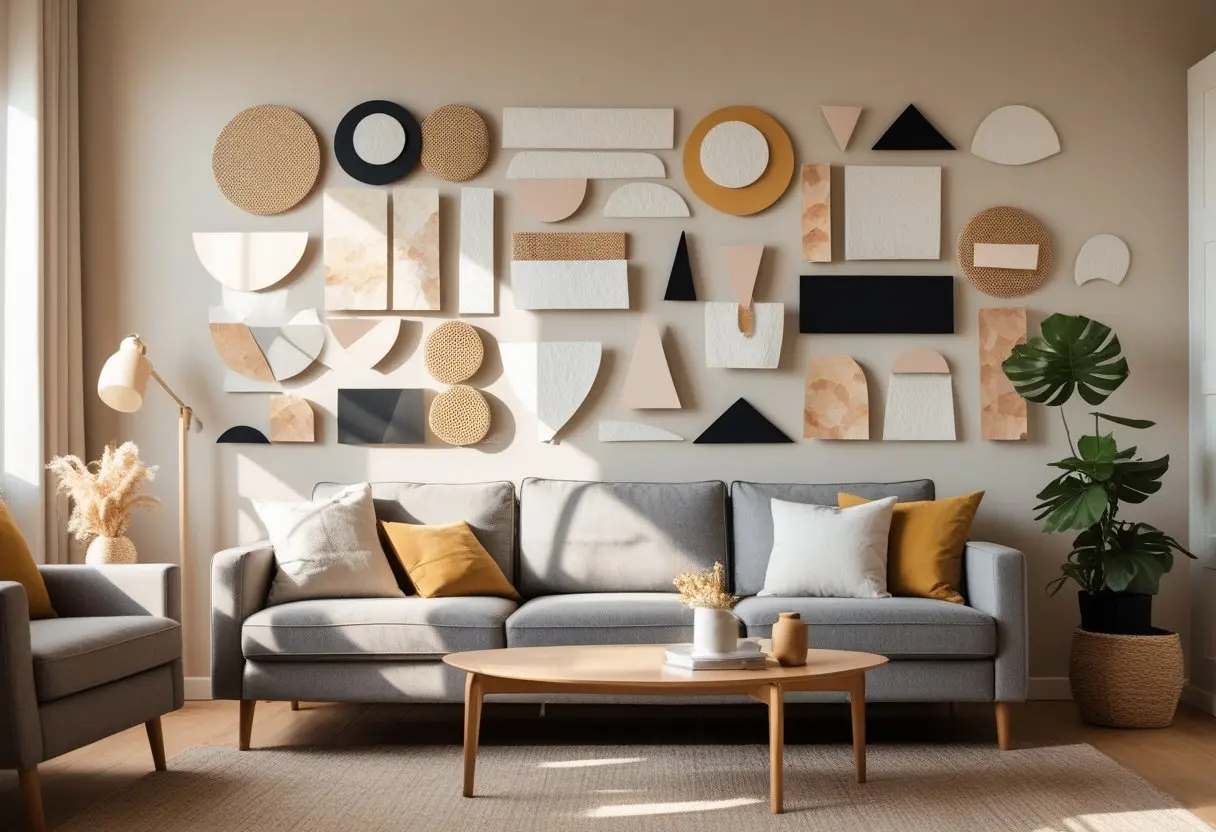
Imagine walking into a room and being drawn to a captivating piece on the wall. It’s not just a single photograph or painting, but a harmonious blend of textures, colors, and memories. This is the power of collage art—a versatile and deeply personal form of expression that is revolutionizing home decor. More than just an arrangement of pictures, collage is a narrative medium that allows you to layer your story, tastes, and creativity directly onto your walls. This guide will help you understand, choose, create, and display collage art to infuse your home with unique personality and warmth.
What is Collage Art? Understanding a Timeless Creative Practice
At its core, collage art is an artistic technique where the artwork is made from an assemblage of different forms, materials, and images, creating a new, cohesive whole. The term itself comes from the French word coller, meaning “to glue.” This practice, which blossomed in the early 20th century with pioneers like Pablo Picasso and Georges Braque, has evolved from a fine arts movement to an accessible and popular form of home decor.
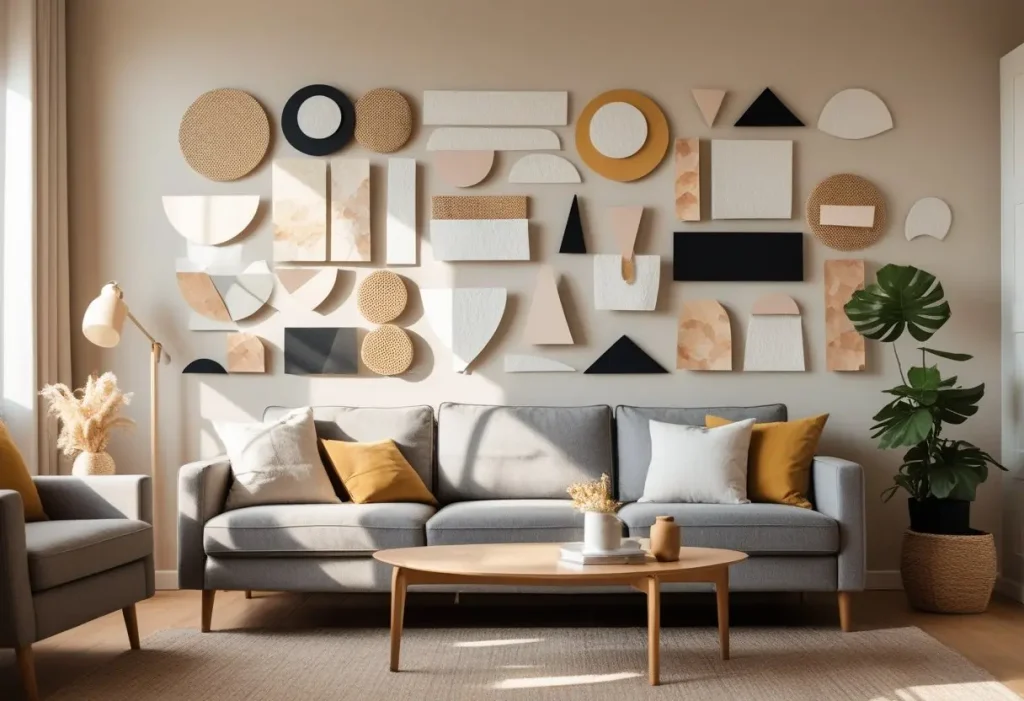
Modern collage for the home often blends:
- Mixed Media: Combining photographs, magazine clippings, fabric, pressed flowers, or even small objects.
- Thematic Storytelling: Creating a visual narrative around a central theme, like travel, family, or nature.
- Textural Interest: Using layers to build physical depth and shadow, adding dynamic energy to a flat wall.
Unlike a single statement piece, a collage invites the viewer to linger, discovering new details and connections with each look. It bridges the gap between the personal intimacy of a gallery wall and the curated focus of a single artwork.
Creating Your Own Collage Art: A Step-by-Step Guide for Beginners
You don’t need to be a professional artist to create meaningful collage art. The process is intuitive, therapeutic, and immensely rewarding. It’s a chance to turn memorabilia, favorite colors, and textures into a custom piece that no store can sell you.
Step 1: Gather Your Inspiration and Materials
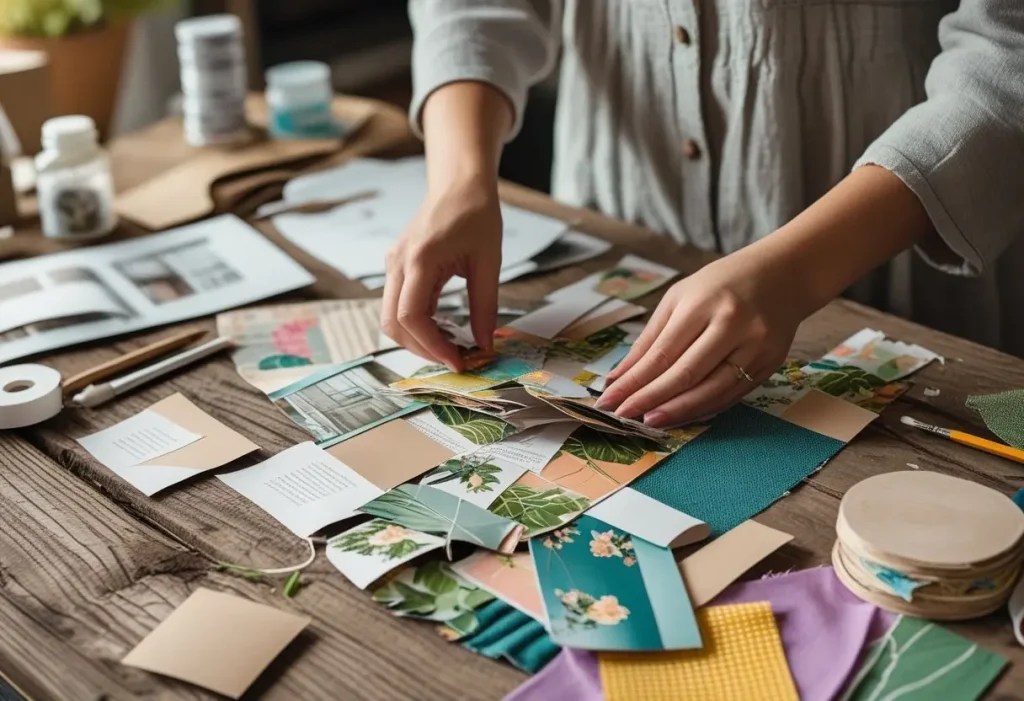
Start by collecting materials that speak to you. Look for:
- Paper Elements: Old book pages, sheet music, maps, postcards, vintage photographs, or colored paper.
- Personal Items: Ticket stubs, labels, handwritten notes, or fabric from old clothing.
- Tools: A sturdy base (canvas, shadowbox, or heavy paper), acid-free glue or Mod Podge, scissors, a ruler, and a pencil.
Tip: Lay all your elements on the base before gluing anything down. Move them around until the composition feels balanced.
Step 2: Compose and Layer with Intention
The magic happens in the layering. Begin with larger background pieces to set the tone. Overlap edges and play with orientation—not every element needs to be straight. Think about creating a visual path for the eye to follow, perhaps from a darker corner to a lighter focal point. Don’t be afraid to tear paper for softer, more organic edges.
Step 3: Secure and Protect Your Artwork
Once satisfied, glue each piece carefully from the background forward. Apply a thin, even layer of glue to the back of each element. For a final protective and glossy finish, apply a sealant or a top coat of decoupage medium over the entire surface. Let it dry completely in a flat position.
How to Choose the Perfect Collage Art for Your Space
If creating isn’t your style, selecting the right piece is just as personal. The right collage wall art should resonate with you and harmonize with your room’s existing decor.
- Consider Your Color Palette: Choose a piece that either complements your room’s dominant colors or introduces a deliberate accent palette. A collage with hints of your throw pillows or rug can create a beautifully tied-together look.
- Match the Style: Is your home modern minimalist, rustic farmhouse, or eclectic bohemian? Seek out collages that match that energy—clean geometric paper designs for modern spaces, or textured, nature-inspired assemblages for rustic homes.
- Think About Scale and Impact: A large, bold collage can serve as a commanding focal point in a living room, while a smaller, more intricate piece might be perfect for the intimacy of a bedroom or hallway. Consider the wall space you’re filling.
- Connect with the Theme: What feeling do you want? Beach-house vibes, botanical calm, or urban energy? Let the collage’s theme reinforce the ambiance of the room.
Expert Tips for Displaying and Styling Collage Art
Placement is key to maximizing the impact of your art. Here are professional styling tips:
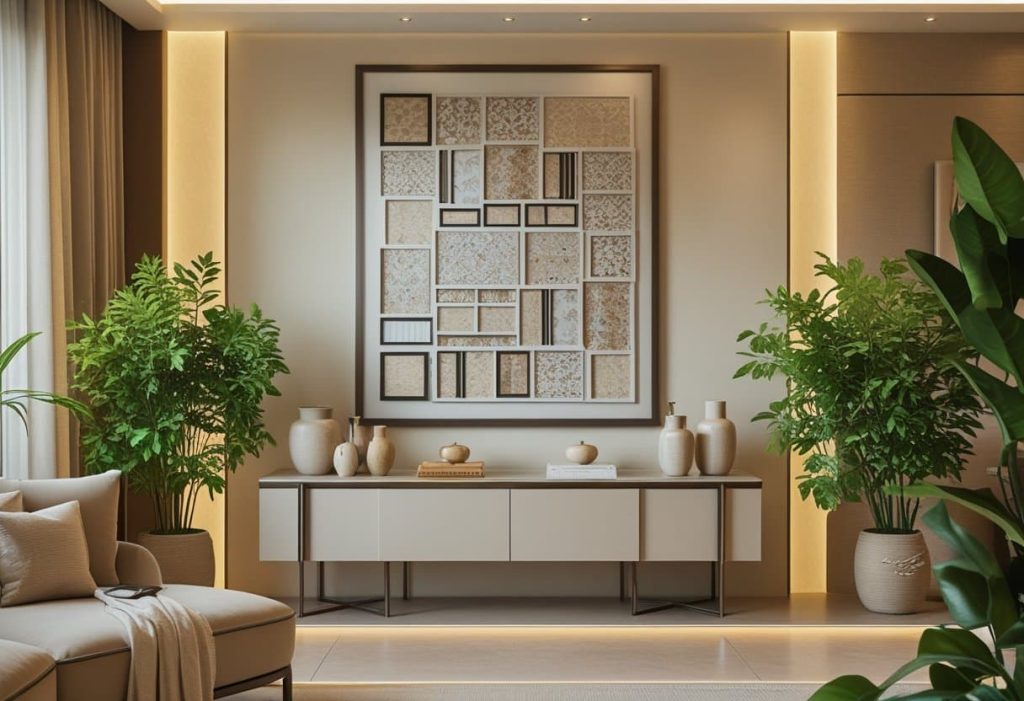
- Create a Focal Point: Hang your largest or most vibrant collage above key furniture like a sofa, bed, or console table. This anchors the room and creates a natural center of attention.
- Build a Gallery Wall: Incorporate a collage piece into a larger gallery wall. Its textured, layered nature provides wonderful contrast against simpler framed prints or photographs. Ensure there is a common thread, like a color or theme, to unify the collection.
- Utilize Unusual Spaces: Don’t forget nooks, bathrooms, or the wall above a doorframe. A small collage can add a surprising and personal touch to an overlooked spot.
- Mind the Height: The center of the artwork should generally hang at eye level (approximately 57 to 60 inches from the floor). In spaces where you are usually seated, like a dining area, you can hang it slightly lower.
Pro Tip: For a balanced look, the width of your collage art should be about two-thirds to three-quarters the width of the furniture it’s hanging above.
Caring for Your Collage Art: Preservation Tips
To ensure your artwork lasts for years, proper care is essential:
- Avoid Direct Sunlight: Prolonged exposure can cause fading and paper deterioration. Hang your collage away from direct rays or use UV-protective glass if framed.
- Control Humidity: Keep it in a stable environment. Extreme dampness can cause glue to fail or promote mold; excessive dryness can make paper brittle.
- Dust Gently: Use a soft, dry brush or a can of compressed air to remove dust from the surface. Avoid feather dusters that can snag on edges.
- Consider Professional Framing: For valuable or sentimental pieces, professional framing with a mat and conservation glass offers the best protection from physical and environmental damage.
Elevating Your Space: The Transformative Power of Collage Wall Art
There exists a profound difference between a house that is merely decorated and a home that tells a story. In the quest to create the latter, decorators and homeowners alike are increasingly turning to an art form that embraces personality, memory, and layered beauty. Collage wall art, the practice of assembling diverse materials into a single, cohesive visual statement, has moved from the artist’s studio into the heart of the modern home.
This is not about hanging a mass-produced poster; it’s about curating a piece of soul for your walls. Whether you are drawn to the tactile romance of vintage paper, the clean lines of geometric digital designs, or the organic warmth of mixed-media textures, integrating collage art offers an unparalleled opportunity to express your unique narrative and elevate your space from ordinary to extraordinary.
From Inspiration to Installation: A Framework for Choosing Collage Art
Selecting the right piece of collage art is a dialogue between the artwork and the room it will inhabit. The perfect choice feels less like a purchase and more like a discovery—a piece that resonates deeply and complements its surroundings. To navigate this process, consider these core principles that bridge artistic appeal and design functionality.
Harmonizing with Your Existing Decor Palette
A collage should converse with your room, not shout over it. Begin by analyzing your space’s dominant colors, textures, and style.
- For Cohesive Serenity: Choose a piece that pulls from your room’s existing color palette. A collage featuring soft blues, grays, and cream can beautifully anchor a coastal-themed living room, tying together upholstery and accents.
- For Intentional Contrast: Use collage art to introduce a deliberate accent color. In a neutral, minimalist space, a collage with bold strokes of terracotta or deep emerald becomes a powerful, energizing focal point.
- For Textural Dialogue: Consider the textures already present. A collage incorporating rough linen, delicate rice paper, or weathered book pages can echo the textures of a chunky knit throw, a rustic wooden coffee table, or a smooth leather chair, creating a rich sensory experience.
Mastering Scale, Placement, and Impact
The physical presence of the artwork on your wall is crucial to its success.
- The Focal Point Formula: Above key furniture like a sofa, bed, or sideboard, the collage’s width should ideally be between two-thirds and three-quarters the width of the furniture piece. This creates a balanced, anchored look.
- Eye-Level Harmony: Hang your art with its center point approximately 57 to 60 inches from the floor—the average human eye level. In spaces where people are primarily seated (e.g., a dining nook or home office), lower this by 3-6 inches for a more intimate connection.
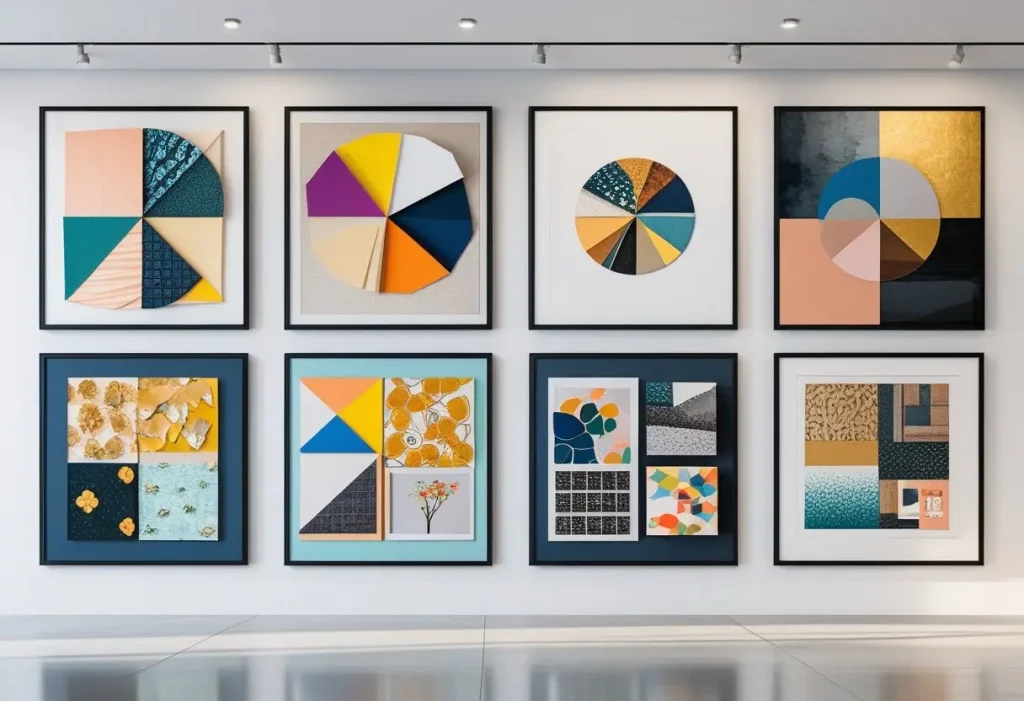
- The Power of Grouping: A single collage makes a statement, but a curated group can create a gallery wall of immense personality. Mix a central collage piece with simpler framed photography, typography prints, or even small shelves holding objects. Maintain cohesion through consistent framing (e.g., all black frames), a unified color story, or a common thematic thread.
The Digital Frontier: Creating Collage Art in the Modern Age
The evolution of collage art has enthusiastically embraced the digital world. Digital collage removes physical constraints, allowing for limitless experimentation with image, texture, and composition before a single piece is printed. It’s an accessible entry point for anyone with a creative vision and a computer or tablet.
Essential Tools and Software for Beginners
You don’t need expensive professional software to start. Powerful, user-friendly options are readily available:
- Canva: Excellent for beginners, offering intuitive drag-and-drop functionality, a vast library of stock images, textures, and graphics, and pre-set templates for various print sizes.
- Adobe Express (formerly Spark): A free tool from Adobe that simplifies professional design, offering robust photo editing and layout tools perfect for collage.
- Procreate: The go-to app for iPad users who enjoy a hands-on, illustrative approach. Its layering capabilities and immense brush libraries are ideal for painting and blending digital elements by hand.
- GIMP: A free, open-source alternative to Adobe Photoshop, offering advanced capabilities for cutting out images, adjusting layers, and creating complex composites for those willing to climb a slightly steeper learning curve.
A Step-by-Step Workflow for Your First Digital Collage
- Define Your Theme & Gather Assets: Start with a concept—”Botanical Wonder,” “Urban Geometry,” “Travel Memories.” Then, collect high-resolution images: your own photos, copyright-free stock images from sites like Unsplash or Pexels, scanned textures (paper, fabric, paint strokes).
- Set Your Canvas: Create a new document at the exact size and resolution needed for your intended print (e.g., 18″x24″ at 300 DPI for high-quality printing).
- Build the Background: Import your chosen background image or create one with color gradients and simple shapes. This sets the foundational mood.
- Layer and Compose: This is the heart of the process. Import your main images. Use selection tools to cut out subjects from their backgrounds. Arrange, resize, and rotate elements. Play with layer opacity to create translucency and depth. Don’t be afraid to overlap.
- Unify with Adjustments: Apply subtle color filters, adjust brightness/contrast, or add a slight grain texture over the entire piece to make the disparate elements feel like part of a single world.
- Finalize and Export: Save your working file with all layers intact. Then, export a final, flattened high-resolution JPEG or PNG for printing.
AI Image Generation Prompt for a Digital Collage Concept:
“A serene, minimalist digital collage suitable for a bedroom wall. The composition features a muted palette of sage green, soft oat, and cream. Central elements include a translucent, abstract shape of a resting bird overlapping with a faint, geometric line drawing of a house plant. In the background, subtle textures of handmade paper and watercolor washes. Style is clean, modern, and calming with plenty of negative space.”
Pushing the Boundaries: Advanced Techniques in Physical Collage
For those who love the tangible, moving beyond paper opens a realm of stunning dimensional art. These advanced techniques add literal depth and can become heirloom pieces.
Incorporating Three-Dimensional Objects
This approach transforms a collage into a shallow shadow box, telling a story you can almost reach out and touch.
- Natural Elements: Securely adhere pressed ferns, delicate seed pods, slices of agate, or pieces of smooth driftwood. Seal natural materials properly to prevent deterioration.
- Found Objects & Memorabilia: Vintage keys, watch gears, postage stamps, fragments of lace, or a single, meaningful piece of sea glass from a memorable trip. These objects inject deep personal history.
- Textile Integration: Burlap for rustic texture, silk for elegance, or a snippet of a child’s first blanket for sentiment. Fabric adds warmth and softness that paper cannot.
Expert Substrate and Adhesive Selection
The foundation and glue you choose are critical for the longevity of a complex collage.
- Substrates: Move beyond canvas. Consider cradled wood panels for a sturdy, gallery-ready finish, or deep-set shadow box frames that provide a protected niche for 3D elements.
- Adhesives:
- Heavy-Duty Gel Mediums: Acts as both glue and sealer, ideal for holding heavier objects.
- Epoxy Resin: For a crystal-clear, glass-like finish that fully encapsulates and protects delicate items, creating a smooth, modern surface.
- Acid-Free Archival Glues: Essential when using vintage photographs or precious papers to prevent yellowing and decay over decades.
Curating a Gallery: Collage Art for Every Room in Your Home
Collage art is not a one-style-fits-all solution. Its adaptability makes it perfect for defining the unique character of each space.
The Living Room: Conversation and Connection
This central space calls for art that reflects your family’s core identity. Consider a large-scale, mixed-media collage that combines a map of your hometown, family photographs transferred to tissue paper, and textured paint. It becomes a visual family history. Alternatively, a series of three smaller, thematically linked abstract collages in complementary colors can create a sophisticated, modern statement above the sofa.
The Bedroom: Sanctuary and Personal Reflection
The bedroom collage should promote calm and personal resonance. A soft, tonal paper collage in calming blues and grays, featuring abstract shapes and perhaps fragments of poetry, fosters serenity. A “memory hoop” collage—using an embroidery hoop as a frame to layer lace, a wedding invitation, and a dried flower—hangs intimately on a wall beside the bed, serving as a personal talisman.
The Home Office: Focus and Inspiration
Stimulate creativity and maintain focus. A typography-focused collage using pages from old dictionaries, inspirational quotes, and schematic diagrams can fuel ideas. For a cleaner look, a digital collage print with architectural lines, geometric forms, and a motivating phrase sets a professional, energetic tone.
Unexpected Nooks: Hallways, Bathrooms, and Kitchen
- Hallway: Create a procession of small, uniformly framed collages that tell a progressive story, guiding you through the space.
- Bathroom: Opt for a water-resistant collage under glass, using sea glass, shells, and images of botanicals to enhance the room’s spa-like feel.
- Kitchen: Frame a charming collage inside a cabinet door or on a pantry wall, using vintage recipe card fragments, herb illustrations, and images of fresh produce for a touch of whimsy.
Caring for Your Investment: Preservation and Maintenance
To ensure your collage art remains vibrant for years, mindful care is essential.
- Lighting is Critical: Display collages away from direct sunlight, which will cause irreversible fading of paper and dyes. Use UV-filtering glass or acrylic when framing, especially for pieces with sentimental or monetary value.
- Control the Environment: Avoid hanging collages in rooms with high humidity (like bathrooms without ventilation) or extreme dryness, which can cause adhesives to fail or paper to become brittle.
- Dust with Care: Gently use a soft, clean makeup brush or a can of compressed air to dislodge dust from textured surfaces. Never use cloths that can catch on edges.
- Professional Insight: For a valuable heirloom piece, consult a conservation framer. They can use archival mats, acid-free backing, and proper sealing techniques to protect the artwork from environmental damage and aging.
Frequently Asked Questions
How do I know if a collage is well-made and will last?
Examine the craftsmanship. Elements should be securely adhered with no curling edges. Look for the use of archival, acid-free materials (paper, glue, backing) which resist yellowing. The finish should be even, and if framed, the glass should not press directly against the artwork’s surface.
Can I commission a custom piece of collage art?
Absolutely. Many collage artists accept commissions. Be prepared to provide the artist with your space dimensions, color palette, desired theme, and any personal elements you’d like incorporated. A clear dialogue ensures the final piece is both personally meaningful and artistically coherent.
What’s the difference between decoupage and collage art?
Decoupage is primarily a decorative technique where cut-out images are layered and sealed onto an object (like furniture or a box) to cover it, often with a clear, glossy finish. Collage is a broader fine art practice focused on composition and conceptual meaning, where the assembled materials themselves are the final artwork, not merely a decoration on another item.
Is it acceptable to mix collage art with other classic art styles in one room?
Yes, this is a mark of sophisticated curation. A modern abstract collage can create stunning contrast in a room with traditional oil paintings. The key is to create a unifying element, such as a shared accent color, a similar frame style, or a complementary mood (e.g., all pieces evoke “tranquility”).
How do I protect a collage that has delicate 3D elements?
A deep-set shadow box frame is the best solution. It provides a physical barrier against dust and accidental contact while allowing the dimensional qualities to shine. Ensure the frame is sealed at the back to prevent insect intrusion.
Elevating Your Space: The Transformative Power of Collage Wall Art
There exists a profound difference between a house that is merely decorated and a home that tells a story. In the quest to create the latter, decorators and homeowners alike are increasingly turning to an art form that embraces personality, memory, and layered beauty. Collage wall art, the practice of assembling diverse materials into a single, cohesive visual statement, has moved from the artist’s studio into the heart of the modern home.
This is not about hanging a mass-produced poster; it’s about curating a piece of soul for your walls. Whether you are drawn to the tactile romance of vintage paper, the clean lines of geometric digital designs, or the organic warmth of mixed-media textures, integrating collage art offers an unparalleled opportunity to express your unique narrative and elevate your space from ordinary to extraordinary.
From Inspiration to Installation: A Framework for Choosing Collage Art
Selecting the right piece of collage art is a dialogue between the artwork and the room it will inhabit. The perfect choice feels less like a purchase and more like a discovery—a piece that resonates deeply and complements its surroundings. To navigate this process, consider these core principles that bridge artistic appeal and design functionality.
Harmonizing with Your Existing Decor Palette
A collage should converse with your room, not shout over it. Begin by analyzing your space’s dominant colors, textures, and style.
- For Cohesive Serenity: Choose a piece that pulls from your room’s existing color palette. A collage featuring soft blues, grays, and cream can beautifully anchor a coastal-themed living room, tying together upholstery and accents.
- For Intentional Contrast: Use collage art to introduce a deliberate accent color. In a neutral, minimalist space, a collage with bold strokes of terracotta or deep emerald becomes a powerful, energizing focal point.
- For Textural Dialogue: Consider the textures already present. A collage incorporating rough linen, delicate rice paper, or weathered book pages can echo the textures of a chunky knit throw, a rustic wooden coffee table, or a smooth leather chair, creating a rich sensory experience.
Mastering Scale, Placement, and Impact
The physical presence of the artwork on your wall is crucial to its success.
- The Focal Point Formula: Above key furniture like a sofa, bed, or sideboard, the collage’s width should ideally be between two-thirds and three-quarters the width of the furniture piece. This creates a balanced, anchored look.
- Eye-Level Harmony: Hang your art with its center point approximately 57 to 60 inches from the floor—the average human eye level. In spaces where people are primarily seated (e.g., a dining nook or home office), lower this by 3-6 inches for a more intimate connection.
- The Power of Grouping: A single collage makes a statement, but a curated group can create a gallery wall of immense personality. Mix a central collage piece with simpler framed photography, typography prints, or even small shelves holding objects. Maintain cohesion through consistent framing (e.g., all black frames), a unified color story, or a common thematic thread.
The Digital Frontier: Creating Collage Art in the Modern Age
The evolution of collage art has enthusiastically embraced the digital world. Digital collage removes physical constraints, allowing for limitless experimentation with image, texture, and composition before a single piece is printed. It’s an accessible entry point for anyone with a creative vision and a computer or tablet.
Essential Tools and Software for Beginners
You don’t need expensive professional software to start. Powerful, user-friendly options are readily available:
- Canva: Excellent for beginners, offering intuitive drag-and-drop functionality, a vast library of stock images, textures, and graphics, and pre-set templates for various print sizes.
- Adobe Express (formerly Spark): A free tool from Adobe that simplifies professional design, offering robust photo editing and layout tools perfect for collage.
- Procreate: The go-to app for iPad users who enjoy a hands-on, illustrative approach. Its layering capabilities and immense brush libraries are ideal for painting and blending digital elements by hand.
- GIMP: A free, open-source alternative to Adobe Photoshop, offering advanced capabilities for cutting out images, adjusting layers, and creating complex composites for those willing to climb a slightly steeper learning curve.
A Step-by-Step Workflow for Your First Digital Collage
- Define Your Theme & Gather Assets: Start with a concept—”Botanical Wonder,” “Urban Geometry,” “Travel Memories.” Then, collect high-resolution images: your own photos, copyright-free stock images from sites like Unsplash or Pexels, scanned textures (paper, fabric, paint strokes).
- Set Your Canvas: Create a new document at the exact size and resolution needed for your intended print (e.g., 18″x24″ at 300 DPI for high-quality printing).
- Build the Background: Import your chosen background image or create one with color gradients and simple shapes. This sets the foundational mood.
- Layer and Compose: This is the heart of the process. Import your main images. Use selection tools to cut out subjects from their backgrounds. Arrange, resize, and rotate elements. Play with layer opacity to create translucency and depth. Don’t be afraid to overlap.
- Unify with Adjustments: Apply subtle color filters, adjust brightness/contrast, or add a slight grain texture over the entire piece to make the disparate elements feel like part of a single world.
- Finalize and Export: Save your working file with all layers intact. Then, export a final, flattened high-resolution JPEG or PNG for printing.
AI Image Generation Prompt for a Digital Collage Concept:
“A serene, minimalist digital collage suitable for a bedroom wall. The composition features a muted palette of sage green, soft oat, and cream. Central elements include a translucent, abstract shape of a resting bird overlapping with a faint, geometric line drawing of a house plant. In the background, subtle textures of handmade paper and watercolor washes. Style is clean, modern, and calming with plenty of negative space.”
Pushing the Boundaries: Advanced Techniques in Physical Collage
For those who love the tangible, moving beyond paper opens a realm of stunning dimensional art. These advanced techniques add literal depth and can become heirloom pieces.
Incorporating Three-Dimensional Objects
This approach transforms a collage into a shallow shadow box, telling a story you can almost reach out and touch.
- Natural Elements: Securely adhere pressed ferns, delicate seed pods, slices of agate, or pieces of smooth driftwood. Seal natural materials properly to prevent deterioration.
- Found Objects & Memorabilia: Vintage keys, watch gears, postage stamps, fragments of lace, or a single, meaningful piece of sea glass from a memorable trip. These objects inject deep personal history.
- Textile Integration: Burlap for rustic texture, silk for elegance, or a snippet of a child’s first blanket for sentiment. Fabric adds warmth and softness that paper cannot Collage Art.
Expert Substrate and Adhesive Selection
The foundation and glue you choose are critical for the longevity of a complex collage.
- Substrates: Move beyond canvas. Consider cradled wood panels for a sturdy, gallery-ready finish, or deep-set shadow box frames that provide a protected niche for 3D elements Collage Art.
- Adhesives:
- Heavy-Duty Gel Mediums: Acts as both glue and sealer, ideal for holding heavier objects.
- Epoxy Resin: For a crystal-clear, glass-like finish that fully encapsulates and protects delicate items, creating a smooth, modern surface.
- Acid-Free Archival Glues: Essential when using vintage photographs or precious papers to prevent yellowing and decay over decades.
Curating a Gallery: Collage Art for Every Room in Your Home
Collage art is not a one-style-fits-all solution. Its adaptability makes it perfect for defining the unique character of each space.
The Living Room: Conversation and Connection
This central space calls for art that reflects your family’s core identity. Consider a large-scale, mixed-media collage that combines a map of your hometown, family photographs transferred to tissue paper, and textured paint. It becomes a visual family history. Alternatively, a series of three smaller, thematically linked abstract collages in complementary colors can create a sophisticated, modern statement above the sofa Collage Art.
The Bedroom: Sanctuary and Personal Reflection
The bedroom collage should promote calm and personal resonance. A soft, tonal paper collage in calming blues and grays, featuring abstract shapes and perhaps fragments of poetry, fosters serenity. A “memory hoop” collage—using an embroidery hoop as a frame to layer lace, a wedding invitation, and a dried flower—hangs intimately on a wall beside the bed, serving as a personal talisman Collage Art.
The Home Office: Focus and Inspiration
Stimulate creativity and maintain focus. A typography-focused collage using pages from old dictionaries, inspirational quotes, and schematic diagrams can fuel ideas. For a cleaner look, a digital collage print with architectural lines, geometric forms, and a motivating phrase sets a professional, energetic tone The Home Office: Focus and Inspiration
Stimulate creativity and maintain focus. A typography-focused collage using pages from old dictionaries, inspirational quotes, and schematic diagrams can fuel ideas. For a cleaner look, a digital collage print with architectural lines, geometric forms, and a motivating phrase sets a professional, energetic tone Collage Art.
.
Unexpected Nooks: Hallways, Bathrooms, and Kitchen
- Hallway: Create a procession of small, uniformly framed collages that tell a progressive story, guiding you through the space.
- Bathroom: Opt for a water-resistant collage under glass, using sea glass, shells, and images of botanicals to enhance the room’s spa-like feel.
- Kitchen: Frame a charming collage inside a cabinet door or on a pantry wall, using vintage recipe card fragments, herb illustrations, and images of fresh produce for a touch of whimsy Collage Art.
Caring for Your Investment: Preservation and Maintenance
To ensure your collage art remains vibrant for years, mindful care is essential.
- Lighting is Critical: Display collages away from direct sunlight, which will cause irreversible fading of paper and dyes. Use UV-filtering glass or acrylic when framing, especially for pieces with sentimental or monetary value.
- Control the Environment: Avoid hanging collages in rooms with high humidity (like bathrooms without ventilation) or extreme dryness, which can cause adhesives to fail or paper to become brittle.
- Dust with Care: Gently use a soft, clean makeup brush or a can of compressed air to dislodge dust from textured surfaces. Never use cloths that can catch on edges.
- Professional Insight: For a valuable heirloom piece, consult a conservation framer. They can use archival mats, acid-free backing, and proper sealing techniques to protect the artwork from environmental damage and aging.
Frequently Asked Questions
How do I know if a collage is well-made and will last?
Examine the craftsmanship. Elements should be securely adhered with no curling edges. Look for the use of archival, acid-free materials (paper, glue, backing) which resist yellowing. The finish should be even, and if framed, the glass should not press directly against the artwork’s surface Collage Art.
Can I commission a custom piece of collage art?
Absolutely. Many collage artists accept commissions. Be prepared to provide the artist with your space dimensions, color palette, desired theme, and any personal elements you’d like incorporated. A clear dialogue ensures the final piece is both personally meaningful and artistically coherent Collage Art.
What’s the difference between decoupage and collage art?
Decoupage is primarily a decorative technique where cut-out images are layered and sealed onto an object (like furniture or a box) to cover it, often with a clear, glossy finish. Collage is a broader fine art practice focused on composition and conceptual meaning, where the assembled materials themselves are the final artwork, not merely a decoration on another item Collage Art.
Is it acceptable to mix collage art with other classic art styles in one room?
Yes, this is a mark of sophisticated curation. A modern abstract collage can create stunning contrast in a room with traditional oil paintings. The key is to create a unifying element, such as a shared accent color, a similar frame style, or a complementary mood (e.g., all pieces evoke “tranquility”).
How do I protect a collage that has delicate 3D elements?
A deep-set shadow box frame is the best solution. It provides a physical barrier against dust and accidental contact while allowing the dimensional qualities to shine. Ensure the frame is sealed at the back to prevent insect intrusion.
The journey into the world of collage art is an invitation to see your home not as a showroom, but as a living gallery of your life’s experiences, tastes, and dreams. It challenges the impersonal nature of mass-produced decor, offering instead a path to authenticity. From the digital screen to the tactile joy of glue and paper, the process of choosing or creating a collage is as rewarding as the finished piece itself. It asks you to look closer, to layer meaning, and to make a space unequivocally yours.
For further inspiration on integrating natural textures, explore our guide to Wooden for Wall Decor, or discover how the principles of organic composition in our article on The Art of the Potager Garden can beautifully inform your collage designs.
Frequently Asked Questions About Collage Art
What is the difference between collage art and a gallery wall?
While both involve multiple elements, collage art is a single artwork where components are layered and fixed together on one surface. A gallery wall is a curated arrangement of separate, distinct frames hung in a group on a wall.
What is the best adhesive for DIY collage art?
For longevity, use acid-free glue sticks, pH-neutral PVA glue, or decoupage medium like Mod Podge. These adhesives are less likely to yellow or damage paper over time.
Can I create digital collage art for my home?
Absolutely! Digital collages, where you blend scanned images and textures using software, are a fantastic modern option. You can print the final design on canvas or high-quality paper for a custom piece.
How do I choose a frame for my collage?
For collages with heavy texture or 3D elements, a shadow box frame is ideal as it provides depth and protection. For flatter paper collages, a standard frame with a mat can add a polished, finished look. Always ensure the glass does not press directly against the artwork’s surface.
Is collage art considered “fine art”?
Yes, collage has been a respected fine art medium since the early 1900s. Today, it is widely accepted and collected, with works featured in major museums and galleries worldwide, alongside being a beloved form of popular and personal decor.
Collage art is more than decor; it’s an invitation to express your individuality. Whether you find joy in the hands-on process of creating your own or in discovering the perfect piece by another artist, integrating collage art into your home adds a layer of depth, story, and soul that flat prints simply cannot match. It turns your walls into a conversation about who you are and what you love.
Ready to start your own creative journey? Explore our guide to Wooden for Wall Decor to see how natural materials can complement your collage style, or dive into the principles of texture and composition in our post on The Art of the Potager Garden for unexpected inspiration.