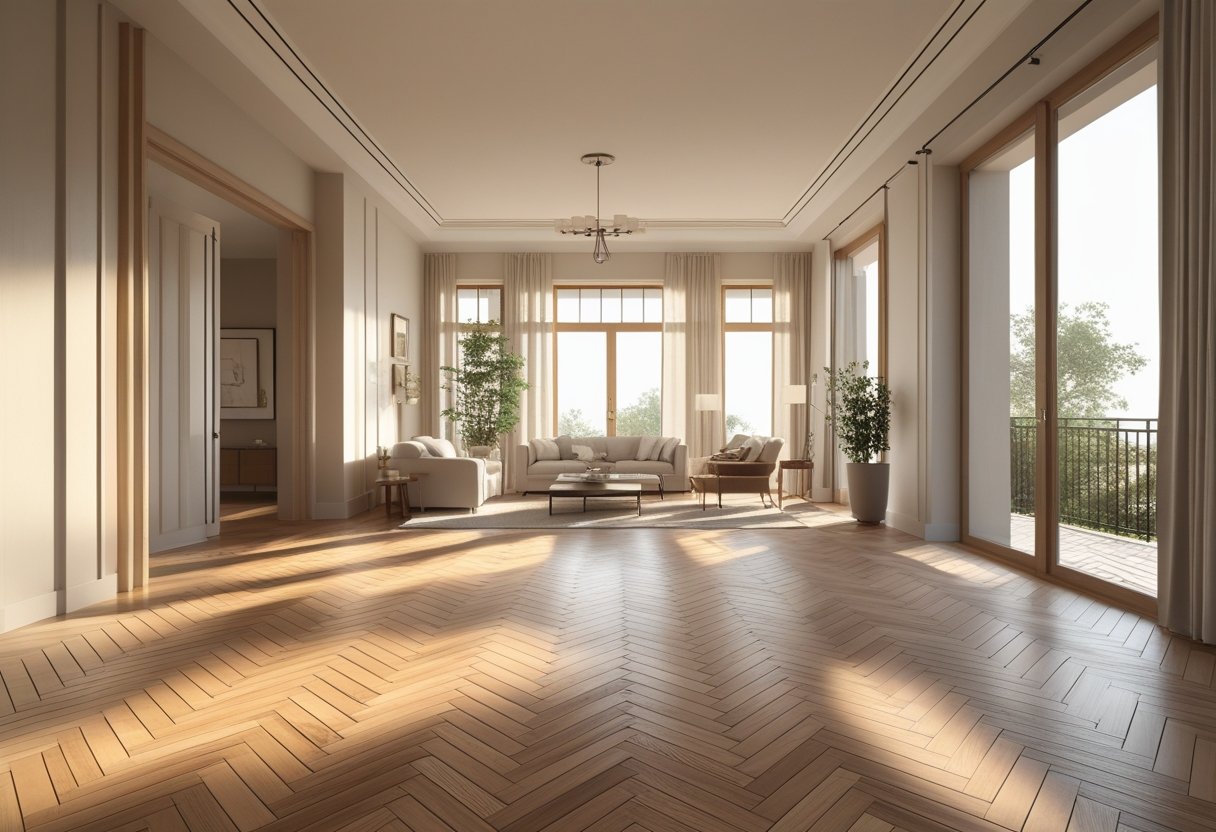
Introduction: The Art and Craft of Parquet Flooring
There’s a moment in every great home design when a single element transforms a space from ordinary to extraordinary. Often, that transformative power lies underfoot. Imagine walking into a room where the floor isn’t just a surface, but a work of art—a geometric tapestry of wood that tells a story of craftsmanship, history, and personal style. This is the magic of parquet flooring.
Unlike standard plank flooring, parquet is a decorative technique where small pieces of wood are arranged in repeating geometric patterns. From the classic herringbone of a Parisian apartment to the bold, custom design in a modern loft, parquet flooring creates an immediate focal point and a foundation for your entire interior design. It’s a choice that whispers luxury but speaks to practicality, offering durability that can last a century with proper care.
This comprehensive guide will walk you through everything you need to know about parquet wood flooring. We’ll explore its rich history, decode the most popular and contemporary patterns, and provide a clear-eyed look at the pros and cons. You’ll get expert advice on installation—from professional quotes to ambitious DIY projects—and learn the simple secrets to maintenance that keeps your floor stunning for decades. Whether you’re renovating a century-old home or building a new one, this guide will help you decide if parquet flooring is the perfect foundation for your dream space.
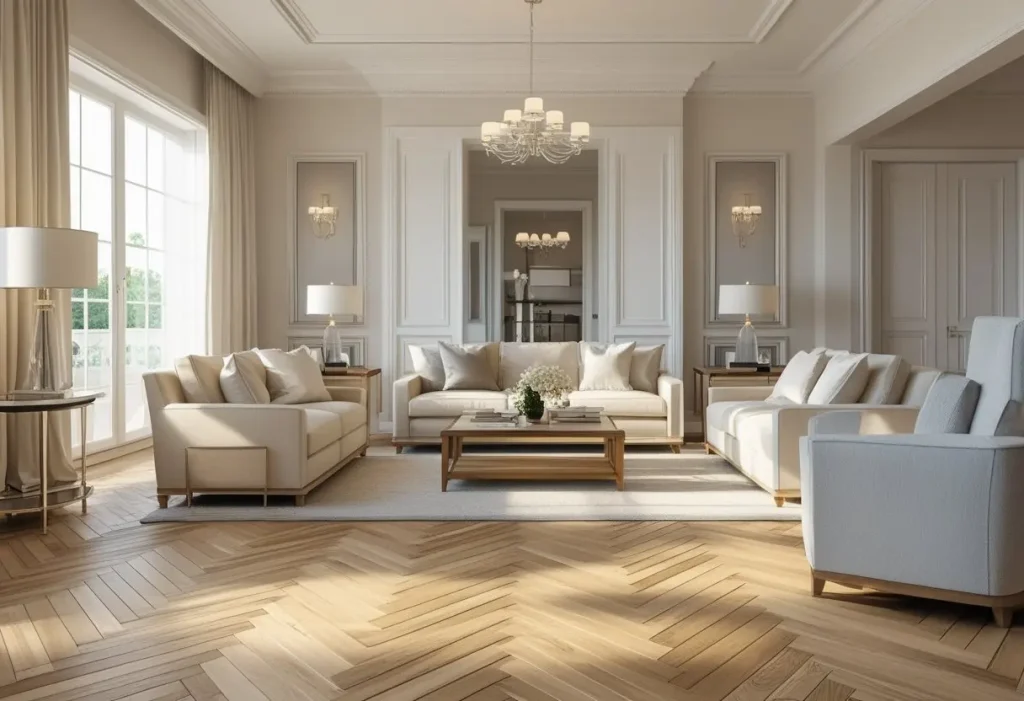
A Brief History: From Palaces to Modern Homes
The story of parquet flooring begins in 16th century France, where it was developed as a more affordable and intricate alternative to marble floors in the grand chateaus. The word “parquet” itself comes from the French “parchet,” meaning a small compartment or enclosure. The Palace of Versailles, under Louis XIV, famously featured majestic parquet de Versailles patterns, solidifying its status as a symbol of opulence and aristocratic taste.
Throughout the centuries, parquet evolved. The Industrial Revolution made wood blocks more accessible, and parquet became a hallmark of elegant homes in the Victorian and Art Deco eras. While it fell out of favor mid-20th century with the rise of broadloom carpet, we are now in the midst of a major parquet renaissance. Today’s technology and sustainable forestry practices have made these beautiful floors more accessible than ever, allowing homeowners to incorporate a touch of timeless artistry into contemporary living.
Understanding Parquet Flooring Patterns
The pattern is the soul of a parquet floor. It defines the character of the room, influences the perception of space, and allows for immense personal expression. Understanding the main categories will help you choose a design that complements your home’s architecture and your personal aesthetic.
Classic & Timeless Patterns
These are the foundational designs that have proven their beauty over centuries. They are universally appealing and add instant heritage value to a home.
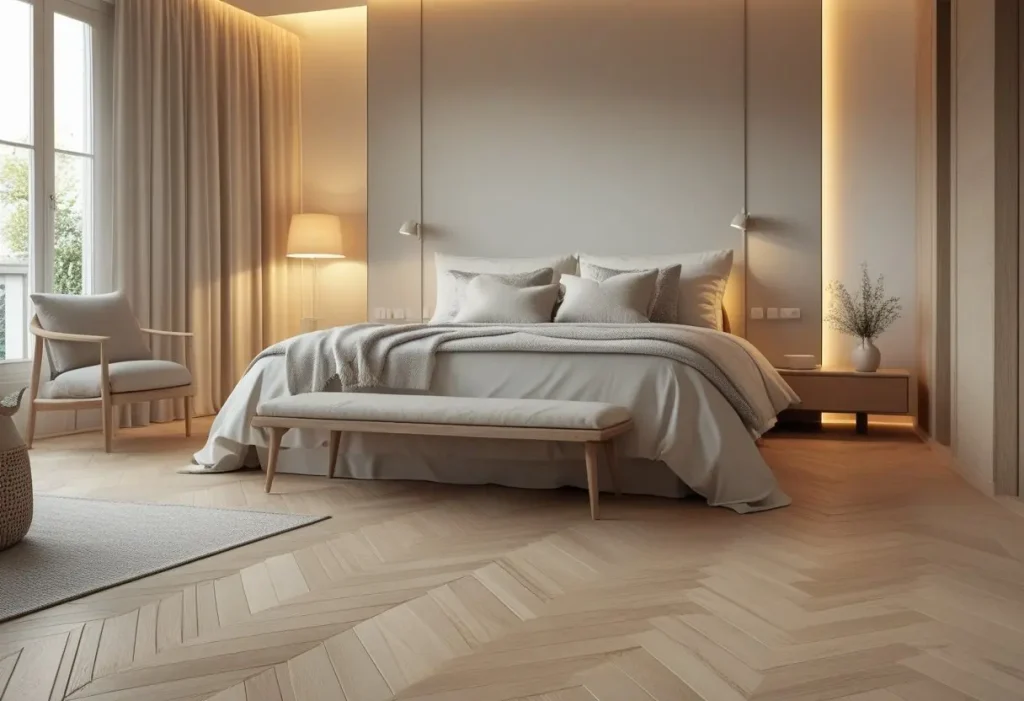
- Herringbone: Arguably the most popular pattern today. It features rectangular blocks laid at 90-degree angles to each other, creating a dynamic, zig-zag “V” or broken chevron effect. It works in both traditional and strikingly modern settings.
- Chevron: Often confused with herringbone, chevron uses planks cut at an angle (typically 45 degrees) so the ends meet to form a continuous, unbroken “V” or arrowhead pattern. It feels more formal and directional than herringbone.
- Basketweave: This pattern mimics the weave of a basket, created by laying pairs of blocks perpendicular to each other. It offers a more subtle, textured geometric feel than the dramatic lines of herringbone.
- Château or Versailles: The most ornate classic pattern, it features a large, square panel composed of smaller rectangles and squares arranged in a symmetrical, decorative design. It evokes ultimate Old World grandeur.
Modern & Creative Patterns
Contemporary designers are pushing boundaries with new takes on parquet.
- Large-Format Herringbone/Chevron: Using wider, longer planks for these classic patterns creates a more modern, scaled-up look with fewer seams.
- Mixed Width Designs: Combining planks of different widths within the same pattern (e.g., a herringbone using both 3-inch and 5-inch blocks) adds a custom, organic layer of visual interest.
- Diagonal & Border Layouts: Laying a standard pattern (like herringbone) on a 45-degree diagonal to the room, or framing it with a contrasting border, creates a custom, high-end designer appearance.
- Custom Medallions & Inlays: For a true centerpiece, custom geometric or floral medallions can be created as a focal point in an entryway or great room.
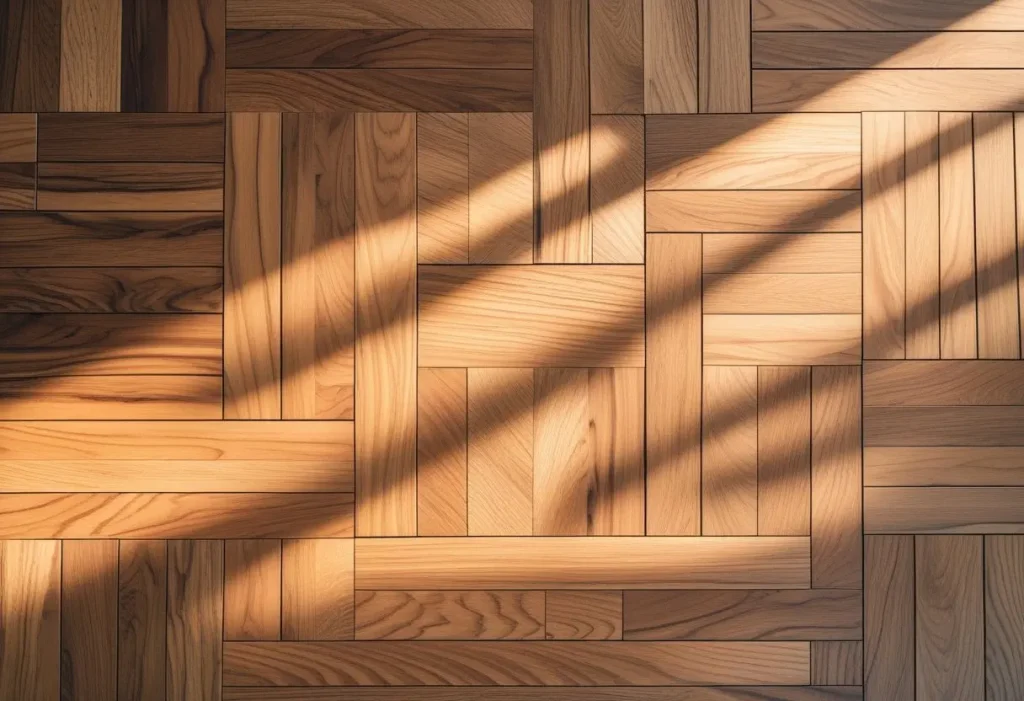
Table: Choosing the Right Parquet Flooring Pattern for Your Space
| Pattern | Best Suited For | Visual Effect | Style Pairing |
|---|---|---|---|
| Herringbone | Hallways, living rooms, kitchens | Dynamic, expansive, adds movement | Transitional, Modern, Scandinavian |
| Chevron | Formal dining rooms, entryways | Elegant, directional, sophisticated | Traditional, Art Deco, Contemporary |
| Basketweave | Studies, libraries, sunrooms | Subtle, textured, cozy | Craftsman, Cottage, Traditional |
| Versailles | Grand entryways, formal parlors | Ornate, luxurious, statement-making | Classic, Old World, Opulent |
| Modern Large-Format | Open-plan living areas, lofts | Clean, contemporary, spacious | Minimalist, Industrial, Modern Farmhouse |
The Practicalities: Pros and Cons of Parquet Flooring
Investing in parquet flooring is a significant decision. Let’s weigh the compelling advantages against the genuine considerations with absolute honesty.
The Advantages (Pros)
- Unmatched Aesthetic Appeal: This is the primary reason people choose parquet. It is a definitive design feature that elevates a room’s entire aesthetic, offering a level of customization and artistry that plain flooring cannot match.
- Can Increase Home Value: A well-maintained, classic parquet floor is often seen as a premium, desirable feature by potential homebuyers, potentially increasing your property’s resale value and appeal.
- Exceptional Durability: When properly installed and maintained, hardwood parquet floors can last 50-100 years or more. They can be sanded and refinished multiple times over their lifespan to repair damage or update stain colors.
- Timeless, Not Trendy: While specific wood tones may cycle, classic parquet patterns like herringbone have remained in style for centuries. It’s an investment in a timeless, not temporary, look.
- Versatile Design Foundation: The natural texture and geometric interest of parquet provide a neutral yet engaging foundation for virtually any design style, from minimalist to maximalist.
The Considerations (Cons)
- Higher Cost: Parquet flooring is almost always more expensive than standard plank hardwood flooring. The cost comes from the intricate manufacturing, higher installation labor (for glued-down traditional parquet), and sometimes more wood waste during installation.
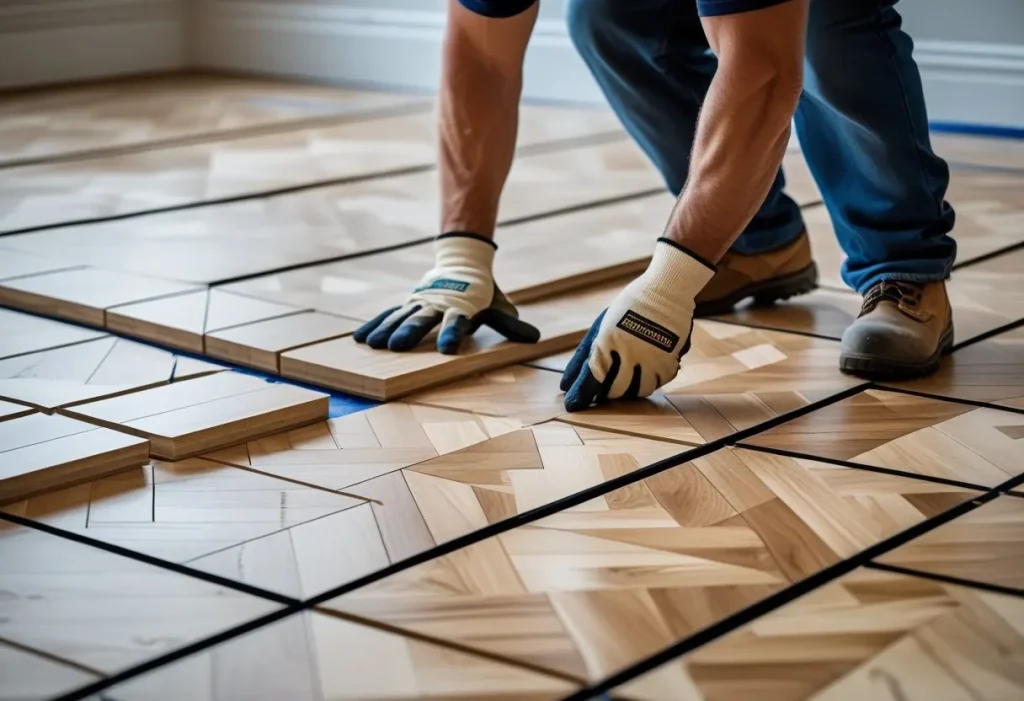
- Complex Installation: Traditional mosaic or solid wood parquet requires a skilled, experienced professional for a glue-down installation onto a subfloor. A poor installation can lead to squeaking, gapping, or failure. (Note: Engineered parquet with click-lock systems is more DIY-friendly).
- Potential for Damage: Like all wood floors, parquet is susceptible to scratching from pet claws, furniture, and grit. It can also be damaged by standing water or significant humidity fluctuations.
- Maintenance Requirements: While easy to clean, it does require a commitment to protective measures (felt pads, area rugs) and periodic recoating or refinishing to maintain its beauty over decades.
- Noise and Hardness: Wood floors are hard underfoot and can be noisier than carpet or cork, which may be a consideration in multi-story homes.
Parquet Flooring vs. Hardwood Plank: A Clear Comparison
This is a common point of confusion. All parquet is hardwood flooring, but not all hardwood flooring is parquet. The key difference is purely aesthetic and structural.
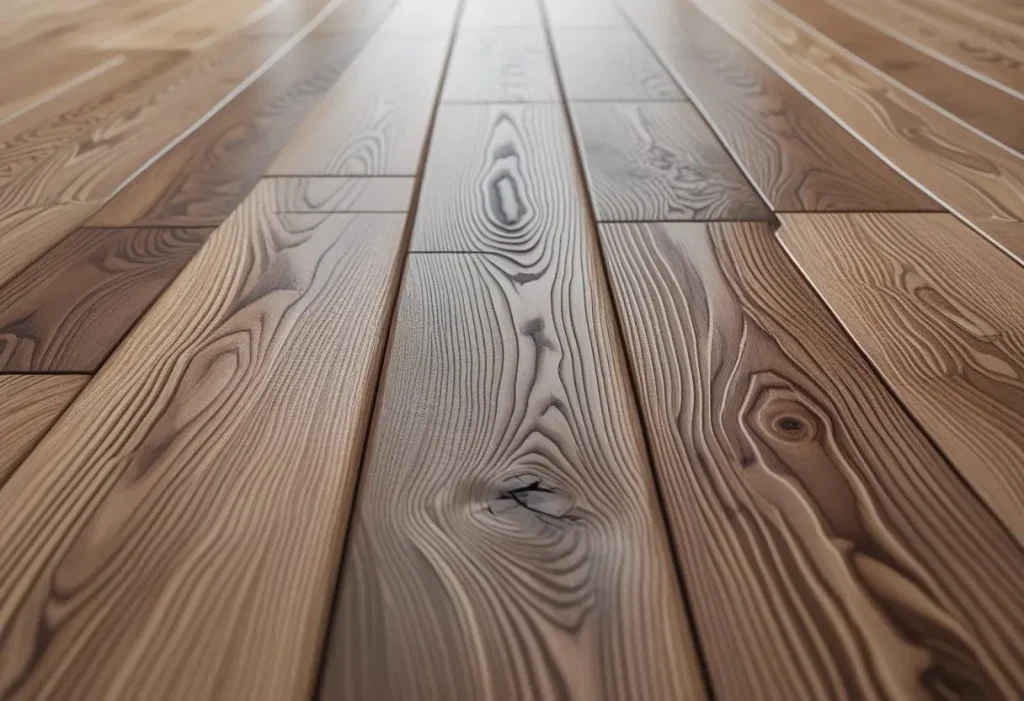
Standard hardwood plank flooring involves laying long, parallel boards. The visual interest comes from the wood’s grain, color, and plank width. It’s a more understated, casual look that emphasizes the material itself.
Parquet flooring uses smaller wood pieces (blocks, strips, or planks) arranged in a geometric pattern. The visual interest comes from the repeated pattern created by the arrangement of the wood pieces. It’s a more decorative, intentional design statement.
From a performance and maintenance perspective, if both are made from the same wood species and finish (e.g., solid oak with a UV-cured polyurethane), they will be very similar. The main differences are in the installation complexity and the visual outcome.
For more on different types of wood flooring, explore our guide on Wood Parquet Flooring: Luxury, Patterns & Lasting Value, which delves deeper into the heritage and specific value of parquet.
The Installation Process: What to Expect
A successful parquet flooring installation is critical to its longevity and beauty. The process varies significantly between traditional solid wood parquet and modern engineered parquet.
1. Traditional Glue-Down (Solid Wood Parquet)
This is the classic method, best left to professionals.
- Subfloor Preparation: The existing subfloor (usually plywood or concrete) must be perfectly clean, dry, level, and stable. Any imperfection will telegraph through.
- Acclimation: The wood must sit in the room where it will be installed for at least 72 hours to adjust to the home’s temperature and humidity.
- Layout & Dry Fit: The installer will plan the pattern layout, often starting from the room’s center to ensure symmetry, and may do a dry fit.
- Gluing: A specialty wood flooring adhesive is troweled onto the subfloor. The individual wood blocks or planks are then pressed firmly into the adhesive according to the pattern.
- Sanding & Finishing: Once the adhesive cures, the entire floor is sanded to a perfectly smooth, level surface. It is then stained (if desired) and sealed with multiple coats of a protective finish (oil or polyurethane).
2. Floating Floor (Engineered Parquet with Click Systems)
This modern approach is more accessible and often DIY-able.
- Underlayment: A foam or cork underlayment is rolled out over the subfloor. This provides moisture resistance, sound dampening, and a slight cushion.
- Click-Lock Installation: The engineered parquet planks, which have a pre-finished surface and a pattern printed or constructed on a wear layer, simply click together at their edges. They are not attached to the subfloor but “float” on top of the underlayment.
- Expansion Gaps: A critical space is left around the room’s perimeter, hidden by baseboards, to allow the floor to expand and contract with humidity changes.
Which method is right for you? Solid wood, glue-down parquet is the ultimate, long-term investment for a forever home. Engineered, click-lock parquet is an excellent choice for quicker renovations, DIYers, or installations over concrete slabs or in basements where moisture is a concern.
A Guide to Maintenance and Care
The good news: maintaining your beautiful parquet flooring is straightforward. Consistent, simple care will preserve its beauty for a lifetime.
Daily & Weekly Care
- Sweep or Dry Mop: Daily dust-mopping or sweeping with a soft-bristle broom prevents abrasive grit and sand from scratching the finish.
- Vacuum: Use a hardwood floor attachment (without a beater bar) weekly.
- Damp Mopping: For cleaning, use a well-wrung microfiber mop dampened with a pH-neutral, hardwood-floor-specific cleaner. Never use steam mops, excessive water, vinegar, or generic cleaners, as they can degrade the finish.
Long-Term Preservation
- Use Protective Pads: Felt pads under all furniture legs are non-negotiable.
- Employ Rugs: Use area rugs with non-slip, breathable pads in high-traffic zones (entries, hallways) and under rolling desk chairs.
- Control Humidity: Maintain indoor relative humidity between 30-50% using a humidifier in winter and a dehumidifier/dehumidifier in summer to prevent excessive expansion or contraction of the wood.
- Manage Sunlight: Use curtains or UV-protective window film on south-facing windows to prevent the wood from fading over time.
- Refinish When Needed: Even with great care, the topcoat will wear. You’ll know it’s time for a professional recoat (a light screen and new topcoat) or a full refinish (sanding down and re-staining/finishing) when surface scratches become widespread and the wood looks dull or worn, not just in isolated spots.
Cost Considerations and Budgeting
The cost of parquet flooring varies dramatically based on materials, pattern complexity, and installation. It’s essential to budget for the complete project.
Cost Breakdown:
- Materials (Wood): Engineered parquet starts at $5-$10 per square foot. Solid wood, custom, or exotic species can range from $10-$25+ per square foot.
- Installation: Professional glue-down installation for solid parquet typically adds $5-$12 per square foot. Click-lock engineered installation is simpler and may cost $3-$8 per square foot if hired out. Complex patterns, extensive subfloor prep, or custom inlays will increase this cost.
- Additional Costs: Don’t forget to budget for subfloor preparation, removal and disposal of old flooring, new baseboards or transitions, moving furniture, and a contingency fund of 10-15% for unexpected issues.
While parquet flooring has a higher upfront cost than many alternatives, its legendary durability makes it a cost-per-year investment. A $15,000 floor that lasts 75 years effectively costs $200 per year—a compelling value for a primary design feature that brings daily joy.
The Sustainability Question: Is Parquet an Eco-Friendly Choice?
Wood flooring can be a sustainable choice, but it depends on the source.
- Look for Certification: Seek out wood certified by the Forest Stewardship Council (FSC). This ensures the wood comes from responsibly managed forests that provide environmental, social, and economic benefits.
- Choose Domestic Species: Oak, maple, and walnut grown in North America or Europe typically have a lower transportation carbon footprint than exotic woods.
- Consider Engineered Wood: The construction of engineered wood uses a thin veneer of precious hardwood over a plywood core, making far more efficient use of the harvested tree.
- Longevity is Key: The most sustainable product is the one that lasts the longest and never goes to landfill. Parquet’s multi-generational lifespan is a major point in its favor.
For those passionate about eco-friendly materials, our guide to Cork Flooring: A Natural Choice for Modern Homes offers insights into another fantastic renewable flooring option.
Real-World Applications: Where Parquet Flooring Shines
Parquet is versatile, but some spaces are truly made for it.
- Living & Dining Rooms: The classic application. A parquet floor here becomes the room’s elegant foundation, perfectly complementing both cozy furniture groupings and formal dining sets.
- Entryways & Foyers: Make a powerful first impression. A durable parquet pattern in an entryway handles traffic beautifully while announcing your home’s style.
- Home Offices & Libraries: The rich, intellectual feel of wood, especially in patterns like basketweave or herringbone, enhances focus and creates a timeless, sophisticated workspace.
- Bedrooms: For a touch of luxury underfoot, nothing compares. It feels warm and inviting, especially when paired with a soft area rug beside the bed.
A Note on Kitchens & Bathrooms: While historically used, solid wood parquet in wet areas is risky due to potential water damage. If you love the look, opt for a high-quality engineered parquet with a waterproof core or consider luxury vinyl tile (LVT) that mimics the parquet pattern flawlessly. Learn more about durable, water-resistant options in our Complete Guide to Luxury Vinyl Tile Flooring.
Future-Proofing Your Investment: Trends and Timelessness
The current trend is toward lighter, natural wood tones (blond oaks, whitewashed finishes), larger-scale patterns, and matte or satin finishes that highlight the wood’s texture rather than creating a high-gloss plastic look. These trends align well with the popular Scandinavian, Modern Farmhouse, and Japandi styles.
However, the true power of parquet lies in its timelessness. Choosing a classic pattern in a mid-tone stain (like natural oak or walnut) is the most future-proof decision. Neutral patterns provide a versatile backdrop that allows you to change your wall color, furniture, and decor over the years without needing to change your floor. It’s the antithesis of a fast-fashion design choice.
Conclusion: Is Parquet Flooring Right for You?
Choosing parquet flooring is a commitment to beauty, craftsmanship, and long-term value. It’s for the homeowner who views their floors not as a backdrop, but as a central character in their home’s story. It asks for a higher initial investment and a mindful approach to maintenance but repays it with decades, even centuries, of unparalleled elegance and durability.
Before you decide, consider your lifestyle, budget, and the home you’re creating. Visit showrooms, feel the samples underfoot, and look at real installations. If your heart leaps at the sight of a sweeping herringbone pattern or the intricate detail of a Versailles panel, you have your answer.
Your home is your sanctuary. Let its foundation be a testament to art, history, and the enduring beauty of natural wood crafted with intention. Let it be parquet.
Frequently Asked Questions (FAQ) About Parquet Flooring
1. Is parquet flooring more expensive than regular hardwood?
Yes, typically. The intricate manufacturing of the patterned blocks or planks and the more labor-intensive installation process generally make parquet flooring more expensive per square foot than standard strip or plank hardwood flooring.
2. Can parquet flooring be installed over concrete?
Yes, but the correct method is crucial. For concrete slabs at or below grade (like basements), a floating engineered parquet floor with a moisture barrier is the safest choice. Solid wood parquet glue-down over concrete requires a near-perfectly dry slab and often a sleeper system or subfloor, which is best handled by a professional.
3. How do I clean and maintain my parquet floors?
Daily dust-mopping and weekly vacuuming with a soft attachment are key. For deeper cleaning, use a barely damp microfiber mop with a cleaner specifically formulated for hardwood floors. Avoid water, steam, vinegar, and wax-based products, which can damage the finish.
4. Can damaged parquet flooring be repaired?
Yes, one of its great advantages is repairability. Individual damaged blocks in traditional parquet can sometimes be carefully removed and replaced by a skilled craftsman. For wider damage or wear, the entire floor can be sanded down and refinished multiple times over its life.
5. Is parquet flooring suitable for kitchens?
It can be, but with caution. Solid wood parquet is vulnerable to standing water and heavy moisture fluctuations common in kitchens. A high-quality engineered parquet with a stable core and a waterproof finish is a better choice. Always clean spills immediately.
6. What is the difference between herringbone and chevron parquet patterns?
This is a common confusion. In herringbone, rectangular blocks are laid at 90-degree angles, creating a broken zig-zag effect. In chevron, the ends of the planks are cut at an angle (e.g., 45 degrees) so they meet to form a continuous, straight “V” or arrow pattern.
7. How long does parquet flooring last?
With proper installation, care, and periodic refinishing, a solid wood parquet floor can easily last 75-100 years or more. Many historic homes feature their original parquet. Engineered parquet has a shorter lifespan, determined by the thickness of its top wear layer, but can still last 25-50 years.
8. Can I install parquet flooring myself?
It depends on the type. Traditional glue-down solid wood parquet is a complex job best left to professionals. However, modern engineered parquet with a click-lock “floating floor” system is designed for confident DIYers, provided the subfloor is level.
9. Does parquet flooring make a room look bigger or smaller?
Patterns can influence perception. Diagonal layouts and classic herringbone can create an illusion of movement and space, making a room feel longer or wider. Very busy, small-scale patterns in dark wood might make a small room feel more enclosed.
10. What types of wood are best for parquet flooring?
Oak (white and red) is the most common due to its hardness, grain, and stability. Other excellent choices include walnut (for rich, dark tones), maple (for a fine, consistent grain), and ash. Exotic woods like teak or jatoba are used for high-end installations.
11. How does humidity affect parquet floors?
Wood is hygroscopic, meaning it absorbs and releases moisture from the air. High humidity causes it to expand; low humidity causes it to contract. This can lead to cupping, gapping, or cracking. Maintaining a stable indoor humidity (30-50%) is critical for parquet floor health.
12. Should I choose solid wood or engineered parquet?
Solid wood is the premium, traditional choice for above-grade installations. It can be refinished many times. Engineered wood is more dimensionally stable, better for areas with humidity fluctuations or over concrete, and often comes in easier-to-install formats.
13. Can I use area rugs on parquet flooring?
Absolutely! In fact, using area rugs in high-traffic zones is recommended to protect the floor. Always use a breathable, natural-fiber rug pad without a rubber or vinyl backing, as non-breathable pads can trap moisture and damage the finish.
14. How often does parquet flooring need to be refinished?
This depends entirely on traffic. In a busy household, you might need a recoat (adding a new topcoat without sanding) every 3-7 years. A full sand-and-refinish might be needed every 15-25 years. You’ll know it’s time when the finish is worn through to the wood in pathways.
15. Is parquet flooring pet-friendly?
It has pros and cons. The hard surface is easy to clean and doesn’t hold allergens. However, pet claws can scratch the finish. Keeping your pet’s nails trimmed, using protective rugs in play areas, and choosing a harder wood species with a matte finish can help minimize visible scratches.